
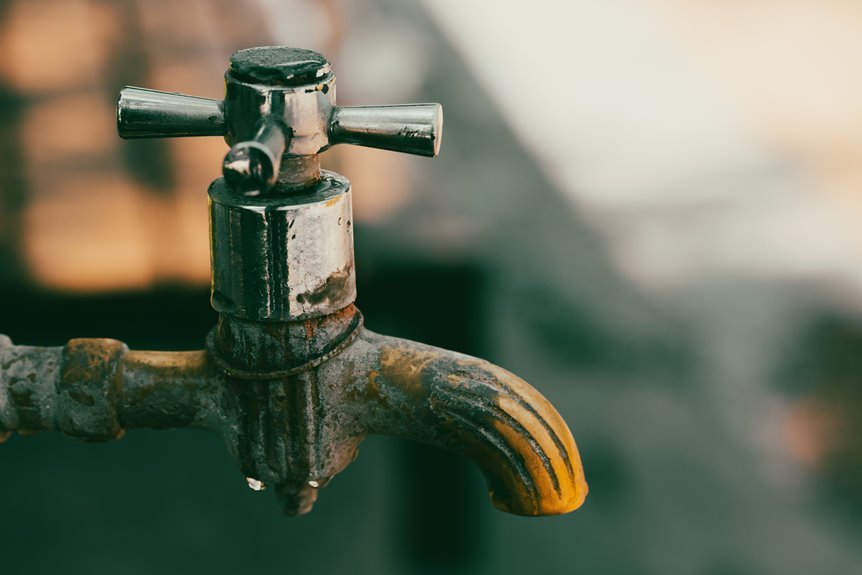
Your faucet corrodes when hard water minerals, moisture, and harsh cleaners compromise protective coatings. Limescale traps water on metal surfaces, speeding oxidation.
Ammonia and bleach-based cleaners scratch chrome, exposing copper underneath. Steel washers touching brass trigger galvanic corrosion under moisture.
Constant drips keep metal perpetually wet, preventing protective layers from drying. Chloride-rich water attacks exposed substrate faster.
Regular descaling, moisture control, and gentler cleaning methods will stop this corrosion process.
Hard Water and Humidity Create the Perfect Corrosion Environment
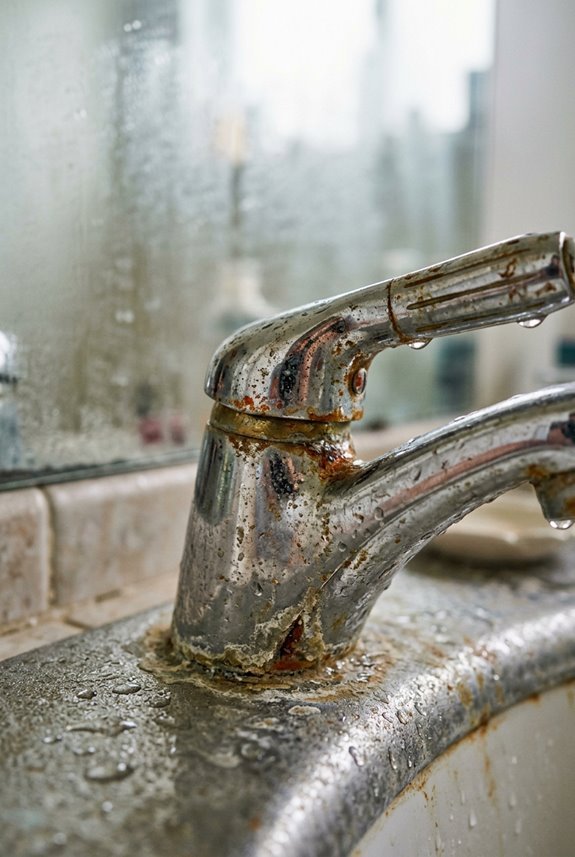
When you’ve got hard water and a steamy bathroom, you’re creating an ideal setup for corrosion to take hold. Hard water deposits calcium and magnesium minerals that build up on your brass and stainless steel faucets.
This mineral buildup, called limescale, traps moisture against metal surfaces. That constant wetness accelerates oxidation and corrosion faster than you’d expect.
Your bathroom’s humidity keeps faucet finishes wet for extended periods. This prolonged moisture contact drives rust and tarnish development.
The combination of hard water minerals and high humidity weakens protective coatings over time. When coatings thin out, they expose underlying metal to corrosive attack.
The mineral-laden water then reaches reactive metal layers beneath. This environment directly causes fixture damage through accelerated chemical degradation of metal surfaces and protective finishes.

PROFESSIONAL HARD WATER STAIN REMOVER: Get the powerful industrial and commercial strength that takes stains, spots, and rust out! Remove years of unwanted hard minerals

Deep Cleaning Made Easy: This Faucet Descaling Cap for Limescale Removal lets you fill it with descaler and attach it to your tap outlet for a thorough deep cleaning experience. Effectively dissolves stubborn buildup and keeps faucets clear

2X CLEANING POWER ON LIME & CALCIUM**: Cuts through stubborn limescale, calcium, and hard-water buildup fast—ideal for deeper bathroom cleaning with less scrubbing.
Chemical Cleaners Expose Bare Metal to Rust and Oxidation
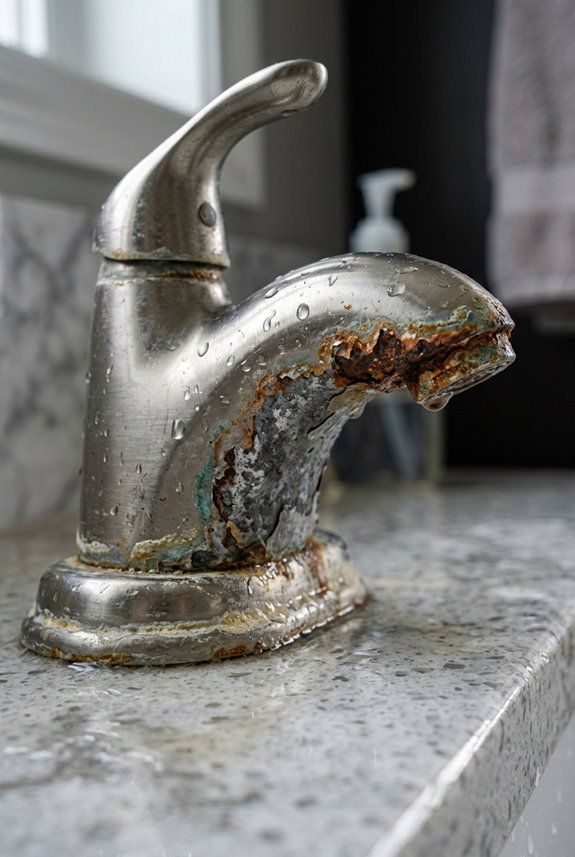
Your bathroom’s chemical cleaners can actually do more harm than good to your faucets. When you use harsh products, you’re risking serious damage to the protective coatings that guard your brass and chrome-plating.
| Cleaner Type | Damage Caused |
|---|---|
| Ammonia-based (Windex) | Creates fissures in chrome, accelerating rust |
| Scouring powders | Physically abrades protective coating through abrasion |
| Bleach | Degrades coatings, exposing bare metal |
| Glass sprays | Seeps under handles, causing moisture corrosion |
When protective coatings wear away, bare metal gets exposed to oxygen and moisture. This triggers oxidation and corrosion quickly.
Mixing different cleaners worsens the problem through galvanic corrosion at contact points between dissimilar metals.
Stick with mild, pH-neutral cleaners instead. Your faucets will maintain their finish and resist corrosion for years.

All purpose, daily use cleaner

BIO-ENZYMATIC POWER: Naturally digests organic waste, stains, urine salts, and malodors at the source-no harsh chemicals needed for deep, lasting cleanliness

𝗣𝗢𝗪𝗘𝗥𝗙𝗨𝗟𝗟 𝗦𝗧𝗔𝗜𝗡 𝗥𝗘𝗠𝗢𝗩𝗘𝗥: Our patent pending liquid pumice stone toilet bowl formula breaks down and removes hard water stains, rust, lime scale, oxidation, and mineral deposits from your porcelain sinks, tubs, and bowls.
Steel Washers Corrode Faster When Touching Brass
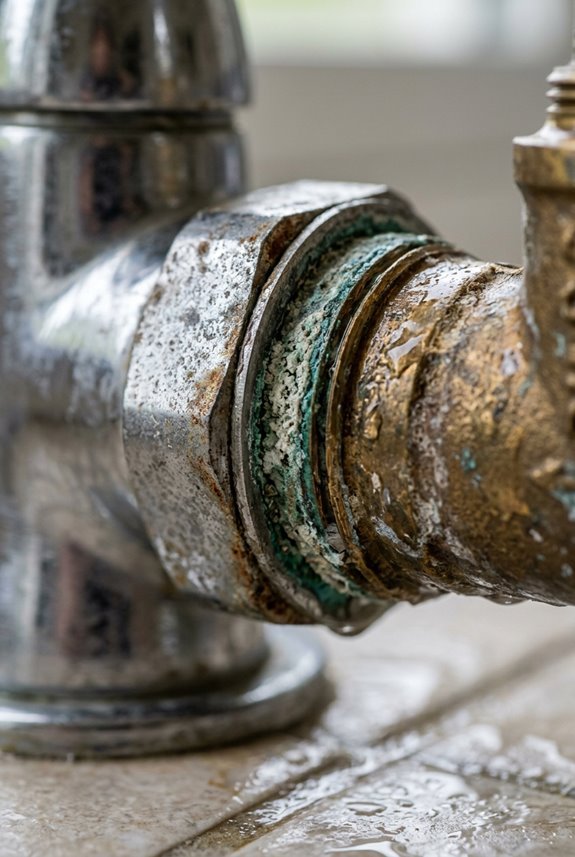
When you pair steel washers directly with brass faucet parts, you’re actually creating a rust problem waiting to happen. This happens because steel and brass react differently electrically, which speeds up corrosion at their meeting point.
The following solutions can stop it.

Seventh Generation toilet bowl cleaner plant-based formula fights tough stains

5X EASIER CLEAN: New Scrubbing Bubbles Easy Clean works 5X faster than the leading all purpose cleaners on limescale. Lab testing 2025

What You'll Get: One 32oz spray bottles of Scrubbing Bubbles Foaming Bleach Bathroom Cleaner. Bottle Made from 30% recycled content (excluding dye, trigger, and label)
Galvanic Corrosion Mechanism
Inside your faucet, two different metals touching each other can speed up rust and damage. This happens through galvanic corrosion, where steel washers and brass components create an electrochemical reaction.
When moisture and humidity reach these dissimilar metals, a galvanic couple forms beneath your sink.
Here’s what occurs in your under-sink environment:
- Steel becomes the sacrificial metal, corroding faster than brass
- Moisture activates the corrosion mechanism between the metals
- Scratches in chromium plating expose brass underneath, intensifying the reaction
- Humidity accelerates the entire process over time
You can prevent this corrosion. Replacing steel washers with corrosion-resistant alternatives like stainless steel or brass dramatically reduces galvanic potential.
These materials won’t create that damaging couple, extending your faucet’s functional lifespan significantly.
Material Incompatibility Solutions
Now that you understand how steel and brass create problems together, let’s fix this issue.
The simplest solution is swapping materials at your metal-to-metal interface. Replace steel washers with stainless steel or brass alternatives.
This eliminates the galvanic corrosion problem because you’re no longer mixing dissimilar metals.
Isolation works too. Insert nonmetallic isolators between steel and brass components.
Rubber gaskets or plastic washers break the electrical connection that drives corrosion.
Protect your chrome plating. Keep protective coatings intact to prevent moisture exposure from reaching underlying brass.
Even small scratches expose copper underneath, intensifying galvanic activity.
Minimize moisture contact. Improve bathroom ventilation and dry fixtures regularly.
This reduces the water needed for electrochemical attack.
These practical steps extend the service life of your faucets significantly.
Thin Chrome Plating Leaves Copper Vulnerable to Oxidation
When your faucet’s chrome coating gets damaged, you’re exposing the copper underneath to air and moisture. This exposed copper quickly oxidizes, forming that reddish-brown or greenish discoloration you see on corroded faucets.
Once the chrome fails, the corrosion process speeds up drastically in your humid bathroom environment.

Exraordinary Material: All solid Stainless Steel main body. Lead-free material keeps your family away from harmful water. Drip-Free ceramic disc cartridge with 500,000 times cycle testing ensures durable performance in daily life.
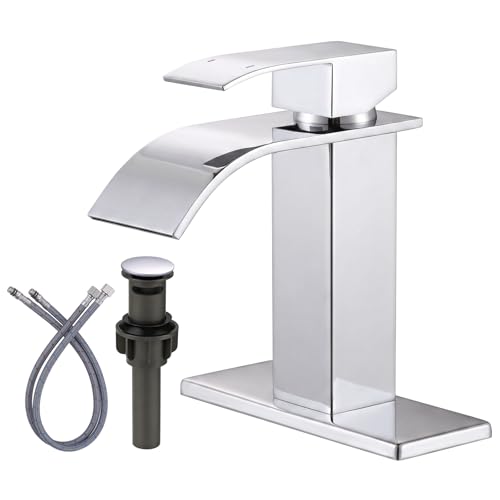
【Certified Safe & Long-Lasting】Backed by NSF, DOE, cUPC and CEC certifications, our bathroom faucet follows North American lead-free regulations. Constructed from quality SUS 304 stainless steel for superior corrosion resistance and lasting durability. Provide your family with safe lead-free water and meet all daily sink usage needs.

【Black Bathroom Faucet】 Modern touch on bathroom faucet with matte black finish,creates an modern-looking. From its durable, long-lasting construction to the contemporary and decor-complementing design, this faucet belongs in your bathroom.
Chrome Coating Failure Mechanisms
Most bathroom faucets rely on a thin chrome layer, usually just a few micrometers thick, sitting over a copper or brass base. This coating fails through several interconnected processes:
- Micro-scratches and wear progressively thin the chrome layer over time
- Abrasive cleaners breach the protective coating, exposing vulnerable copper underneath
- Galvanic corrosion occurs when dissimilar metals interact beneath the chrome surface
- Chloride-rich water penetrates pinholes and attacks the exposed copper substrate
When the chrome layer fails, your copper substrate oxidizes rapidly. This creates tarnish and copper oxide, which accelerate localized corrosion and pitting.
Mineral deposits compound the problem by holding moisture against the metal surface. Protecting your faucets requires gentler cleaning methods and prompt maintenance to prevent these degradation processes.
Exposed Copper Layer Oxidation
Why does your faucet suddenly show dark spots or a greenish tint? When your chrome plating wears thin or gets damaged, the copper core underneath becomes exposed.
This exposed copper reacts quickly with moisture and oxygen in your bathroom.
The protective layer that normally shields your copper disappears during chrome failure. Without this barrier, oxidation happens fast.
You’ll notice greenish patina or darkened areas forming where the chrome’s damaged.
Water finds those tiny scratches and pinholes in your plating. It travels directly to the copper core, speeding up corrosion.
In mixed-metal fittings, galvanic corrosion can occur as well.
The exposed copper becomes electrochemically active in damp environments. This accelerates damage at affected spots, turning a small problem into a bigger one quickly.
Constant Dripping Keeps Metal Wet and Accelerates Rust
Have you noticed rust forming around your faucet faster than expected? Constant dripping keeps metal surfaces perpetually wet, accelerating rust formation dramatically.
Understanding why this happens allows you to take preventive action.
Constant dripping keeps metal surfaces perpetually wet, accelerating rust formation dramatically and requiring immediate preventive action.
When water continuously drips on metal, it prevents protective coatings from drying and resealing. The corrosion process unfolds in several stages:
- Moisture activates electrochemical reactions at metal joints and interfaces
- Mineral deposits and limescale trap additional water against the surface
- Galvanic corrosion speeds up where dissimilar metals meet
- Small leaks concentrate chlorine and cleaners, weakening finishes
Even tiny drips create damp spots that won’t dry. These wet areas become breeding grounds for corrosion.
The longer water sits on your faucet’s metal surfaces, the faster rust spreads. Fixing leaks immediately protects your fixtures from premature deterioration and the expense of replacement.

【Dual-Sided Grit Design】 HHXI Limescale Pad features a 600 grit green scrub side and 3000 grit white polish side, perfect for cleaning daily dirt and limescale on most bathroom surfaces.
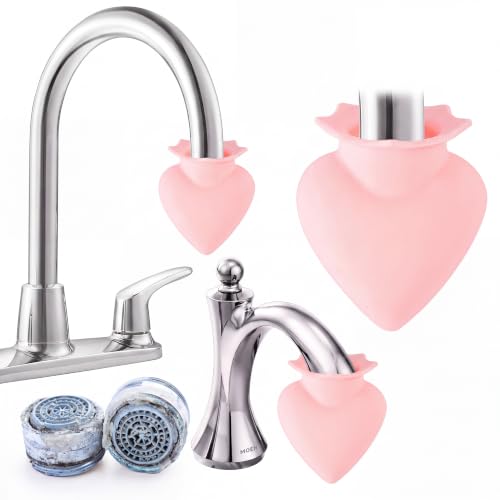
Fits Standard or Wide Faucets (neck Diameter 1.18"): constructed from silicone material, this cleaner accommodates round and square faucet spouts within the listed size range; It is not stretchable, so you may use a strap or tie to fasten it tightly onto faucets during use; Not suitable for ultra-slim modern faucets with neck diameter below 1 inch; Please measure your faucet neck before purchase for proper matching

These faucet descaling caps eliminate stubborn limescale, calcium deposits, and mineral buildup from sink faucets, shower heads, and aerators without scrubbing, scraping, or tools; simply fill with white vinegar, slip the cap over the fixture, and let the natural soak restore strong water flow and a like-new shine
How to Stop Mineral Buildup Before Corrosion Spreads
While constant dripping accelerates rust, the minerals in your water make things worse. Hard water deposits calcium and magnesium, forming white lime-scale crusts that trap moisture and speed corrosion.
Acting early stops damage before it spreads to your chrome finish and stainless steel.
| Prevention Method | How It Helps |
|---|---|
| White vinegar descaling | Dissolves mineral buildup monthly |
| Water softening system | Reduces hard water minerals |
| Aerator cleaning | Removes lime-scale deposits |
Your action plan:
- Descale fixtures with citric acid quarterly
- Dry faucets after each use
- Install a protective sealant on chrome
- Check water hardness levels in your area
Regular descaling prevents mineral buildup from becoming corrosion. You’ll extend your fixtures’ life significantly by addressing moisture and water hardness now.

CABINET & FURNITURE CLEANER from Rejuvenate: Removes dirt, grime & grease buildup from cabinets & furniture to clean and shine (24 oz). SOAP SCUM REMOVER from Rejuvenate:...