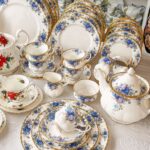
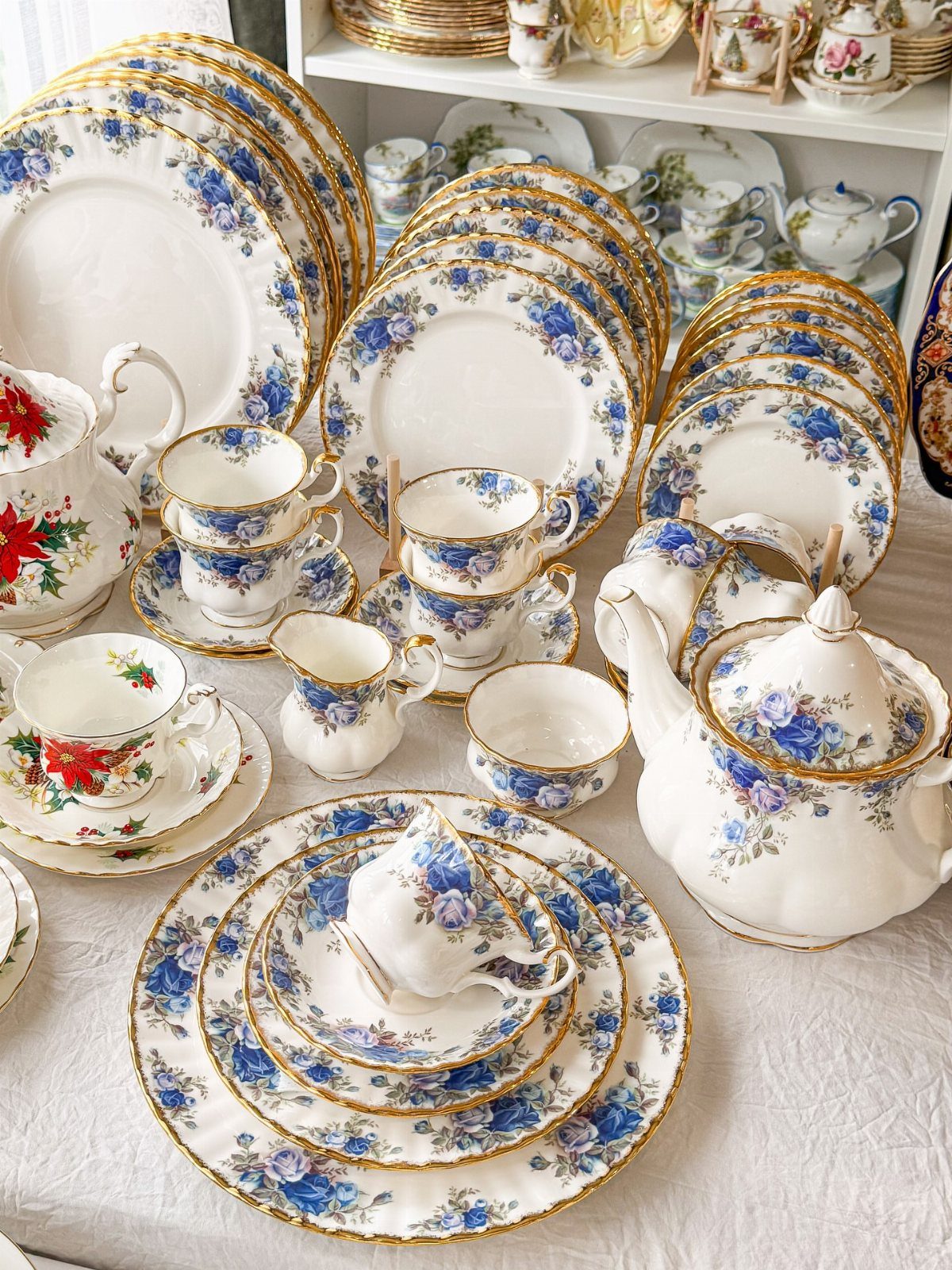
Vintage plate sets range from formal porcelain with gold rims to cabbage-shaped pieces from Portugal, and hand-painted birds or fish sit alongside florals and line drawings.
Famille Rose dinner services come with multiple pieces, while patterns like Wedgwood Strawberry Vine or Royal Stafford Ducks turn up in sets of 6 or 8.
1. Turkey Dinner Plates
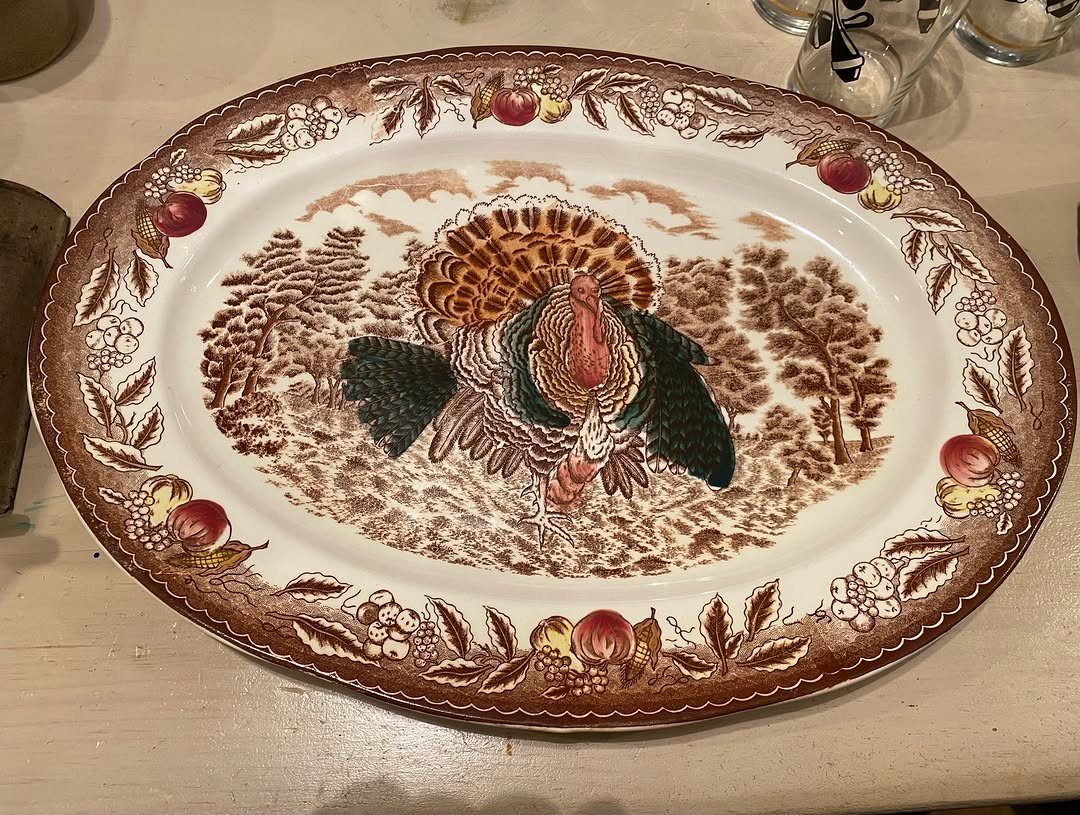
Turkey plates run the center of the holiday table, and vintage ones show up in estate sales and thrift stores most weeks of the year.
Look for oval platters and round dinner plates with hand-painted or transfer-print turkeys in the center, often bordered by autumn leaves, fruit, or vines.
Condition and maker both affect what you pay. I prefer pieces with clear details in the bird’s feathers and bright color in the border; faded prints read flat from across the table.
Pair them with solid-colored linens so the pattern stays the focus.
2. Emile Henry Soup Bowls

Soup bowls with embossed lion heads at the rim bring a sculptural detail to the table without pattern or color competing for attention.
The raised heads sit at intervals around the bowl, visible when the dish is empty and framing the food when it is full.
I would use these for first courses or pasta; the shape holds liquid well and the lion detail makes a plain soup feel more considered.
Sets give you bowls and a serving piece, enough for a small dinner or a regular rotation.
3. Wedgwood Strawberry Vine
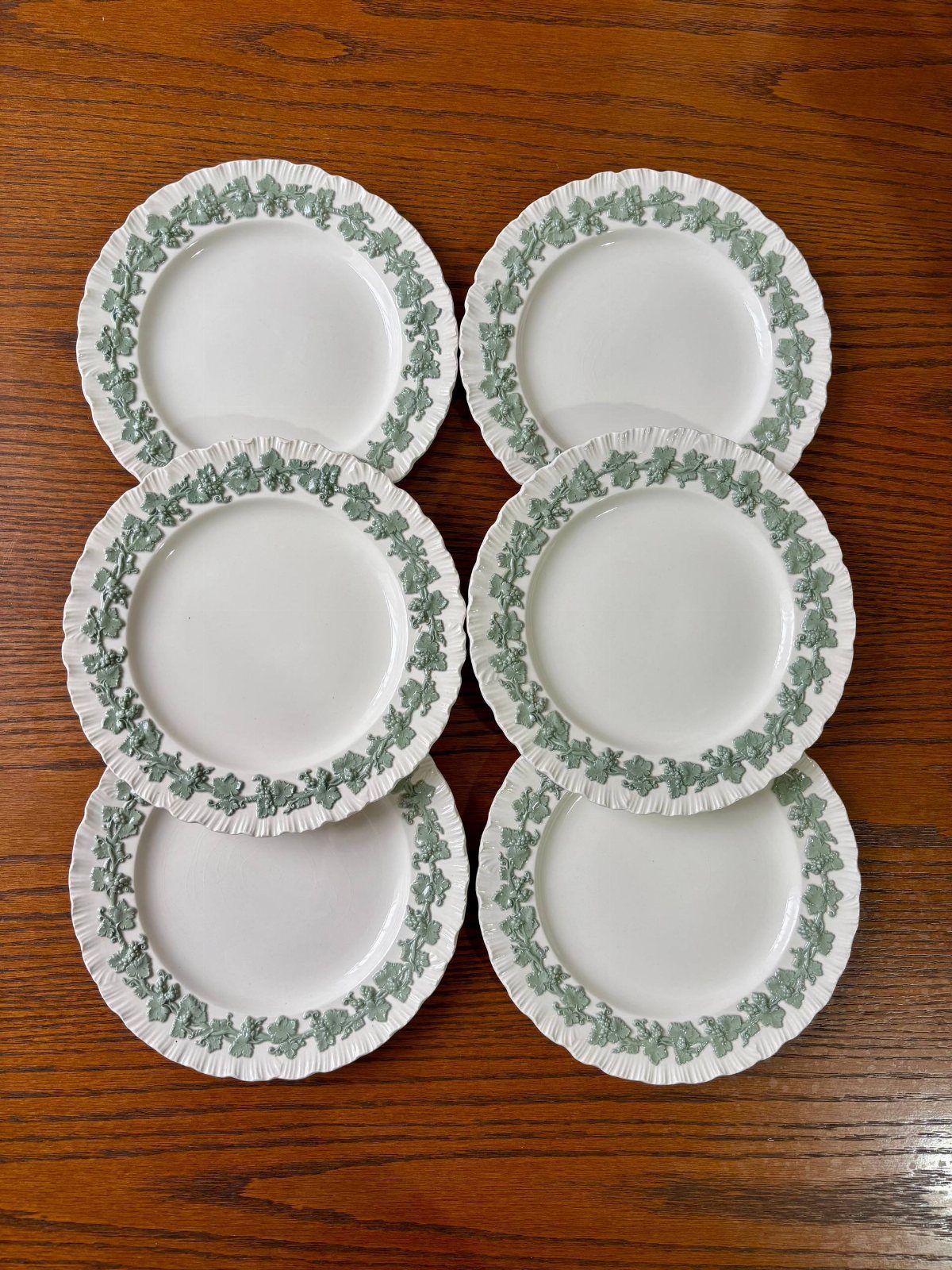
Salad plates with strawberry vines printed in green along the rim work for spring and summer tables without reading overly seasonal. The pattern sits close to the edge, leaving the center white and letting the food show clearly.
Vintage Wedgwood pieces in this pattern turn up in sets of six or eight.
I like the simplicity: one color, one motif, no gold trim or competing shapes. The green reads crisp against white, and the pattern scales well whether you are serving salad or dessert.
Stack them with solid white dinner plates for a two-tone table.
4. Royal Brocade Burgundy
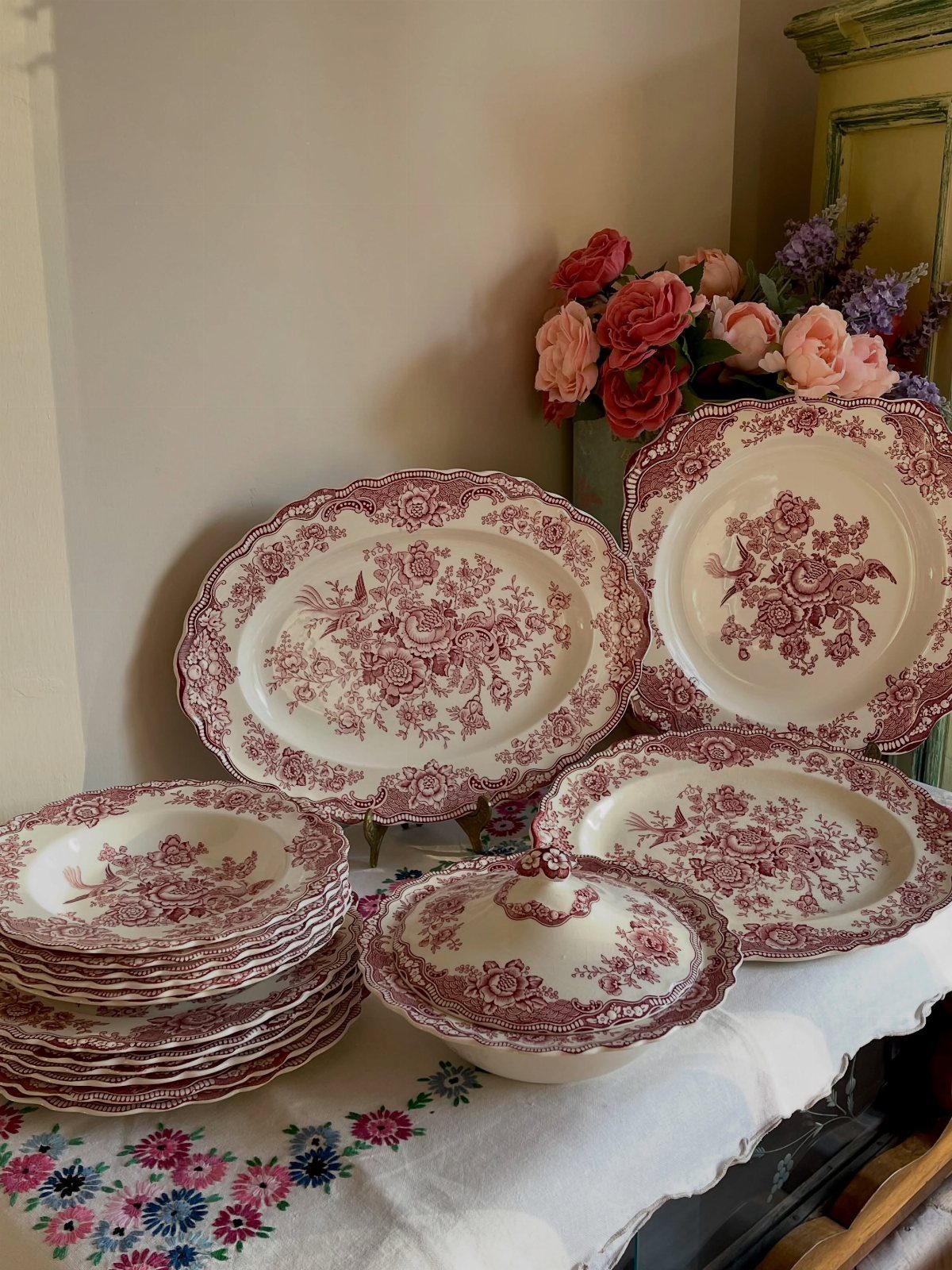
Burgundy chintz plates layer floral pattern densely across the surface, with darker reds and pinks filling every inch of the rim and center.
The style reads formal and works best on tables already set with linen and silver; it is too much pattern for a casual weeknight.
Look for salad and dessert plates in this color family if you want the look without covering the entire table in florals.
I use these as accent pieces under solid-colored dinner plates, which lets the pattern show at the edges without overwhelming the food.
Pair them with white or cream linens to give the eye a place to rest.
5. Bordallo Pinheiro Cabbage
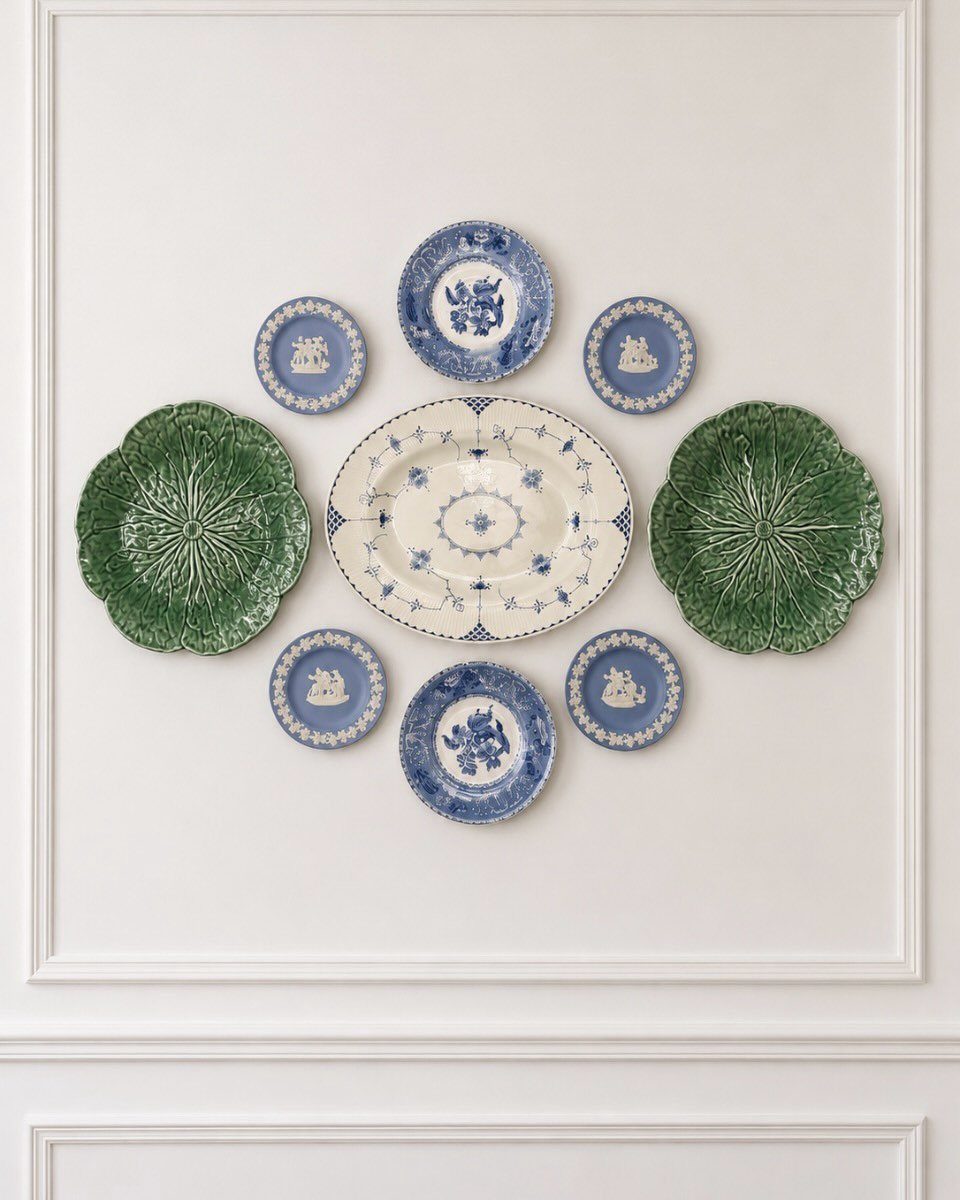
Cabbage plates shaped and painted to look like real cabbage leaves bring texture and color to the table in a way flat plates cannot.
The green glaze covers raised veins and ruffled edges, and the shape holds salads, sides, or bread without the formality of a standard dinner plate.
Bordallo Pinheiro made these in Portugal, and vintage pieces show up in antique shops and online.
I like them grouped on a wall as much as on the table; the sculptural form reads as art when it is not in use.
6. Marcel Guillot Fish Plates

Hand-painted fish plates give you a different seafood on each piece: shrimp, lobster, whole fish, shellfish. The illustrations sit at the center with loose brushwork and bright color, and no 2 plates match exactly.
Marcel Guillot made these in France, and vintage sets include dinner plates, salad plates, and serving pieces.
I would use them for a seafood dinner where the plates themselves become part of the table’s theme. The painted details look best on white or cream linens that do not compete with the color.
Expect to pay more for complete sets; individual plates sell for less and still carry the look.
7. Casa Nuno Blue Plates

Mixed blue-and-white plates mounted on the wall give you pattern without matching, and vintage pieces in this color scheme turn up often enough to build a collection plate by plate.
Look for similar scale and rim width so the grouping reads cohesive even when the patterns differ.
I would arrange them in a grid or loose cluster above a console table or sideboard. The blue anchors the wall without heavy frames, and white backgrounds keep the patterns from fighting each other.
Use them on the table for a more casual look than a matched set delivers.
8. Famille Rose Dinner Service

Famille Rose porcelain brings pink florals, figures, and gilding together on plates, bowls, and serving pieces made in China from the 18th century onward.
The palette centers on rose pink with green, yellow, and gold accents, and the designs cover most of the surface.
Complete sets include dinner plates, soup bowls, teapots, and creamers.
I like the formality for special occasions, though the decoration is too intricate for everyday use. Condition affects price; check for crazing and chips before buying, since wear shows clearly on white porcelain.
9. Royal Stafford Ducks

Brown transferware with ducks and acorns reads autumnal without limiting the plates to one month. The pattern usually features 2 ducks in a landscape, bordered by acorns, oak leaves, or vines printed in brown on a cream ground.
Royal Stafford made versions of this pattern, and salad plates in this style work for fall lunches or stacked under solid dinner plates year-round. The brown is neutral enough to pair with warm linens or wood chargers.
Look for sets of four or six if you want matching pieces for a full table.
10. Casa Nuno Green Plates
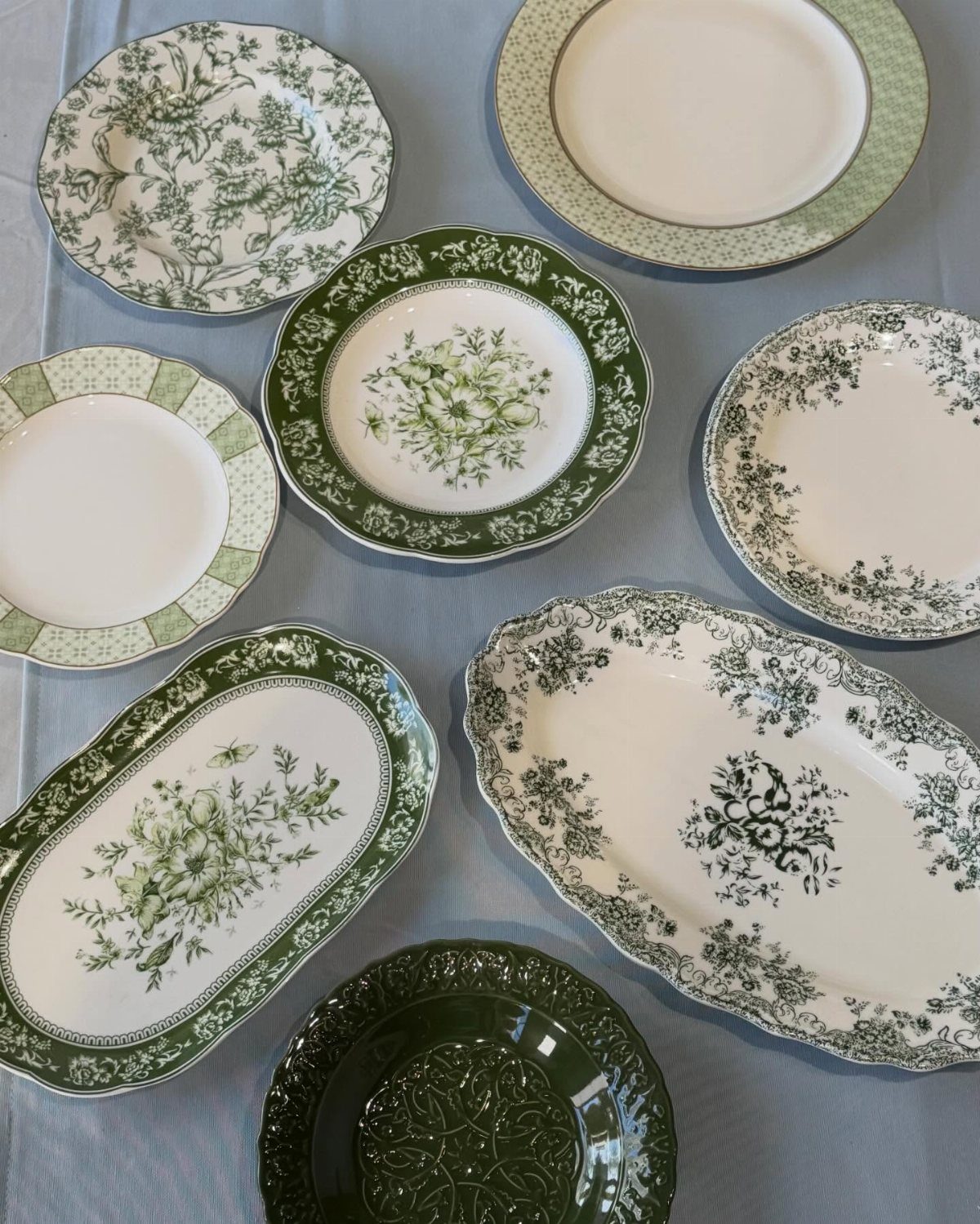
Green-and-white plates in mixed patterns layer the same way blue-and-white ones do, but the green reads warmer and less expected.
Vintage pieces come in florals, stripes, scalloped edges, and geometric prints, all in shades of green that sit close enough to group together.
Collect them over time from estate sales or antique shops. The mix-and-match approach costs less than a matched set and gives you flexibility if a plate breaks.
Pair them with white or natural linen and brass flatware for a table that feels collected rather than coordinated.
11. Floral Porcelain Plates

Porcelain plates with hand-painted roses and gold rims suit formal tables where the decoration is part of the occasion.
The floral pattern usually covers the center and rim, with gilding along the edge that catches light when the table is set.
Sets include dinner plates, salad plates, bowls, and sometimes glassware with matching motifs.
I would use these for holiday dinners or events where the table itself is meant to be noticed. The gold trim means hand washing; these are not everyday dishes.
12. Line Drawing Plates
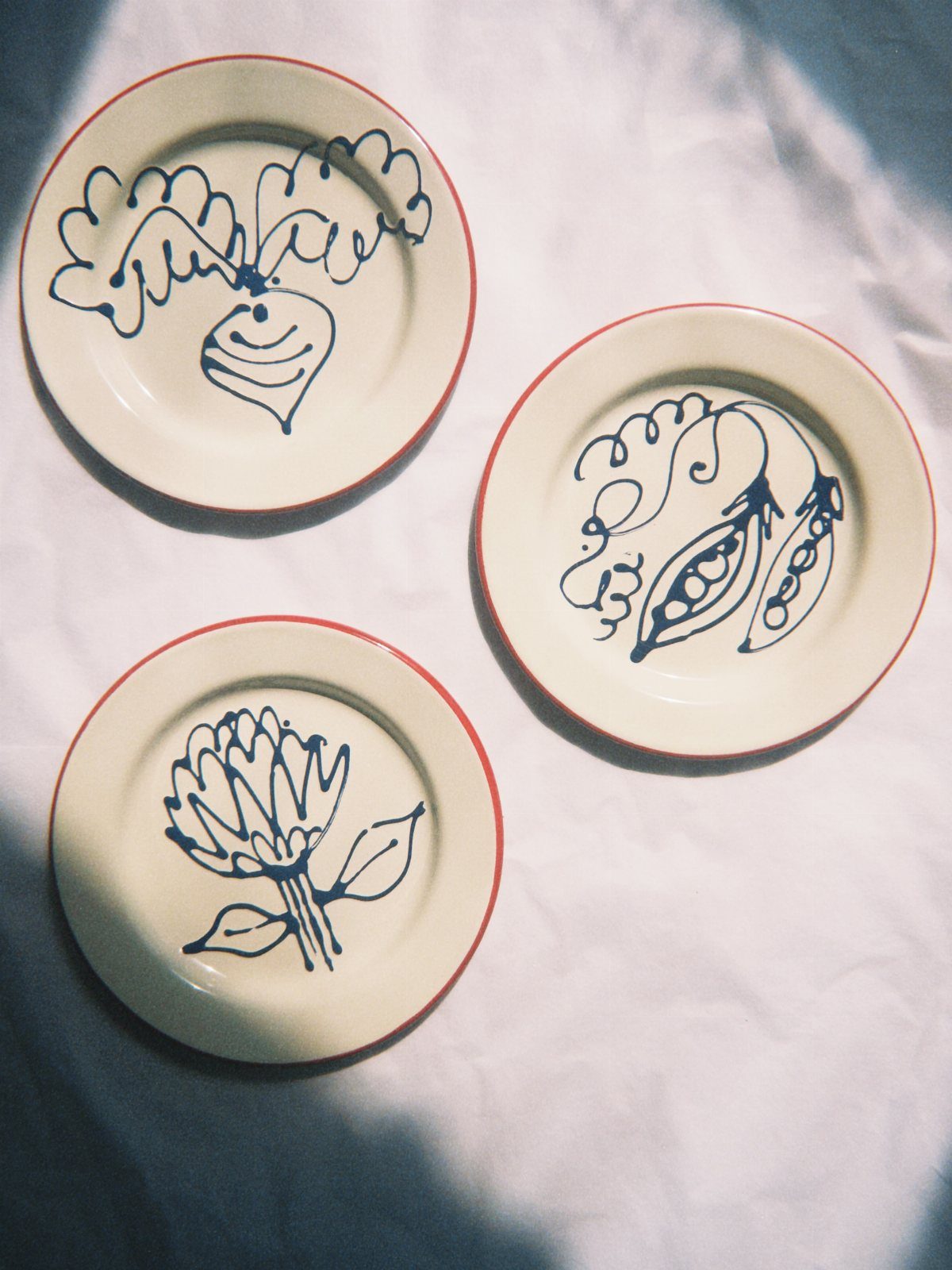
Line drawings of vegetables printed on cream plates bring illustration to the table without heavy color or pattern.
The drawings sit at the center in one ink color, often blue or black, with a contrasting rim in red, green, or navy.
These plates work for informal meals where the graphic simplicity suits modern or farmhouse tables. The line work shows enough detail to identify the vegetable but stays minimal enough to use with other patterns or solids.
Look for sets of 4 to 6 if you want one vegetable per guest, or buy a single design if you prefer uniformity.
Frequently Asked Questions
Which vintage plates are worth money?
Complete sets in good condition from known makers like Wedgwood, Bordallo Pinheiro, or Famille Rose porcelain command higher prices than individual pieces.
Hand-painted details, clear maker’s marks, and minimal wear increase value, especially when the pattern shows crisp lines and bright color rather than fading or crazing.
Marcel Guillot fish plates and Famille Rose dinner services with intact gilding sell for more because collectors seek full sets for formal use.
How to tell if a plate is valuable?
Check the maker’s mark on the back, the condition of the decoration, and whether you have a full set or single pieces.
Plates with clear, unfaded patterns and no chips or crazing are worth more than damaged ones, and known makers like Royal Stafford or Bordallo Pinheiro bring higher prices than unmarked dishes.
Gold trim, hand-painted details, and sculptural forms add value if the work is intact.
Are old dish sets worth anything?
Complete vintage sets are worth more than individual plates, particularly when every piece matches and shows minimal wear.
Sets from makers like Emile Henry, Wedgwood, or Marcel Guillot hold value because they are usable for full table settings rather than single accent pieces.
Condition determines price: faded prints, chips, and crazing lower what you can ask, while clear patterns and bright color keep sets competitive.
What are some popular vintage plate brands?
Wedgwood, Bordallo Pinheiro, Royal Stafford, and Emile Henry turn up regularly in estate sales and antique shops with recognizable patterns and consistent quality.
Marcel Guillot fish plates and Famille Rose porcelain from China also appear often enough to collect over time. Casa Nuno plates in blue or green mix-and-match patterns show up as single pieces rather than matched sets.