A pantry door organizer mounts to the back of the door and holds spices or condiments you grab often, while pull-out shelves on full-extension glides bring back-row items within reach in narrow cabinets.
The choice depends on whether you prefer open shelving, enclosed cabinets, pull-out drawers, or door storage, and how you balance visibility against closed fronts.
1. Wood Pantry Shelving
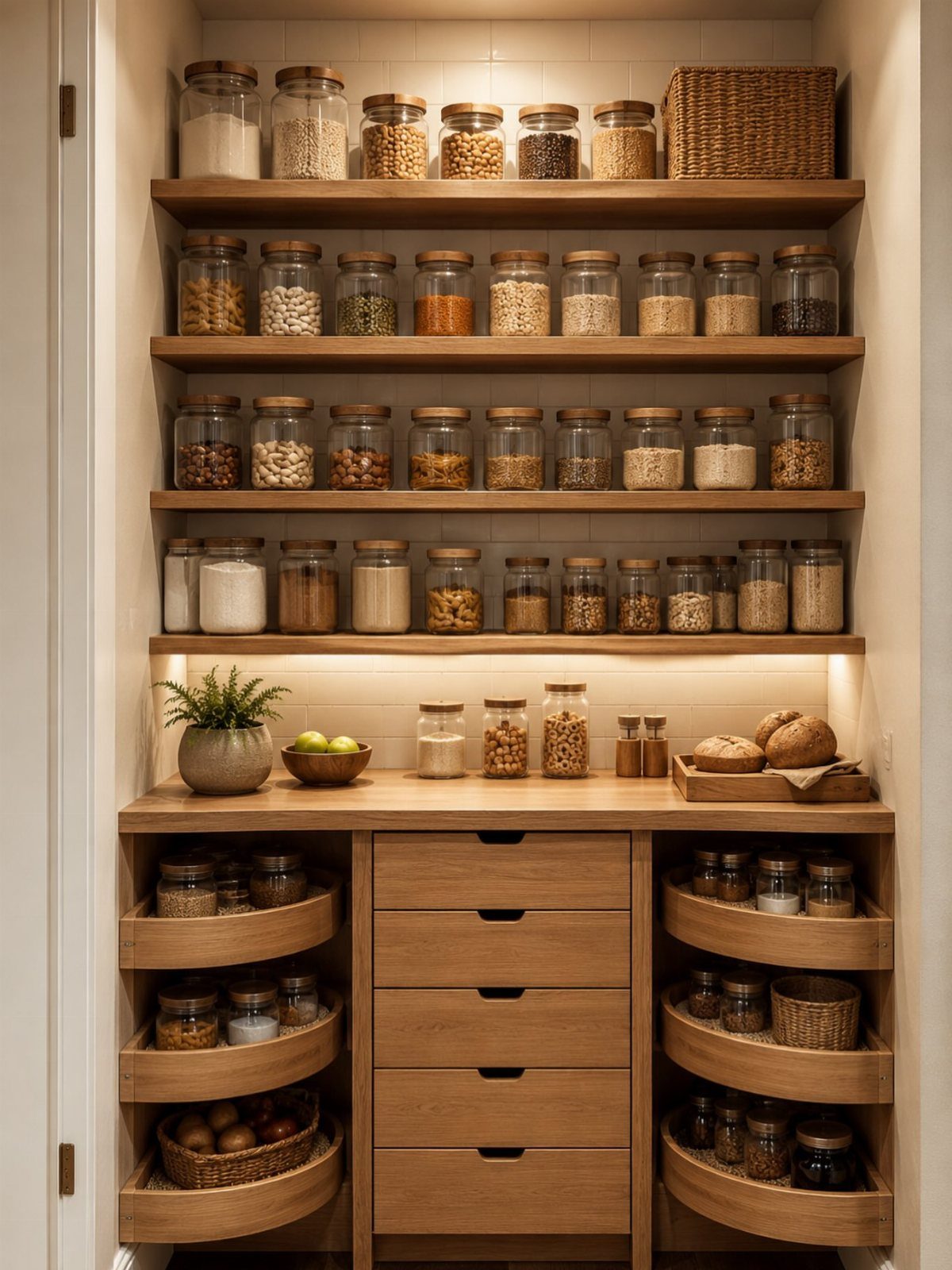
Open wood shelves make pantry items visible and easy to reach without opening a door. Fixed shelves suit tall jars and small appliances; adjustable shelves on a track let you change spacing as your needs shift.
Install shelf cleats or L-brackets into studs for strength, spacing shelves to suit the height of your tallest cans and boxes. Finish raw wood with polyurethane or leave it bare if you prefer the look to darken over time.
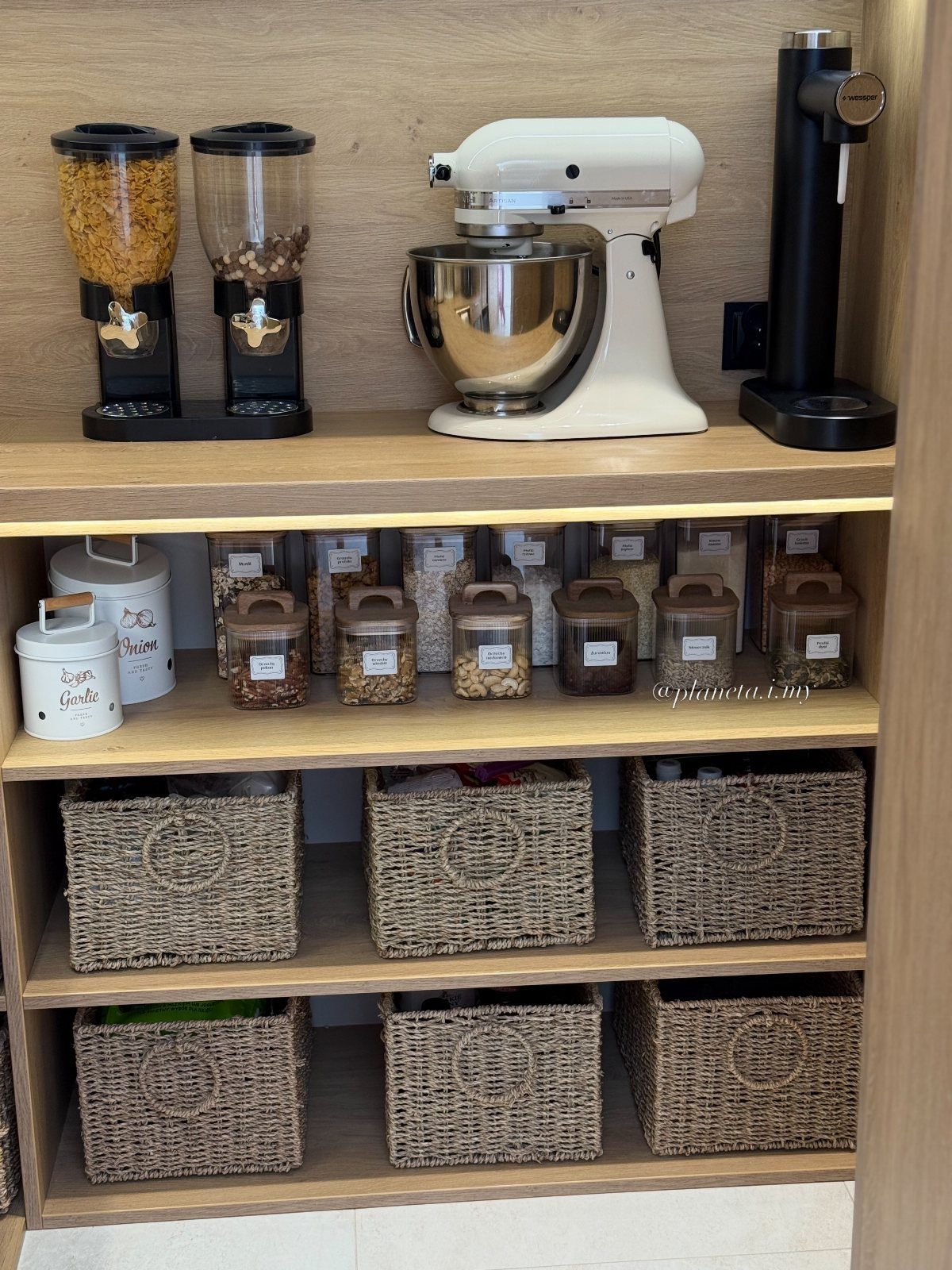
2. Wicker Basket Storage
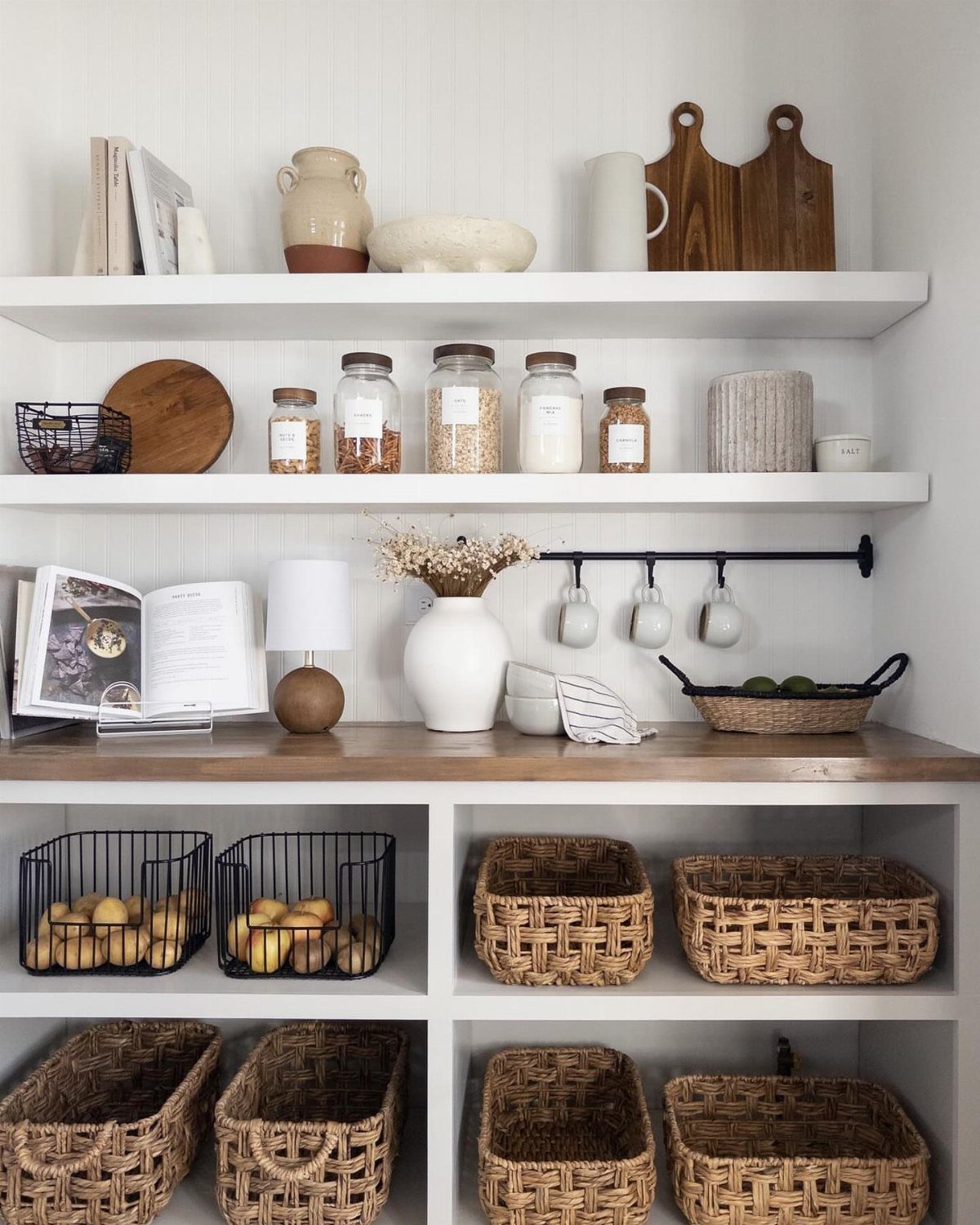
Woven baskets corral bulk produce, bags of snacks, and kitchen linens on open pantry shelves or inside cabinets. They slide in and out without hardware and hide uneven packaging.
Measure your shelf depth first.
Buy baskets an inch shorter than your shelf depth so they pull out cleanly. Wire bins work the same way and let you see through the sides.
3. Glass-Front Pantry Cabinets
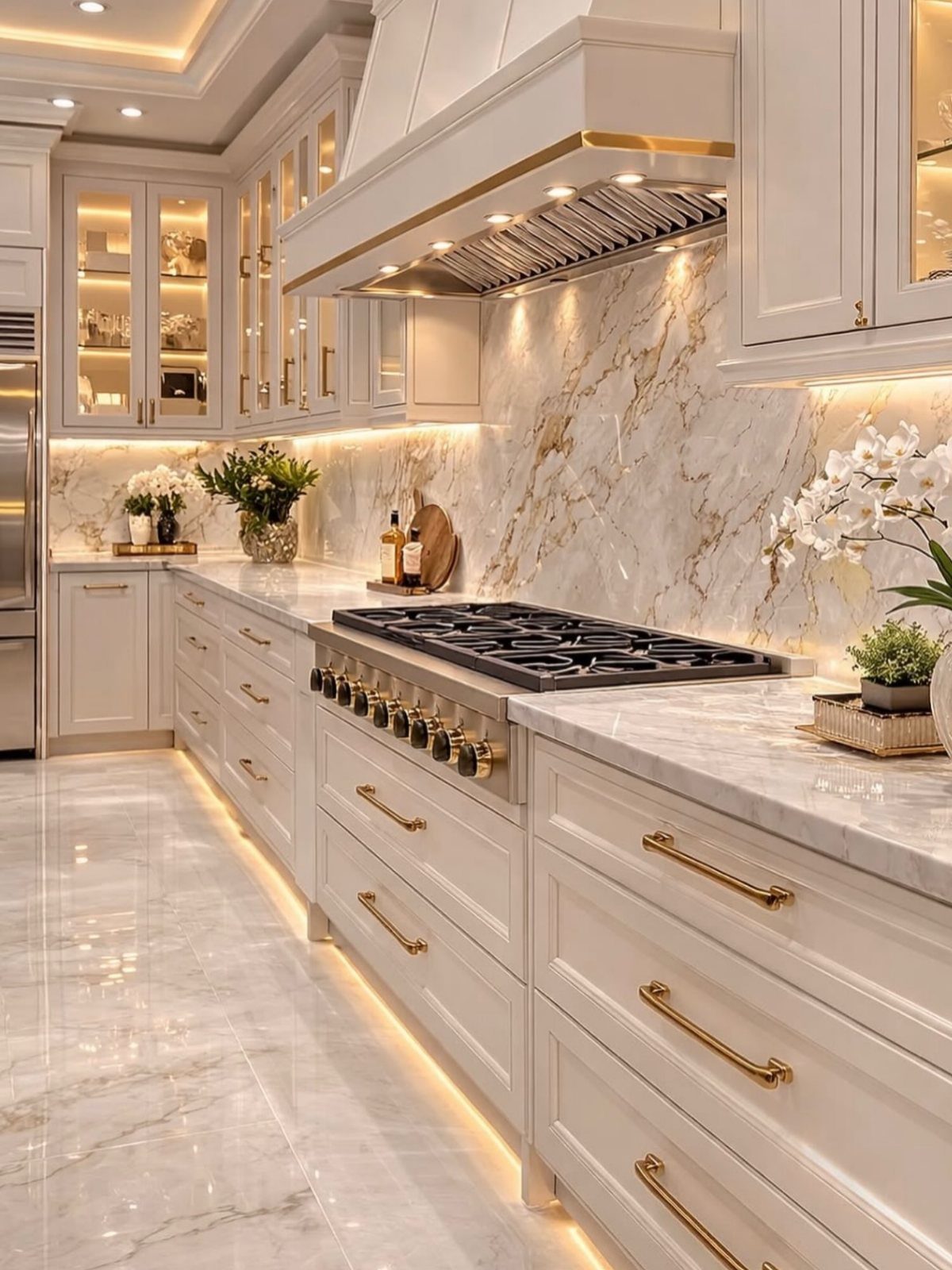
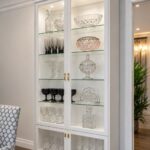
Glass cabinet doors let you see what is inside without opening them, which cuts down on door swinging in a tight kitchen.
They also push you to keep the interior organized, which is either motivation or pressure depending on how you work.
Clear glass shows everything.
Seeded or frosted glass softens the view if you want the look without the scrutiny. Most stock cabinet lines offer glass inserts as an upcharge; retrofit kits fit existing frame doors.
4. LED-Lit Pantry Storage

Strip lighting along the underside of pantry shelves or the top rail inside a cabinet makes labels readable and keeps you from digging. Battery-powered LED strips install with adhesive backing and last months before the cells need swapping.
Hardwired puck lights or a plug-in transformer work better for a pantry you open dozens of times a day. Motion sensors are worth the extra wiring if you usually carry something in both hands.
5. Pull-Out Pantry Storage
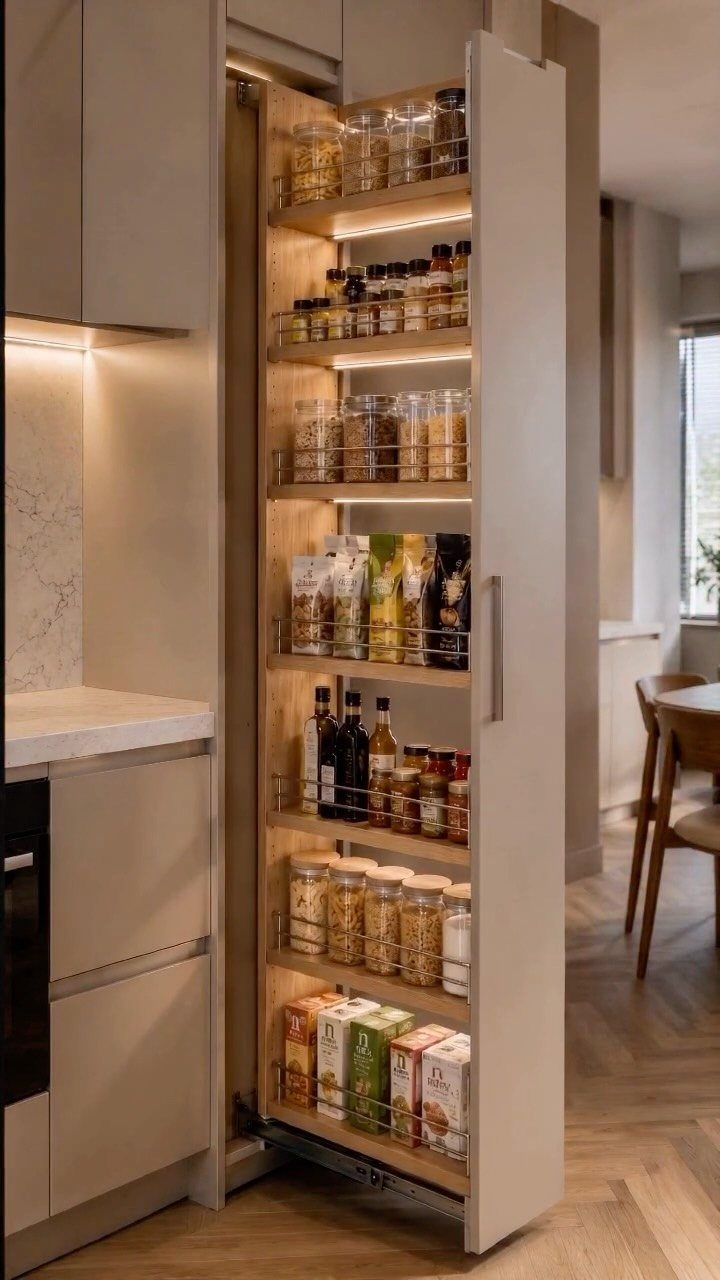
Pull-out shelves slide forward on full-extension drawer glides, bringing back-row items within reach. They suit narrow cabinets and tall pantries where a fixed shelf buries things.
Retrofit kits fit most framed cabinets. Measure the interior width and depth, then subtract an inch for the glide hardware.
Ball-bearing glides hold more weight than roller glides and close smoother under load. Install one shelf at a time so you can adjust spacing as you fill it.
6. Door-Mounted Spice Racks
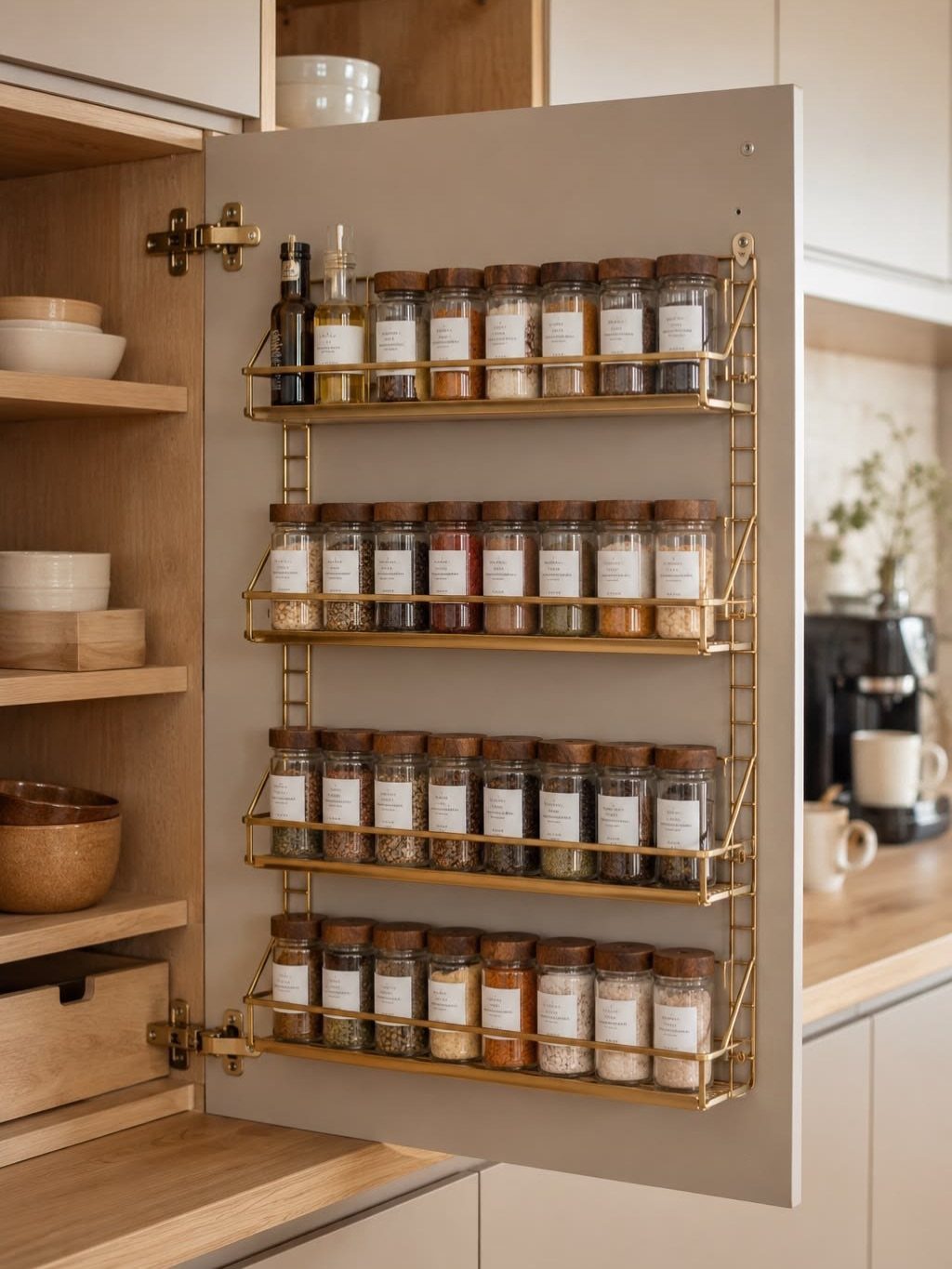
Racks screwed into the back of a pantry door hold spice jars, oils, and vinegars in a single layer where you can read every label. The door swings all that storage out of the way when closed.
Mount shallow wire or metal racks low enough that the top shelf clears the door frame. Space them to match the height of your spice jars, leaving just enough room to lift one out.
Check that the door closes without the rack hitting the opposite shelf edge; if it binds, move the rack down or use a thinner model.
7. Wood Pantry Drawers

Drawers keep dry goods, baking supplies, and snacks enclosed and sorted without the reach of a high shelf. They slide out on full-extension glides so you can see and grab what sits in back.
Dovetail joinery or plywood sides hold up better under repeated loading than particleboard. Add dividers inside wide drawers to keep packets upright.
8. Natural Wood Pantry Cabinets

Cabinets finished in oak, maple, or walnut bring warmth and grain variation that painted finishes flatten out. Natural wood shows wear differently: dings and scratches blend into the texture instead of chipping through a top coat.
A clear sealer protects against moisture and oil without changing the color much.
Oil finishes darken the wood and need reapplication every year or two. Prefinished plywood or veneer gives you visible grain with a factory topcoat already in place.
9. Hidden Pantry Cabinets

Pantry doors built flush with surrounding cabinetry keep storage from dominating the kitchen visually. They read as another cabinet door until you open them and find shelves instead of dishes.
Match the door style and finish to your base cabinets.
Shaker panels, slab fronts, and recessed frames all work as long as the proportions stay consistent. Push-to-open latches skip the hardware and keep the front clean.
10. Two-Tone Pantry Cabinets

Upper cabinets in white or a light paint lift the eye, while wood bases ground the pantry and tie it to butcher block counters or wood floors elsewhere in the kitchen.
The contrast breaks up a tall cabinet bank without introducing a third material.
Match the wood tone to existing trim or flooring so the pantry looks intentional rather than mismatched.
White uppers work with nearly any wood species. Stain the lower cabinets to coordinate with your kitchen island or dining table if those pieces already mix finishes.
11. Glass Pantry Doors

A glass insert in a wood pantry door lightens the door visually and lets daylight reach the pantry interior. Frosted or reeded glass hides the mess when the shelves stay full.
Most cabinet shops offer glass panel doors as an option on stock frames.
Retrofit kits replace solid center panels in existing doors if you have a routed groove to hold the glass. Single panes work in narrow doors; wider doors need a muntin or rail to keep the glass from flexing.
12. Freestanding Pantry Cabinet

A cabinet you can move adds storage without construction or permanent changes to the kitchen layout. It suits renters and anyone testing a layout before committing to built-ins.
Look for cabinets deep enough to hold full-size cereal boxes and dinner plates without tipping forward.
Adjustable shelves inside let you fit tall bottles on one level and canned goods on another. Toe kicks keep the cabinet stable; skirted bases hide uneven floors but rock more easily.
13. Glass Jar Organization

Clear glass jars let you see how much flour, rice, or pasta you have left without opening anything. They stack on wood shelves without sliding and keep dry goods fresher than the bags they came in.
Square jars fit more into a given shelf width than round ones.
Buy jars with airtight lids if you store baking ingredients; screw-top lids work fine for snacks and grains you go through quickly. Label the front or lid so you can tell sugar from salt at a glance.
14. Corner Pantry Cabinet
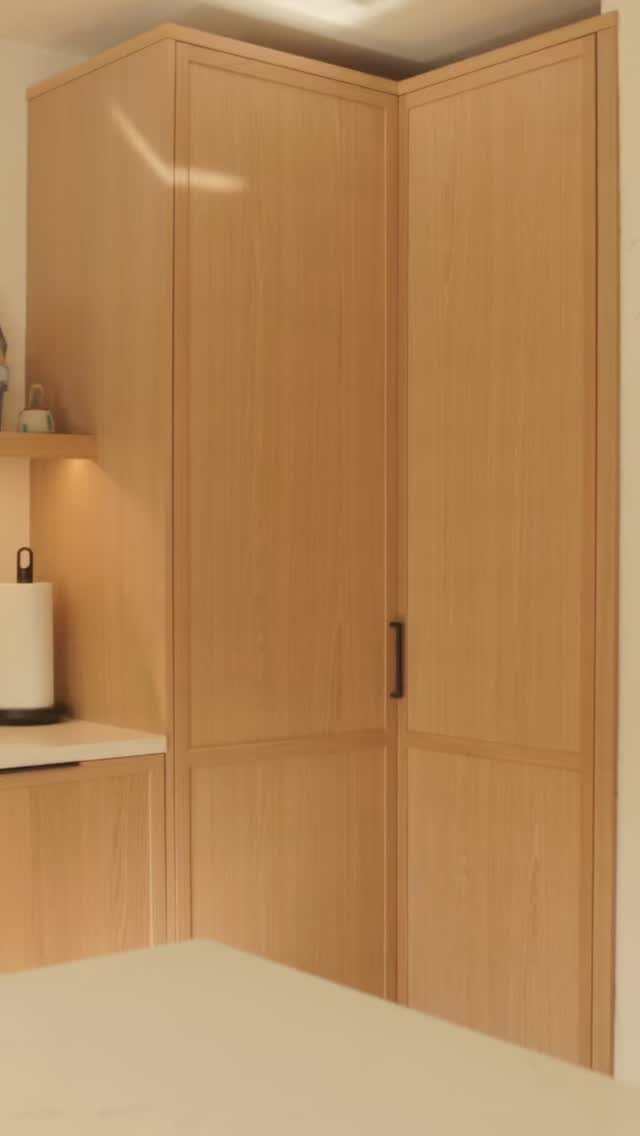
Tall cabinets fitted into a kitchen corner claim space that standard base cabinets leave empty. They hold more than a lazy Susan and let you install full-depth shelves on a hinge.
Measure corner-to-corner along the walls, then leave a margin for the door swing.
Stock cabinet widths run 24, 27, or 30 inches per side. Bi-fold doors or a single wide door both work; bi-folds need less clearance to open fully.
15. Farmhouse Wood Pantry

Open shelves in raw or whitewashed wood, wire baskets for produce, and labeled glass jars give a pantry the laid-back look of a working farmhouse kitchen. The style suits kitchens with other unfinished wood or painted furniture.
Skip upper cabinets and mount wood planks directly to the wall on L-brackets.
Add hooks under the lowest shelf for dish towels or measuring cups. Wicker baskets keep root vegetables ventilated; label them so everyone knows where the onions live.
16. Black and Wood Pantry
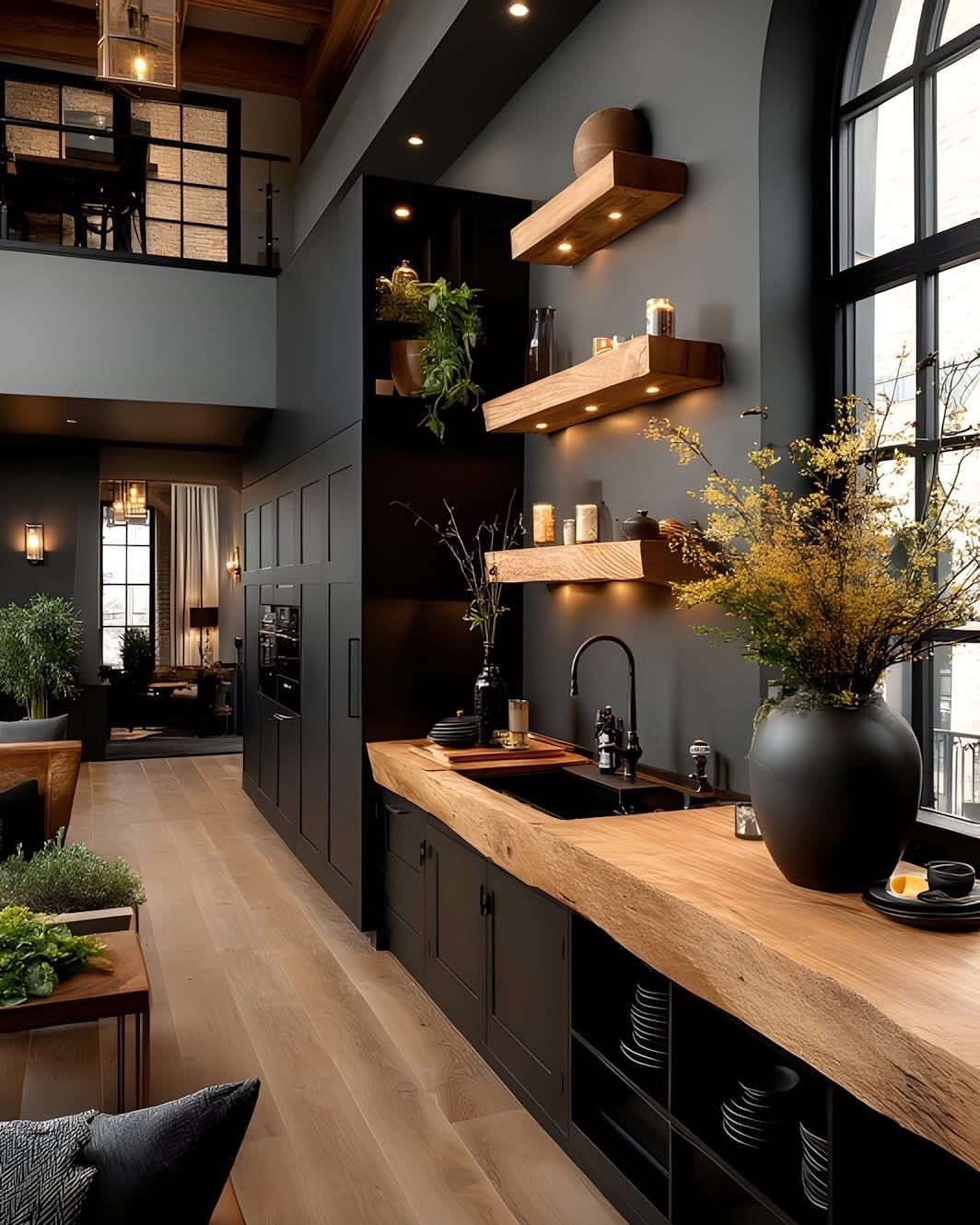
Black cabinets paired with wood counters or shelves bring contrast that holds up better in a pantry than all-white finishes.
The dark base hides scuffs from dropped cans and rolling carts; the wood warms the space and ties it to the rest of the kitchen.
Matte black shows fewer fingerprints than gloss.
If your kitchen already has black hardware or a black range, match that finish. Natural or light-stained wood reads clearer against black than dark walnut.
17. Open Pantry Cabinets

Shelves without doors keep everything in view and let you grab what you need without a door swing blocking the aisle.
They work best for dry goods you actually use and keep in matching jars, not half-empty cereal boxes and torn bags.
Install adjustable shelves on standards so you can shift heights as your storage changes.
Dust settles faster on open shelves, so plan to wipe them down monthly. For the open look with some concealment, skip doors on the upper half and add them below.
18. Wood Pantry with Counter

A countertop inside the pantry gives you a place to set down grocery bags, stage ingredients before cooking, or park a stand mixer you use daily but do not want on the main counter.
It turns the pantry into a prep zone instead of just storage.
The counter needs depth to be useful for anything beyond setting down a bag.
Butcher block or the same laminate as your kitchen counters both hold up to repeated use. Leave clearance between the counter edge and the opposite shelf so you can stand and work without turning sideways.
19. Pantry Wine Storage
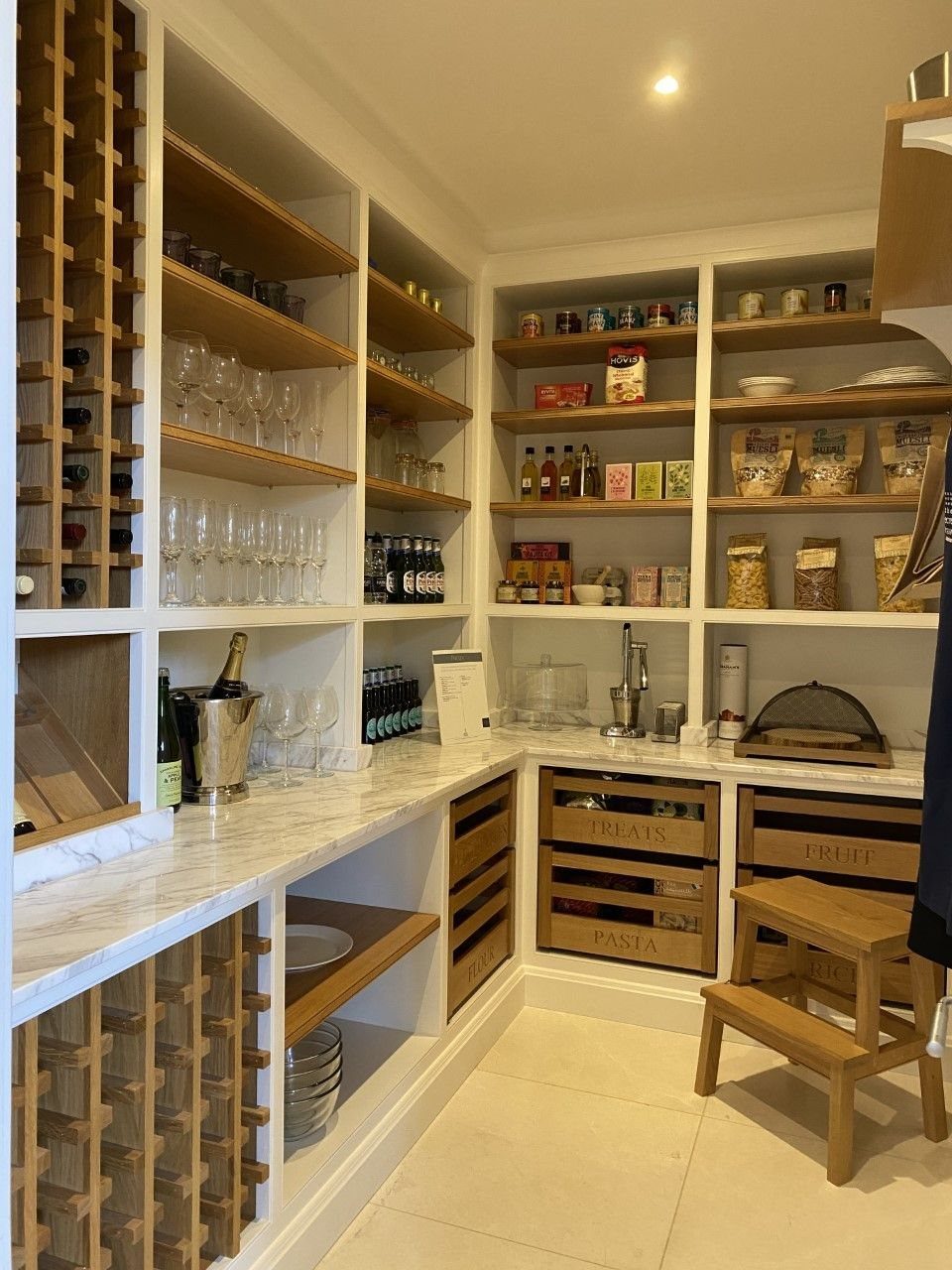
Cubbies sized for wine bottles keep your collection horizontal and organized inside the pantry, where temperature swings less than on an open counter. Horizontal storage keeps corks wet and prevents them from drying out.
Diamond-shaped cubbies hold one bottle per opening. Square cubbies take two or three bottles stacked.
Both styles fit standard wine bottles; measure Champagne bottles before you buy if you stock those. A wine cooler inside the pantry holds fewer bottles but keeps temperature stable if you keep bottles longer than a few months.
20. Wood Pantry with Island

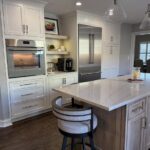
An island set in front of pantry shelving gives you a prep surface, extra seating, and a place to set down groceries without blocking access to the shelves behind it.
The island turns the pantry zone into a working area instead of a pass-through.
Space the island far enough from the shelving that people can pass comfortably.
Give yourself room to work at the island while someone else reaches the shelves behind you. Match the island wood to your pantry shelves or cabinetry so the pieces read as one zone.
21. White and Wood Pantry
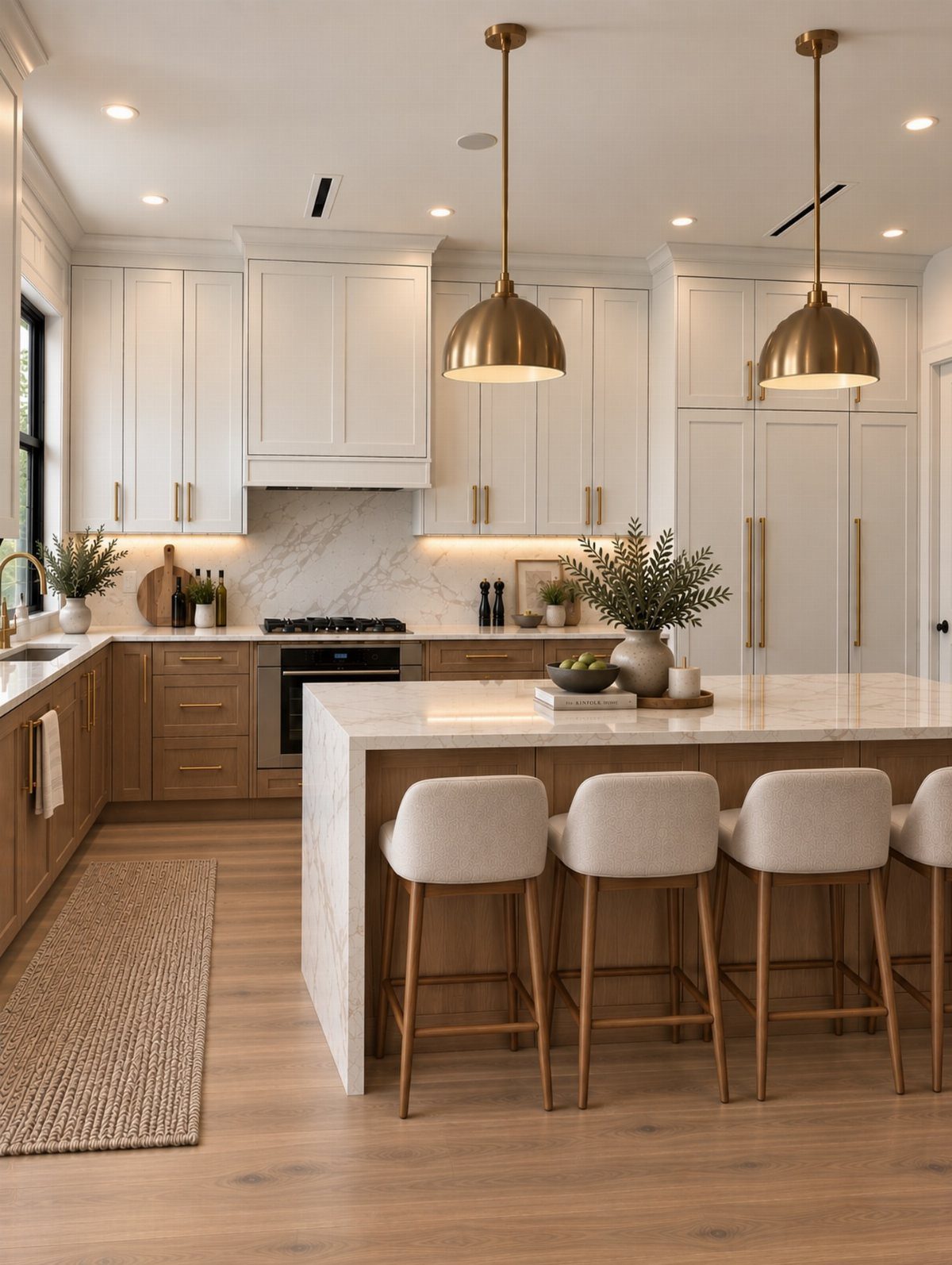
White cabinets on the upper half keep a tall pantry from feeling heavy, while natural wood bases add warmth and hide scuffs better than white paint.
The split keeps the pantry cohesive with a two-tone kitchen without introducing a third finish.
Paint the uppers the same white as your kitchen cabinets.
Stain or finish the wood bases to match your island, floor, or existing wood trim. The transition works cleanest at counter height or at the midpoint of a full-height cabinet bank.
22. Wood Pantry with Utensil Rail

A brass or steel rail screwed into the wall beside pantry shelving holds utensils you reach for daily and keeps your drawers clear.
Hooks slide along the rail or lock into notches so you can rearrange tools as your cooking routine changes.
Mount the rail at arm height, where you can lift a spoon or spatula off without stretching.
Space the rail far enough from the counter edge that utensils hang without hitting the backsplash. Brass warms up wood counters; matte black or steel reads cleaner in a modern kitchen.
23. Wood Pantry with Coffee Station

A coffee maker, mugs, and a canister of beans inside the pantry keep morning prep contained and free up counter space in the main kitchen.
Pairing it with a small beverage fridge for milk turns the setup into a full station that holds everything you need in one spot.
Run an outlet inside the pantry if one is not already there.
Set the coffee maker on the counter or a pull-out shelf so you can reach it without bending. If you go through more than a pot a day, add a water line for a plumbed machine.
24. Wood Pantry with Sink

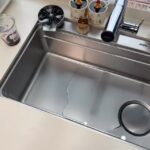
A sink inside the pantry lets you rinse produce, fill pots, and wash dishes away from the main kitchen without hauling everything to the other side of the room.
It suits pantries large enough for a counter and turns the space into a second prep zone.
Install a farmhouse or undermount sink in the pantry counter, matching the faucet finish to your kitchen hardware. Run a drain line to the main stack and a supply line from the nearest water source.
Add a small dishwasher under the counter if the pantry width allows it and you want to keep serving dishes out of the main sink.
25. Wood Pantry with Marble

Marble on the pantry counter brings the same polish you see in formal kitchens but keeps it tucked away where spills and scuffs from daily use matter less.
The stone works where the pantry doubles as a baking or coffee station and you want a cool surface for rolling dough.
Match the marble to your main counters if you already have stone in the kitchen.
Honed finishes hide water spots better than polished slabs. Seal the marble after installation and reseal it whenever you set down anything acidic.
26. Wood Pantry with Quartz
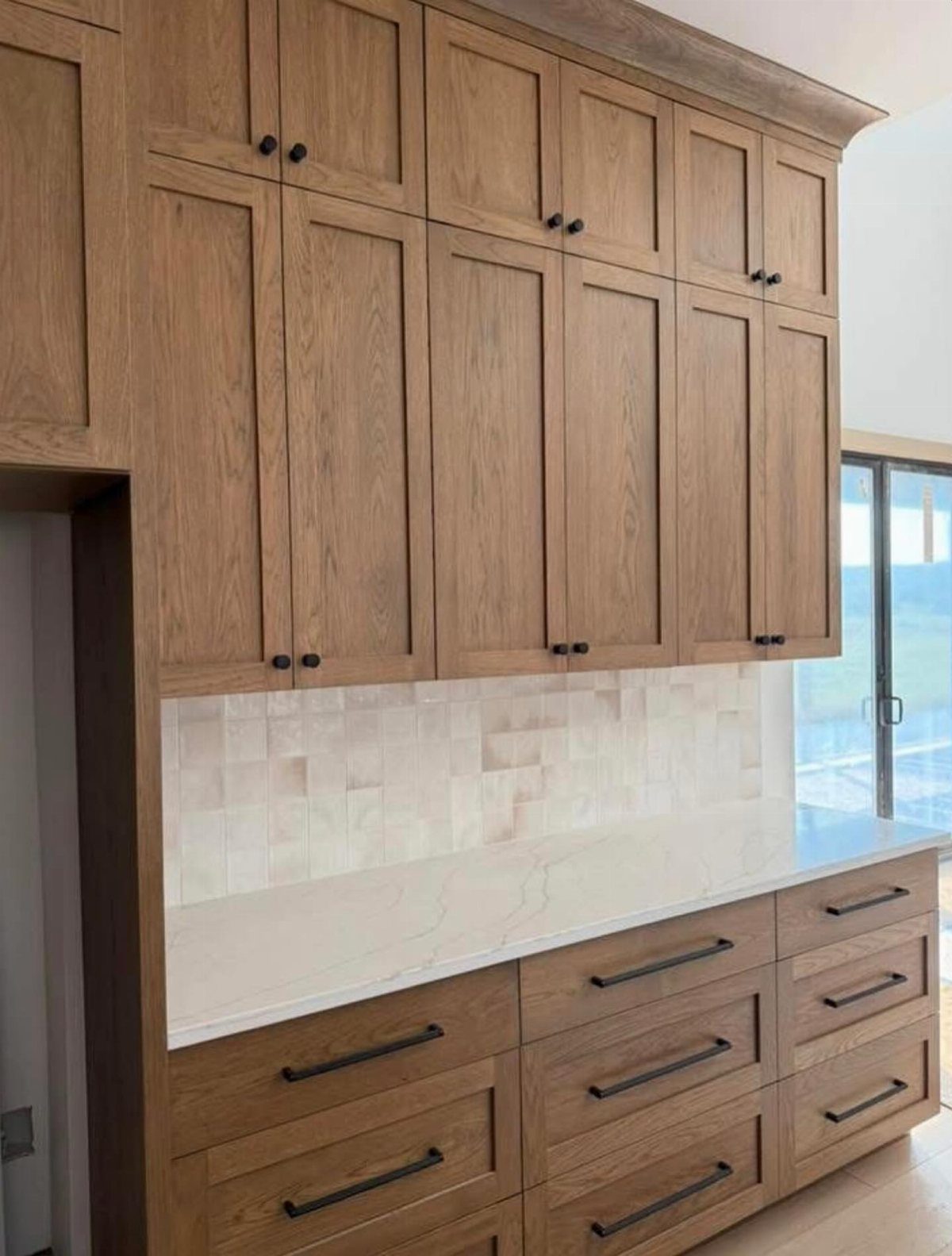
Quartz counters in a wood pantry give you a durable work surface that does not need sealing and holds up to spills without staining.
White quartz keeps the space bright and ties the pantry to white perimeter counters in the rest of the kitchen.
Match the quartz thickness to your existing counters so the transition reads as intentional.
A small backsplash protects the wall where you prep or pour. Quartz costs less than marble and needs no maintenance beyond wiping it down.
27. Wood Pantry with Tile

Patterned tile on the pantry floor defines the space and hides crumbs better than a solid color.
Checkered or geometric patterns work in pantries large enough to show the repeat; smaller pantries need simpler tile or the pattern overwhelms the room.
Seal grout lines after installation so dropped liquids do not stain.
Matte tile gives better traction than polished finishes when the floor gets wet. If your kitchen has wood or neutral tile, the pantry floor is a good place to add pattern without committing to it everywhere.
28. Arched Glass Pantry Door

An arched top softens a wood pantry door and suits kitchens with other curved details like range hoods or windows. Seeded glass in the arch lets light through while blurring the shelves behind it.
Most door shops can mill an arch into a standard door blank or build a custom door to match your cabinet style.
The arch needs clearance above the doorway, so measure the opening height before you order. Single doors show the arch better than pairs.
29. Saloon Pantry Doors
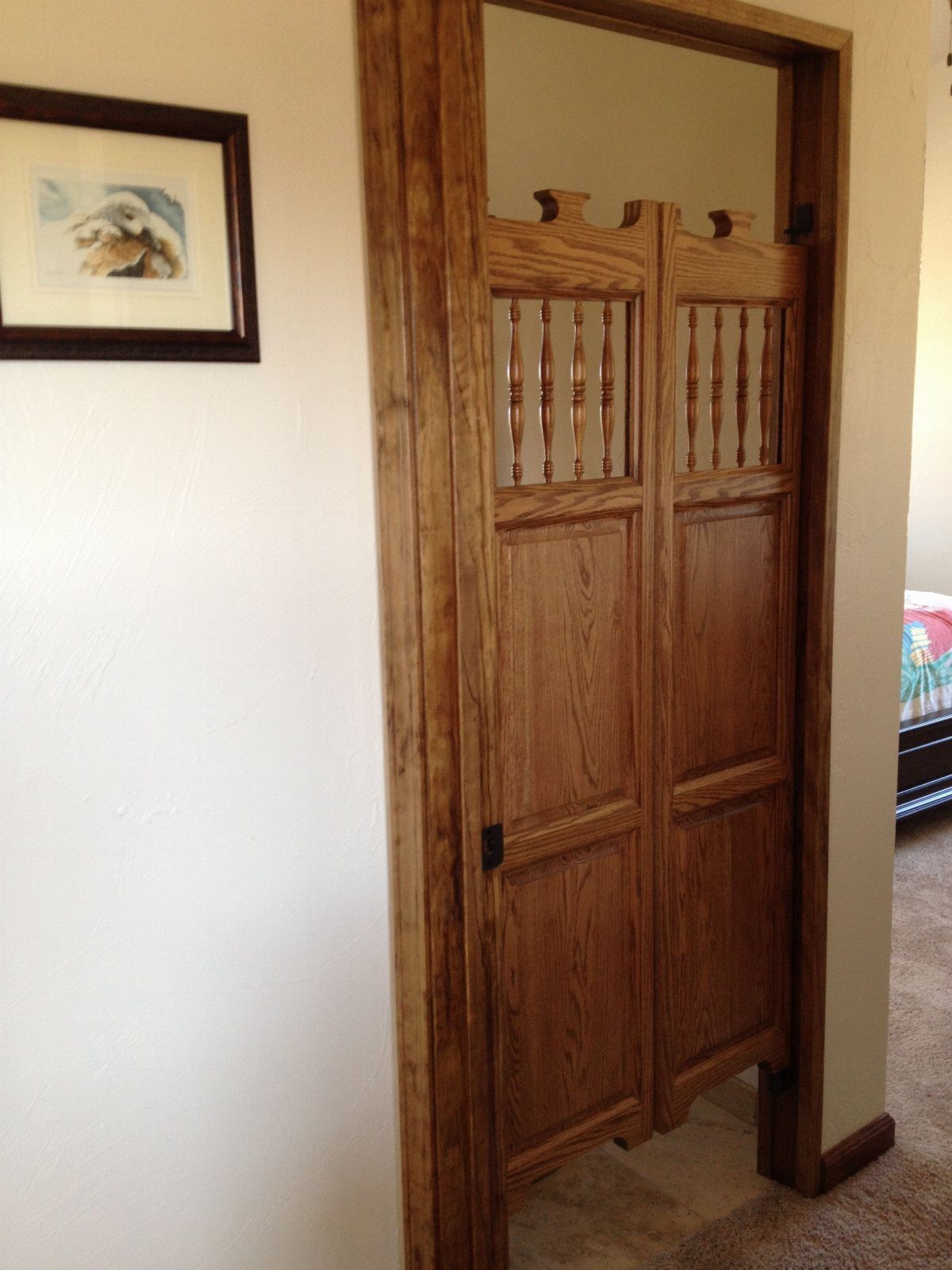
Saloon doors swing both directions and close on their own, so you can push through with full hands and not worry about leaving the pantry open. They suit narrow doorways where a full door would block the path when open.
Mount the doors on double-action spring hinges. The doors need clearance to swing freely in both directions, so measure the floor and check for baseboards or trim that might catch the bottom edge.
Saloon doors show more of the pantry than a solid door, so keep the shelves organized or add frosted panels.
30. Pantry French Doors

French doors bring light into a windowless pantry and make the doorway feel wider without a structural change.
Glass panes let you see what is inside before you open the doors, which helps when you are looking for something specific and do not want to stand in the doorway blocking traffic.
Hinges mount to the doorjamb on opposite sides so both doors swing into the pantry. If the doorway is narrow, one active door and one stationary panel give you the look without needing full clearance for both.
31. Pantry Door Organizer

Racks screwed to the back of a pantry door hold spices, condiments, or snacks you grab often and turn dead space into storage that moves with the door.
Wire or wood shelves with guardrails keep jars from falling when the door swings.
Mount the organizer before you fill it so you can find studs or use anchors that hold weight.
Check that the racks clear the doorjamb when the door closes. Shallow shelves work better than deep ones; anything too far back catches on the frame.
32. Pantry Door Signage
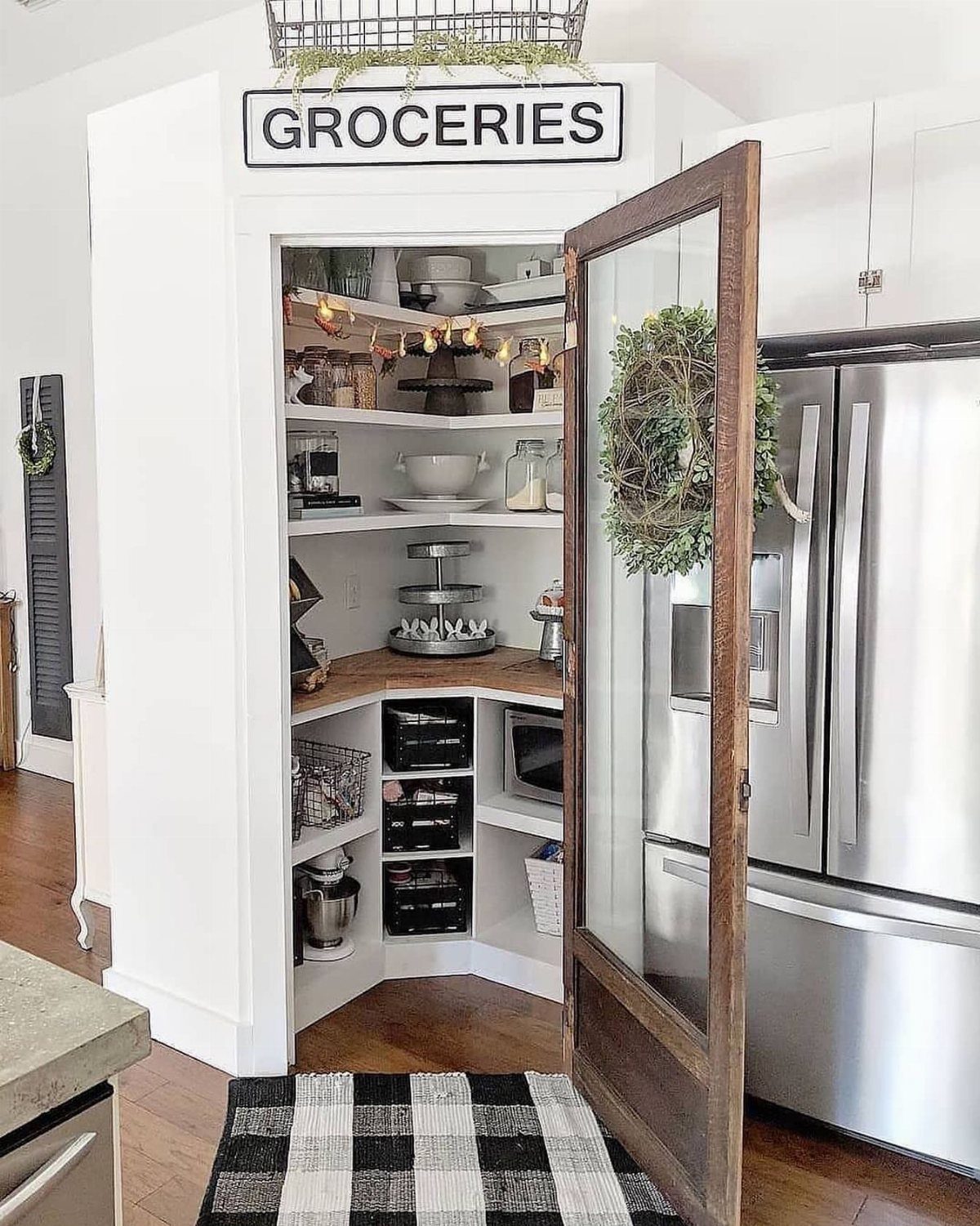
A sign above or beside the pantry door marks the space and adds a bit of personality where otherwise you would just see a blank panel. Painted wood signs read clearest; vinyl lettering works if the door finish is smooth.
Hang the sign high enough that it clears the door when it swings open.
Black letters on white or natural wood suit most kitchens without adding a color you have to match elsewhere. Skip the sign if the door already has glass or detail that makes the function obvious.
33. Pantry Cabinet with Drawers

Drawers at the base of a tall pantry cabinet keep heavy items like small appliances or bulk dry goods at waist height, where you can reach them without bending to the floor or climbing a step stool.
Shelves above the drawers hold everyday items; doors close the whole unit when you want the pantry out of sight.
Size the drawers deep enough for stand mixers or large bags of flour.
Soft-close glides keep the drawers from slamming when you push them shut. If the pantry sits in the kitchen instead of a separate room, match the cabinet finish to your other cabinetry.
34. Pantry with Open Cubbies
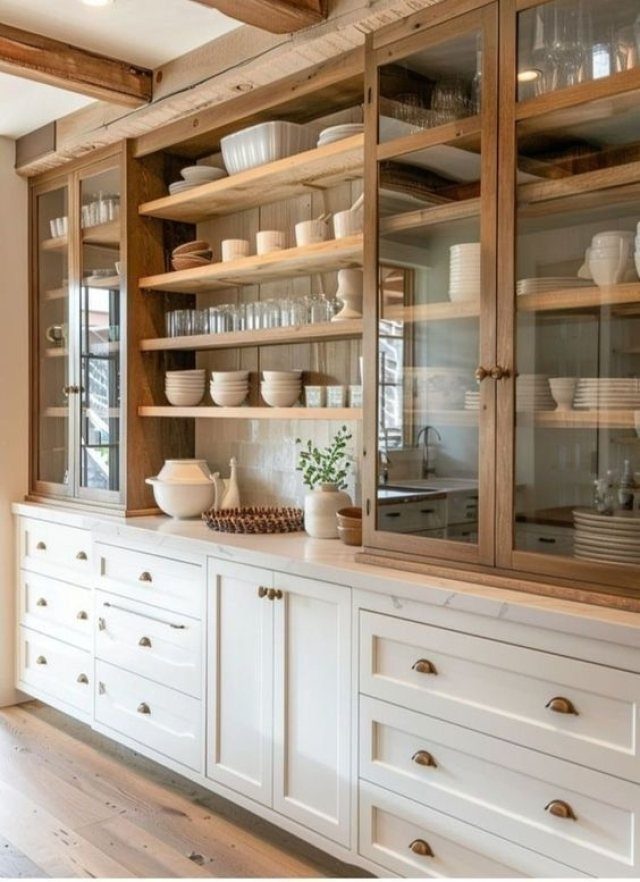
Cubbies without doors or shelves break up a wall of closed cabinets and give you a spot for cookbooks, serving bowls, or dishes you reach for daily.
They work best below eye level, where you can see what sits inside without crouching.
Space cubbies in a grid or stagger them by size depending on what you store.
Leave enough height per cubby for stacked bowls or folded linens. If the cubbies sit near the stove or sink, keep them for items that do not mind dust or splatter.
35. Pantry with Chalkboard Door

Chalkboard paint on a pantry door turns it into a running grocery list or menu board you can update with chalk as the week changes.
The matte black finish adds contrast in a white or wood kitchen and gives you a place to write without hunting for paper.
Sand the door smooth and prime it before you apply chalkboard paint.
Two coats give better coverage than one. Condition the surface by rubbing chalk over the whole panel and wiping it off before you write anything you want to keep; this keeps the first real notes from ghosting into the paint.
36. Rustic Barn Pantry Door
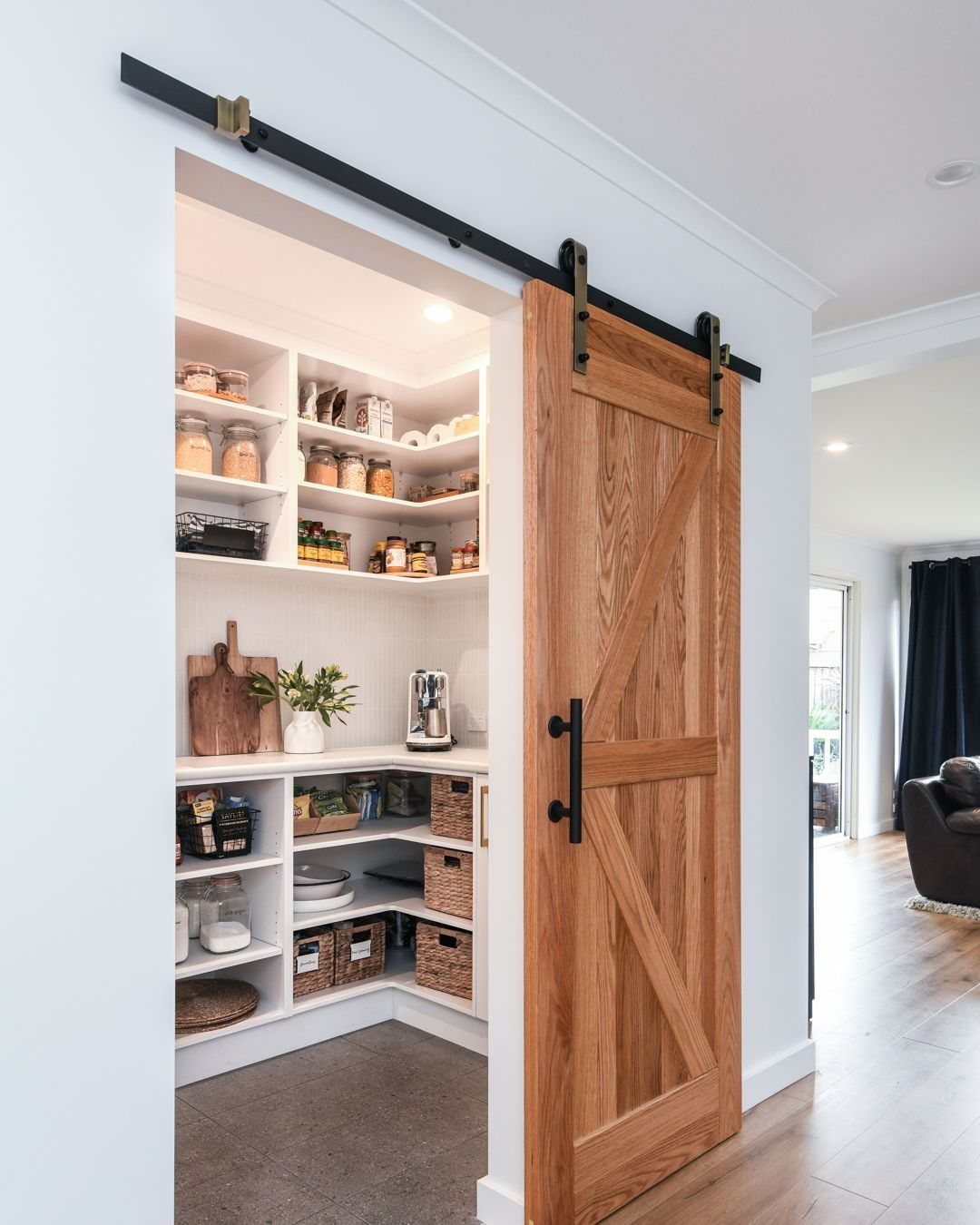
A sliding barn door in reclaimed or weathered wood hides the pantry without the swing clearance a hinged door needs.
The hardware mounts to a track above the doorway, so the door slides along the wall and stays out of the aisle when open.
Measure the door a few inches wider than the opening so it covers the frame and any gaps when closed. Mount the track to studs or blocking, not just drywall.
37. Pantry with Floating Shelves

Floating shelves clear the floor and let you see everything at once without opening a cabinet door. They suit a pantry alcove or corner where a freestanding cabinet would block the aisle and you want the storage to feel open.
Anchor the shelves into studs with hidden brackets rated for the weight you plan to load.
Space them close enough to stack canisters or jars without wasting vertical room. Thicker wood reads sturdier; anything under 2 inches can sag under heavy jars.
38. Pantry Shelf Supports
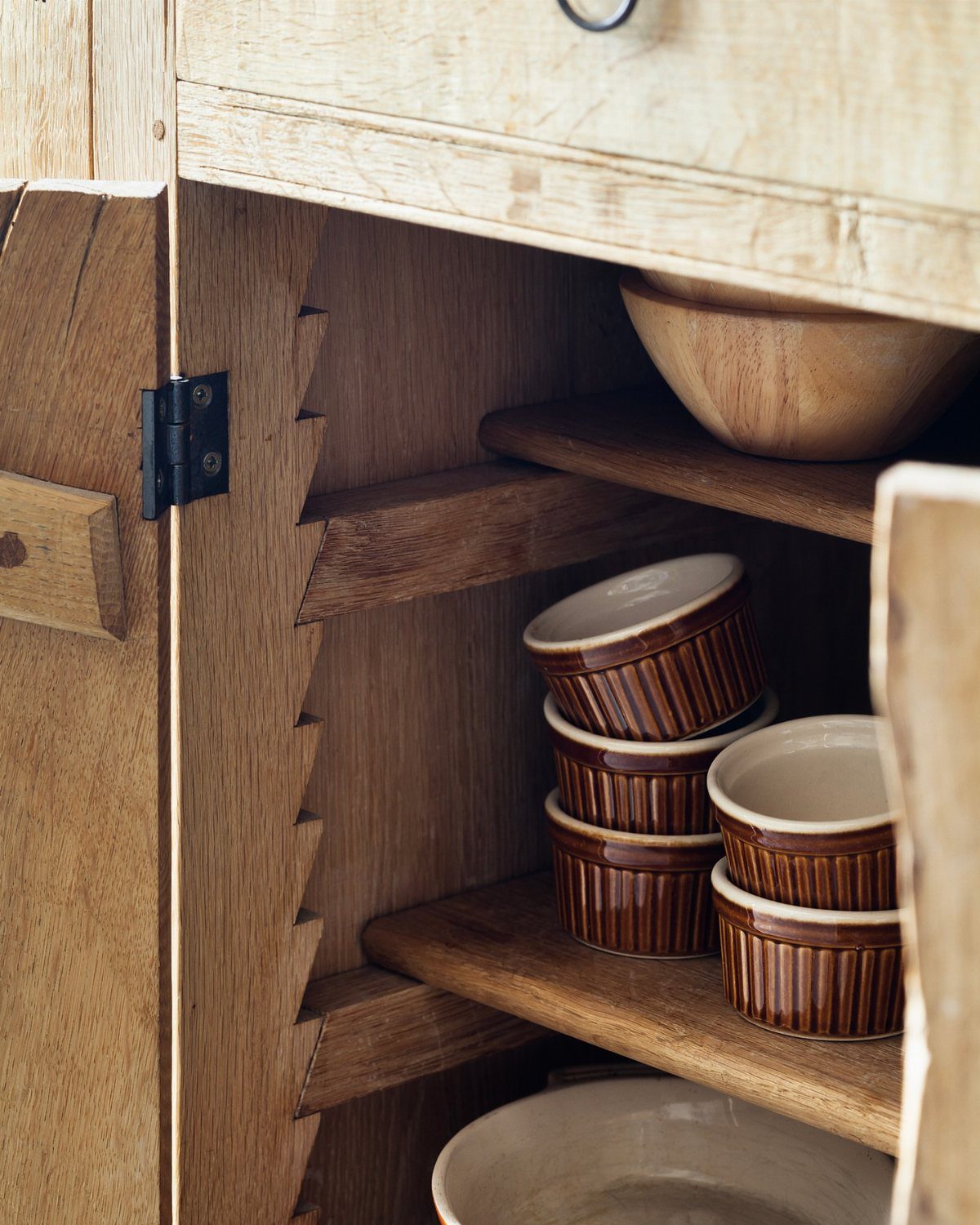
Vertical cleats notched into the side panels of a pantry cabinet hold each shelf without metal brackets and suit a rustic kitchen where you want the hardware to disappear. The wood-on-wood joint stays visible and adds detail to open shelving.
Cut the cleats to match the shelf depth and screw them into the cabinet sides before you slide the shelves in.
Space the notches at intervals that give you the shelf heights you need. The cleats lock the shelves in place, so you can load them without worrying about the shelf tipping forward.
39. Reclaimed Wood Shelves

Weathered boards salvaged from old barns or fences bring texture that new wood cannot match and suit a farmhouse kitchen where the pantry is meant to show age.
The grain and nail holes stay visible and give each shelf a different look.
Sand the boards just enough to remove splinters without erasing the patina.
Seal the wood so it does not absorb spills. The thickness varies by what you find, so check that your brackets or cleats fit the actual board depth before you mount anything.
40. Wood Pantry with Wine Cubbies

Diamond-shaped cubbies built into the lower cabinets hold bottles on their sides and keep wine separate from dry goods without adding a standalone rack. The cubbies fill space that would otherwise need deep shelves you cannot reach into easily.
Size each opening to hold a standard wine bottle with a finger of clearance.
If you drink more white than red, add a wine fridge under the counter and save the cubbies for overflow or bottles you plan to open soon.
Frequently Asked Questions
What is a pantry cabinet?
A pantry cabinet is a tall kitchen cabinet dedicated to storing food, dry goods, and small appliances, either built into the cabinetry or added as a freestanding piece.
It can have solid doors, glass fronts, or open shelves depending on how much you want visible.
How much space do you need for a pantry?
Standard pantry cabinets run 84 to 96 inches tall, 15 to 30 inches wide, and 24 inches deep. Narrow widths fit between appliances or at the end of a cabinet run; wider cabinets hold more but need clearance for the door swing.
How much do pantry cabinets cost?
Pantry cabinets range from $450 to $1,400 depending on size, materials, and whether you choose stock or custom cabinetry. Freestanding units typically cost less than built-ins, and solid doors run cheaper than glass fronts.
Does a pantry cabinet add value to my home?
A pantry cabinet will not lift your home value the way a kitchen remodel might, but it can help your listing stand out if competing homes lack storage or if buyers have large families.
Buyers notice functional storage more than they notice luxury finishes.