
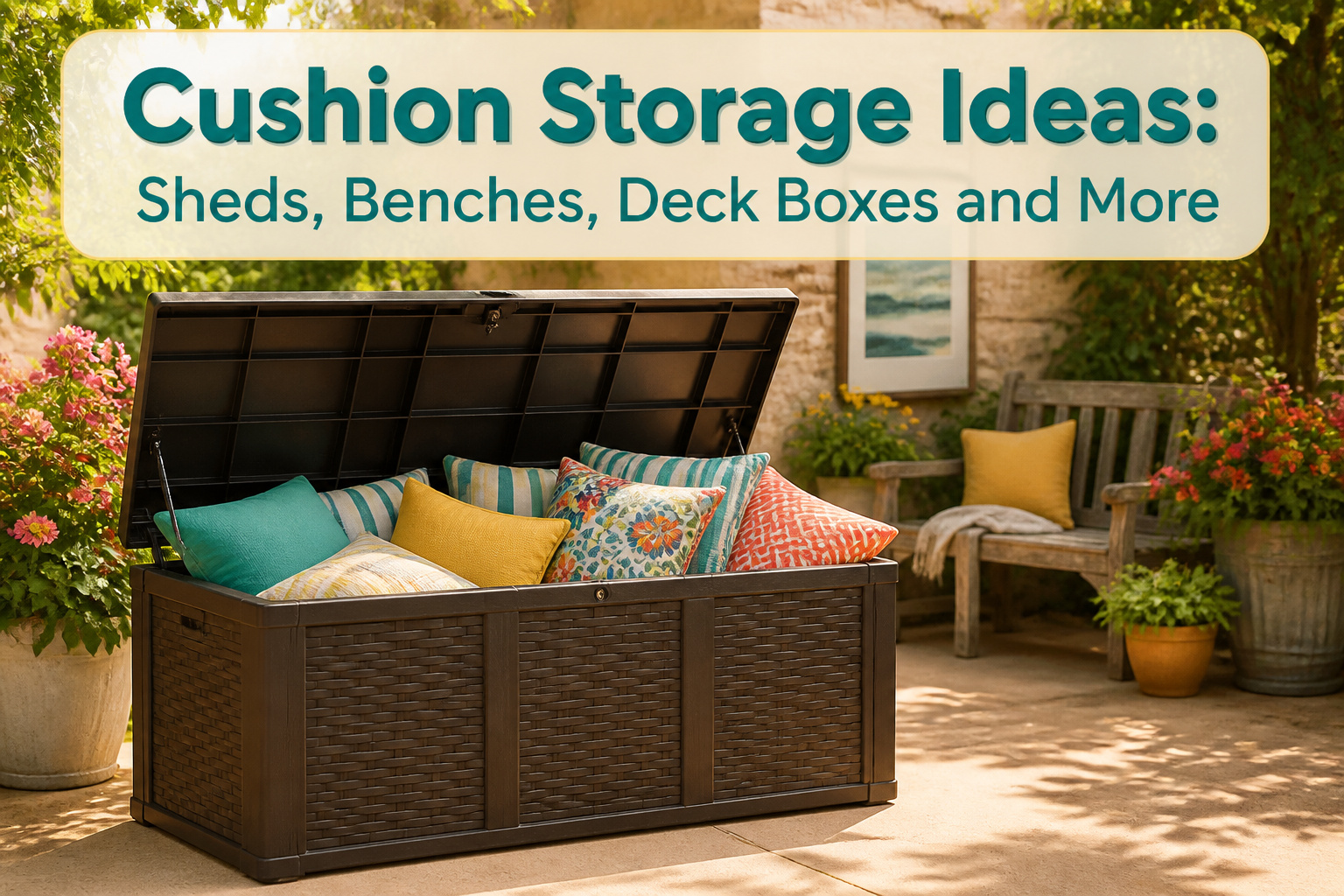
Cushion storage ideas are only as good as the climate you store them in. A resin deck box keeps cushions dry through Oregon downpours, but the same box grows mold by March in coastal Carolina if the seams breathe. The Devoko 100 Gallon deck box, with its lockable lid and hydraulic slow-close hinges, works because its high-density resin seals out humidity where it matters.
Storage Shed

A Suncast Storage Shed is water- and UV-resistant, and it comes with a floor built in. That last detail matters more than I expected when I started comparing options: a raised floor keeps cushions off the damp concrete or dirt that turns fabric musty over a single season.
This is the move when you are storing more than a few cushions, or when you are also juggling outdoor dishes, pool toys, or the grill cover that never folds small. The shed buys you capacity and weather protection in one footprint, and the resin walls handle sun and rain without the resealing that wood demands every couple of years.
The tradeoff is space and upfront assembly. A shed needs a level spot in the yard, and it is not the answer for a balcony or a rental you are leaving in twelve months. For a first-home owner with a patch of grass and a growing pile of patio gear, though, the shed stops the annual shuffle of hauling cushions indoors every time a storm rolls through.
Outdoor Storage Bench
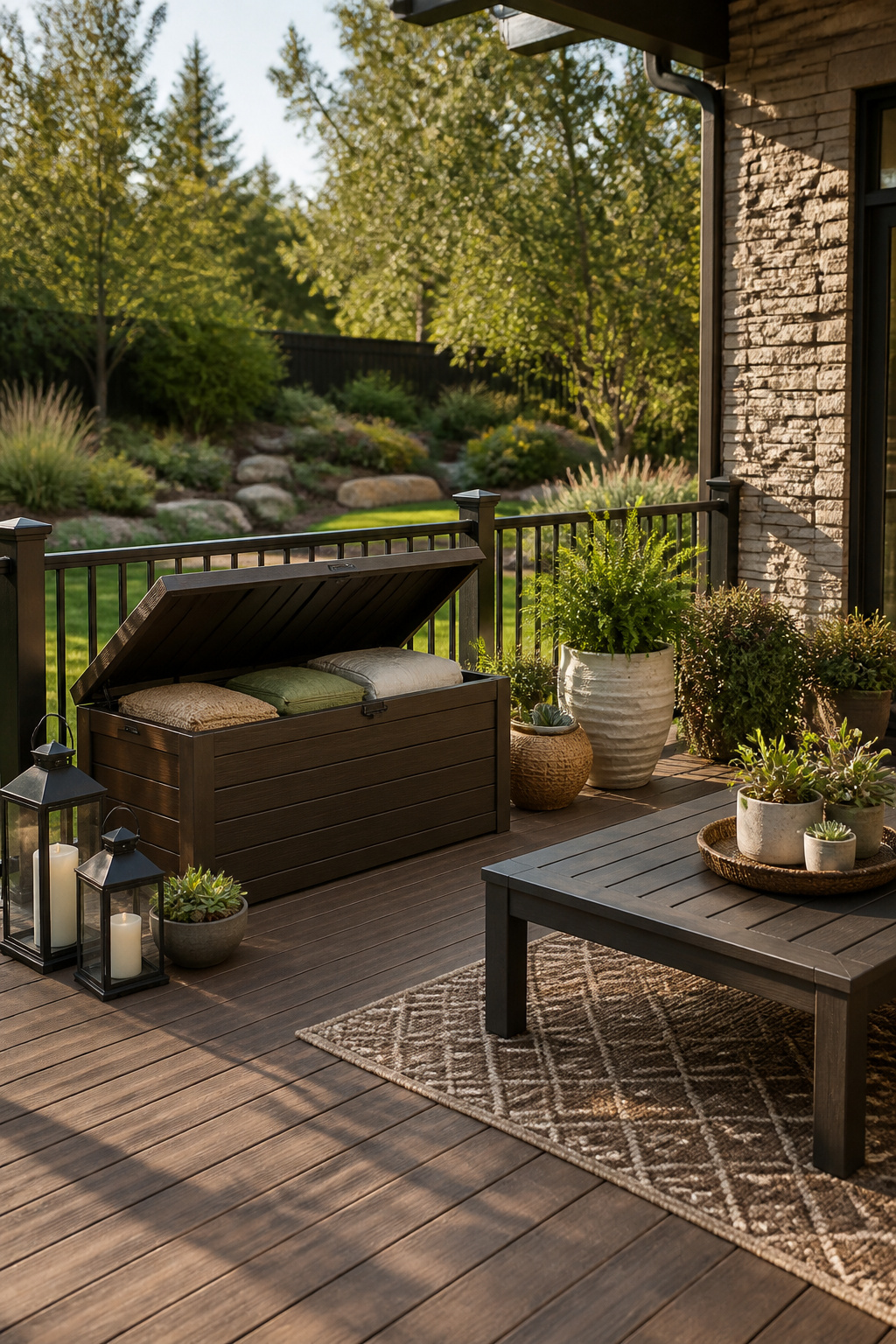
An outdoor storage bench sits right where you need it, and that proximity is what makes it work. Mine went on the deck beside the main seating group, close enough that grabbing cushions after dinner felt like part of the same motion as standing up. The lid lifts on a hydraulic hinge, the kind that stays open while you load or unload, and the interior stays dry through real rain. One owner in Oregon reported everything inside staying dry through downpours, and the assembly took her under thirty minutes alone.
The dual purpose is what earns the space. A deck box stores more volume, but the bench gives you somewhere to sit while you tie a shoe or set down a tray. Most hold a full set of patio cushions plus a few extras, pool towels, or the occasional garden tool. I keep mine to cushions and outdoor dishes only; mixing in soil or hose nozzles means grit on the seating surface every time you open it.
Weather resistance varies by build. Look for a hydraulic lift rated for outdoor use and walls thick enough that the lid does not flex under someone’s weight. Placement matters too: tucked against the house wall catches less sideways rain than open patio center, and that small choice buys you seasons before you need to think about additional sealing.
Deck Box
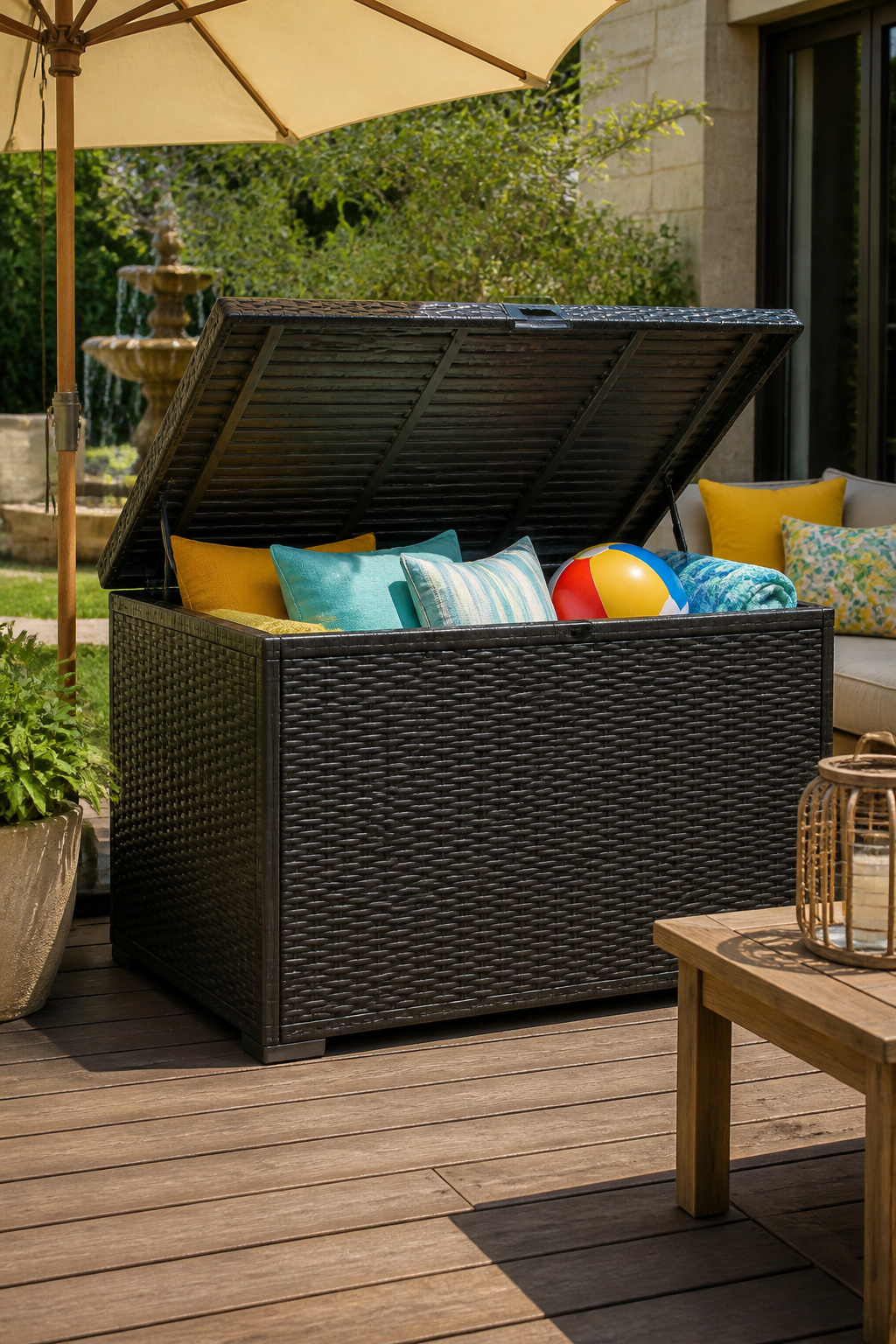
A deck box sits right where you use it, which matters more than it sounds when rain starts mid-cookout. The Devoko 100 Gallon Waterproof Large Resin Deck Box is the one that kept surfacing in my reading: lockable lid, hydraulic slow-close hinges so it won’t slam on fingers, and high-density waterproof resin built to take UV without cracking or rusting. It comes in five colors with an imitation rattan finish that reads as furniture, not afterthought.
The 100-gallon sizing fits a full set of lounge cushions with room left for pool floats or the outdoor dishes you never want to haul inside again. Eight total sizes exist in the line, so the footprint scales down for apartment balconies or up if you’re storing for a sectional.
Resin wins over wood here for a reason that showed up repeatedly: no resealing, no rot, no warped lid that won’t latch after two humid summers. The tradeoff is weight. A loaded resin box stays put in wind, but one person can still drag it to sweep underneath. Wood looks warmer and takes paint, yet the maintenance clock starts immediately.
Lockability changes how you use the thing. Pool chemicals, grill tools, the Bluetooth speaker: all of it stays outside instead of cluttering the kitchen counter. The included cushion on the Devoko is waterproof, and the box itself doubles as seating. More than 5,000 buyers have rated it, averaging 4.4 out of 5 stars.
Waterproof Storage Bags
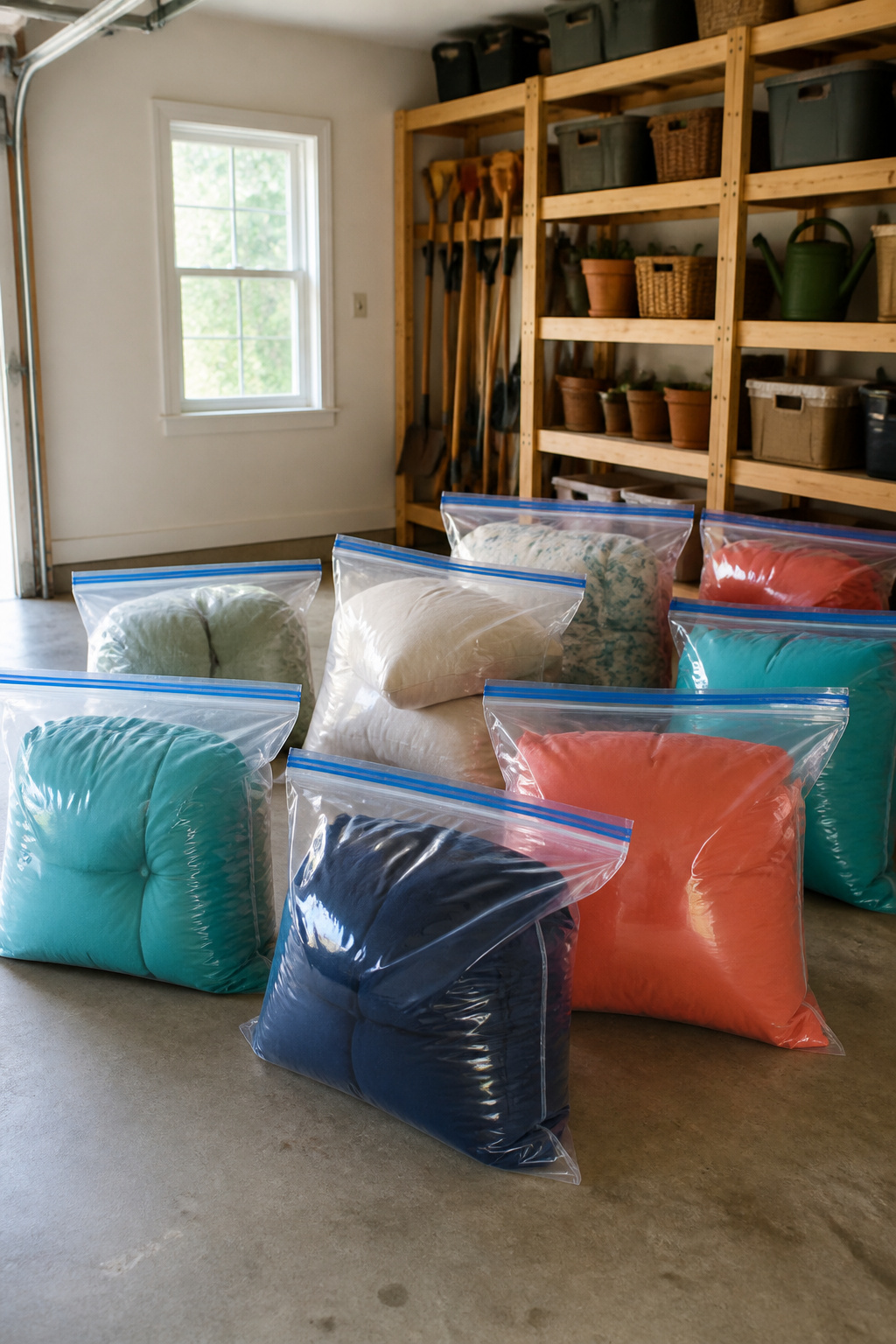
A Ziploc Big Bag costs a few dollars and seals tight enough to keep a patio cushion genuinely dry through a season. That airtight seal is what separates it from a garbage bag that slips open the first time something leans against it. Mold and mildew need moisture to grow, so the barrier matters more than the thickness of the plastic.
Rigid containers stack neatly in a garage, but the bags win on two counts. They fold flat when empty, which matters in a small apartment or a shed already crowded with tools. And they compress slightly around odd shapes, a lounge chair back or a curved bench cushion, where a bin leaves dead space you still pay to store.
The catch is compression itself. Vacuum bags squeeze every inch out, but cheaper foam can stay collapsed after a winter of that pressure. A standard waterproof bag, not a compression model, stores the cushion at its natural loft and still keeps rain out. For anyone hauling cushions up to a closet shelf or down to a basement corner, the bag is easier to lift and easier to wedge into a gap between shelves.
Airtight Containers
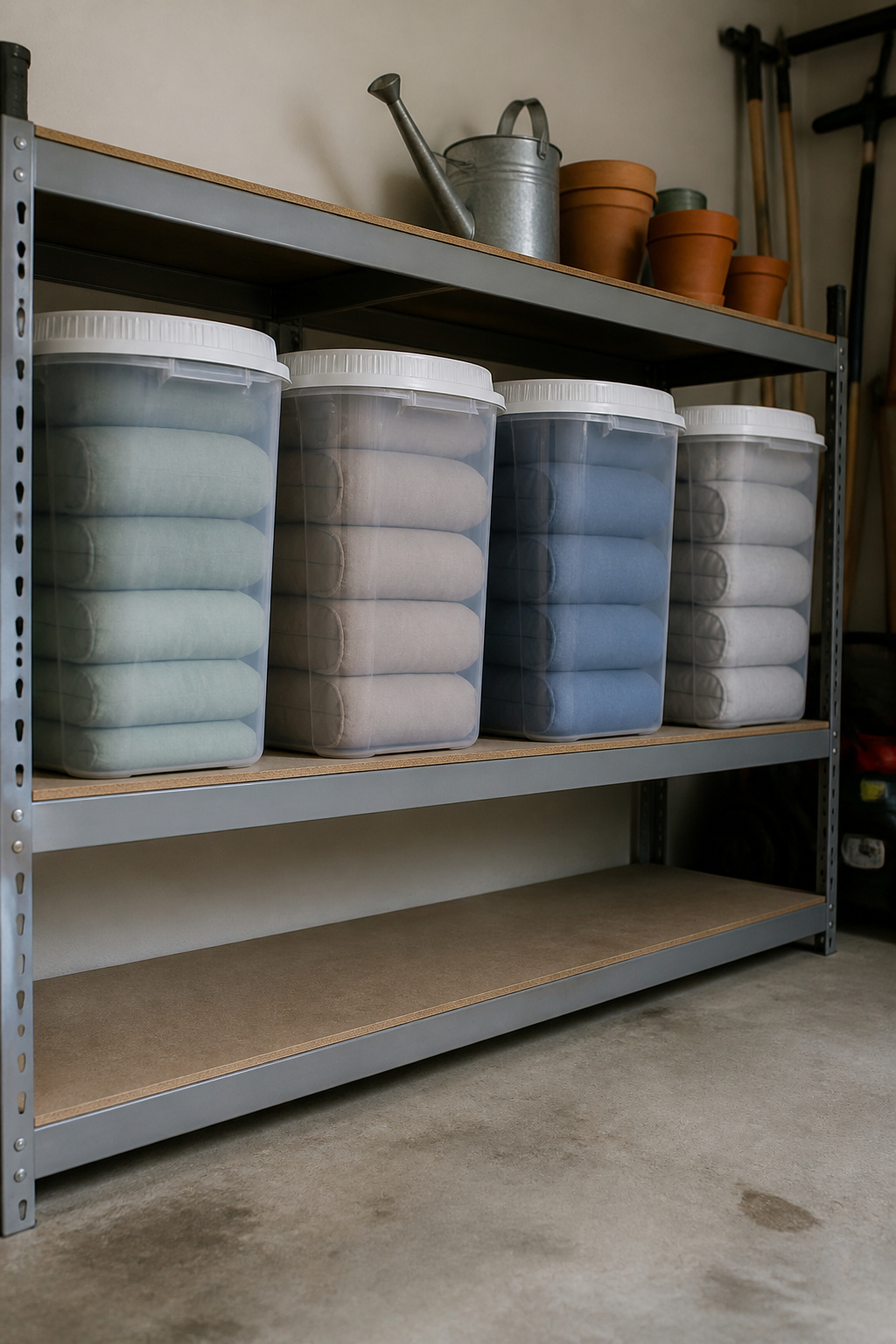
Snap-lid totes and screw-top bins each have a place in cushion storage, and the difference matters more than the price gap suggests. A true screw-top seal, the kind that threads like a jar, keeps humidity out through a full summer of garage heat waves. Snap lids are faster to open, but the gasket fatigues after a season or two of heavy use; by year three you are pressing down harder and still finding a musty corner on the bottom cushion. For standard seat cushions, roughly 24 by 24 inches, a 30-gallon tote stands upright without folding the foam. Back cushions need more length, so a 50-gallon bin or a dedicated bag works better than cramming.
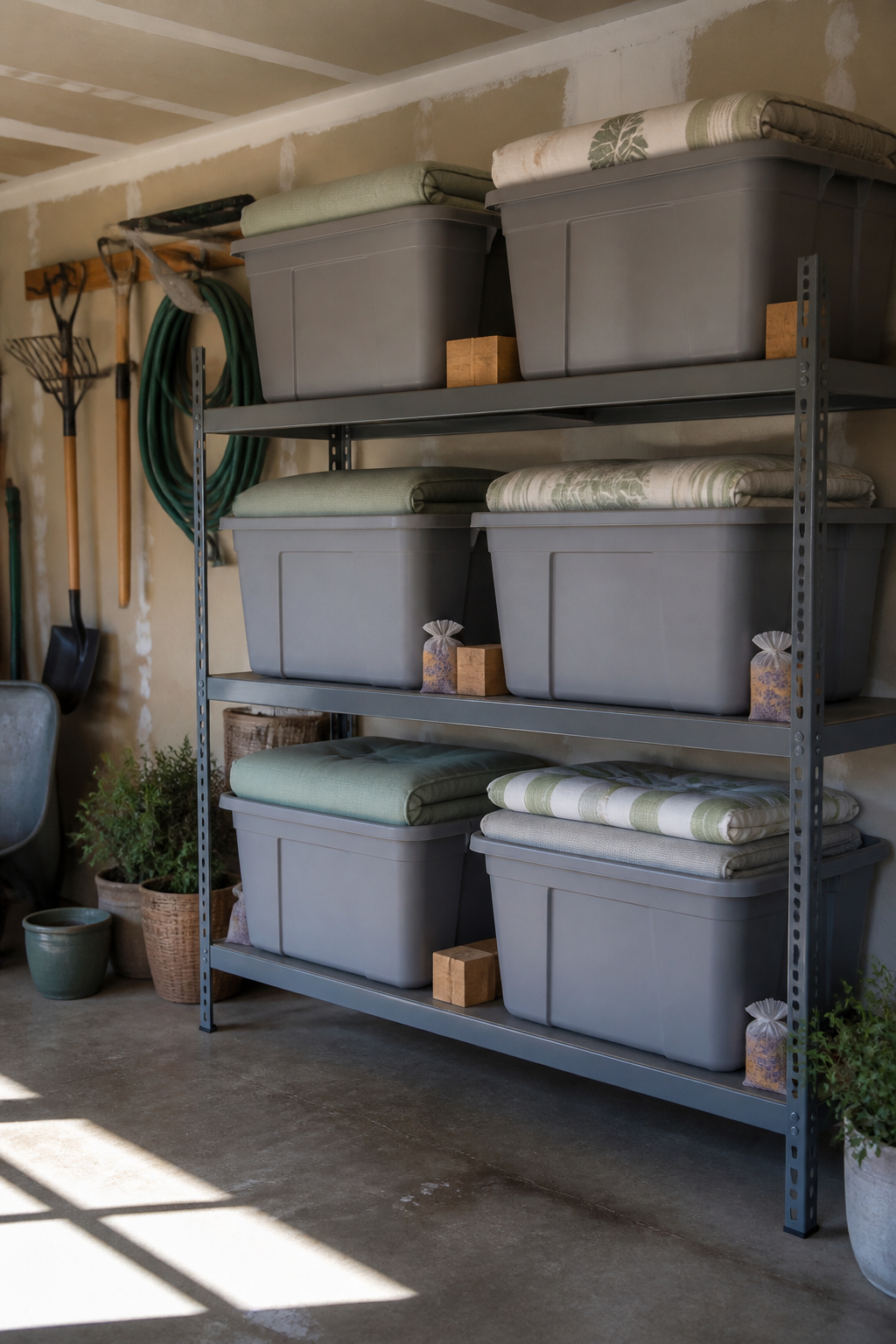
Cedar blocks or lavender sachets inside the bin add a repellent layer that airtight plastic alone does not provide. Mice can smell the polyester fill through thin walls, and ants will trail along any seam that lost its seal. I set bins on a garage shelf rather than the floor, since concrete wicks moisture and puts the lid seam at risk. A quick wipe of the gasket with a dry rag before closing takes thirty seconds and catches the grit that would otherwise compromise the seal.
Garage Shelves
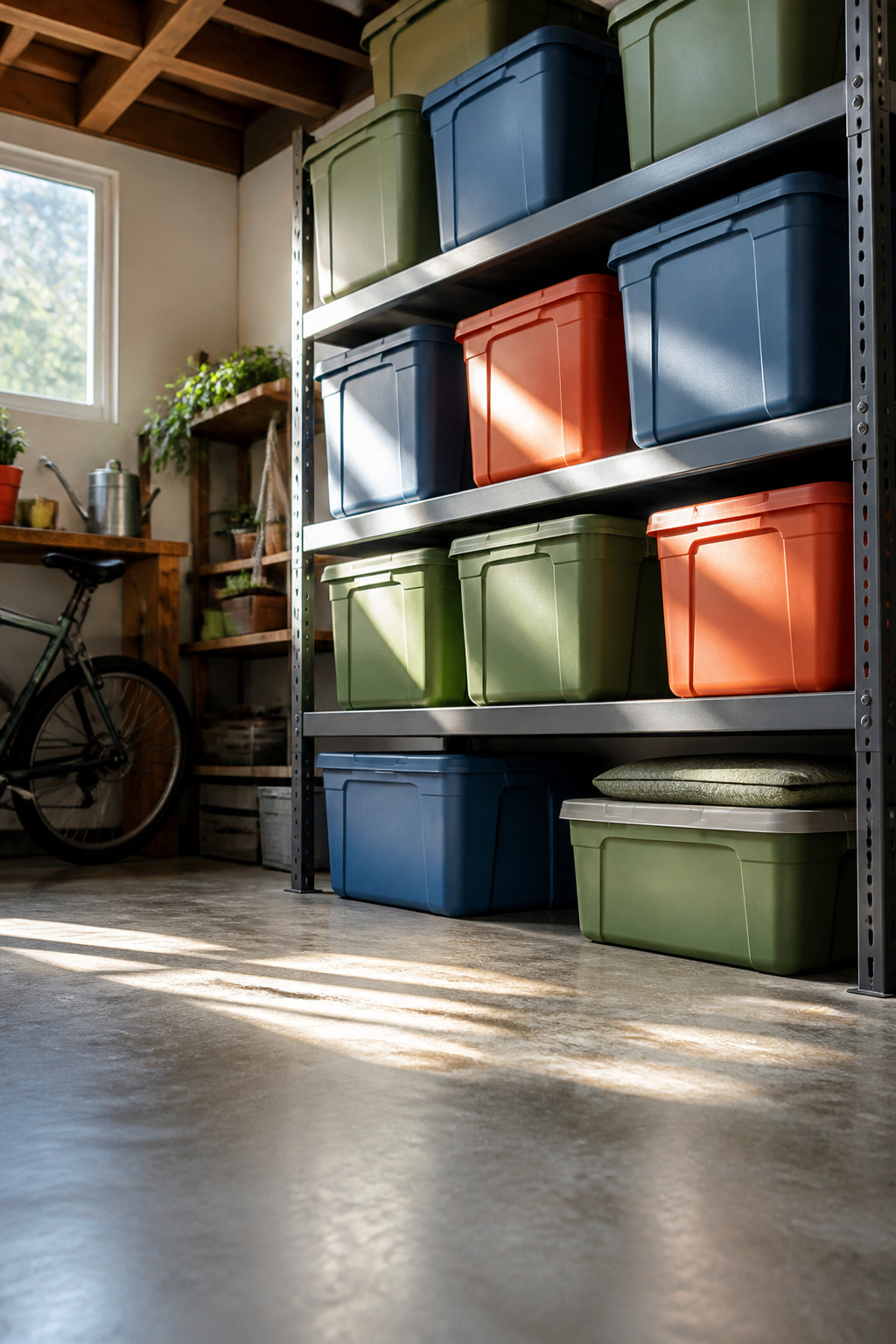
Garage shelves keep cushions off the concrete, which matters more than most people realize until they lift a tote in March and find the bottom dusted with white mildew. Six inches of clearance is the minimum worth building or buying for; anything lower and you are storing on the floor with extra steps.
Heavy-Duty Garage Totes work well for this job, the reinforced-bottom kind that does not sag when you stack two of them. The passages note them for indoor storage, and a garage qualifies if the space stays dry and ventilated. Plastic shelving is lighter and cheaper, but metal handles weight better if you are stacking more than one season deep. Shelf height depends on what else shares the wall; leave headroom to lift a tote without tilting it into the rafters.
Elevation buys you two things in a garage: protection from the moisture that collects at ground level, and distance from the mice that follow the walls when the weather turns. The seal on the tote handles the rest.
Foldable Storage Boxes
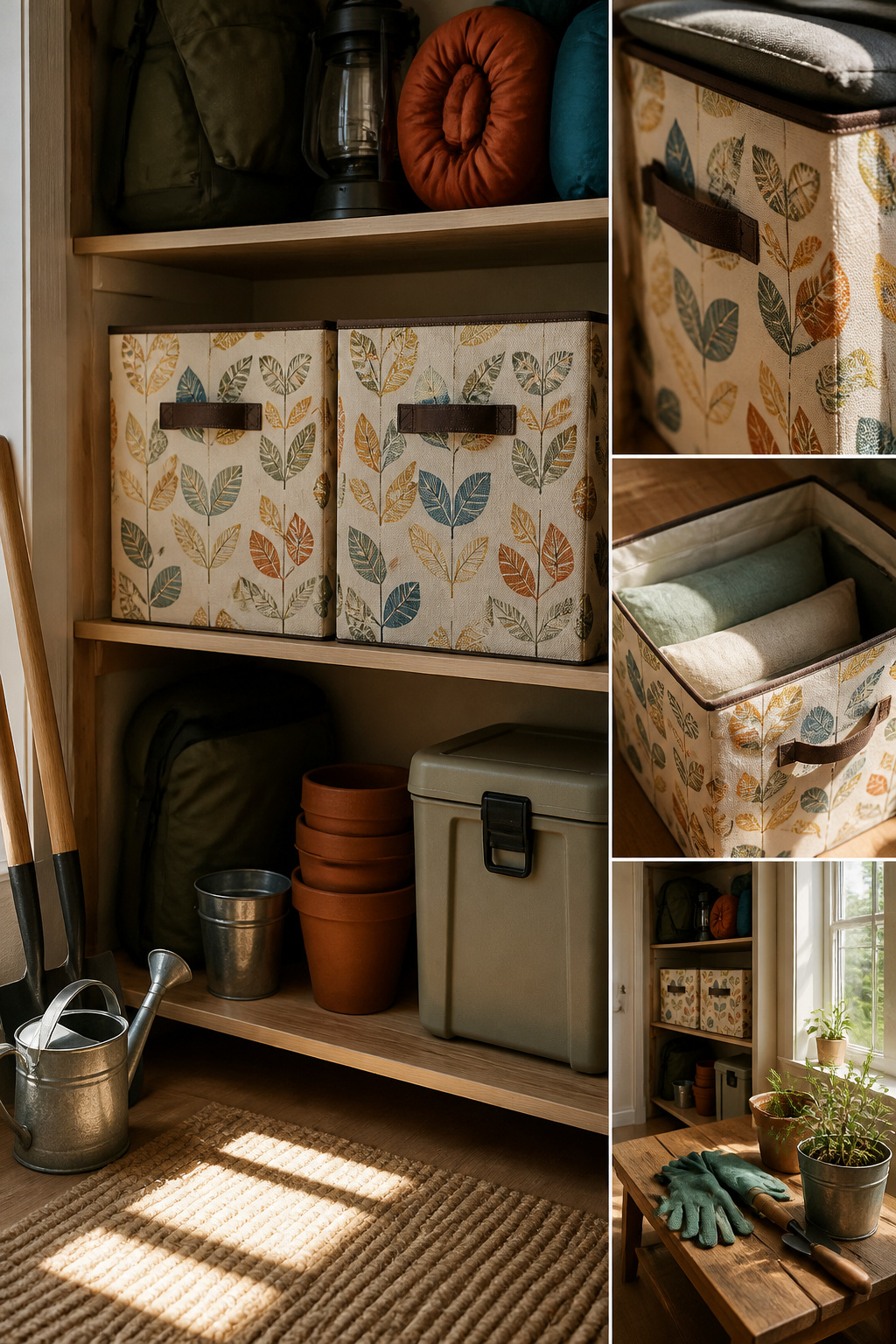
Foldable storage boxes promise the cleanest footprint of any cushion storage option: walls that close up flat and slide under a bed or behind a dresser once winter hits. The reality is more conditional. "Foldable" usually means a fabric skin stretched over a wire or composite frame, and that frame determines whether the box is worth buying at all. Wire frames collapse to nearly nothing but fatigue at the joints after two or three seasons of loading; composite or thin plywood boards hold their shape longer but add weight you notice when you haul the full box down from a closet shelf.
Fabric boxes breathe, which helps if you are storing cushions that were not perfectly dry when you packed them. Plastic versions seal tighter against dust but trap moisture if there is any inside, so the choice depends on how rushed your autumn teardown tends to be. Neither material is truly waterproof; these are indoor or sheltered-porch solutions, not replacements for a deck box left out in the rain.
Longevity is the real tradeoff. A foldable box that costs half what a rigid bin does and lasts three seasons is a fine deal for someone who rents and moves often. For a homeowner planning to stay, the replacement cycle gets old fast. The move is to buy one with a reinforced bottom panel, since that is the part that sags first under the weight of dense foam cushions.
Cleaning Before Storing
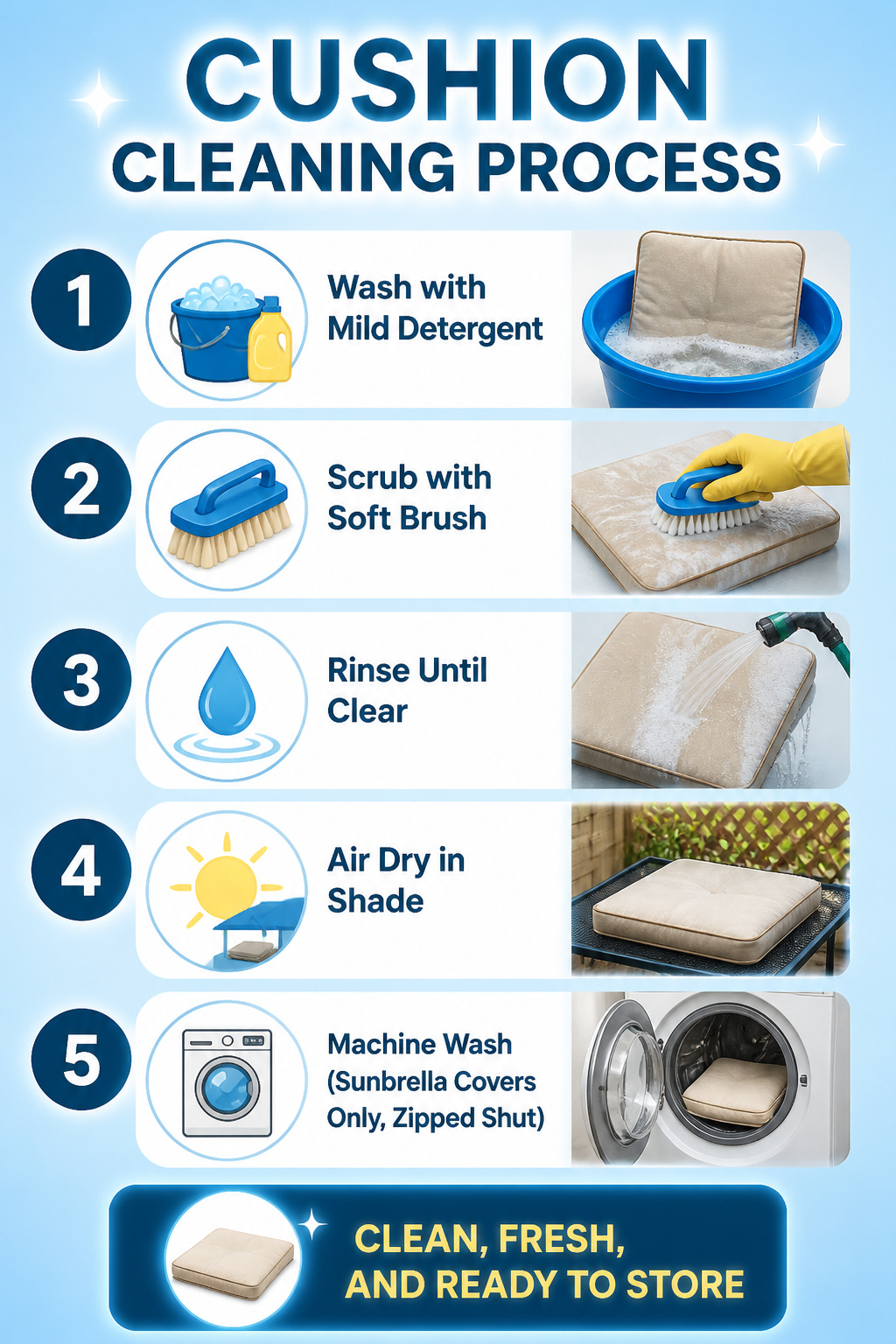
A dirty cushion stored in a shed or deck box becomes a mold colony by spring. Mild detergent and warm water in a bucket will handle most outdoor fabrics. Scrub with a soft-bristle brush, rinse until the water runs clear, and air dry in a well-ventilated spot out of direct sunlight. Sunbrella covers can go through a gentle machine cycle if zipped shut, but they still need that same air dry afterward.
Storing even slightly damp padding traps moisture in a dark, enclosed space. The result is mildew that degrades the fabric and leaves a smell you will not wash out later. A full day of drying time is worth it.
Indoor Against Outdoor Storage
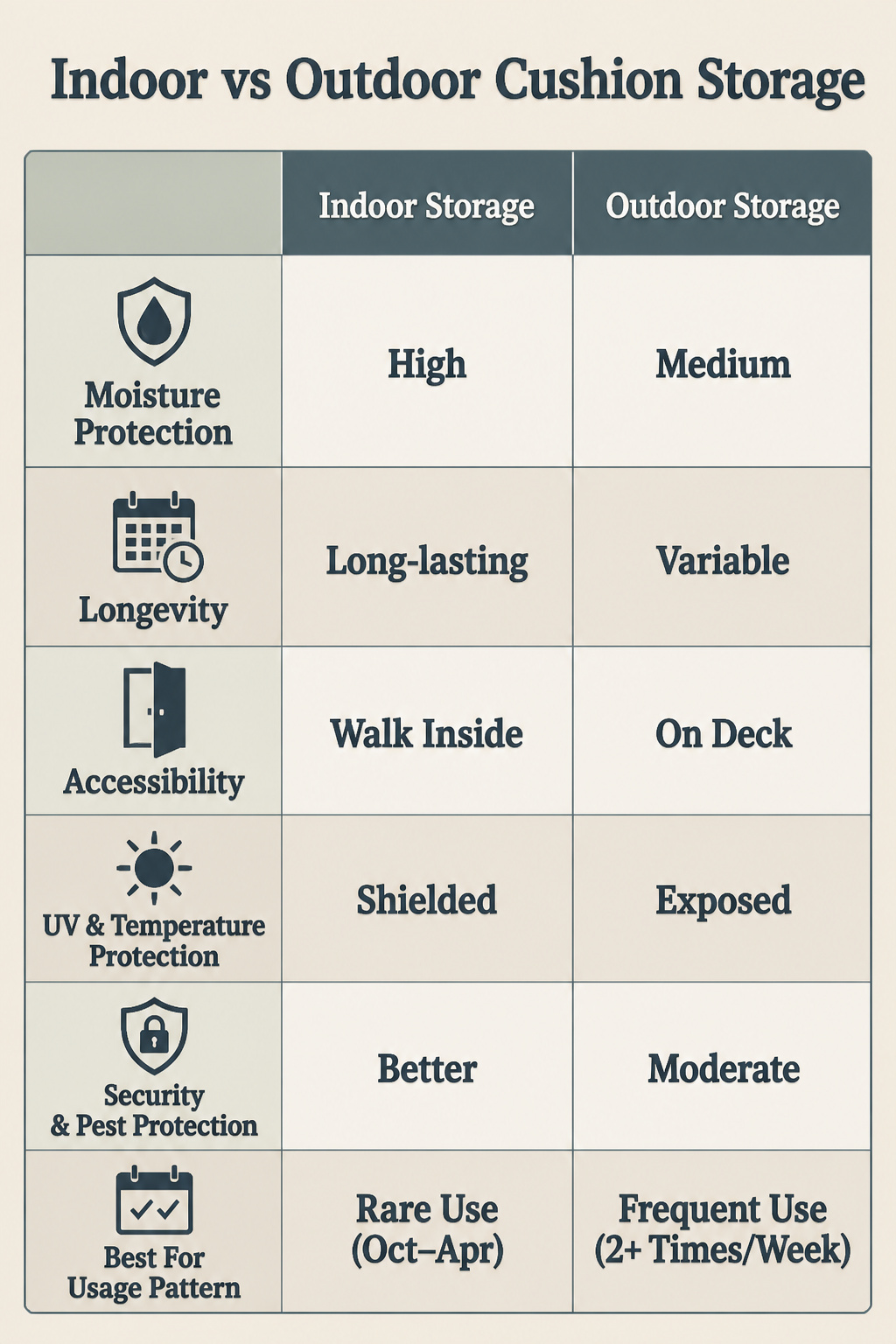
Indoor storage wins on moisture protection and longevity. A garage, basement, or shed shields cushions from the UV fading and temperature swings that degrade fabric over seasons, and even a basic heavy-duty tote with a reinforced bottom keeps the damp out better than most outdoor setups. The tradeoff is the walk. When a summer storm rolls in, hauling cushions through a house at 9 PM gets old fast.
Outdoor options flip that equation. A deck box or storage bench sits right where you use it, and the better resin models lock, seat guests, and survive Oregon downpours without leaking. The catch is what "weather-resistant" actually means. Fabric storage bags and basic bins buy time, not invincibility; pests, condensation, and freeze-thaw cycles still find their way in.
Of the seven storage types worth considering, five lean outdoor: deck boxes, storage benches, waterproof bags, fabric covers, and standard bins. Two belong inside: airtight containers and garage totes. The split matters because most renters and first-home owners lack both a shed and the patience to use it nightly. If you store cushions more than twice a week, outdoor access pays for itself in actual use. If they sit unused from October to April, indoor dry storage is the only move that preserves the investment.
What Climate Changes
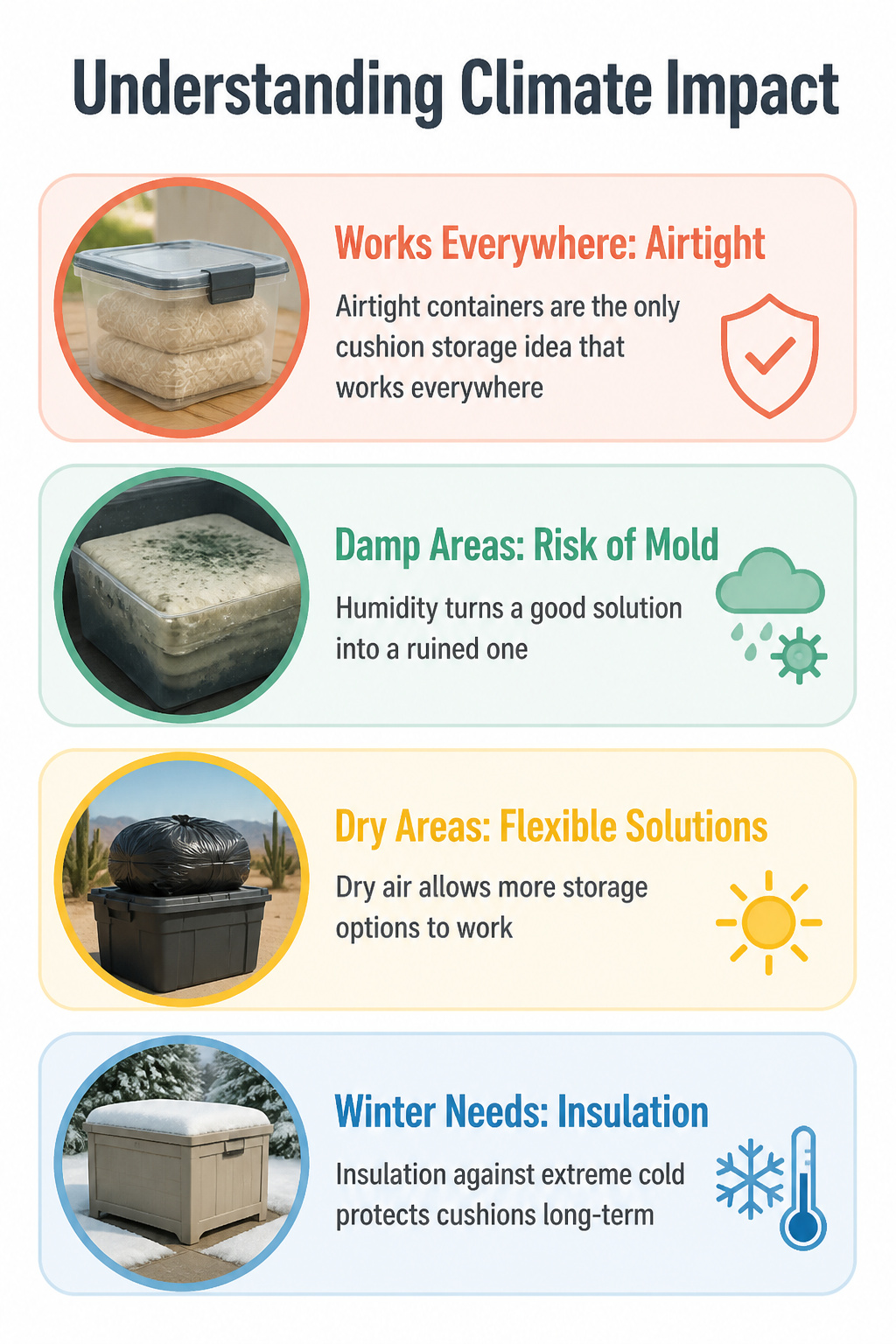
Airtight containers are the only cushion storage idea that works everywhere, because humidity is the variable that turns a good solution into a ruined one. In a damp climate, a deck box that breathes at the seams will grow mold inside by March; the same box in Arizona keeps cushions dry for years. I learned this the hard way after storing a set in a supposedly weatherproof bench on a covered porch in coastal Carolina. The cushions came out smelling like a basement, and the foam had started to break down where moisture had pooled underneath.
Dry climates give you more room to experiment. Trash bags with a tight seal, heavy-duty garage totes, even a basic deck box without gasket seals can work because the air itself pulls moisture away. But once the relative humidity stays above sixty percent for weeks at a stretch, anything short of an airtight seal is gambling. Clear plastic bins help you spot trouble early, yet their lids rarely seal tight enough for true protection; they are better for garage storage in the Southwest than for a shed in the Pacific Northwest.
Winter adds its own pressure. Cold alone does not damage cushion fabric, but repeated freeze-thaw cycles will crack vinyl covers and let moisture seep into the fill. Storage that provides insulation against extreme cold, not just water resistance, matters once temperatures drop below freezing for extended periods. A deck box left uninsulated on a concrete patio will transmit that cold straight through to whatever sits inside.
Keeping Pests Out
The first summer my cushions came out of storage looking like Swiss cheese, I learned that sealed storage is the only storage that counts. A plastic tote with a gasket lid stops mice, silverfish, and the ants that follow crumbs from ever reaching the foam. Cedar blocks or lavender sachets smell pleasant in the closet, but they are a backup, not a strategy. Pests will walk around a sachet to reach nesting material.
Check the bins every six weeks through winter, especially after a warm snap. Look for the fine dust of insect frass, tiny fabric shavings, or the musty smell that means moisture has compromised the seal. One crack in a lid, one corner left unlatched, and the barrier becomes a trap that concentrates the problem. Elevate the tote on a shelf or pallet if your storage sits on a concrete floor; rodents travel those edges as highways.
If you open a bin and find damage, move every cushion out before you seal the rest again. A single infested piece left in contact with clean ones undoes the work.
Frequently Asked Questions
What is the best way to store patio cushions during the off-season?
Keep them in a dry, well-ventilated area using airtight containers, deck boxes, or garage totes on shelves at least six inches off the floor. In humid climates, only a true airtight seal like a screw-top bin reliably blocks the moisture that ruins foam and fabric; in dry climates you have more flexibility with deck boxes and heavy-duty bags.
How should I clean my patio cushions before storing them?
Wash with mild detergent and warm water, scrub with a soft-bristle brush, and rinse until the water runs clear. Let them air dry in a well-ventilated spot out of direct sunlight for a full day; storing even slightly damp cushions traps moisture in the dark and turns them into a mold colony by spring.
Can I leave my patio cushions outside all year round?
No. Harsh weather conditions, UV exposure, and temperature swings degrade fabric and crack vinyl covers over time. Repeated freeze-thaw cycles let moisture seep into the fill, and any storage short of airtight fails once humidity stays above sixty percent for weeks at a stretch.