
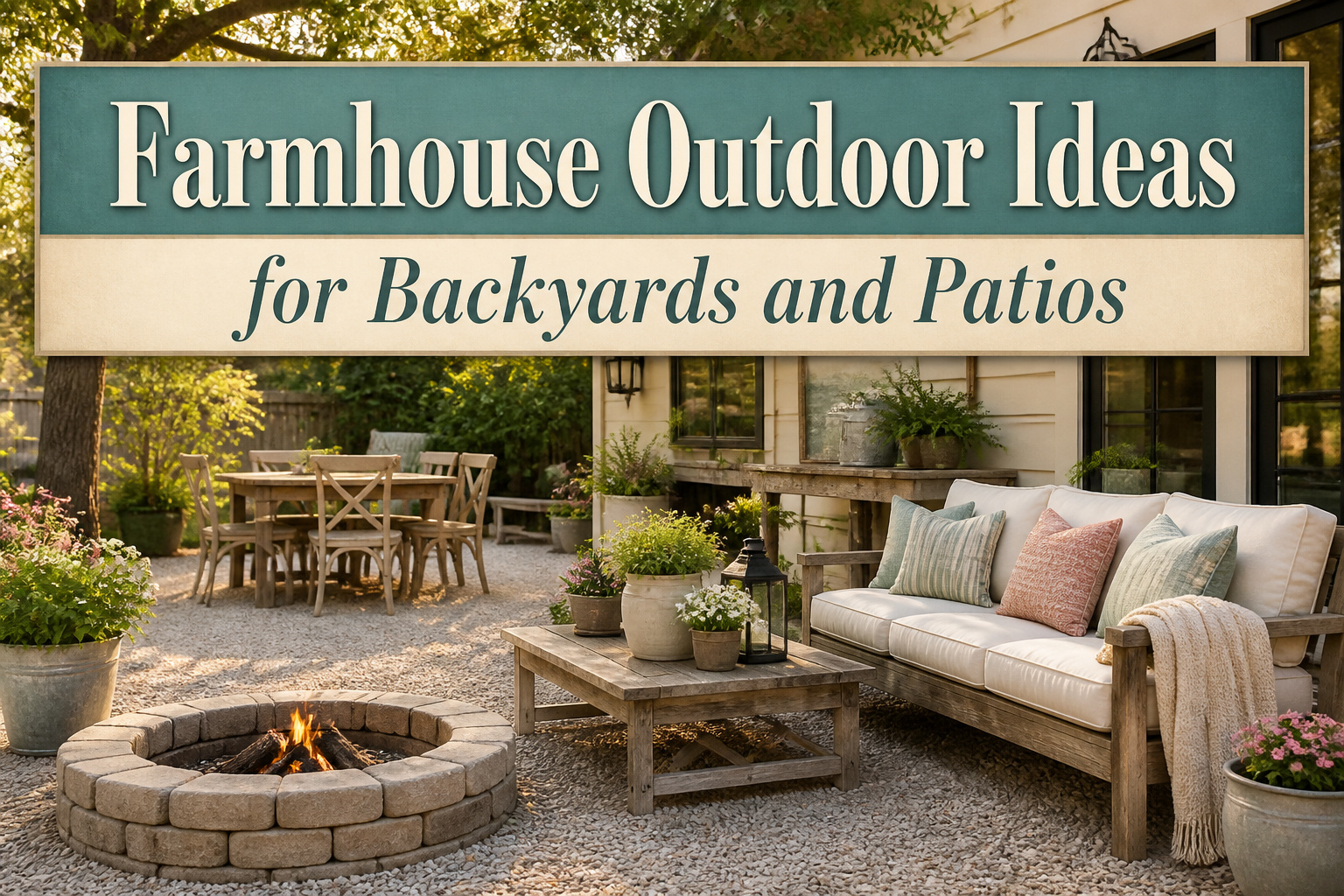
Farmhouse outdoor ideas range from a $340 gravel fire pit built in one Saturday to a three-weekend concrete block fireplace that costs $1,100 and mostly photographs better than it functions. What separates the projects that finish from the ones that rot in your garage until July is whether you blocked the calendar and wrote the supply list before buying anything.
1. Cozy Fire Pit Area
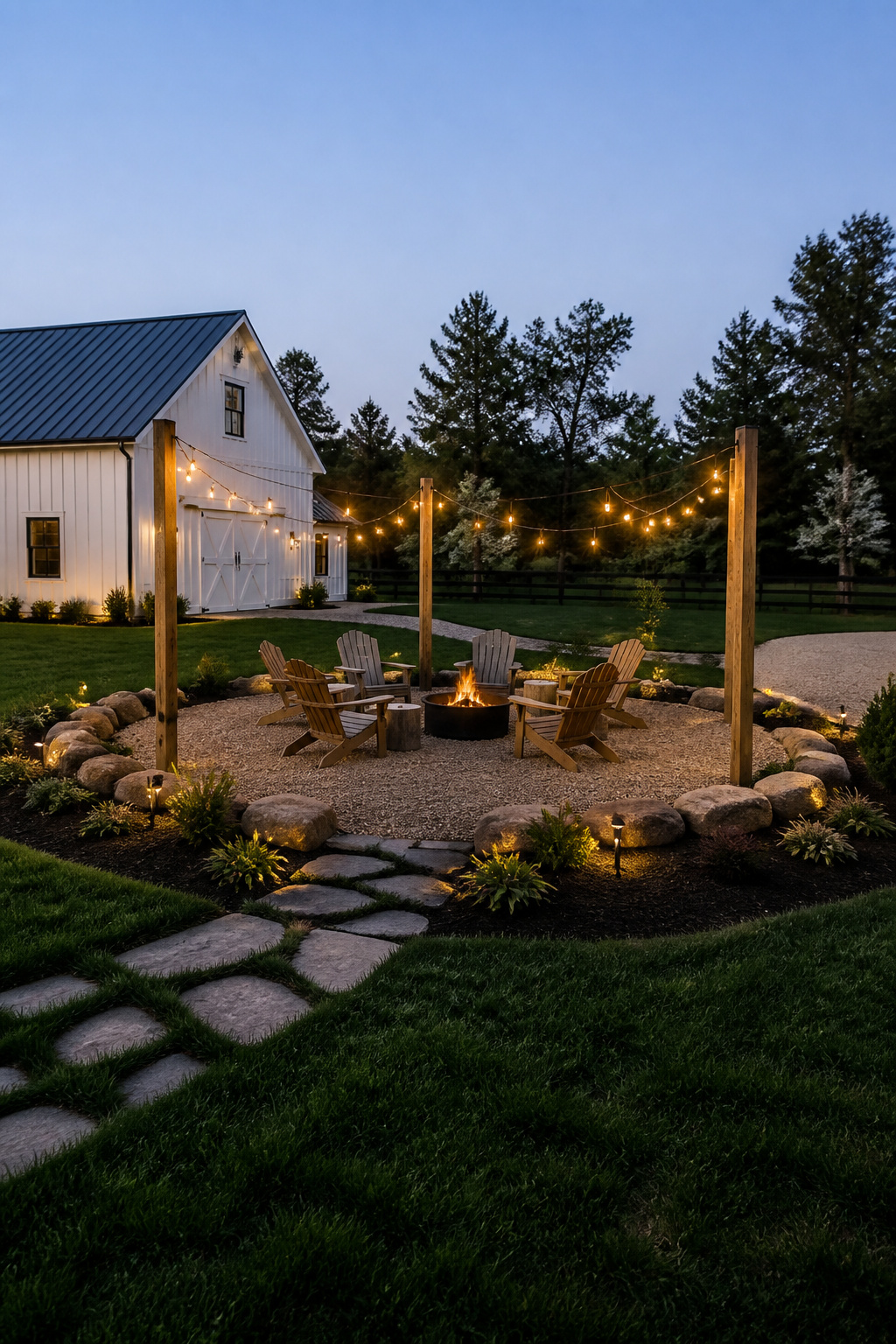
A gravel fire pit area with Adirondack chairs arranged for conversation is the kind of project that looks harder than it is. I built mine for under $400 in a single Saturday, and the only real mistake was placing it too close to the fence the first time. Heat radiates further than you think, and a scorched fence board taught me to keep a ten-foot clearance from anything vertical.
The setup itself is straightforward. A level section of yard gets defined with edging or stone, then filled with compacted gravel. Natural wood or black Adirondack chairs around a dark fire pit, warm gravel underneath, and surrounding greenery are enough for a modern farmhouse look without overthinking it. String lights hung from simple wood posts finish it at night.
For anyone who wants the structure overhead, there are 25 distinct pergola fire pit ideas worth browsing before you commit to open sky. I stuck with open air because my budget was real and my timeline was one weekend, not three.
2. Relaxing Hammock or Swinging Bed
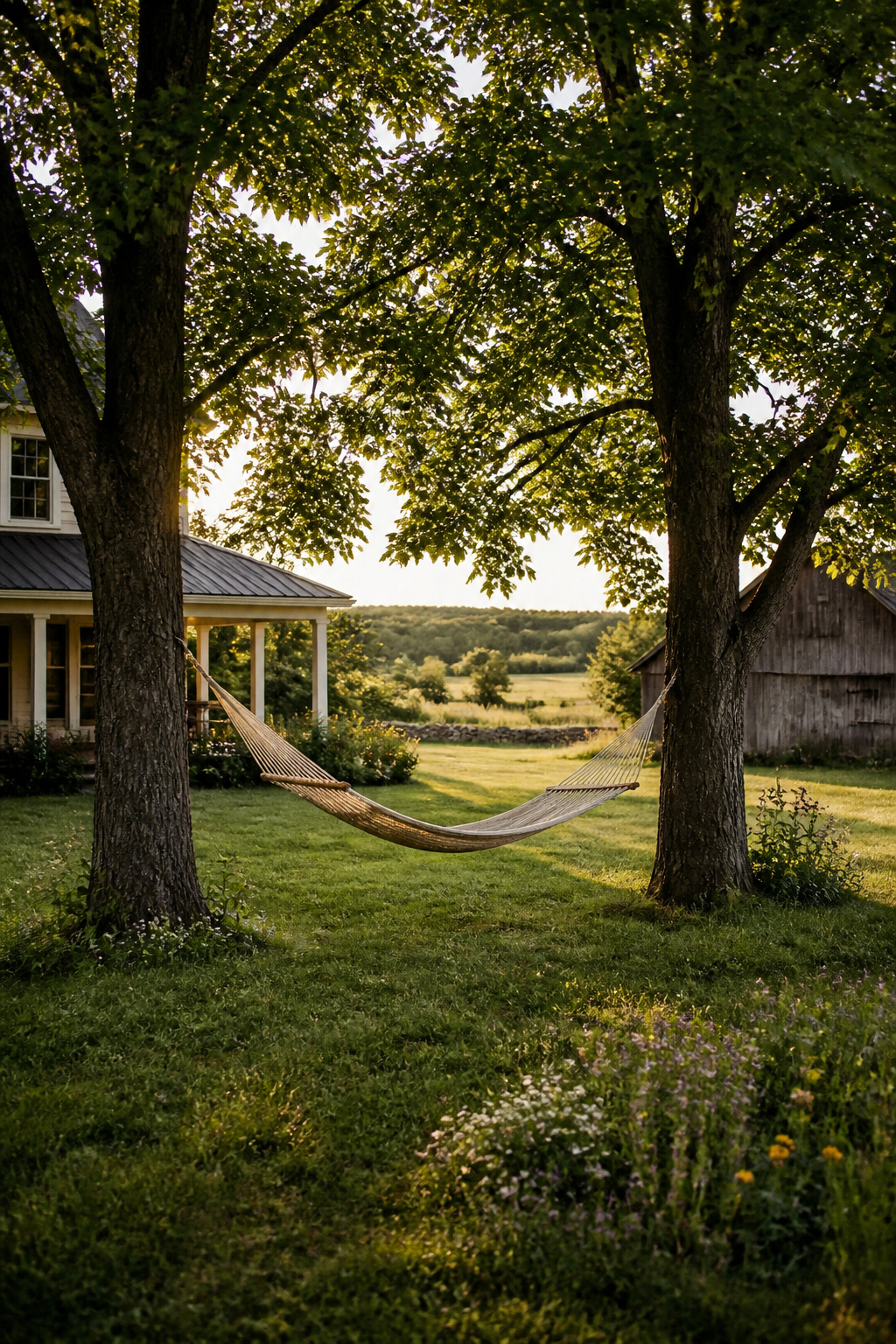
Tree-mounted hammocks carry the farmhouse look better than anything bolted to a patio, but the trees have to earn it. I needed a 12-foot span between two mature maples before the arc hung right and the base cleared the ground without scraping. Anything closer, and you are folded like a taco; anything wider, and the ridgeline sags until you are staring at bark.
Freestanding frames solve the spacing problem, though they shift the whole look toward pool-furniture territory. The metal ones read modern, and the wooden arches cost enough that you could have planted two saplings and waited instead. For renters, the frame is the only honest option, but homeowners with the trees should use them.
Rope beat chain for me after one winter taught the difference. Chain links squeaked in the wind, chewed the bark where they rubbed, and the cold made them stiff enough to handle like rebar. Rope grips without noise, gives slightly under weight, and when it does weather out, twenty dollars replaces it. Chain just rusts in place and dares you to unclip it.
3. Outdoor Kitchen
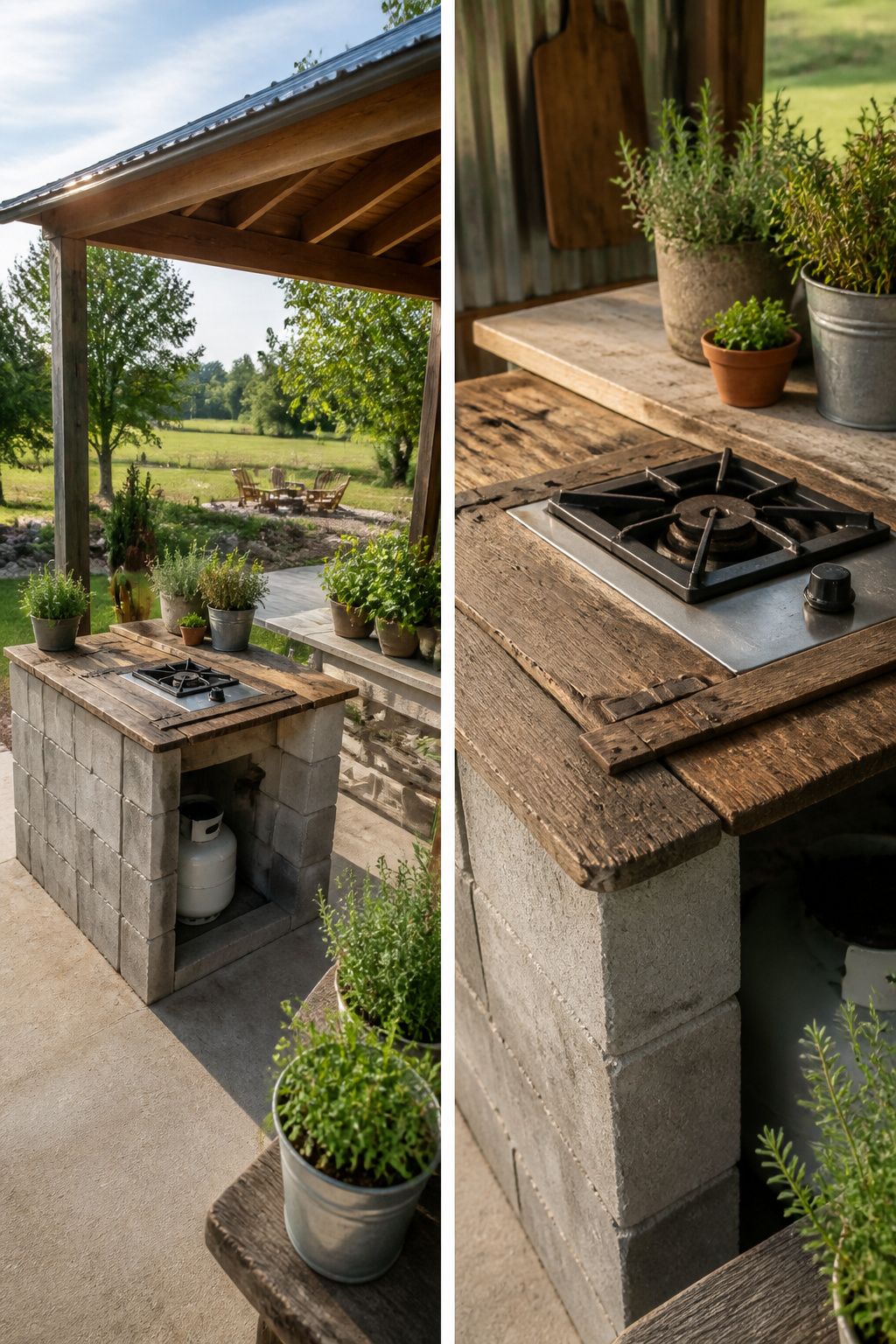
Concrete blocks stacked three high give you a cooking base for about forty dollars, and a salvaged door laid across the top becomes your counter for zero if you time it right with a demolition crew. I bolted a single propane burner into one corner, ran the hose through a gap in the blocks, and that was the whole build. No plumbing meant no permit chase, and the whole thing stayed under $600 even with the tank and regulator.
What actually happens out there is simpler than the photos suggest. I sear steaks, boil corn, and reduce any pan sauce that can handle a breeze. What still comes inside is anything that needs steady low heat, anything with cream or butter that can break, and any night when the wind is up past fifteen miles an hour. The concrete soaks up grease and spatters, which is the point; the door surface is sacrificial and replaceable.
4. Flower Beds and Gardens
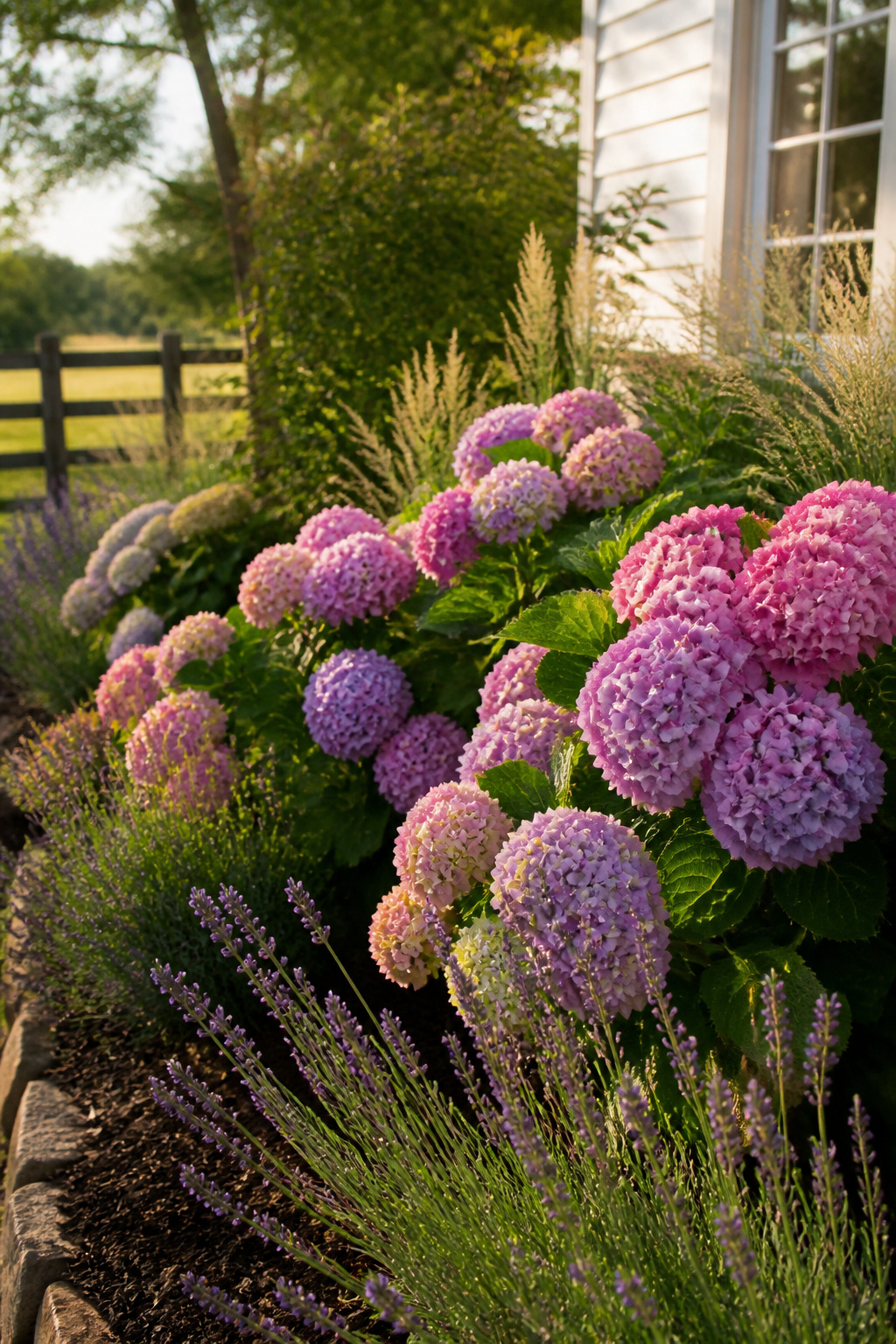
The backbone of a farmhouse garden runs on three plants that behave differently through the season. Hydrangeas give you the big mounded shapes, lavender carries the gray-green and the scent, and ornamental grasses add the movement that keeps the bed alive in November. In zone 6, the schedule matters more than the variety. I put plugs in the ground in mid-May after the last hard frost, and that first year I spent $80 on full-size plants that sat there looking expensive while they established the same root system anyway. The plugs caught up by August and filled out better the following spring. The grasses especially need that first season to dig deep before they start their clumping; a gallon pot just means more transplant shock for something that was going to sit tight regardless.
5. Pergola or Pavilion
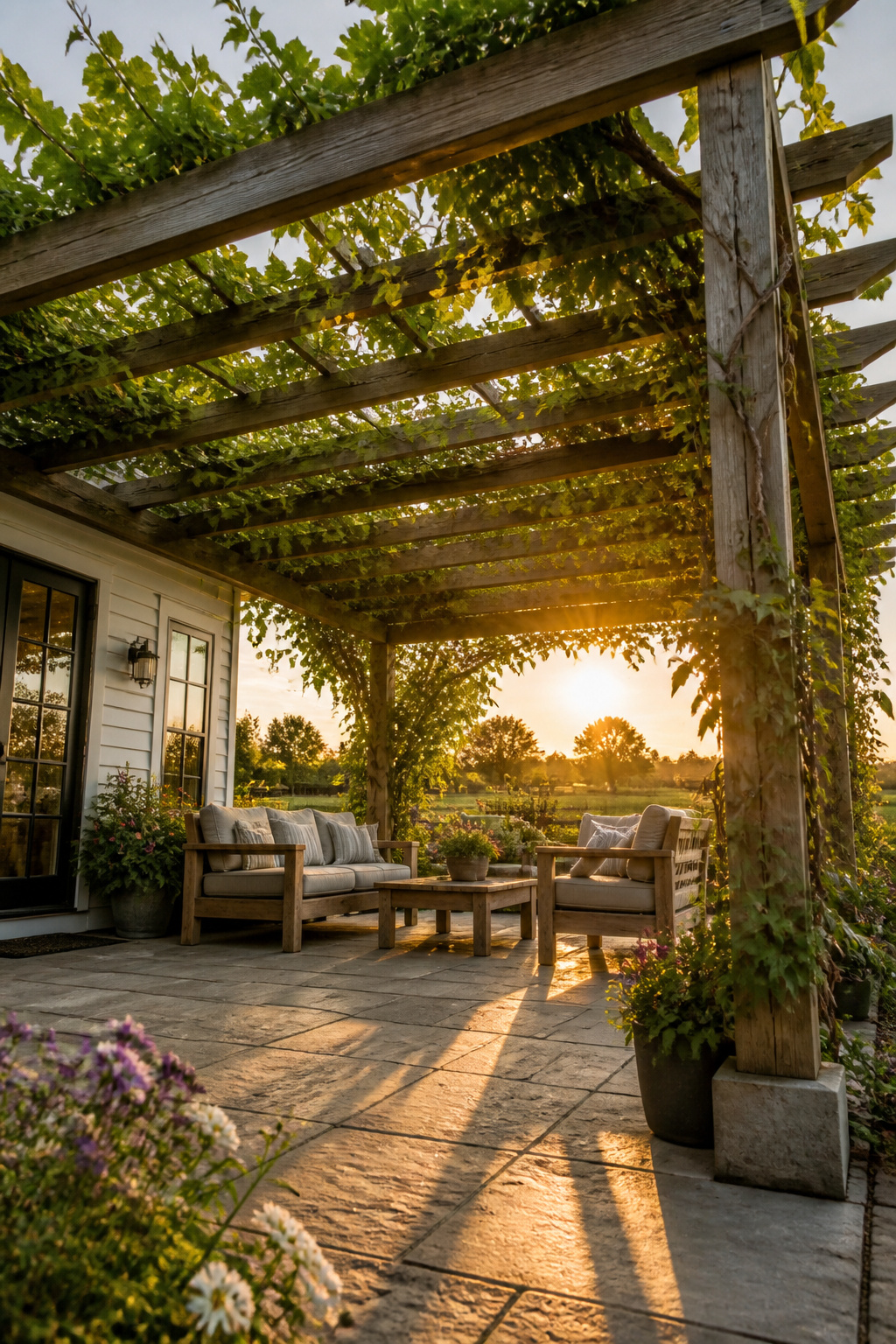
A 10×12 pergola built from pressure-treated 4x4s ran me about $900 in lumber. The cedar kit I priced first wanted $2,800 for roughly the same footprint, and the wood was only marginally better. For something that sits outside year-round, marginally better is a hard sell.
The pressure-treated route means cutting your own rafter tails and buying the hardware separately. I spent a Saturday on assembly with a borrowed auger for the posts. The posts went in quick; getting the beam level across all four took longer than the instructions implied.
My first attempt at vines was a failure. I planted a fast-growing annual right at the base, thinking coverage mattered more than longevity. It grew, then died back to nothing each winter, leaving bare slats for half the year. The second time I went with a hardy perennial vine and gave it a proper trellis wire to climb. Three seasons later it shades the beams properly, and the drop in afternoon temperature underneath is noticeable.
If you are renting or might move, skip the concrete footings and use bolt-down post bases on paver pads instead. The whole structure comes apart with a socket wrench and fits in a U-Haul.
6. Natural Stone
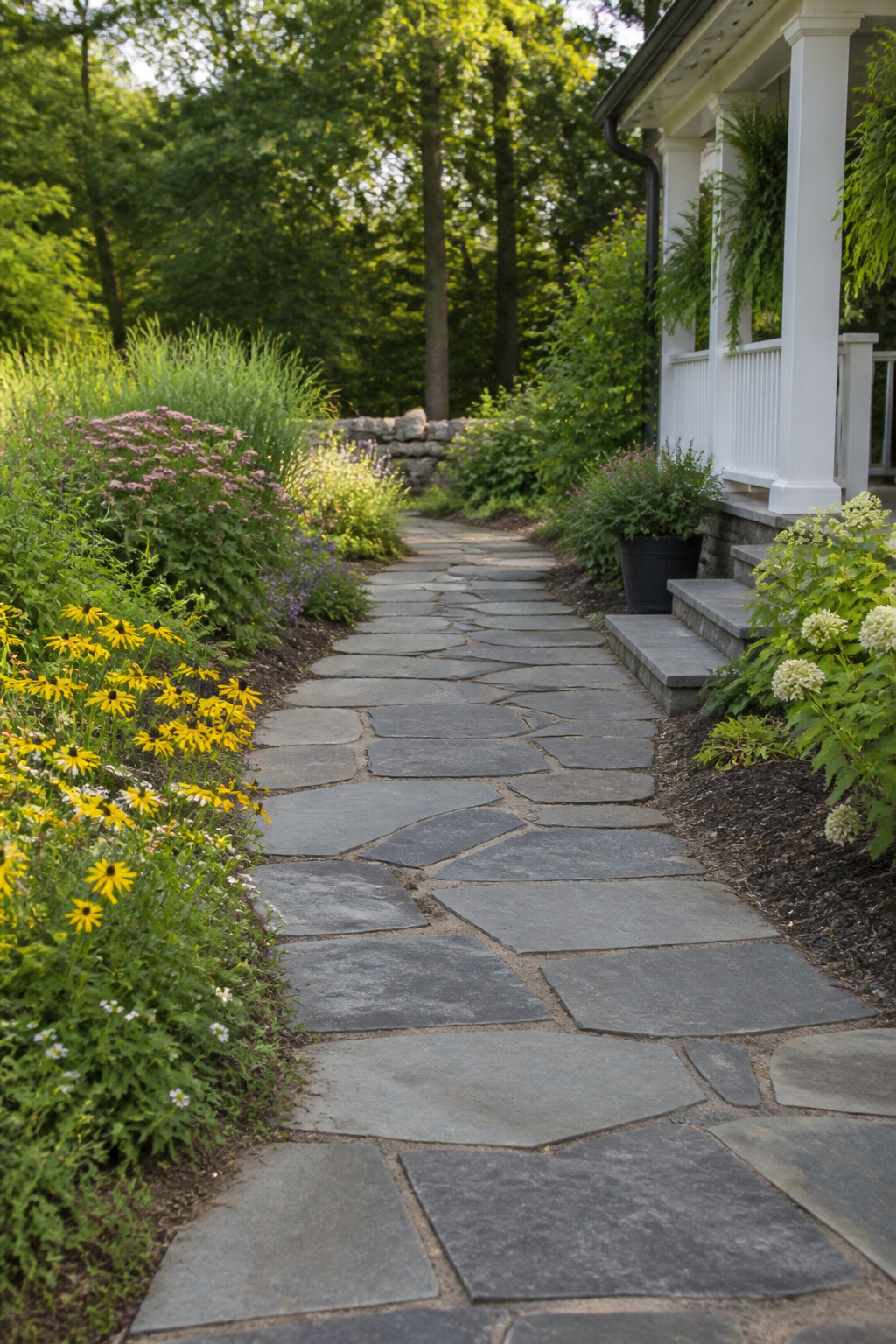
Flagstone paths look like they have always belonged in a yard, and a dry-laid sand base keeps them that way without the cracking that haunts mortar in freeze-thaw country. I spent about $340 with delivery for enough Pennsylvania bluestone to run a narrow side yard, roughly 40 linear feet, and skipped the concrete bed because I wanted to lift and reset any stone that shifted.
Weeds came through the joints inside two seasons, despite the landscape fabric I tucked underneath. Sand settles, seeds find purchase, and pulling them becomes part of the rhythm. A propane torch works faster than hand-weeding once the stones are set, though I scorched a fern the first time I got lazy about aiming.
The base matters more than the stone itself. I dug six inches, tamped crusher run until it rang, then screeded an inch of coarse sand. Each flagstone got leveled by eye and a short level, tapped in with a rubber mallet. Gaps run two to three inches; I fill them with more sand, sweep, and repeat after rain.
7. Comfortable Outdoor Furniture
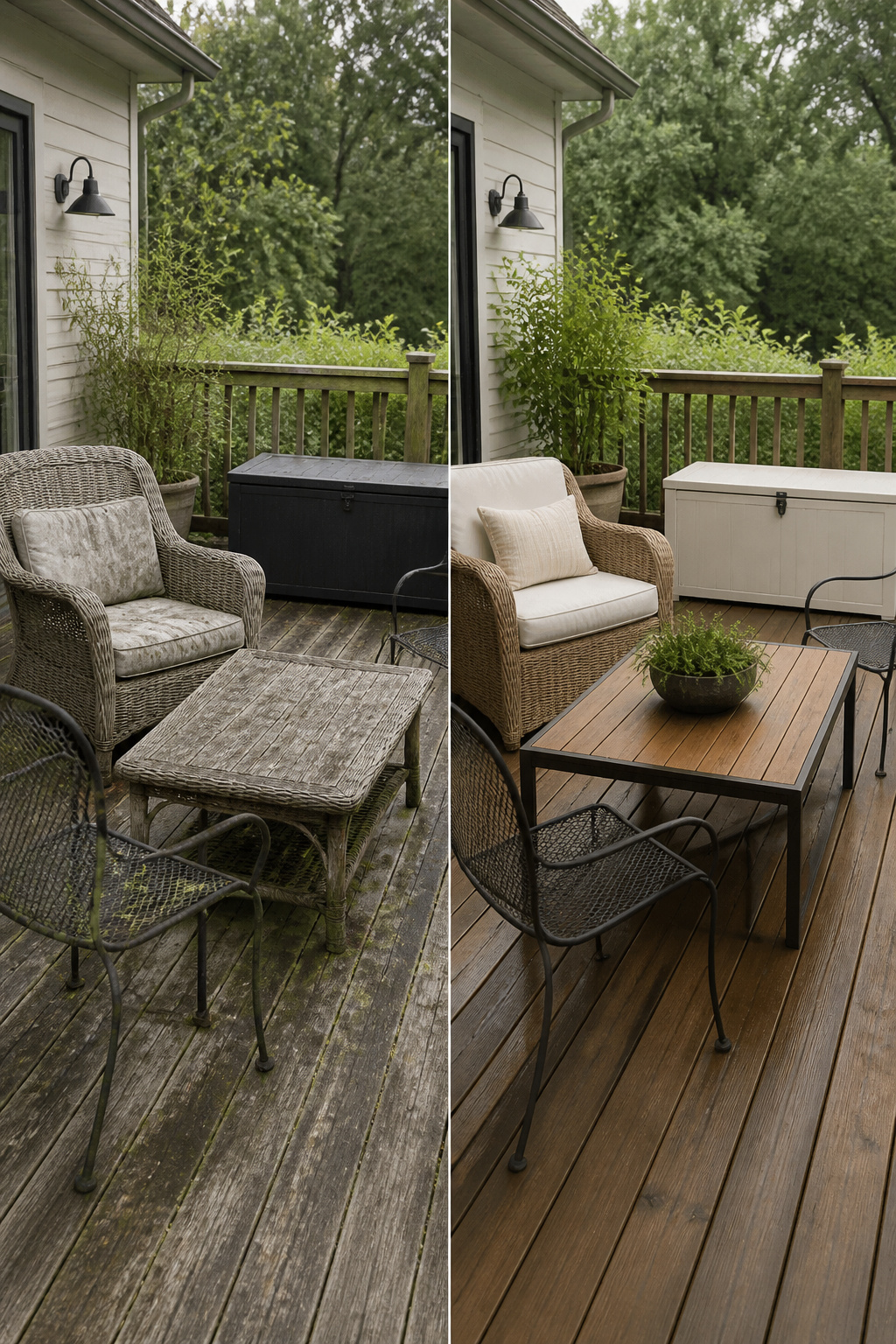
Wicker, wood, and metal each make a different promise about how long they’ll survive outside. The acacia set cost me $220 and looked warm and farmhouse-right for about fourteen months before the legs started splitting where water pooled. The $89 steel frame with a mesh seat, bought as a temporary placeholder, is the one still on the patio three years later. Cushion storage is the real test of whether any of it stays usable. I left the acacia cushions under the cover once after a rain, and the mildew smell never fully left. Now the steel chairs stay bare until someone sits, and the cushions live in a deck box with a gasket seal. For a farmhouse look on a budget, weather-resistant beats weatherproof every time, and the difference shows up in year two, not year one.
8. Privacy Landscaping
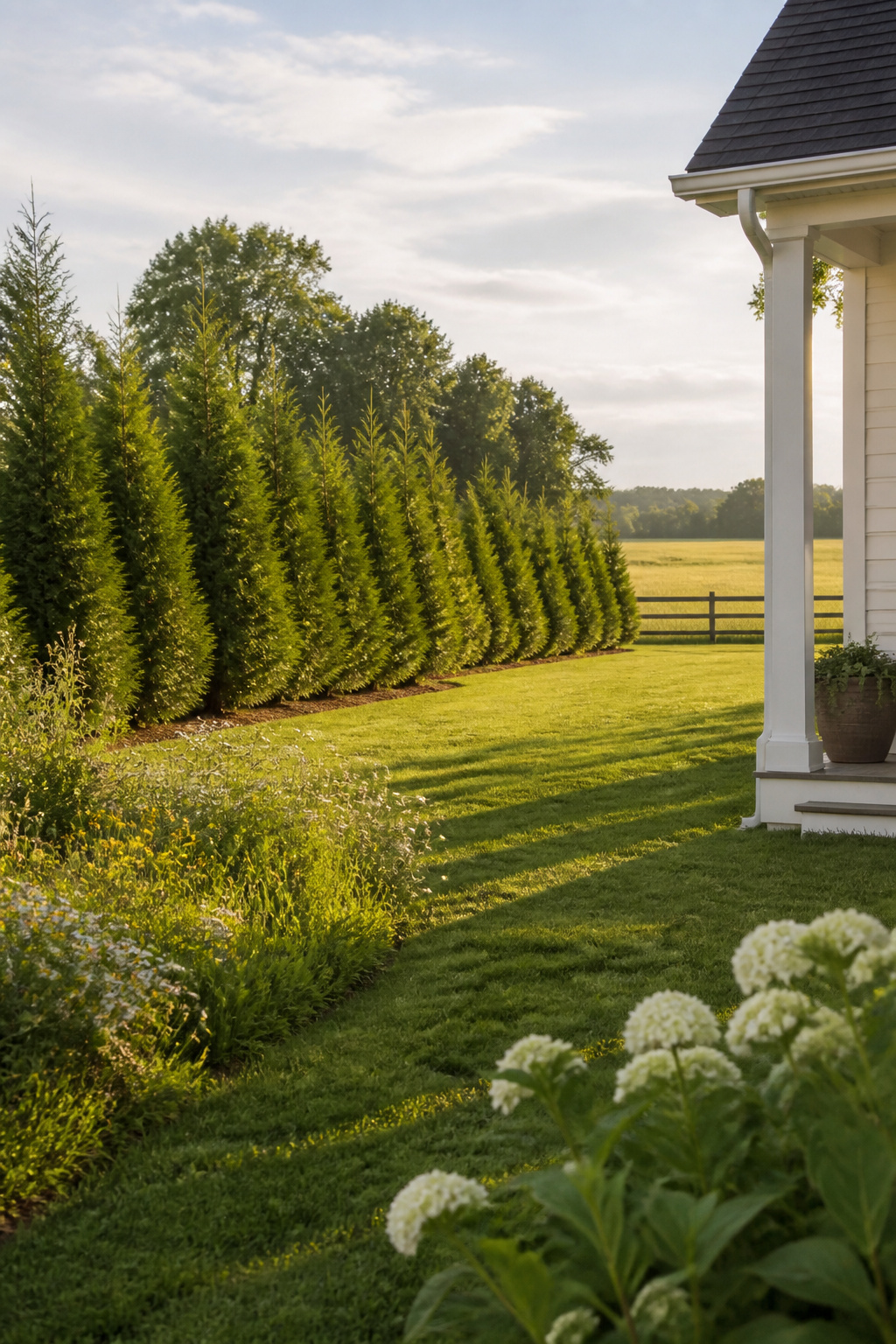
Arborvitae hedges take about three years to fill in enough to matter, and the spacing you choose in year one decides whether you get a wall or a picket fence. I planted mine at 24 inches on center because the nursery tag said "fast growing" and I wanted instant coverage. That was the mistake. By summer three the trunks had thickened and the branches met, but they met thinly; a persistent gap runs shin-high where the lower foliage never thickened. The right spacing for a solid screen is 36 inches apart, which feels absurdly wide when you are standing in a line of knee-high twigs, but the trees need that room to push outward instead of upward. Mine now read as a row of individual columns rather than one mass, and the only fix is to pull every other plant and restart the clock. If your property line runs long, the cost of overplanting is not just the extra trees; it is the years spent waiting for a hedge that never quite arrives.
9. Outdoor Fireplace
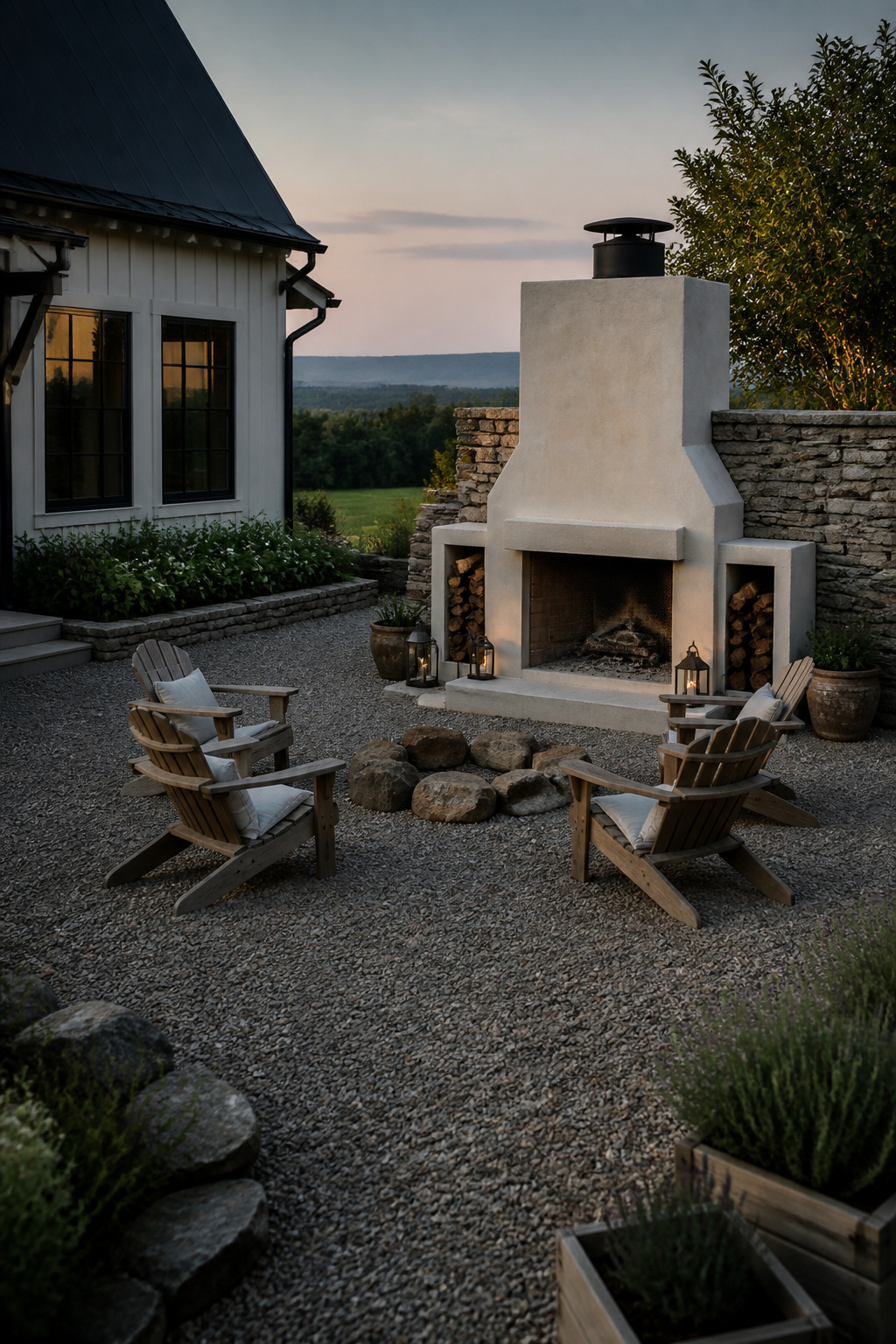
Concrete block and stucco gave me the farmhouse look without the farmhouse price tag. The core is standard 8-inch block stacked dry, then skim-coated with a scratch-and-brown stucco layer that hides every imperfection. A wood-burning flue kit ran about $340 of the $1,100 total, and that metalwork is the one place I refused to cut corners.
Three weekends broke down simply: one for the block plinth and hearth slab, one for the firebox and throat, one for stucco and cure time. The stucco needs misting twice daily for five days or it cracks from the heat later. I learned that after hairline fissures appeared on my first attempt.
The fireplace draws eyes better than it draws smoke. Wind from the wrong angle pushes everything into the seating area, and the fixed structure means you cannot pivot to dodge it like you would a portable pit. Chairs end up eight to ten feet back for comfort, which eats more patio than I expected. Ash hauling is a real chore too: no scooping and shaking like with a steel bowl, just a brush-and-pan routine down a narrow firebox throat, then a walk to the compost bin.
I light it maybe six times a year now. The fire pit gets the other twenty evenings because it forgives wind shifts and lazy cleanup. The fireplace stays because it photographs well and warms the house’s whole visual presence from the kitchen window. For anyone choosing between them, ask which you will actually tend to, not which looks better on the plan.
10. Lighting Features
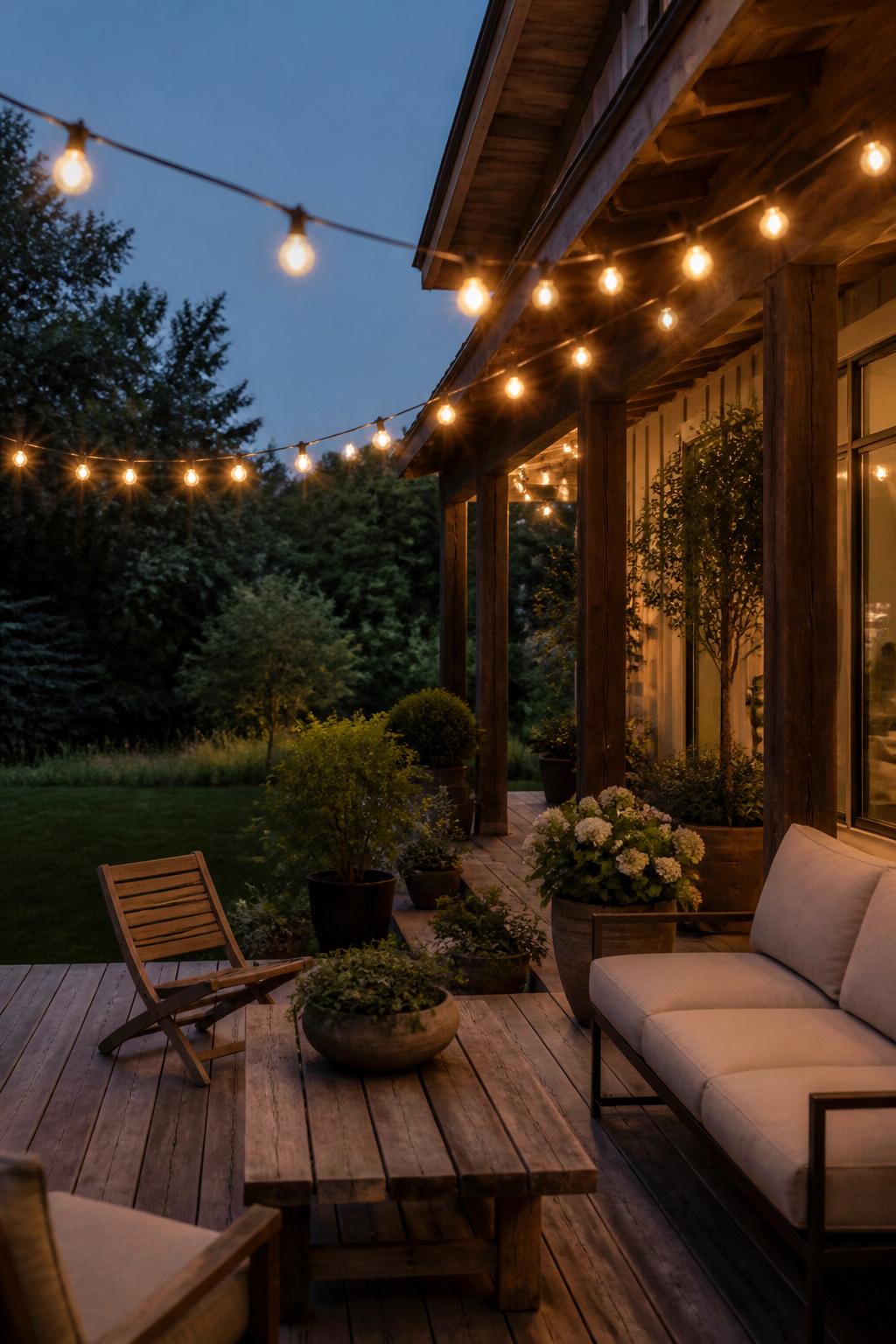
String lights sag after one season unless you run them on guide wire. I learned that the hard way on a 20-foot run across my patio; the middle drooped until it was practically a necklace. Galvanized steel cable, two eye hooks, and a turnbuckle to tension it, and the lights stay level through humid summers.
Solar path lights were the next experiment, and they were dead by November. The panels clouded over, the batteries wouldn’t hold a charge past dusk, and the dim amber they managed looked more like a malfunction than atmosphere. I pulled them out and never replaced them.
What stayed was a 120V bistro string set plugged into a weatherproof outlet. The bulbs are 2700K, not the 5000K daylight that makes a backyard feel like a parking lot. Warm color temperature matters more than lumens for farmhouse style; you want the light to look like it came from a filament, not a floodlight. At 15 watts per bulb, it is bright enough to eat by without erasing the night sky.
Reclaimed Wood and Vintage Finds
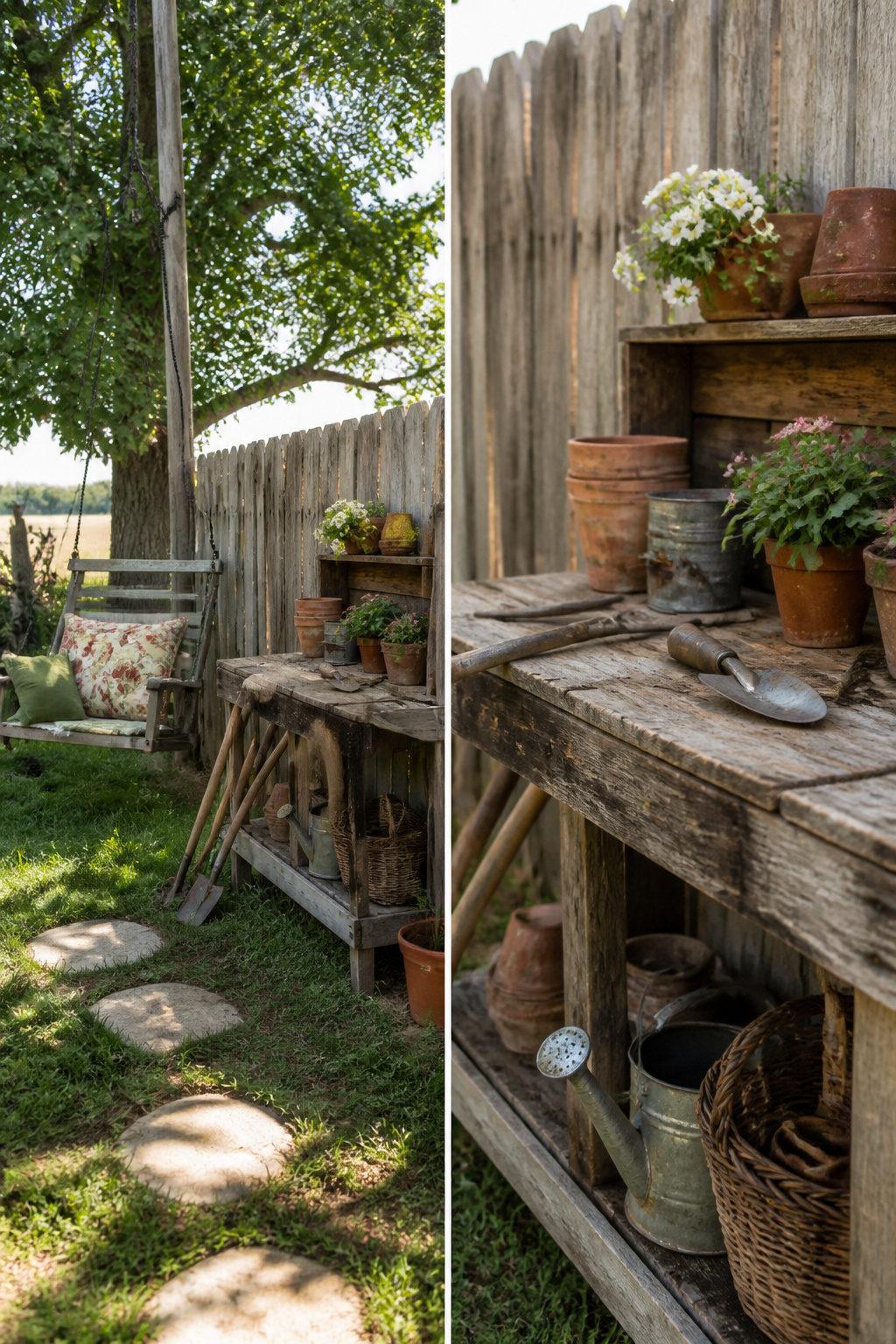
The barn door potting bench sitting against my fence started as a splintered slab from a teardown thirty miles outside town. Estate sales, not curated vintage shops, are where the 1950s porch swing actually came from: thirty dollars, half the bolts rusted solid, a wasp nest in the seat slats. Real finds smell like mildew and require a full Saturday of disassembly.
I used to trust the patina. Then I sanded a flea-market window frame for a planter box and the dust came up chalk-white. A lead test kit costs eight dollars and adds twenty minutes. Skipping it once was enough. Now every painted piece older than 1978 gets swabbed before it crosses my threshold. The bench and swing look like they have history because they do, not because someone distressed them with a belt sander and a can of stain from the craft store.
DIY Projects That Actually Finish
The pallet sofa in my backyard sat half-sanded from March to June. Every weekend I walked past it with coffee in hand, telling myself Saturday was the day. The wood stayed gray, the cushions stayed in my garage, and the whole thing finally went to the curb in July. Four months of guilt, zero hours of sitting.
That same spring I built three raised beds in one Saturday. Cedar boards, deck screws, a mallet when the drill battery died. Total outlay ran about $180, soil included, and I was planting tomatoes by Sunday evening.
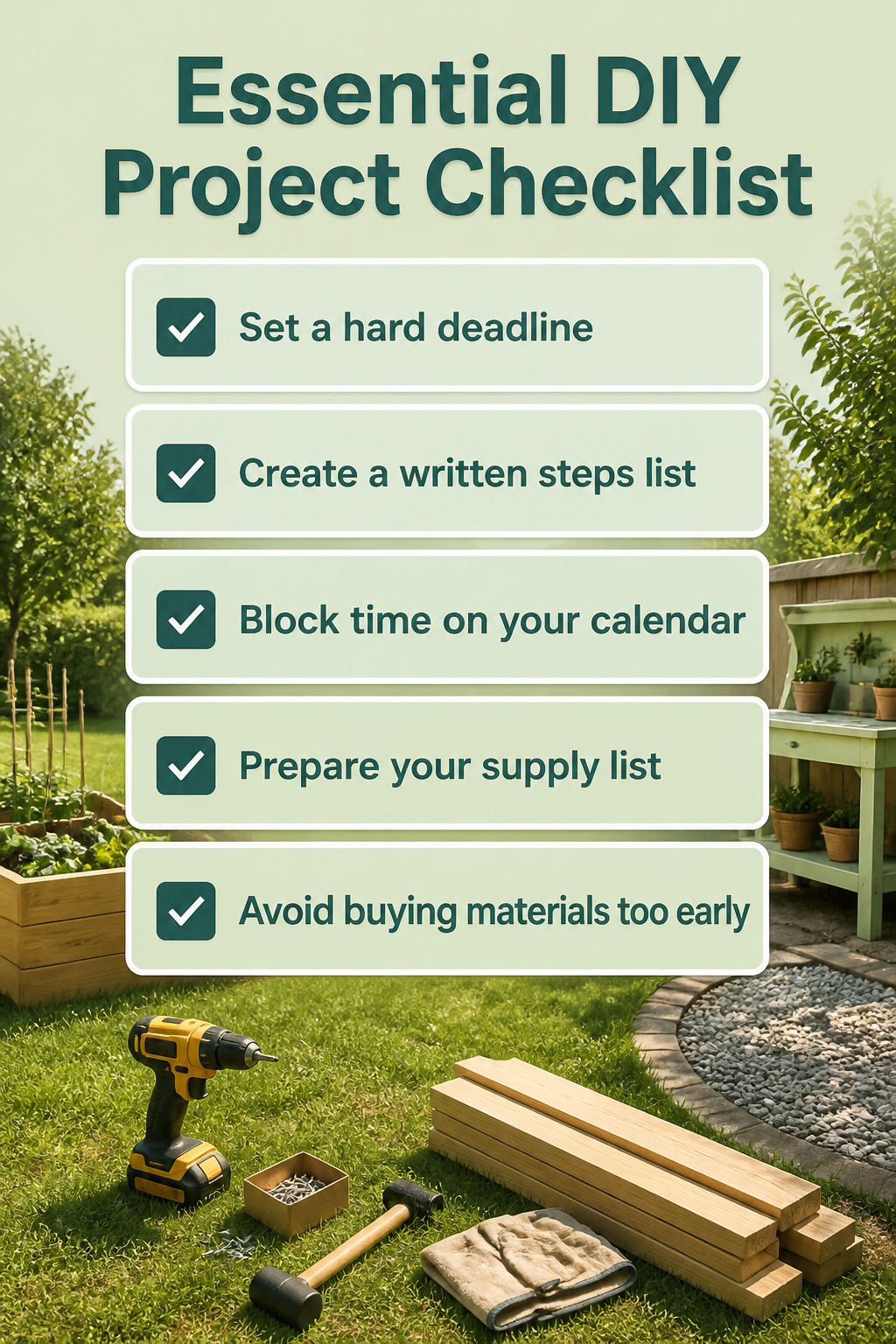
Two abandoned projects haunt my spreadsheet. The sofa ate $340 between lumber, outdoor foam I never cut, and fabric that mildewed in the garage. A pergola extension I sketched but never priced properly would have run past $800; I caught myself before the first post hole. Both failures share a pattern: no hard deadline, no written steps, materials bought before the plan was firm.
Three that finished stayed under $250 each and had something in common. The raised beds, a potting bench from salvaged doors, a simple gravel path: each had a Saturday blocked on the calendar, a supply list written Thursday night, and a point where stopping meant real waste. The potting bench took six hours start to finish. The path, four. Weekend projects work when the weekend is the container, not the suggestion.
Small Animals in a Suburban Yard
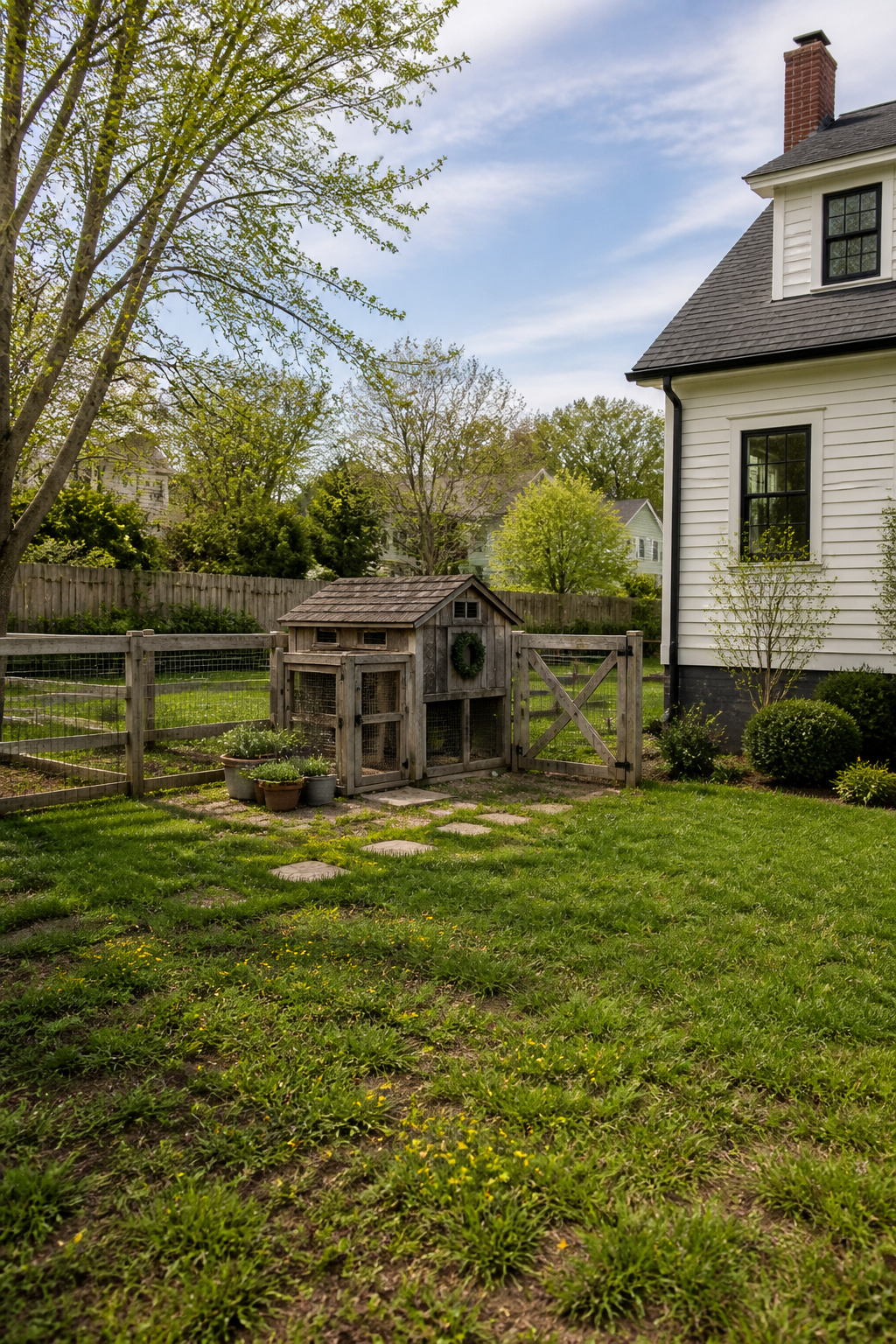
Three hens in a 4×8 coop fit most suburban lots without crowding the view. Before the lumber went down, I checked the ordinance: six hens allowed, no roosters, coop set back fifteen feet from property lines. The neighbor two doors down asked about noise the day she saw the framing. No complaints came after; the breeds that lay brown eggs tend to chatter at conversational volume, and a closed coop at night keeps even that low.
Feed runs about twenty dollars a month for the three. Egg production drops in winter and after the second molt, so year two is where the math flips: store eggs cost less than the organic layer pellets if you are counting strictly by the dozen. The value sits elsewhere. The composted bedding goes straight to the raised beds, and the shells solve the blossom-end rot that used to hit my tomatoes every July.
Materials That Survive Real Weather
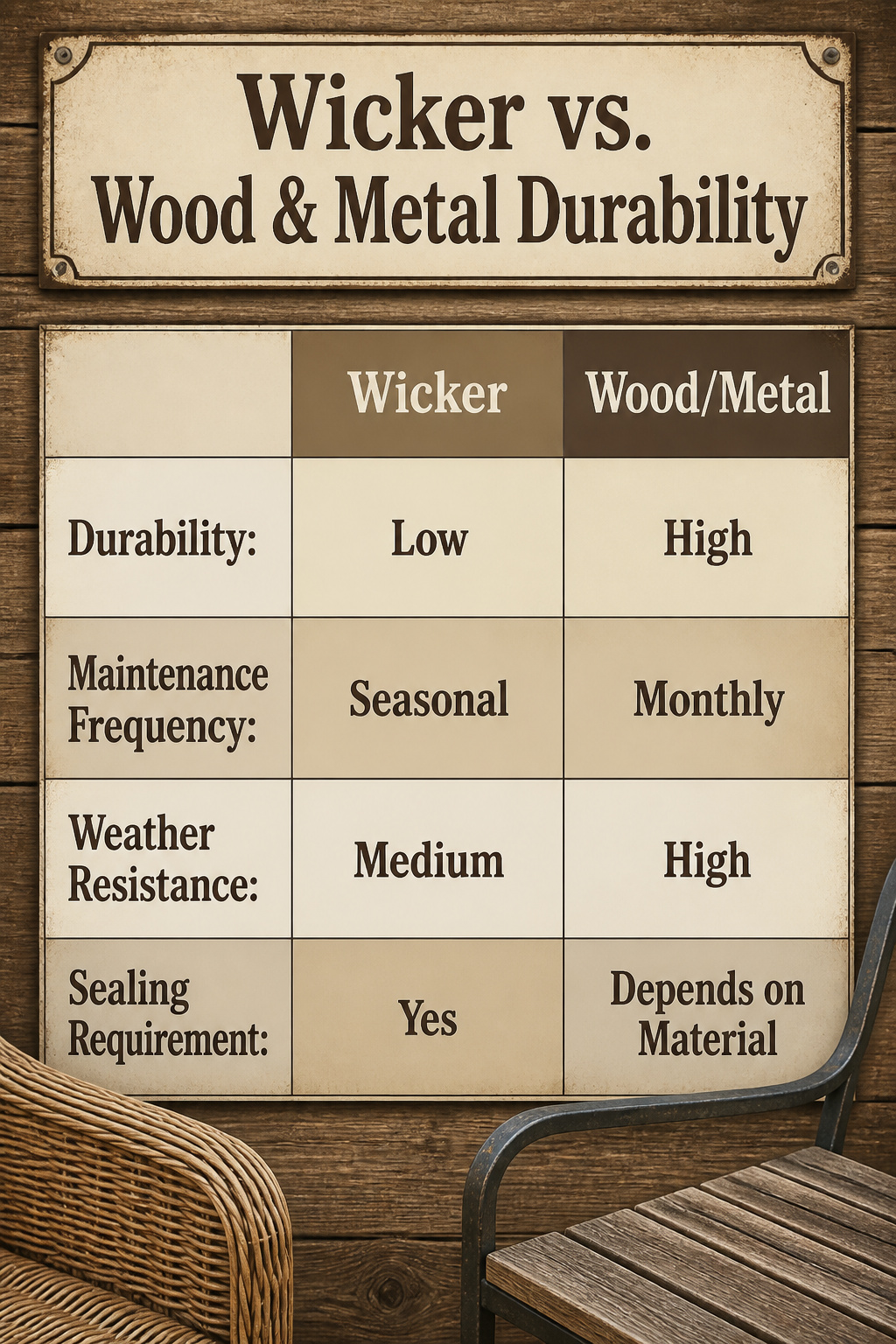
Wicker softens and sags if it sits wet through winter, so the October cover goes on mine the first weekend the nights drop below fifty. Wood needs the opposite timing: March sealing, before the pollen season starts, so the oil has time to cure before summer use. I learned that sequence backward the hard way, sealing in September and watching rain spot the fresh finish gray within a week.
Metal is simpler until it is not. Aluminum frames need nothing; steel ones need touch-up the moment paint chips, or rust runs under the coating and the leg hollows from the inside. I bought a small electric pressure washer after renting three springs in a row cost more than owning. The washer paid for itself in one season, and now the October routine takes an hour instead of a afternoon with a brush.
Frequently Asked Questions
What are some key elements of a farmhouse patio?
White painted walls or fencing, wicker or wooden furniture, greenery from plants and trees, repurposed wood accents, vintage-style lighting, and pops of color from cushions or container plants define the look. String lights hung from simple wood posts and warm gravel underfoot reinforce the modern farmhouse feel without overcomplicating it. A fire pit area with Adirondack chairs arranged for conversation anchors the space for gatherings.
What materials work best for a farmhouse patio?
Weather-resistant wicker, wood, and metal hold up outside, though each behaves differently over time. The author found an $89 steel frame chair outlasted a $220 acacia wood set that split after fourteen months. Cushion storage matters more than the frame material itself; a gasket-sealed deck box prevents mildew that ruins seating.
How much maintenance does this patio style require?
Wood furniture needs sealing in March before pollen season so the oil cures properly for summer use. Wicker should be covered once nights drop below fifty degrees to prevent sagging from winter moisture. Plants require watering and pruning, though choosing low-maintenance greenery like hydrangeas, lavender, and ornamental grasses reduces effort after the first establishment year.