

Here’s how to machine-wash your shower curtain: First, detach it from the rod and remove all rings and hardware. Fold it inside out for even cleaning on both sides.
Load it into your washer with one or two bath towels to balance the load. Use a gentle cycle with warm water and a small amount of detergent.
If your curtain is grimy, add ½ cup of color-safe bleach. Air-dry plastic or vinyl curtains completely before rehanging.
Continue reading for specific steps that extend your curtain’s lifespan.
Can You Machine-Wash Shower Curtains?
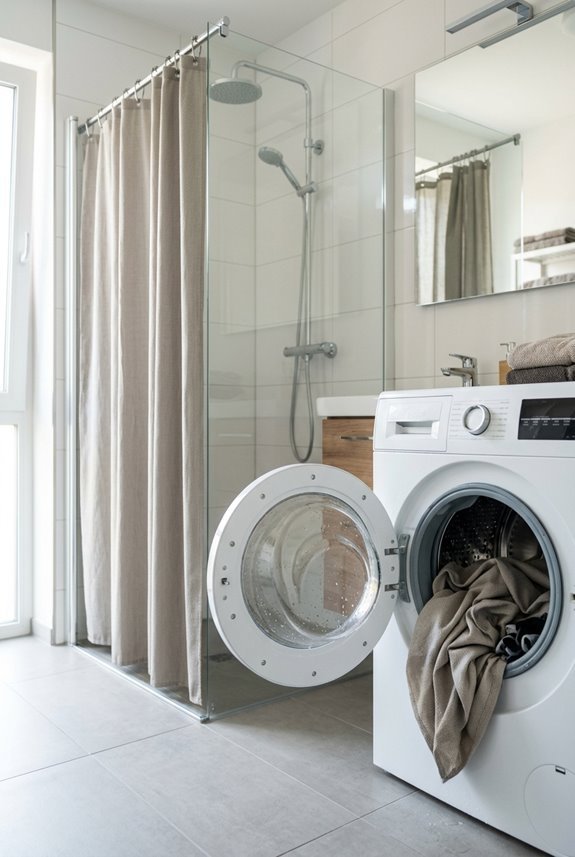
Yes, you can wash most shower curtains right in your washing machine. Fabric, plastic, and vinyl curtains are all washable.
However, you’ll want to check your care guidelines first, as they provide important information.
Most shower curtains—fabric, plastic, and vinyl—are machine washable. Always check care guidelines first for best results.
Before tossing your curtain in, detach it from the rod completely. Remove all rings and hardware too.
This simple step protects both your curtain and washer.
When you’re ready to machine wash, use these settings:
- Gentle cycle
- Warm water
- Highest water level
- One or two bath towels to balance the load
Following these care guidelines ensures your shower curtains come out fresh and clean.
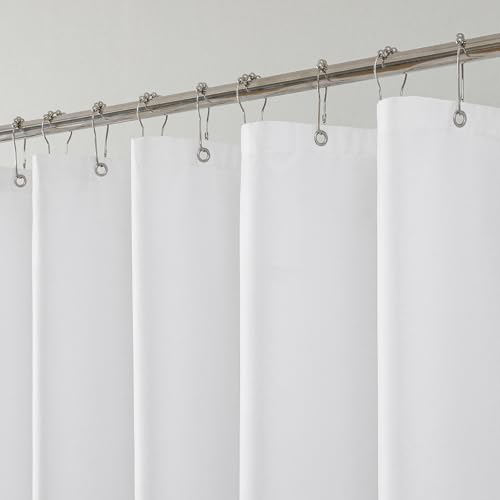
Premium Waterrepellent Polyester Fabric:Crafted with 100% soft polyester, our shower liner uses nano-scale hydrophobic technology to repel 99% water within 3 seconds . Water beads instantly roll off without soaking through, unlike stiff PEVA/PVC liners.

Package Includes: Comes with 1 faux linen shower curtain featuring reinforced metal holes and 12 bonus metal hooks,rust resistant and easy to slide.You will enjoy the added convenience of these bonus hooks while saving on the cost and effort.
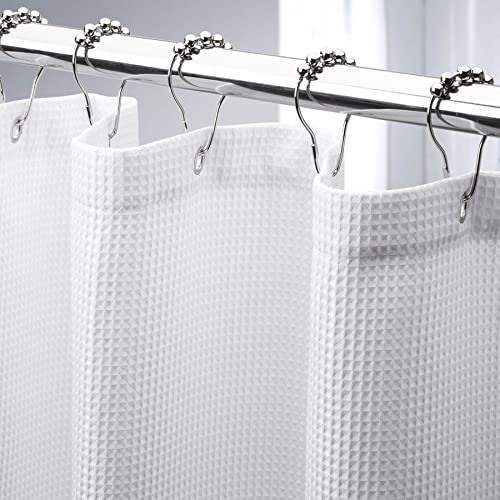
Superior heavy-duty polyester fabric - AmazerBath white shower curtain waffle weave is made of heavy-duty polyester fabric. 240GSM (Gram Per Square Meter), about 1.1 pounds heavier than normal 90GSM fabric shower curtains. It is comfortable to touch, no smell, no-blowing, withstands moist bathroom and ensures long-lasting use. Warm tips, this package only includes a waffle shower curtain, hooks are not included.
Check the Care Label First
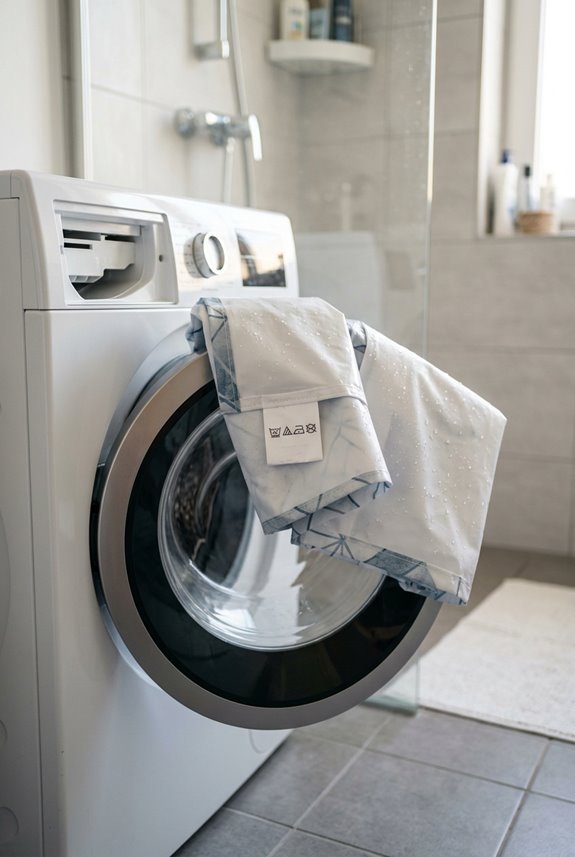
Before you toss your shower curtain into the washing machine, check the care label first. The label indicates whether your curtain is machine washable and specifies the exact cycle type and water temperature to use.
Some labels note whether you can tumble-dry on low heat or if air drying is preferable. The drying method protects your curtain from damage.
If there’s no label, use general guidance: add a small detergent amount, toss in towels to balance the load, and skip high heat. Reading the instructions takes two minutes and prevents curtain damage.

HOTEL LUXURY QUALITY: Superior quality polyester shower curtain/liner, applicable to hotel and home décor. Use by iteself or protect your decorative curtain with this 2-in-1 shower curtain liner

Natural Linen Blend Fabrics: Our outer shower curtain is crafted from 20% natural imported linen and 80% polyester, featuring premium linen blend material with a gentle soft texture. Both the outer fabric and matching inner liner are treated with a water-repellent coating, letting water droplets slide off rapidly and accelerating surface drying.

Shower curtain measures 84" Long x 72" Wide, which is longer than your average shower curtain.
Remove Rings and Detach the Curtain
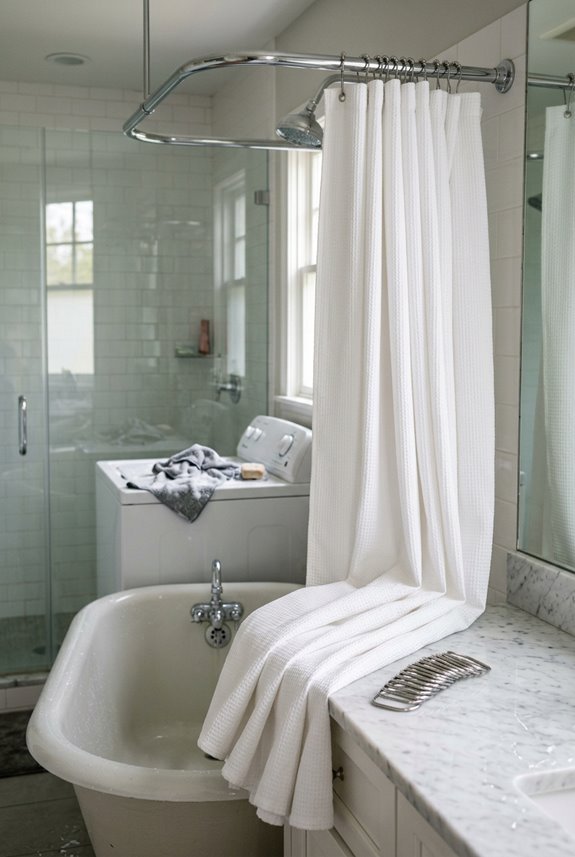
Before you toss your shower curtain in the washer, detach it from the rod completely. Remove all the rings and hardware so nothing metal ends up damaging your machine or curtain.
Once the rings are off, rinse them and set them aside to soak separately in hot water and detergent.

Premium Material: Black Shower curtains are made of fabric 100%, the color won't fade. Applicable to hotel and home décor, looks very clean and classy.

Fabric Shower Curtain: Decorate your bathroom with classic design of the Lush Decor Geo Shower Curtain. Designed with a navy and white trellis pattern that adds dimension to your space.

INCLUDES: (1) Shower Curtain
Detaching From The Rod
How do you get your shower curtain ready for washing. Start by removing your shower curtain from the rod completely.
This step prevents snagging and gives you space in your washing machine.
Next, take off all the rings holding your curtain in place. Removing rings protects your washer and allows the curtain to clean evenly.
You can clean these rings separately by soaking them in hot water with detergent, then rinsing thoroughly before reusing them.
Before loading your curtain into the washing machine, inspect it carefully. Check for any metal components, magnets, or embellishments that could rust or damage the drum.
Set aside anything that doesn’t belong in the wash.
Once your shower curtain is free of hardware, you’re ready to load it into your washing machine.
Removing Hardware Safely
The rings holding your curtain in place need to come off first. Removing them protects your washer and curtain because loose rings can damage your machine’s drum during the wash cycle.
What to do:
- Slide each ring off the rod carefully
- Set them aside in a safe spot
- Never wash curtain hardware with the fabric
Once you’ve removed all the rings, your curtain moves freely in the washer without snagging. This simple step prevents costly machine repairs.
For stubborn rings: Soak them separately in hot water with detergent. Rinse thoroughly to remove soap residue.
Reattach them only after your curtain dries completely.
Fold the Curtain Inside Out for Even Cleaning
When you fold your shower curtain so the interior and exterior faces press together, both sides receive thorough cleaning. This folding technique allows water and soap to reach every part of the curtain evenly during the wash cycle.
Your curtain will be fresher and cleaner when both surfaces receive equal attention throughout the wash.

Smooth gliding - Engineered spherical roller balls of shower curtain hooks can glide smoothly and fast across shower rod.

Ball design - The ball on the top of the shower curtain ring adopts a spherical design, reducing friction, sliding without noise, and pulling the shower curtain effortlessly.
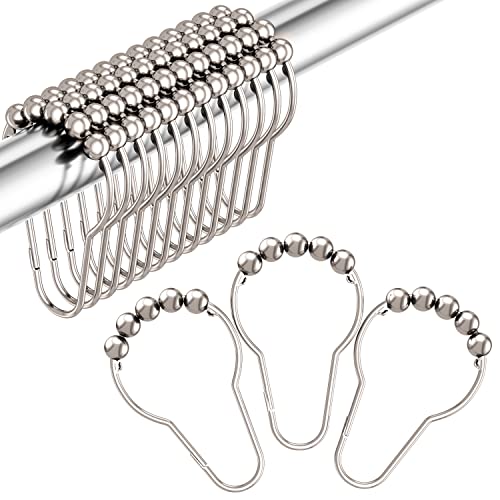
Rustproof & More Sturdy Stainless Steel - Stainless steel is more rust-resistant and sturdy than ordinary metal shower curtain hooks, allowing for years of use in the bathroom.
Why Inside-Out Matters
Flipping your shower curtain inside out during washing makes a significant difference in cleaning results.
When you position your shower curtain inside-out, you expose both fabric surfaces to water and detergent. This matters because:
- Better detergent distribution reaches every layer evenly
- Fabric washing agitation dislodges trapped grime from inner weaves
- Soap residue on your outer surface decreases noticeably
- Both sides dry uniformly after washing
Your shower curtain traps moisture and dirt between layers constantly. Regular washing misses these hidden areas.
By folding inside-out, you ensure nothing gets overlooked. The water can flow freely around all fabric sections.
This approach means your curtain gets genuinely clean, not just surface-level clean. The difference becomes apparent after your first inside-out wash.
Folding Technique for Curtains
How do you fold a shower curtain to get the best wash results? Start by laying your curtain flat on a clean surface.
Fold it in half lengthwise, then fold it in half again widthwise. This creates a manageable bundle that fits easily in your washer.
Key folding steps:
- Align all edges carefully
- Press folds flat to reduce bulk
- Place folded curtain with creases facing the center
This folding technique ensures water and detergent reach both sides of your shower curtain during the wash cycle. By positioning it this way, you maximize contact between fabric and soap.
Your washer care improves considerably when you use this method. You’ll achieve even cleaning without needing extra rinse cycles, saving you time and energy.
Even Soap Distribution Benefits
To really get your shower curtain clean, fold it inside out before washing. This simple shower curtain care technique ensures soap reaches every surface evenly.
When you fold the curtain inside out, both sides get equal exposure to cleaning agents and water.
Even soap distribution matters for your wash:
- Removes buildup uniformly across interior and exterior surfaces
- Prevents soap concentration in certain areas that can damage fabric
- Improves overall cleanliness with balanced cleaning action
- Protects your curtain from harsh chemical spots
Pair this folding method with a gentle cycle and warm water. Add a couple of bath towels to your load.
They’ll absorb water and help agitate your curtain evenly. Your shower curtain will come out fresher and last longer with this approach.
Select a Gentle Cycle and Warm Water
- Gentle cycle reduces stress on fabric fibers
- Warm water distributes soap evenly throughout the load
- Lower agitation protects against tears and damage
For plastic or vinyl curtains, use the handwash cycle with slow spin speeds for extra protection. Set your washer to the highest water level.
This ensures thorough rinsing and proper soap distribution across your entire shower curtain.
These adjustments reduce fabric damage and improve cleaning effectiveness for your bathroom essential.

Smooth gliding - Engineered spherical roller balls of shower curtain hooks can glide smoothly and fast across shower rod.

SMOOTH GLIDE FOR EFFORTLESS CURTAIN MOVEMENT: Designed to slide easily along standard shower rods, allowing curtains to open and close smoothly without snagging or resistance.

DOUBLE HOOK DESIGN : These double shower curtain hooks keep perfect balance on your shower rod. The high-low design eliminates any concern about the weight difference between your curtain and liner, so each panel hangs freely without interfering with the other.
Add Detergent and Optional Bleach
Now I’ll show you how to add the right amount of detergent and decide if bleach is right for your curtains.
Use a small amount of laundry detergent to prevent soap scum and residue from building up on the fabric.
You can also add ½ cup of bleach or color-safe bleach if your curtains are really grimy, but always check your care label first.

【Hook Free Design】: No need for annoying and messy hooks, can be installed quickly, saving you time.
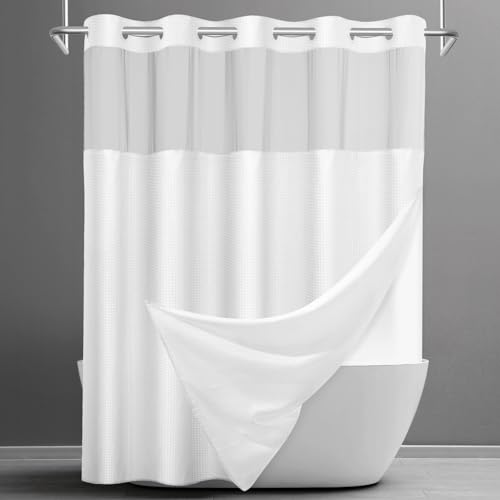
【Hook Free Design】: No need for annoying and messy hooks, can be installed quickly, saving you time.

🚿【Dimensions】 72W * 72H inch (183W * 183Hcm); 256GSM (Gram Per Square Meter), about 1.1 pounds heavier than normal 90GSM fabric shower curtains; 12 rust-resistant grommets that fit most standard shower hooks or rings. Package includes 1 Green Waffle Shower Curtain and 12 Plastic Hooks.
Detergent Amount Guidelines
How much detergent should you actually use? Less is more when washing your shower curtain.
Using too much soap leaves behind stubborn residue that’s hard to rinse out. Follow these guidelines for the best results:
- Use only a small amount of laundry detergent
- Follow your washing machine’s recommended dosage guidelines
- Add ½ cup bleach or color-safe bleach for extra grime (optional)
- Check your curtain’s care label before adding bleach
Balance your load with one or two bath towels. This helps the detergent distribute evenly throughout the wash cycle.
The towels also aid agitation without overloading your washing machine. Using the right detergent amount prevents residue problems and delivers a cleaner shower curtain.
Bleach Selection and Safety
Once you’ve added your detergent, consider bleach for your laundry. Bleach isn’t always necessary, but it can help brighten white curtains.
Before using bleach, check your care label first. If it permits bleach and your curtains are white or colorfast, you can proceed.
Bleach Guidelines:
- Add 1/2 cup of bleach to your washing machine
- Use color-safe bleach for colored shower curtains
- Skip bleach entirely if your care label forbids it
Run a gentle cycle with warm water to protect your fabric. Avoid high heat since it weakens fibers.
After washing, rinse thoroughly to remove all bleach residue. This prevents yellowing and damage.
Following these precautions will keep your shower curtains fresh and durable for years.
Proper Product Placement
Where should you actually put your detergent and bleach?
Getting proper product placement in your washer makes a real difference in your results.
Here’s what you need to know:
- Add a small amount of detergent to the washer drum before loading your shower curtain
- Pour bleach into the dispenser if your washer has one, following manufacturer instructions
- Use ½ cup of bleach maximum for extra grime on plastic or vinyl curtains
- Consider color-safe bleach as a gentler alternative for delicate materials
Always check your shower curtain’s care label first. Some fabrics have specific requirements you’ll want to follow.
By placing products correctly in your washer, you’ll avoid residue and streaks that ruin your curtain. This ensures thorough, even cleaning throughout the wash cycle.
Throw in Towels to Balance the Load
Adding one or two bath towels to your washer when you’re cleaning a shower curtain makes a real difference. The towels help balance the load evenly inside the drum.
They also increase agitation and water flow around your curtain during the wash cycle.
Towels prevent your curtain from clumping or bunching together. This means soap and water reach every part of the fabric.
You’ll get cleaner results with more even exposure throughout the wash.
Key placement tip: Put the towels inside the washer with your curtain, not outside. This positioning maximizes the balancing effect.
Pair this towel strategy with a gentle cycle, warm water, and a high water level for effective shower curtain cleaning.

Natural Linen Blend Fabrics: Our outer shower curtain is crafted from 20% natural imported linen and 80% polyester, featuring premium linen blend material with a gentle soft texture. Both the outer fabric and matching inner liner are treated with a water-repellent coating, letting water droplets slide off rapidly and accelerating surface drying.
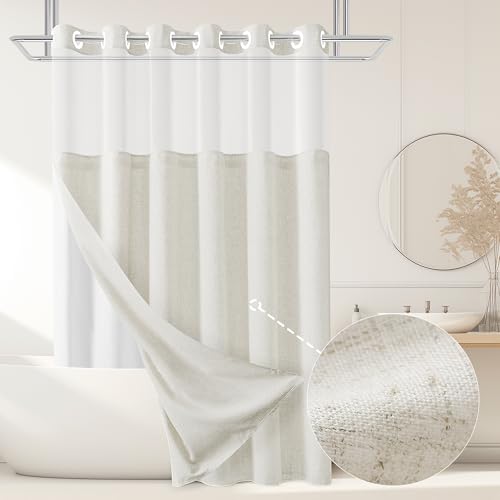
Natural Linen Blend Fabrics: Our outer shower curtain is crafted from 20% natural imported linen and 80% polyester, featuring premium linen blend material with a gentle soft texture. Both the outer fabric and matching inner liner are treated with a water-repellent coating, letting water droplets slide off rapidly and accelerating surface drying.

¡¾UNIQUE DESIGN¡¿ The flower design and the multicolors of this shower curtain is a nice addition to your bathroom.It does indeed have vibrant and eleglant elements in the design that compliments each other wonderfully.
Shake Out the Curtain After Washing
Your washer’s cycle is done, but the cleaning process isn’t quite finished yet. Shake out your curtain immediately after washing.
This step is crucial for proper curtain care and helps you achieve the best results.
Your washer’s cycle is done, but the cleaning process isn’t quite finished yet. Shake out your curtain immediately after washing.
Here’s why shaking matters:
- Removes excess water that pools in folds, promoting even drying
- Dislodges small fabric particles that cling during washing for a cleaner finish
- Prevents wrinkles from setting into your curtain
- Prepares your curtain for the appropriate drying method
For fabric curtains, shake gently, then tumble-dry on low heat if the care label allows. For plastic or vinyl curtains, shake thoroughly and air-dry only; never use a dryer.
These simple shaking techniques reduce wrinkles, improve drying speed, and extend your curtain’s lifespan.

DURABLE & CONVENIENT – Enhance your bathroom decor effortlessly with the sleek & classic look of the Hookless Waffle Shower Curtain. This 3-in-1 shower curtain set features a shower curtain with a see-through window, It’s A Snap! Liner, and Flex-On rings for easy installation

Premium Quality - Our ombre black shower curtain is made of 100% polyester with unique patterns and odorless, long-lasting, and lightweight material. The soft and silky shower curtains with weighted hem help keep the curtain in place and avoid blowing, letting it hang elegantly.

Easy Installation: Expertly crafted to fit most standard bathtubs and showers, this 72x78 inch grey fabric shower curtain seamlessly integrates into your bathroom space. It features 12 button holes that provide a secure fit with virtually any hook or ring, ensuring effortless installation and smooth operation
Air-Dry Plastic and Vinyl Curtains
How should you dry your plastic or vinyl shower curtain after washing? Never use a dryer.
High heat damages plastic vinyl curtains by making them brittle or warped.
Instead, shake out the curtain thoroughly right after washing. Then hang it back on the shower rod immediately.
This shower curtain care method lets air circulate around the entire surface.
Why air-dry works best:
- Prevents heat damage
- Keeps the curtain in good shape
- Takes minimal effort
The curtain typically dries completely within a few hours. Hanging to air-dry is the easiest approach for plastic vinyl curtains and extends their lifespan by avoiding heat exposure.

【High Quality Material】➤Shower curtain hooks are made of premium metal,finished with a durable plating for long lasting rustproof which can be used in a long time,metal rings won't crack or break.Each curtain ring enables to load up to 60 lbs,and is able to hold your shower curtain perfectly with no doubt.

[ANTI-CORROSION MATERIAL]: The shower curtain hooks are made of thickened wire diameter, rust resistant and durable, enough to hang shower curtains and liners, or a variety of bathroom and living items.
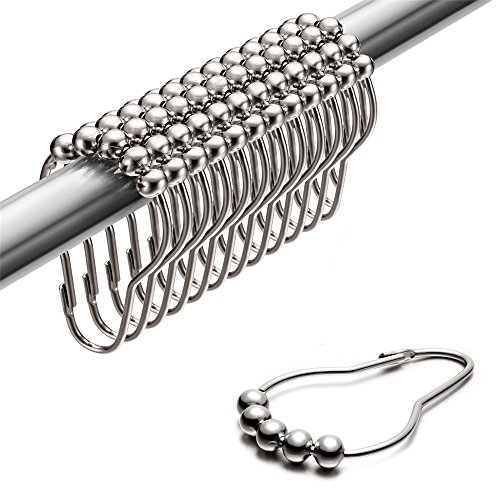
PLATED & POLISHED Chrome– The steel is polished with a polished nickel finish. The hooks sparkle in presence of light, adding a very elegant look to any bathroom.
Machine-Dry Fabric Curtains on Low Heat (If Allowed)
Unlike plastic curtains, fabric shower curtains can handle a dryer if the care label says it’s okay. Check the label first because some fabrics aren’t dryer-safe.
When drying is permitted, follow these steps:
Fabric shower curtains can be dryer-safe—always check the care label first, as some materials aren’t suitable for machine drying.
- Use your low heat dryer setting to protect the fabric
- Add a couple of bath towels to balance the load
- Prevent clumping and snagging with the extra weight
- Remove your shower curtain promptly after drying
Low heat minimizes damage and reduces wrinkles significantly. Taking your curtain out immediately prevents lingering odors and keeps wrinkles at bay.
If you’re unsure about your care label or it restricts drying, skip the dryer entirely. Air drying is always the safer choice for your fabric shower curtain.

[CLOSED LOOP BUCKLE DESIGN]: The shower curtain rings feature a simple snap-on closed loop design, quick and easy to install and remove, without the hassle of a falling shower curtain.
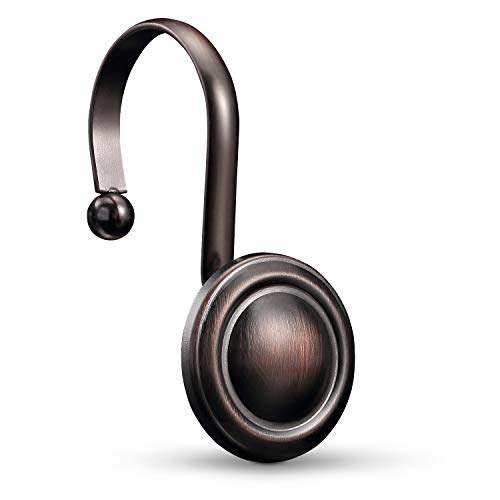
Rust Resistant Hooks for Curtain Pack of 12 pieces

[RUSTPROOF STRUCTURE]: The shower curtain hooks are made of stainless steel with an electroplating process to resist rust and corrosion, perfect for bathroom environment.
Soak Grimy Curtains Before Washing
Once you’ve decided on the right drying method, address any stubborn dirt buildup on your curtain first. Soaking transforms grimy curtains before they go in the washing machine.
Fill a tub with warm water and mild detergent, then fully submerge your curtain. The soak loosens embedded dirt on both fabric and vinyl liners, making the actual wash cycle easier.
| Step | Time | Action |
|---|---|---|
| Fill tub | 5 min | Add warm water and detergent |
| Submerge | 1 min | Place curtain fully underwater |
| Soak | 15–30 min | Let grime loosen naturally |
| Rinse | 3 min | Remove detergent residue thoroughly |
Gently agitate the curtain during soaking to avoid damaging fibers. After soaking, rinse thoroughly before washing.
This method removes significantly more dirt than washing alone.
Hand-Wash Delicate Curtains as an Alternative
If your shower curtain’s fabric feels delicate or you’re worried about machine damage, hand-washing is a gentler choice. This method preserves your curtain’s color and integrity over time.
Use warm water with mild detergent for the best results.
Follow these steps:
- Dampen the curtain and scrub gently with baking soda and dish soap
- Soak stubborn grime in warm water with mild detergent beforehand
- Use cool water for plastic or vinyl shower curtain materials
- Gently squeeze excess water without wringing afterward
After cleaning, hang your curtain to air dry away from direct heat. This approach minimizes wear on delicate fabrics while keeping your shower curtain fresh and clean.
How Often Should You Wash a Shower Curtain?
How frequently you wash your shower curtain depends on moisture, humidity, and visible buildup in your bathroom. Wash yours every one to three months for shower curtain care that keeps mildew away.
If you live in a humid climate, increase your washing frequency to monthly.
Watch for visible stains, discoloration, or mold spots. These signal it’s time for a wash.
Machine wash essentials include using cold water with gentle cycles for plastic curtains. Add bath towels to balance the load during your machine wash.
For regular maintenance, wipe down your curtain weekly with a dry cloth. This simple habit reduces moisture buildup between washes.
Consistent washing frequency maintains a fresher, cleaner bathroom.