
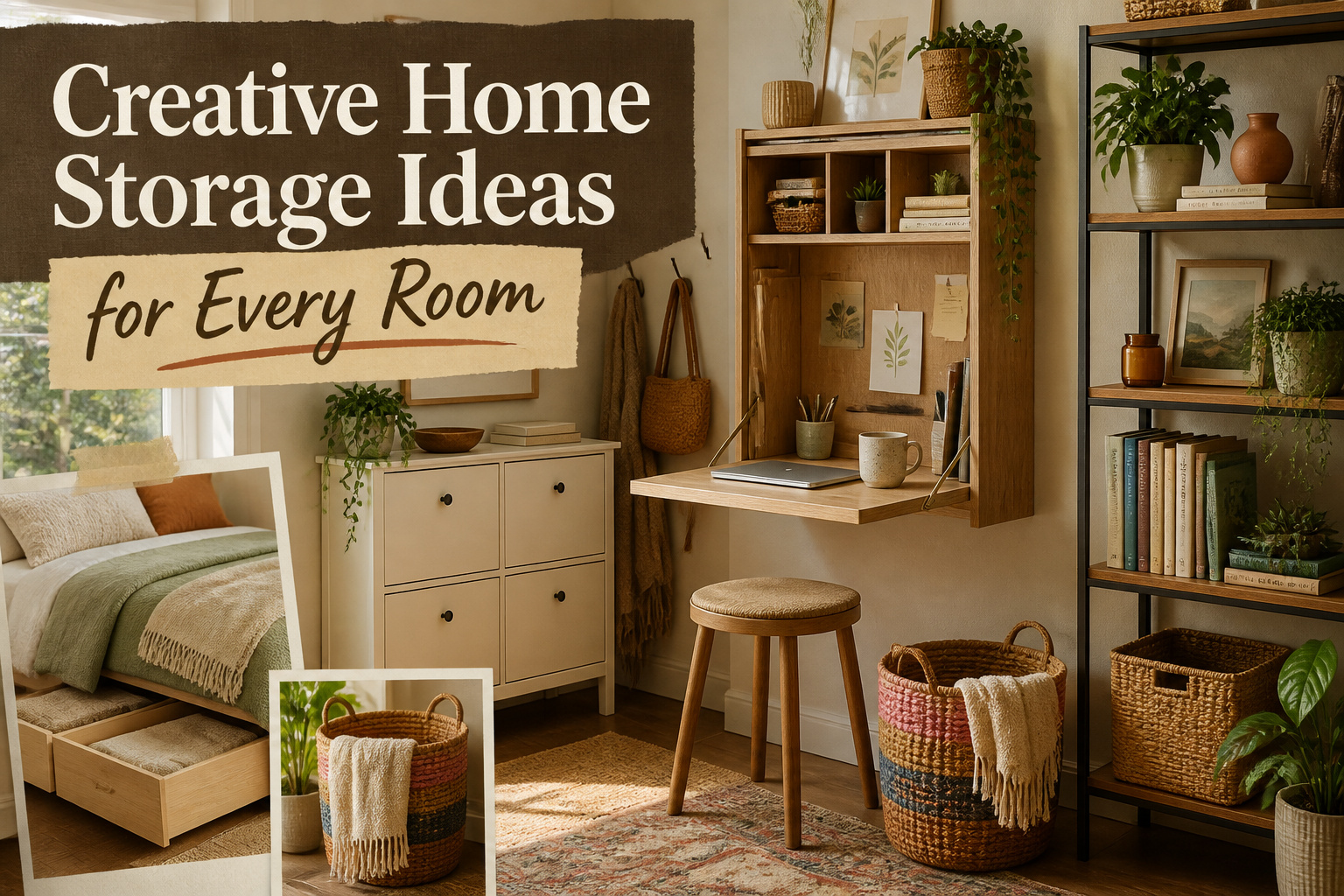
Storage that actually earns its space in 2026 runs from a $44.99 woven basket to a $499 wall-mounted desk, and the single question that sorts them is whether your lease lets you drill into the wall. The Hemnes shoe cabinet at $150 stays flat against plaster with no anchors needed; a ceiling pot rack or window bench demands structural certainty most renters do not have. The best solutions, like the bed with drawers I swapped into my first apartment, turn dead space into storage you use without remembering it is there.
1. Multipurpose Spaces
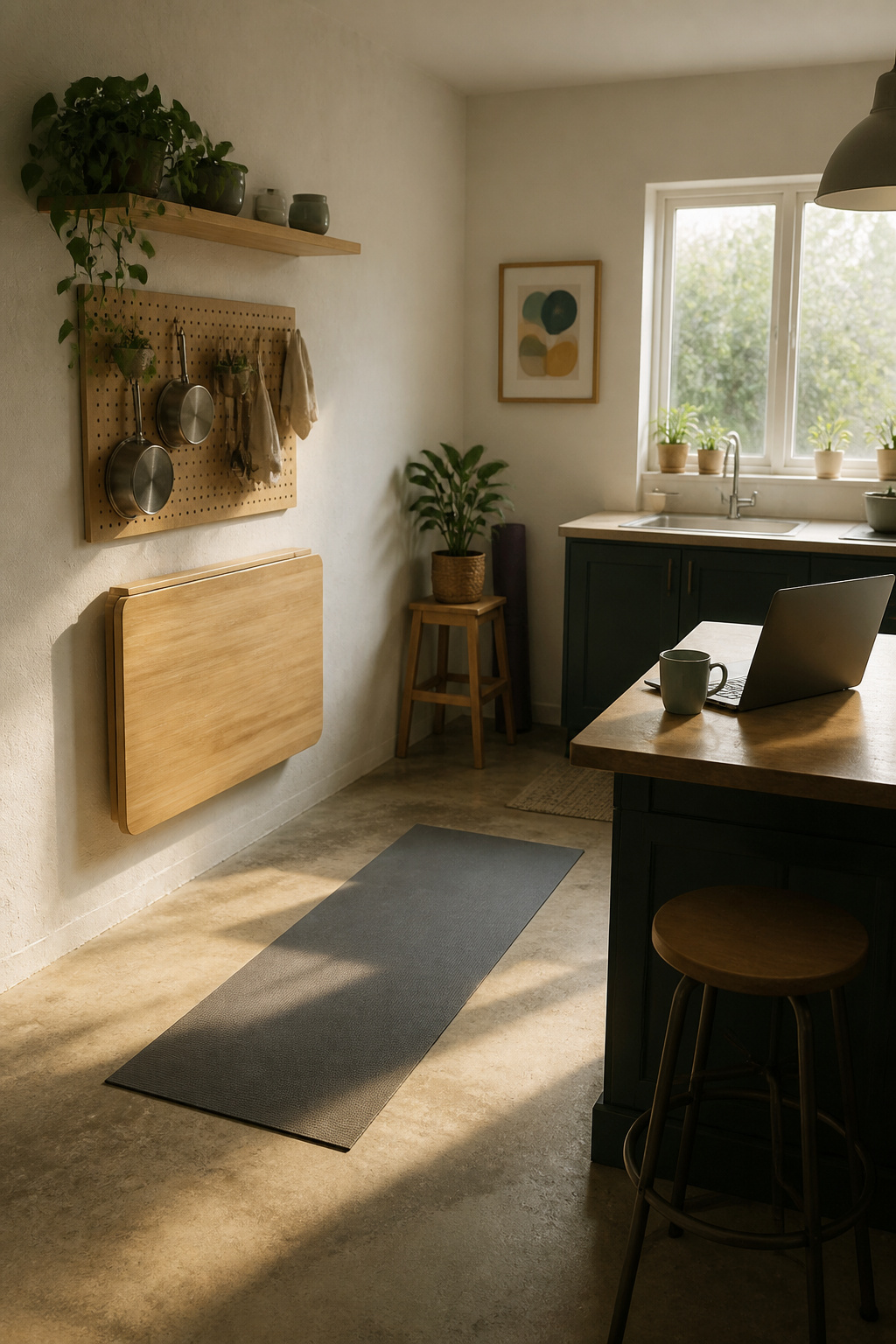
The label on the lease says "kitchen," but six months in it became clear the table was where bills got paid, laptops opened, and occasionally someone ate. The room works better when you stop defending its original job. A wall-mounted drop-leaf table folds flat after dinner and frees the center for a yoga mat or a project spread. I have seen the same 10-foot wall hold a pegboard of pots during cooking hours, then a laptop and coffee by nine. The tension is not square footage; it is the assumption that a kitchen must look like a kitchen all day. Storage that adapts, a table that disappears, bins that slide from pantry to desk drawer, these let the space follow the actual morning rather than the floor plan. The mistake is buying furniture for the name of the room instead of the sequence of hours you spend in it.
2. Shoe Racks
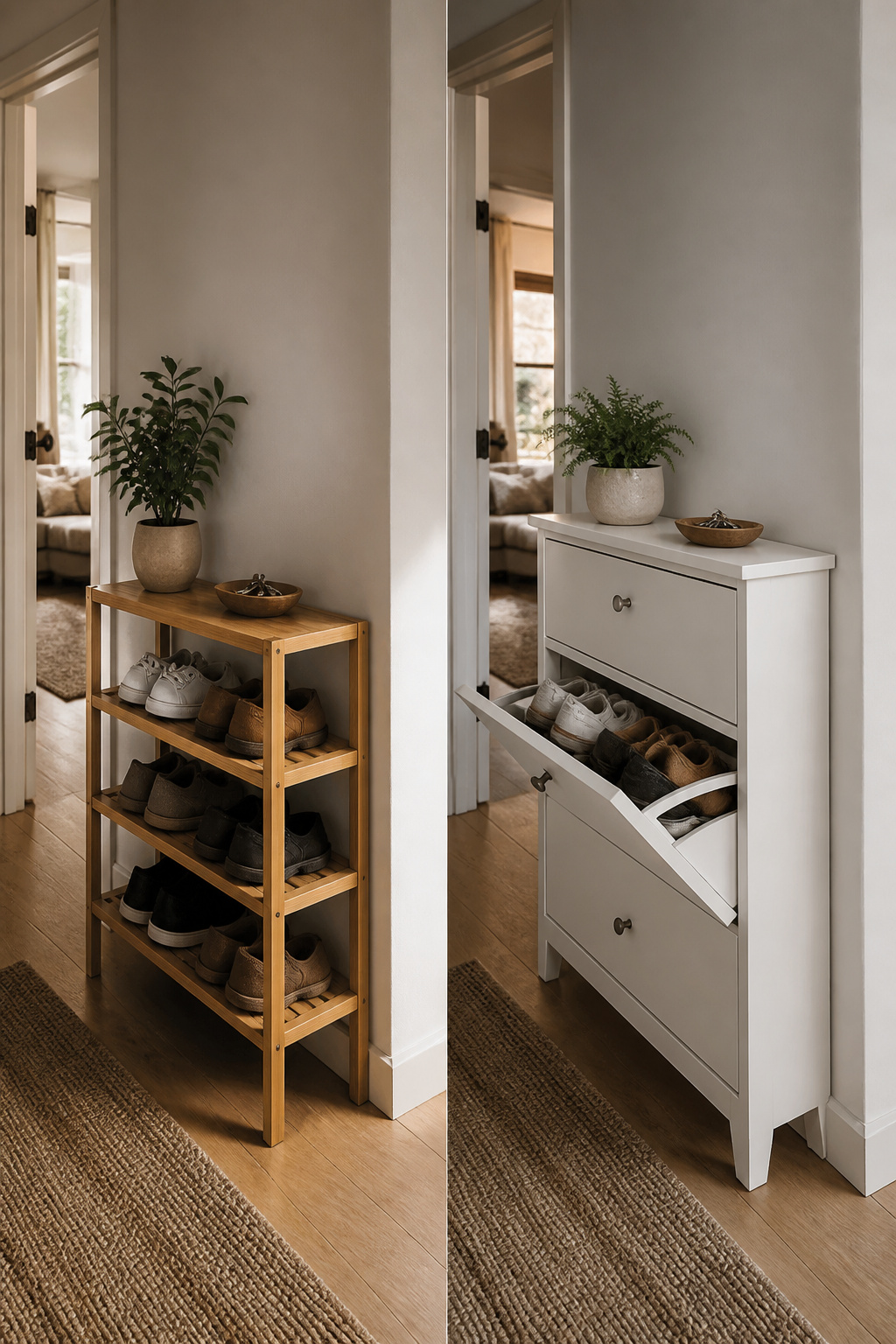
The IKEA Hemnes shoe cabinet at $150 solves the tripping hazard most racks ignore. At just over five inches deep, it hugs the wall in a narrow entryway while hiding roughly twelve pairs behind a tilt-out flap. The flat top catches keys and sunglasses on the way out, which matters more than I expected before I had a dedicated drop zone.
The Yamazaki 6-Tier Shoe Rack at $155 takes the opposite approach. Open steel frames stack six rows of shoes in full view, better for someone who wants to grab and go without opening anything. It also works as a bench if you add a cushion across the top tier, though the narrow shelves wobble under any real weight.
Between them, the Hemnes wins for apartments with tight footprints and landlords who care about wall scuffs. The Yamazaki wins for renters who need the seating and do not mind the visual clutter. Neither handles boots well; the Hemnes compartments are too shallow, and the Yamazaki tiers sit too close together.
3. Storage Benches
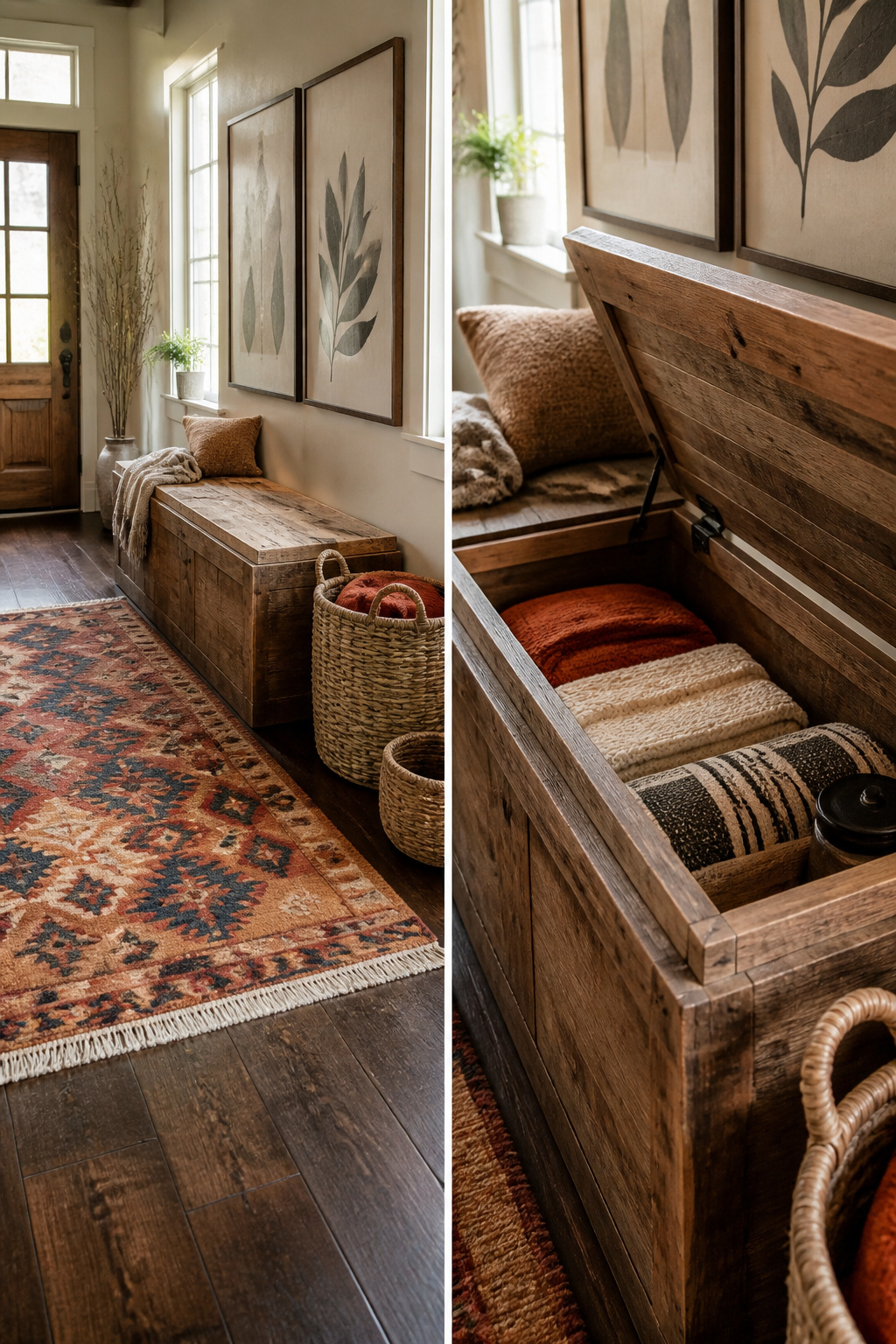
A storage bench looks like the answer to every cluttered entryway until you lift the lid and try to fit something inside. The cavity beneath the seat is shallower than it appears in photos, and the hinge hardware eats up inches at the back. Seasonal clothing and spare bed linens slide in neatly enough, as long as you fold them flat and avoid anything bulky like down comforters. The real problem is the stuff you actually reach for daily: shoes with soles that dirty the upholstery, bags that collapse into shapeless piles, or kids’ toys that seem to multiply once the lid closes.
What convinced me, reading through a dozen of these projects, is that the bench works best as seasonal overflow you touch twice a year, not as active storage. The lift-top chaises on sectionals face the same math: convenient for a throw blanket, useless for anything you need in a hurry. If your lease allows it, a floating bench-shelf mounted low along the wall keeps the floor clear, though you trade hidden storage for open bins that force you to stay tidy. Plywood and a weekend of cutting will get you there for less than finished furniture, but only if you measure the wall studs first.
4. Wall Hooks
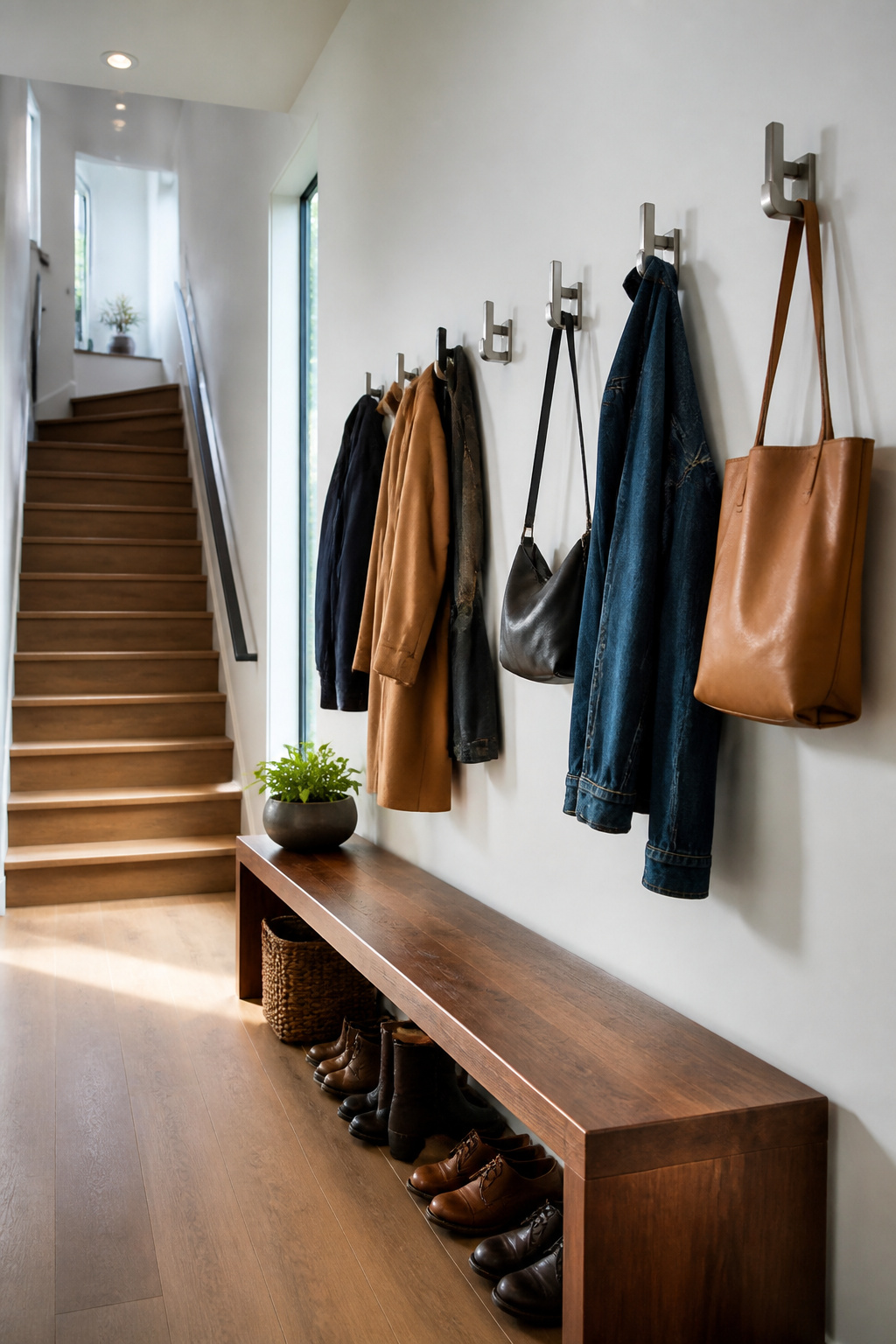
Wall hooks earn their place because they ask so little: a drill, a few minutes, and a strip of wall you probably weren’t using anyway. The payoff shows up the first time a jacket lands on a hook instead of the back of a chair. In a rental, renter-friendly wall hooks keep security deposits intact while still holding a rotation of coats, bags, and the occasional set of skis. Mounted against a stairway wall, gear that once blocked floor space suddenly reads as intentional, almost gallery-like.
The failure point is straightforward. Plaster walls crumble under the torque of a heavy load, and a hook rated for a towel will surrender a bike helmet to gravity by morning. Weight matters more than buyers expect. Where hooks surprise is in their flexibility: a metal bar with sliding hooks in a cramped kitchen corrals bulky utensils, a plant, and a small print in the same twelve inches of wall. The same hardware that handles winter gear can flip to bath towels, though the damp environment means checking anchors more often. Skip the ones that promise everything and deliver a pulled-out drywall anchor. The right hook is the one rated for double what you plan to hang.
5. Under-Bed Storage
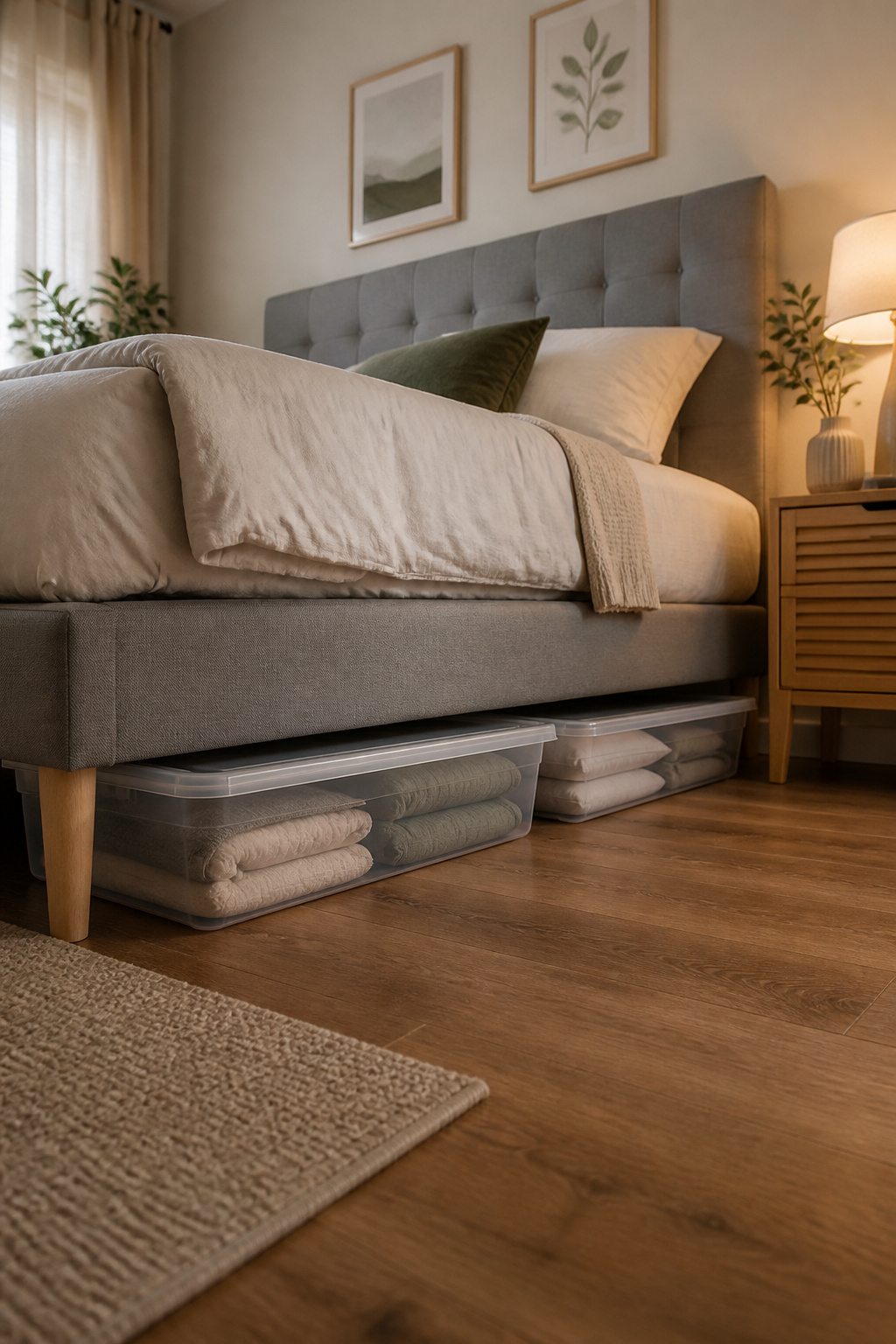
The space beneath a bed is usually the biggest hidden footprint in a bedroom, and most people treat it like a landfill. Long plastic bins with lids slide in easily on carpet or hardwood, and if the bed frame sits high enough, shallow drawers on casters pull out without lifting anything. The common mistake is filling them with items you forget about, so the first bin in should be the one you open most often: spare linens for the current season, not the off-season clothes you convince yourself you’ll rotate.
Baskets work if you want the look to read intentional from the side, though anything fabric lets dust through. What goes under should be stuff that survives neglect: extra pillows, a backup comforter, the vacuum bags of sweaters you actually wear. Shoes and paperwork tend to turn into archaeology projects. If you can’t remember what’s in there without pulling three bins out, the system has already failed.
6. Window Nook Storage
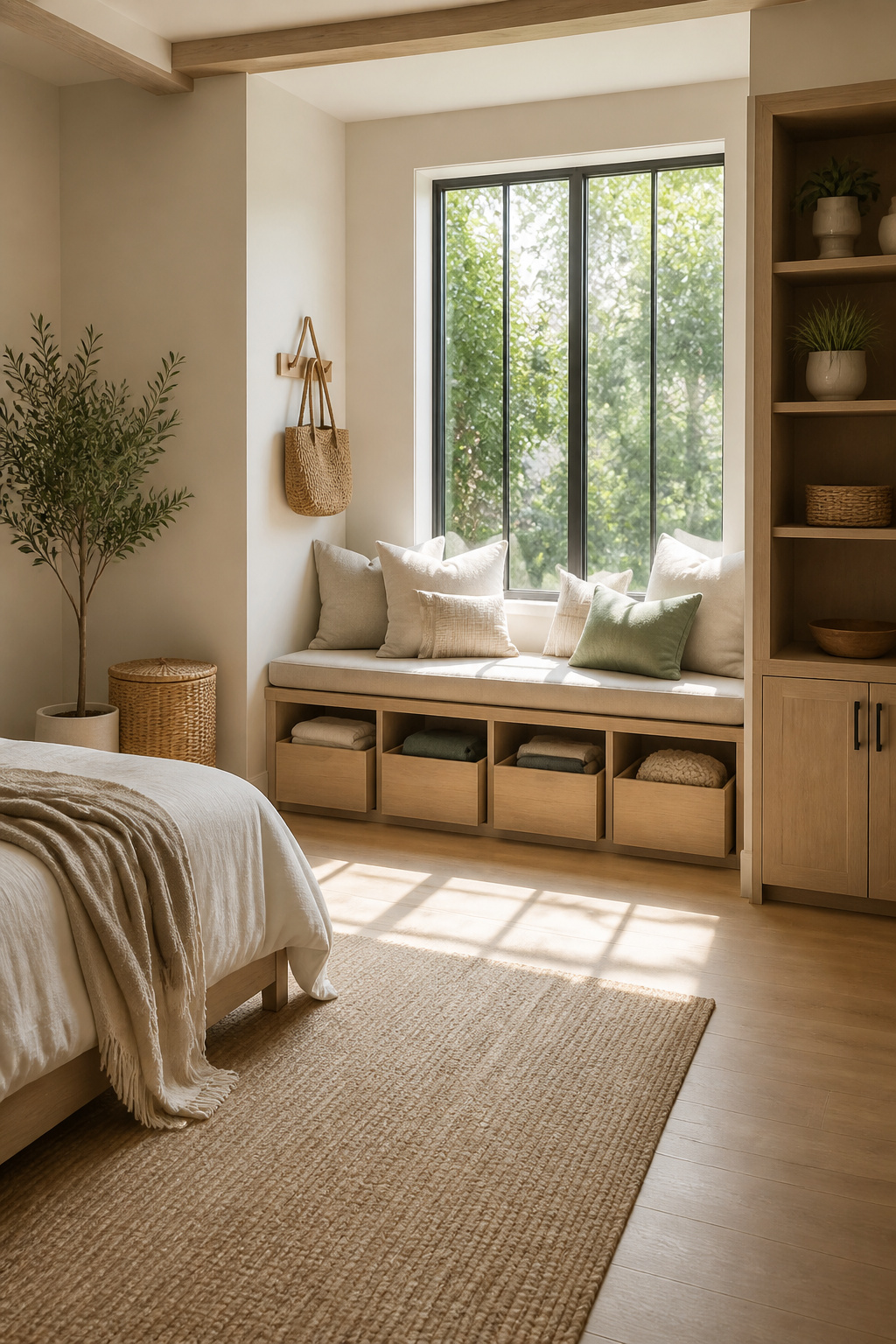
Window nooks invite storage because the space already exists, already lit, and already underused. A bench with a hinged top or pull-out bins below the seat turns that rectangle of floor into something that earns its keep. The sources mention wood bins sized for anything large or small, and the bench itself can sit low enough that it does not block the glass.
The catch is structural. Most renters cannot build in, and many first-home owners discover the wall beneath a window is not empty. There is often a radiator, ductwork, or a header carrying load from above. In older houses the sill may sit barely above the floor, leaving no cavity to open. Plywood and a floating mount work around some of this, but only some. Where the wall is solid or the lease forbids anchoring, the project stalls before it starts.
What convinces me, reading through the plans, is that window bench storage succeeds when the window already owns the wall. If the window is an interruption in a longer run of drywall, the bench looks wedged in and the storage volume shrinks to a few board feet. If the window is the wall’s entire purpose, as in a bay or a dormer, the seat reads as completion rather than addition. The cost is then just plywood, paint, and a weekend of cutting; the value is a seat that does not clutter floor space and bins that keep spare linens or seasonal clothing out of sight. That trade is worth making, but only after checking what lives in the wall below the sill.
7. Stairwell Spaces
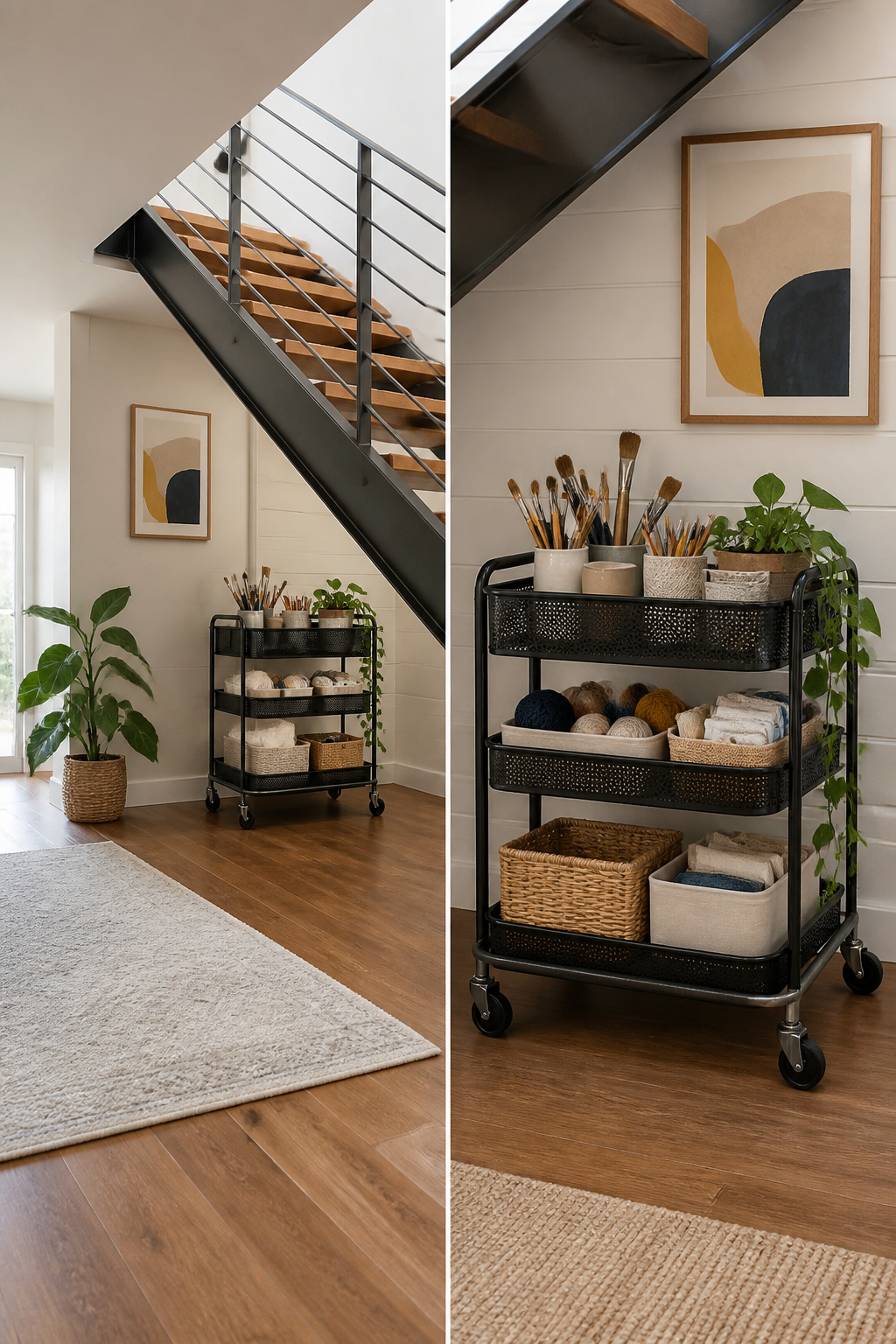
The space under a stairwell is rarely flat. The angle of the stairs slices the volume in half, leaving a triangle of headroom that shrinks to nothing at the back wall. A full closet conversion only works if you commit to a door that follows that same slope, or you build a false wall and accept the dead zone behind it. I have seen both done well, and both go wrong when the owner assumed the floor space matched the usable space.
A pull-out drawer or rolling cart keeps everything accessible. The bracket shelves and fiberglass steps that make a stairwell structurally sound also create a narrow cavity, sometimes just 18 inches deep at the floor, widening toward the front. A sturdy shelf on wheels lets you roll the whole contents out into the open rather than crawl into a triangular closet. One approach I have seen used for craft supplies simply parks the cart under the lowest tread and pulls it out like a shallow pantry when needed.
The real choice is between maximum storage with fixed shelves that waste the back corner, or less total space with zero waste because nothing stays out of reach. For a weekend project with a few hundred dollars, the cart wins. A closet conversion demands carpentry, a door hung to a sloped header, and the patience to trim every shelf to a different depth.
8. Portable Tool Storage
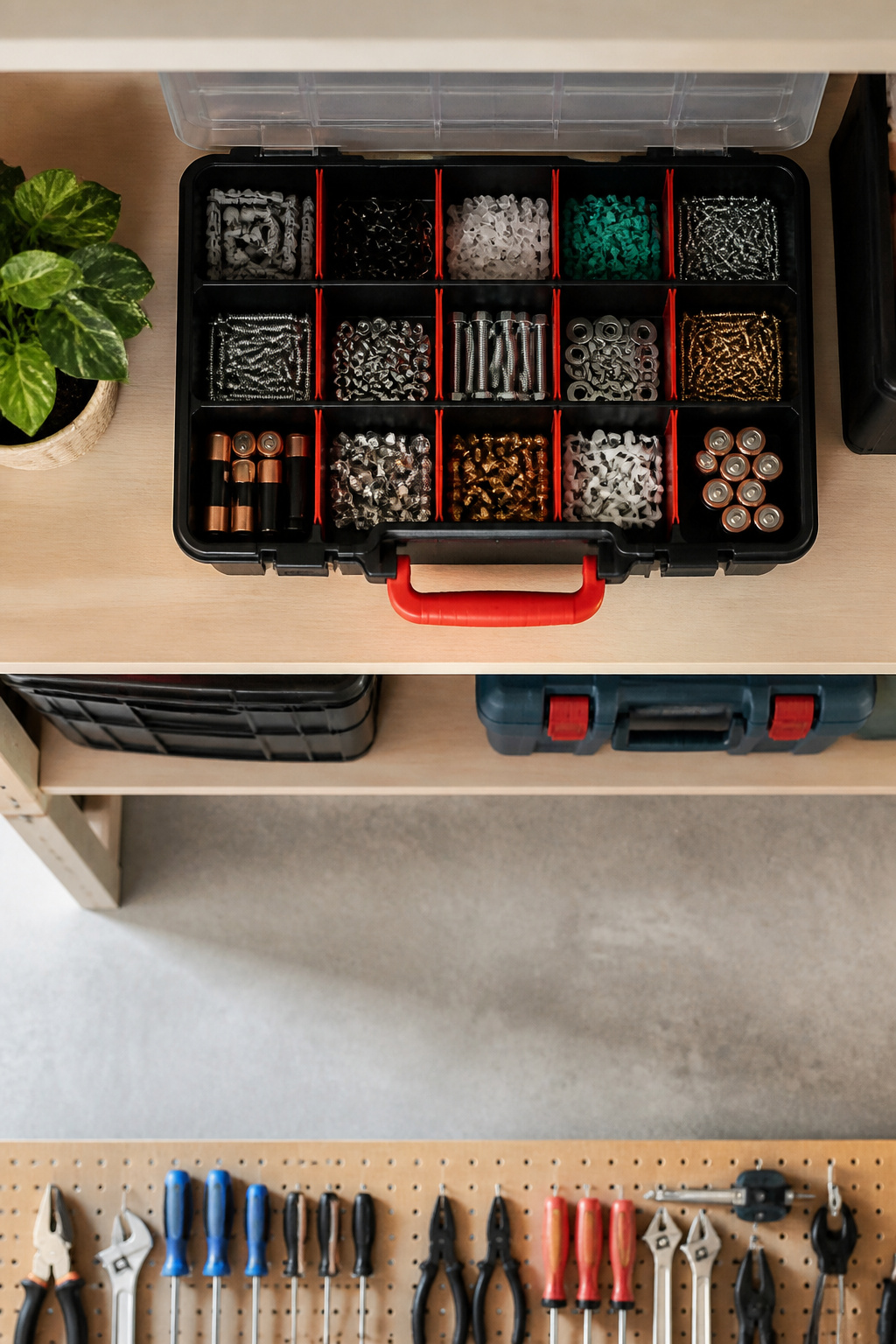
A toolbox that fits under a bed or slides onto a closet shelf handles the small stuff that baskets lose. Screws, batteries, charging cables, and the spare keys you never find when you need them stay visible in divided trays that lift out. The hardware is built for weight, so latches close tight and handles survive being dragged from garage to apartment and back.
The IKEA OMMJÄNGE Basket at $44.99 shows what a non-toolbox option costs. It looks softer on a shelf, but everything pools at the bottom and the open top collects dust. A closed toolbox keeps categories separated and protected for roughly half that price at most hardware stores, sometimes less on sale. Metal ones dent and rust eventually; plastic cracks in cold garages. Either outlasts fabric by years.
I keep one under my kitchen sink now, not for tools but for the command strips, picture hangers, and outlet covers that used to rattle around in a junk drawer. The only mistake was buying one too shallow, the first time. Depth matters more than footprint.
9. Repurposed Furniture
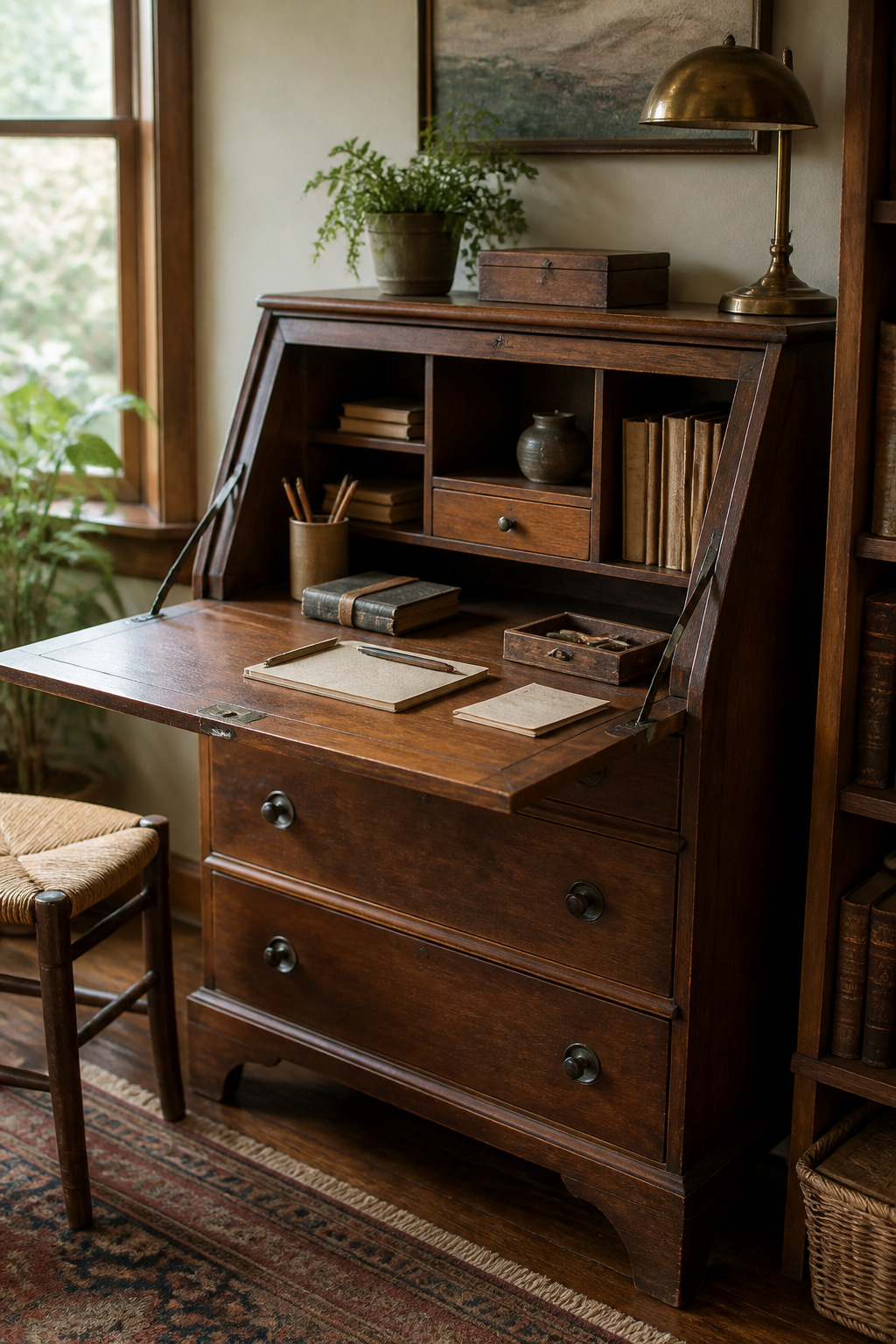
A secretary desk that folds flat against the wall earns its square footage twice over. The West Elm Mid-Century Mini Secretary Desk runs $499 and needs no installation, which is the pitch: pay for the convenience of new. For storage on a real budget, the better move is the same form in vintage form. Old secretary desks, medicine cabinets with drawers, even metal shop bins turn up at estate sales and consignment shops for a fraction of that price, and the wear is half the point.
Check that the frame is square and the hinges still bite before you haul anything home. Sagging doors on a fold-down desk mean the writing surface will never sit flat. Test every drawer for smooth travel; stuck slides are fixable, but cracked dovetails are a parts hunt. Updated hardware on a vintage piece, like the pulls on a repurposed medicine cabinet, bridges the gap between salvage and finished furniture without the $499 markup.
10. Hanging Storage
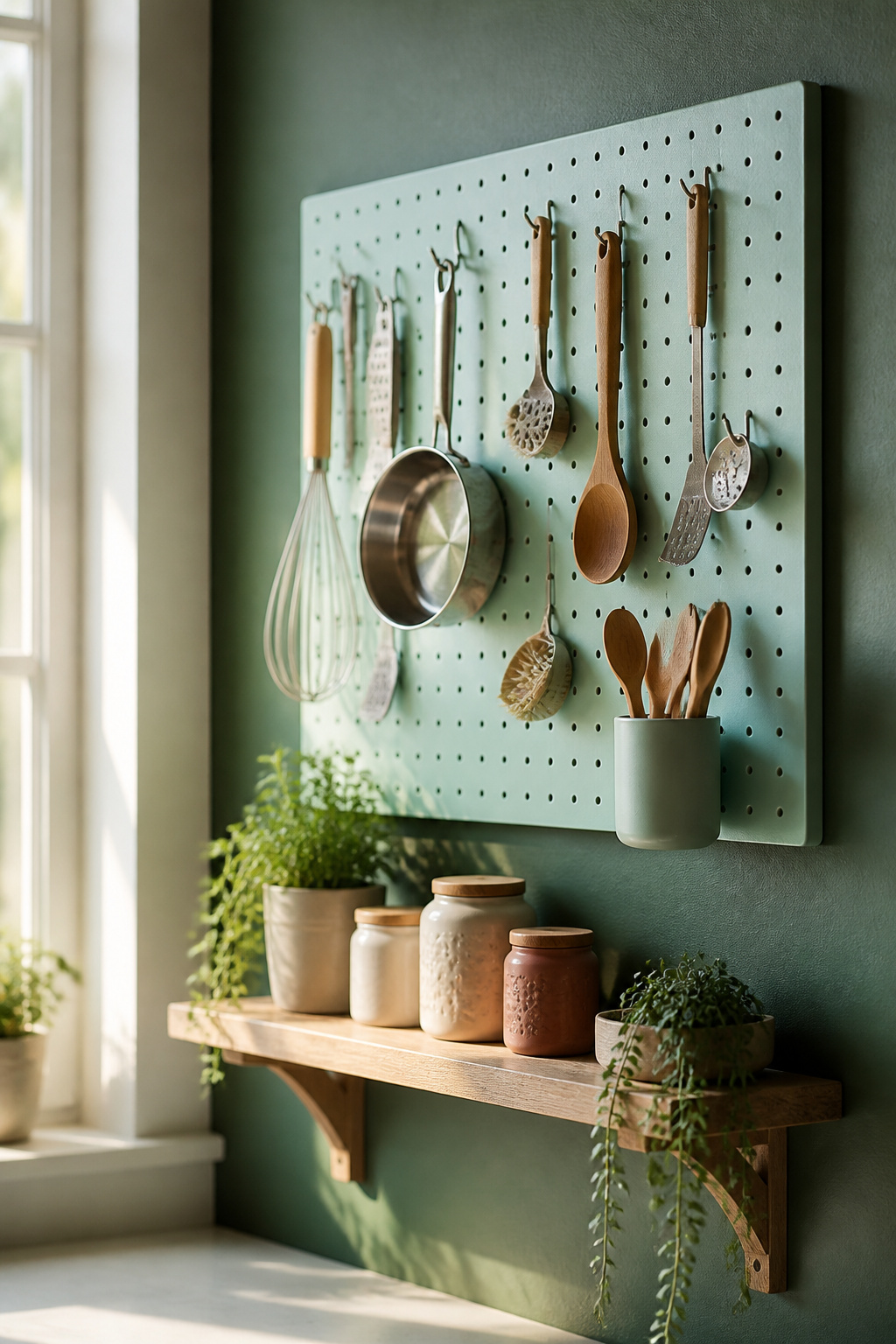
Vertical space turns into storage the moment you stop treating walls like backdrops. In my kitchen, a pegboard runs about $54 and holds the tools that used to crowd the counter: colanders, shears, the odd pan. Julia Child kept one for the same reason, and the logic has not changed. The board works because you see everything at once, but it only works if the wall behind it can take the load. Drywall anchors handle light baskets; a stud or toggle bolt is non-negotiable for anything over fifteen pounds or so. I have seen a row of hanging baskets pull clean out of a plaster wall because someone skipped that step.
Weight limits matter twice: what the hook claims, and what the wall type actually tolerates. A basket of onions reads as light until you fill it. In a rental, the damage from a failed mount often costs more than the storage itself, so the judgment call is whether to patch two tiny holes later or risk a larger one now. Towel rods with S-hooks gain you a row of removable bins in a pantry or laundry nook, and mixing basket sizes keeps the look from going too uniform. The ceiling pot rack is the older cousin of this idea, beautiful and effective in kitchens where cabinet space runs short, though it asks for solid joists and a willingness to cook under your own cookware.
DIY Storage Projects
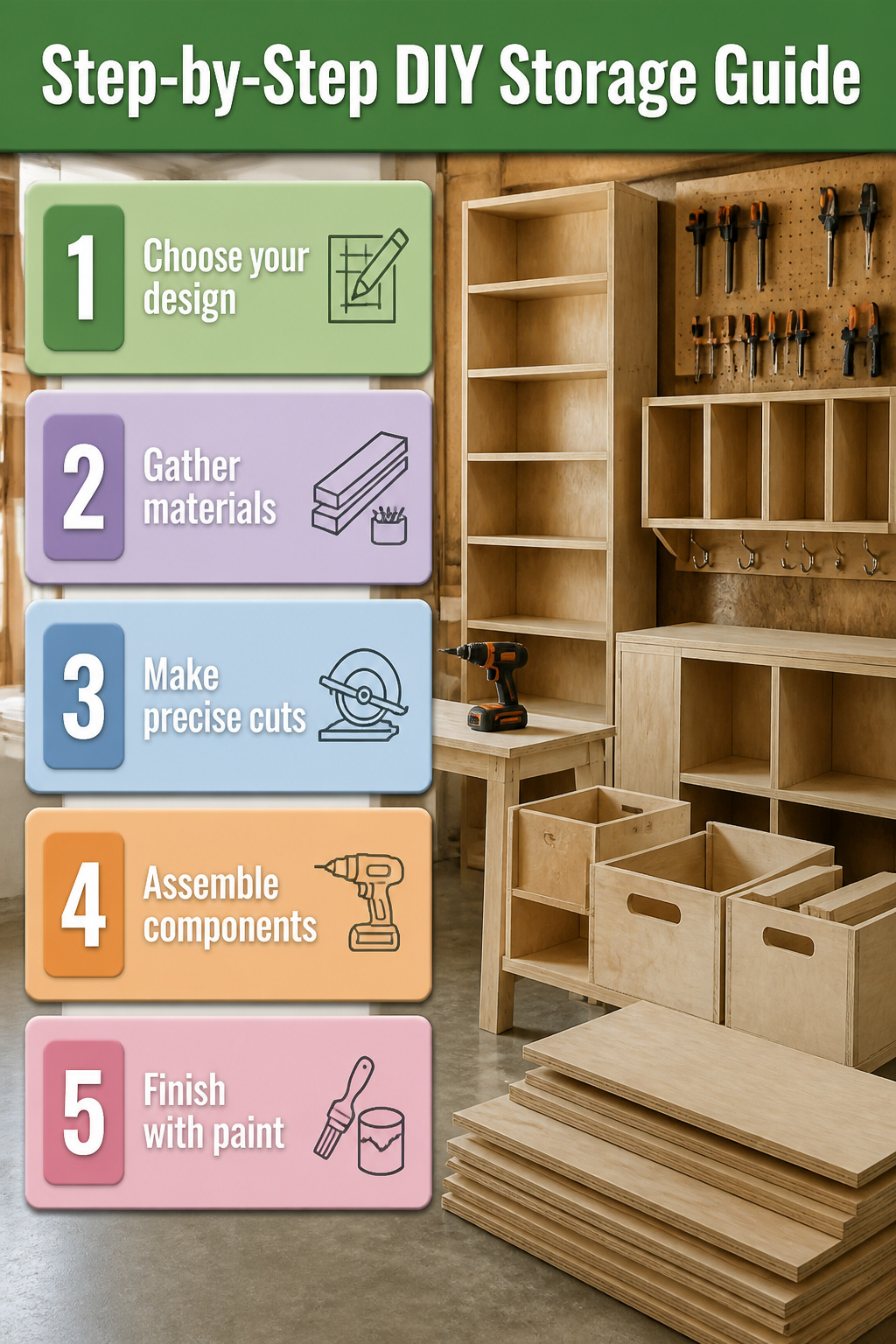
Custom storage built from plywood and common lumber sits unfinished in more garages than anyone wants to admit. The gap between a Saturday plan and a completed project usually opens right at the first cut, when the material turns out to be a different thickness than the online tutorial assumed. I have watched a simple wall-mounted cubby eat an entire weekend because the pocket holes kept blowing out on the cheap pine the builder chose to save money.
What actually finishes in two days tends to be small: a pegboard panel sized to one wall, a set of identical boxes with no drawers, a shelf unit that does not need to fit around existing trim. Anything requiring a dado, a sliding component, or paint that has to cure between coats drifts into the next weekend, then the one after that. The labor is not the obstacle; it is the decisions. Ready-made units have already absorbed those hours of adjustment.
The real cost shows up in the ruined sheet of half-inch birch, the second trip for the right screws, the bracket that looked right in the store and flexes once loaded. Those mistakes can outspend a flat-pack bookcase before the project is even functional. Renters especially should weigh whether the holes and the bulk travel with them, or whether the money went into something they will leave behind in a year.
Maximizing Vertical Space
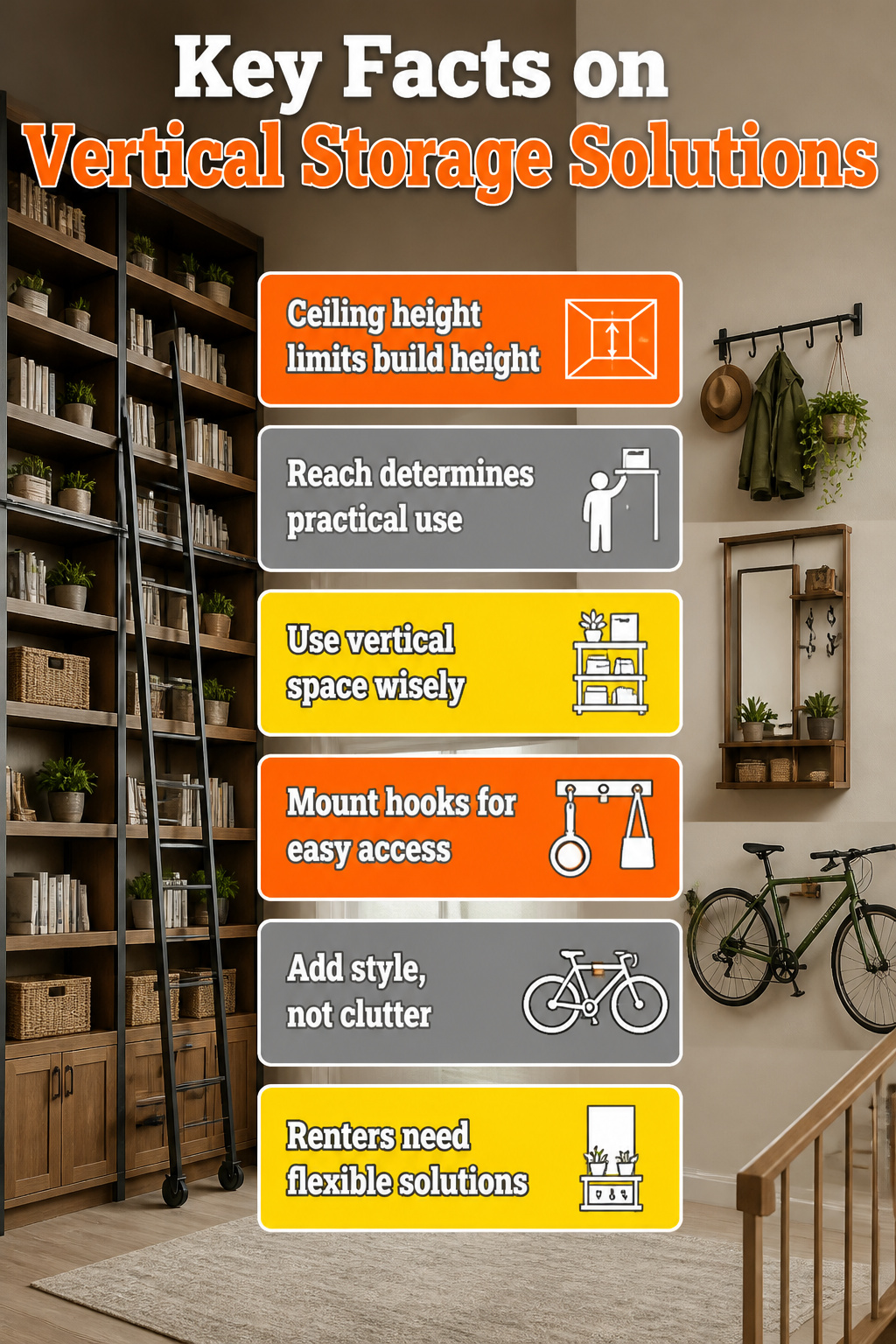
Ceiling height sets the hard limit on how high you can build, and reach sets the practical one. A floor-to-ceiling unit that spans wall to wall looks built-in and grand, but the top third stays empty unless you keep a ladder with rolling casters nearby. In a rental, that permanence rarely makes sense; the better play is mounting shelves and hooks at the height you can actually use, then filling the band above with light, seasonal items you grab twice a year.
Wall-mounted metal bars with S-hooks work in kitchens for pans and utensils, in entries for jackets, and along stairway walls for skis or bikes. The same mount that holds a cast-iron skillet carries a trailing pothos, so the storage reads as intentional, not apologetic. For renters, a hook system with built-in shelving and an attached mirror replaces a piece of furniture you do not have floor space for. Paint the wall behind a bike mount to match the frame, and the bike becomes part of the room instead of clutter leaning against it.
Furniture That Doubles as Storage
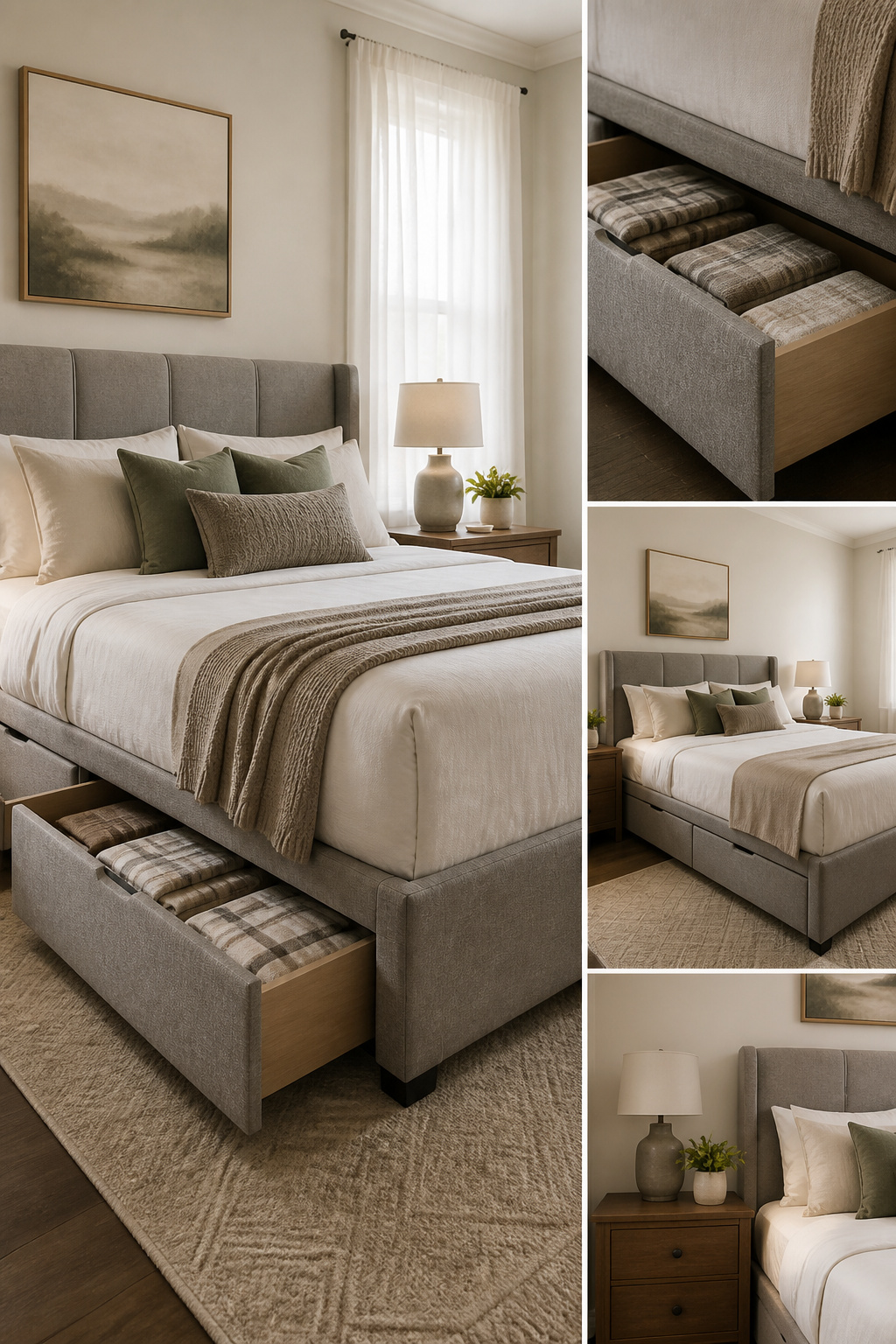
The best storage upgrade I made in my first apartment was swapping my regular bed for one with drawers underneath. Suddenly the off-season coats and extra bedding had a home that did not involve vacuum bags sliding around in a closet. A bed with built-in drawers turns dead space into the most accessible storage in the room, since you are standing right there to swap the flannel sheets anyway.
Ottomans with hidden compartments work the same way, though the cheap ones frustrate me. The lids on the lower-priced models tend to slam or stick, so the piece becomes storage you avoid using. If the hinge is not soft-close, plan to prop the lid with one hand while you dig with the other. That tradeoff still beats a bare ottoman when you are storing remotes, spare blankets, or the dog’s leash collection in a living room with no closet nearby.
The real win with dual-function furniture is that it does not read as storage. A guest sees a bench, not a bin for your winter gear. In small rentals where every piece competes for floor space, that disguise matters more than the cubic footage it holds.
Frequently Asked Questions
What are some creative home storage ideas for small spaces?
Wall-mounted drop-leaf tables fold flat when not in use, shoe cabinets under six inches deep hug tight entryways, and under-bed bins slide in easily on any flooring. The right hook rated for double your planned load turns unused wall strips into active storage without eating floor space.
How can I maximize storage in my home?
Mount shelves and hooks at heights you can actually reach, then fill the band above with light, seasonal items. Wall-mounted metal bars with S-hooks work across kitchens, entries, and stairway walls for pans, jackets, or bikes. The top third of a floor-to-ceiling unit stays empty unless you keep a ladder handy, so plan for what you touch daily instead.
What are some DIY home storage solutions?
Projects that actually finish in two days stay small: a pegboard panel sized to one wall, identical boxes with no drawers, or a simple shelf unit that avoids existing trim. Anything needing dados, sliding parts, or paint curing between coats drifts into extra weekends. Plywood bins under a window bench run cheap, but only if you check wall studs and what lives below the sill first.