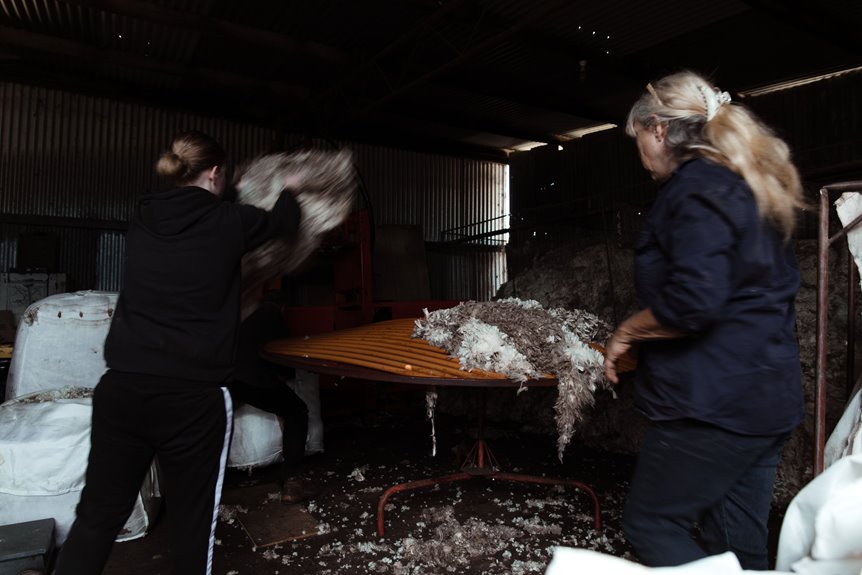
Wool rugs shed inherently because of how they’re made and the fiber quality used.
Machine-made rugs with weak adhesives shed more than hand-knotted options.
Long-staple, high-altitude wool sheds less than short-staple varieties.
Shedding peaks during the first three to six months, then tapers off.
You’ll stop it faster by vacuuming gently without a beater bar, using rug pads underneath, and avoiding pulling loose fibers.
Construction quality directly impacts your rug’s performance and longevity.
Why Wool Rugs Shed: Quality and Construction Matter
Machine-Made vs. Hand-Crafted Rugs
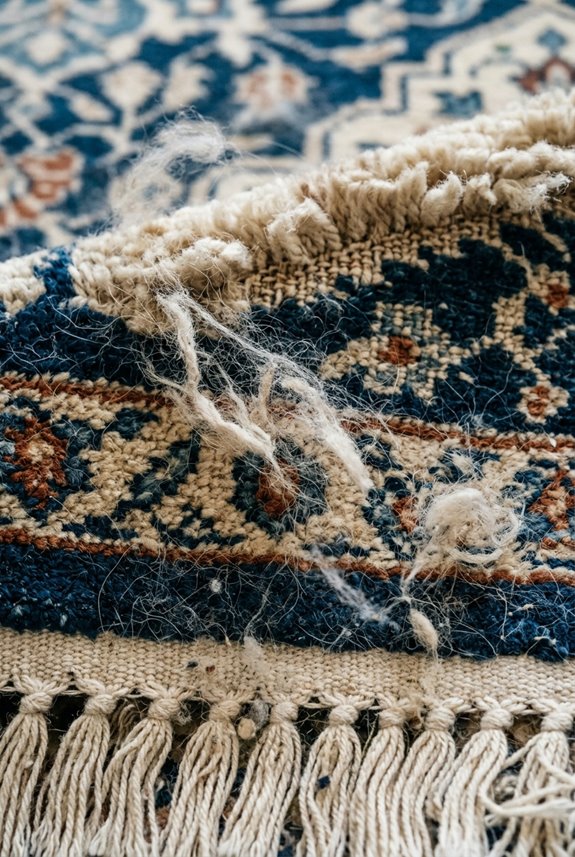
Machine-made and tufted rugs shed more than hand-knotted or hand-woven options. This occurs because lower-quality construction uses weaker adhesives and backing materials that break down over time.
Wool Quality Matters Too
The wool itself impacts shedding significantly. Long-staple, high-altitude wool interlocks better and sheds less. Short-staple, lowland wool doesn’t hold together as well, leading to more fiber loss.
The Bottom Line
When you invest in quality construction and premium wool, you’re choosing a rug with greater durability and longevity. Superior materials consistently deliver superior performance.

Water-Repellent & Stain-Resistant for Everyday Spills: Designed for busy homes, this washable runner rug features a water-repellent, stain-resistant surface that helps everyday spills bead up instead of soaking in quickly. Juice, water, crumbs, and everyday pet messes can be wiped away more easily, while the waterproof backing helps reduce moisture from reaching the floor underneath. Ideal for kitchens, hallways, entryways, and other frequently used indoor spaces.

Water-Repellent & Stain-Resistant for Everyday Spills: Designed for busy homes, this washable runner rug features a water-repellent, stain-resistant surface that helps everyday spills bead up instead of soaking in quickly. Juice, water, crumbs, and everyday pet messes can be wiped away more easily, while the waterproof backing helps reduce moisture from reaching the floor underneath. Ideal for kitchens, hallways, entryways, and other frequently used indoor spaces.

Water-Repellent & Stain-Resistant for Everyday Spills: Designed for busy homes, this washable runner rug features a water-repellent, stain-resistant surface that helps everyday spills bead up instead of soaking in quickly. Juice, water, crumbs, and everyday pet messes can be wiped away more easily, while the waterproof backing helps reduce moisture from reaching the floor underneath. Ideal for kitchens, hallways, entryways, and other frequently used indoor spaces.
When Shedding Should Stop: What’s Normal
How long should you expect your wool rug to shed?
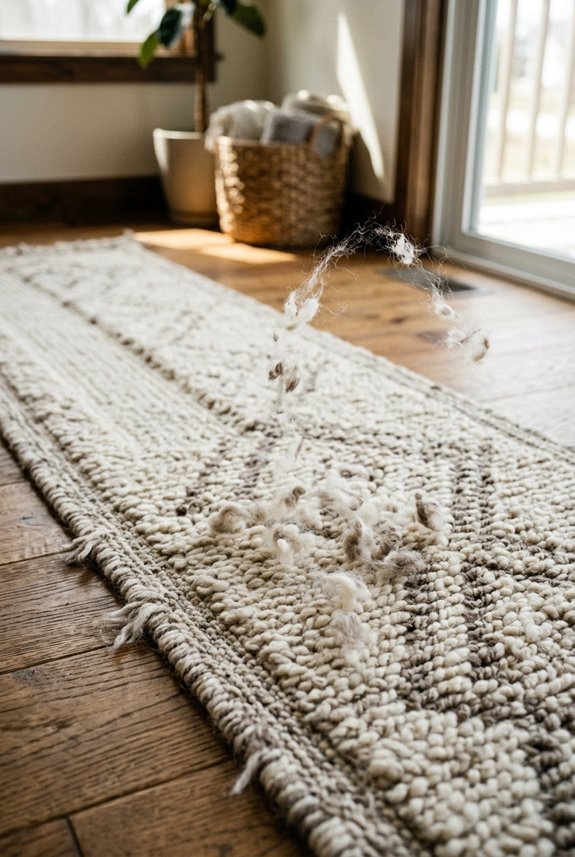
Wool shedding is completely normal. During the break-in period, which typically lasts three to six months, you’ll notice peak shedding. This happens as excess fibers surface and disperse naturally.
Wool shedding is completely normal during the three to six month break-in period as excess fibers surface and disperse naturally.
What determines your timeline:
- Hand-knotted rugs stabilize quickest, often by six months
- Hand-tufted rugs may shed longer, depending on rug construction quality
- Textured and pale rugs shed more initially
After the break-in period ends, shedding gradually tapers off. Most rugs reach a low-shed state once fibers settle properly. If shedding persists beyond six months, check your rug’s material quality and placement. Moving it to low-traffic areas can significantly reduce shedding.

✅ LONG PRONGS - 1/2 inch long brush bristles with a slight kink, to get deeper into the fur, untangle, unmat and restore fluffiness to fur

Premium Quality-This abstract area rug is crafted from faux wool fibers, offering a soft, cashmere-like feel for ultimate comfort underfoot. Its low-pile, tightly woven construction ensures long-lasting durability and shape retention, while resisting daily wear and minimizing dust buildup to keep the rug clean and fresh. It adds a warm, cozy vibe to any room.

Outdoor rug adds wonderful dimension and super-soft texture
Vacuuming, Pulling, and Cleaning Mistakes That Make It Worse
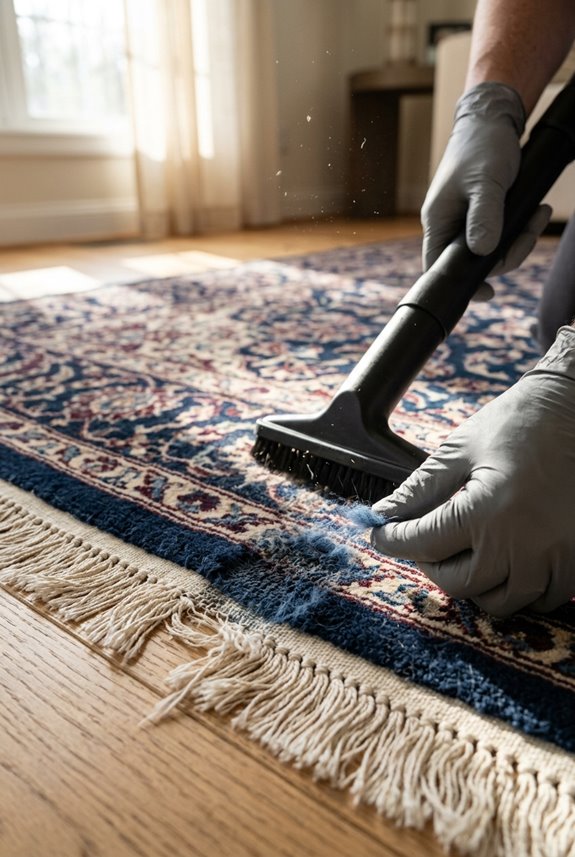
Many people don’t realize their cleaning habits can actually make wool shedding worse. Aggressive vacuuming techniques damage fibers you’re trying to protect. Here’s what works best:
| Mistake | Better Approach |
|---|---|
| Beater bar vacuums | Suction-only method |
| Fast, aggressive passes | Gentle, slow vacuuming |
| Against nap direction | Following nap direction |
| Pulling loose fibers | Leaving them alone |
Use a suction-only vacuum for your rug care. Move slowly and follow your rug’s nap direction consistently. Never pull sprouts or loose fibers because this weakens yarn bundles and increases shedding.
Allow your new wool rug to settle before heavy cleaning. Place a rug pad underneath to reduce friction. These vacuuming changes reduce fiber loss measurably over time.

THE ORIGINAL EXTRA STRONG GRIPPER: our trusted Gorilla Grip nonadhesive rug pads offer a unique, dual sided grip that firmly holds onto both the rug pad and your hard floor to help prevent rug movement
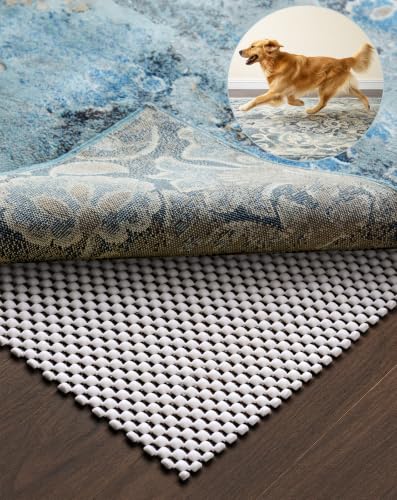
Non-slip Protection: Our pad's signature grip keeps rugs securely in place, preventing bunching and sliding during daily use. It also protects your floors from wear and tear, including damage from high heels, children at play, and more.

【 Waterproof Rug Pad】--Felt + Waterproof TPR carpet pad for all types of carpeting. The rough fabric of the felt top layer grips the carpet tightly to prevent it from curling and crawling, while the non-slip backing prevents the carpet from slipping in any direction.
Stop Shedding Now: Light Vacuuming, Rug Pads, and Trimming
You’ve already learned what makes shedding worse. Now let’s tackle what actually stops it.
I recommend starting with light vacuuming using a suction-only model without a beater bar. This removes surface fibers without pulling anchored ones loose. You’ll notice the difference immediately.
Next, invest in quality rug padding. It reduces friction and movement, which protects your fibers and lowers shedding over time. This single step makes a measurable impact.
Trimming loose tufts is your third defense. Use sharp scissors to carefully trim any fibers rising above the surface. This prevents loose ends from spreading further.
Finally, brush or rake your rug outside regularly. You’ll lift loose fibers before they shed indoors.
These three actions, light vacuuming, rug padding, and trimming, work together to noticeably reduce shedding and keep your wool rug looking fresh longer.

The Jones Collection by Magnolia Home by Joanna Gaines x Loloi is a hand-tufted area rug with an organic design in neutral stone tones.

[DURABLE HANDMADE CONSTRUCTION]: SAFAVIEH's Chelsea rug brings artisan craftsmanship to French Country designs; Suitable for living rooms, dining rooms, bedrooms, dens, and family rooms

Conceptualized in collaboration between DIY experts Chris & Julia Marcum and the award winning Loloi brand.
Choosing a Wool Rug That Sheds Less From the Start
Before you buy a wool rug, understanding construction matters. It’s the difference between a rug that sheds heavily and one that stays beautiful for years.
Hand-knotted rugs are your best choice. They feature tighter knots and stronger warp/weft durability, meaning fewer loose fibers escape over time.
Wool quality makes a real difference. Long-staple wool from mountain sheep has superior fiber retention. Prioritize 100% wool rugs, since blends and wool with synthetic components shed more as adhesives degrade.
Avoid tufted or machine-made options. These rely on glues and backings that break down, causing increased shedding.
When shopping, look for dense knot construction and high-quality materials. This upfront decision prevents excessive fiber loss and maintains your rug’s appearance over time.