
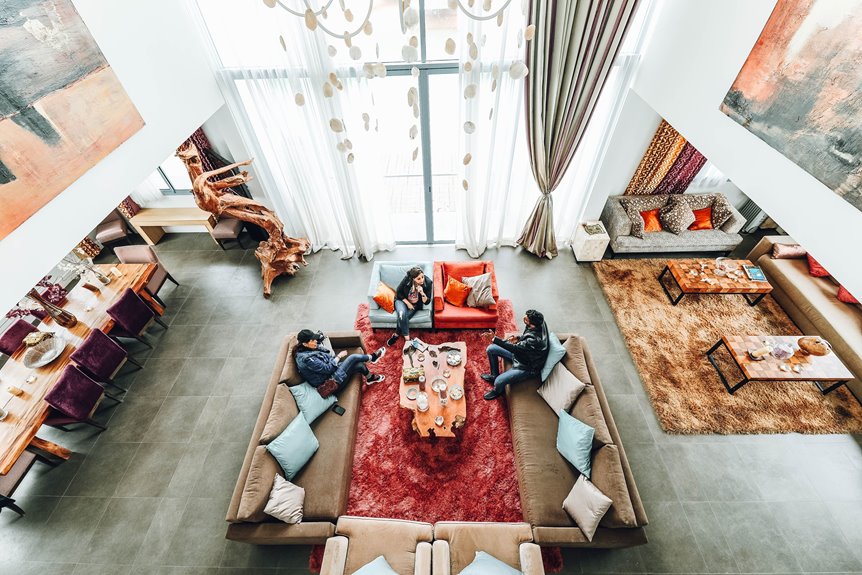
Yes, place your rug under the couch. Position your sofa’s front legs on the rug while extending it 6–12 inches beyond the sofa’s width.
This anchors your seating, defines your space visually, and protects your floors from wear and dents. In smaller rooms, this placement opens up the area.
In larger spaces, it prevents furniture from floating. A grounded rug creates cohesion and stability without crowding.
Specific placement strategies vary depending on your room layout.
Should Your Rug Go Under the Couch? The Case for Anchoring
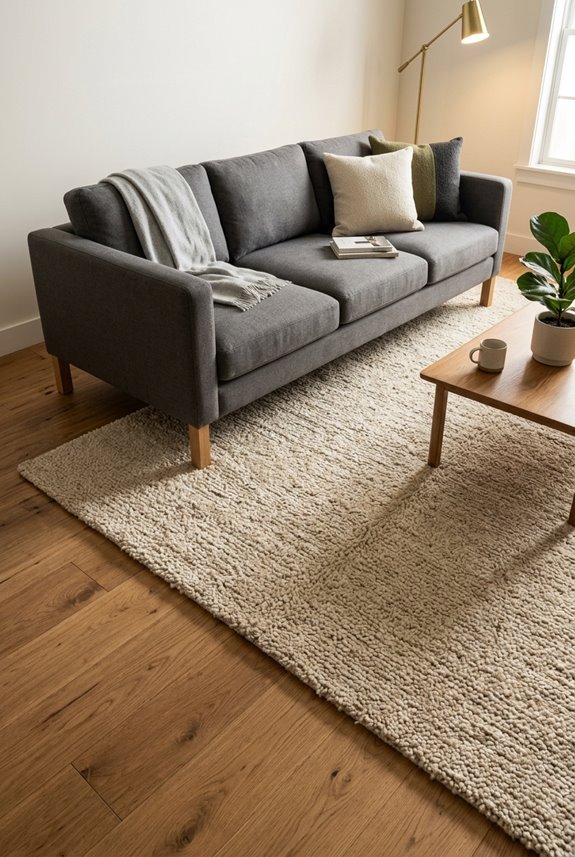
- Extend the rug 6 to 12 inches beyond your sofa’s width for balance
- Position your sofa’s front legs on the rug while keeping back legs off
- This creates grounding without crowding movement around the room
For smaller rooms, tuck just the front legs onto the rug. This defines your seating without overwhelming your space.
When you anchor with a rug, you strengthen visual cohesion and create a room that feels organized and complete.

New & Improved Area Rug With More Cushioning – Our new inner layer is 25% thicker than the previous material, giving this 5x7 area rugs a softer, more cushioned feel underfoot. Made for families who spend time on the floor, it adds extra comfort for playing with the kids, reading, relaxing, or simply walking barefoot at home

Soft Fluffy Rugs for Bedroom: With its plush high-low piles, this 5x7 area rugs delivers an incredibly comfortable and soft sensation, making it suitable for going barefoot. Lay the carpet over your hardwood floor, and it not only infuses warmth but also turns any room into a snuggle-worthy retreat

Ultra-Soft Low Pile Rug: Gent drizz living room rugs 8x10 made of Upgraded durable low pile faux wool fibers, 0.25'' thick, featuring a soft fuzzy density surface, soft and pliable to the touch, providing great comfort for your bare feet. The low pile makes it easy for your Large area rug to clean and is perfect for homes with kids and pets
How Rug Placement Expands or Shrinks a Room Visually
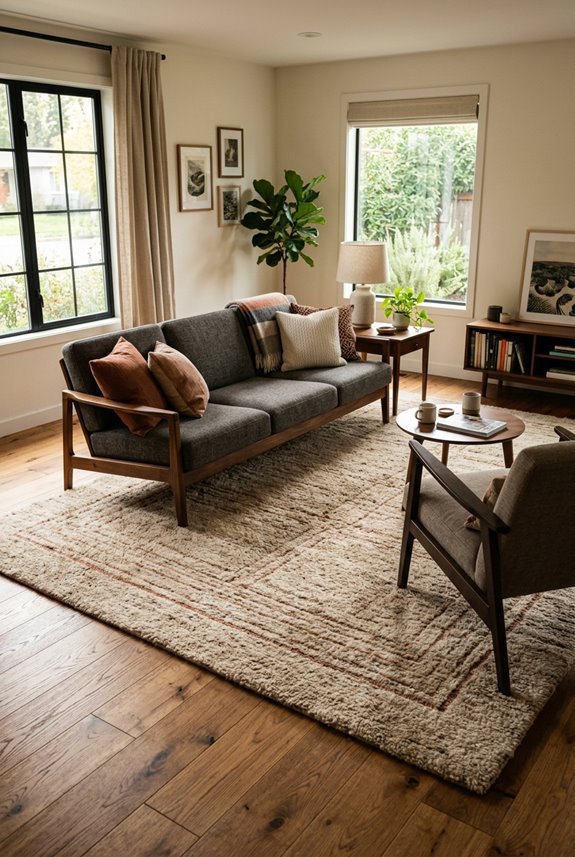
Rug placement directly impacts visual balance in your space. In smaller rooms, extending your rug under just the front sofa legs creates an open, spacious feeling.
This approach draws the eye outward rather than inward.
Rug placement under front sofa legs in smaller rooms creates openness, drawing the eye outward and enhancing visual balance.
For larger rooms, placing your rug under all main furniture pieces anchors everything together. This unified arrangement makes the space feel more intentional and complete.
In open-concept layouts, a shared rug grounds your seating zone while preserving floor openness. You create definition without closing off the room.
Odd angles or unconventional layouts benefit from partial rug placement under your sofa. It shifts focus to your furniture arrangement, making the room feel more organized and purposeful.
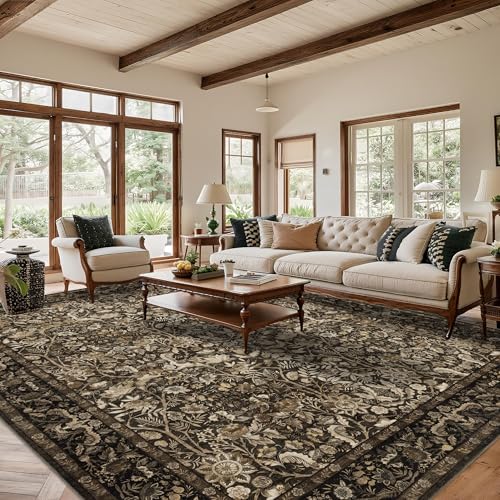
Will this 10x14 rug anchor my living room seating area? Yes! At 10x14 feet, this vintage floral area rug is perfectly sized for sofas and coffee tables — large enough to bring your seating area together, yet compact enough for smaller living spaces. The timeless floral pattern in warm brown, black, and gold tones turns your living room into a cozy, welcoming retreat. Designed to fit perfectly under most 3-seat sofas with room to spare, it defines your conversation area with effortless style

Soft Low Pile: Made of premium polyester, this washable rug offers ultra soft, skin-friendly comfort for bare feet. Sleek low pile comes with reinforced edges, feeling cozy underfoot without being bulky. Smooth placement under doors and furniture avoids blocking daily traffic

Genuine PREMIUM 100% New Zealand & Australian Wool
Rug Placement for Asymmetrical Rooms: Creating Visual Balance
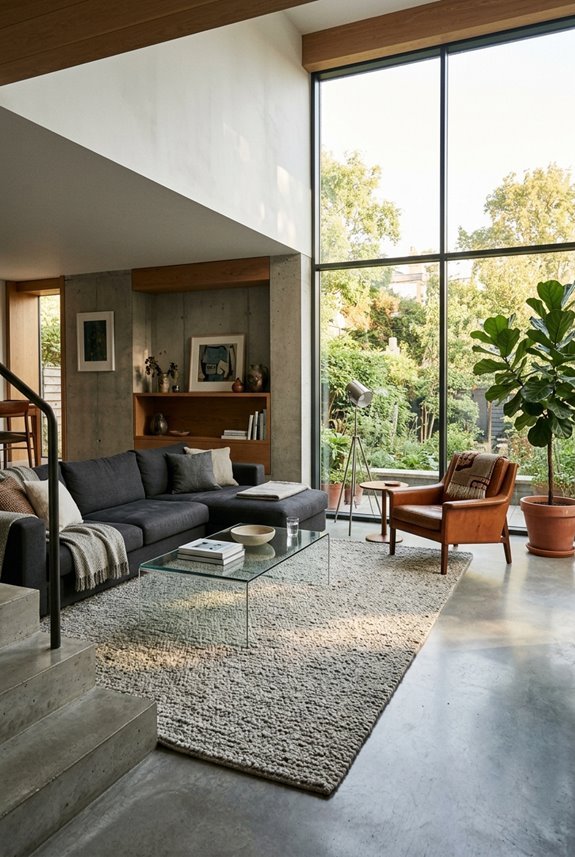
What if your room’s odd angles and uneven layout could actually become an advantage? Thoughtful rug placement can deliver exactly that result.
When your space feels unbalanced, a rug becomes your tool for correction. Place it so your sofa’s front legs sit firmly on the rug.
This single choice anchors your seating area and directs focus to your furniture arrangement.
The rug defines your living zone with clarity. It shifts attention away from those tricky angles.
People notice your comfortable, cohesive furniture arrangement instead.
The rug acts as a grounding surface that creates visual balance despite architectural quirks. Even partial placement under the sofa introduces order.
You’re working with your room’s shape strategically rather than fighting against it.

Ultra Soft & Non-slip: Featuring a shaggy carpet surface, the Ophanie soft area rug is highly soft with a high-density sponge interlayer. This rug effectively reduces shedding, and the non-slip bottom with small, durable anti-slip dots enhances friction to prevent sliding.
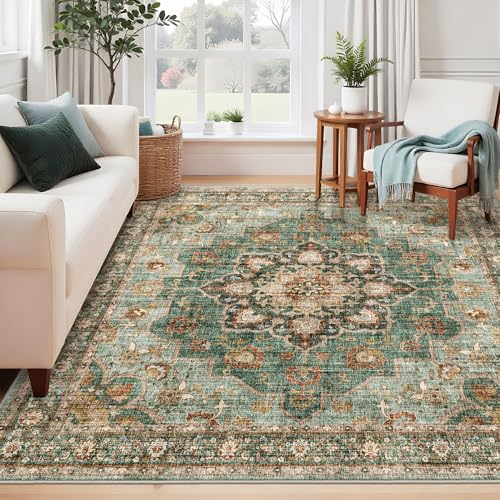
Lived-in Look and Feel: This exquisitely designed 6x6 rug features a vintage-inspired motif with a medallion in the center. Its unique, goes-with-anything decor styles from country to contemporary. The inviting colors along with its regal texture create the perfect depth and dimension in your space, allowing you and your loved ones to sit back and relax.

Abstract & Geometric: A blend of retro style, geometric patterns and abstract elements, 6x9 area rug comes with a sense of a movie filter! This instantly turns your room into a mid-century modern gallery. A great fit for any room: living room, bedroom, dining room, hallway, home office, dorm or kitchen
Creating Distinct Zones in Open-Concept Spaces
How do you make one large room feel like separate living areas without building walls? A strategically placed rug does the trick.
When you position a rug under the sofa and anchor your seating arrangement on it, you’re using visual zoning to carve out a distinct living area. This approach defines boundaries without walls, keeping your space open and flowing.
A textured rug like the Hutchinson Polyester Face Rug in Burgundy/Denim adds warmth while clearly separating your living zone from other areas. Extend the rug 6 to 12 inches past your sofa’s width for balance.
This prevents that floating feeling in larger spaces. Visual zoning reduces clutter and clarifies how people move through your home, creating harmony within openness.
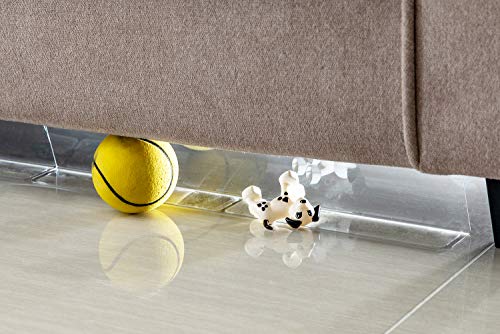
🏆 Never Fish Out Toys Again! Save Your Time & Back Tired of constantly searching under the couch for lost toys, balls, or pet supplies? Our transparent blockers create a...
Functional Benefits: Protection, Stability, and Long-Term Wear
Your floors face constant pressure from furniture weight, and a rug underneath your sofa works hard to protect them. That rug under sofa absorbs impact and prevents dents from developing over months and years.
A rug beneath your sofa absorbs impact and prevents dents, protecting your floors from constant furniture weight over time.
Stability Matters
When you place a rug beneath your couch, the furniture stays put. It won’t shift when you sit down or move around.
Adding non-slip liners underneath anchors everything further, reducing wobbling and curling edges.
Long-Term Protection
Heavy furniture pressing directly on bare flooring causes permanent damage. A protective layer means your hardwood, laminate, or tile stays pristine.
You’re investing in your home’s durability.
Whether you’re renting or planning future changes, this protection keeps your flooring intact. Your rug becomes a practical barrier that prevents wear patterns, stains, and structural damage that would otherwise reduce your floor’s lifespan by years.

MODERN AESTHETIC: This contemporary design features subtle solid and striped patterns. A neutral palette of charcoal, cream, and gray enhances diverse decors. Anchor your space with sophisticated style.

Vintage Floral Boho:Featuring classic vintage brown tones and retro patterns, this 6x9 area rug blends seamlessly with modern, farmhouse, rustic and traditional home decors. It elevates the aesthetic of living rooms, dining rooms, bedrooms and spaces under kitchen tables, adding warm, cozy ambiance to every corner of your house.
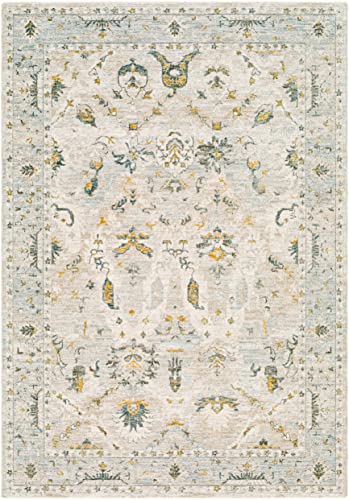
Precise size is 7'10" x 10'2" (nominal 8'x10'); we recommend measuring your room before purchase; allow for minor color variations in natural daylight or indoor nightlight due to high-quality textile fibers.
Avoiding Tripping Hazards: How Rug Proximity Prevents Accidents
Safety matters when you’re arranging your living room. Thoughtful rug proximity makes a real difference in preventing accidents.
Why positioning matters:
When you place your rug close to seating, you create predictable pathways. Your guests naturally transition from bare floor to rug surface smoothly.
This consistency reduces tripping hazards significantly.
Smart placement techniques:
- Position your couch’s front legs on the rug for stability
- Minimize gaps between your sofa and rug edge
- Apply non-slip rug liners to prevent shifting and curling
These simple adjustments anchor your furniture and eliminate dangerous obstacles. Movement becomes natural and secure in a properly arranged space.
Check your setup regularly. Furniture shifts over time, so maintaining proper rug proximity keeps your living area accident-free for everyone who visits.

New & Improved Area Rug With More Cushioning – Our new inner layer is 25% thicker than the previous material, giving this 8x10 area rug a softer, more cushioned feel underfoot. Made for families who spend time on the floor, it adds extra comfort for playing with the kids, reading, relaxing, or simply walking barefoot at home

CLASSIC VINTAGE AESTHETIC BEIGE RUG: The area rug 8x10 features a harmonious blend of beige tones that evoke a timeless vintage charm, making it an ideal addition for any room in your home—from retro bohemian and rustic farmhouse to modern minimalism. Perfect rugs for living room, bedrooms, dining room rugs for under table, entryways, playrooms, or home offices, this 8x10 rug serves as the finishing touch to your interior flooring decor

Modern Abstract Rug: Our modern abstract rug breaks the rules and structure of traditional rugs, combining beauty and practicality. These area rugs bring a modern and personalized decorative effect to the space. These rugs for living room can be perfectly integrated with various interior styles.
Right-Sizing Rugs for Small Living Rooms
When you’re working with a small living room, choosing a rug size that makes your space feel bigger rather than cramped requires strategic positioning and careful dimension selection.
Balance your sofa without overwhelming the room by following specific measurements and placement techniques that will transform your space.

【Ultra Soft and Luxury】This fluffy rug is made of of high quality artificial animal wool, super soft touch pile of this sheepskin area rug add a luxury touch to cover your home, will give you softness and plushness feeling

【Ultra Soft and Luxury】This fluffy rug is made of of high quality artificial animal wool, super soft touch pile of this sheepskin area rug add a luxury touch to cover your home, will give you softness and plushness feeling.

Designed by Becki Owens in collaboration with Livabliss, neutral tones and durable construction make this rug perfect for any living space or entryway.
Front Legs Visual Expansion
How can you make a small living room feel bigger and more organized?
Placing your sofa’s front legs on the rug creates smart visual anchoring. This technique expands your space without overwhelming it.
You’ll gain:
- Better visual balance that makes rooms feel intentional
- Clear seating zones without covering the entire floor
- Preserved movement space around your furniture
- A cohesive look that ties your layout together
When you anchor just the front legs, your sofa feels grounded and purposeful. The back legs staying off the rug maintains openness.
This approach prevents that “carpeted blob” feeling many small rooms struggle with.
Make sure your rug is wide enough so front legs sit comfortably within its boundaries. This prevents a floating appearance.
You’re creating definition while keeping your room feeling spacious and welcoming.
Layering For Compact Spaces
Want to make your small room feel intentionally designed without covering it wall-to-wall with carpet?
Layering is an effective approach for compact spaces. Here’s how to do it:
Start with a neutral base. Use a flatwoven jute or sisal rug as your foundation.
It’s budget-friendly and creates the visual impression of a larger, custom layout without overwhelming the room.
Add a smaller rug on top. Rug placement matters significantly here.
Layer a smaller, well-chosen rug over that base, positioning it in front of the sofa. This defines your seating zone immediately.
The benefits are significant. Layering adds texture and depth to your space.
It makes everything feel larger without taking over completely. Your surrounding floor stays visible and open, which is essential for compact rooms.
This combination creates intentional design in tight spaces.
Proportional Rug Dimension Selection
Getting your rug size right makes all the difference in small spaces. Understanding proportion helps you create a connected, intentional look that makes your room feel bigger.
What works well:
- Front-leg placement visually expands your space while keeping traffic flow clear
- 20–30 cm extension beyond sofa sides creates balanced proportion
- 6–12 inches beyond width prevents awkward floating feels
- Medium sizes like 260 x 360 cm anchor multiple seating pieces together
When you’re shopping, measure your room and seating layout first. This guides your rug placement decision.
You’ll want enough coverage so your furniture sits grounded, not isolated.
The right dimensions transform how your space feels by creating a unified base that pulls everything together intentionally.
Large Rooms: Full Coverage Without Overwhelming
I want to help you make your large room feel connected instead of scattered. When you extend your rug under all the main furniture pieces, you create one unified seating area that feels intentional and grounded.
This approach keeps the space from feeling choppy while still leaving plenty of open floor visible around the edges.

Upgraded New Material Design: FlyDOIT modern minimalist rug is made of premium short wool coral fleece, which is super soft, luxurious, skin-friendly, no linting and so on. The surface is dense and soft, making you feel like lying on a cloud

Secure Non-Slip & Versatile: Equipped with a steel plate texture dot-molded backing, this 3ft round rugrunner non slip offers superior anti-slip performance, firmly securing itself on hardwood, tile, and laminate floors, especially in high-traffic areas such as kitchens and entrance. Its innovative design creates a strong friction with the floor surface, ensuring the black rug stays put even in the busiest households.Reduces noise

NEUTRAL ABSTRACT RUG: This rug features a unique neutral abstract design with a cream base combined with brown, adding more warmth and cozy to your home. The carpet is good for living room, bedroom, dining room study room, home office, etc
Anchoring Without Visual Weight
How do you anchor a large room without making it feel cramped? Rug anchoring doesn’t require heavy, dark colors that shrink your space.
Selecting the right palette makes all the difference.
To anchor without overwhelming:
- Choose neutral tones like graphite, soft gray, or beige that harmonize with your décor
- Let light colors extend your visual field while grounding furniture pieces
- Balance scale with subtlety by selecting a large rug in understated shades
- Preserve airiness while defining zones with sophisticated, muted palettes
When you choose a rug that matches your space’s existing colors, you maintain that open feeling. The rug still anchors your sofa and seating area effectively.
You’re creating cohesion without visual weight. This approach produces the grounded, connected layout you need while preserving openness.
Strategic Furniture Placement Balance
Why does your large room feel disconnected even with quality furniture? Strategic rug placement creates the balance you’re looking for.
When you extend your rug 6–12 inches beyond your sofa width, something shifts. Your seating area stops floating.
Instead, it becomes a unified zone where every chair and sofa sits confidently within the same space.
Full Coverage Works Because:
- All major furniture pieces sit on the same rug
- Visual fragmentation disappears
- The room feels intentionally arranged, not scattered
This balanced approach anchors heavy furniture while distributing weight evenly. Your sofa won’t shift over time.
The chairs feel grounded.
In large spaces, oversized rugs prevent that awkward floating feeling that makes rooms seem disconnected. Your furniture arrangement becomes centered and cohesive.
The strategic placement of your rug determines whether your space functions as a cohesive interior or appears fragmented.
Extending Visual Field Boundaries
Your large room needs a visual anchor, and that’s exactly what a full-coverage rug delivers.
When you place the rug under furniture in spacious layouts, you’re creating something powerful. You’re defining boundaries without making the room feel cramped.
This approach helps everything belong together naturally.
A properly sized rug accomplishes the following:
- Unites separate furniture pieces into one cohesive seating area
- Extends your visual field by creating intentional spatial limits
- Improves overall visual balance throughout the room
- Draws attention to your central living space
A cool, neutral-toned rug, like graphite or platinum shades, blends seamlessly with most palettes. It subtly extends what your eye perceives as the room’s usable space.
The rug grounds your furniture arrangement and prevents awkward asymmetries. Everything feels more intentional and connected when anchored properly.
Sectional Sofas: Sizing and Placement Principles
Getting the Rug Under Your Sectional Right
- Use painter’s tape to mark rug dimensions on your floor first
- This helps you see how the sectional’s legs will sit on the rug
- Choose a size that anchors the full shape of your seating
A properly sized rug under your sectional defines your living zone without making the space feel cramped. You’ll want enough room for comfortable movement around the perimeter.
This approach prevents awkward divisions and keeps your layout feeling balanced and intentional. Your sectional becomes the anchor point that holds everything together.
When placing a sectional sofa, the rug underneath significantly affects your room’s functionality and appearance. Sectional sizing works best when your rug supports all the major contact points, creating a cohesive seating arrangement that feels integrated rather than scattered.
Traditional Decor: Why Symmetry and Full Coverage Matter
How does a perfectly placed rug transform your living room into a polished, put-together space?
When you prioritize rug placement with symmetry, your room gains instant cohesion. Traditional decor thrives on balance and intentional design choices.
Full coverage works for these reasons:
- Your sofa’s front legs anchor firmly on the rug for stability
- Symmetric arrangement reinforces timeless, refined appeal
- Extended sizing beyond your sofa width prevents floating feelings
- Better acoustics and comfort enhance your space’s luxury
Centering the rug under your main seating creates a visual anchor. This grounding effect strengthens your room’s focal point.
Full-coverage placement supports formal spaces by improving both function and aesthetics. This approach completes your living area, creating the cohesive, polished look traditional design demands.

Precise size is 7'10" x 10' (nominal 8'x10'); we recommend measuring your room before purchase; allow for minor color variations in natural daylight or indoor nightlight due to high-quality textile fibers.
Precise size is 9' x 12'2" (nominal 9'x12'); we recommend measuring your room before purchase; allow for minor color variations in natural daylight or indoor nightlight due to high-quality textile fibers.

Precise size is 7'10" x 10'10" (nominal 8'x11'); we recommend measuring your room before purchase; allow for minor color variations in natural daylight or indoor nightlight due to high-quality textile fibers.
Modern Minimalist Rooms: Bold Rugs as Statement Pieces
In modern minimalist rooms, bold rugs function as statement pieces that create intentional contrast rather than blend into the background. Textural design and high-impact color strengthen a space’s clean aesthetic by adding visual interest and depth.
The right rug anchors a seating area while introducing personality and warmth to a minimalist room.
Contrast Through Textural Design
Want your minimalist room to feel intentional and polished?
Textural contrast transforms your rug from background to statement piece. Layering different textures creates visual interest without clutter.
Consider these approaches:
- High-pile against sleek furniture. Soft rugs balance minimal pieces.
- Linear patterns for modern movement. Grid designs anchor spaces effectively.
- Graphite tones with ivory sofas. Crisp contrast enhances polish.
- Bold weaves as focal points. Textures define your living zone.
Rug anchoring works best when you extend the rug 6 to 12 inches beyond your sofa’s width. This prevents that floating feeling in open layouts.
Pair striking rugs with minimal furniture. This strategy lets your rug shine while maintaining that clean, uncluttered aesthetic.
The textural contrast becomes the focal element that grounds your room’s visual design.
Anchoring With High-Impact Color
Ready to make your rug the hero of your minimalist room. Bold, saturated colors create the perfect anchoring point in modern spaces.
When you place your rug under the couch, that high-impact color immediately draws the eye and grounds everything around it.
Think graphite paired with pearl, or deep jewel tones against light furnishings. This contrast signals intention.
Your rug becomes a deliberate design statement, not an afterthought tucked to the side.
Here’s what works:
- Position the rug under your entire seating arrangement
- Choose colors that complement your ivory or neutral sofa
- Let that anchoring color unify your whole space
Your room will feel intentional and cohesive when color placement serves as a functional design anchor.
Boho and Eclectic Interiors: Layering and Offset Placement
How do you create that effortless, collected-over-time look in your living room?
Layering rugs is your secret. Placing a smaller patterned rug over a neutral base instantly adds depth and warmth.
This approach tells your room’s story through texture and travel-inspired details.
Key benefits of layered placement:
- Defines zones in open layouts while keeping everything cohesive
- Creates visual interest without overwhelming other textiles
- Anchors seating areas with intentional, less rigid placement
- Blends craft, personality, and wanderlust into your décor
Offset your smaller rug slightly. Let sofa front legs sit partially on it rather than dead center.
This lived-in feel is essential for boho spaces. You’re not aiming for perfection.
Instead, you’re building a space that reflects who you are and where you’ve been.
High-Traffic Homes: Rug Placement for Kids and Pets
Creating a Protected Seating Zone
Extend your rug under all main furniture pieces. This anchored approach cushions your floors and reduces dents from constant movement.
Kids and pets create unpredictable traffic patterns, so a stable foundation prevents floor damage.
Securing Your Rug
Use a non-slip rug liner or furniture pads underneath. These prevent shifting as your family moves around seating areas.
A secured rug reduces tripping risks and protects your floors from damage.
Choosing Practical Materials
Select neutral or textured rugs with durable, low-pile fibers. These hide wear better and clean more easily in high-traffic homes.
Flatweave options work well too.
Safety Considerations
Position your rug close enough to seating to minimize tripping hazards while allowing easy movement. This approach reduces accidents and prevents floor damage in active households.
Flexible Placement for Rentals and Frequent Moves
If you’re renting or moving often, keep your rug placement flexible rather than fully committing it under the couch.
You can place your rug with just the sofa’s front legs on it, giving you that grounded feeling while staying ready to relocate.
This approach lets you rearrange your space whenever you need to without the hassle of repositioning a large anchored rug.
Temporary Layout Solutions
You’re moving soon, or maybe you’re renting and can’t commit to a permanent setup. That’s completely acceptable.
A temporary layout lets you experiment without stress. What works best:
- Partial rug under the couch defines your seating area flexibly
- Non-slip pads keep your rug stable during furniture moves
- Painter’s tape helps you visualize furniture and rug placement first
- Floating arrangements let your rug sit in front of the sofa only
Try layering a neutral base rug with a smaller accent rug on top. This creates visual interest while keeping your space adaptable.
This approach means you can reconfigure your space whenever you need. Your temporary layout works as a finished solution.
You’re building a home that fits your current life, not postponing design decisions until circumstances change.
Adaptability Without Commitment
The temporary solutions we just covered work great, but what if you need something that lasts longer without permanent commitment?
Non-permanent rug placement creates flexibility while still defining your space. Try placing just the front sofa legs on the rug.
You get that anchored feeling without full commitment.
Layering rugs offers another smart approach. Put a smaller decorative rug over a larger neutral base.
If you move, you simply rearrange without swapping everything out.
What works most effectively:
- Use painter’s tape to mark rug dimensions
- Test furniture placement before committing
- Add non-slip underlays for stability
- Reconfigure layouts between moves easily
This adaptability means you’re not locked in. You’re creating a defined seating zone that works with your lifestyle, not against it.
Investing in Full-Coverage Rugs vs. Budget-Friendly Strategies
How much should you really spend on a rug for your living room? The answer depends on your space and budget.
Full-coverage rugs anchor your furniture and create a polished foundation. They improve acoustics and help everything feel connected.
However, they’re pricier.
If you’re watching your wallet, consider these smart alternatives:
- Layer a smaller rug over a neutral base for designer style on a budget
- Place just the sofa’s front legs on the rug to define seating
- Use one smaller rug in front instead of oversized pieces
- Mix textures with layering for depth and visual interest
Both approaches work. Full-coverage rugs offer maximum impact in medium to large spaces.
Budget-friendly layering strategies create that cohesive look without breaking the bank. Choose what fits your needs and lifestyle.