A hidden coffee bar fits cabinets you already own or ones built specifically for the station, and the install ranges from mounting a pull-out shelf to cutting an arched recess into the wall.
Pick the approach by how much cabinet modification you can manage and whether the spot has room for doors to swing, slide, or lift.
Pocket doors need a cabinet wide enough for the door panels to slide into the frame, while flip-up mechanisms work in tighter spots where a side-swing door would block the walkway.
1. Pocket Door Cabinet
Pocket doors slide into the cabinet frame itself, so the coffee station disappears completely when closed and nothing sticks out into the room.
The cabinet needs to be built in or wide enough that the doors can slide completely into the sidewalls.
If you are adding this to existing cabinetry, you will need to modify the cabinet box to create the pocket channels.
When closed, the front sits completely flush.
2. Pull-Out Coffee Machine Shelf
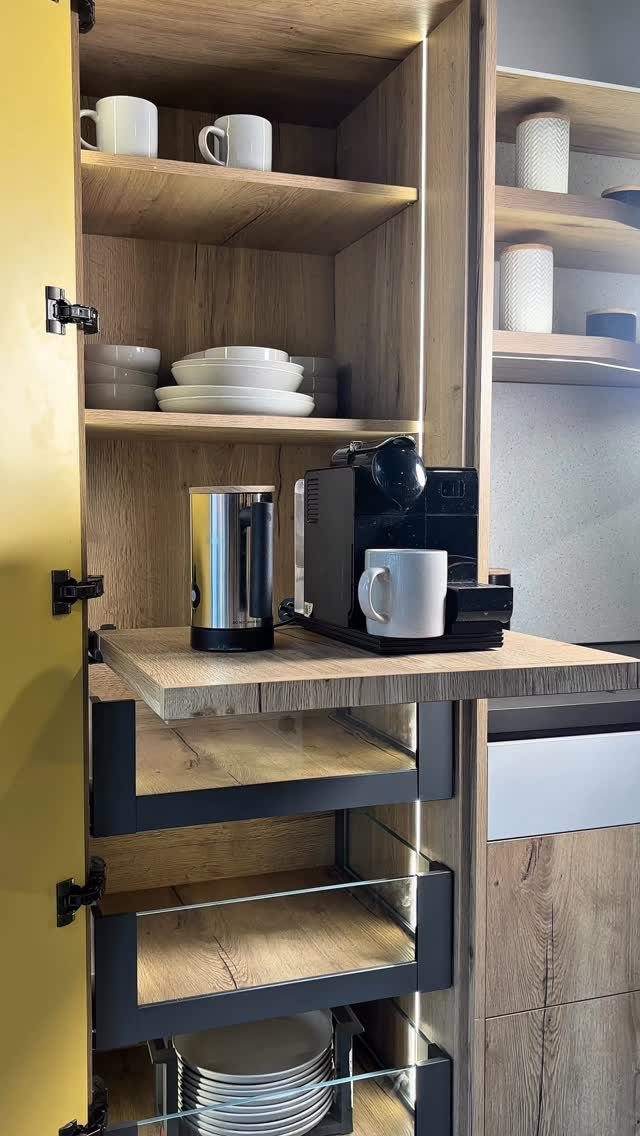
A pull-out shelf lets you slide the coffee maker forward for easy access, then tuck it back inside when you are done.
This keeps the counter clear and the machine out of sight, and it works in almost any cabinet tall enough to hold the brewer.
Use heavy-duty drawer slides rated to support the weight of the machine plus water. Mount the machine toward the back of the shelf so the front edge has room for mugs or a small tray.
This setup fits standard base cabinets without major modification.
3. Coffee Bar Armoire
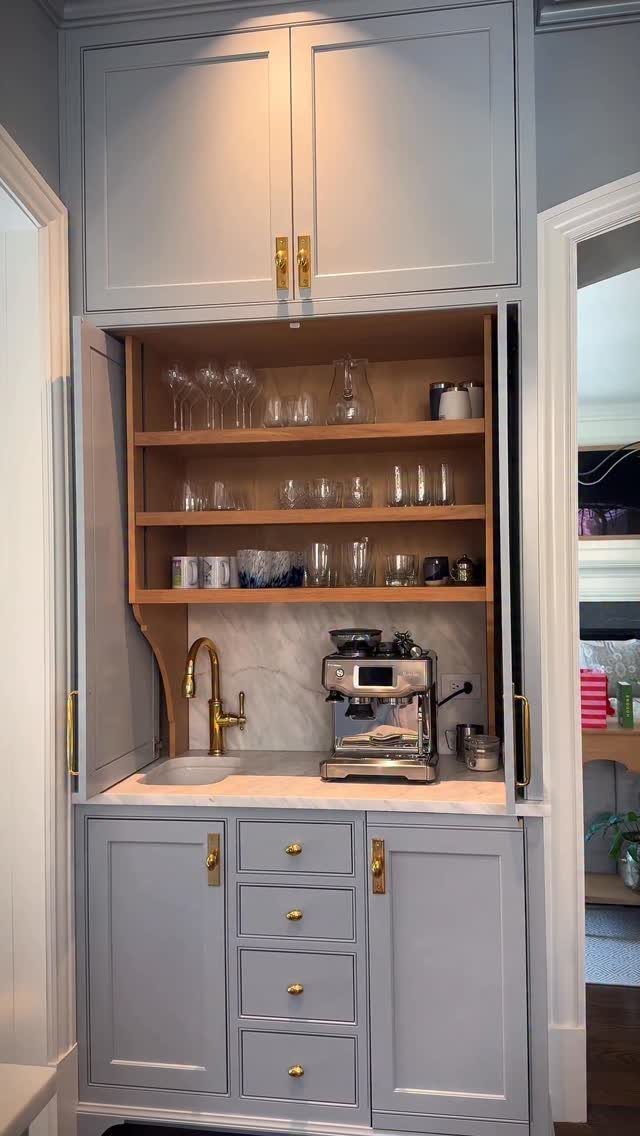
An armoire gives you a full beverage station that closes up like a piece of furniture. A small sink makes refilling and cleaning much easier if you can run a water line and drain to the spot.
If plumbing is not an option, the same cabinet works without it.
You lose the sink but keep all the counter space, storage, and the ability to shut the doors and hide the whole thing. Armoires with adjustable shelves give you the most flexibility for different machine heights.
An armoire lets you set up a station outside the kitchen.
4. Integrated Coffee Station

A built-in station gives the coffee setup its own permanent home, usually carved into a run of cabinets or a pantry wall.
The arched alcove includes a counter, open shelves, and cabinet storage below, all wired for the machine and lit from inside.
This is a remodel-level project.
You will need to plan electrical, countertop material, and cabinet dimensions around the machines you use. The result is a station that looks like it was always meant to be there.
Best for new builds or full kitchen renovations where you can design the space from scratch.
5. Coffee and Wine Cabinet
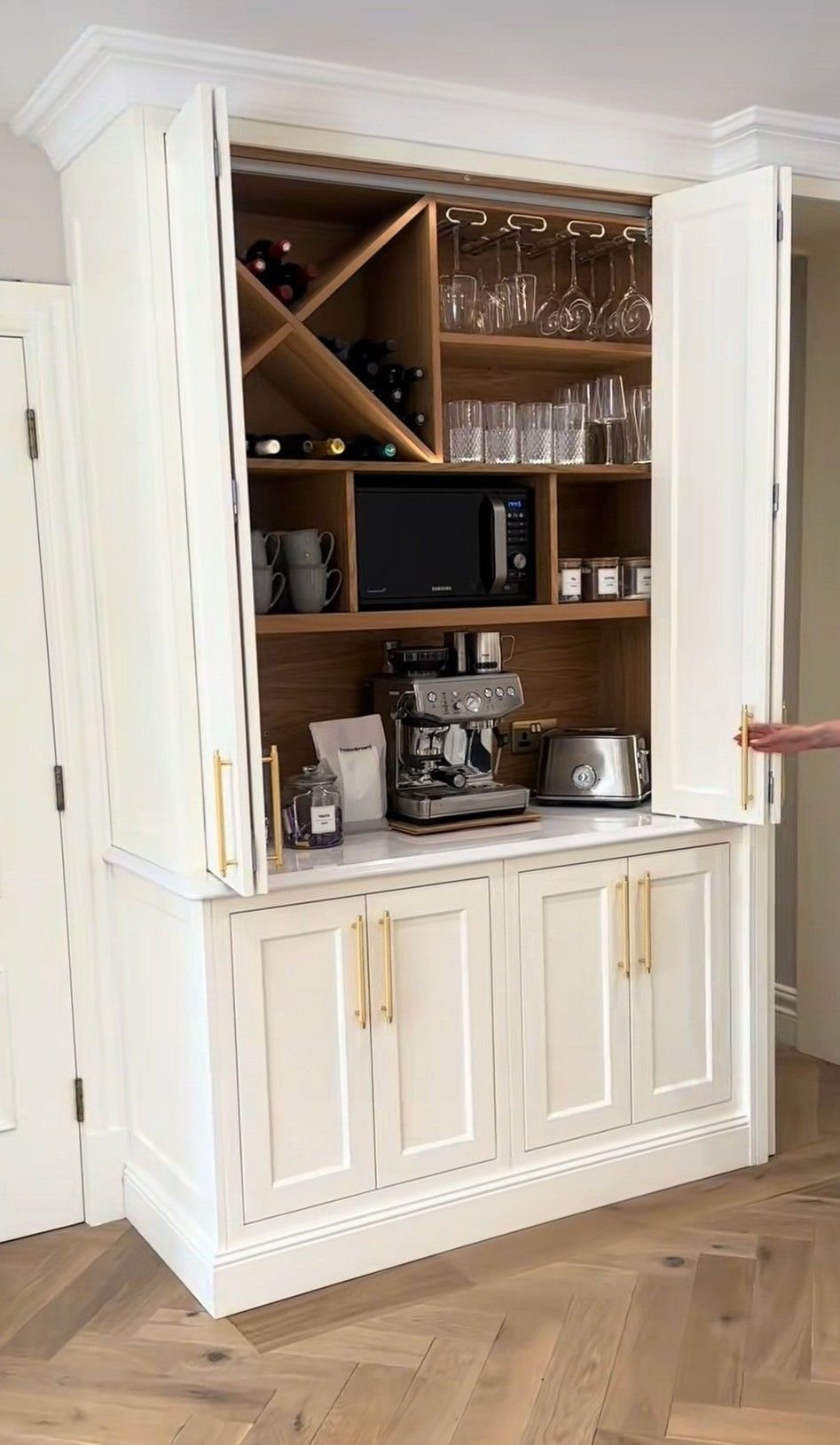
This cabinet combines coffee and wine in one spot, with hanging glass storage above and a wine rack on one side.
The coffee machine sits on a counter shelf, and the microwave tucks in below or beside it, depending on the layout.
The mix fits a butler’s pantry or dining room where you need both functions close together. You will need enough depth for the machine and enough height for stemware to hang without hitting the counter.
If you entertain often, this setup keeps everything in one place and still closes up between uses.
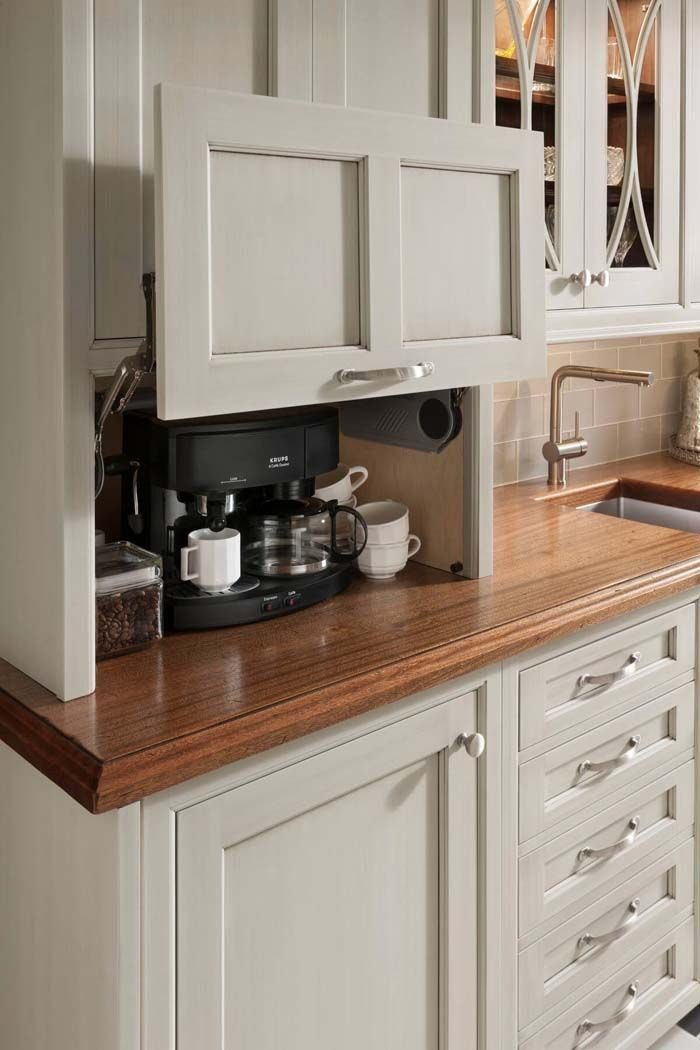
6. Flip-Up Cabinet Door

A flip-up door lifts out of the way instead of swinging to the side, so you do not lose space to the door arc.
You will need a lift mechanism rated for the door weight. The cabinet needs to be tall enough that the open door does not block access to the machine.
This is one of the simpler hidden setups to add to an existing cabinet, and it works in tighter spaces where side-swing doors would get in the way.
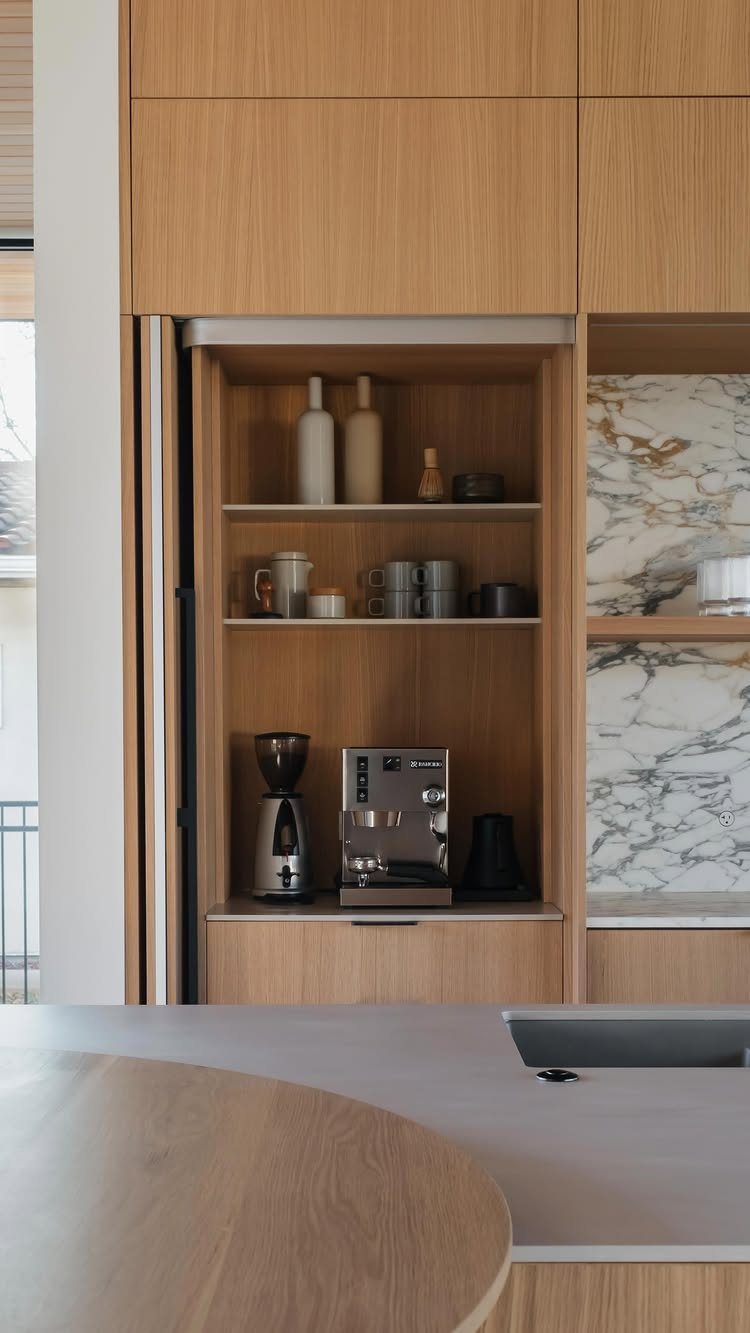
7. Open Shelf Coffee Station
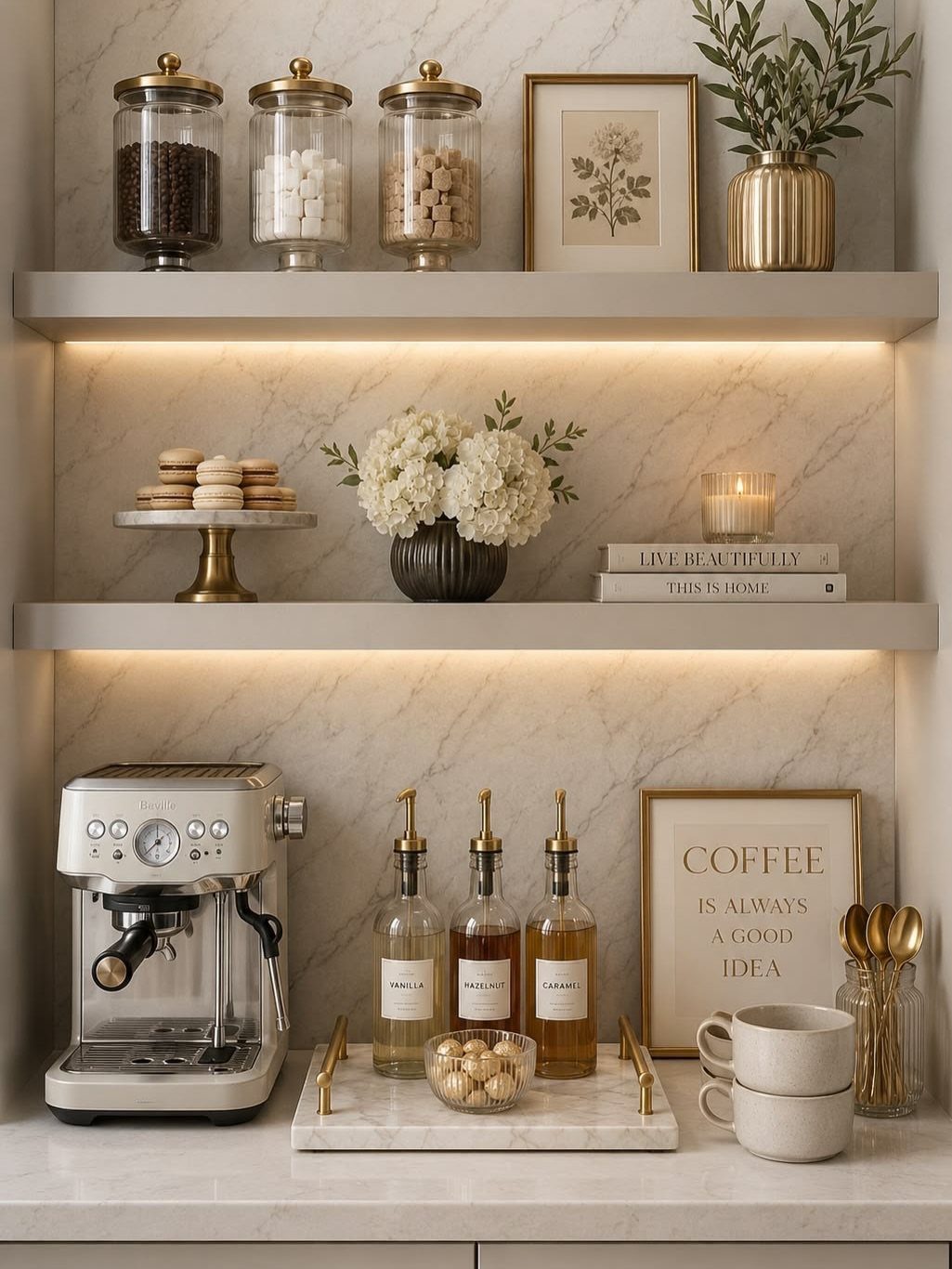
Open shelves in a marble alcove keep mugs and coffee gear within reach while the setup stays tucked into the wall.
This works in a butler’s pantry or a kitchen nook where you have the wall depth for the alcove.
If you are building it into existing cabinetry, you will need to remove the cabinet doors and possibly adjust the shelf heights to fit your machine and tallest items.
The setup stays open during use, so it suits a space where you don’t mind the coffee gear being visible sometimes.
8. Converted Kitchen Cabinet Coffee Station

A standard kitchen cabinet, upper or lower, can turn into a coffee station without a full remodel. Pull out the shelf when you brew, then slide it back and close the doors.
Upper cabinets work if you can reach the machine comfortably. Lower cabinets give you more counter height and easier access but take up base cabinet space.
You will need an outlet inside or nearby, and heavy-duty slides if the shelf holds more than the machine. This setup keeps the station out of sight and uses cabinet space you already have.
9. Built-In Coffee Machine
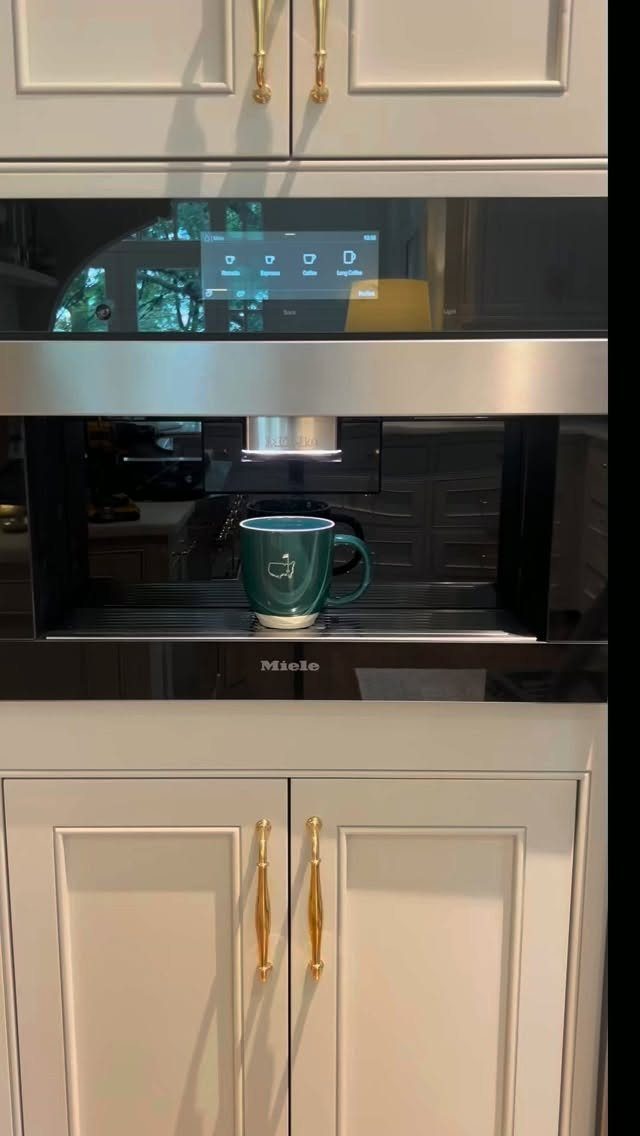
A built-in machine mounts directly into the cabinet face, flush with the doors. Most require a dedicated electrical line and a water connection if the model has a plumbed option.
Miele, Bosch, and Gaggenau make machines sized for standard cabinet openings. Measure the cabinet depth and the machine’s rear clearance before committing to a model.
If you are retrofitting, you will need to cut the cabinet face and possibly add a support shelf inside.
This is a permanent installation and costs more than a countertop machine, but it clears the counter completely and looks built into the cabinetry.
10. Pantry Closet Coffee Station

A pantry closet gives you room for the machine, counter space, and storage for mugs, pods, and anything else coffee-related. The whole station stays behind closed doors when not in use.
Install a countertop at the right height for the machine. You will need an outlet inside the closet and enough depth for the machine to sit back from the door swing.
This setup works best if you have a walk-in pantry or a butler’s pantry deep enough to hold the counter and leave room to move.
Shallow closets can still fit a machine on a shelf, but you lose the counter workspace.
11. Fluted Glass Cabinets

Fluted glass doors let you see what is inside without fully opening the cabinet. The coffee station sits behind the glass, and the cabinet closes to keep the setup contained.
This works in a built-in nook or an armoire-style cabinet. The glass diffuses the view slightly, so the station reads as organized rather than hidden, and the doors keep dust off the machine.
Fluted glass is heavier than flat, so use hinges rated for the weight.
12. Coffee Pod Drawer Below the Machine

A shallow drawer mounted directly below the machine holds coffee pods in one layer, organized by type or color. You pull the drawer, grab a pod, and push it closed without bending or reaching.
The drawer needs to be deep enough for single-serve pods and wide enough to fit your collection. Use dividers or a pod organizer insert to keep them from sliding around.
This fits under a countertop machine or a pull-out shelf setup. If you are building it into a cabinet, make sure the drawer slides clear the machine’s base and any cords.
13. Wood-Lined Cabinet
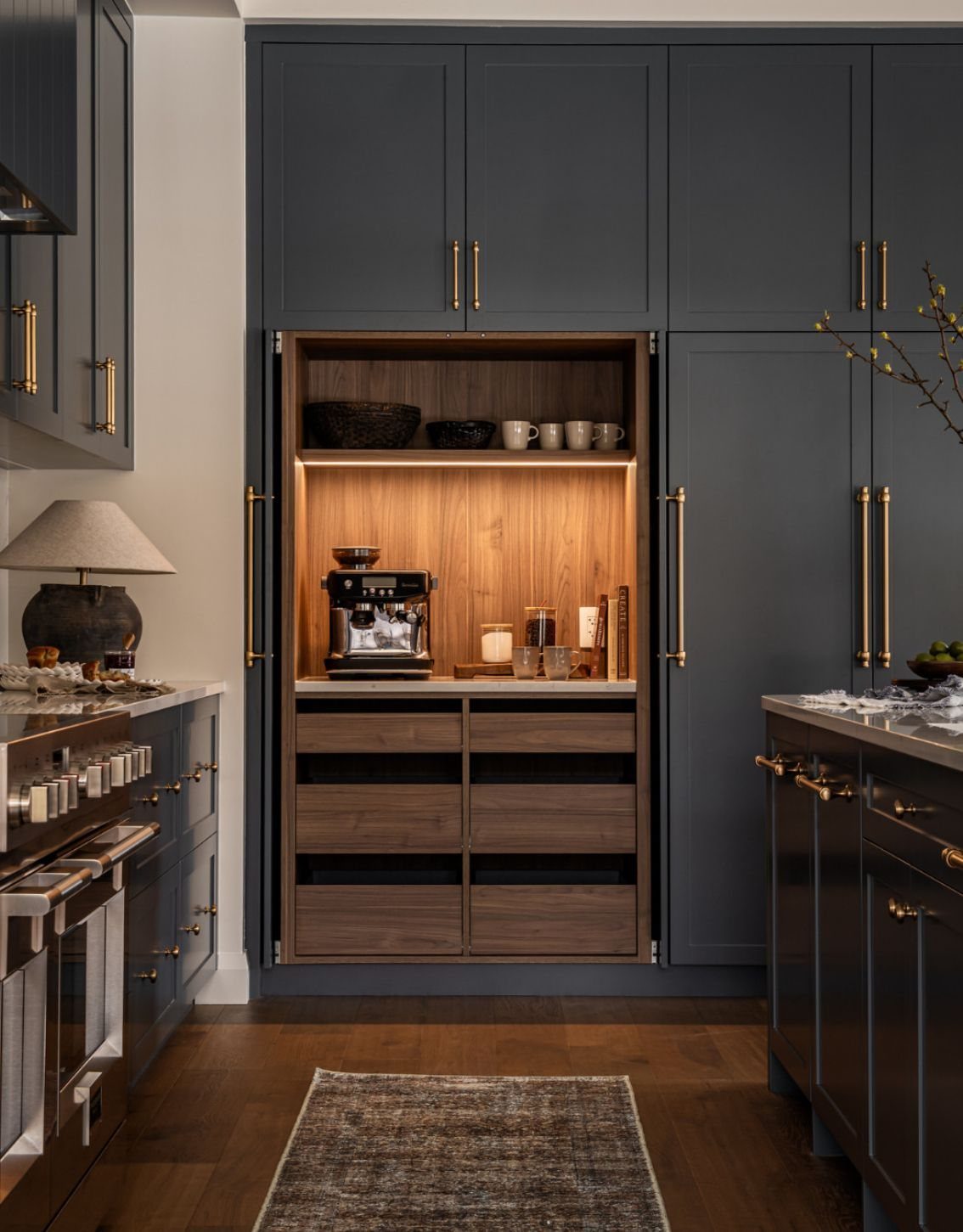
A wood interior gives the station warmth that stands apart from surrounding cabinetry. The contrast works whether the exterior is painted or dark-toned, and the wood reads as intentional rather than leftover builder finish.
You can line an existing cabinet with veneer plywood or tongue-and-groove boards.
Cut pieces to fit the back and sides, then secure them with panel adhesive or brad nails. If the cabinet has adjustable shelves, pull them before lining and reinstall after.
This takes a day and costs less than replacing the whole cabinet.
14. Coffee Station Nook

A kitchen cabinet nook already has the frame, depth, and doors you need.
If the cabinet has a back, drill a hole for the cord or remove the back panel entirely for easier access to the outlet. Adjustable shelves let you set the spacing around the machine without custom cuts.
This fits a standard-depth cabinet and keeps the setup inside cabinetry you already have.
15. Lighted Cabinet with Open Doors
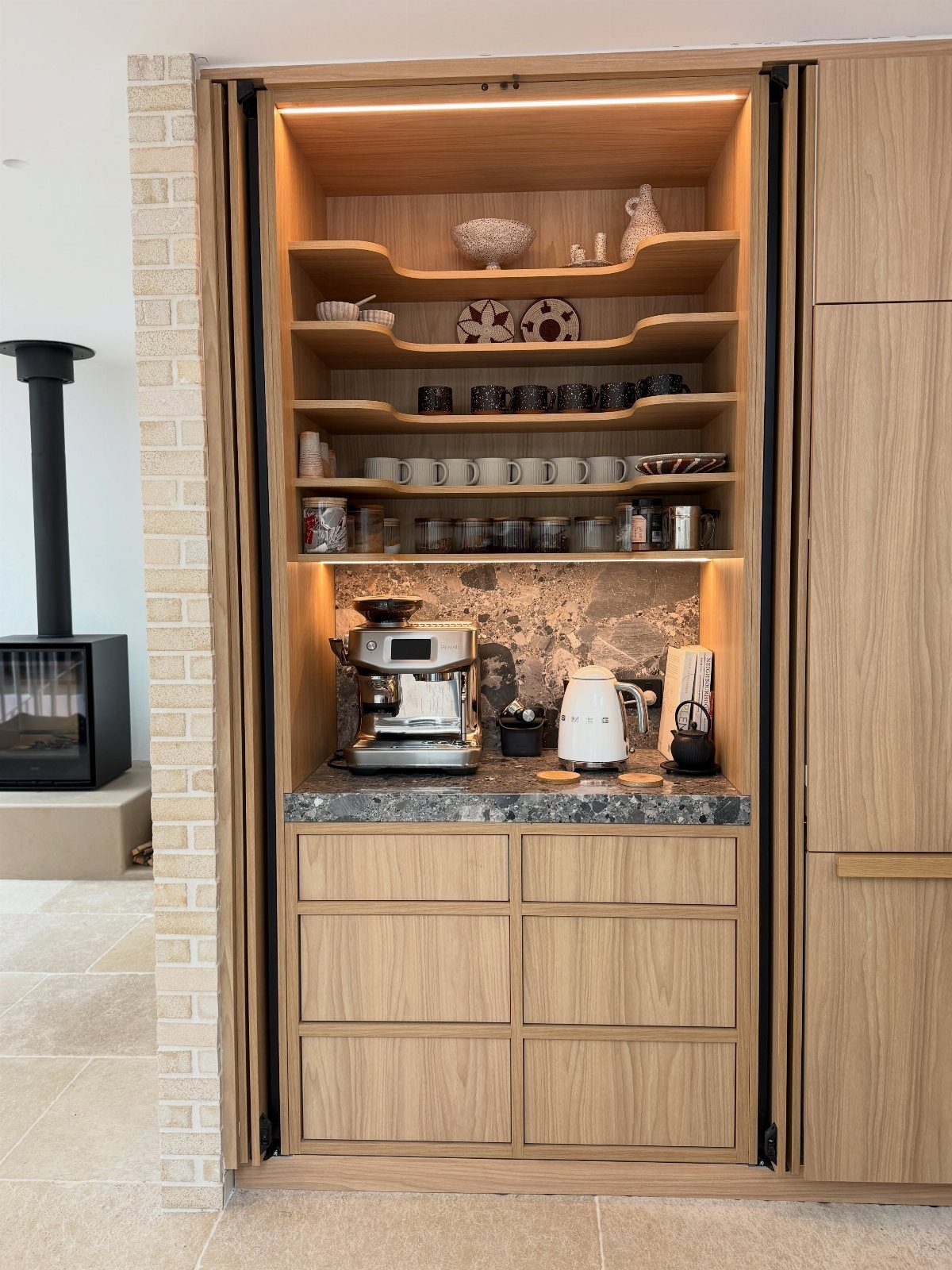
Interior lighting makes the station easier to use in the morning and highlights the setup when the doors are open.
LED strip lights or puck lights mount to the cabinet ceiling or underside of a shelf and plug into the same outlet as the machine.
The backsplash and counter shelf give the station a finished look.
If you are building this into a wall, the backsplash can be tile, stone, or the same material as your main counters. Match the counter height to where you will stand to use the machine.
16. Sliding-Door Coffee Cabinet

Sliding doors save space in front of the cabinet and let you open just one side if the machine sits off-center. The wood-lined interior keeps the station visually separate from the white cabinetry around it.
Pocket doors slide into the cabinet itself but need a wider box to hold the door channels.
This fits kitchens where side-swing doors would block a walkway or another cabinet.
17. Arched Recessed Coffee Bar

An arched recess turns the coffee station into a permanent built-in feature. The arch gives the alcove an intentional look, and the lower cabinets add storage for beans, filters, and backup supplies.
This requires wall depth for the recess and framing for the arch.
If you are retrofitting, you will need to open the wall, frame the curve, and drywall around it before adding the counter and cabinets. Lighting can be recessed into the arch or mounted under the top shelf.
Best for a remodel where you can plan the electrical and cabinet dimensions from the start.