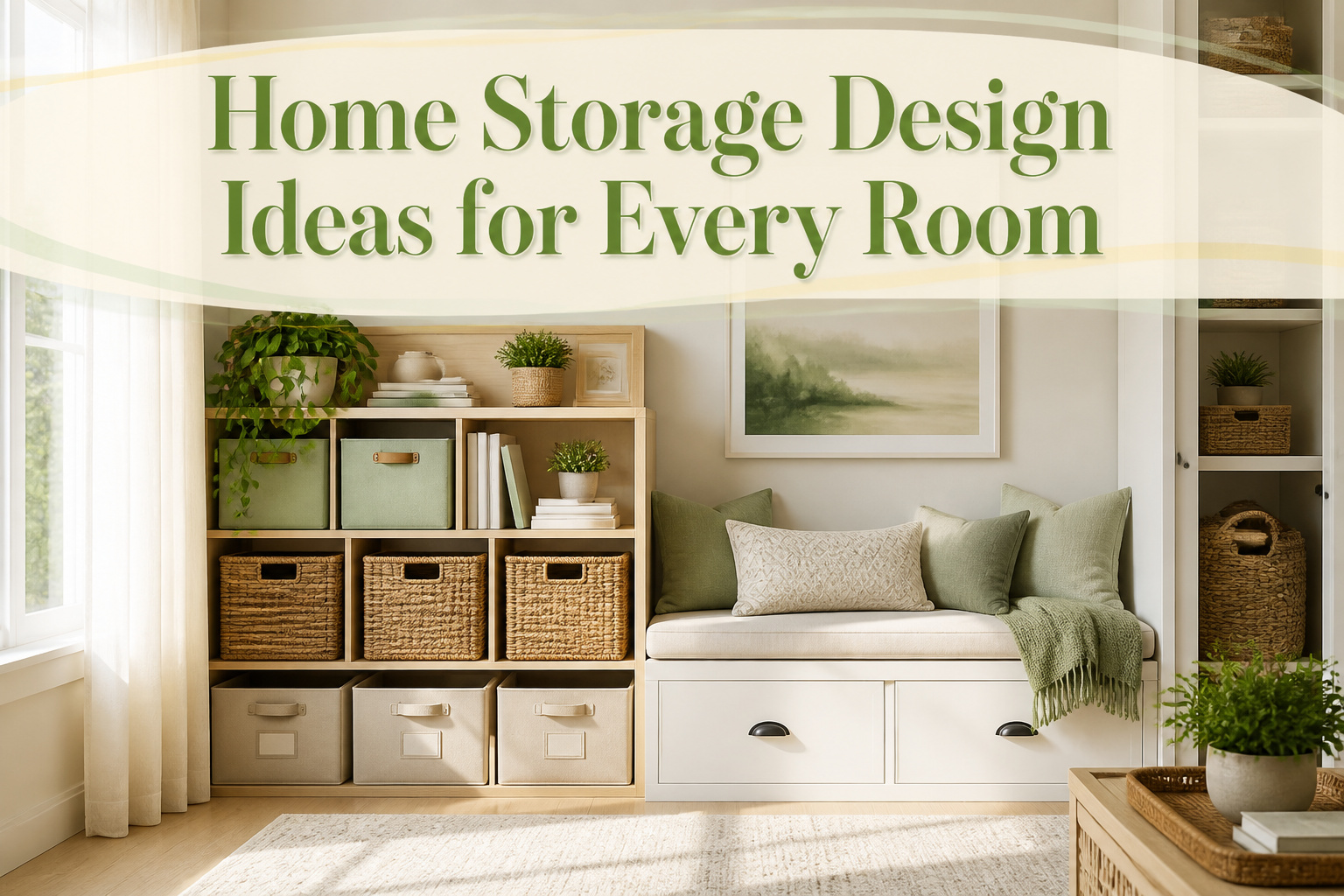
The home storage design ideas worth keeping in 2026 run from $20 in cardboard and tape to nearly $4,000 in entryway millwork, and the only filter that matters is whether the piece opens wide enough to load and unload without one hand propping the lid. I learned the hard way that a rolling cart stops cold an inch from the wall when you forget to measure the baseboard trim, and that a hinge quality matters more than cushion thickness because a lid that slams becomes a bench you avoid.
1. Multipurpose Spaces
The hardest storage problem in a small home is not where to put things, but where to put the room itself. A studio apartment leaves no boundary between sleep and work, and a guest room that sits empty eleven months a year starts to feel like a storage unit with a bed in it.
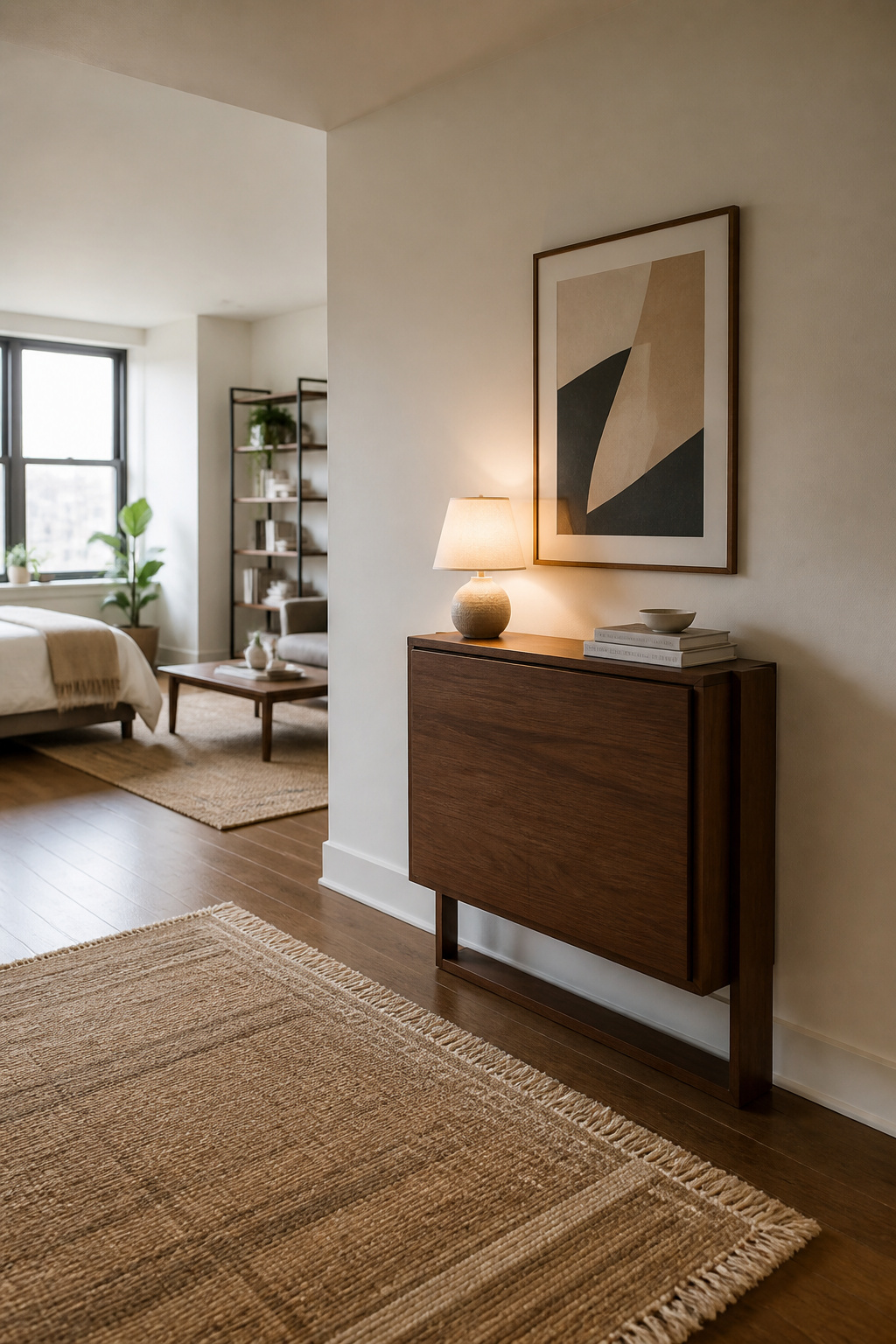
What convinced me, reading through a dozen of these setups, is that the fold-away desk is the piece that makes the double duty honest. The West Elm Mini Secretary Desk at $499 closes down to about the depth of a console table, which means the same wall can hold a lamp and a stack of books when no one is working. That is the difference between a room that shifts and a room that just piles up.
Entryways are the other place where one room tries to do too much at once. The Pottery Barn Modern Farmhouse Entry Tower Set at $3,897 is a lot of money for a coat rack, but it is also a mail station, a shoe cabinet, and the thing that keeps bags from drifting onto the kitchen table. For most budgets, that is the function to copy, not the price.
2. Shoe Storage Solutions
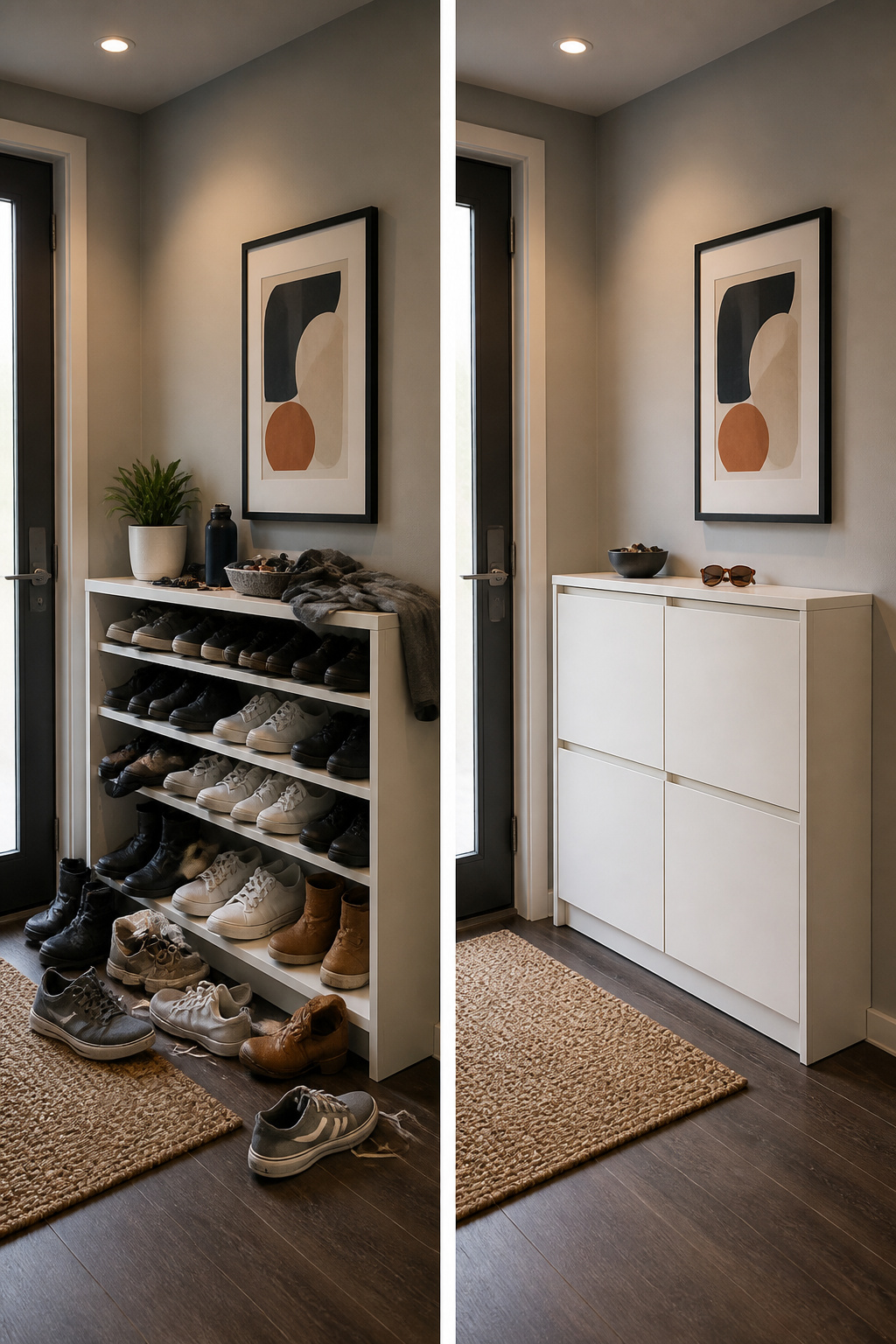
Shoe piles in the entryway announce a storage problem before you even step inside. The IKEA Ställ Shoe Cabinet at $150 solves this with a slim profile built for narrow halls, its shallow depth letting you tuck it against a wall without blocking traffic. Doors hide the clutter, and the flat top catches keys and sunglasses on the way out.
For open spaces or larger households, the Yamazaki 6-Tier Shoe Rack at $155 keeps everything visible and within reach. No doors means faster grab-and-go mornings, though it also means the collection stays on display.
The real choice is footprint versus visibility. The Ställ disappears into tight entryways where a protruding rack would become a tripping hazard. The Yamazaki needs room to breathe but holds more pairs in the same vertical space. In a rental, the cabinet moves with you and looks intentional against any wall color; the rack reads more temporary, which suits some spaces and undermines others.
3. Under-Bed Storage
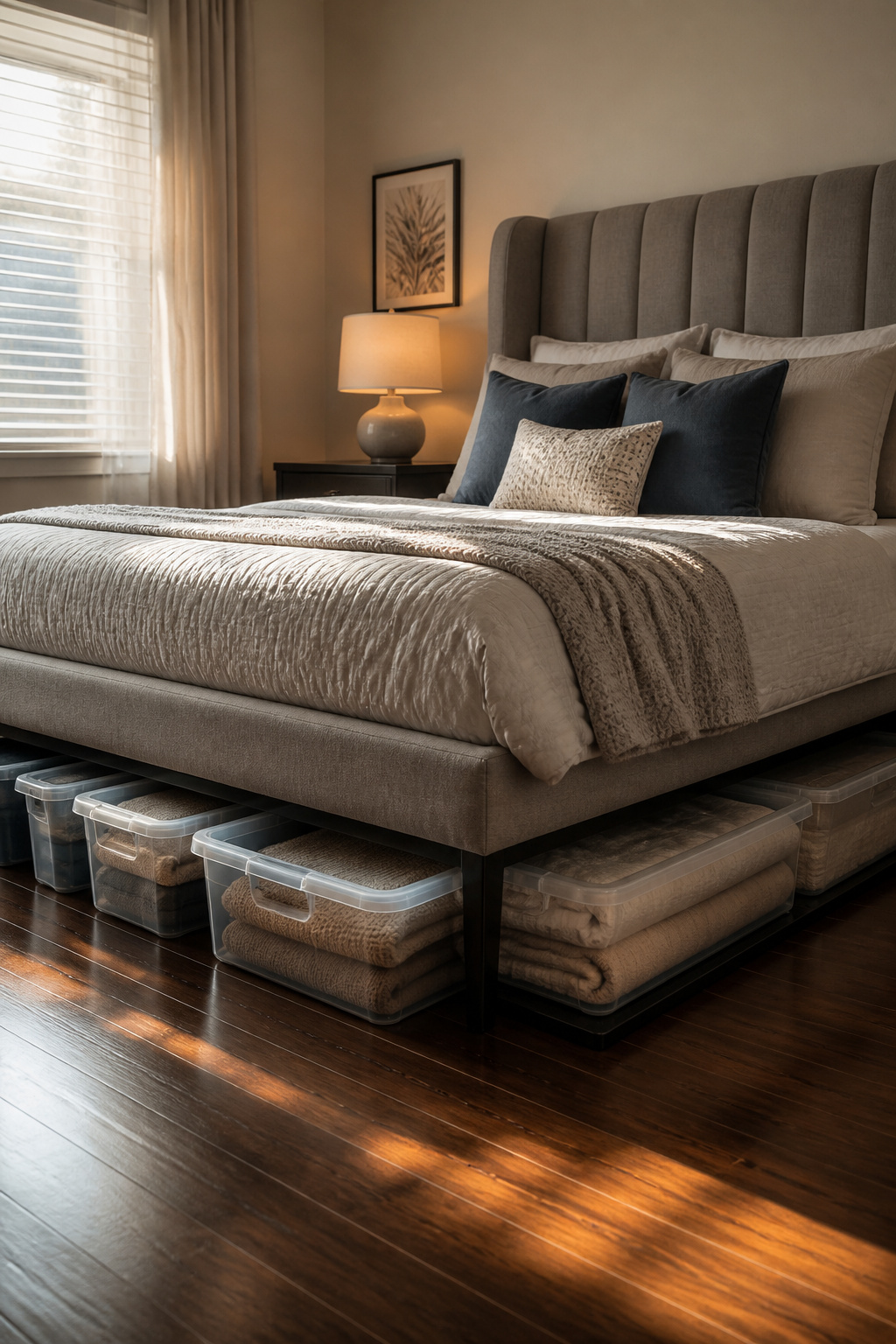
The space beneath a bed is usually the first place people overlook and the last place they measure. Most bed frames leave at least six to eight inches of clearance, sometimes far more with a platform or lifted frame, and that volume adds up to enough room for out-of-season clothes, extra bedding, or a full shoe collection if you plan it right.
Measure your bed frame height before you buy anything. A container that slides in easily at the footboard may wedge tight against a support slat or a low side rail. Under-bed storage containers come in enough sizes that you can match the depth to your actual clearance rather than guessing. For bulky items like comforters or winter coats, vacuum storage bags flatten the pile to a fraction of its height, which turns a shallow four-inch gap into usable space. The bags also seal out dust, which matters more than people expect for anything stored six inches from the floor.
Long, narrow baskets or lidded boxes keep the look cleaner if the bed skirt rides up or the frame is open on the sides. Drawers that glide out on casters cost more but save the kneeling and reaching; lidded bins you pull by hand are cheaper and fine for things you access twice a year. The choice depends on whether you are storing backup sheets you change monthly or a down coat you will not touch until November.
4. Wall Hooks
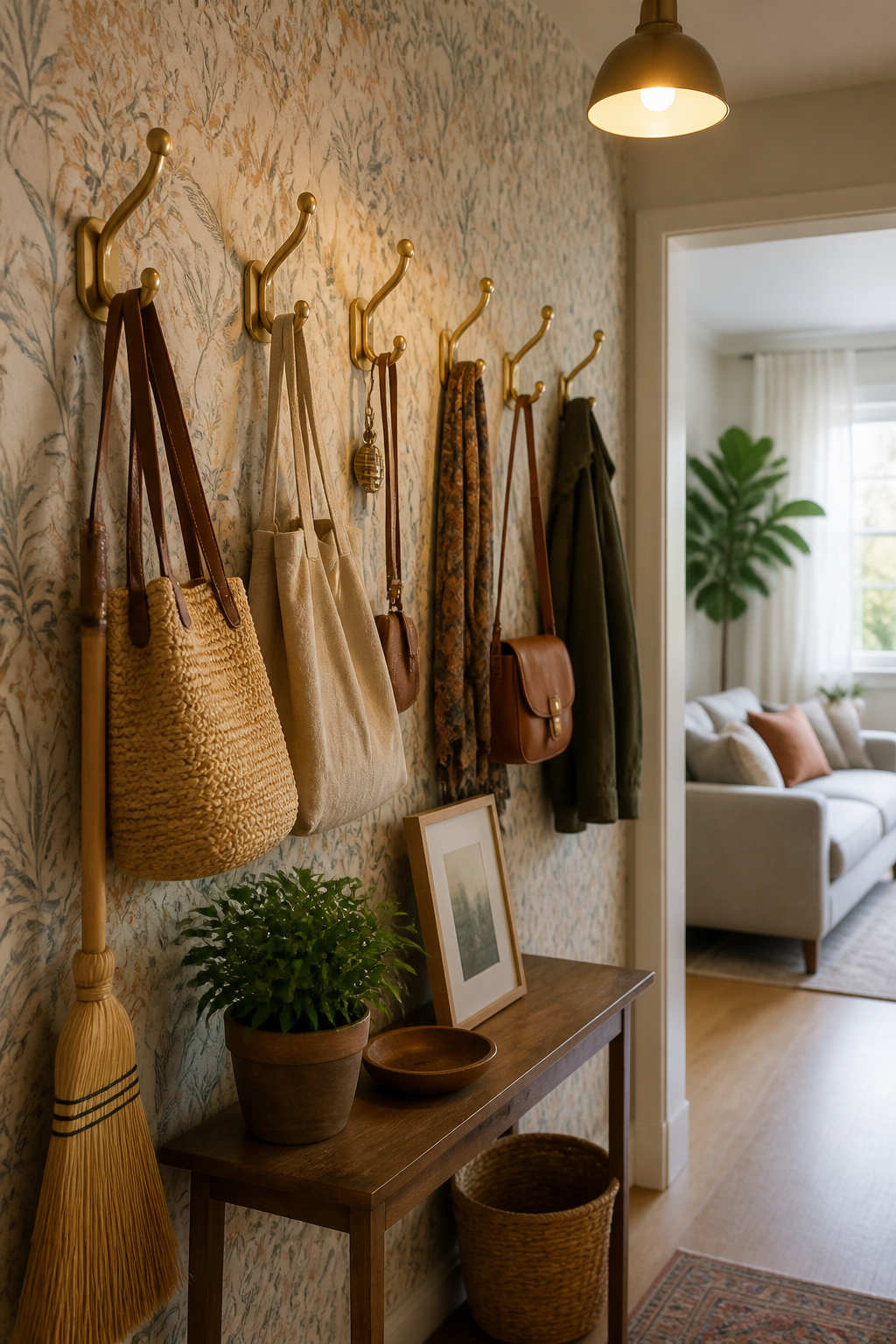
A single hook behind the door handles a bathrobe. Three in a row by the entry handle coats, bags, and the dog leash without the floor pile that makes a small rental feel smaller. Wall hooks win where shelves would eat the last six inches of walkway.
The back of a door is dead space until you mount a rack there. Wall-mounted wire racks come in various sizes and can hold more than single hooks for gear bags or cleaning tools. In the bathroom, the same rack turns towels into something like a display rather than a heap. Weight matters more than people guess. A mop or a loaded gear bag pulls downward and outward; the screw that holds a towel fails fast under leverage. Anchor for what you actually hang, not what the package shows in the photo.
I have learned to place hooks at the height where my hand already reaches, not where a picture looks balanced. The stairway wall, the gap beside the fridge, the side of a tall cabinet where no linen closet exists: these spots stay empty because they are awkward, not because they are useless. Skis mounted there free floor space and read as decor in the off months. The same logic holds for anything with a long shape that leans badly and falls often.
5. Creative Use of Vertical Space
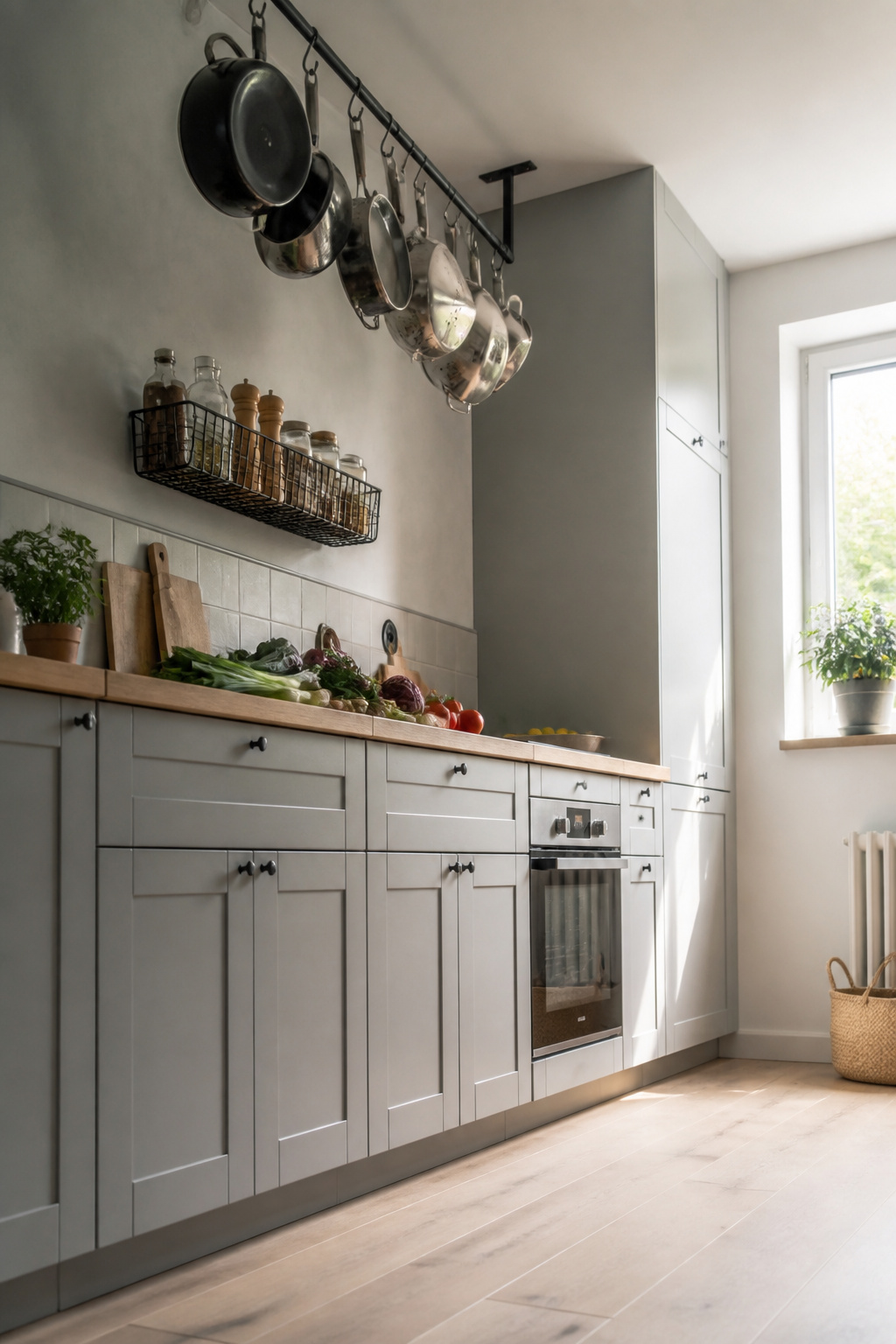
Wall-mounted wire racks turn the back of a door or a narrow slice of wall into storage for brooms and mops without eating floor space. The same logic applies to tall cabinets, which replace a missing linen closet by stacking cleaning supplies upward instead of letting them sprawl across a counter.
In the kitchen, that dead zone above the island is fair game for a hanging shelf unit. Oversized pots and pans sit there within reach but out of the way, freeing the base cabinets for things you grab more often. Pantry shelves that stop short of the ceiling leave a gap that tension rods can turn into vertical storage for paper towel rolls. Pull from the bottom and the stack drops the next one into place.
The IKEA OMMJÄNGE Basket at $44.99 mounts to the wall and works as a catch-all for the kind of clutter that otherwise colonizes a tabletop. Before installing anything that reaches up, measure your ceiling height. A tall cabinet or rolling ladder system that looks right in a room with 25-foot ceilings will dominate a standard 8-foot space and block light you cannot afford to lose.
6. Storage Benches
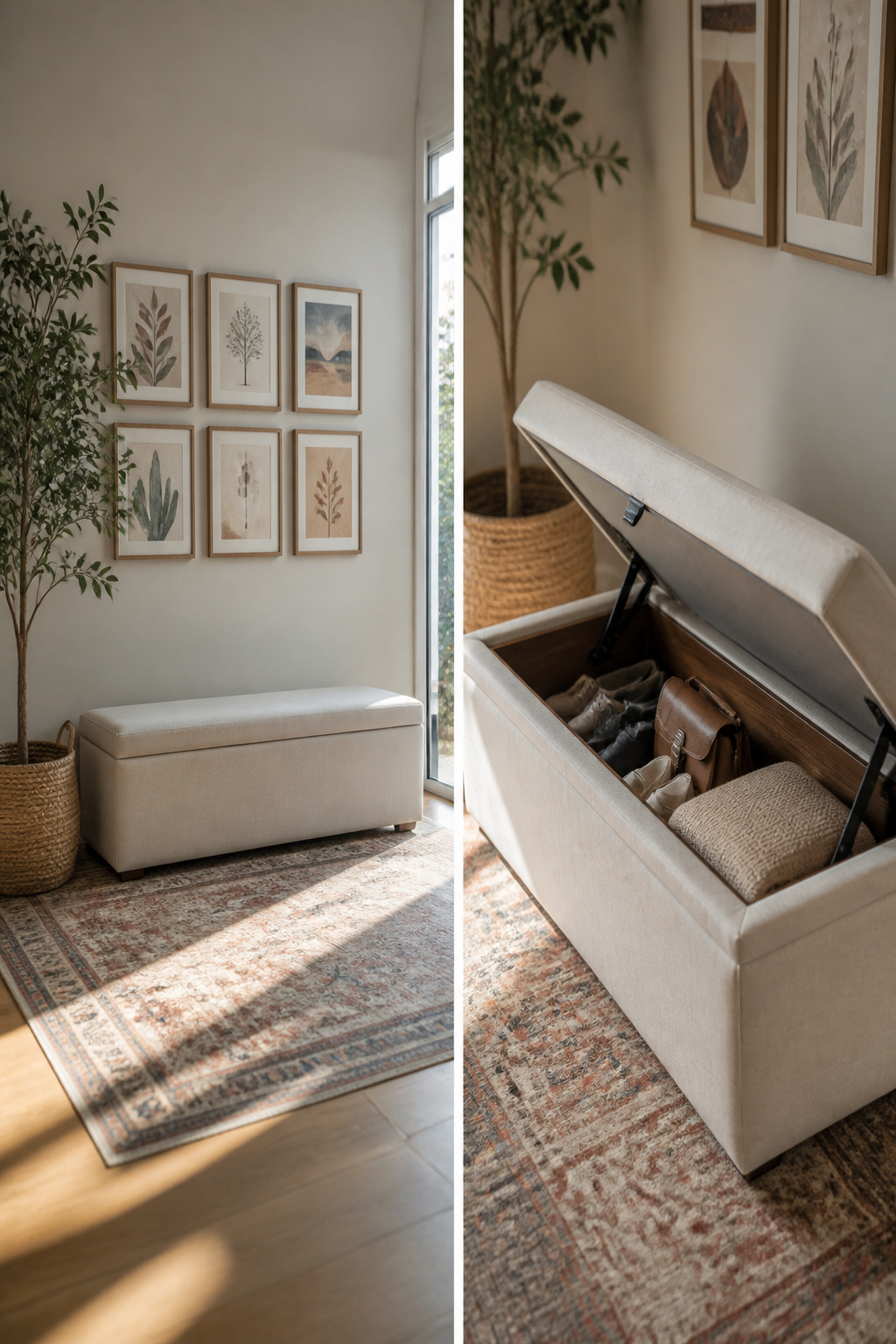
Storage benches hide the mess that entryways collect. A flip-top bench by the door swallows shoes the second you step inside, which matters more than the cushion color if you are actually shoe-free. The hinge is where daily use lives or dies: a piano hinge across the full back edge carries weight without sagging, while two small butt hinges at the corners will torque loose inside a year. I learned that reading spec sheets, not from any drama; the difference is thirty dollars in hardware.
Window seats with lift tops store linens or off-season clothes you do not need till October. Built-in wall shelves above the seat turn that whole wall into usable depth, not just the bench box below. Outdoor storage benches for cushions and garden tools need treated wood and a lid that actually seals, or you are storing mildew. The hinge quality matters more than the cushion thickness, because a lid that slams or drifts open becomes a thing you avoid using.
What fits inside versus what looks right in a room is the real trade. A deep bench holds more but juts into traffic; a floating bench-shelf mounted low along the wall keeps floor space open and still takes bins underneath. Plywood works fine for that mount if you finish the edge.
7. DIY Storage Solutions
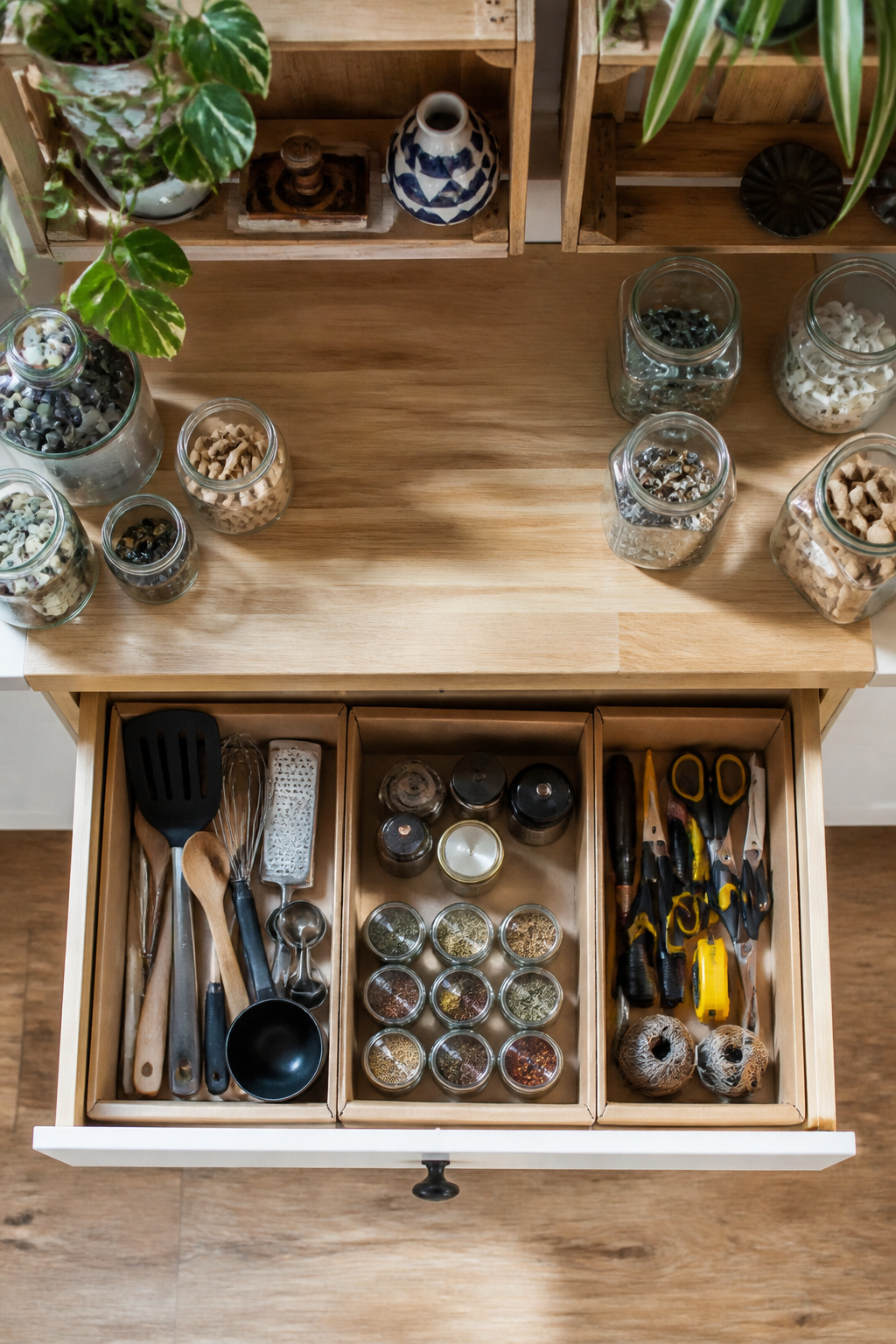
Cardboard sits in every home, waiting. I cut strips from an old shipping box last month, notched them to interlock, and ran tape along the edges. The result was a set of custom drawer dividers that fit a kitchen junk drawer exactly, no wobbling, no wasted space. Total cost stayed under $20 for a roll of packing tape and a yard of patterned paper I already owned. The cutting and fitting took one slow afternoon, mostly because I measured twice after misjudging the first slot by half an inch.
Mason jars and wooden crates work the same way: free storage if you already have them, slightly better if you spend twenty minutes on the finish. A jar needs no alteration to hold cotton rounds or hardware. A crate screwed to the wall becomes shelving; stacked, it becomes a bedside table with built-in cubbies. The painted boxes I tried for holiday ornaments looked handmade, not boutique, which was fine until the humidity softened the corners. Cardboard has limits.
8. Closet Organization Systems
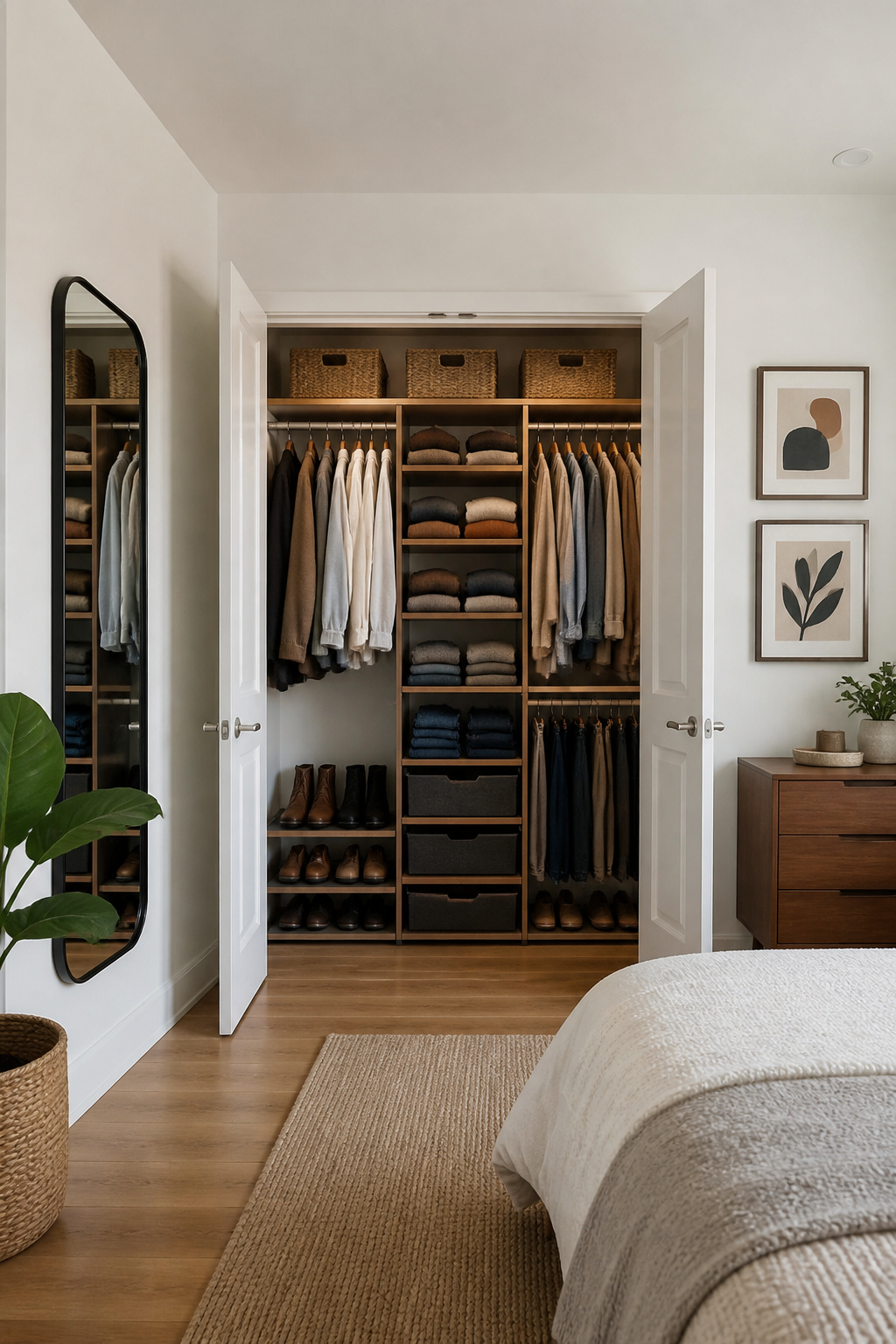
Adjustable closet rods slide up and down to hang shirts above long coats, or drop low enough for a kid to reach. Shelf expanders stack onto existing ledges to double shoe rows without a single screw into the wall. Drawer dividers turn one messy bin into sorted slots for belts, folded tees, or whatever else disappears in the back. A basic kit with all three runs about what you’d spend on a nice dinner out; paying someone to measure and install the same parts usually costs four or five times that. Most renters can set these up in an afternoon and take the whole system with you when the lease ends, which is the part that sold me after I watched a friend abandon two hundred dollars in drilled-in track shelving. The tradeoff is the look: metal brackets and wire grilles read utilitarian against custom millwork, but the storage math works out nearly the same.
9. Kitchen Storage Hacks
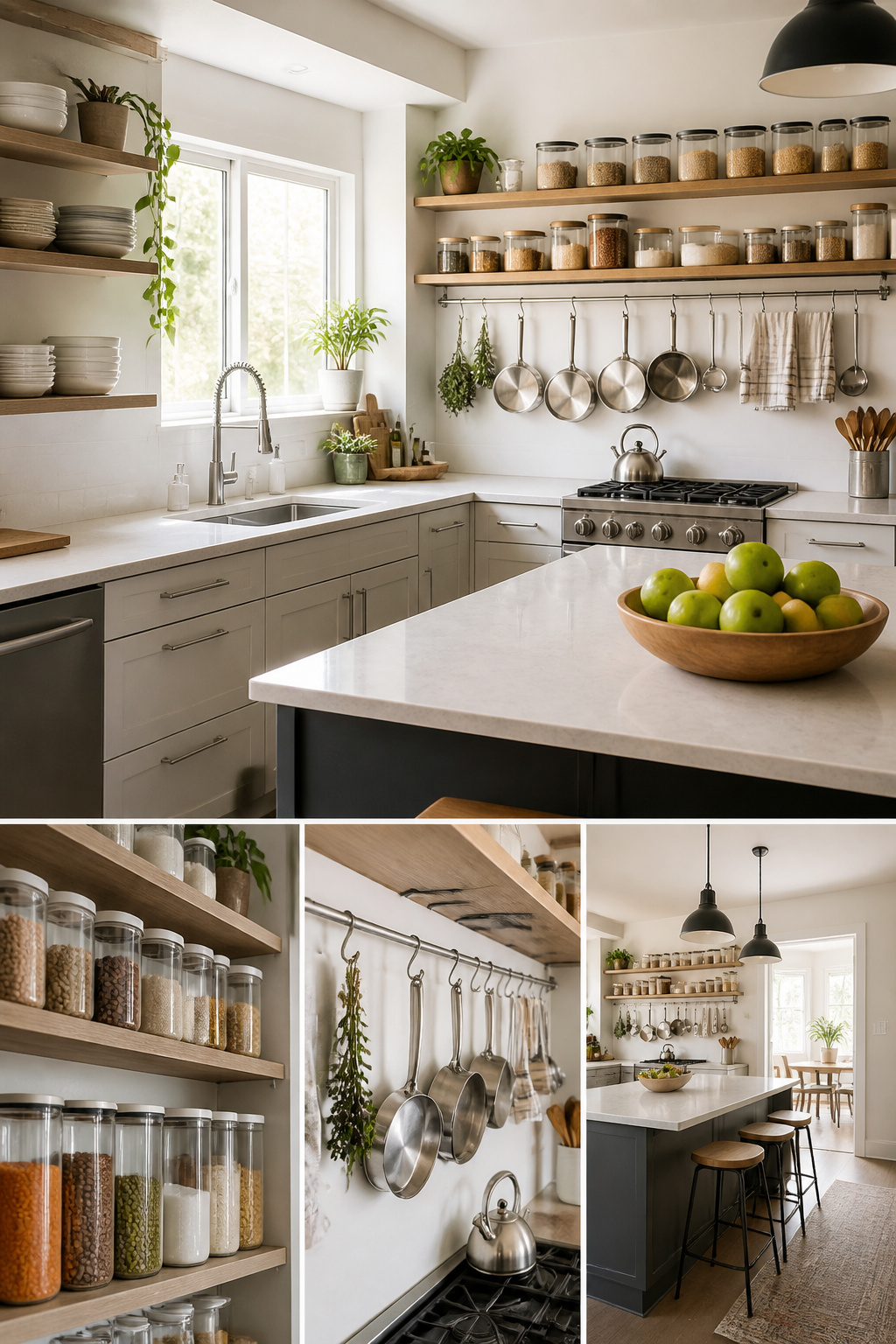
Wall-mounted racks turn the gap between upper cabinets and countertops into real estate that most renters leave empty. A steel rail with S-hooks holds the tools you reach for daily; the pans stop rattling in drawers and the spatulas dry where you can see them. Mount the rail at least eighteen inches below the cabinet bottom or the handles will knock. Clear containers on open shelves or inside cabinets solve the problem of buying duplicates because the bag of farro looks like the bag of barley. The same container in three sizes stacks, and a label on the narrow side lets you read it from the front.
Rolling carts fill the awkward twelve-inch gaps beside refrigerators or at the end of counters where nothing else fits. A slim two-tier cart holds cutting boards and onions; a wider three-tier model becomes a mobile prep station. The wheels lock, which matters more than people think on vinyl floors.
Deep cabinets are where storage goes to die. A half-depth shelf on risers creates two visible layers; the back row sits higher so you can see over the front. Pull-out bins on low-friction sliders cost more than a turntable but reach the full twenty-four inches without the wobble that dumps bottles. I tried the turntable first. The wobble won.
10. Bathroom Storage Ideas
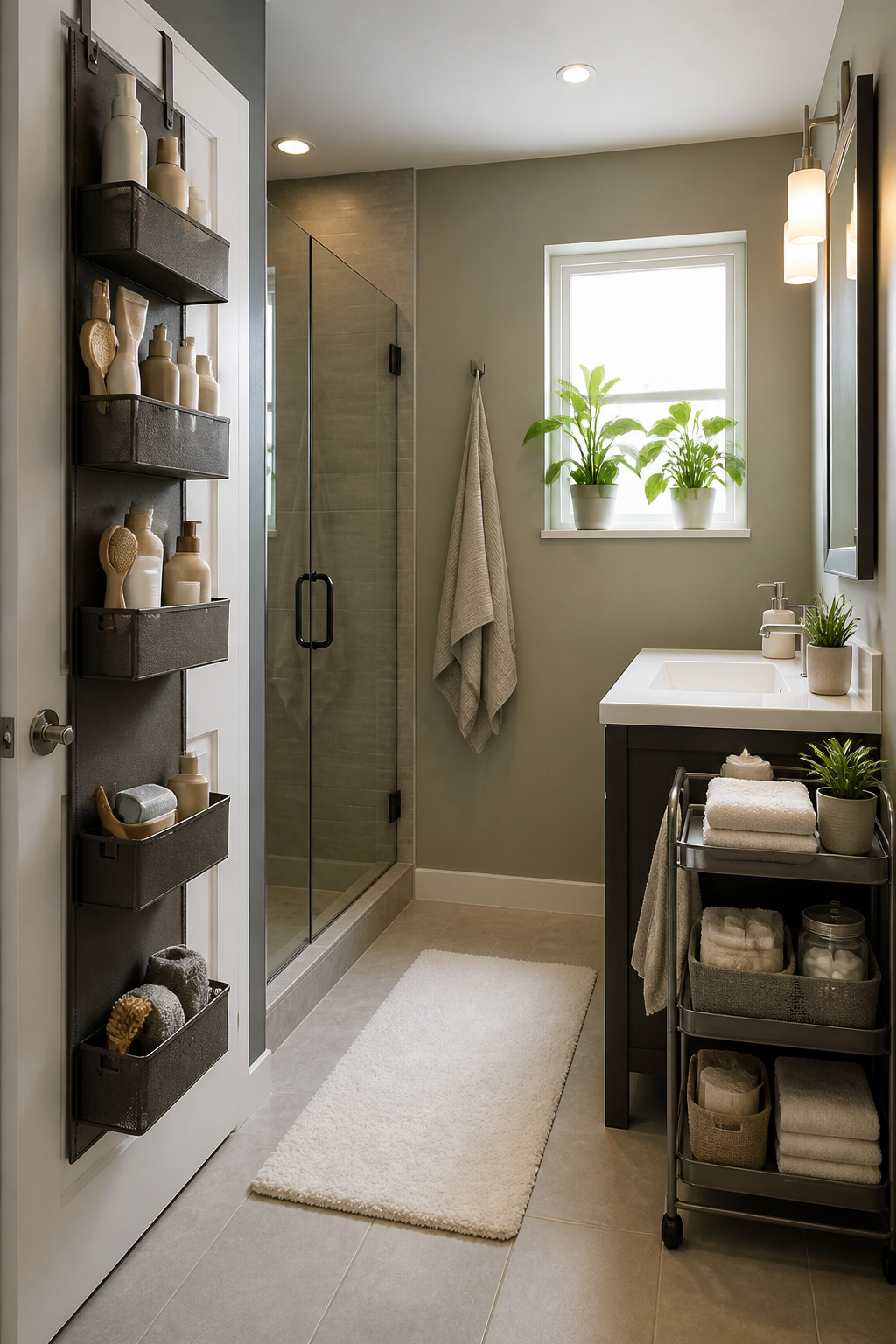
Bathrooms without under-sink cabinets leave you working with walls and doors from the start. Over-the-door organizers that hinge directly on the door hardware and close with a magnet keep beauty products off the vanity without the sway of pocket-style shoe racks. The hinge-mounted style stays flat against the door, which matters in a narrow bath where every inch of swing radius counts.
Wall-mounted shelves work if you pick the material deliberately. Standard MDF or untreated wood absorbs moisture fast in a steamy bathroom; I have watched particleboard shelving belly and flake inside ten months of daily showers. Powder-coated metal or solid teak holds up, but the finish matters more than the species. Anything with a seam or raw edge is where the failure starts.
A small bar cart or tiered etagere fills the gap when drilling into tile is not an option. Linens stay dry on the upper tiers, toiletries drop to the lower, and the whole unit rolls out for cleaning. The best ones are narrow enough to park beside the toilet or between the sink and tub without blocking the walkway.
If the bathroom has zero built-in storage, moisture resistance is not a nice-to-have; it is the decision that determines whether you replace the system in a year.
Furniture That Hides Storage
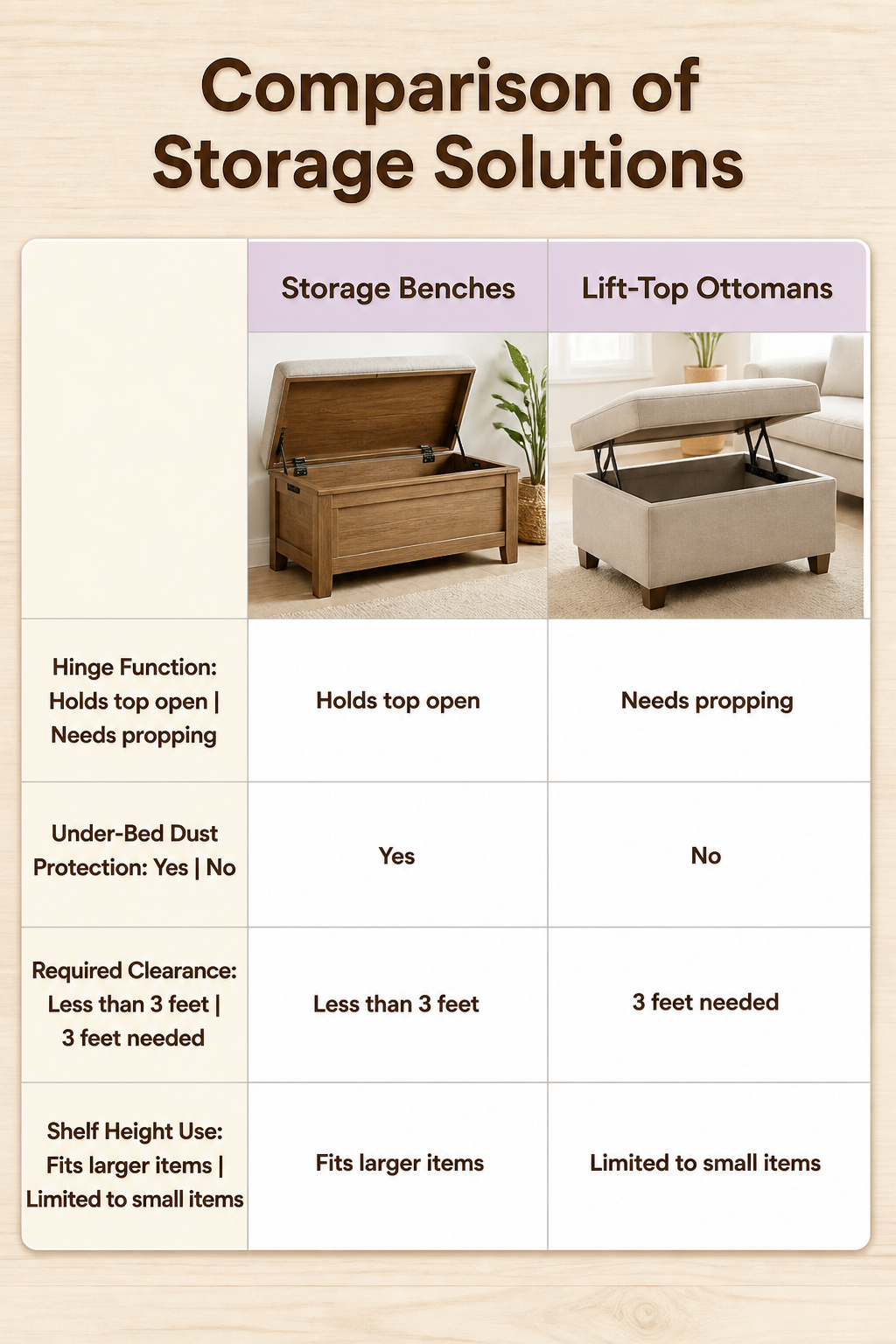
Storage benches and lift-top ottomans only earn their floor space if the compartment opens wide enough to actually load and unload. A lid that tilts back forty-five degrees forces one hand to prop while the other fishes around; the piece becomes a bench you occasionally store things inside, not storage you can live with. The hinge should hold the top open on its own, ideally past ninety degrees, or you’ll find yourself using the surface less and less.
Beds with drawers underneath solve the dust problem that kills open under-bed bins, but the real test is whether the drawer clears a bedside table or wall when it rolls out. A drawer that needs three feet of clearance in front requires a bedroom layout built around it. Side-lift drawers, the kind that pull toward the foot of the bed, often work better in tight rooms than end-pull models.
Coffee tables with lower cabinets look substantial, yet the shelf height determines what goes in. Six inches of vertical space fits remotes and coasters, not board games or photo albums. Before buying, stack the items you actually need nearby and measure; the number of closed-door pieces that end up holding nothing but air would surprise you.
Organizational Systems That Stick
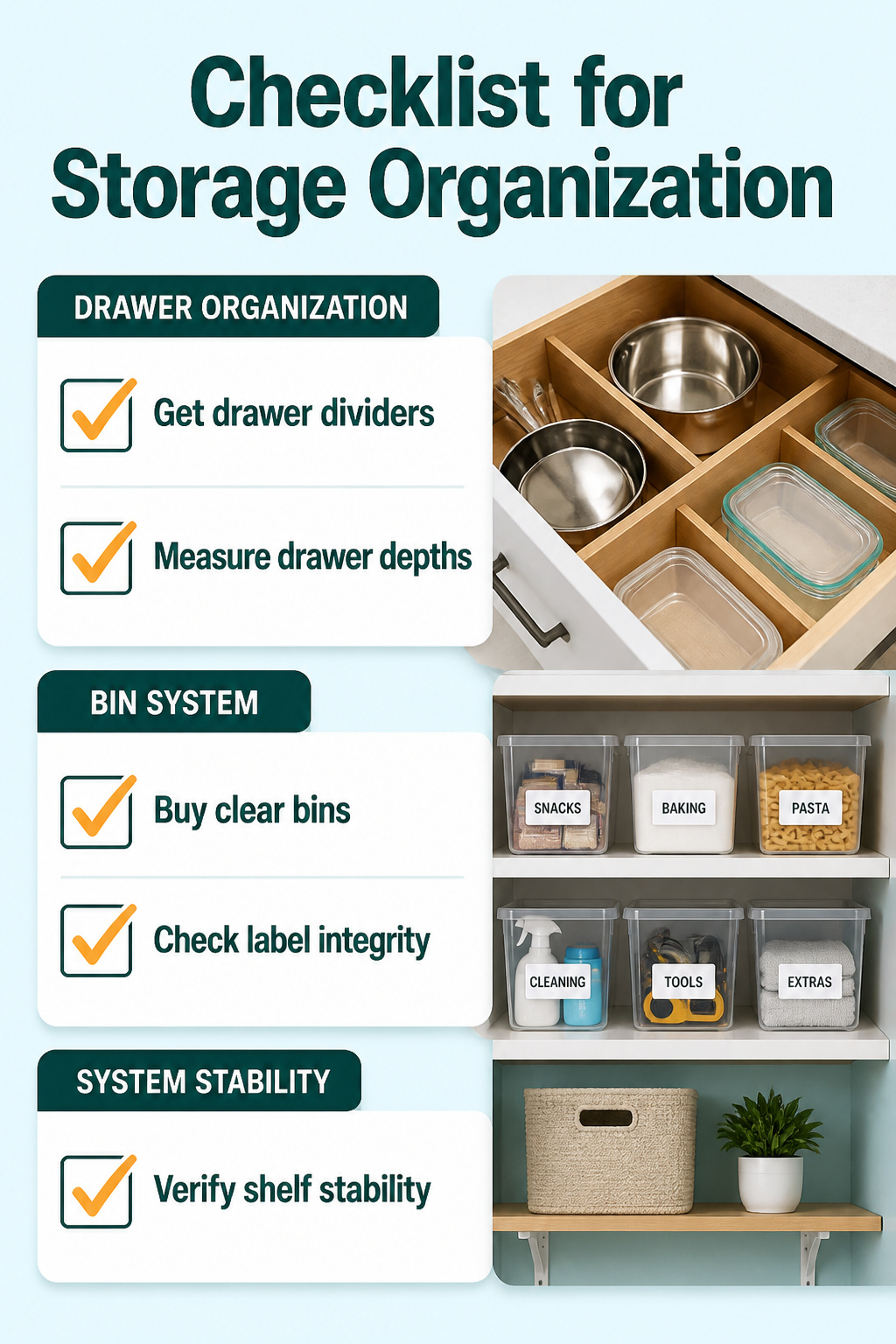
Drawer dividers and clear bins are the maintenance layer that keeps a storage system from collapsing after the first month. I have watched friends build beautiful closet systems, then lose them to the same clutter inside six weeks because every small item still wandered. The fix costs under $30 and takes an afternoon.
For deeper drawers, 4-inch tall adjustable dividers work for pots, pans, and food storage containers. Shallow drawers do better with low-profile expandable bamboo dividers, hung spring-loaded at the back so they look fitted rather than store-bought. Either way, the divider creates a cell where one item belongs, and the visual boundary does more of the enforcement than you expect.
Clear bins with labels slide into cubbies or shelves and remove the guessing that lets clutter back in. Small plastic bins, clearly marked, keep a system honest: you see the category, you see the volume, and you know when you are cheating. The label matters as much as the bin. Without it, the clear walls just show you a mess faster.
The whole point of the big pieces, the shelves and the rods and the built-ins, is to hold these small containers steady. Skip this layer and you have built a stage for future chaos.
What I Got Wrong Measuring
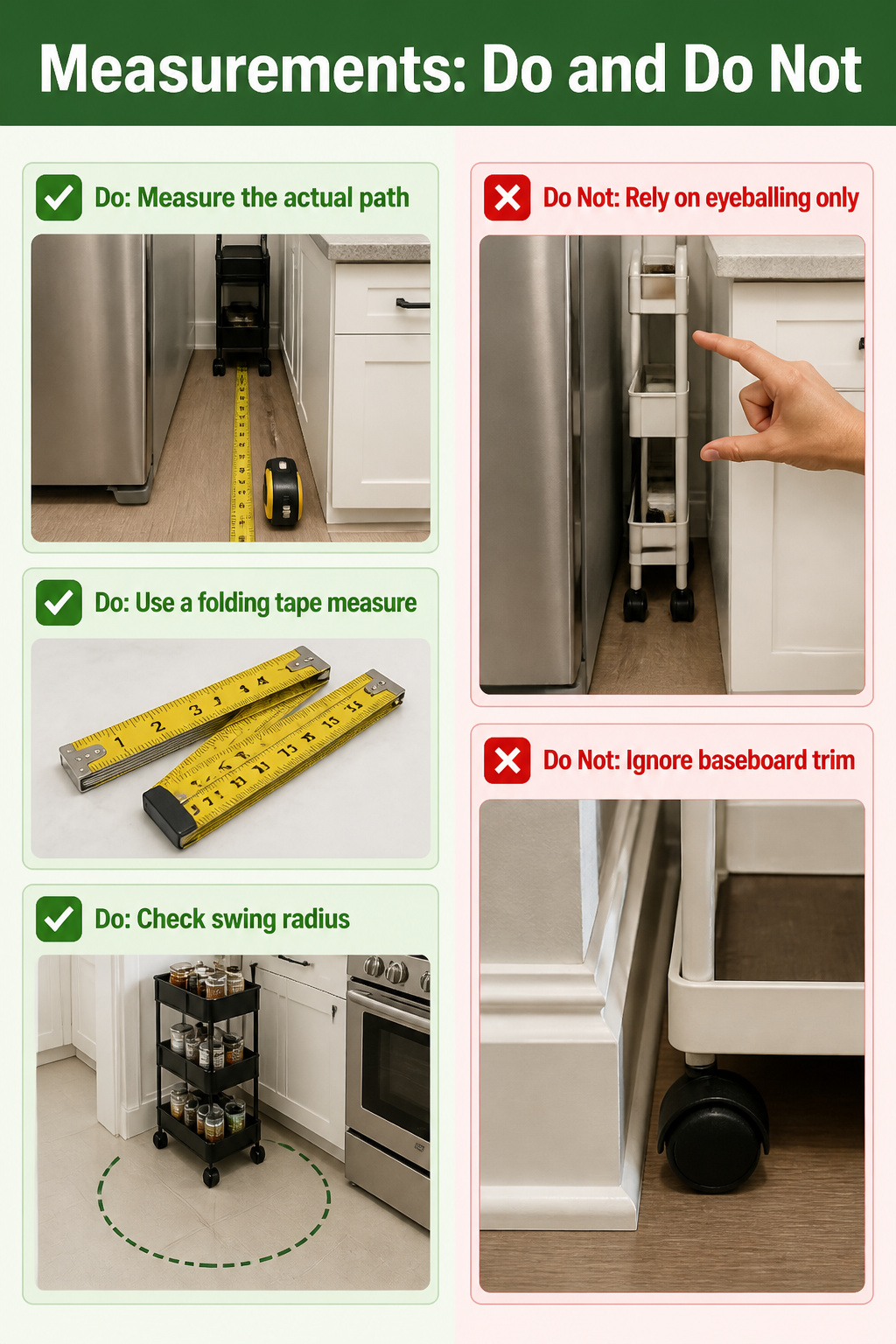
Rolling carts sold me on home storage design ideas faster than anything else. The promise of sliding supplies out from a dead gap between appliances felt like free square footage. I picked up a slim caddy for the kitchen, certain the four-inch clearance beside my counter would swallow it whole. The cart arrived, assembled fine, and stopped cold an inch from the wall. The baseboard trim I had eyeballed added just enough width to kill the whole plan.
Measure the actual path, not the gap. That means the floor width at the exact height the wheels roll, the depth of any trim or quarter-round, and the swing radius if the cart turns a corner to get there. I now keep a folding tape measure in the same drawer as my checkout cards.
Outdoor Storage Basics
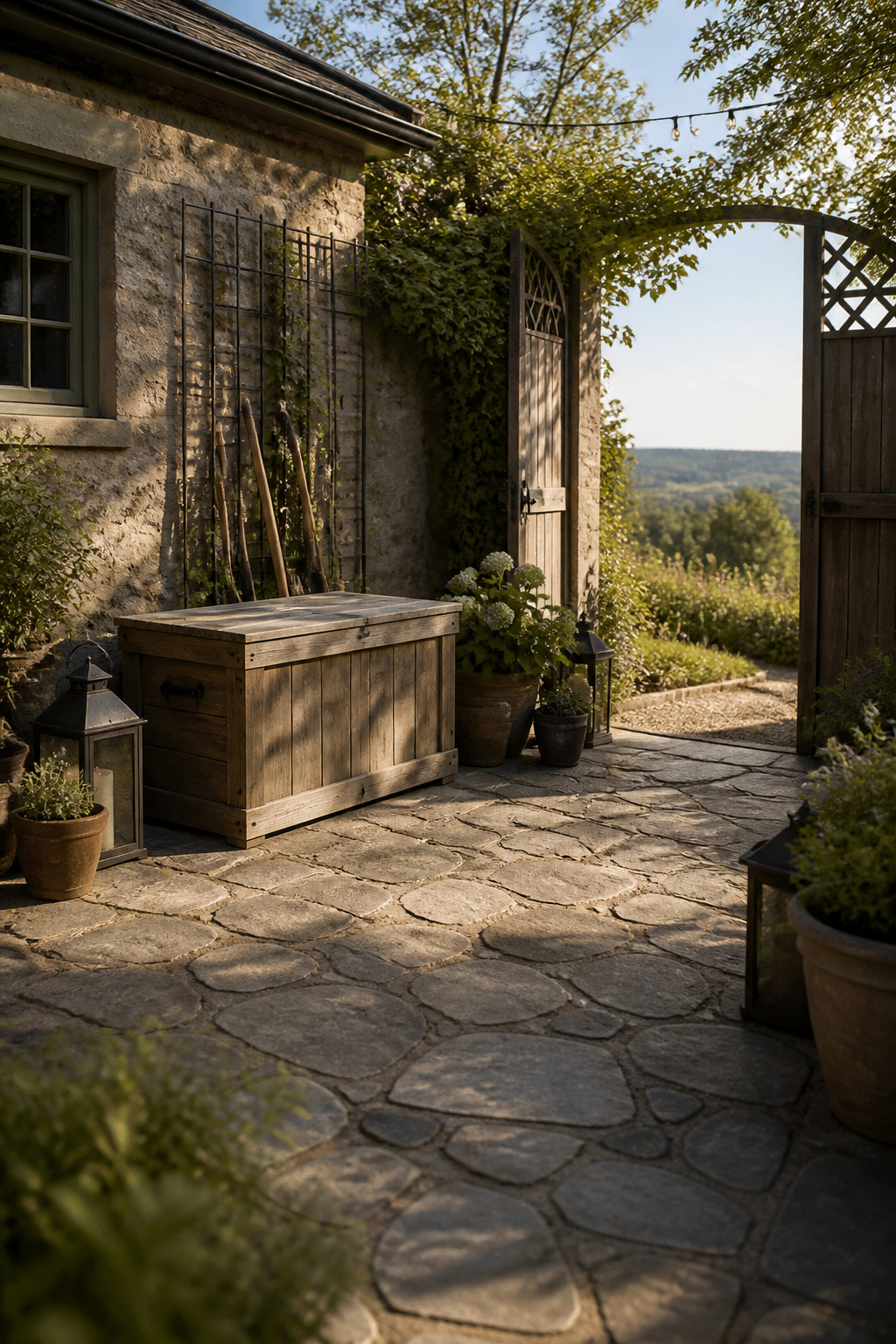
Outdoor storage tends to get treated like an afterthought until the grill cover rips or the cushions grow mildew. The minimum that actually holds up is a deck box with a gasket-sealed lid: anything less, and rainwater finds the seam between lid and wall inside the first season. Treated wood sheds with polarized windows keep the interior closer to ambient temperature, which matters if you are storing paint or anything with a label that lists a temperature range. For garden tools alone, a narrow bin under $150 usually suffices; patio cushions need that sealed deck box or they will smell like the inside of a cooler by August. I skipped the shed my first year and stacked everything on a covered porch. The porch roof kept the rain off, but the morning sun warped a resin bin so badly the lid never closed flat again.
Frequently Asked Questions
How do I organize a small closet?
Start with adjustable closet rods that slide up and down to hang shirts above long coats or drop low for kids to reach. Shelf expanders stack onto existing ledges to double shoe rows without drilling, and drawer dividers sort belts and folded tees into slots so nothing disappears in the back. A basic kit with all three costs about what you’d spend on a nice dinner out, and most renters can install it in an afternoon and take the whole system along when the lease ends.
What are some creative storage ideas for small spaces?
Fold-away desks close down to console-table depth so the same wall holds a lamp and books when no one is working. Storage benches with piano hinges across the full back edge swallow shoes at entryways without sagging, and wall-mounted wire racks turn the back of a door or narrow wall slices into storage for brooms and gear bags. The IKEA OMMJÄNGE Basket at $44.99 mounts to walls as a catch-all for tabletop clutter.
How can I maximize storage in my kitchen?
Mount a steel rail with S-hooks at least eighteen inches below upper cabinet bottoms so pan handles do not knock, and store tools where they dry in sight. Clear containers in three sizes with labels on the narrow side let you read contents from the front without buying duplicates. Rolling carts fill awkward twelve-inch gaps beside refrigerators; a slim two-tier model holds cutting boards and onions, while wider three-tier versions become mobile prep stations with locking wheels.
What are the best storage solutions for small bathrooms?
Over-the-door organizers that hinge directly on door hardware and close with magnets keep beauty products off the vanity without the sway of pocket-style racks; the flat profile matters in narrow baths where swing radius is tight. Wall-mounted shelves in powder-coated metal or solid teak survive steam that softens MDF or particleboard inside ten months. A small bar cart or tiered etagere rolls beside the toilet or between sink and tub when drilling tile is not an option, with linens up top and toiletries below.