
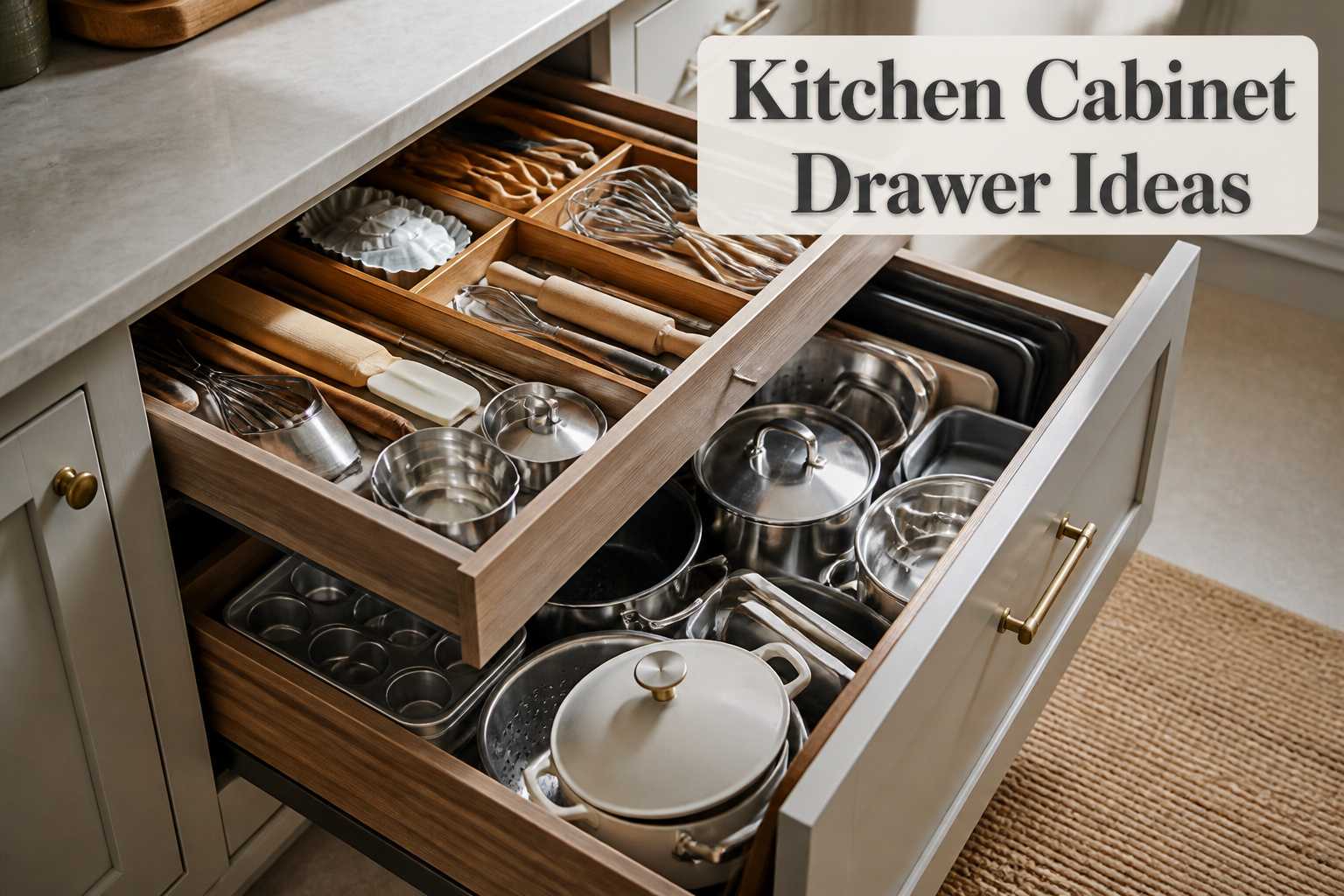
The right kitchen cabinet drawer idea depends on how much weight you plan to load and whether your floor is level enough to tolerate cheap hardware. Deep pot drawers with Blum’s Movento glides carry 90 to 150 pounds and include adjustment screws for tilt and height, but the slide housing itself eats a small slice of vertical space. That tradeoff is worth it only if you actually own the cast iron and stand mixers that make standard side-mount slides sag within months.
1. Deep Pot and Pan Drawers
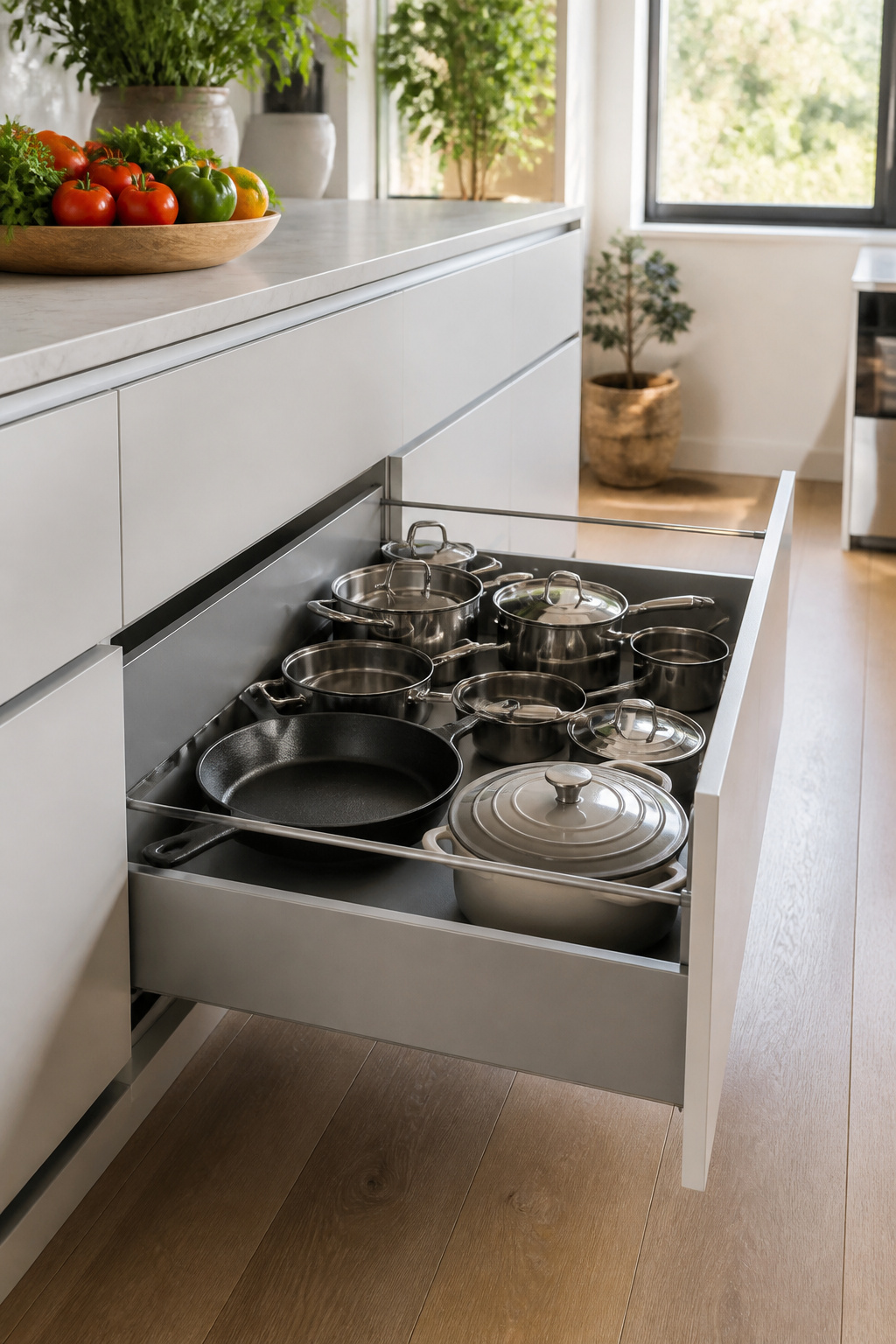
Lower cabinets with fixed shelves never fit the reality of bulky cookware. A stack of lids slides the moment you reach behind it, and that 12-inch cast-iron skillet lives on the stovetop because lifting it overhead is not worth the shoulder strain. Deep drawers fix this by turning the entire cavity into reachable space.
The vertical gain matters more than the floor footprint. A drawer box running 24 to 30 inches front to back can swallow a stand mixer, a Dutch oven, and the roasting pan you use twice a year, all in one layer with nothing stacked. You pull, you lift, you push closed. The countertop stays clear because the storage actually works.
Weight is where cheap hardware quits. Cast iron in quantity runs past what basic side-mount slides tolerate long-term; the sag becomes visible in months, then the bind, then the drawer you have to wrestle. Blum’s Movento glide systems carry 90 to 150 pounds with sag values rated for floor-level application, which is where these drawers sit. They also include soft-close, which sounds like a luxury until you hear a loaded drawer slam at 6 a.m.
The tradeoff is a small loss of vertical space to the slide housing itself. In a kitchen where the floor is not quite level, the built-in adjustments for side, height, tilt, and depth save the installation from looking handmade.
Experts in cabinetmaking and design both recommend Blum’s Movento for all hardware, especially in areas that will get potential rough usage from the toe-kick open.
That endorsement centers on load capacity and alignment tolerance, the two places where drawer failure actually starts. For a weekend project with a few hundred dollars in materials, hardware that forgives uneven floors and heavy use is where the money goes first.
2. Pull-Out Spice Drawers
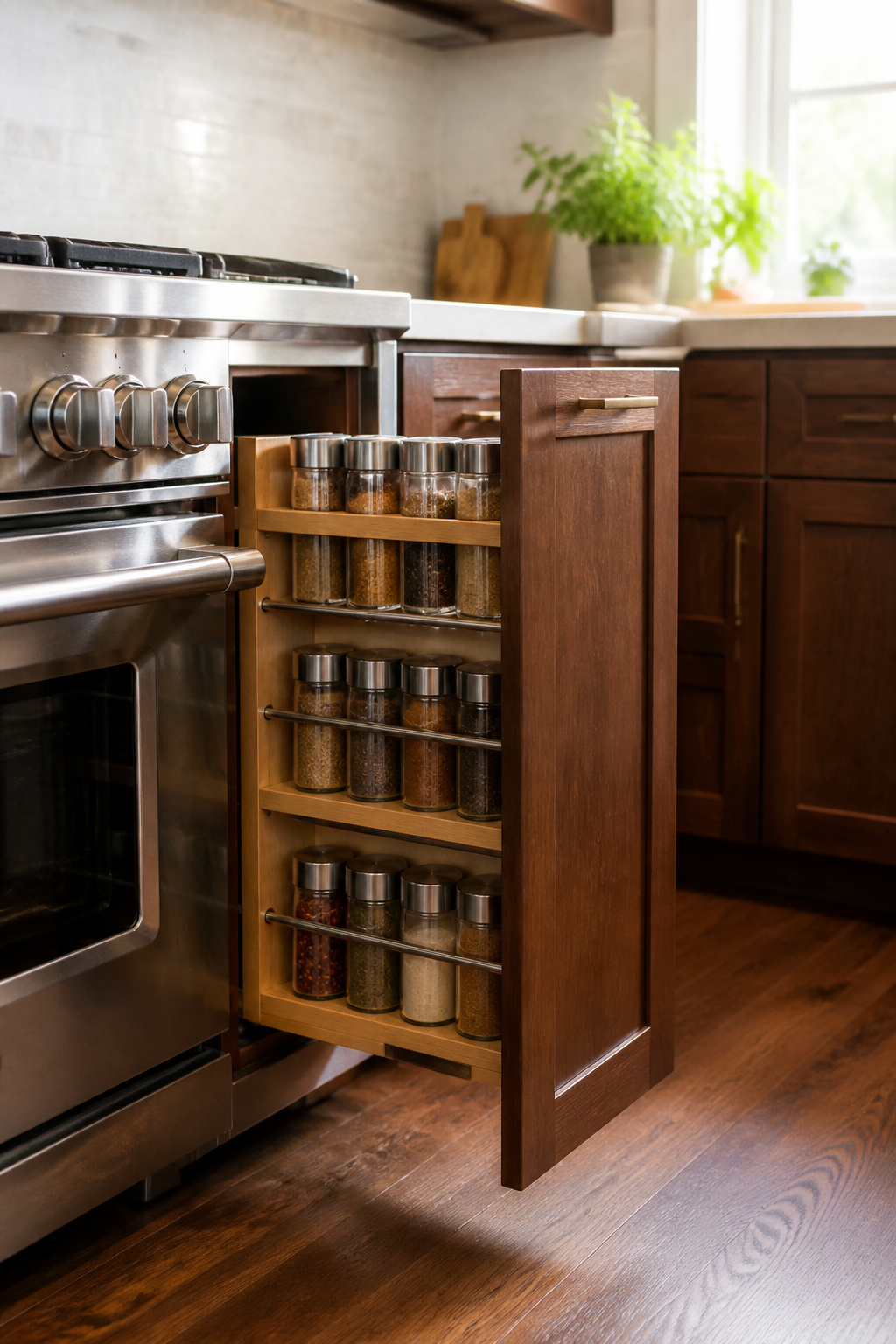
The six-inch gap beside my range was dead space until I slid in a narrow pull-out spice drawer. Now the jars sit on a shallow tiered rack, labels facing up, and I can read them without crouching or digging through a cabinet. A typical spice drawer runs only 3 to 4 inches deep, which is exactly enough for standard jars and nothing more. That shallowness is the point: it keeps the contents visible in one glance and prevents the back-row bottles from expiring untouched. If your cabinet is wider than 30 inches, two narrow drawers will slide smoother than one wide one that binds on the tracks. I skipped the countertop rack and the cabinet turntable both, and the only thing I miss is the excuse to buy duplicate cumin.
3. Customized Cutlery Dividers
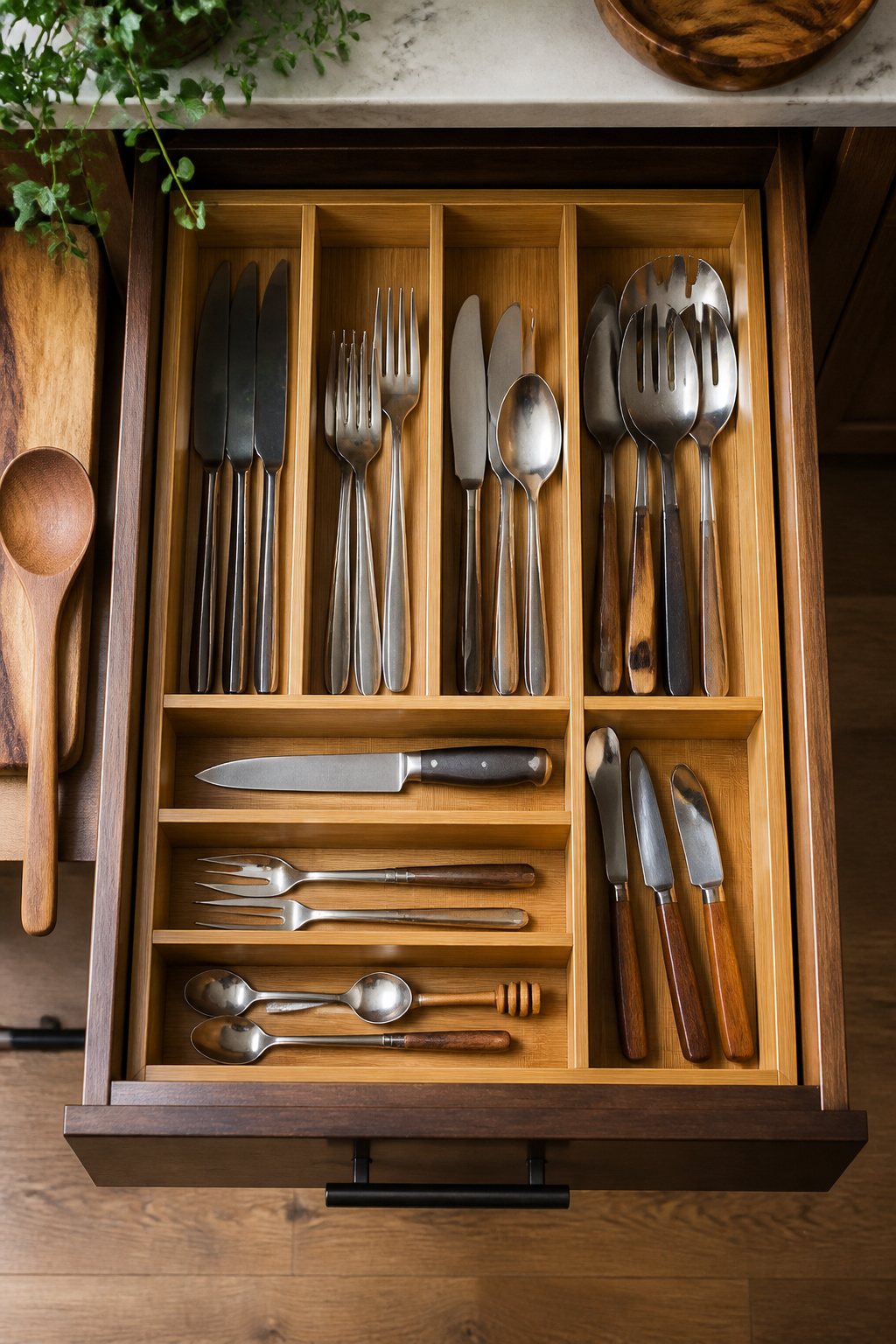
Standard cutlery drawers run shallower than the rest of the kitchen lineup, which sounds like a limitation until you stop forcing generic plastic trays into them. A divider built to the actual drawer dimensions leaves no fingers of dead space along the sides or back where spoons slide under and jam the track. Wood or bamboo cut to fit sits flush, uses the full height, and stays put when you yank the drawer open for a serving fork in a hurry.
I learned this the hard way after two rounds of off-the-shelf organizers that claimed to be "adjustable" but never adjusted enough. The second one left a three-inch gap at the rear that collected crumbs and a paring knife I forgot existed. Custom sizing means each slot matches what you own: the wide serving spoons, the bread knife you refuse to store loose, the oddball melon baller from your aunt. A kitchen designer can map the interior to your actual collection, or a local woodworker can mill one from a drawing if you hand them the inside dimensions. Either way, the shallow drawer stops being a compromise and starts working like it was built for your hands.
4. Hidden Trash and Recycling Drawers
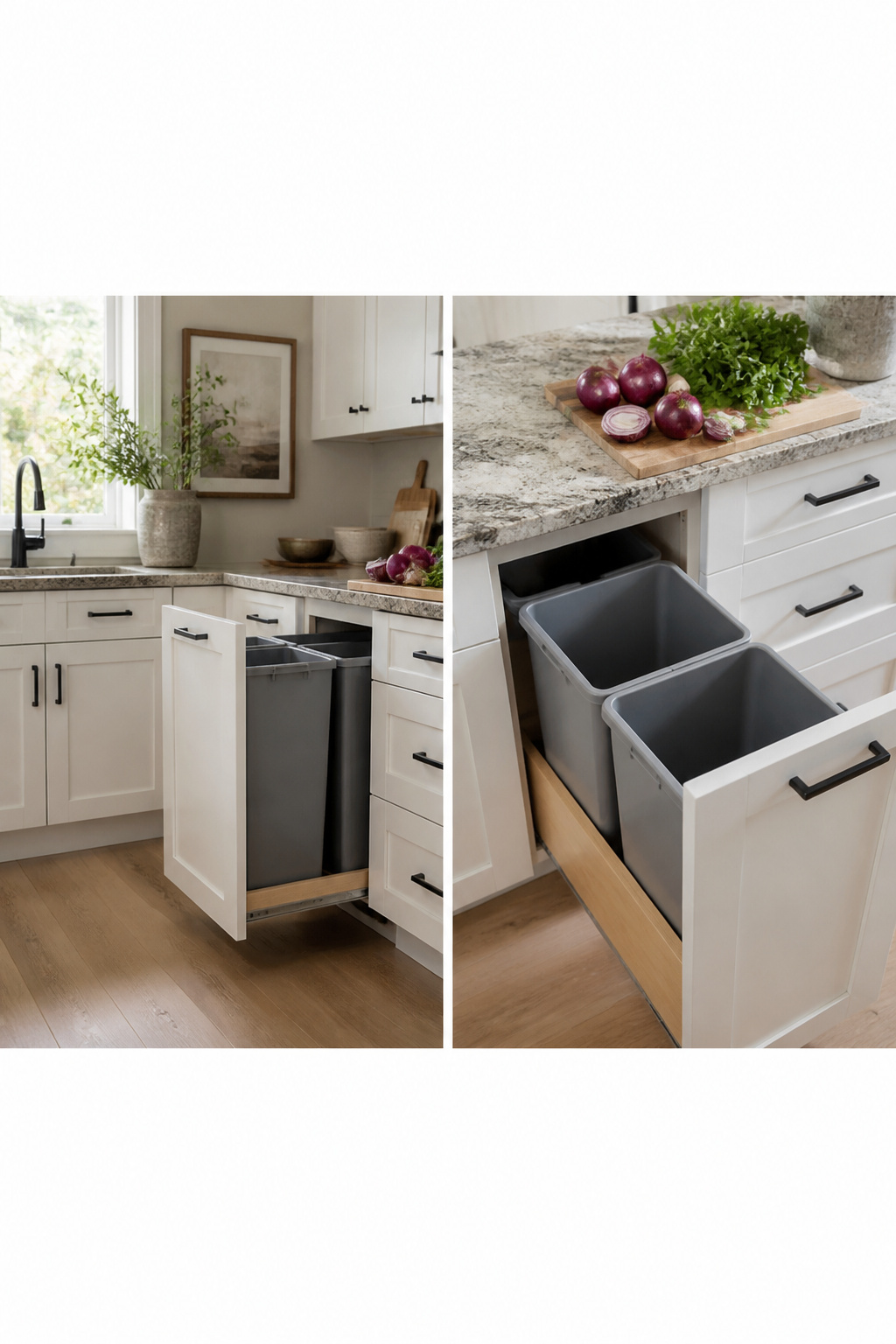
A pull-out trash and recycling drawer near the sink or prep area is one of those upgrades that makes daily cooking feel less like a chore. The bins sit inside a standard cabinet base, slide out when you need them, and disappear completely when you don’t. No more knocking over a freestanding can with your hip while carrying a cutting board, and no more giving up floor space to something you look at but never want to see.
The setup that caught my attention runs $316 through Kraftmaid, which includes the dual-bin configuration for separating trash and recycling in one motion. A Rev-a-Shelf pullout double waste bin comes in lower at $165 if you’re comfortable retrofitting into existing cabinetry rather than ordering with new cabinets. Either way, the bag mounting matters more than the brand: look for a frame that grips your preferred bag size so the liner doesn’t slide down when you toss something heavy. The divider between compartments is fixed on most units, so plan for roughly equal volume or accept that one side will fill faster.
5. Under-Sink Storage Drawers
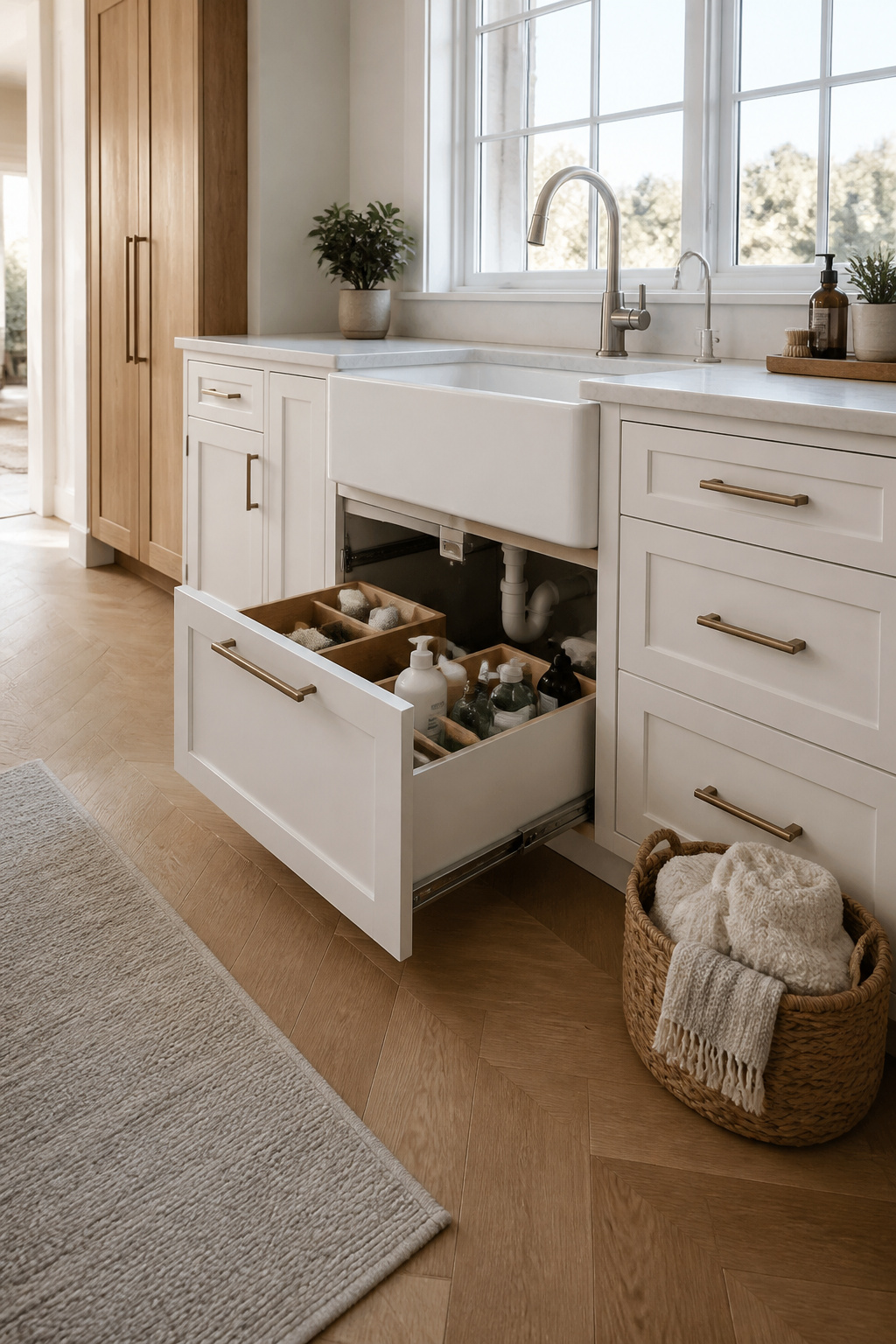
The space under a kitchen sink is usually a graveyard of half-used spray bottles and a sponge you lost last month. Plumbing and a disposal unit chew up most of the vertical room, so standard deep drawers are out of the question. What actually works is a U-shaped drawer front or a pair of short drawers that wrap around the pipes, giving you pull-out access to the inches that remain.
I looked at a lot of these systems, and the wire two-tier pull-outs run about $38. The second tier sits high enough to clear the trap and is genuinely useful for sponges, dish soap, and the small stuff that otherwise slides to the back. Wider cabinets, anything past 30 inches, do better with two separate drawers instead of one. A single wide box binds on the tracks once the humidity warps it even slightly.
Depth is the real limit. Toe-kick drawers in this spot give you roughly 3 inches of usable height. That is plenty for trash bags and scrub brushes, but it will not hold a bottle of bleach standing up. Store anything moisture-sensitive in a sealed bin, and skip solid wood bottoms. A leak under the sink is a when, not an if.
6. Tiered Drawer Organizers
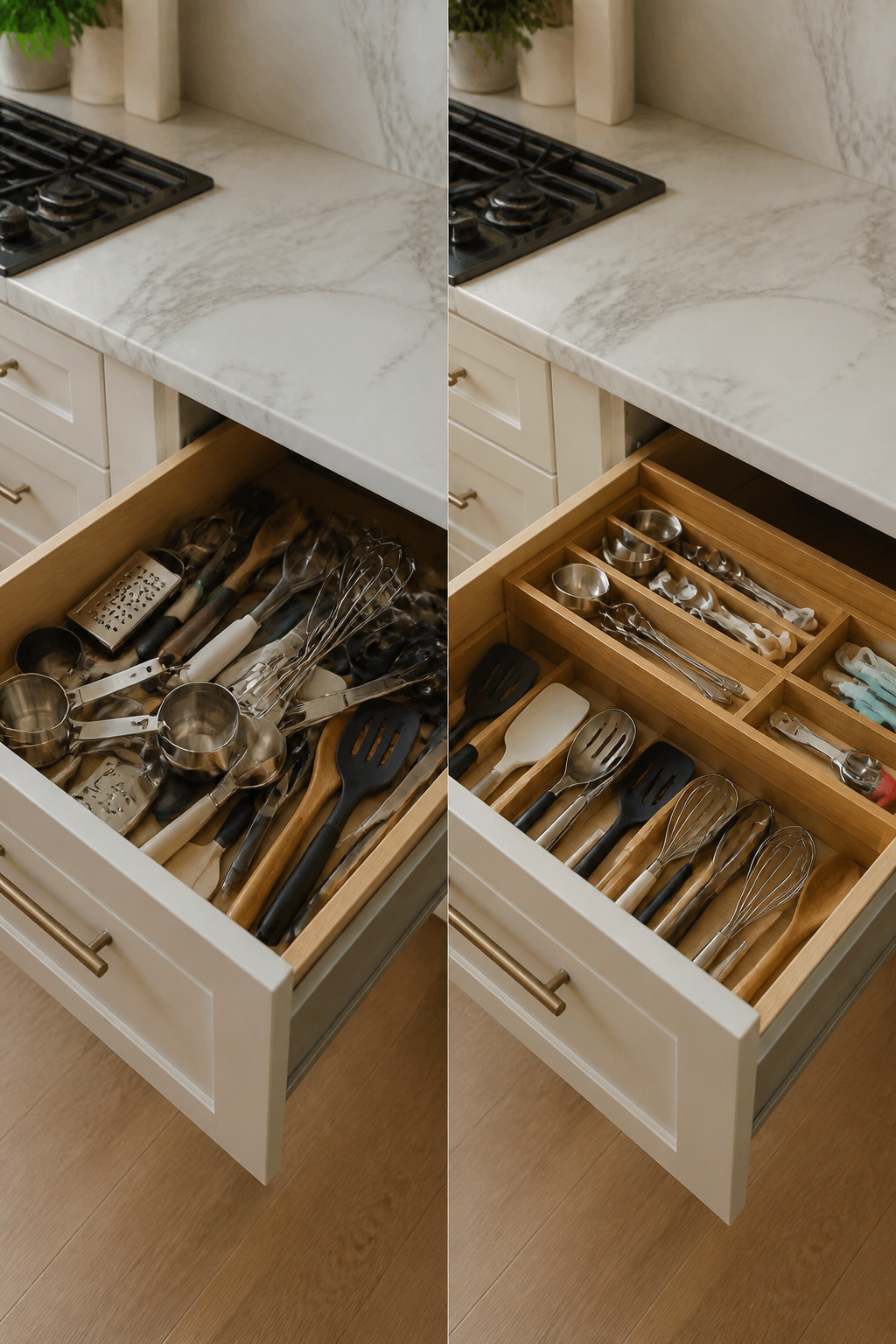
A standard-height drawer wastes the top half of its volume if everything sits flat on the bottom. Tiered organizers fix this by stacking a shallow tray above the main floor, so you see both levels at once when you pull the drawer open.
The upper tray works best for small items: measuring spoons, bag clips, or the everyday silverware you reach for constantly. The lower level handles larger pieces, like serving utensils or bulkier gadgets, that would bury the small stuff if they shared one plane. Rev-a-Shelf makes a tiered cutlery pullout with a hidden second layer for special-occasion flatware; the unit runs about $187. For a simpler version, a stationery-style double-tiered organizer drops into existing drawers without the custom hardware.
Materials matter more here than in single-level trays, since the upper shelf collects crumbs and drips from above. Smooth, easy-wipe surfaces save you from disassembling the whole unit to clean it. Less frequently used items belong on the lower tier; the small step down is enough to hide them from casual glance but not enough to make retrieval annoying.
7. Hidden Charging Station Drawers
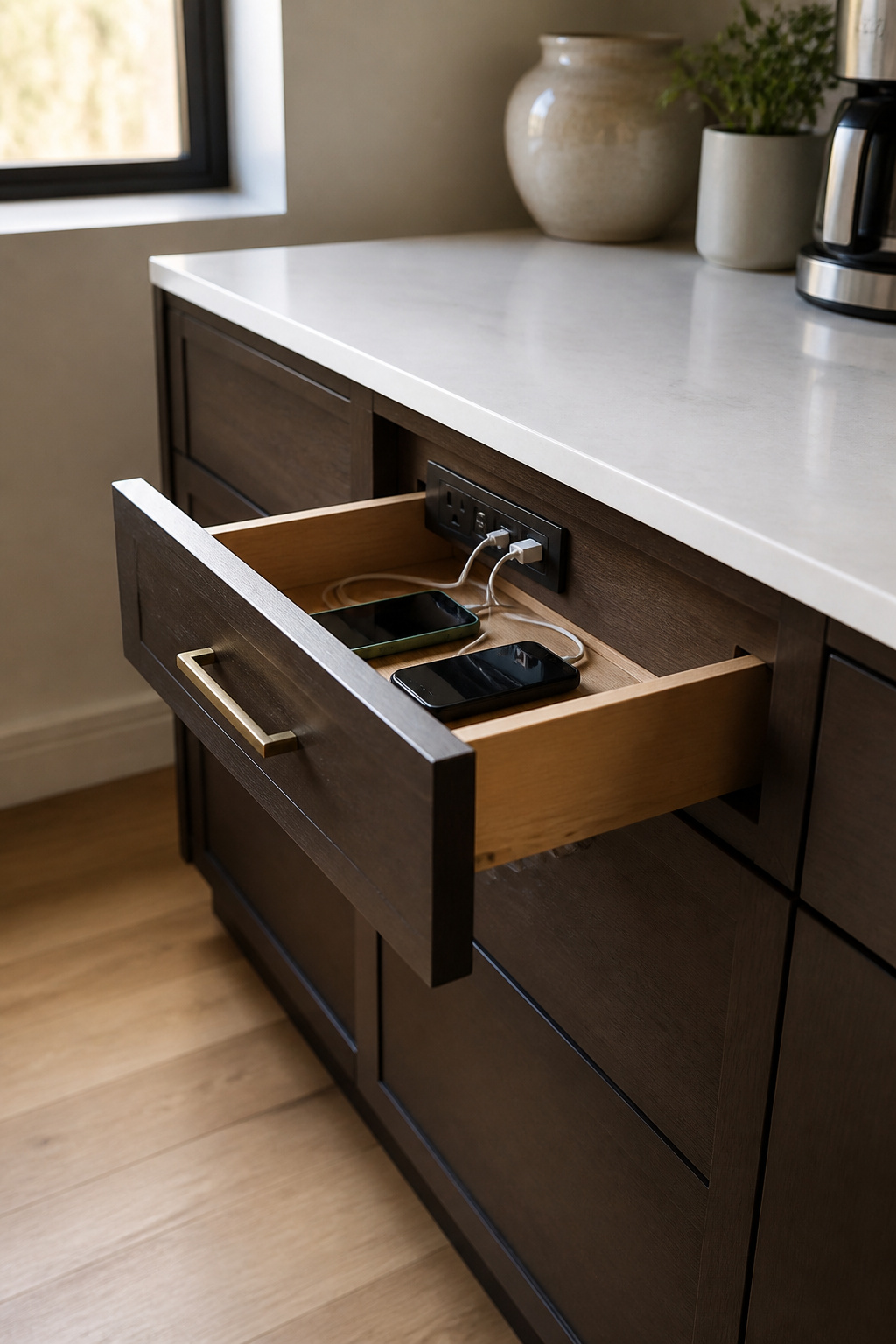
A drawer with a built-in outlet or USB port turns any cabinet into a phone or tablet dock that stays out of sight. The tablet you use for recipes can charge while it waits, and the kitchen counter stays clear of the cable nest that usually follows multiple devices. What stopped me from installing one immediately was the heat: phones warm up while charging, and a closed drawer with no airflow traps that heat against wood and wiring. The safe move is choosing a kit with a ventilation gap or a louvered front, or planning a small gap at the back of the drawer box so air moves. Most ready-made charging drawers also include a surge protector, which matters in a kitchen where splashes happen and you do not want a direct line from countertop spill to wall current. For a weekend project, a ventilated charging drawer kit with built-in surge protection runs the safest middle ground between convenience and the fire code common sense any landlord or inspector would expect.
8. Drawer Dishwashers
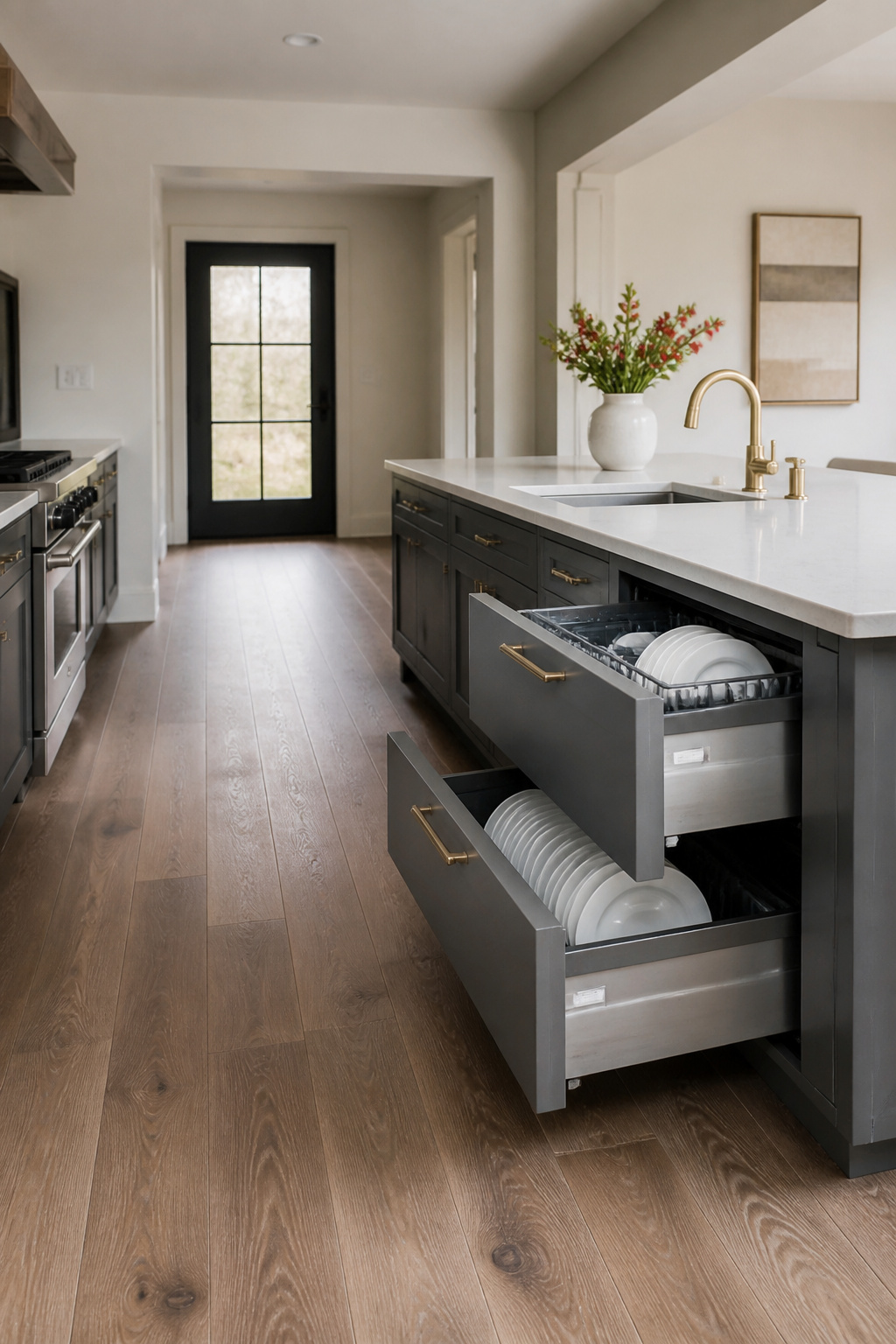
Drawer dishwashers fit into standard cabinet drawer openings, usually stacked as two independent units that run separately or together. For a small kitchen or a secondary prep area like a basement bar or mother-in-law suite, that split operation matters more than the novelty: one drawer handles breakfast dishes while the other waits for dinner, or you run a half load without the water waste of a full-size machine.
The footprint stays inside existing cabinetry, so you keep floor space and counter continuity. In my reading, the tradeoff shows up at installation: drawer dishwashers need precise cabinet specs and a dedicated water line to each level, which can turn a simple swap into a plumbing project. If your kitchen is already tight, check whether losing one base cabinet for the appliance pays back in workflow. For a renter, this is likely a wish-list item to note for later; for a first-home owner gutting a galley kitchen, it is one of the more useful places to spend the appliance budget.
9. Knife Block Drawers
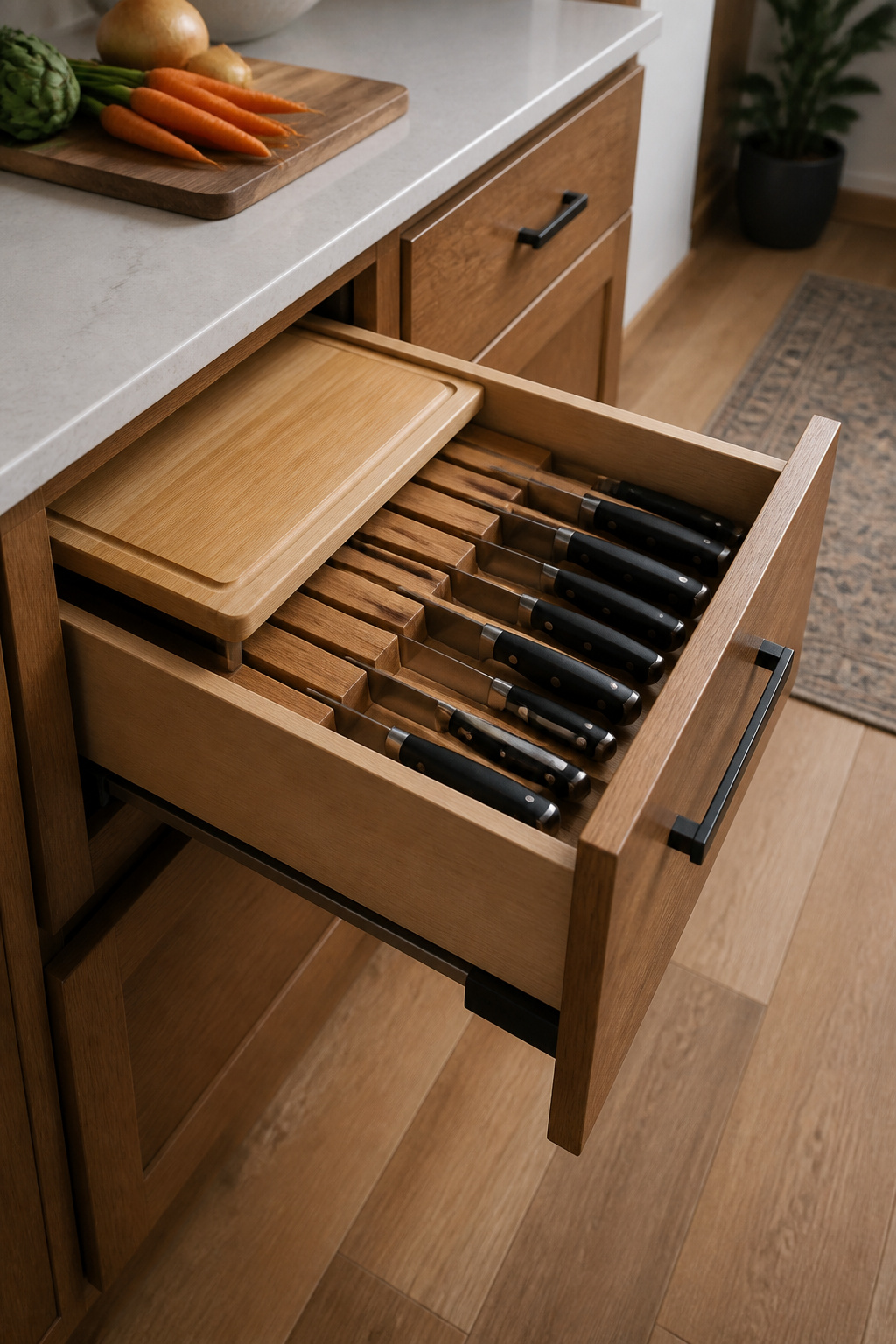
A knife block drawer tucks every blade out of sight and off the counter, which matters in a kitchen where prep space is already tight. The block sits inside the drawer itself, with slots sized for different blade lengths so nothing rattles around. At around $40, it is one of the cheaper upgrades that actually changes how the room functions.
I like this setup for the safety alone. A countertop block sits in the open where a bumped handle can send it tumbling, and the blades face outward at eye level for anyone passing by. Inside the drawer, the knives lie flat, fully enclosed, and only someone pulling the handle ever touches the edge. One option I have seen pairs the block with a shallow pull-out cutting board directly above it, a two-layer use of one drawer column that keeps every cutting task in one place.
The trade-off is slot count. Some built-in blocks run a single row and leave you choosing which knives make the cut. A replacement insert with denser slot spacing solves that without a cabinet order, and swapping one in takes about the time of unloading the drawer.
10. Corner Drawer Solutions
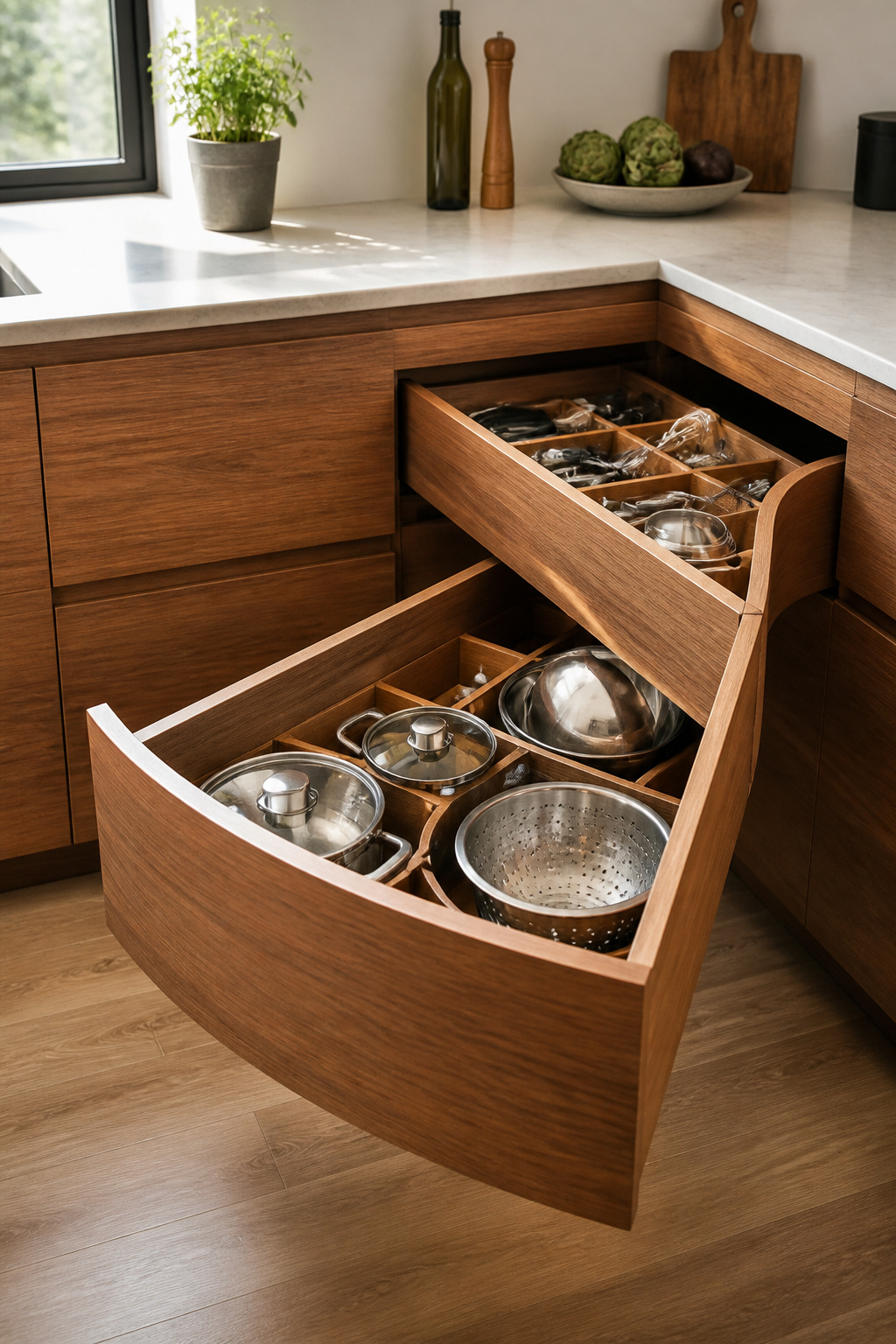
Corner cabinets have a reputation for swallowing cookware whole, and after installing a standard lazy Susan in my last rental, I understood why. The spinning shelf looked clever until a heavy pot tipped and jammed the mechanism, leaving half the space reachable only by kneeling and reaching blindly into the triangle of dead space behind it.
Angled or curved drawer fronts replace that entire setup. The drawer itself pulls out diagonally on a curved track system, bringing every item into the open with one motion. What reads as two separate drawer fronts meeting at a right angle is actually a single L-shaped box, so the face looks conventional while the interior uses the full depth of the corner.
Compared to a rotating shelf, the access is immediate: nothing hides behind a spinning quadrant, and weight distribution matters less because the drawer glides rather than pivots. The tradeoff is the hardware. Curved tracks cost more than standard side-mount glides, and installation tolerances are tighter; a cabinet box even slightly out of square binds the drawer. For a weekend project with a few hundred dollars, this is where measurement pays off, because the drawer front is built to the angle of your specific corner, not a universal ninety degrees.
11. Vertical Drawer Dividers
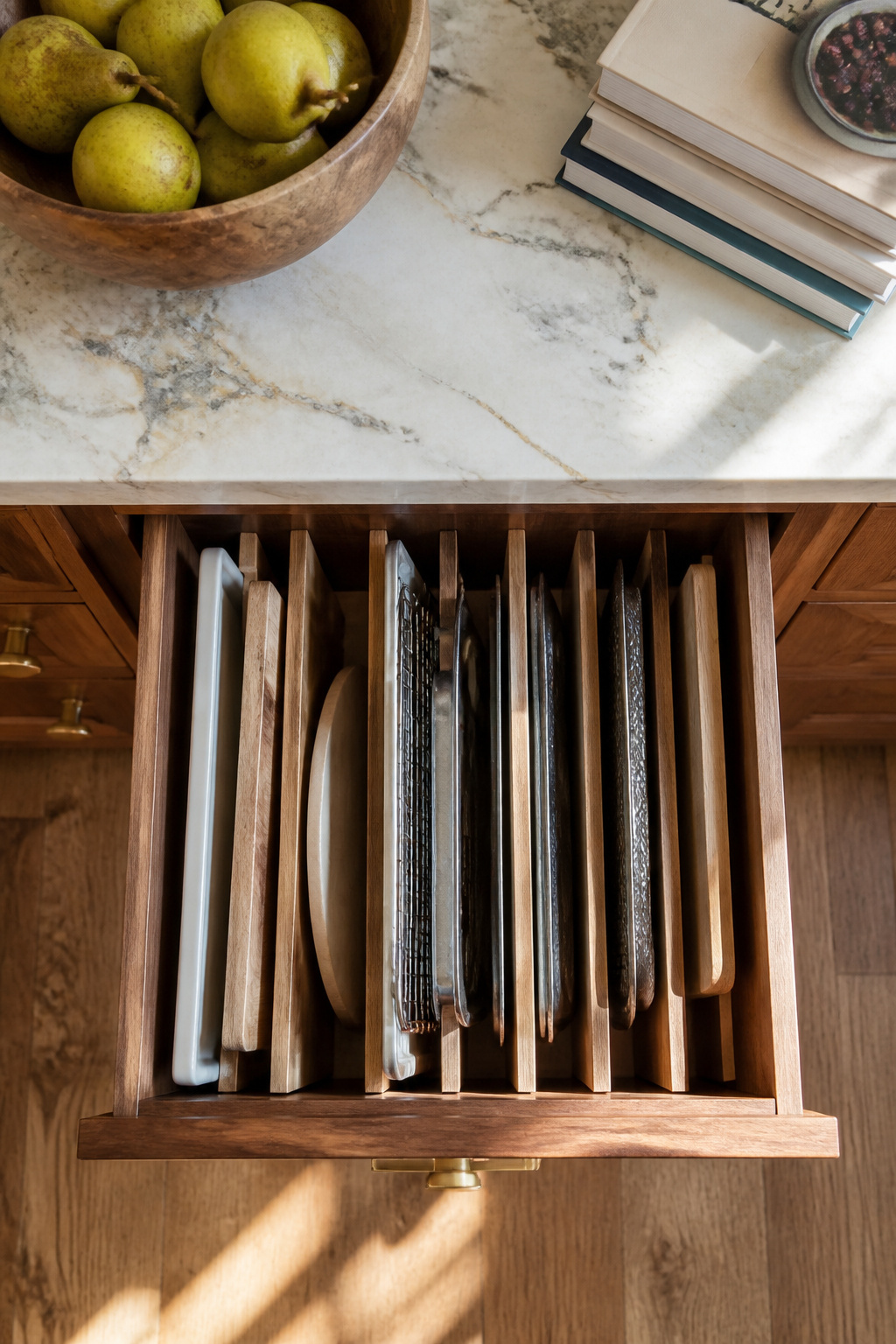
Standing a baking sheet on its edge instead of flat in a stack is one of those small moves that pays off every time you cook. Vertical dividers let you slide out exactly the tray or cutting board you need without lifting three others first. The same logic works for canned goods: rows held upright stay visible and do not topple when you pull one from the middle.
Most dividers adjust to the height of what you store, which matters because a standard dinner plate needs a drawer depth around 18–20 inches to sit comfortably without tilting. In deeper drawers, the upright arrangement stops items from sliding toward the back every time you close the cabinet. I have seen renters install bamboo tension dividers on a Saturday morning and have the drawer sorted before lunch; no hardware, no commitment, and they lift out when the lease ends. The tradeoff is that you sacrifice a few inches of front-to-back depth to the divider thickness itself, so measure the drawer box before you buy rather than guessing from the face frame.
12. Appliance Garage Drawers
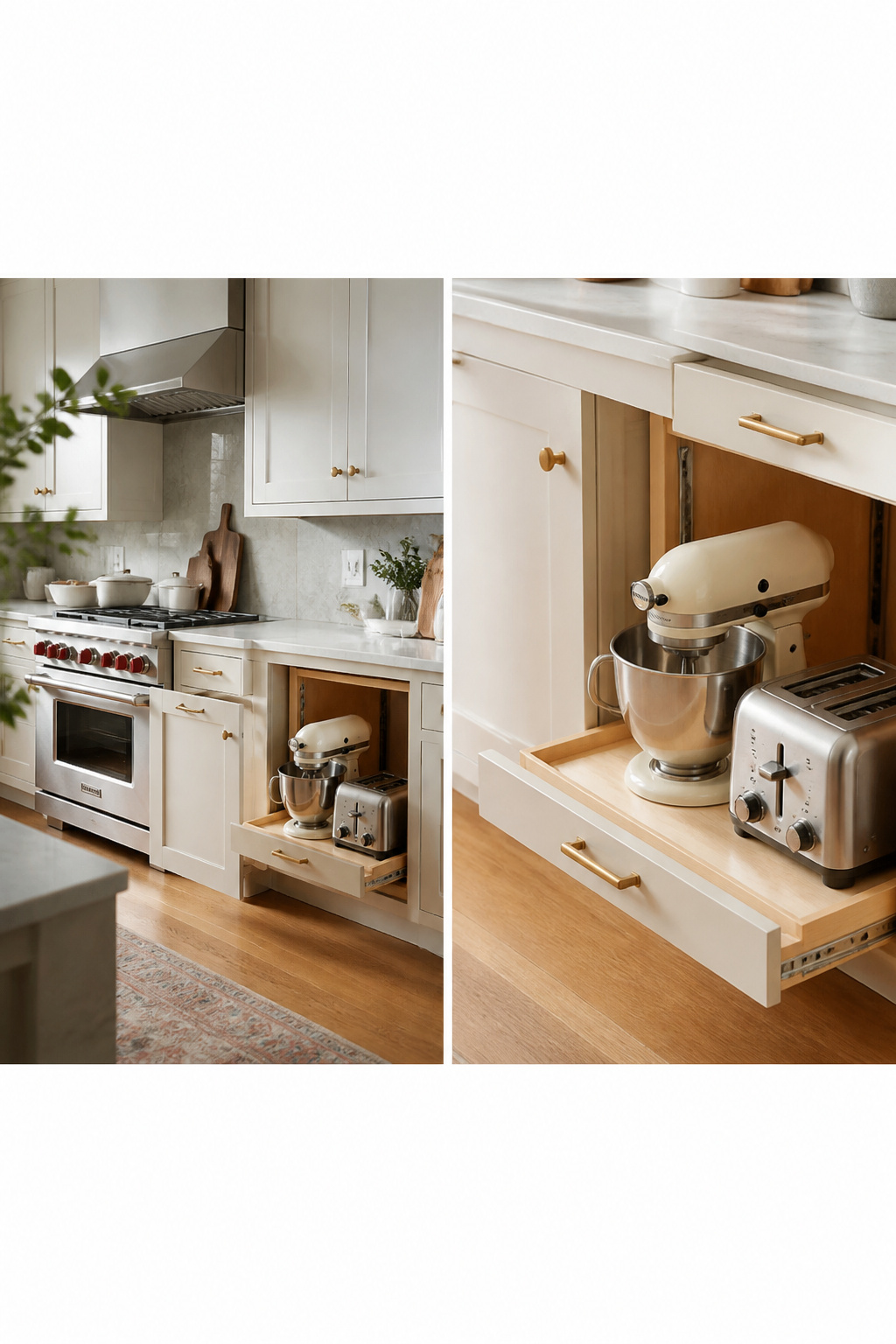
Deep drawers tucked beside the range or at the end of a cabinet run keep the stand mixer, toaster, or espresso machine off the counter without banishing them to a basement shelf. A simple pull-out platform rolls forward on full-extension slides, then stops level with the counter so the appliance lifts out without the awkward half-crouch that strains your back. Some versions add a spring-assisted lift that raises the base the last six inches, which matters more than I expected the first time I hauled a fifteen-pound mixer up from a low drawer.
The electrical rough-in is the part that trips people up. You need an outlet inside the cabinet cavity, and the cord has to reach without stretching taut across the gap. Plan for that before the cabinets go in, because retrofitting means either a visible cord channel or opening the wall. For renters, a battery-powered appliance garage with no hardwired outlet limits you to smaller tools, but the drawer itself installs with four screws into existing cabinet sides and leaves no trace on move-out day.
13. Adjustable Drawer Organizers
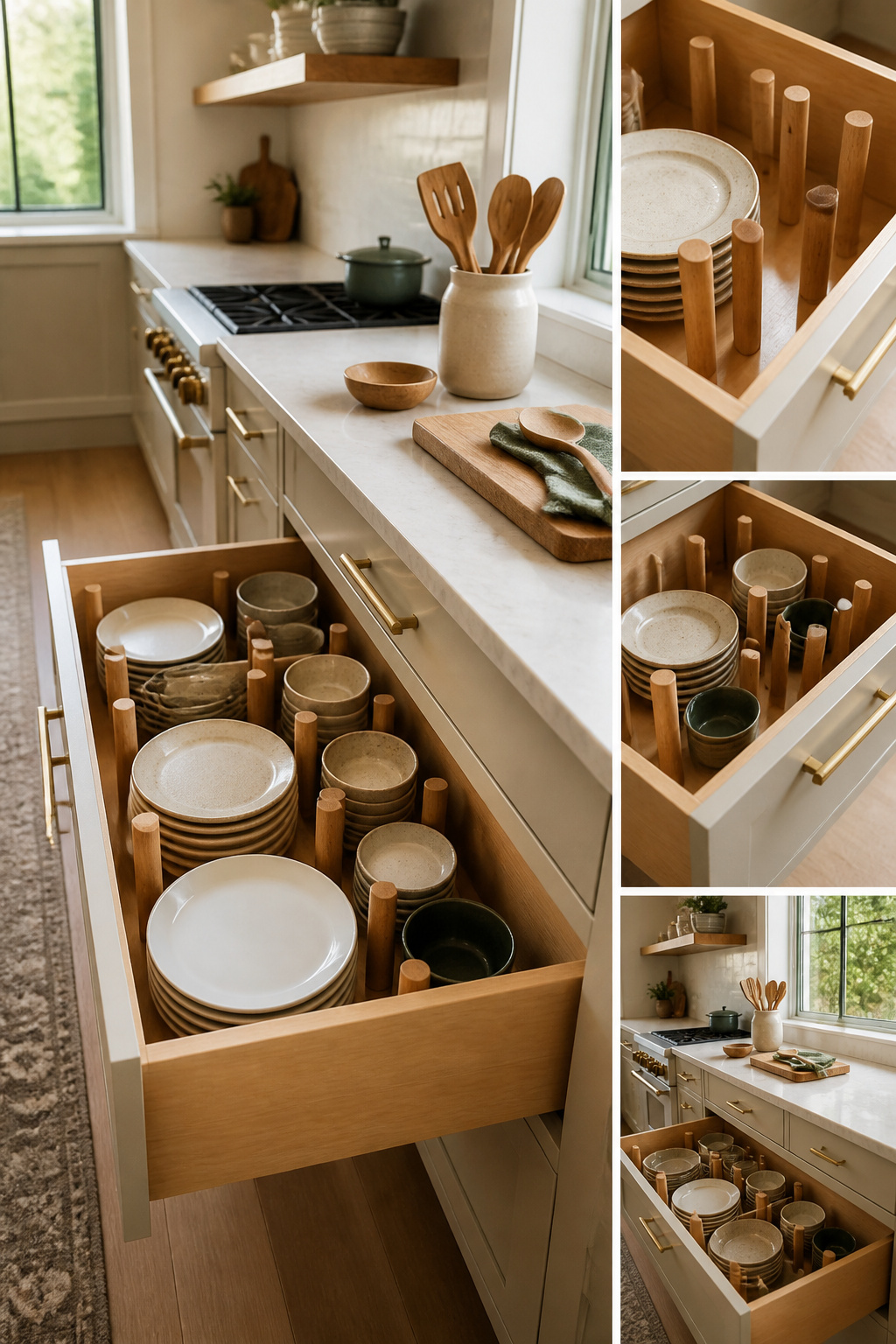
Peg systems sit low in the drawer and let you move the dowels around as your dishes change size, which matters more than it sounds. The plates you own at move-in rarely match the plates you own three years later, especially if you pick up hand-me-downs or switch to a new set after a roommates’ departure. A pegged dish organizer keeps stacks from sliding without committing to a fixed layout, so the drawer still works when you replace eight-inch salad plates with ten-inch dinner ones.
Expandable dividers and movable bins work the same way for utensils, gadgets, and baking tools. One month the deep slot holds a garlic press and a zester; the next, after a phase of cooking that dies off, that same width stores a thermometer and a pair of shears. Pre-sectioned drawers never forgive that kind of shift. Adjustable ones do, and insert dividers let you convert a basic rental drawer without altering the cabinet at all. Take them with you when the lease ends, or reconfigure them for the next apartment’s deeper box. The flexibility costs a little more attention up front, but it saves the replacement cycle that fixed organizers demand.
14. Hidden Pull-Out Pantry Drawers
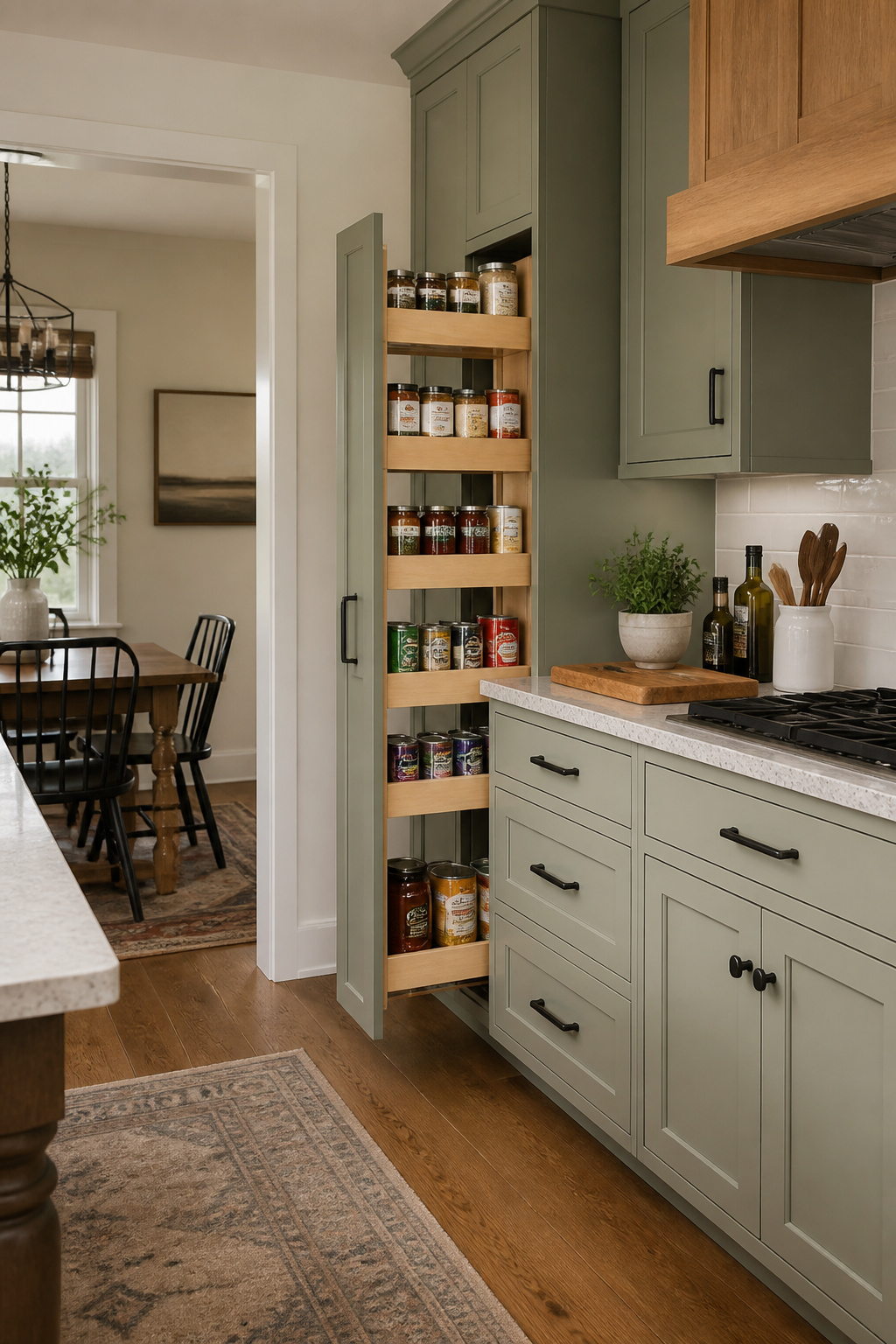
Tall narrow pull-out drawers turn the six-inch gap beside a refrigerator or at the end of a cabinet run into actual pantry space. The ones that work run on full-extension slides or glides, hardware that carries the whole drawer box out past the face frame so nothing sits in shadow at the back. I spent an afternoon measuring my own dead space and found fourteen inches of depth behind a decorative panel that did nothing. A pull-out unit there now holds dry goods, canned goods, and the staples I used to stack on the counter.
Wood, metal, or plastic each has its place. Wood keeps the look consistent with existing cabinets. Metal handles heavier loads without flex. Plastic cuts weight and cost if you are fitting this into a rental kitchen you may leave behind. Dividers inside let you separate categories, which matters more than it sounds: when the drawer comes all the way out, you are standing in one spot reading labels instead of kneeling to reach the back of a shelf. Meal planning gets faster when you can see the whole inventory at once.
15. Baking Sheet and Tray Organizers
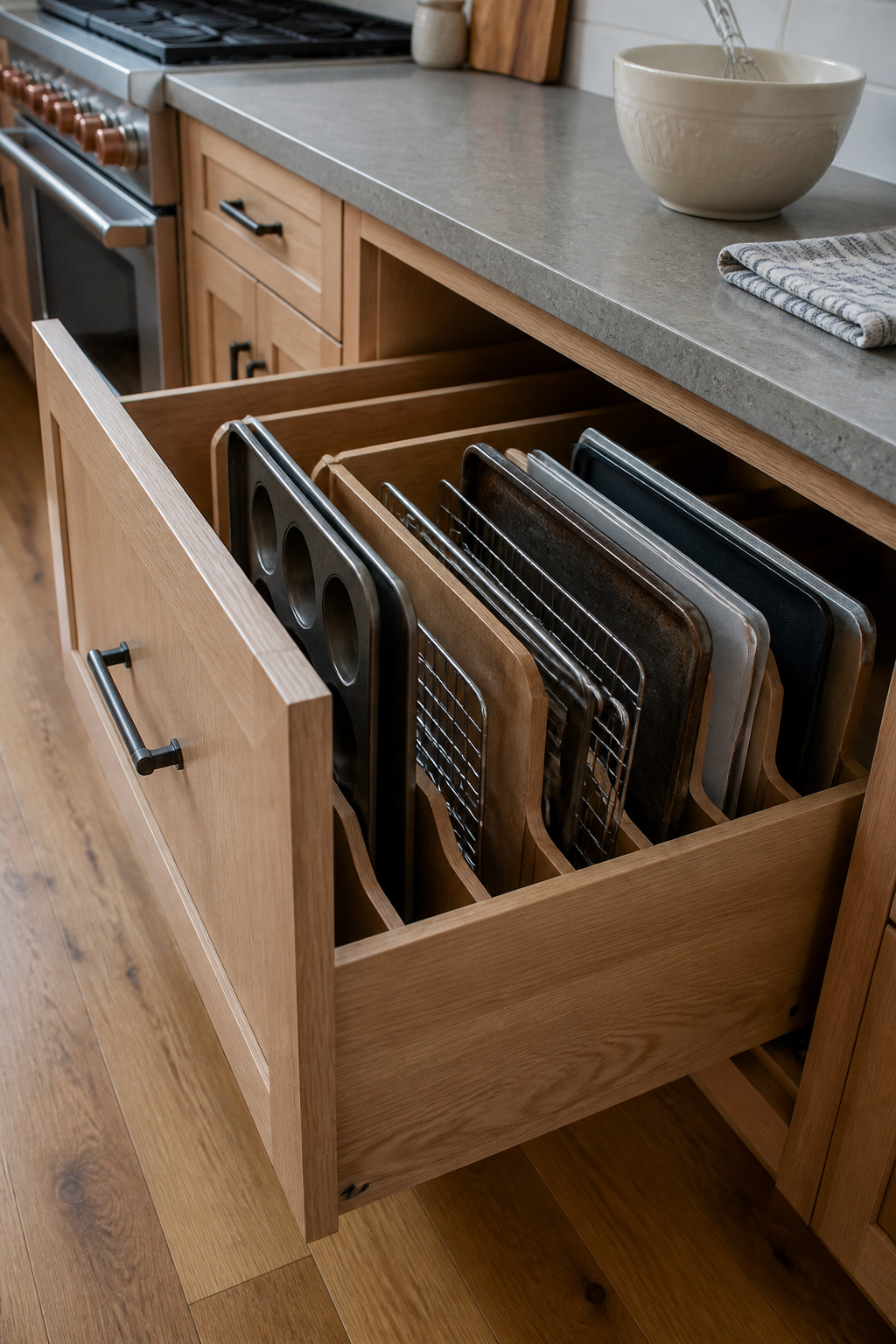
A drawer with vertical slots for baking sheets changes the sound of your kitchen as much as the storage. Stacked sheet pans and muffin tins slide and clang every time you pull one from the pile, and the nonstick coating takes the hit. Dividers that hold pans upright stop both problems: each tray slides out quietly, edges never scrape, and the coating lasts longer. Cooling racks fit the same slots if the spacing is wide enough, so the whole baking kit lives in one pull instead of three separate stacks. Smooth-gliding slides matter here because loaded sheet pans get heavy fast; a sticky drawer with ten pounds of aluminum in it is a daily annoyance. A non-slip liner underneath keeps the bases from shifting and scratching where the dividers don’t reach. The vertical setup also uses the full drawer depth, so a 24-inch cabinet front stores more than the same width of stacked horizontal piles with dead space above them.
Why Drawers Beat Cupboards
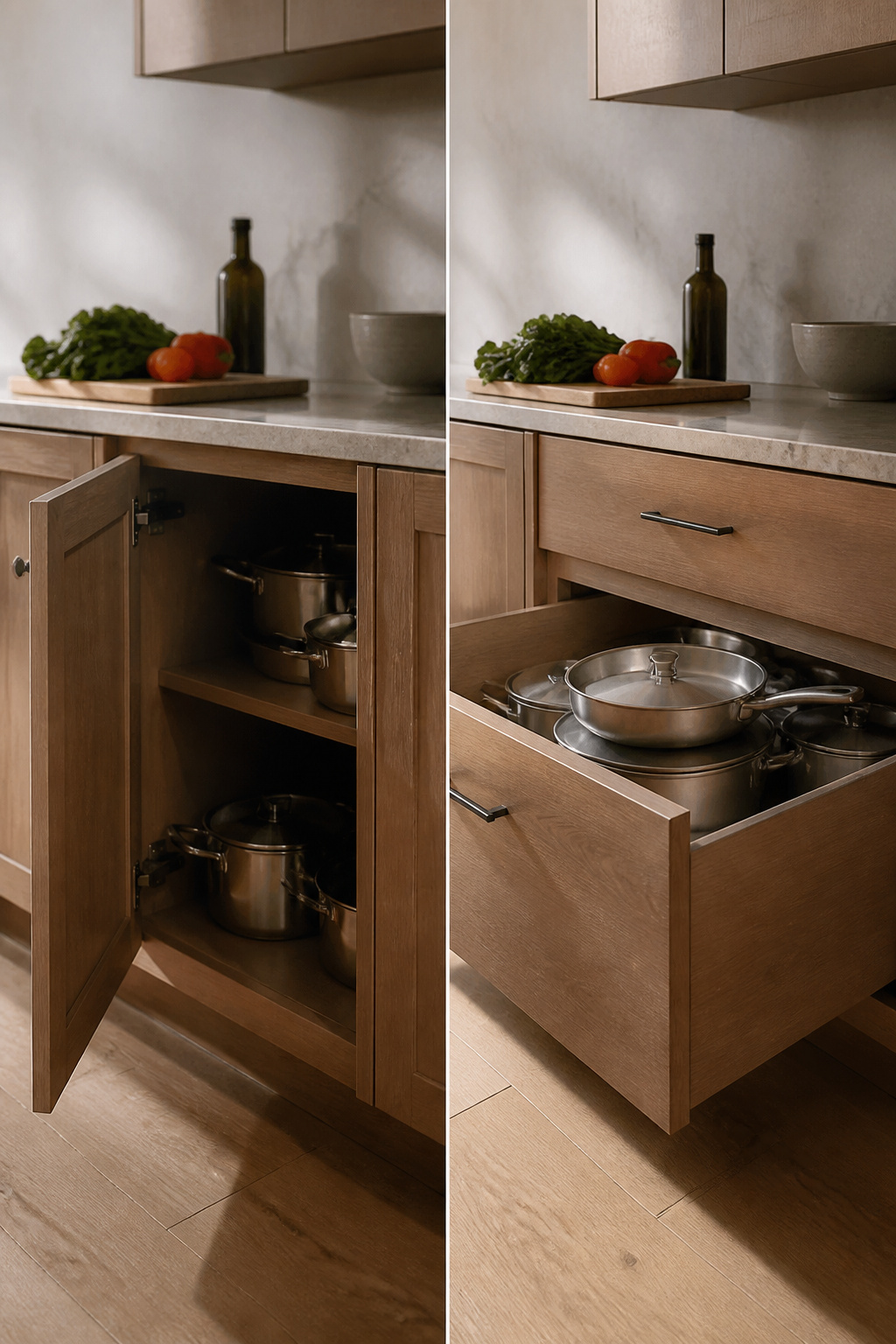
The first time I swapped a base cabinet for a full bank of drawers, the difference hit me at six o’clock on a Tuesday. Dinner was running late, I needed the big sauté pan, and instead of kneeling to reach past the stacked lids and missing lids into the dark back corner, I pulled the drawer out to its full extension and the pan was right there, handle first, with the lid nested underneath. No kneeling, no stacking, no forgetting what you own because it lives in shadow.
That visibility from above changes how a kitchen actually functions. Drawers let you group tools by task, pots with their lids, baking dishes by size, so nothing hides behind anything else. Sources consistently note that most new base cabinet layouts now run two to three deep drawers instead of fixed shelves behind doors, and the reason is motion: less of it, more purposeful. Cabinets still win for the tall stuff, the occasional roaster, the bulk bags that stand upright. The balanced kitchen uses both, but the daily-work zone belongs to drawers if you have the choice.
Drawer Types by Depth and Use
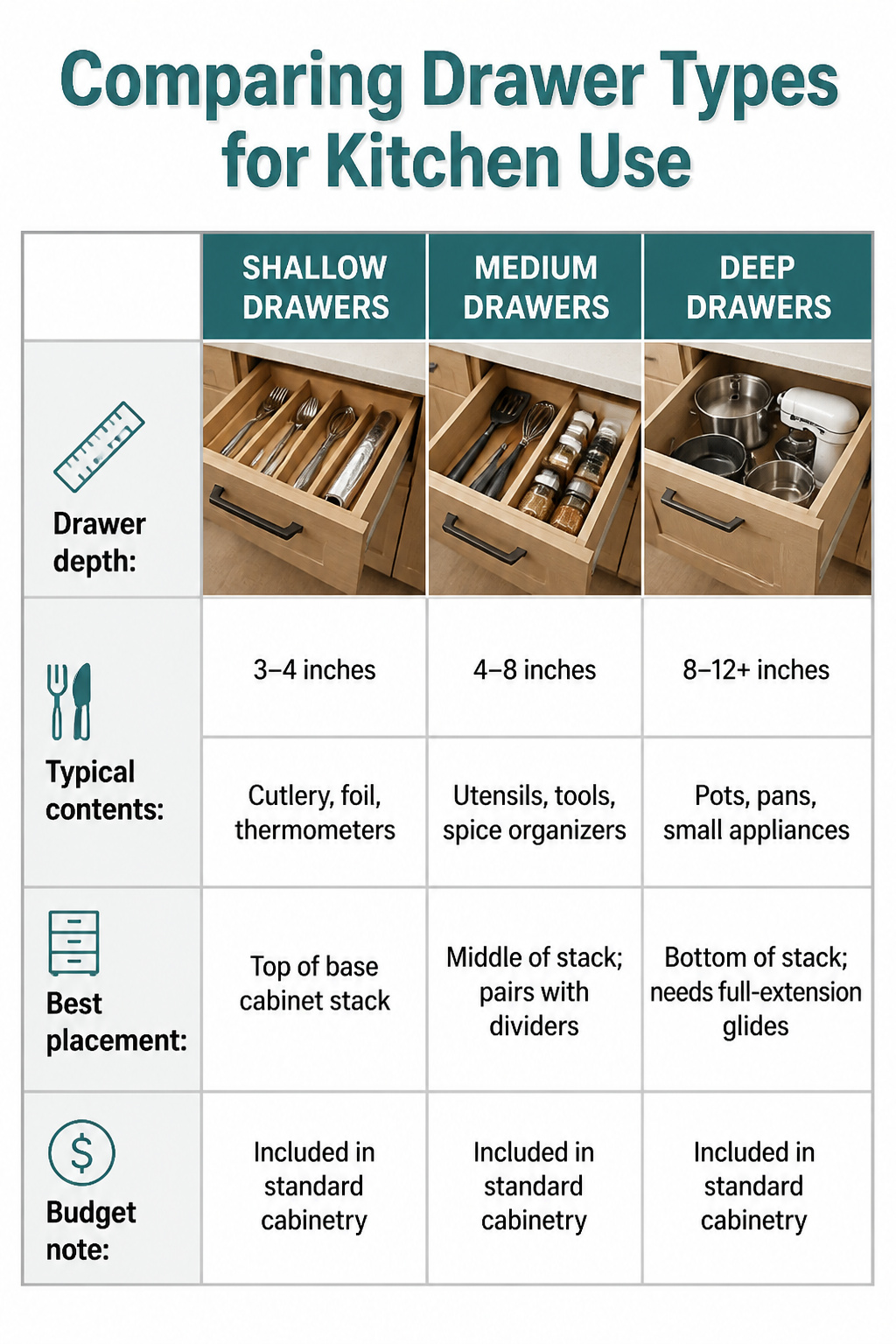
The shallow drawer at the top of a base cabinet stack earns its spot because you open it fifteen times a day without thinking. Cutlery, foil, cooking thermometers, the things your hand reaches for on autopilot. Keep it between three and four inches deep, enough to clear a ladle handle without wasting the volume below.
Medium drawers land in that four-to-eight-inch band, where utensil organizers and smaller tools live. This is where adjustable dividers pay off, because the drawer you set up for spatulas and whisks shrinks or stretches as your habits change.
Deep drawers start around eight inches and run to twelve or more. Stock pots, sauté pans, the stand mixer you use twice a month but cannot lift onto a shelf. Peg systems or stainless rails keep stacked items from sliding when the drawer rolls out full extension, which matters more than I expected once I started storing cast iron down there.
| Drawer depth | Typical contents | Best placement | Budget note |
|---|---|---|---|
| 3–4 inches shallow | Cutlery, foil, thermometers | Top of base cabinet stack | Included in standard cabinetry |
| 4–8 inches medium | Utensils, tools, spice organizers | Middle of stack; pairs with dividers | Included in standard cabinetry |
| 8–12+ inches deep | Pots, pans, small appliances | Bottom of stack; needs full-extension glides | Included in standard cabinetry |
Custom cabinetry runs $500–$1,200 per linear foot, so getting the depth right before you order matters. I sized one deep drawer too shallow for my Dutch oven and lost the slot above it to dead air.
What I Built and What I Bought
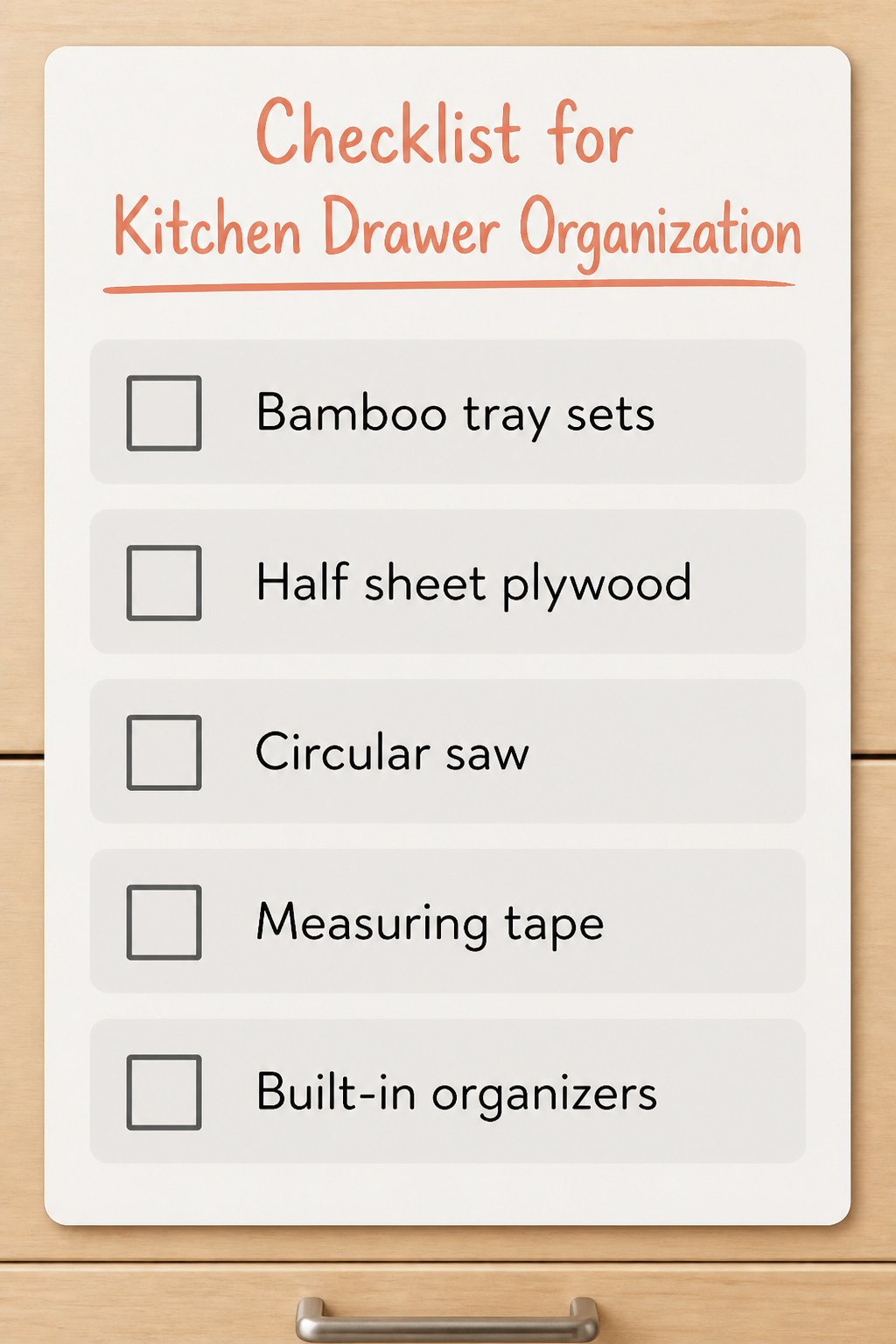
Bamboo tray sets run about $29 for a basic configuration, and that is where most people should probably stop. The wood matches maple drawers cleanly, and the compartments shift around as storage needs change between baggies, batteries, or whatever else accumulates. I have watched friends spend a January weekend cutting plywood dividers for the same result, sanding edges that never quite sit flat, and the math rarely works out.
The exception is when a drawer has an odd depth or an obstruction the ready-made trays straddle awkwardly. A half sheet of 3/4-inch plywood and a circular saw will build a custom box in an afternoon, but only if the drawer is already emptied and measurements are checked twice. Built-in organizers ran about a quarter of one kitchen’s total cabinet budget in a recent full renovation, which is why adding them later, online, saved most of that cost. For renters especially, buying organizers you can lift out beats anything screwed down, since drawer dimensions follow you to the next apartment about as often as the lease does.
Frequently Asked Questions
How to choose kitchen cabinet drawer ideas?
Start by matching the drawer depth to what you actually store. Shallow drawers, 3 to 4 inches, work for cutlery and spices; medium drawers, 4 to 8 inches, fit utensils and tools; deep drawers, 8 to 12 inches or more, swallow pots, pans, and small appliances. Check the hardware load rating before you buy, especially for anything holding cast iron or a stand mixer, and factor in full-extension glides so nothing hides in back.
Are drawers better than cupboards?
Drawers win for daily use because you see everything at once and reach it without kneeling or unstacking. Base cabinets with fixed shelves hide items in shadow and force you to lift lids off lids. Cupboards still make sense for tall, bulky, or rarely used pieces, so the best kitchen mixes both.
What are the best kitchen cabinet drawer ideas?
Deep pot and pan drawers, pull-out spice drawers, and tiered organizers rank at the top for 2026. Deep drawers with heavy-duty glides like Blum’s Movento handle serious weight without sagging. Narrow pull-out spice drawers turn wasted gaps into usable storage, and tiered organizers double the usable height of a standard drawer by stacking a shallow tray above the floor.