
A kitchen spice rack can run from a few dollars of scrap wire and finishing nails to a custom copper-and-wood build that takes an afternoon. What separates the projects you finish from the ones you abandon is whether you measured your actual jars first. That six-inch gap beside your fridge, the one you have ignored for two years, is enough.
1. Hanging Spice Board
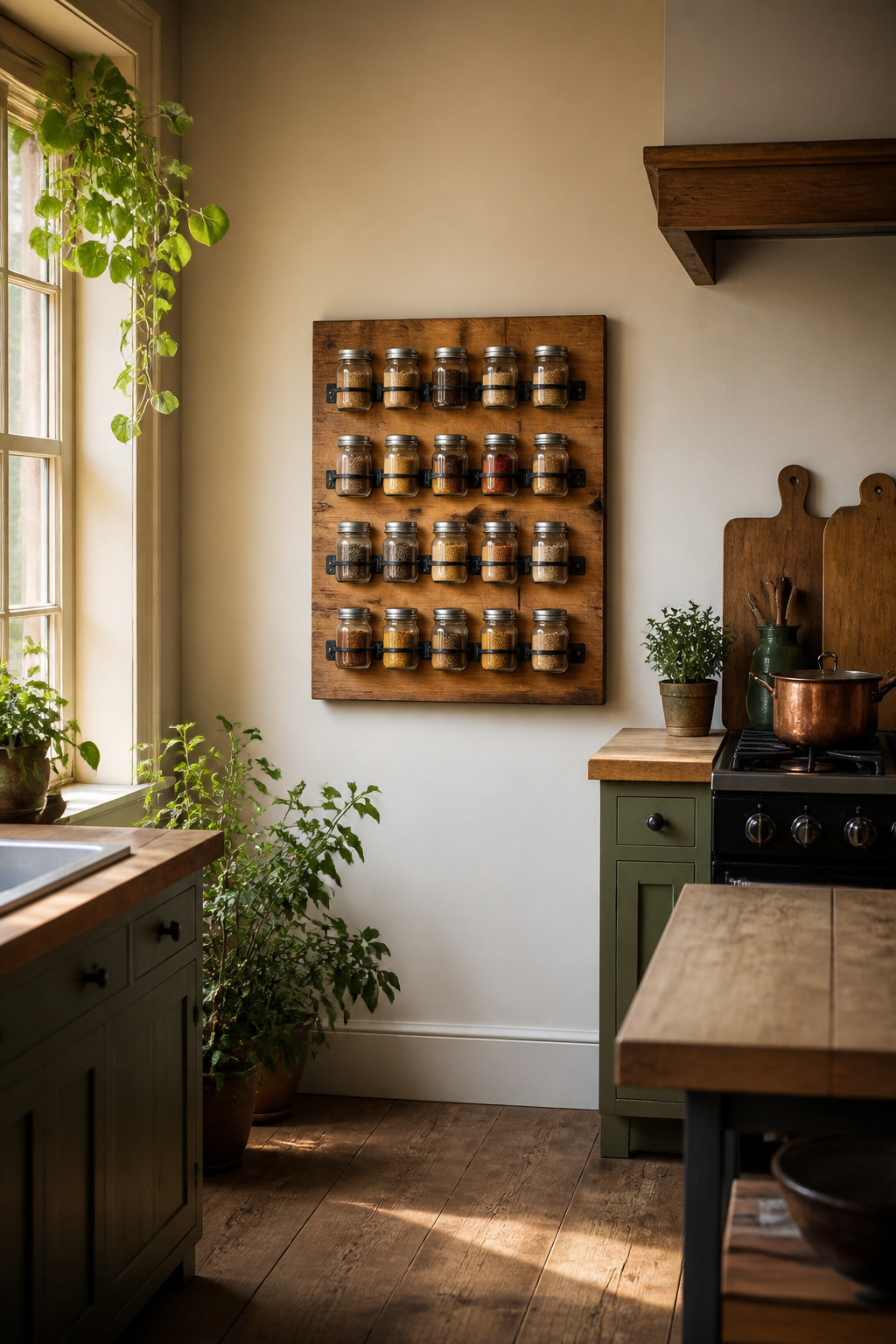
A hanging spice board turns the dead space between cabinets or the skinny wall beside your fridge into actual storage. Mine went on a six-inch gap I had ignored for two years.
Board material matters more than I expected. Raw wood soaks up cooking grease and turns sticky near the stove; sealed hardwood or painted MDF wipes clean and does not warp. Metal pegboards work too, though the hooks can rattle if you bump them reaching for a pan.
The real advantage is keeping jars visible and within arm’s reach of your prep area. But visible does not mean open to heat. Spices still break down fast if you hang them directly above the stove or next to the oven vent. Mount the board on a wall you cook beside, not one you cook under, and you get the convenience without shortening the lifespan of what is inside the jars.
2. Nail and Wire Rack
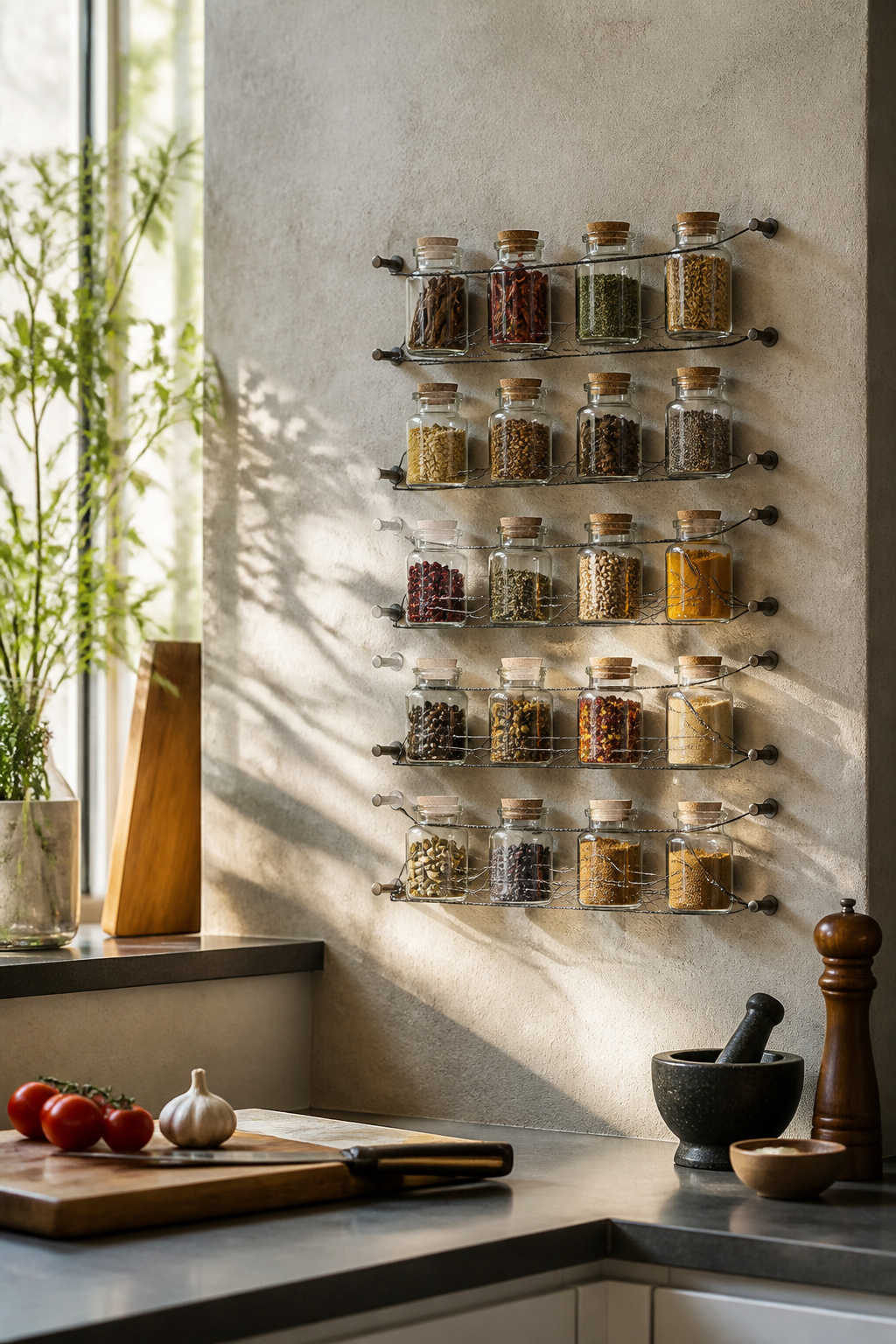
A nail and wire rack asks almost nothing of your walls. Picture a simple grid of thin wire stretched between finishing nails tapped into studs or a light wooden frame, with jars resting in each gap. For renters staring down a lease agreement, the appeal is obvious: each nail is a tiny hole that spackle and a dab of paint will erase in twenty minutes. No brackets, no anchors, no explanation to the landlord.
The open wire does more than look spare. Air moves through from both sides, which matters in kitchens that steam up near the stove. I have seen wire spaced too wide, though, and watched a small jar slip through the gap the first time someone reached past it for pepper. The spacing has to match your jars before you hammer the last nail.
Weight sits on each individual nail, not distributed across a shelf. A single nail in drywall without a stud will pull under a full glass jar. The honest limit is lighter containers, or fewer of them, or finding the studs. Wire gauge matters too. Anything under about 16 gauge will sag over months, and sagging wire tips jars toward the same fall you were trying to prevent.
3. Copper and Wood Rack
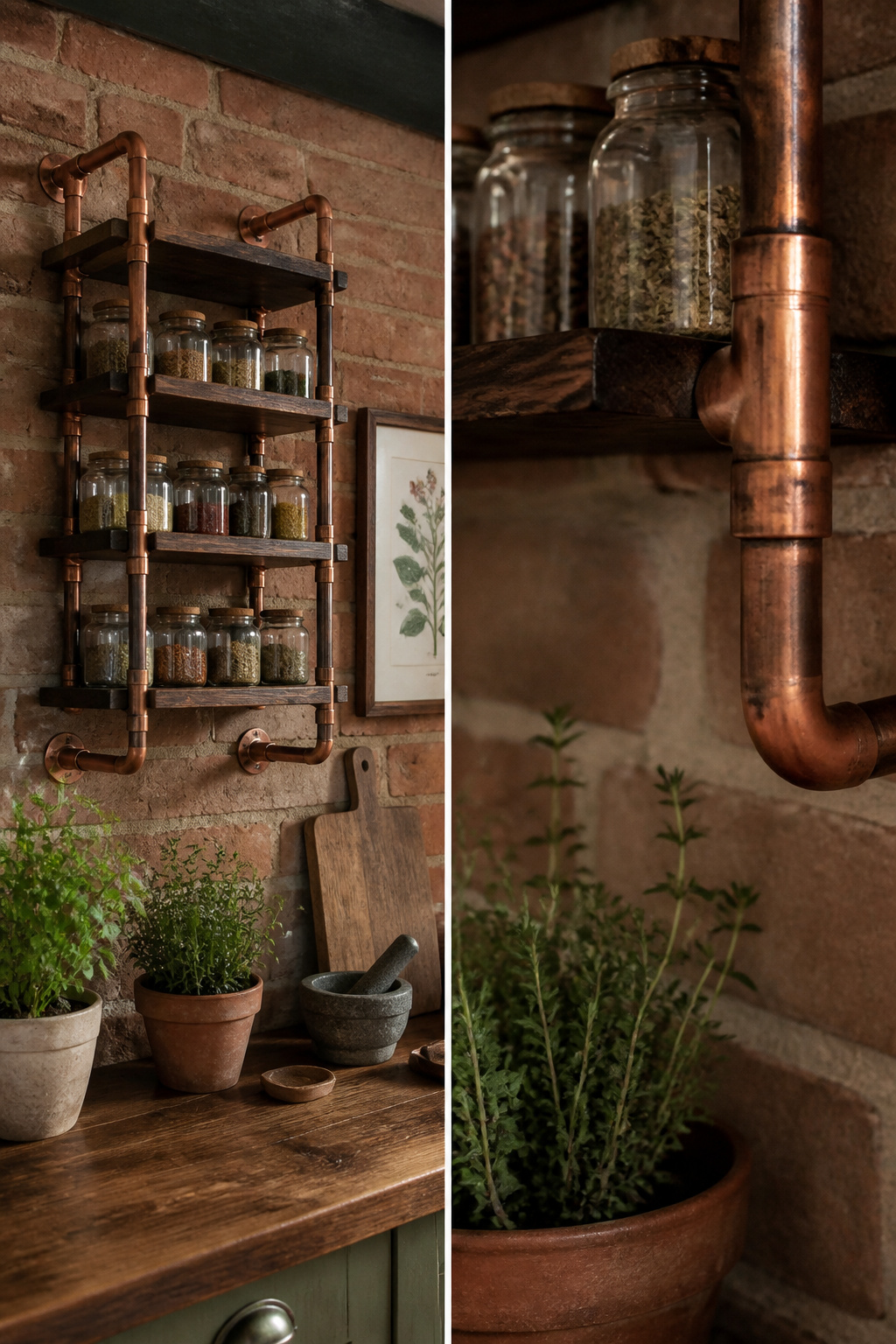
Copper pipe and wood shelving strike a useful middle ground between industrial hardware and warmth, a pairing that works in kitchens with brick, butcher block, or even just warm white cabinets. Half-inch copper fittings from the plumbing aisle run a fraction of what design retailers charge, and the threaded joints mean assembly needs nothing fancier than two wrenches and a free hour.
The metal changes. Bright salmon-orange shifts toward brown, then settles into that mottled green-brown patina people either chase with vinegar solutions or fight with polish. I lean toward letting it age. Sealed copper keeps its shine but looks like a showroom piece, and kitchens are not showrooms.
Wood sealed only with oil will darken and swell near a stove. Polyurethane or a hardwax oil buffer, kept thin on the shelf face so it does not look plastic, buys years before you need to sand and re-coat. A friend skipped this step on a rack mounted beside her range; six months in, the front edge had cupped enough that jars wobbled.
The look reads custom at a distance, but up close the pipe threads and shelf-bracket hardware announce themselves as assembled, not carved. That honesty is half the appeal.
4. Tiered Spice Racks
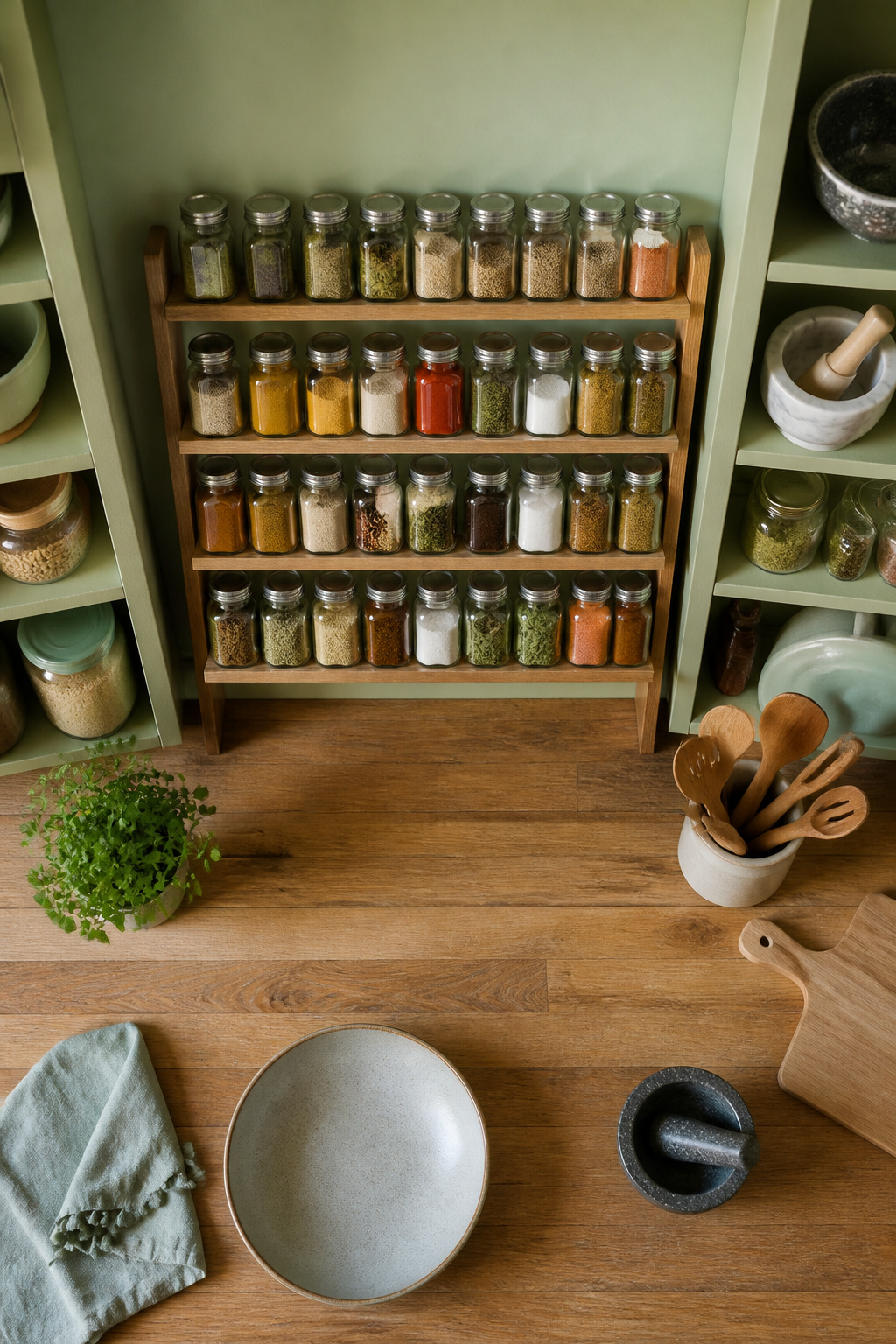
A stepped platform raises each row of jars above the one in front, so labels stay visible from a normal standing height without digging anything out. That visibility is what turns a collection you already own into one you actually cook with; buried jars expire before they empty, and most of us have opened a third cumin because the first two sat behind taller bottles.
These fit three places in practice. Inside a cabinet, a shallow tiered rack uses vertical space that flat storage wastes, and the stepped height matches short jars in front with taller ones behind. On a counter, the same principle keeps daily spices reachable without the rummage that sends paprika dust across the backsplash. In a pantry, rows of tiered shelving let you scan the whole inventory at once, which is how you notice the oregano running low before the recipe calls for it.
What convinced me, reading through a dozen of these setups, is that three separate top organizers back the tiered design specifically for visibility: the height-adjusted steps that account for jar size, the at-a-glance access that replaces stacking, and the scan-ability that turns a cupboard into a working kitchen tool rather than a storage problem. The mistake is buying one too deep for your space; a tiered rack pushed to the back of a 24-inch cabinet still hides its own rear row.
5. Test Tube Wall Rack
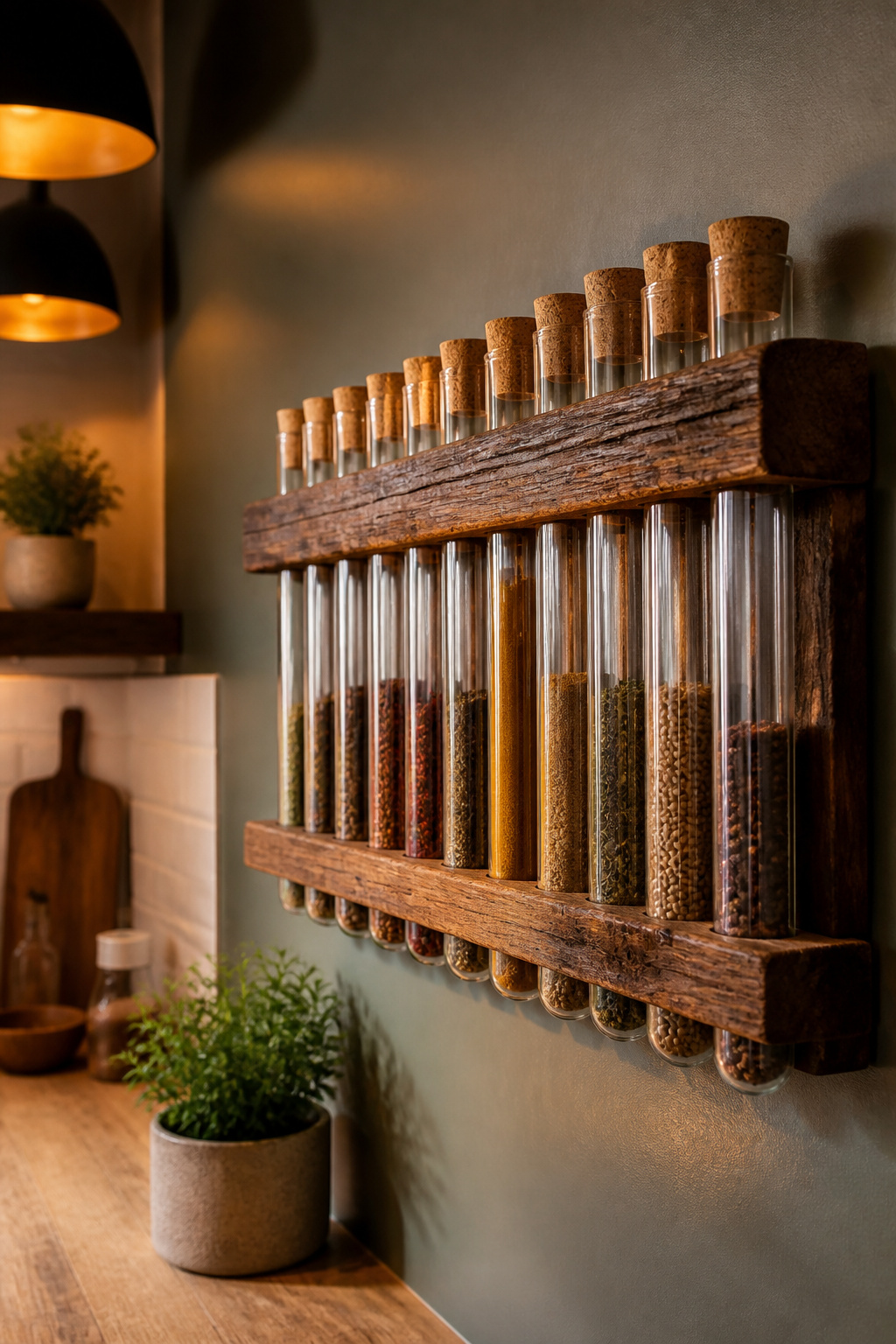
Glass test tubes with cork stoppers mounted in a wall rack give a kitchen the look of an old apothecary or lab bench, which is the whole point. The narrow cylinders read as decorative from across the room, but the small capacity fills faster than you expect, especially with ground spices that settle and leave air gaps at the top. Two builds I looked at used reclaimed equipment or finished wood holders to match existing trim, so the frame is where the style actually lives.
The real friction comes after mounting. Ground cumin and ground coriander look nearly identical through glass, and paprika shades range enough that guessing by color costs you a ruined dinner. Labels matter here more than on opaque jars. Dating them helps too; cork seals better than they look, but they are not airtight, and spices in tubes turn faster than you think. I would not put my whole collection in these, but a dozen favorites in a tight wall space works if you commit to the upkeep.
6. Magnetic Spice Racks
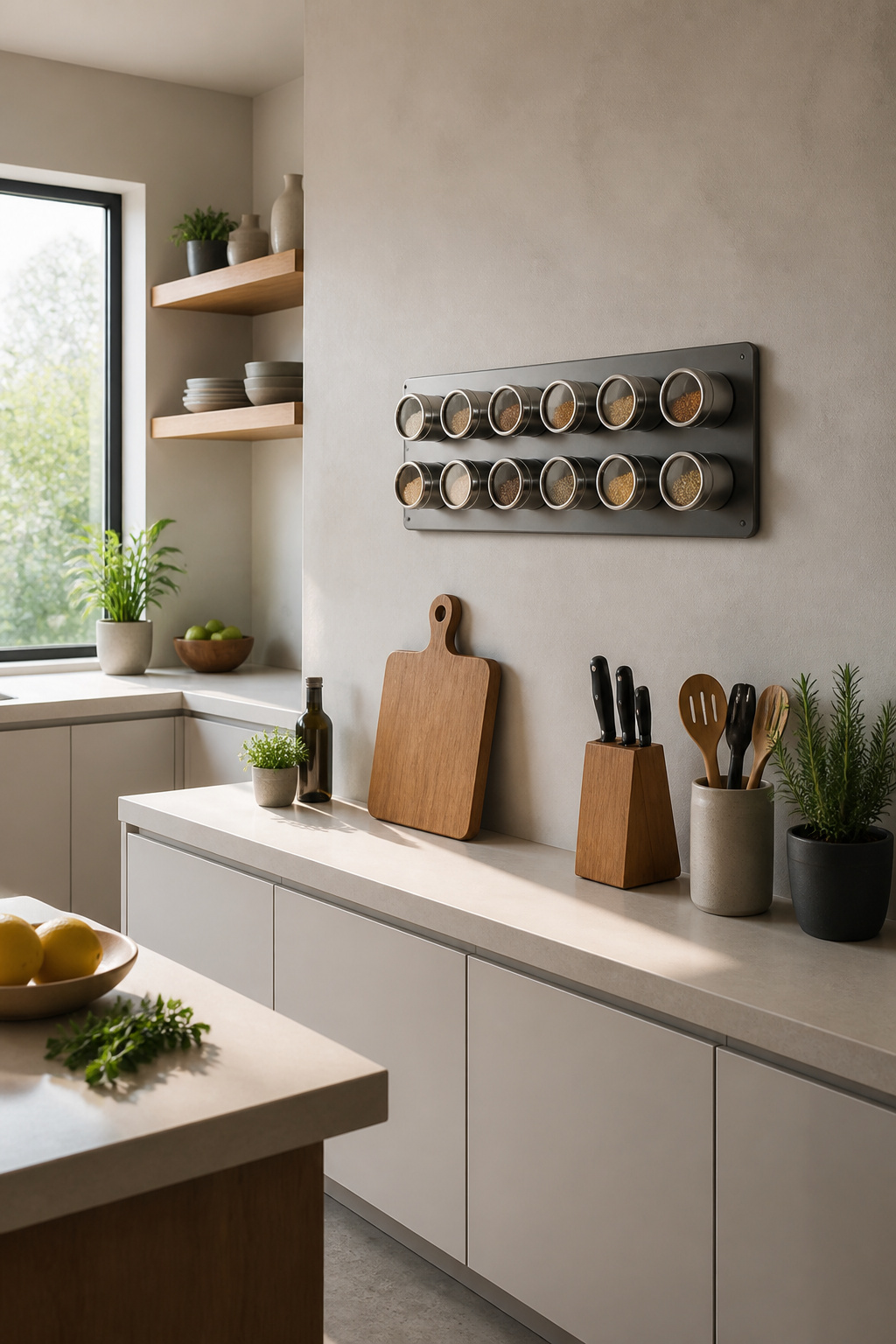
A thin steel plate mounted at eye level turns an unused stretch of wall into active storage. Small jars with magnetic lids or metal bases stick straight to the plate, the refrigerator side, or any other metal surface, which matters most in kitchens where counter space is already spoken for. You see the full collection at a glance, and the jar you need lifts off with one hand.
The catch is placement. Heat from a nearby stove degrades spices fast, and direct sun through a window does the same, so keep the plate away from both if you want the cinnamon to still taste like cinnamon six months from now. Magnet strength is the other variable worth checking before you settle on a spot. A weak magnet on a glass jar full of dried oregano will slide, especially if someone shuts the fridge hard or the wall plate sits where elbows pass. Test the hold with the jar full before you commit to the layout; the empty jar lies.
7. DIY Wooden Spice Rack
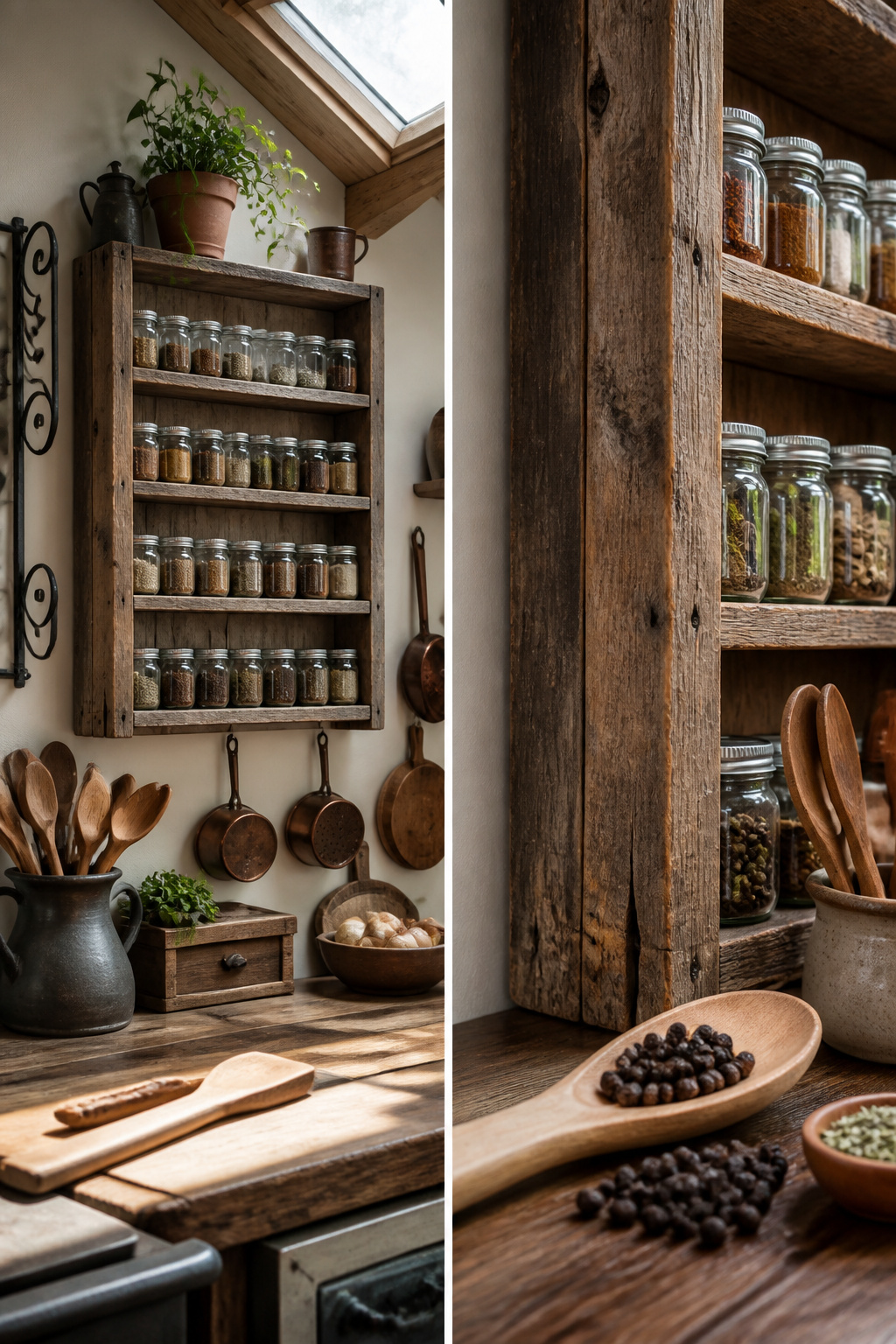
A wooden spice rack built to your own jar collection and wall space solves the problem store-bought sizes never quite do. Three shelves spaced to fit your tallest bottle, a simple rectangular frame, and basic cuts with wood glue or nails get you there in a weekend. Repurposed wood changes the math entirely: a pallet board or old shelf heading to the scrap pile becomes the raw material, and the dings and grain variation read as character once sanded smooth and sealed.
The sources all point to this route, but none hand you a cut list. What they confirm is the logic: measure your frame to hold three shelves, measure the vertical gap so every jar clears, and hang it within arm’s reach of your prep area or stove. You will need to work out your own dimensions based on the jars you actually own, which is the trade you make for a rack that fits your kitchen rather than a standard one that fits a box.
Metal backing is another path the sources mention, sheet steel cut to size at the home improvement store, though that shifts the project toward wall-mounted magnetic storage rather than open shelving. For pure wood, the sustainability appeal is straightforward: reclaimed lumber keeps material out of the waste stream and costs little beyond your time.
8. Pull-Out Spice Racks
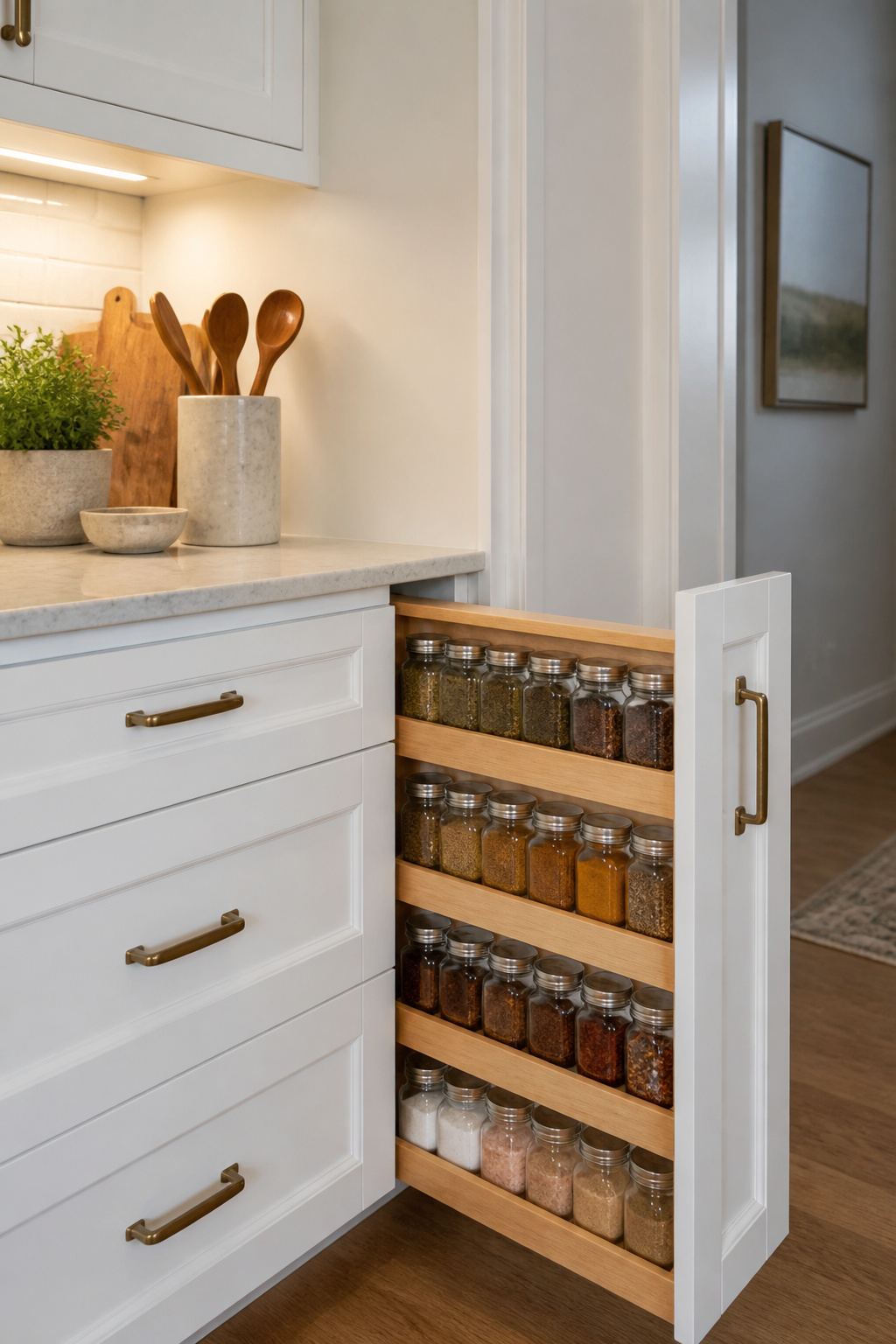
A pull-out spice rack on slides tucks your collection into the cabinet where heat and light cannot reach it, the environment most recommendations favor for keeping oils from degrading. The narrow frame needs only a standard base cabinet width to fit; measure your opening before ordering, since some units demand a full 9-inch or 12-inch cavity while others squeeze into slimmer gaps beside a mixer or cutting boards.
Installation sits between a countertop stand and a wall-mounted rack in complexity. You will need a drill and a level, and if your cabinet has a fixed shelf, that shelf may require notching or removal to let the slides extend fully. The reward is access without crouching or reaching, every jar visible at once as the rack glides forward into the light.
9. Over-the-Door Organizers
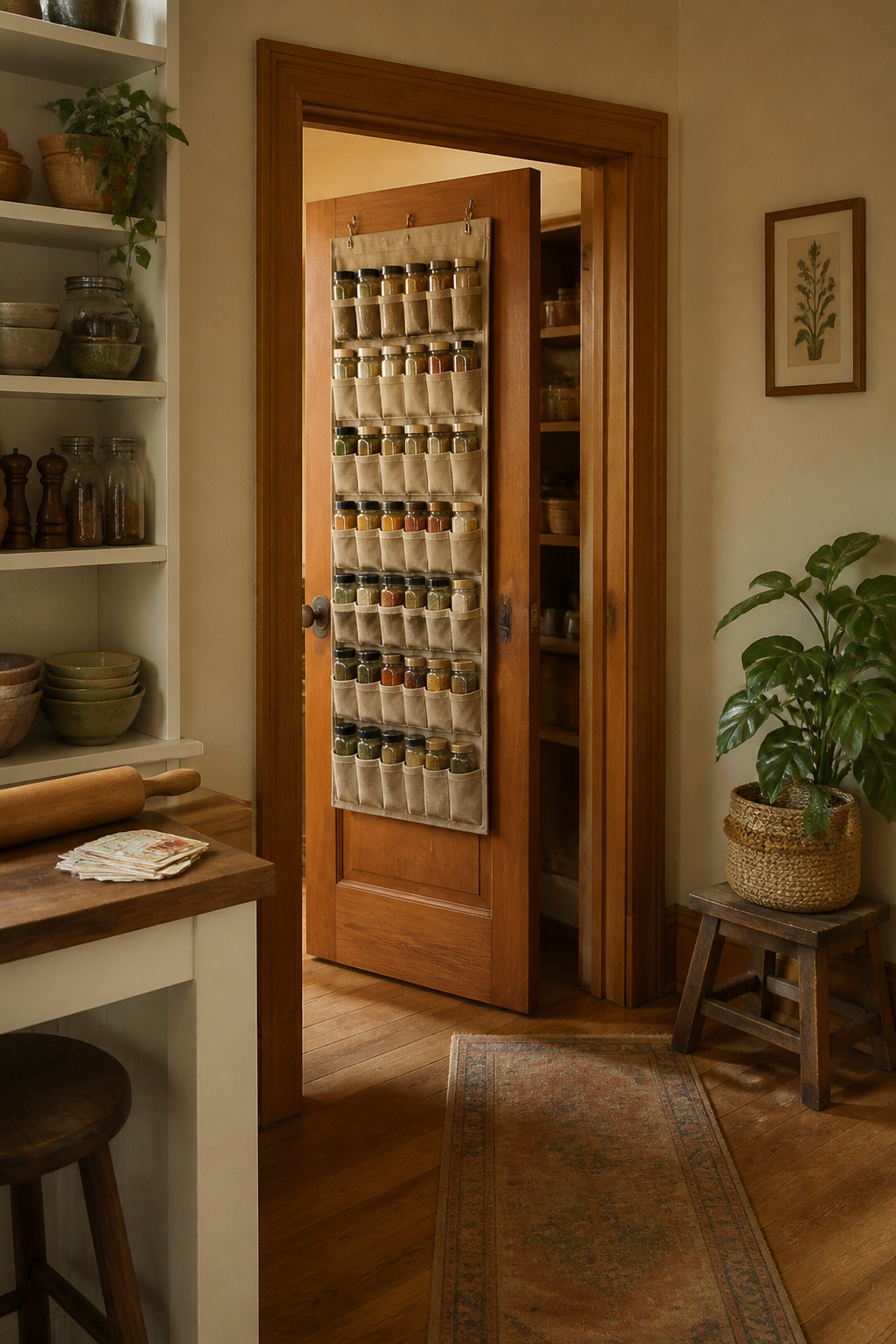
The back of a pantry door is dead space until it isn’t. An over-the-door organizer, whether a wire rack or vinyl pocket system, turns that surface into storage that keeps spices visible and within reach without claiming a single shelf.
Two approaches keep coming up for a reason. A metal rack, the kind that screws or hooks over the door frame, holds more weight and keeps bottles upright. Plastic or vinyl pouches hang cheaper and lie flatter, but sag once you load them with glass.
Door clearance is the first thing to check. The organizer plus the depth of your widest jar has to clear the door frame when it swings, or you’ll hear that thunk every time you close it. Weight matters too: a loaded rack puts strain on hinges that were never meant to carry a shelf. If the door starts to drift open, you’ve crossed that line.
Heat is the other variable. A pantry door near the stove still channels warmth every time you fire a burner. Store the everyday cumin and pepper there, but keep the backup bottles, the ones you won’t touch for months, farther from the heat source.
10. Countertop Spice Racks
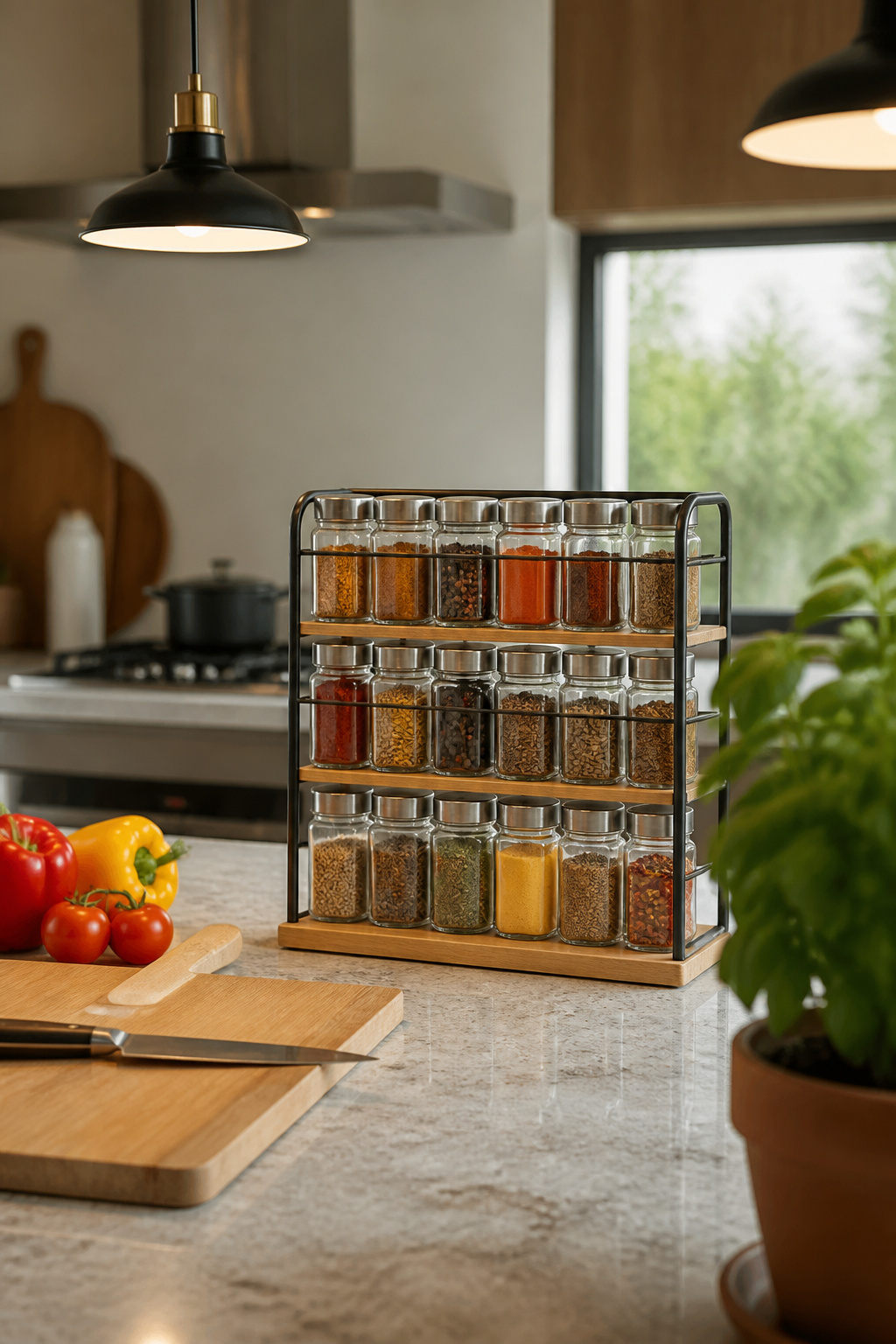
A countertop spice rack trades your most reachable square footage for the fastest access you’ll get outside of a drawer. Single-tier stands keep the footprint small; rotating units hold more but eat the space where you might prep vegetables or set a hot pan.
The sources all warn to keep spices away from heat and sunlight, yet they still include countertop options because most cooks reach for peppercorns or cinnamon multiple times a meal. Convenience wins when the alternative is rummaging through a cabinet with sauce on your hands.
If you’re keeping the rack on the counter, the coolest, darkest spot is typically the corner farthest from both the stove and any window, usually on the side of the kitchen that doesn’t get afternoon sun. A turntable tucked there gives you the rotation without the light damage, though you’ll still want to check freshness more often than with pantry storage.
11. Lazy Susan Spice Rack
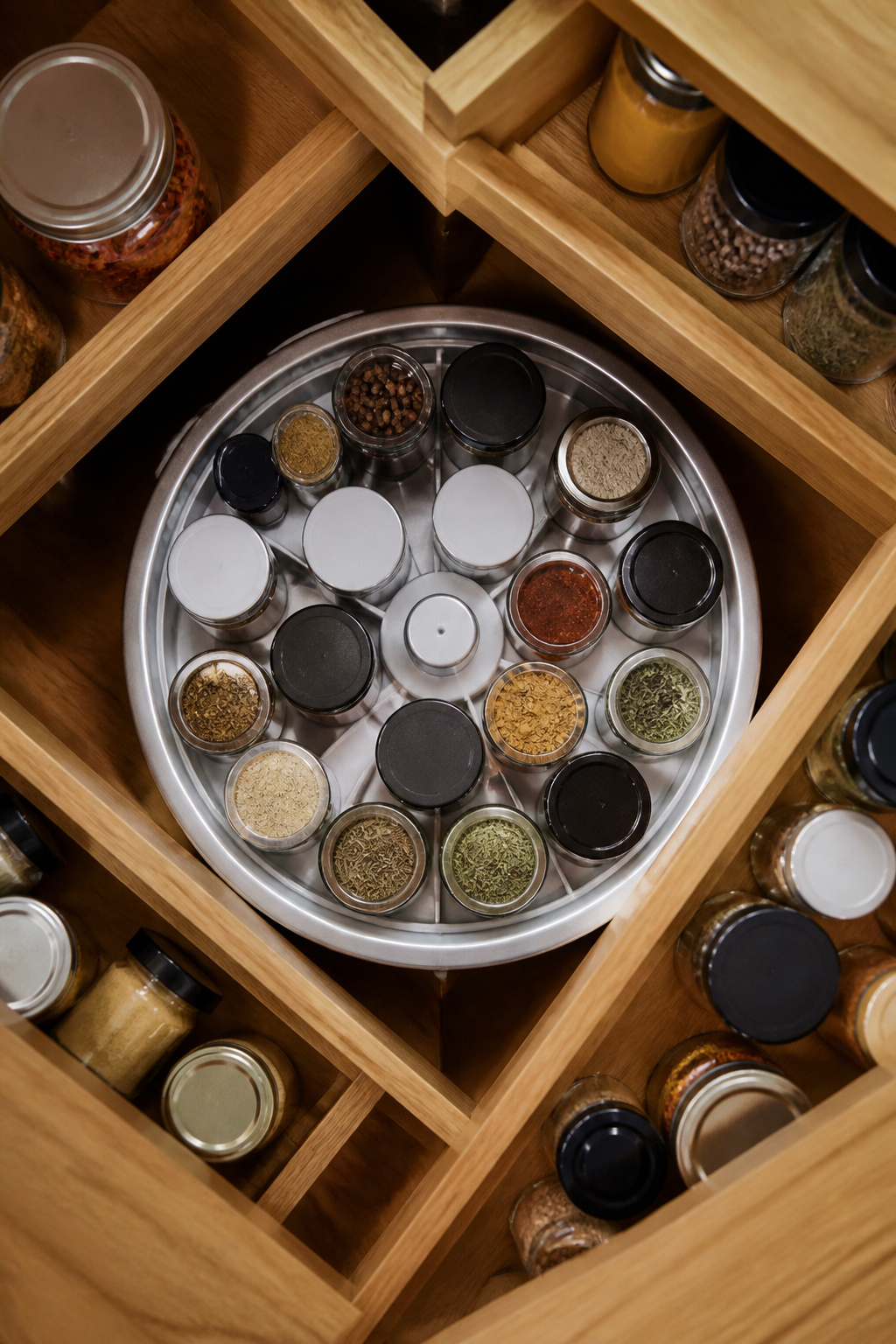
A lazy Susan is a circular tray that spins on a base, letting you rotate spices toward you instead of digging through a row. That motion matters most in corner cabinets, where the geometry leaves you reaching blindly into a black hole of jars. Spin the tray and the back corner comes to you.
On a counter or pantry shelf, the same rotation keeps everything visible from one standing spot. Grouping by category or how often you reach for something makes the spin faster; you learn the layout and stop at the jar you want.
The standard diameter that fits most base cabinets is 10 to 12 inches. Anything wider and the circle bumps the door hinge or the cabinet wall. Height is the real trap. A jar that clears the shelf below still has to pass under the shelf above it, or under the cabinet door frame when the Susan sits on a counter. Tall bottles meant for oils or bulk spices often do not, and you only discover this after you have already loaded it up and given it a spin.
12. Vintage Bread Pan Rack
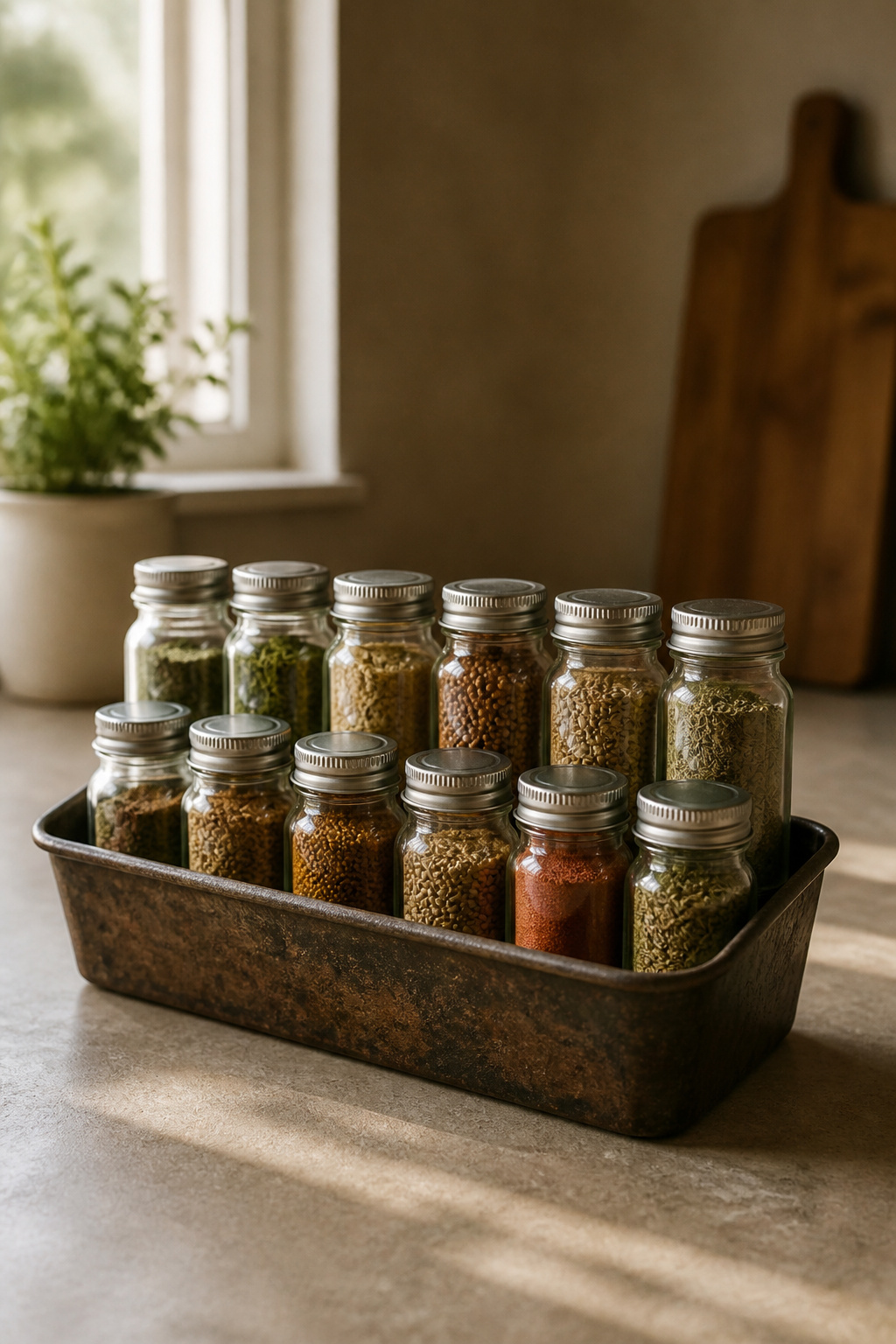
A vintage bread pan sitting on a thrift store shelf does not look like kitchen storage until you turn it sideways. The low steel walls, usually eight to ten inches across and four to six deep, become a shallow shelf that keeps spice jar labels facing outward and readable without lifting anything. The rolled rim that once helped a loaf release catches the edge of a counter and keeps the whole thing from sliding.
Divided pans, the kind that baked four mini loaves in one piece, work even better. Each channel holds two or three standard jars upright and separated, so you are not knocking over the cumin to grab the coriander. A single full-size pan swallows eight to ten jars if you line them in one row, or more if you stagger two. The weight is enough that it stays put without mounting, which matters for renters who cannot drill tile.
The finish is the only catch. Bare aluminum pits near the stove. Enamel-coated steel lasts longer but chips if you drop it. I would check the bottom for rust before paying, and plan on a coat of food-safe paint if the original color has worn through to metal. At two or three dollars, the failed ones go back to being bread pans.
Where Spices Actually Stay Fresh
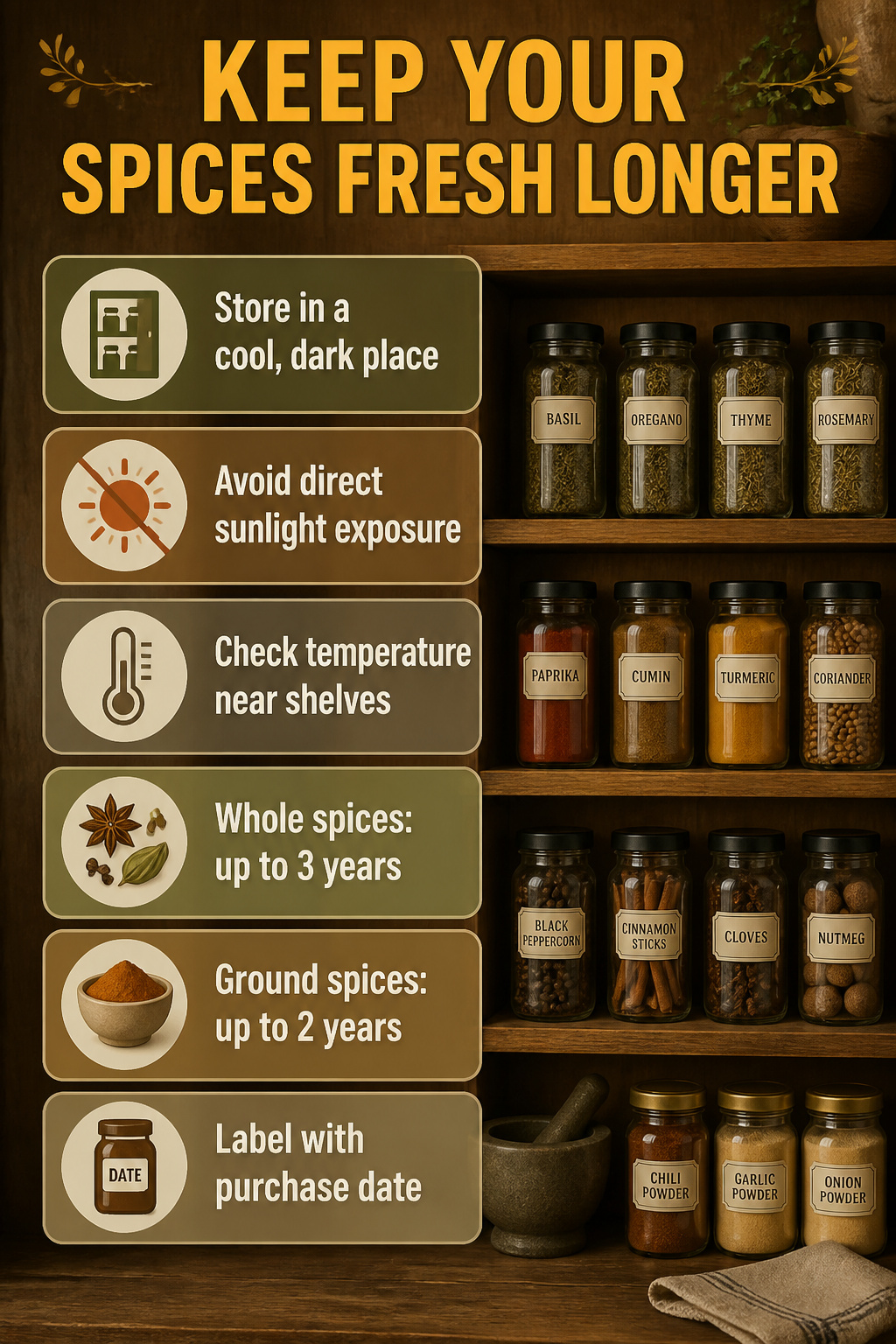
Spices keep their punch in cool, dark, dry storage. That basic rule is why the windowsill rack I once considered would have been a mistake: direct sunlight breaks down volatile oils fast, and the temperature swings near a pane finish what the light starts. Heat does the same damage. A counter beside the stove or an open wall rack mounted over the backsplash sits in the warmest zone of the room, so spices there fade quicker than the calendar suggests.
The pantry or a cabinet away from the oven is the safer bet. To test a spot, leave your hand on the shelf for thirty seconds after the range has been running. If it feels warm, pick another wall.
Whole spices hold their flavor up to three years. Ground spices run closer to two. Label the purchase date when you transfer them, because color and smell fade before you notice.
Labeling That Saves You From Mistakes
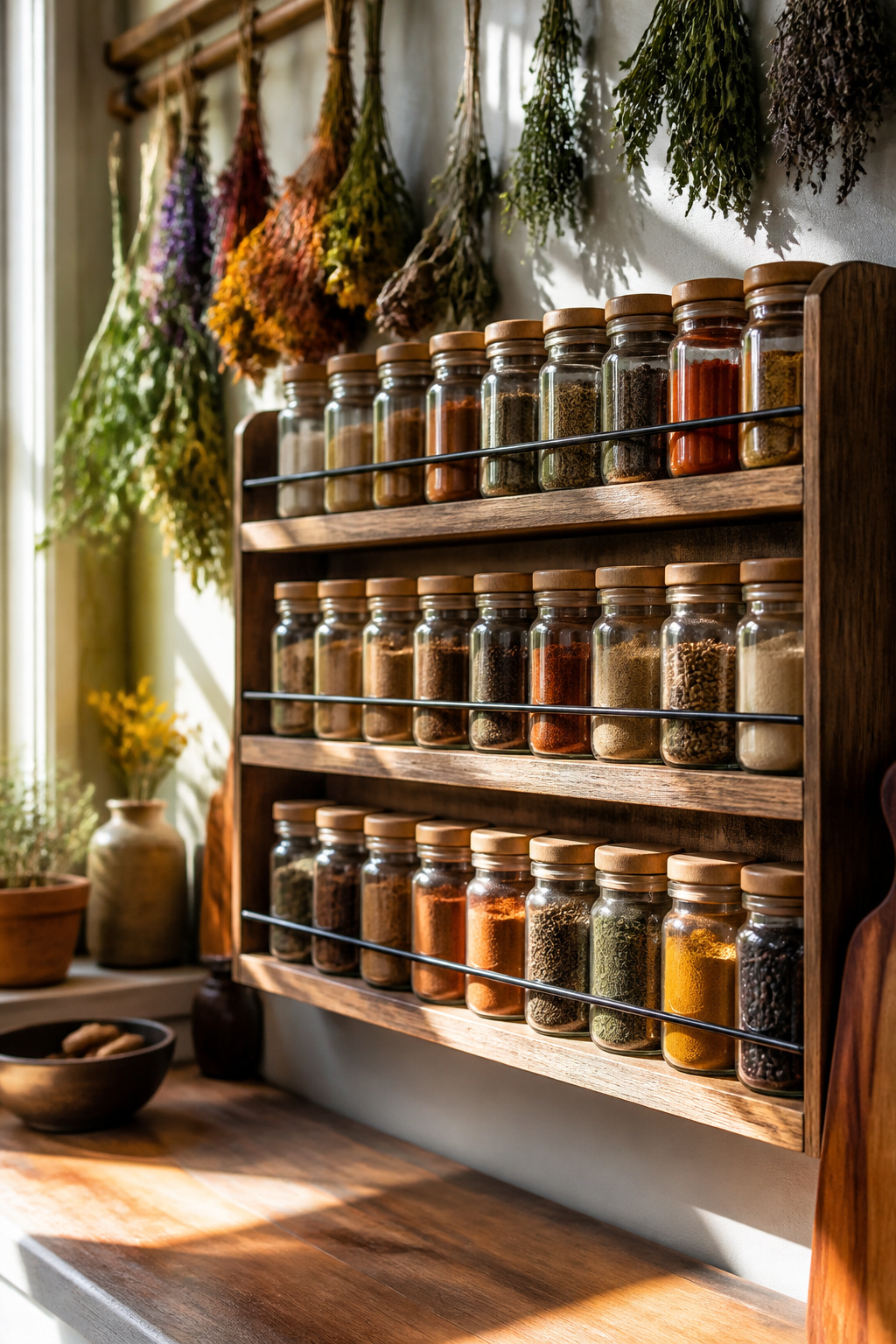
Ground cumin and ground cinnamon look nearly identical once they leave their jars, which is why a permanent label beats a temporary lid every time. I write the name large enough to read at arm’s length, and if I am feeling thorough, the purchase date in small print underneath. That second part matters more than I expected: ground herbs like basil or oregano hold their punch for only one to two years, and whole spices stretch to about three. The sniff test still rules, though. If you open the jar and the smell does not reach you, the spice is past saving, no matter what the calendar says. Some people store bulk ground spice in the fridge to push freshness to six months, but the standard grocery bottle does fine at room temperature for most households. Check smell every six months, toss what has gone flat, and your rack stays honest.
Repurposed and Thrifted Rack Materials
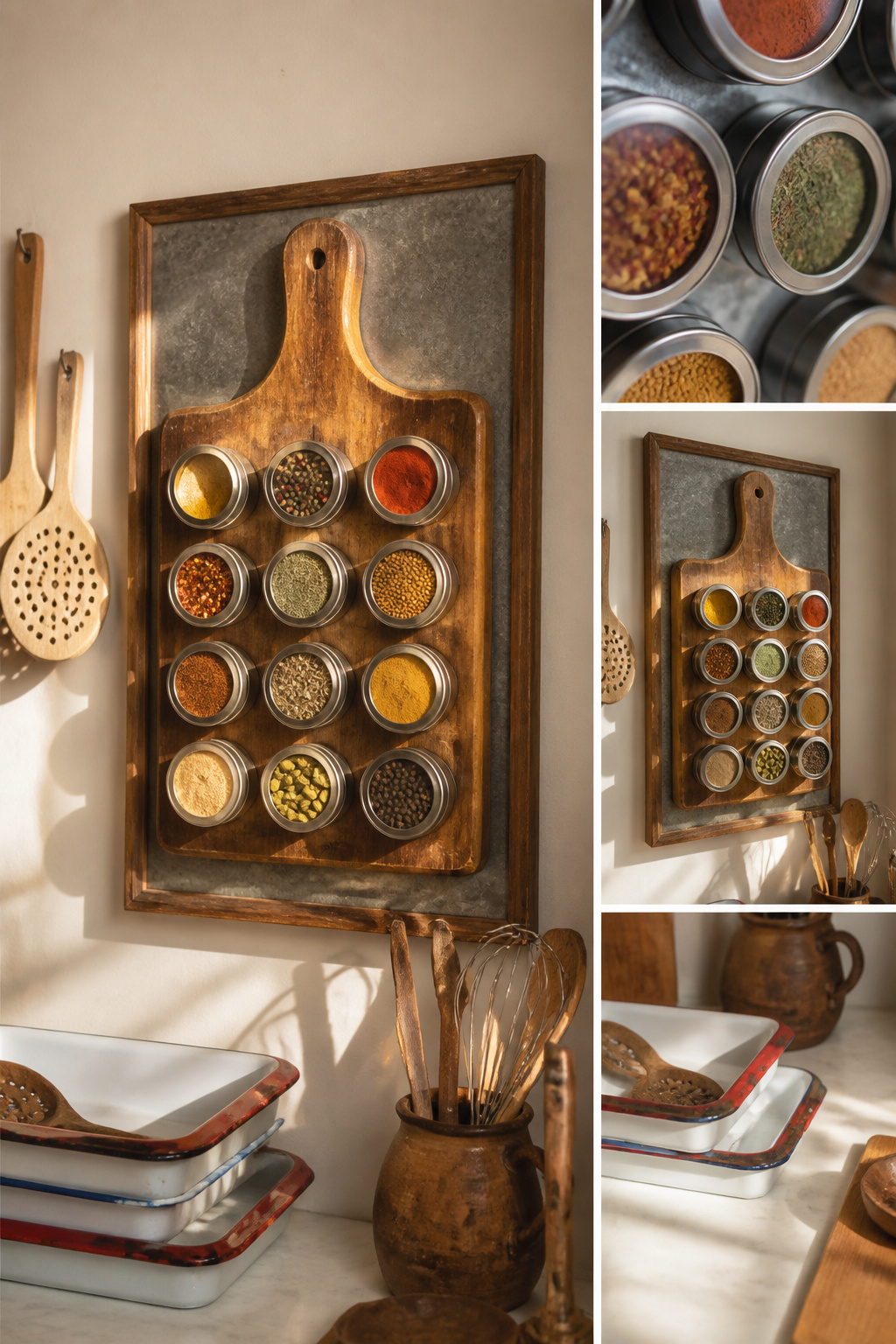
Old wood feels like the obvious choice until you have a cabinet full of ground cumin smelling like a thrift-store basement. The pieces that actually survive kitchen humidity are the ones that started life with a finish on them, not raw barn wood. A vintage bread pan with its enamel coating, or a mid-century cutting board already sealed with decades of oil, will shrug off the steam from a simmering pot. Raw pallet wood will not. It warps, it mildews, and it off-gases whatever sat in that warehouse.
Sheet metal is the other sleeper hit here. Home improvement stores stock it, will cut to size, and it costs less than a fancy organizer from a kitchen boutique. Pair it with a thrifted wood frame and you have a magnetic backing that holds tins without drilling into rental walls. The weight matters, though: screws need to hit studs or proper anchors, because a rack full of glass jars pulls harder than a picture frame.
Yard sales and estate sales are where the bread pans and old tins surface, not curated vintage shops with curated prices. The hunt is half the point. Last spring I watched someone walk past three enameled pans at fifty cents each because they were "dirty." Those pans are now my oregano and thyme rack, and the patina they earned in someone else’s kitchen fifty years ago beats anything I could buy new.
Frequently Asked Questions
What is the best way to store spices?
Keep spices in a cool, dark, dry place away from heat and light. A pantry or cabinet away from the oven works best. Test a shelf by leaving your hand on it for thirty seconds after the range has been running; if it feels warm, pick another spot.
How long do spices last?
Whole spices hold their flavor up to three years, while ground spices run closer to two. Label the purchase date when you transfer them, because color and smell fade before you notice. If you open a jar and the smell does not reach you, the spice is past saving.
How can I organize my spices effectively?
Use tiered racks, magnetic organizers, or labeled containers to keep spices accessible and visible. Tiered designs work inside cabinets, on counters, or in pantries; magnetic plates free up counter space; and clear labeling prevents grabbing cumin when you wanted cinnamon.