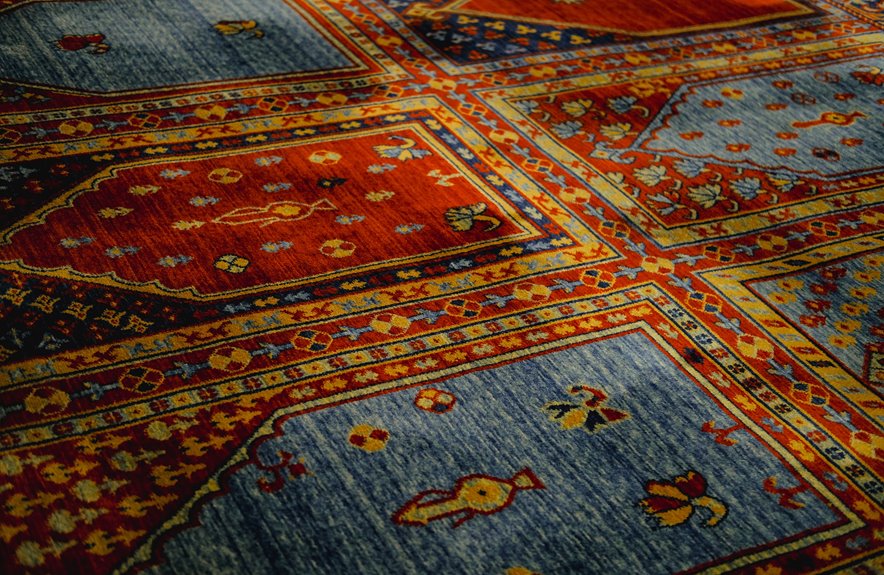
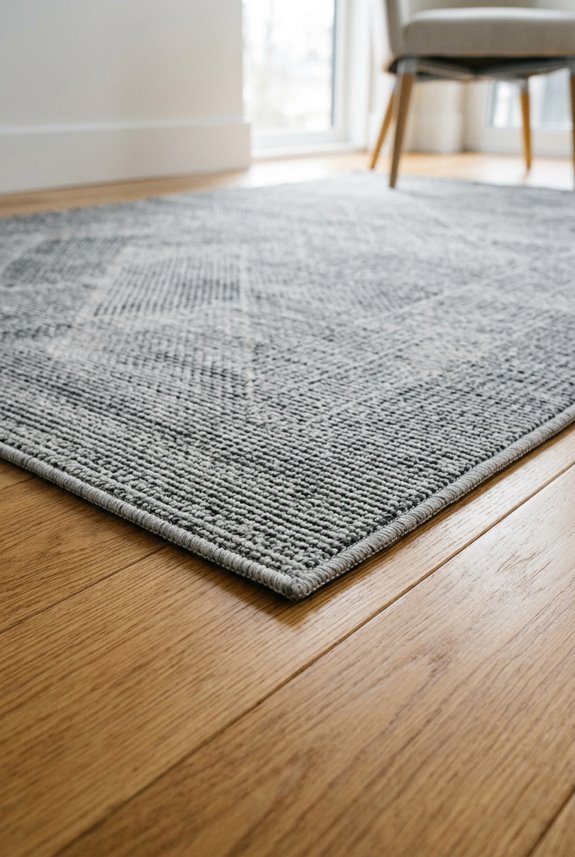
A low pile rug features short, densely woven fibers that create a flat, durable surface. It works well in busy homes because dirt stays on top, spills wipe away easily, and furniture sits securely. The short fibers resist crushing and matting, making them suitable for high-traffic areas like entryways and dining rooms. Vacuuming is straightforward and maintenance is minimal. Materials range from wool to synthetic polypropylene.
What Are Low Pile Rugs? Definition and Core Characteristics
Why choose a rug that’ll fall apart in your busiest rooms?
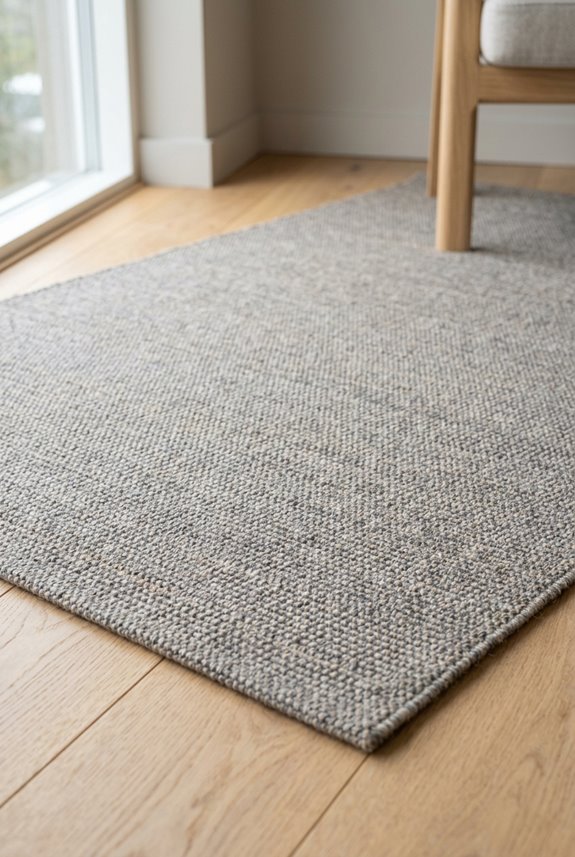
Low pile rugs feature short, tightly woven fibers creating a dense surface. They’re also called short pile rugs, and they combine comfort with practicality.
Core Benefits:
- Durability that resists crushing and matting
- Easy to vacuum and maintain regularly
- Simple spill cleanup with quick wiping
- Support secure furniture placement safely
These rugs work effectively in high-traffic areas like hallways and under dining tables. The short fibers mean fewer tripping hazards for your family. They’re sturdy enough for everyday life while staying manageable. When you choose a low pile rug, you’re investing in something that maintains its appearance with minimal maintenance effort, making it a practical choice for active homes.
Why Low Pile Rugs Outperform in High-Traffic Spaces
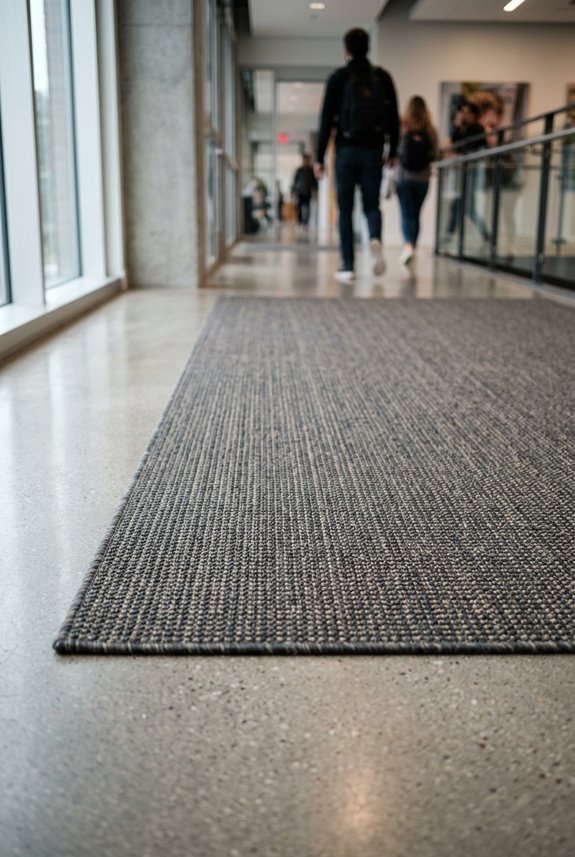
You’ve learned what makes low pile rugs special. Low-pile construction handles daily wear effectively.
Low-pile construction delivers exceptional performance for daily wear, making it the ideal choice for active households.
Here’s what makes them stand out:
- Dirt stays on top – Dense fibers trap debris on the surface, making vacuuming quick and effective.
- Spills wipe away easily – You can clean messes fast, reducing staining and maintenance time.
- Durability wins with traffic – Short fibers resist crushing and matting, keeping your rug looking fresh longer.
Their fiber resistance means they won’t snag easily, even with kids and pets around. The low profile also prevents tripping hazards near stairs and under furniture. They work well with rolling office chairs. Low-pile rugs deliver measurable performance in high-traffic environments.

Plush and Skin-Friendly Material: the house rug crafted with a low-pile, ultra-soft memory foam-like surface, provides exceptional underfoot comfort, relieving pressure and...
Low Pile vs. High Pile: Key Differences Explained
When you’re shopping for a new rug, understanding the difference between low-pile and high-pile options helps you choose what works best for your space.
Key distinctions between the two options:
| Feature | Low Pile | High Pile |
|---|---|---|
| Fiber Height | Short, dense fibers | Tall, fluffy fibers |
| Durability | Resists crushing in high foot traffic | Flattens over time with use |
| Vacuuming | Quick and easy maintenance | Requires more frequent attention |
Low-pile rugs excel when you need durability. Their short fibers resist crushing, making them perfect for busy hallways and living rooms. They’re also easier to vacuum and show less wear.
High-pile rugs offer softness underfoot but demand more care. They trap dust more easily and flatten under foot traffic.
For households with active lifestyles, low pile provides practical durability while remaining manageable for regular maintenance.

Trap Dirt and Moisture: Our door mats are made of premium Polypropylene and extremely dense yarns, which are highly stain-resistant and absorbent. They quickly absorb moisture and efficiently scrape dirt off shoes, keeping the floors clean and dry. Widely used in any weather, especially rainy, snowy or mud conditions. Suitable for the front door, back door, entryway, indoor entrance, etc.

Great Value & Chic Style: This 2 X 3 hallway runner rug adds a vibrant touch to your living room with its beautiful colors and subtle pattern that complements your furniture and decor. It's soft to the touch and looks as elegant as more expensive entryway rugs, offering excellent value for its quality.

Vintage Charm: Step into a timeless garden scene—lush dark green, playful songbirds, and winding pomegranates woven with a touch of vintage, timeworn charm. A statement rug that feels likefeel like it’s been part of your home forever
Best Rooms for Low Pile Rugs: Where They Thrive
Low-pile rugs excel in busy areas because they’re incredibly durable and built to handle foot traffic. They work best in these spaces:
Low-pile rugs excel in busy areas thanks to their incredible durability and superior ability to handle foot traffic.
- Living rooms and dining areas – Their durability means they withstand daily wear while staying easy to vacuum
- Entryways and hallways – The low profile prevents tripping hazards in these narrow spaces
- Home offices – Rolling chairs glide smoothly across the short fibers without catching
Add a rug pad underneath to boost slip resistance and cushioning, especially in open-plan spaces. Low-pile rugs maintain their appearance while handling heavy household use.

【Super Soft Area Rug】Our 6x9 area rugs are crafted from soft and high-density material that create a velvety texture, gently cushioning every step—like walking on a cloud. Featuring a modern abstract design with bold artistic print patterns, the area rug adds a contemporary touch to any space. Ideal beige rugs for living room, bedroom, dining room under tables, nurserys, or office.

Low-Pile Design: At just 0.3 inch thick, this rug provides soft underfoot comfort while fitting seamlessly under low-clearance furniture and interior doors without snagging

Vintage Area Rug: This exquisite 8x10 area rugs feature a central floral medallion and ornate border, bringing a touch of classic elegance to your home. With its contrasting blue, gray, brown and cream colour scheme, the area rugs 8x10 add a touch of warmth and luxury to any space, whether your living room, bedroom, dining area or home office
Why Low Pile Rugs Last Longer Than High-Pile Alternatives
Why do low-pile rugs outlast their high-pile cousins so consistently? Their tight-weave construction simply resists wear better. Short, densely packed fibers won’t crush or mat like looser alternatives do in high-traffic areas.
| Feature | Low-Pile | High-Pile |
|---|---|---|
| Fiber Depth | Minimal | Significant |
| Wear Visibility | Less Noticeable | More Obvious |
| Maintenance | Easy-to-clean | Labor-intensive |
Cleaning becomes straightforward. Vacuuming removes dirt before it embeds itself. Pet hair lifts away easily. Spills don’t penetrate deep into fibers.
Materials matter too. Wool blends and polypropylene offer exceptional durability. These tight-weave fabrics bounce back from foot traffic effectively. A low-pile rug will maintain its appearance for years with proper care.

Soft Modern Memory Foam Rug: Vasofe area rugs is made of super soft fluffy polyester fiber and memory foam material, with a elastic memory sponge in the middle, increasing the thickness of the carpet. We can feel the comfort of walking on the shag rug with our feet, away from the cold floor, and enjoy a comfortable resting area

【Low Pile Woven Design】This bathroom rug is carefully crafted from premium, soft, and skin-friendly fabric. Its woven texture boasts a natural, stylish look that delivers stronger decorative appeal. Featuring a low-pile design, it won’t hinder door opening and closing, and can be easily placed in various scenarios such as under doors,bathroom

A Beautiful Look at a Smart Value: These 5x8 area rugs features a modern neutral abstract design that adds instant warmth, soft texture, and a polished finish to your living room, bedroom, dining room, or home office. Its versatile pattern blends with modern, farmhouse, and contemporary decor, helping you anchor furniture and turn bare floors into a cozy, pulled-together space
Low Pile Rug Maintenance: Cleaning and Care Tips
How do you keep your low-pile rug looking fresh and new? Consistent maintenance makes a significant difference in preserving your investment.
Here’s what I recommend for effective low-pile cleaning and maintenance:
- Vacuum regularly – Vacuum your low-pile rug weekly using a standard upright vacuum. This removes surface dirt and prevents buildup.
- Spot clean spills immediately – When spills happen, wipe them away quickly with a damp cloth. This prevents stains from setting into the fibers.
- Avoid aggressive brushing – Be careful not to scrub too hard, which can damage the tightly woven fibers.
A rug pad underneath enhances slip resistance, protects your floors, and extends your rug’s lifespan. These simple steps will keep your low-pile rug looking great for years.

Machine Washable Area Rugs: Our living room rug, one of the 8x10 area rugs, surfaces is resistant to stains and dirt, and can be easily cleaned with a rag or vacuum cleaner; for deep cleaning, use a washing machine

Secure Non-Slip & Versatile: Equipped with a steel plate texture dot-molded backing, this 3ft round rugrunner non slip offers superior anti-slip performance, firmly securing itself on hardwood, tile, and laminate floors, especially in high-traffic areas such as kitchens and entrance. Its innovative design creates a strong friction with the floor surface, ensuring the black rug stays put even in the busiest households.Reduces noise

Washable Runner Rug: Laundry room rug is machine washable, making daily maintenance a breeze and giving you more time to enjoy your cozy life. If excessive liquid or dirt has accumulated on the surface of the kitchen rug and you want a thorough clean, machine wash on a gentle cycle in cold water (do not use bleach) and lay flat to dry or tumble dry using a no heat setting to preserve the quality and vibrant colors of your kitchen mat
Size, Shape, and Style: Your Low Pile Selection Checklist
I’m here to help you pick the perfect low-pile rug for your space. You’ll want to match dimensions, shape, and style together to get the best results. The key combinations that work best vary by room.

MACHINE WASHABLE RUG: Skip the cleaning hassles. The carpet features a thin design, vacuum-friendly living room rug traps less dust and won't jam your robot. Toss it in the washer for a quick refresh

Modern Dedign: This area rugs design employs a combination of abstract arcs and straight lines, using 3D technology to present staggered lines and textures, easily adapts to various home decor styles.

[Modern Abstract Area Rug] Product details: Dimensions: 5x7 feet (60x84 inches). Thickness: 0.27 inches. Style: Modern Abstract Design. This neutral abstract design is a combination of red and orange whether placed the carpet on the floor of living room, bedroom, or dining room rugs for under table, can integrated with home spaces perfectly, make your home space full of vitality
Selecting The Right Dimensions
Once you’ve decided that a low-pile rug is right for you, the next step is finding the perfect fit. Getting your dimensions right affects how your space feels and functions.
Here’s how to approach sizing for your room:
- Small spaces: Choose 3×5 or 4×6 feet rugs for cozy areas that need durability without overwhelming the room.
- Medium rooms: Go with 6×9 or 8×10 feet options that anchor your furniture and define the space effectively.
- Large open plans: Select 10×12 feet or bigger rugs to create distinct zones while maintaining that low-pile durability.
Low-pile rugs handle high-traffic areas beautifully. Their tightly woven fibers resist wear and tear. Measure your room carefully before purchasing. The right dimensions directly impact your home’s comfort and functionality.
Shape And Style Combinations
Finding Your Perfect Match
Consider how different shapes work with your space. Traditional rectangles remain popular, but round and runner options offer creative alternatives. Each shape guides traffic flow differently through your room.
Your low-pile construction makes sharp lines and bold patterns stand out clearly. This means these rugs pair effectively with minimalist modern interiors. Clear colors and defined designs showcase the dense fibers well.
Style Pairings That Work
- Geometric patterns suit contemporary spaces
- Solid colors complement transitional designs
- Bold prints anchor modern rooms
The durability of low-pile rugs preserves your chosen style’s vibrancy over time. Select shapes and colors that reflect your personal taste while creating a welcoming space.
Low Pile Rug Materials: Wool, Synthetic, and Natural Fibers
What makes one low-pile rug better than another? The material you choose really matters. Understanding your options will help you pick the perfect rug for your space.
- Wool – Wool is naturally stain resistant and incredibly durable. It will last for years in your busiest rooms.
- Synthetic – Synthetics like polypropylene offer enhanced durability and stain resistance. They work well for families with kids and pets.
- Natural Fibers – Cotton offers softness and is often machine washable, making cleanup easy.
Each material brings different benefits to your low-pile rug. Consider your lifestyle and traffic patterns. Wool works well for formal spaces. Synthetic excels in high-traffic areas. Cotton suits casual, easy-care homes. Select based on where the rug will be placed and how it will be used.

Trap Dirt and Moisture: Our door mats are made of premium Polypropylene and extremely dense yarns, which are highly stain-resistant and absorbent. They quickly absorb moisture and efficiently scrape dirt off shoes, keeping the floors clean and dry. Widely used in any weather, especially rainy, snowy or mud conditions. Suitable for the front door, back door, entryway, indoor entrance, etc.

Welcome Guests, Not the Mess: Crafted from high-quality polypropylene with ultra-dense yarn, our premium Mibao door mat is your home's first line of defense. It exceptionally absorbs moisture and expertly scrapes off mud, dirt, and grime from shoes. Enjoy peace of mind with a spotless, dry floor even during heavy rain, snow, or muddy days—perfect for front doors, back doors, and indoor entryways

[COLOR & PATTERN]: SAFAVIEH's Monaco area rug features a navy-toned field with an ornate medallion, framed by a light blue-toned floral border; actual color may appear darker or lighter than shown, depending on lighting and screen settings
Low Pile Rugs in Interior Design: Style Ideas for Every Room
Low-pile rugs work beautifully in nearly every room because of their durability and easy maintenance. In high-traffic areas like living rooms and dining rooms, they resist crushing and keep your space looking fresh. Pairing low-pile rugs with modern or minimalist designs creates a polished look. They also complement flatweave kilims and hand-knotted geometrics perfectly.
For open-plan spaces, a low-pile rug defines your seating area without overwhelming the room. The flat, dense surface keeps furniture secure and displays patterns crisply. In layered interiors, it serves as a stable foundation that grounds your design. Low-pile rugs adapt smoothly to contemporary apartments and vintage-inspired homes alike.

Effortless Maintenance: Keep your space looking fresh effortlessly with our machine washable rug. No need for professional cleaning - simply toss it in the washing machine for a quick and easy clean.

[COLOR & PATTERN]: SAFAVIEH's Monaco area rug features a pink-toned field with an ornate medallion, framed by a multicolor-toned floral border; actual color may appear darker or lighter than shown, depending on lighting and screen settings

【Dense Soft Pile】Soft touch, skin-friendly feel. Adds comfort and elegance, perfect for families with kids and pets.