
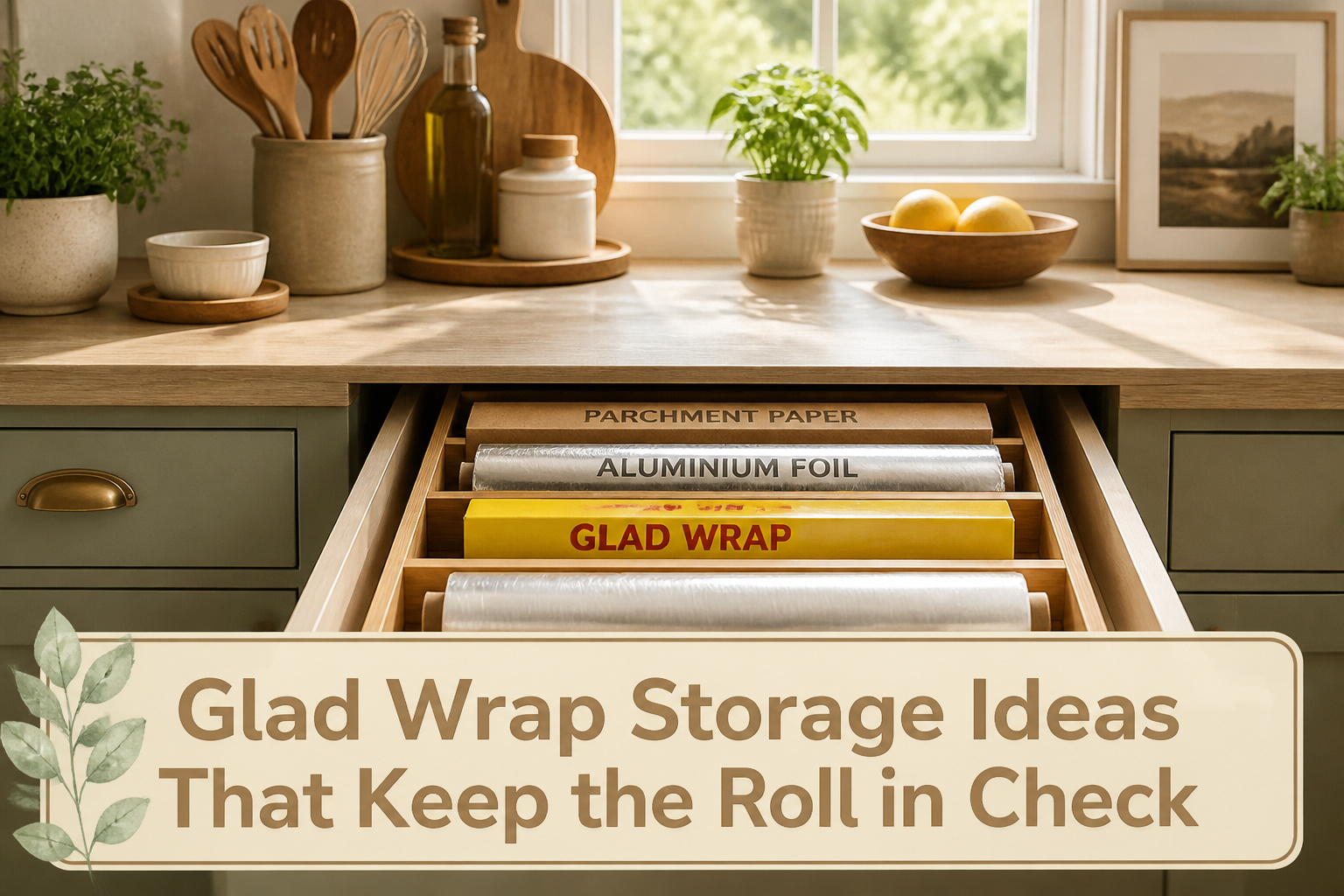
The right glad wrap storage idea depends on whether you own your walls or your cabinets. Renters face a stricter filter: anything requiring screws, drilling, or adhesive that survives humidity will cost part of a security deposit. That condition eliminates about half the standard solutions before you even measure your drawer.
A tension rod bowed and dropped two rolls of foil onto the pots below after about a week, all because the diameter was off by one size. The half-inch versus five-eighths distinction is the kind of detail that turns a cheap fix into a kitchen cleanup.
1. Drawer Storage
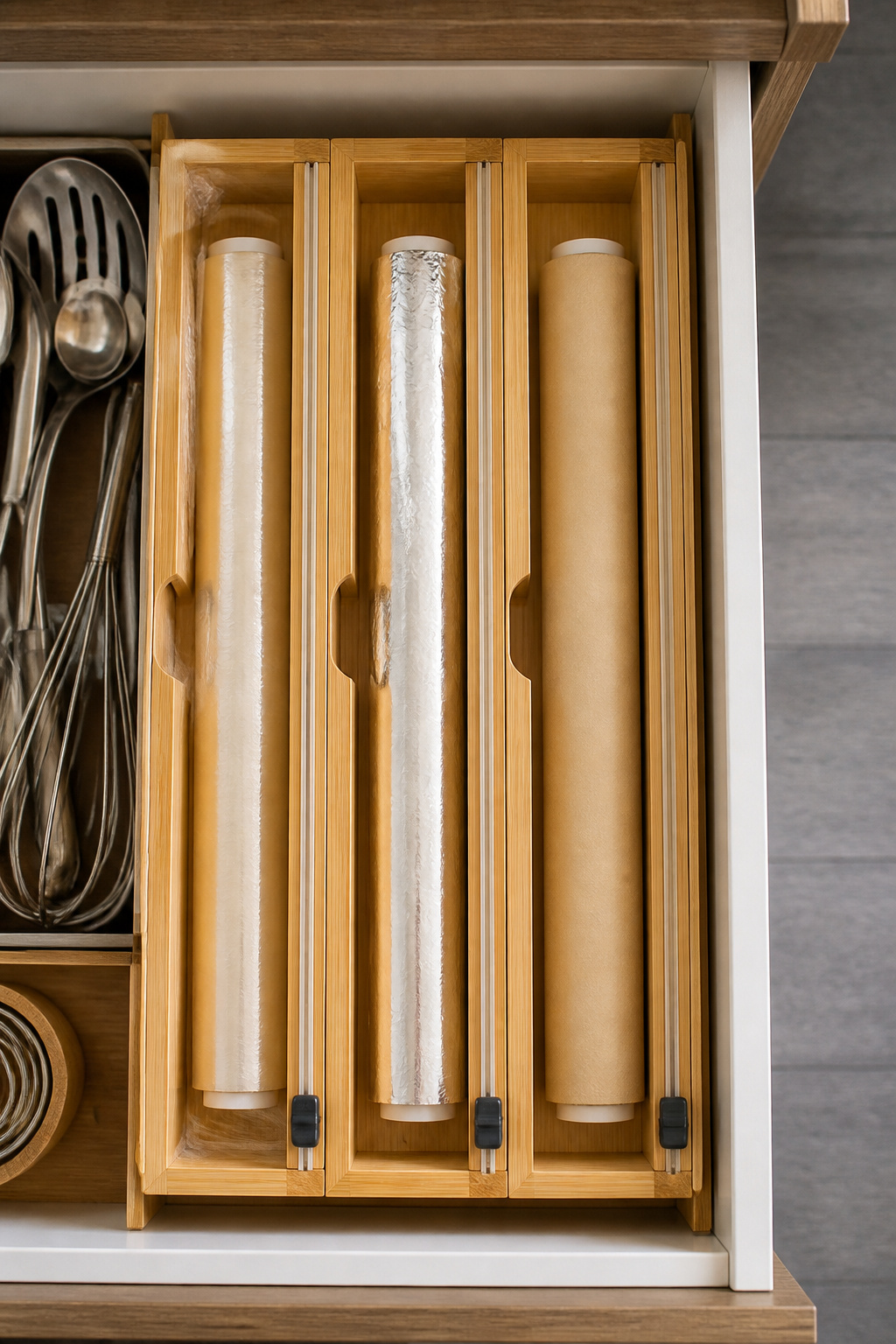
A drawer near the prep space is the most natural place for wraps to live, since that’s where you actually need them. The Bamboo Drawer Organizer at $32.98 on Amazon fits most kitchen drawers and holds three rolls with built-in sliding cutters, which means you can tear foil or film one-handed while your other hand is holding a bowl or a piece of fish.
I tried keeping the original boxes in a drawer for years. The sizes never match, so they slide around and wedge themselves at angles, and the serrated edges catch on the drawer frame when you pull. One box always ends up buried behind another. The organizer fixes this by holding the rolls upright and giving each its own slot, but it does eat depth: measure your drawer height against a roll standing on end before you buy.
If your drawer is shallow, the dual-sided bamboo containers that sit on a counter work better. The WRAPdock runs $39.99 and holds two rolls with tear teeth on each side. For renters who can’t mount anything permanent, either option beats the box-jumble I started with.
2. Wall-Mounted Organizers
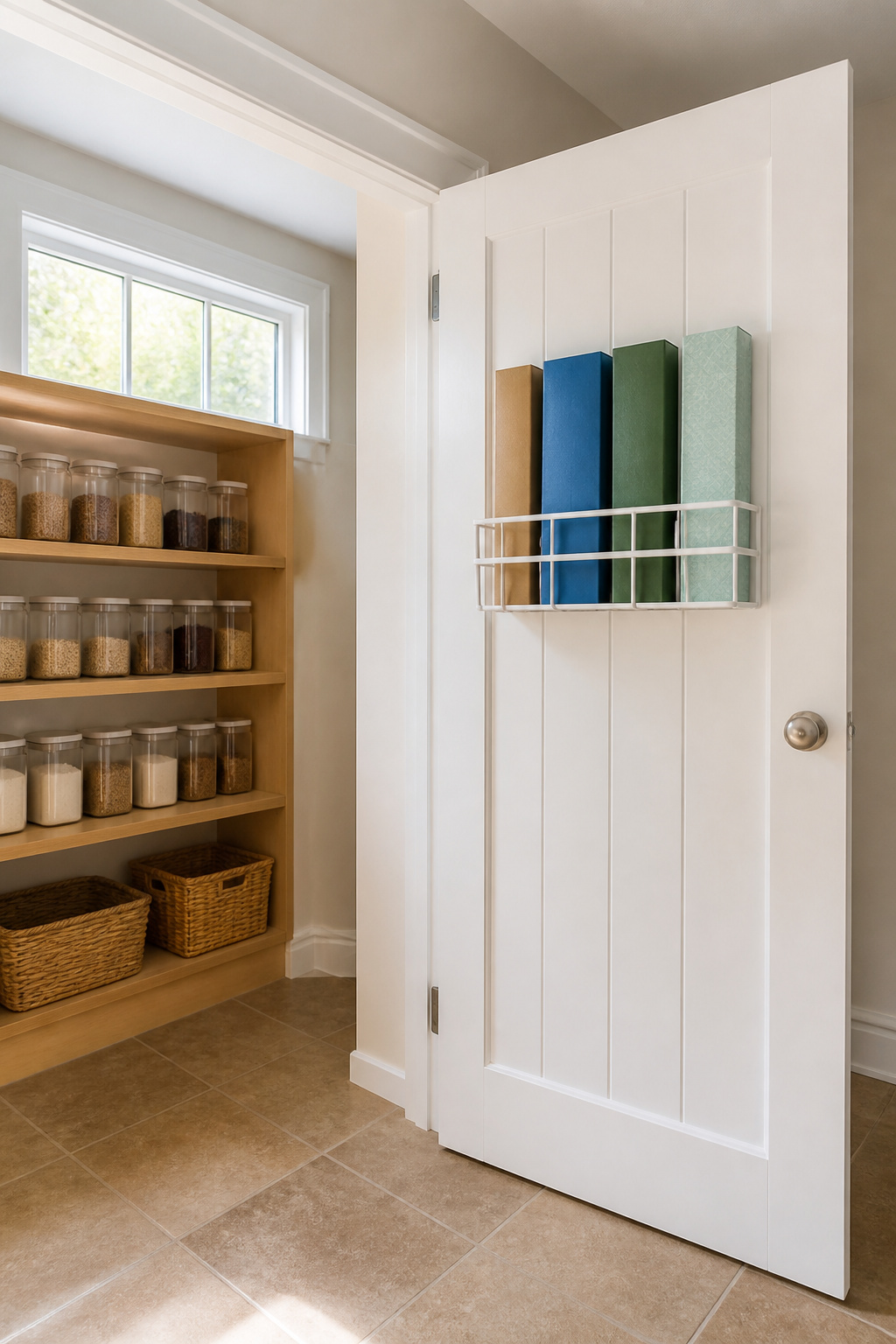
Wall-mounted organizers turn the dead space behind a pantry door or on a side wall into storage that does not fight your counters for room. The $13.87 Wall-Mounted Rack Organizer is a white steel rack sized to stand boxes upright, including wider bag boxes beyond standard wrap widths. I mounted mine to the inside of a cabinet door with the included hardware, not adhesive, because the door is painted MDF and I did not trust stick-on backing to hold against the snap of a foil box being pulled free.
For renters avoiding drill holes, the $20.99 Acrylic Adhesive Mount Storage Organizer uses double-sided tape and a slim, transparent bin that keeps visual clutter low. The high edges keep boxes from tipping when the door swings. I have not tested this one long-term, so I cannot confirm whether the adhesive survives summer humidity in a kitchen; the steel rack at $23.97 offers an expandable width and adjustable shelves that snap to fit, which may be the safer buy if your cabinet doors are textured or your landlord charges for wall repair.
3. Magazine Holders
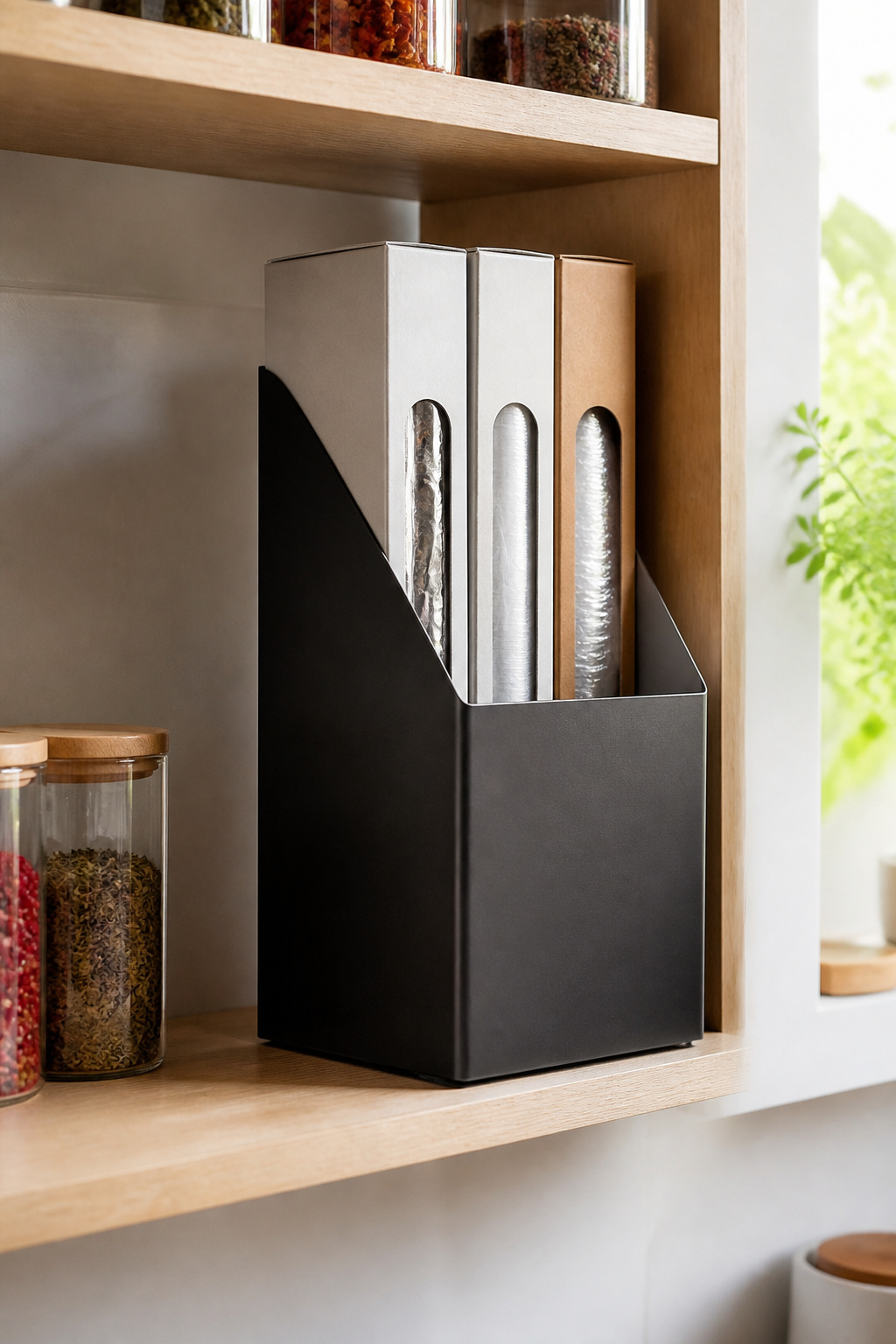
A magazine holder corrals wrap boxes upright without costing anything if you already own one. The sides need to be tall enough to keep the box from tipping, which means a flimsy cardboard holder won’t cut it. I tried one from an old office set and watched a foil box lean forward every time I slid the pantry door shut. Metal or thick plastic holders hold the line better. Under a sink or on a pantry shelf, the footprint stays slim and the rolls stay vertical, the same orientation that lets you pull a sheet without the box skidding. If your holder’s sides land below the midpoint of the wrap box, the weight wins and the thing falls.
4. Under-Shelf Racks
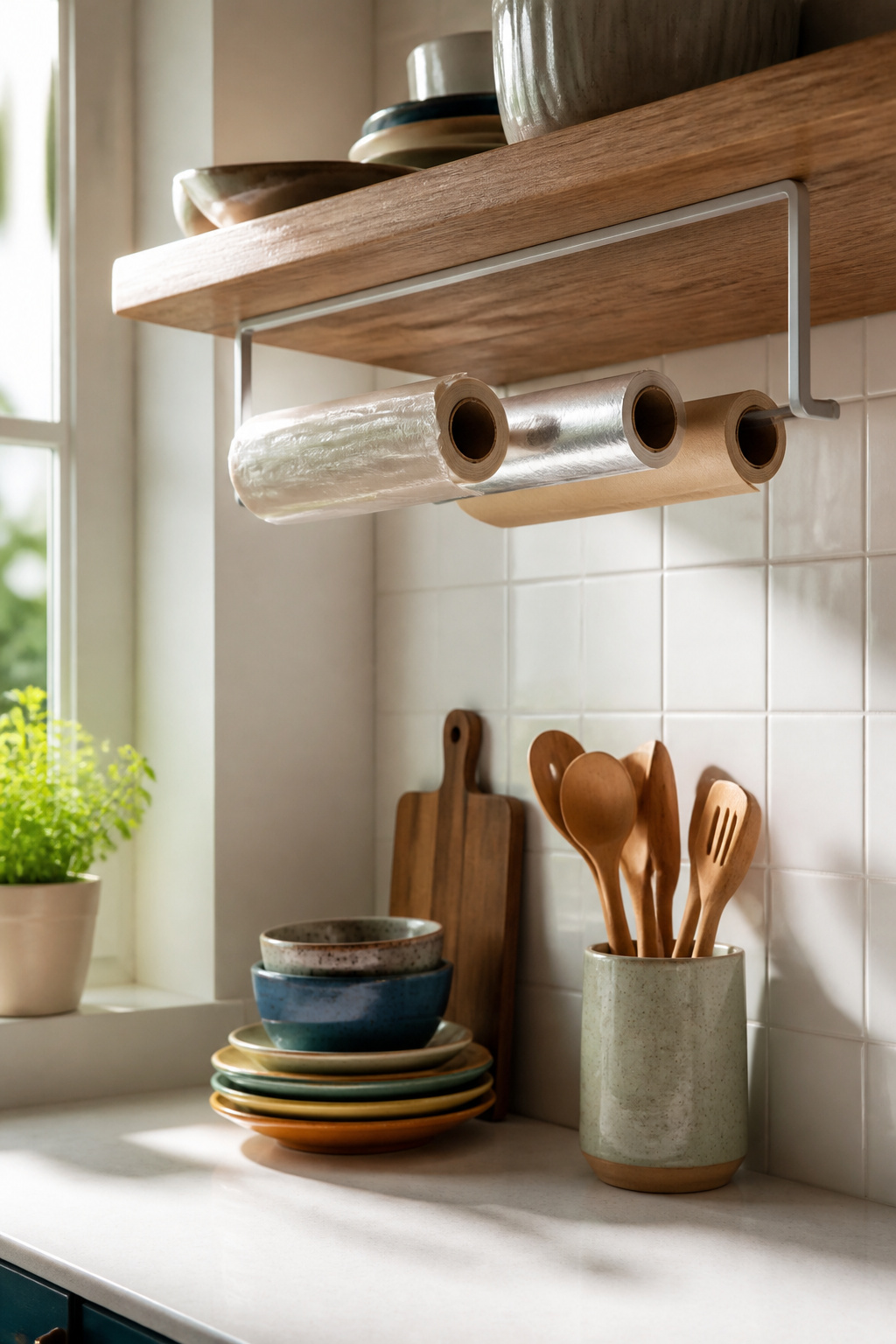
Under-shelf racks clip onto an existing shelf and hang down into the open air below, which turns the vertical gap between shelves into storage that actually holds something. Most need about ten to twelve inches of clearance to let the rolls hang without brushing the counter or the next shelf down, and the shelf itself has to be wood or another material thick enough for the bracket to grip. The ones I have seen use spring-loaded clips or simple hook brackets; no drilling is involved, which matters if you are renting and the cabinet is not yours to alter.
The real question is whether the rolls stay put. Gravity wants them to slide toward the front every time you pull the foil or the wrap, and a shallow rack lets them do it. Some racks solve this with a raised lip or a bar across the front, but others leave the end open for easier grabbing. I would pay the extra few dollars for the lip; fishing a roll out from under the shelf defeats the purpose. One option that keeps coming up is the Miles Kimball Shelf Wrap Holder at $16.99, which is built for exactly this job and includes that front bar.
Stacking is another way to play it. A rack with vertical dividers lets you store six rolls in the footprint of one, though you need enough headroom for the full height. The Kitchen Foil & Wrap Organizer at $9.99 works this way, but it sits on the shelf rather than hanging under it. For renters, the clip-on under-shelf version wins because it leaves no holes and travels with you.
5. Tension Rods
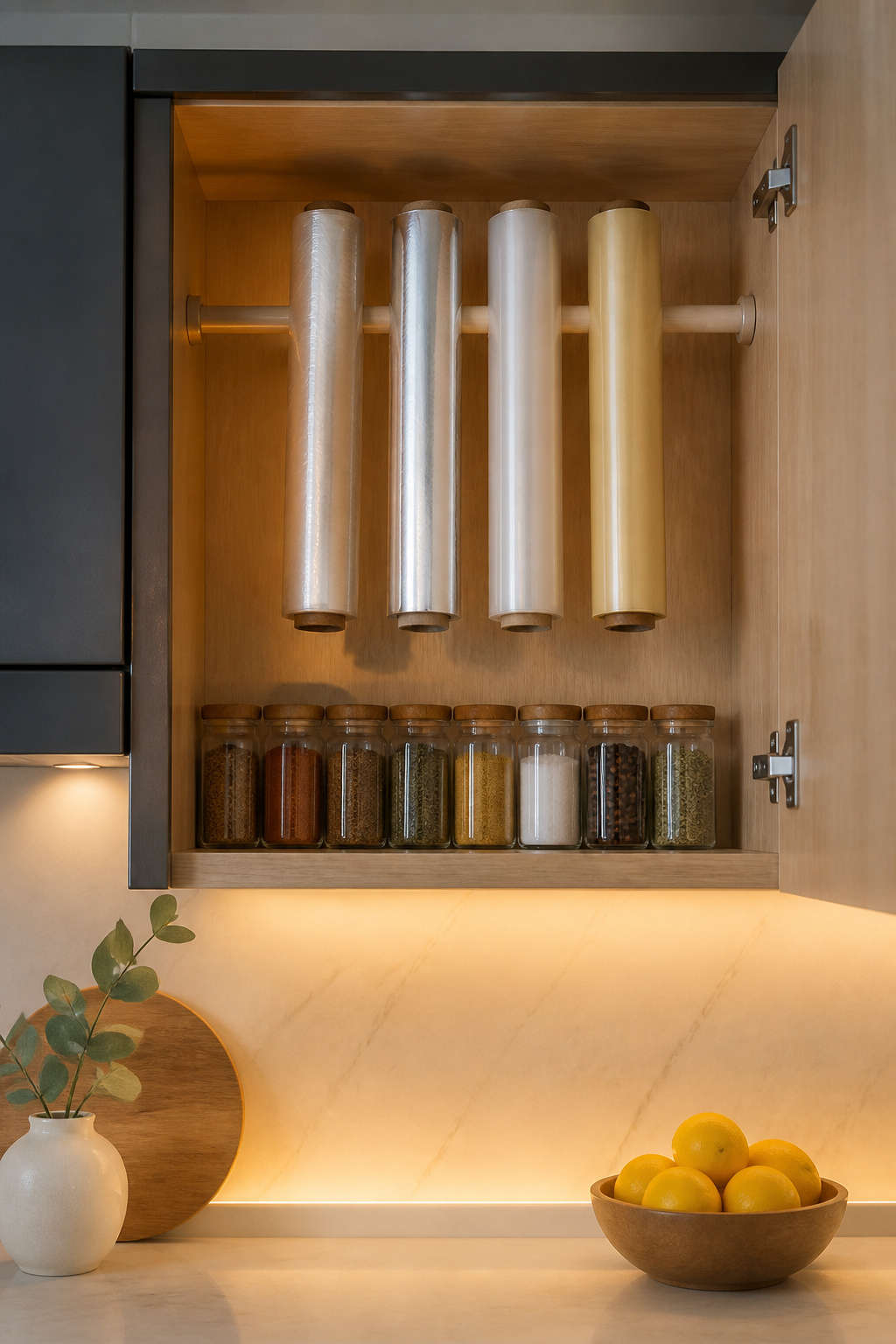
A tension rod sized to the roll’s core diameter keeps plastic wrap from sagging or sliding off the ends. Most rolls fit a half-inch or five-eighths rod, though the heavy restaurant rolls need the thicker one. I skipped checking this once, bought the skinnier rod, and watched it bow and drop two rolls of foil onto the pots below after about a week.
Three rods set front to back across a standard upper cabinet will hold six to nine rolls depending on how tightly you group them. Leave a hand’s width of clearance above so you can lift the roll over the rod when the wrap runs out. The rod sits in place without hardware, which matters in a rental where cabinet drilling costs your deposit.
6. DIY Solutions
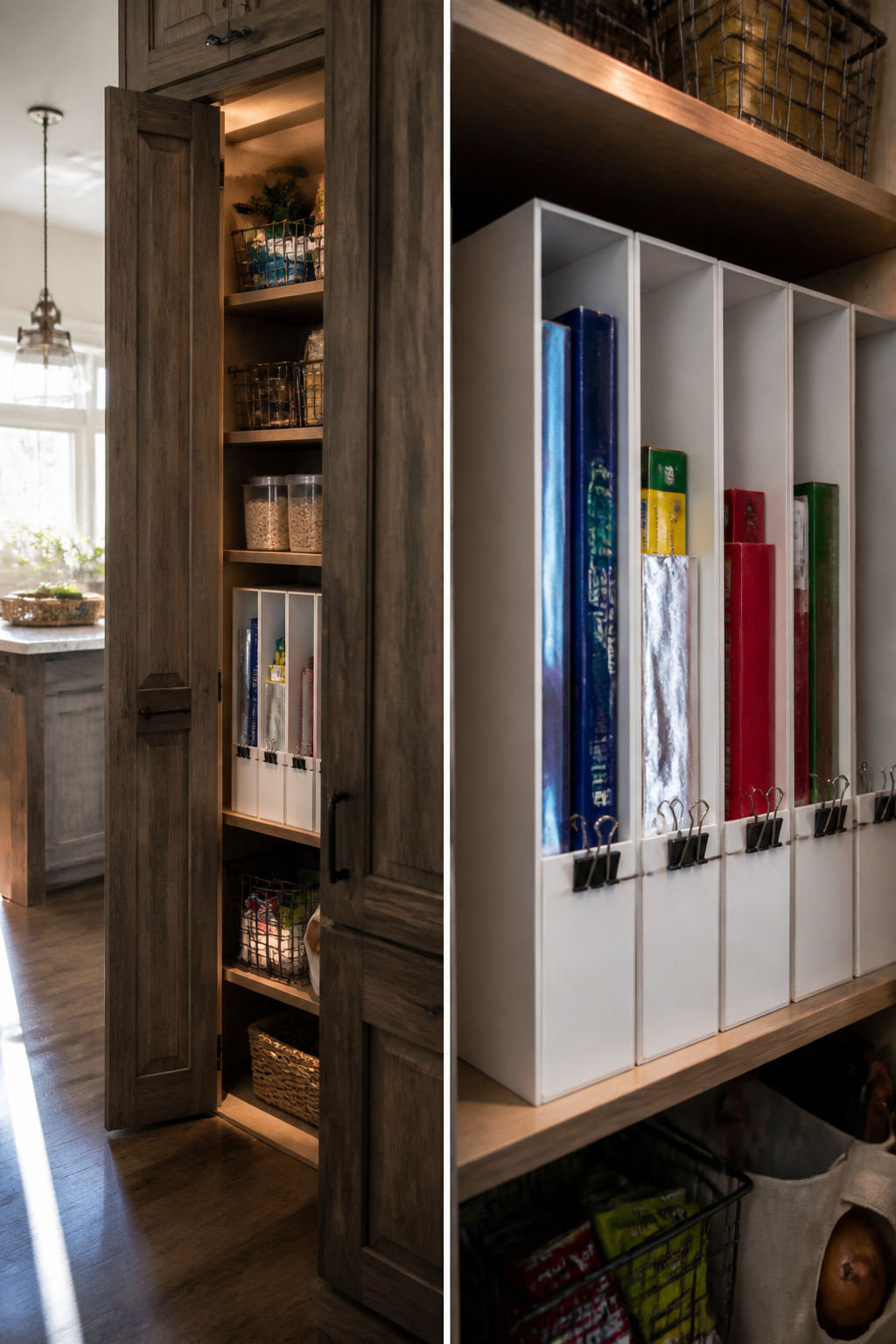
The cheapest route to a custom wrap organizer starts in the fencing aisle at a hardware store. A standard vinyl fence post, cut into six 12-inch lengths, stacks into a row of upright compartments that fit foil, plastic wrap, and storage bags without the usual drawer jam. Binder clips hold the stack together and make surprisingly tidy label holders, so each slot stays assigned to freezer bags or Saran Wrap rather than becoming a mixed pile by Wednesday.
I like that this costs roughly the price of a few fence posts and a package of clips, plus a Saturday for measuring, cutting, and gluing the pieces so they do not shift. The tradeoff is the work: no sliding rails, no finished edges, just PVC rectangles that do the job in a narrow cabinet where nothing else would fit. For a renter or a first-home owner with more time than budget, that math usually wins.
7. Bamboo Organizers
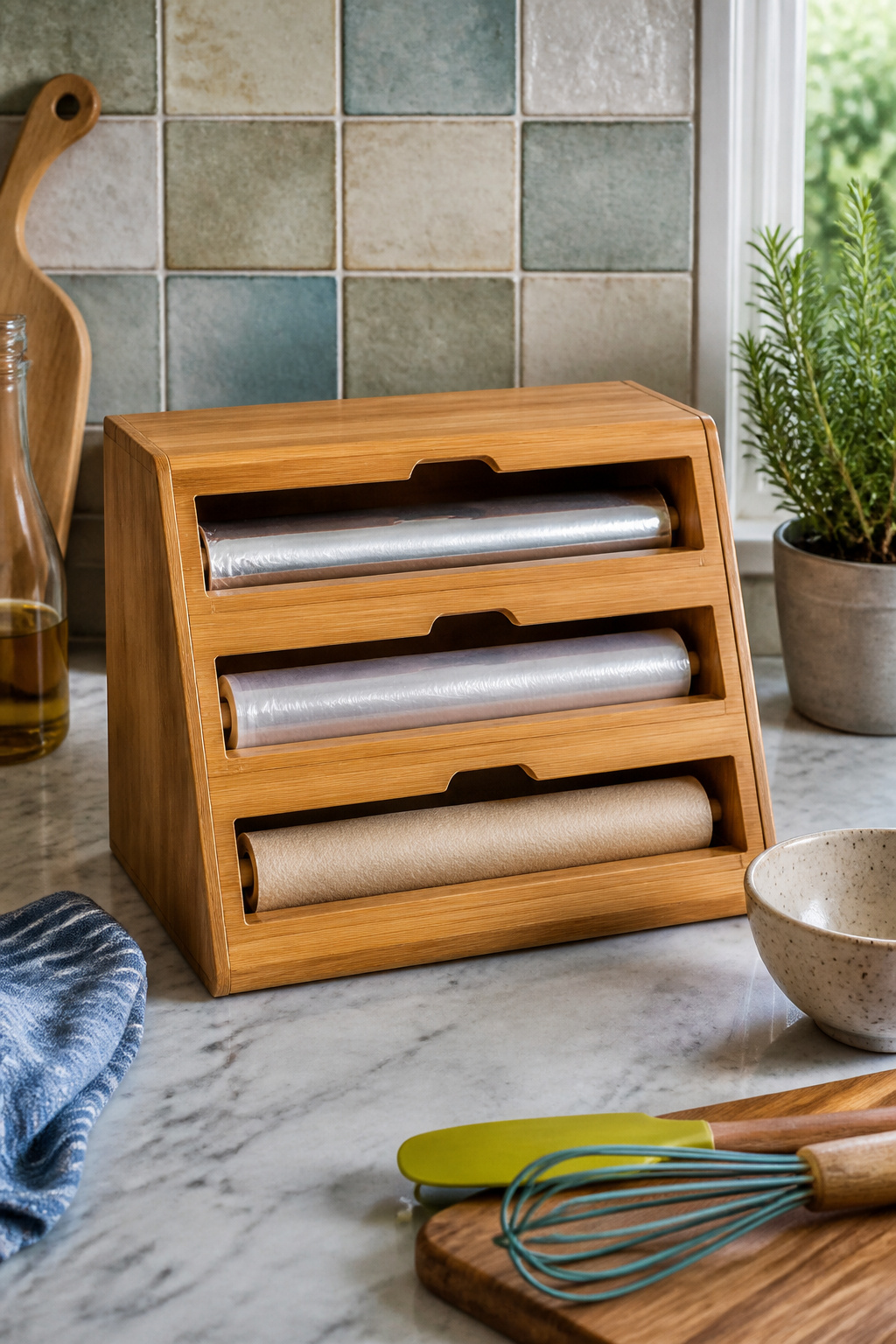
Bamboo organizers sit at the crossroads of looking intentional and actually working. The ones built for wrap rolls run about $32.98 on Amazon for a three-slot model with sliding cutters, which gets you foil, plastic, and parchment living in the same footprint instead of tumbling through a drawer.
Dedicated wrap slots keep each roll locked in place, though some units swap those for adjustable dividers that let you reconfigure if you buy jumbo rolls or switch brands. The tradeoff is stability: fixed slots line up the cutter precisely, while loose dividers can drift and leave you wrestling the roll one-handed.
I wanted the warm look to justify the counter space in my small kitchen, where every visible item gets judged twice. Bamboo reads as deliberate in a way white plastic does not, but the grain also shows grease spots and the corners collect crumbs if the unit lives near the stove. At $49.99, the wall-mountable version with five bag slots starts asking whether you reach for wraps often enough to earn that real estate. For daily lunch-packing, the storage density pays out. For occasional use, a basic drawer insert hides the same function at half the profile.
The kitchen wrap organizer fits inside wide kitchen drawers, or it can be mounted on a wall.
That flexibility matters most in rentals, where drawer widths vary and wall-mounting might cost a deposit deduction. My call: mount it only if the drawer is already crowded with utensils. Otherwise, the hidden drawer version keeps the visual clutter down and the bamboo still feels good every time you pull it open.
8. Magnetic Holders
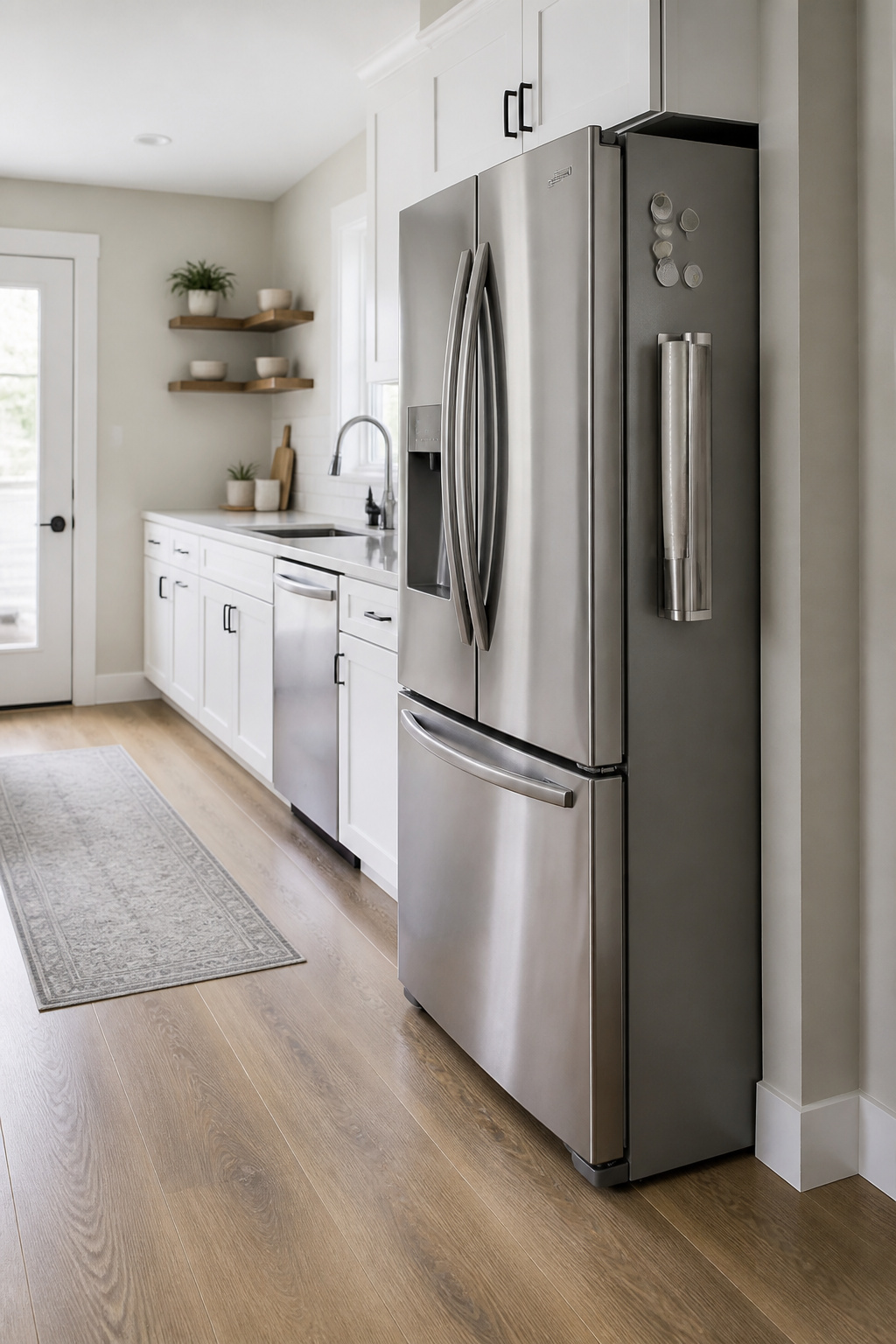
The side of a refrigerator is dead space in most kitchens, and a magnetic holder turns it into storage without a single screw. The Yamazaki magnetic wrap holder runs about $22.00 and keeps the roll vertical, so the end stays findable.
Before buying, test whether your fridge is actually magnetic. Stainless steel panels vary: some have enough iron content to grip, others are non-magnetic alloys and will reject anything. The compressor side runs warmer than the rest, but not hot enough to soften plastic wrap or affect the adhesive on magnetic strips. Weight limits matter more than temperature. These holders are built for one standard roll, not a bulk warehouse pack, and overloading them will eventually pull the magnet loose mid-dispense.
Renters get the real win here. The holder lifts off clean when the lease ends, or moves to the new place if the next fridge cooperates.
What Stays Within Reach
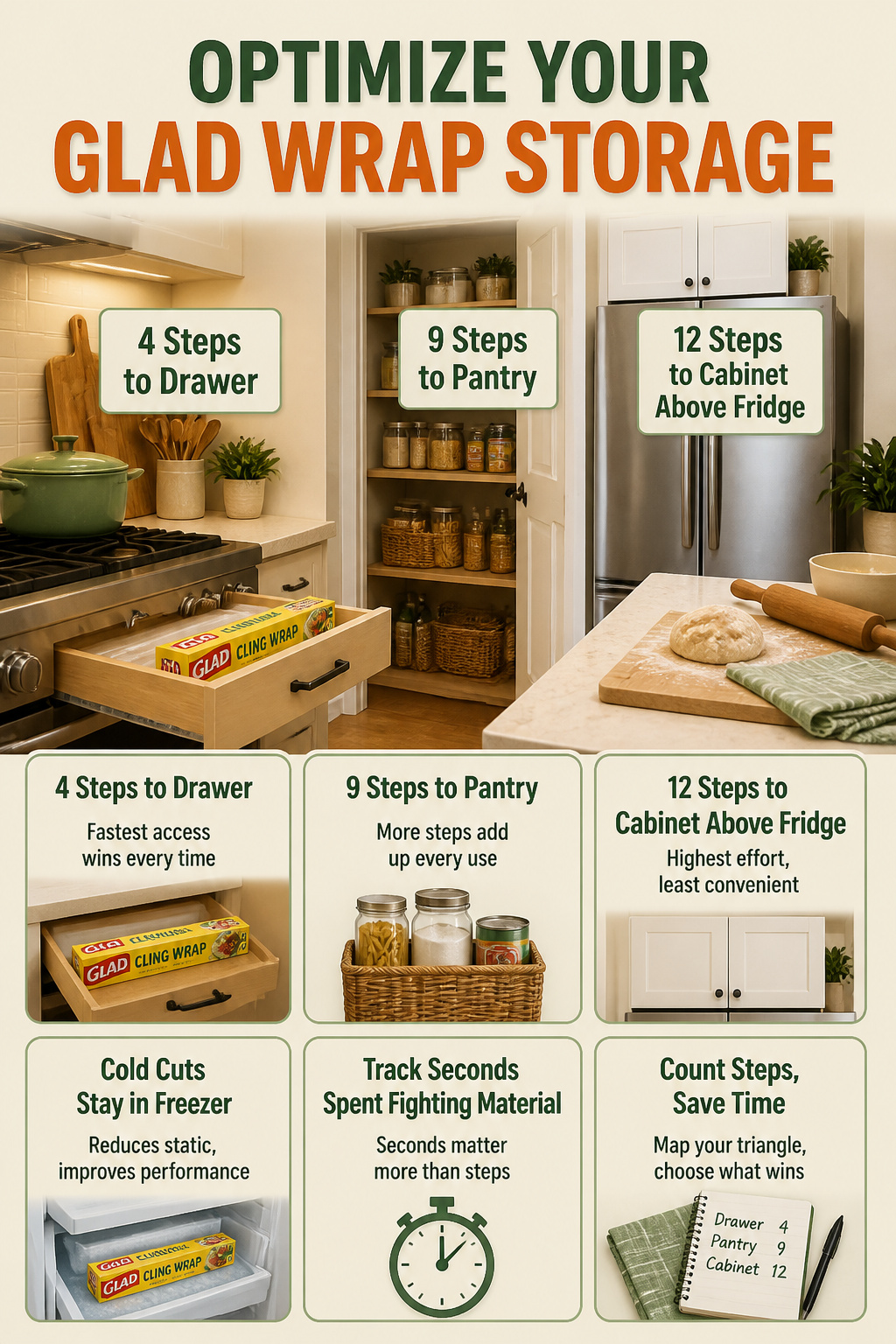
The roll lives in the kitchen, but where in the kitchen matters more than the container itself. Most advice says to keep wraps near food prep, which sounds obvious until you realize prep happens in three different spots: the counter where you assemble sandwiches, the island where you roll dough, the stovetop where you park leftovers. I mapped my own triangle last winter. Where I wrap, where I store, and the steps between them. Four steps to the drawer beside the stove. Nine to the pantry. Twelve to the cabinet above the fridge. That four-step drawer won every time, even when the pantry had prettier bins.
The freezer trick changed how I think about reach, though. Cold cuts the static that makes cling wrap cling to itself, and a roll that behaves is faster to grab than one that tangles. If your kitchen is compact, the freezer might be the nearest viable spot. The principle stays the same: count the steps, then count the seconds spent fighting the material. The second number matters more.
Using Air You Already Paid For
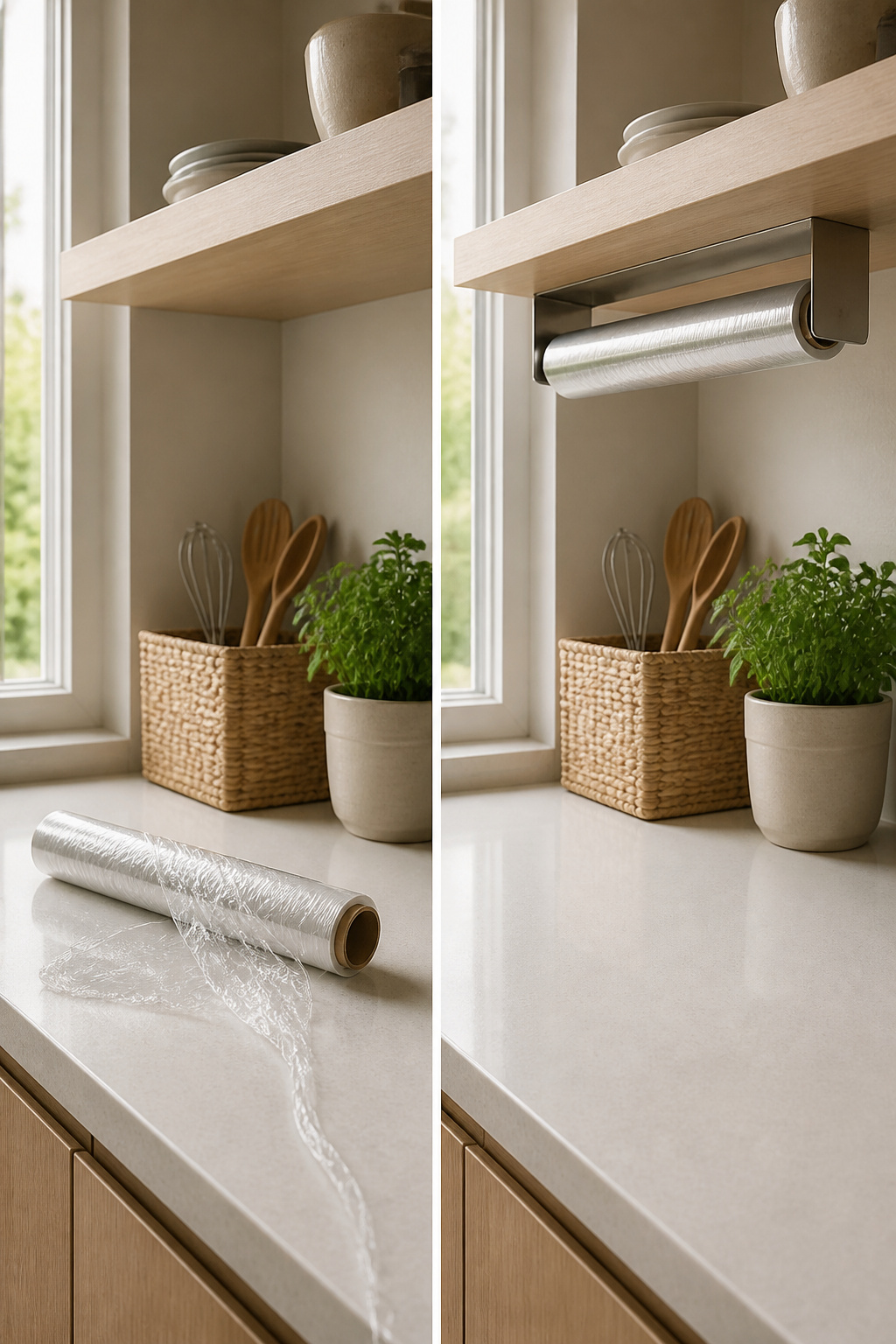
Wall space in a rental is dead space if you cannot drill into it, so I stopped treating walls as the only vertical option. The inside of a cabinet door costs nothing to use and closes over whatever hangs there. A wrap holder mounted there keeps the roll out of sight and off the counter, and the only check is whether the door still shuts without hitting a shelf inside. Most over-the-door racks hang without hardware entirely, which matters when your lease charges for nail holes.
The two inches under a shelf read as empty until you measure them. An under-shelf basket or wrap holder turns that gap into storage you already paid for with your square footage. The Miles Kimball Shelf Wrap Holder runs about $17 and hangs from the shelf board above it, no adhesive needed. That two-inch gap is enough for a standard roll if the holder sits flush; buy too deep and the roll catches on whatever lives below.
Command hooks and a wooden dowel will do the same job on a wall or door back if you prefer the DIY route. The hooks hold under a pound each, which covers a cardboard wrap box easily. I would skip the adhesive-only organizers; the double-sided tape fails in kitchen humidity, and a fallen wrap box leaves a sticky stripe you will scrape off at move-out.
Built, Not Bought
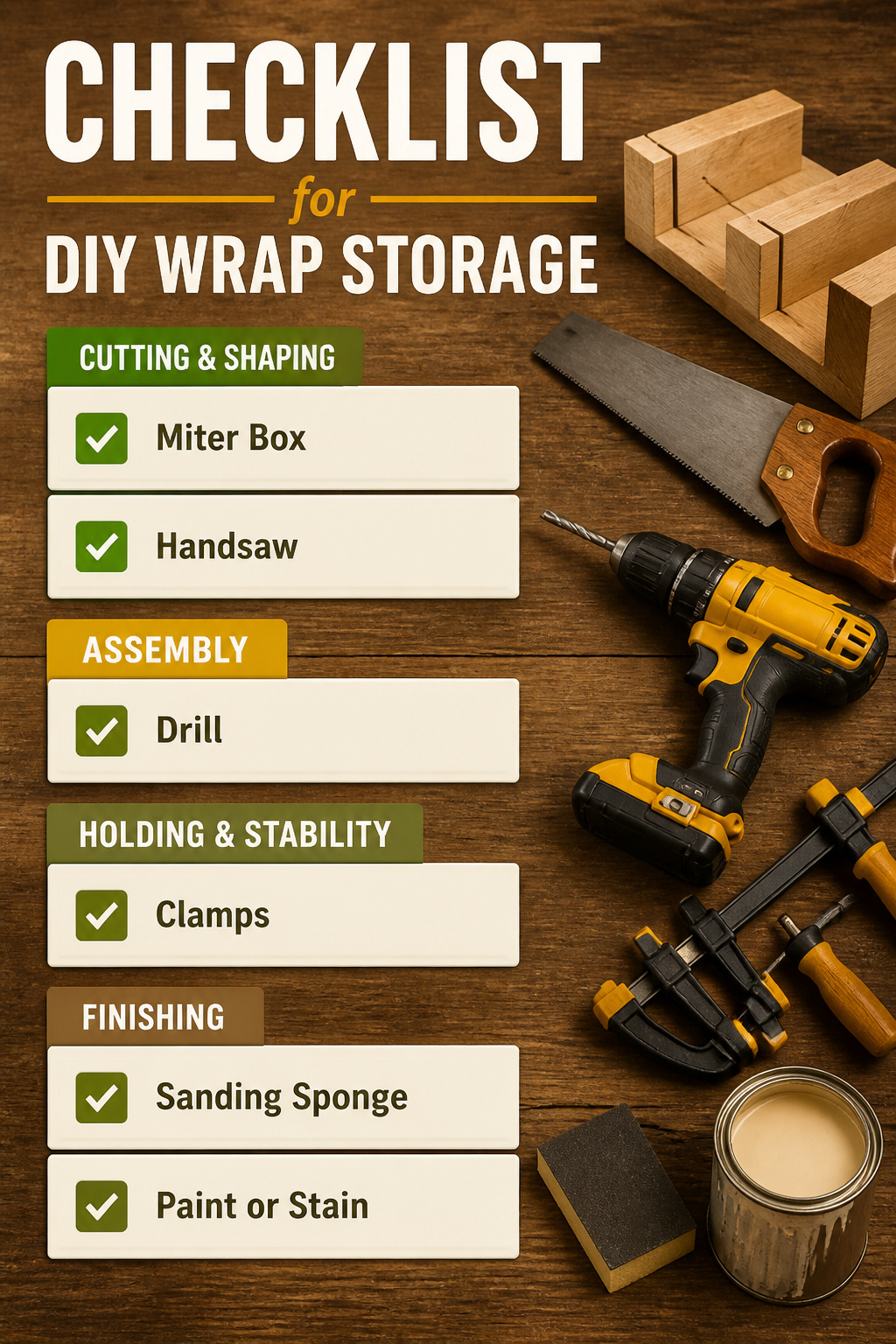
A weekend build for glad wrap storage rarely needs more than what already sits in the junk drawer. I keep a miter box and a handsaw for any trim that needs squaring, a drill for pilot holes so the wood doesn’t split, and clamps because holding something straight with your knee is a lesson you learn once. For finishes, a sanding sponge and whatever paint or stain is left from the last project cover it. The cost stays near zero if you treat each build as a way to use up cutoffs from earlier jobs. What convinced me, reading through a dozen of these, is that the best storage pieces look store-bought because someone took the extra twenty minutes to sand the edges round and wipe off the glue squeeze-out before it dried. Skip that step and you have a solution that works fine but irritates you every time you open the drawer.
Frequently Asked Questions
How do you store aluminum foil?
Keep foil upright in a dedicated slot or box so it won’t wrinkle or get crushed. A bamboo drawer organizer with fixed slots or a wall-mounted steel rack both hold the roll vertically and let you tear one-handed. If you keep the original box, the serrated edge can catch on drawer frames, so a modern dispenser with a sliding cutter protects the sheet and speeds up prep.
Where do you put Saran Wrap in the kitchen?
Store plastic wrap in a cool spot near where you actually use it, not above the stove or near heat that softens the film. A drawer beside the prep counter wins if it is four steps away versus twelve to the pantry. Cold also helps; a freezer-adjacent cabinet cuts the static that makes cling wrap tangle on itself.