
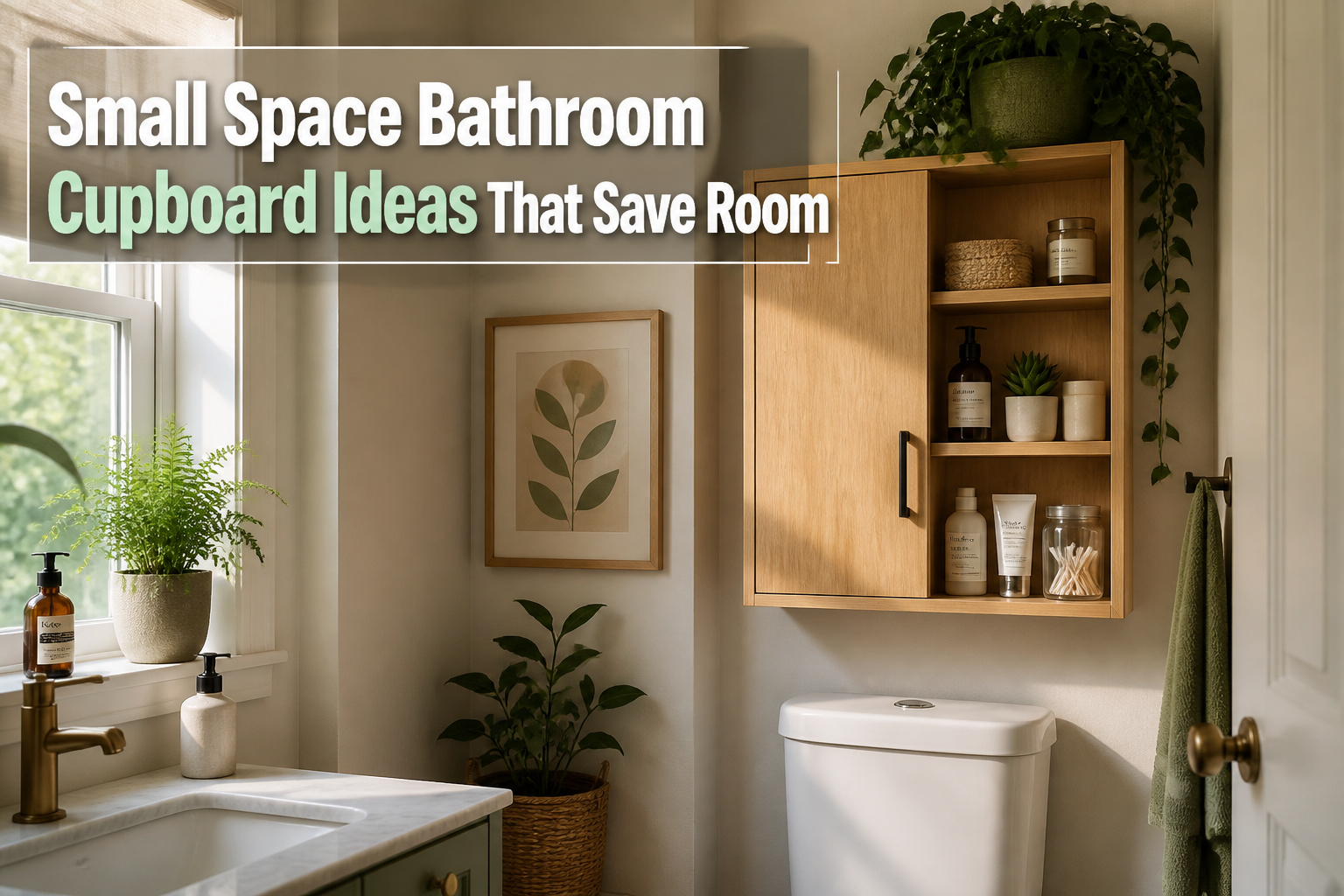
The right bathroom cupboard ideas for small spaces run from $8 magnetic strips to a $749 West Elm cabinet, and the single factor that sorts them is whether you own the walls or just the floor space. Renters skip recessed medicine cabinets and anything that needs a stud; homeowners gain the full vertical plane. That 55-inch floor-to-ceiling clearance above the toilet, for instance, is not guaranteed in older buildings where molding or a sloped soffit eats the last critical inches.
1. Over-the-Toilet Shelves
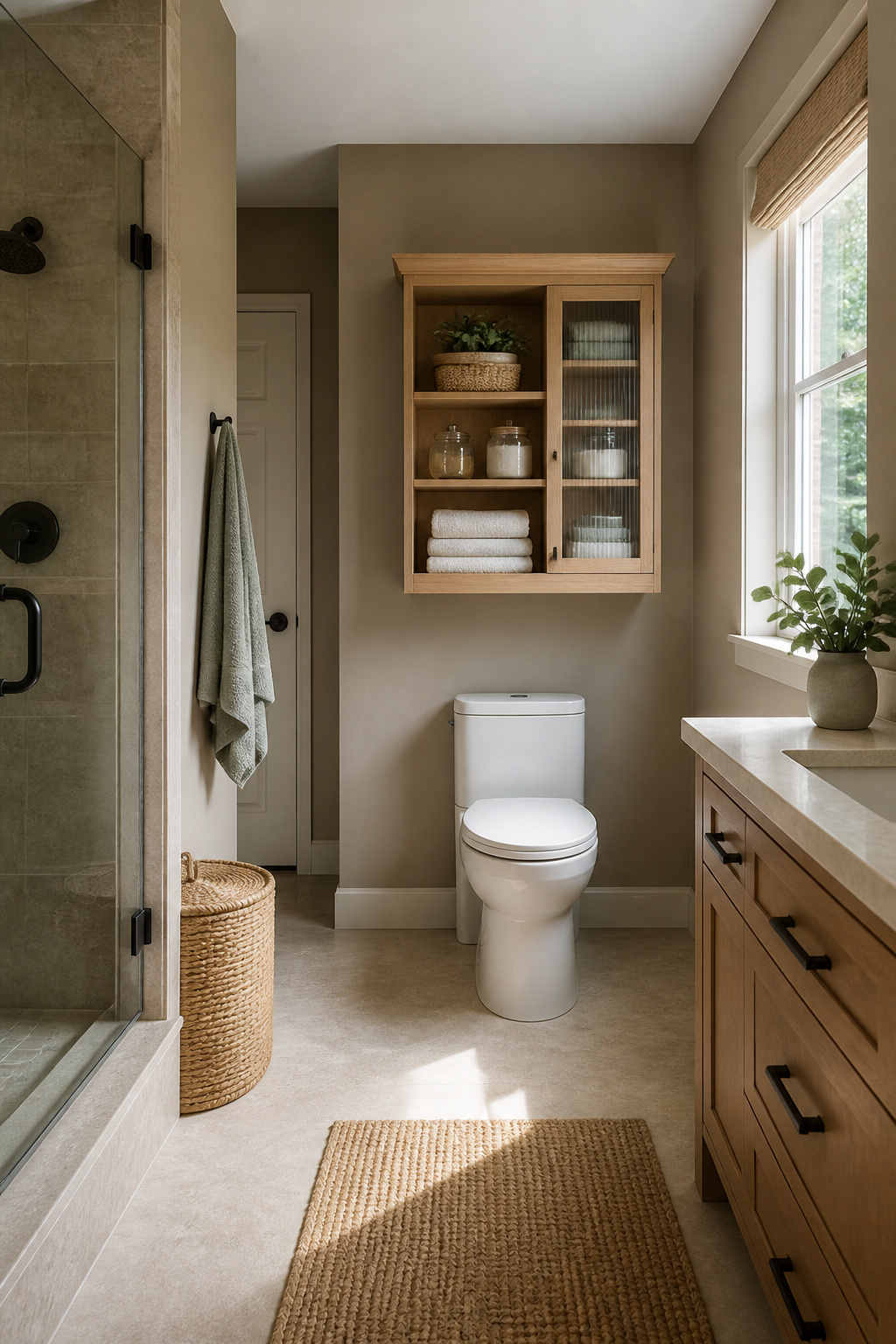
Vertical storage above the toilet is the first place most small-bathroom advice lands, and for solid reason: that wall is already dead space, and the plumbing keeps it clear of other furniture. Most over-the-toilet shelving needs at least 55 inches of floor-to-ceiling clearance to fit without crowding the tank or blocking the flush mechanism. The West Elm Mid-Century Bathroom Pharmacy Cabinet, at 20.25"W x 14"D x 50"H, sits just under that threshold, which makes it workable in tighter vertical slots than a full 60-inch etagere but still demands a tape-measure check before ordering. I would not assume the standard 8-foot ceiling saves you; in older rentals the molding, vent, or a sloped soffit can eat those last five inches fast. Open shelves above the tank read lighter and let you spot the backup toilet paper, but a cabinet with a door, like that West Elm unit with its glass panel and hidden drawer, hides the clutter you do not want guests to catalog. The $749 price is real money for a renter, so weigh whether you will take it with you or if a vintage find from a marketplace better matches the budget most of these projects run on.
2. Rolling Carts
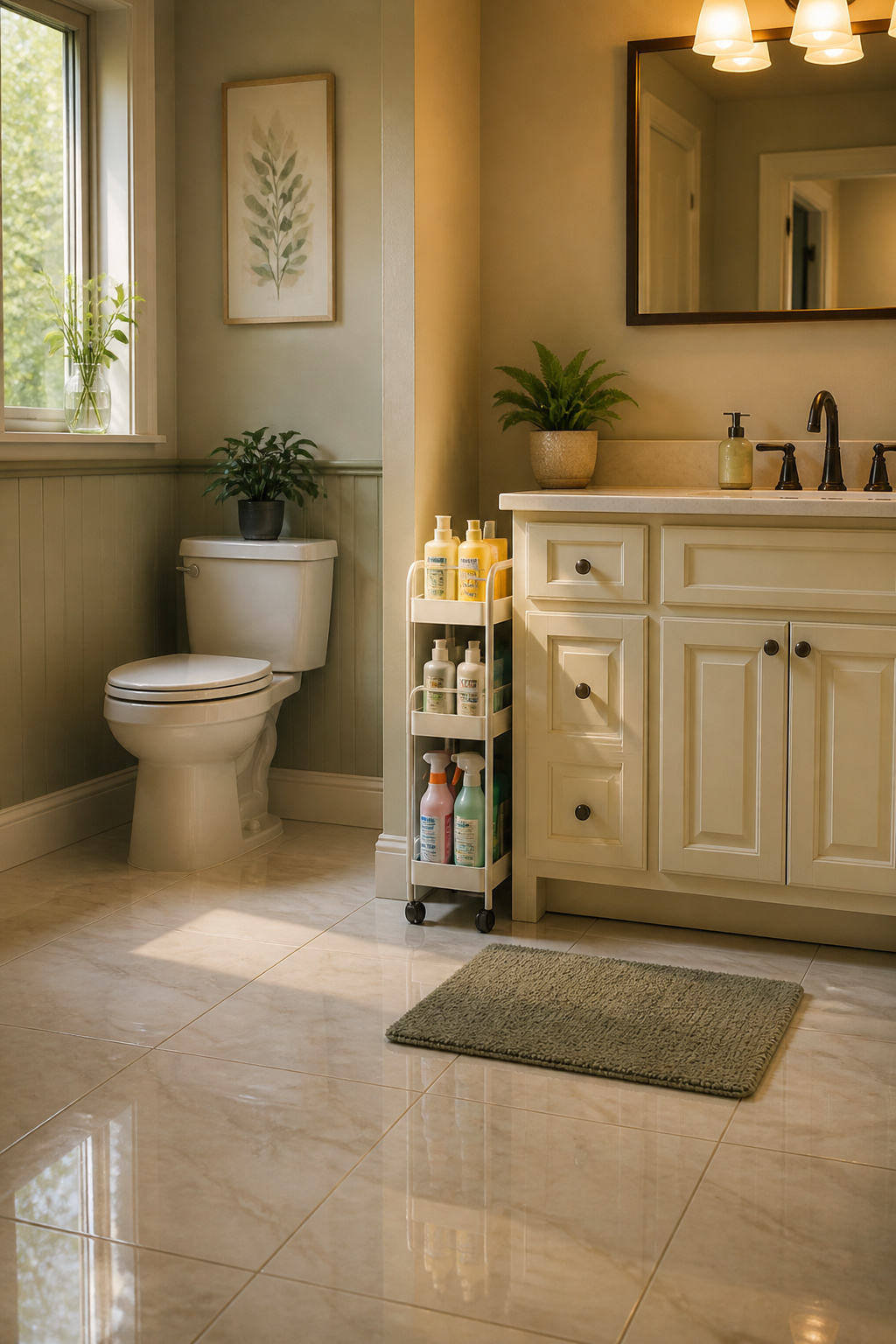
A rolling cart turns the dead zone beside a toilet or vanity into storage that actually moves with you. The SPACEKEEPER Slim Rolling Storage Cart measures 5.1"W x 22"D x 30"H, a footprint narrow enough to slide into gaps where a cabinet door would bang against the wall. I have seen these work in three spots: the sliver between toilet and wall, the tight stretch between vanity and drywall, and that awkward inch or two beside a shower stall where nothing fixed will open.
The cart holds toilet paper, cleaning bottles, and the small tools that multiply under a sink. Four separate recommendations point to this specific size, which suggests the 5-inch width is not a lucky guess but the dimension that clears most standard bathroom fixtures. The open sides let you grab what you need without crouching; flip the open side toward the wall if you would rather not look at your toilet brush and bleach bottles.
3. Under-Sink Organizers
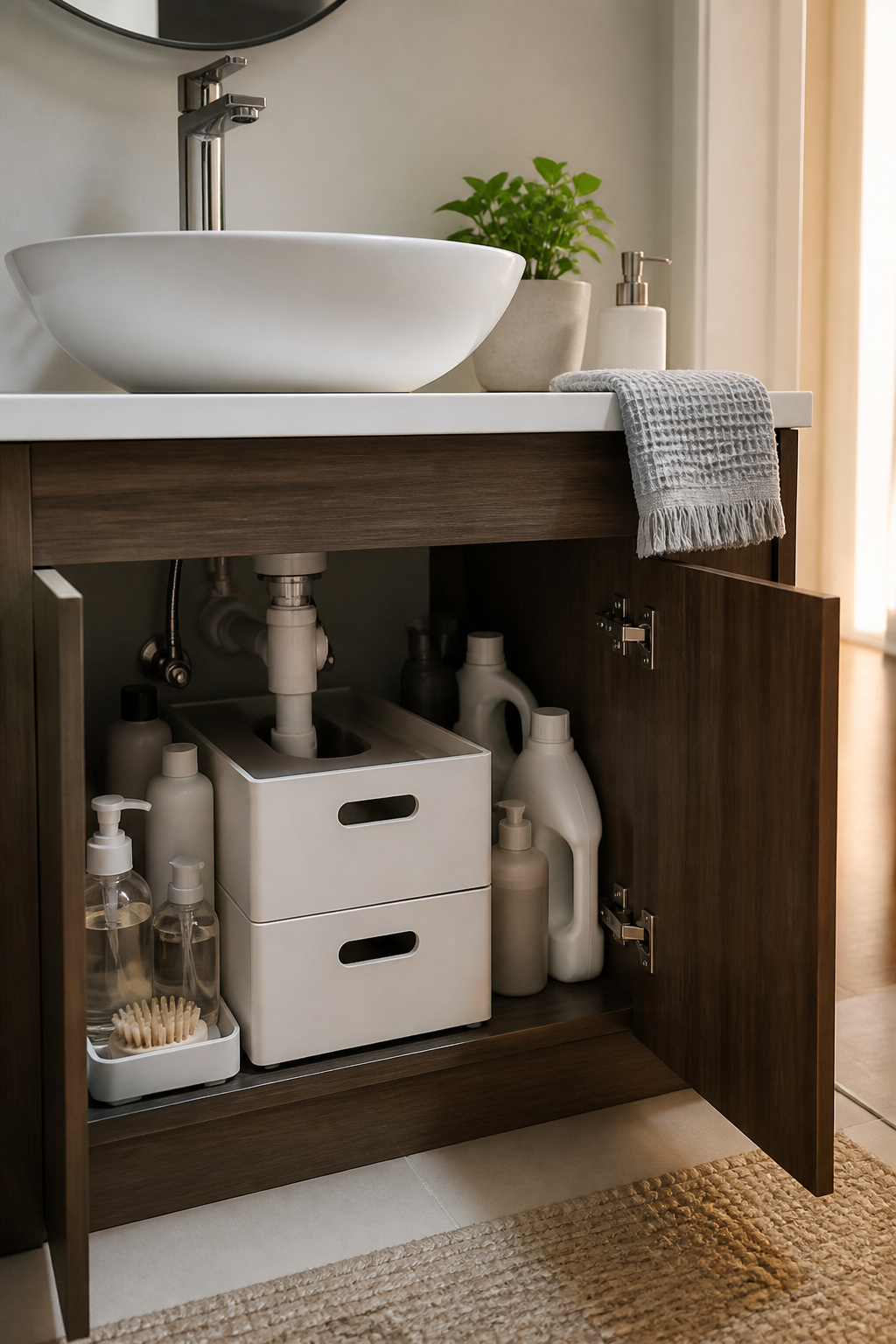
The cabinet cavity beneath a bathroom basin is usually half empty because a drain pipe hangs down through the middle of it. A flat shelf won’t work, and a boxy organizer slams against that pipe the moment you slide it in. The height that actually fits is rarely more than about 12 inches, which is why the Vtopmart 2-Tier Bathroom Storage Organizer at 16.5"L x 10.5"W x 12"H gets mentioned so often: it is built short enough to slip under most standard drains.
That 12-inch height is the number to measure before buying anything. The better designs are either U-shaped to notch around the pipe or pull-out drawers that let you reach the back without crawling. The Vtopmart unit uses a slide-out two-tier layout that reviewers say essentially doubles usable space, and it includes screws to anchor it to the cabinet floor if you want to pull both drawers at once. I would skip the screws and just open one side at a time; the thing sits stable enough for light bathroom storage, and renters avoid drilling cabinet bases they do not own.
The common mistake is grabbing a taller unit that looks right in the store photo and then discovering the drain pipe blocks it by two inches. Measure from the cabinet floor to the underside of the basin, subtract an inch for the pipe’s curve, and buy to that number.
4. Wall-Mounted Shelves
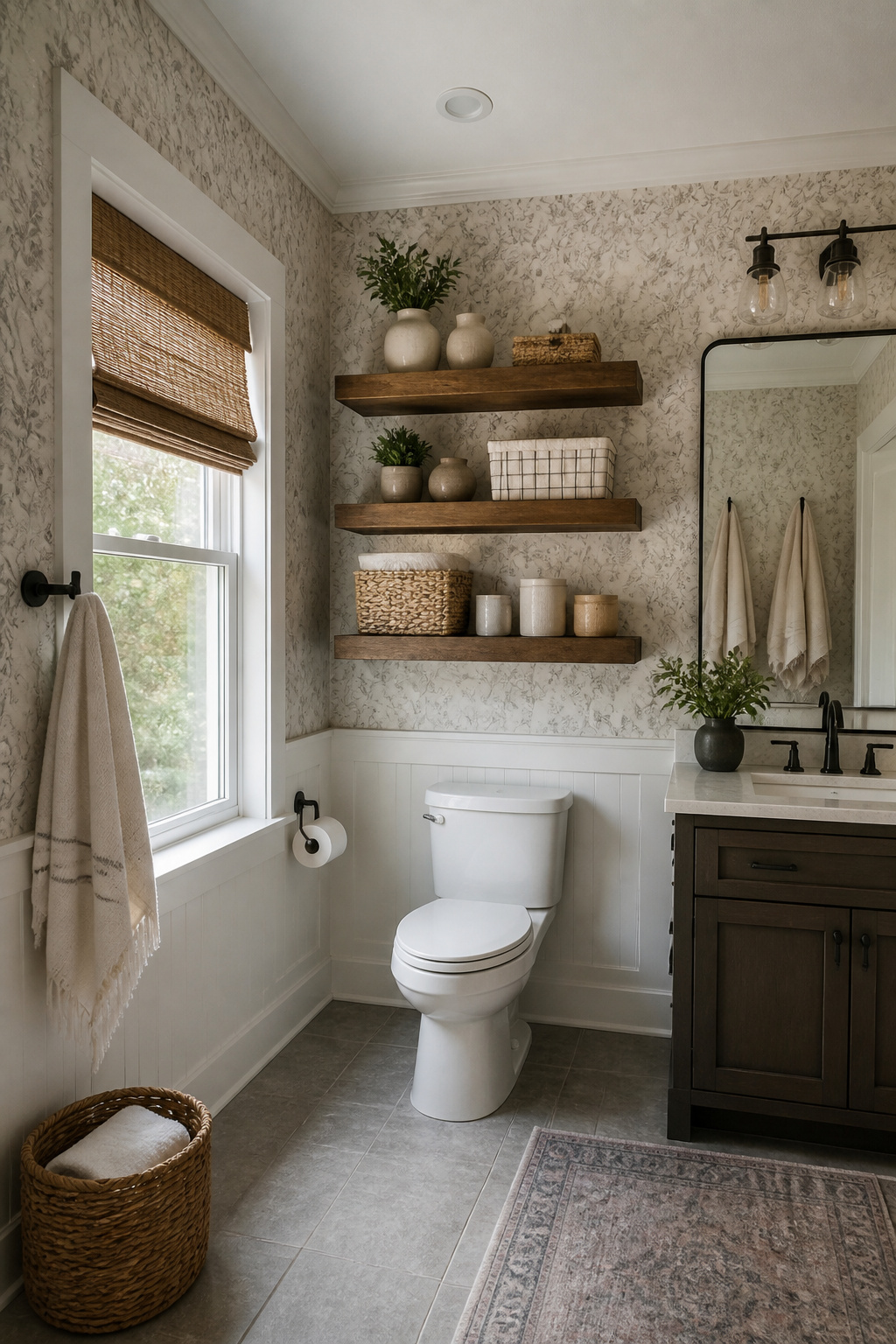
Floating shelves above the toilet or flanking the mirror turn dead wall into usable storage without eating floor space. The sources all point there, and they are right, but they skip the dimension that actually matters in a small bathroom: depth past 4 to 6 inches turns a shelf into a hazard. At 8 inches you are catching a hip on the corner in a narrow path; at 10 you are knocking bottles into the sink with your elbow while you shave. The hardware finish matching your faucet or towel bar gives the shelf a built-in look, which helps in a room where every visible object already competes for attention. Lower shelves work best for the daily rotation, upper ones for backstock or a single small object that reads as intentional rather than leftover. A renter can install these with a drill and wall anchors in an afternoon, patch the holes later, and carry the shelves to the next place. The mistake is treating depth as free space to fill; in a small bathroom, the wall you walk past is not the wall you lean against, and the difference costs you bruises.
5. Baskets and Bins
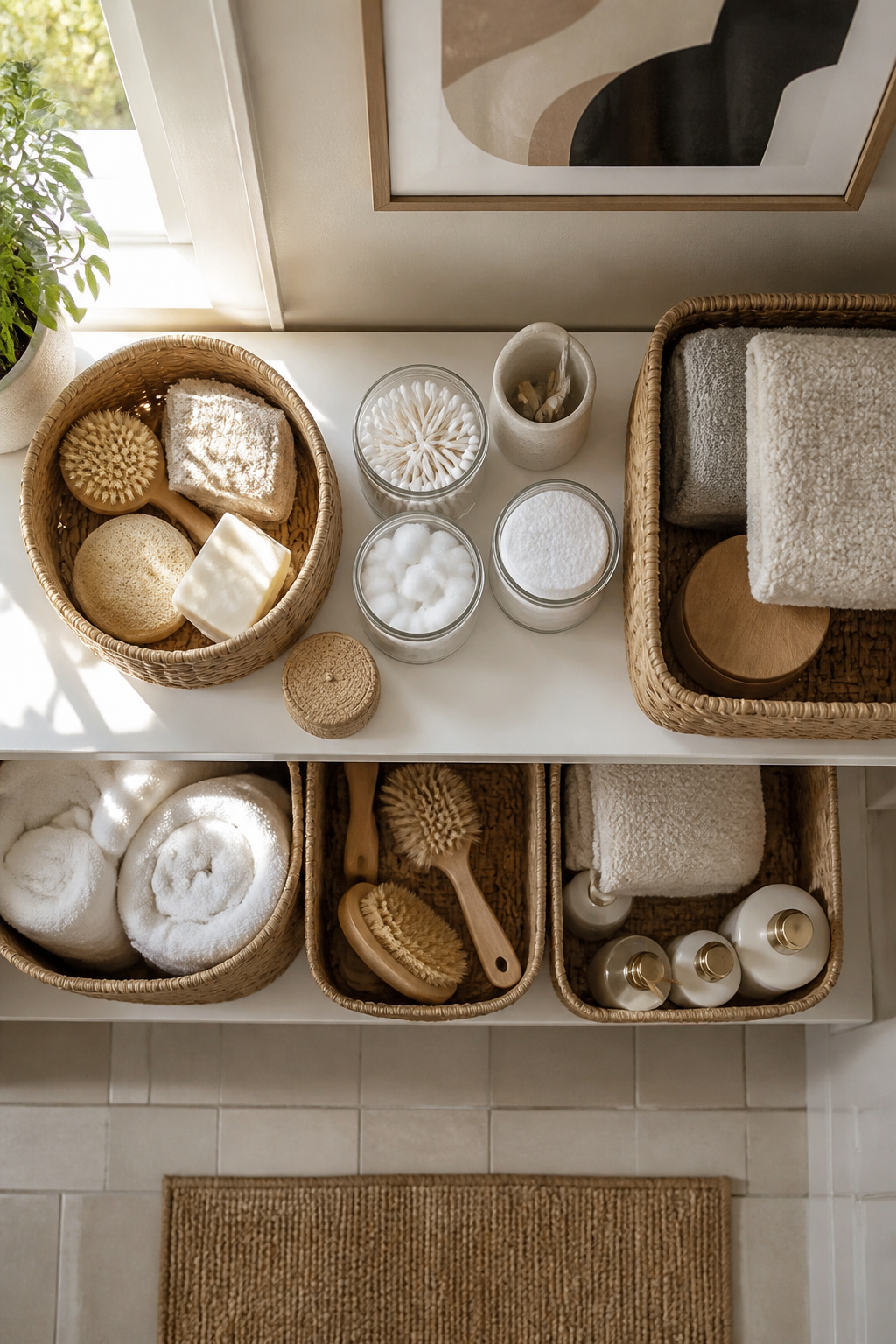
Baskets and bins are the only reason my bathroom shelves stay usable past the first month. Without them, any flat surface becomes a dumping ground in about three weeks of actual morning rush. The zone principle is what makes the system last: one basket for daily skincare, a separate one for hair tools and products, another for cleaning supplies. Each category stays corralled and labeled so anyone in the household can put things back to the right place.
Washable options are the practical choice here, because bathroom baskets collect dust, product residue, and the occasional spilled face serum. Wicker bins add texture and warmth while hiding clutter like spare toilet paper rolls or hot tools you’d rather not have on display. Stackable bins work especially well under sinks and inside cabinets where vertical space matters. Closed storage keeps the room looking cleaner, but the basket inside is what keeps it organized once the door swings shut.
6. Hanging Organizers
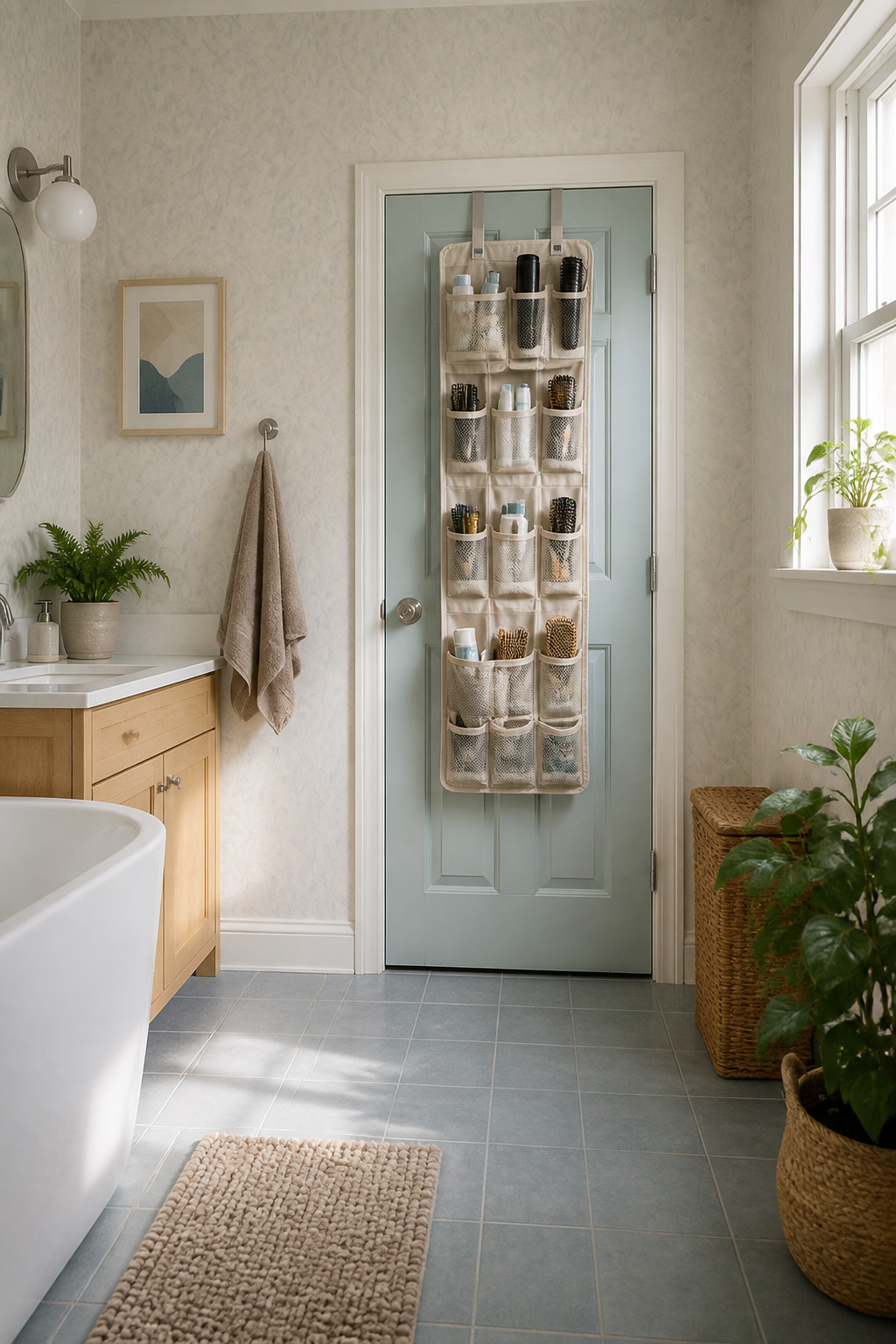
The back of a bathroom door is dead space until it isn’t. Behind-the-door cabinets mount directly to the hinge pins and swing open with the door itself, no extra hardware needed. A magnet at the top keeps cabinet and door moving as one unit, so nothing rattles.
At least 3.5 inches of clearance from the door face to the wall or frame when shut is the make-or-break number. Rental doors in older buildings often fall short of the standard gap product pages assume, so a tape measure belongs in this decision before any cart gets filled. Skip this step and the cabinet hits the jamb on the first close.
Over-the-cabinet-door organizers slip over the interior of a vanity door instead, holding brushes, a flat iron, a hair dryer. No clearance issue there, though the door itself has to close fully with the organizer loaded.
Wall-mounted racks with adjustable bins, like the Elfa system, trade the hidden bulk for flexibility. Heights shift along the hanging bar, which matters when one person stores travel-size bottles and another keeps full-size conditioner.
7. Medicine Cabinets
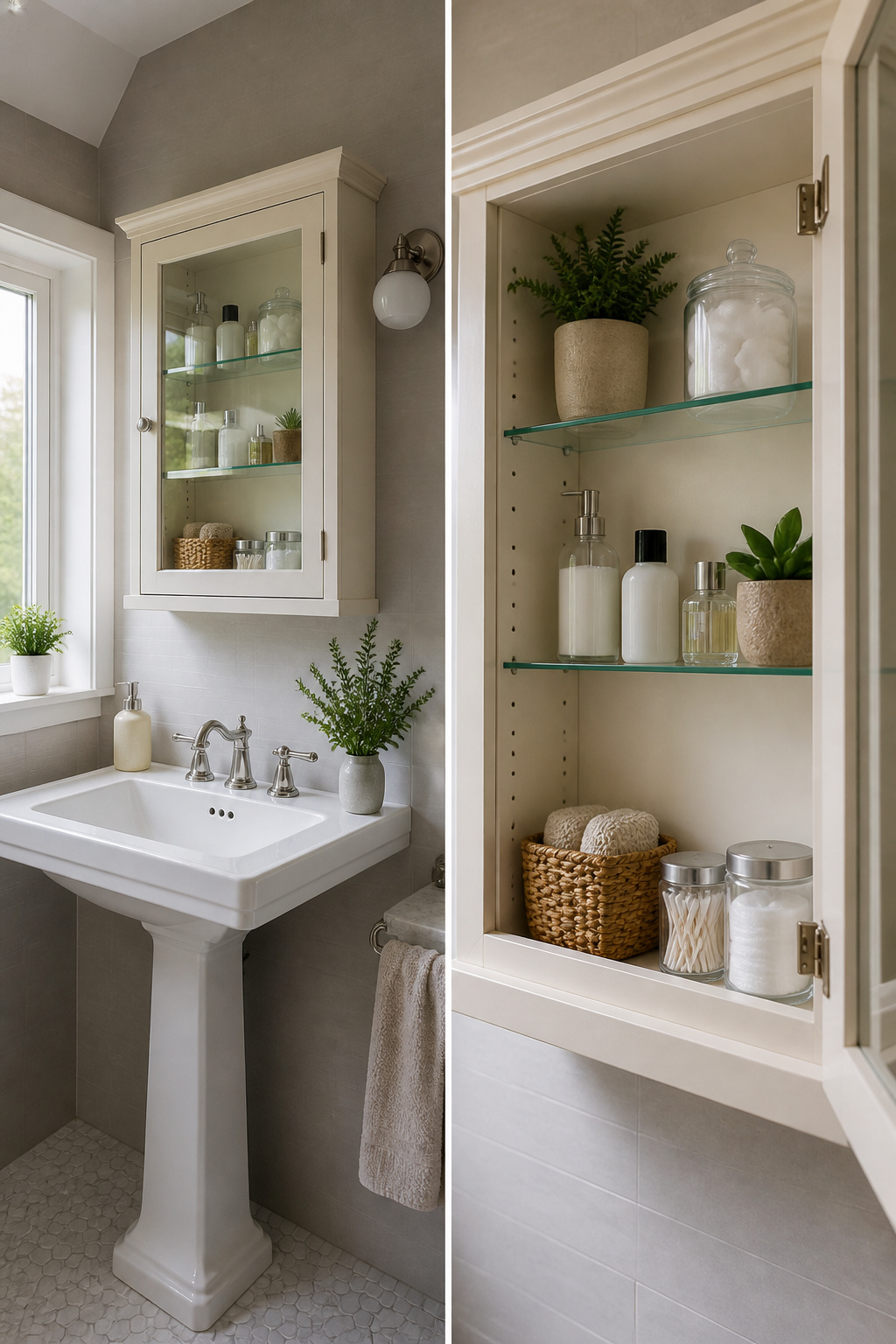
Medicine cabinets hide the mess you do not want to display. Surface-mounted units bolt onto the wall and keep their full depth for storage; recessed ones sit flush with the drywall and look cleaner, but they eat into the wall cavity. In standard 2×4 construction that leaves about 3.5 inches of actual depth inside, minus whatever the mirror and frame consume. Most toiletries fit, but a pump bottle or electric toothbrush charger may not.
The West Elm Mid-Century Bathroom Pharmacy Cabinet is a surface-mounted option at 20.25"W x 14"D x 50"H, built from kiln-dried eucalyptus and engineered wood with an acacia veneer. The 14-inch depth gives real room behind its glass panel doors, and a drawer hides the clutter you would rather not see. At $749 it is not a weekend impulse buy.
Recessed install needs more skill and a wall without plumbing in the way. Surface mount is the renter’s path, or the homeowner who wants Saturday morning to stay simple.
8. Freestanding Cabinets
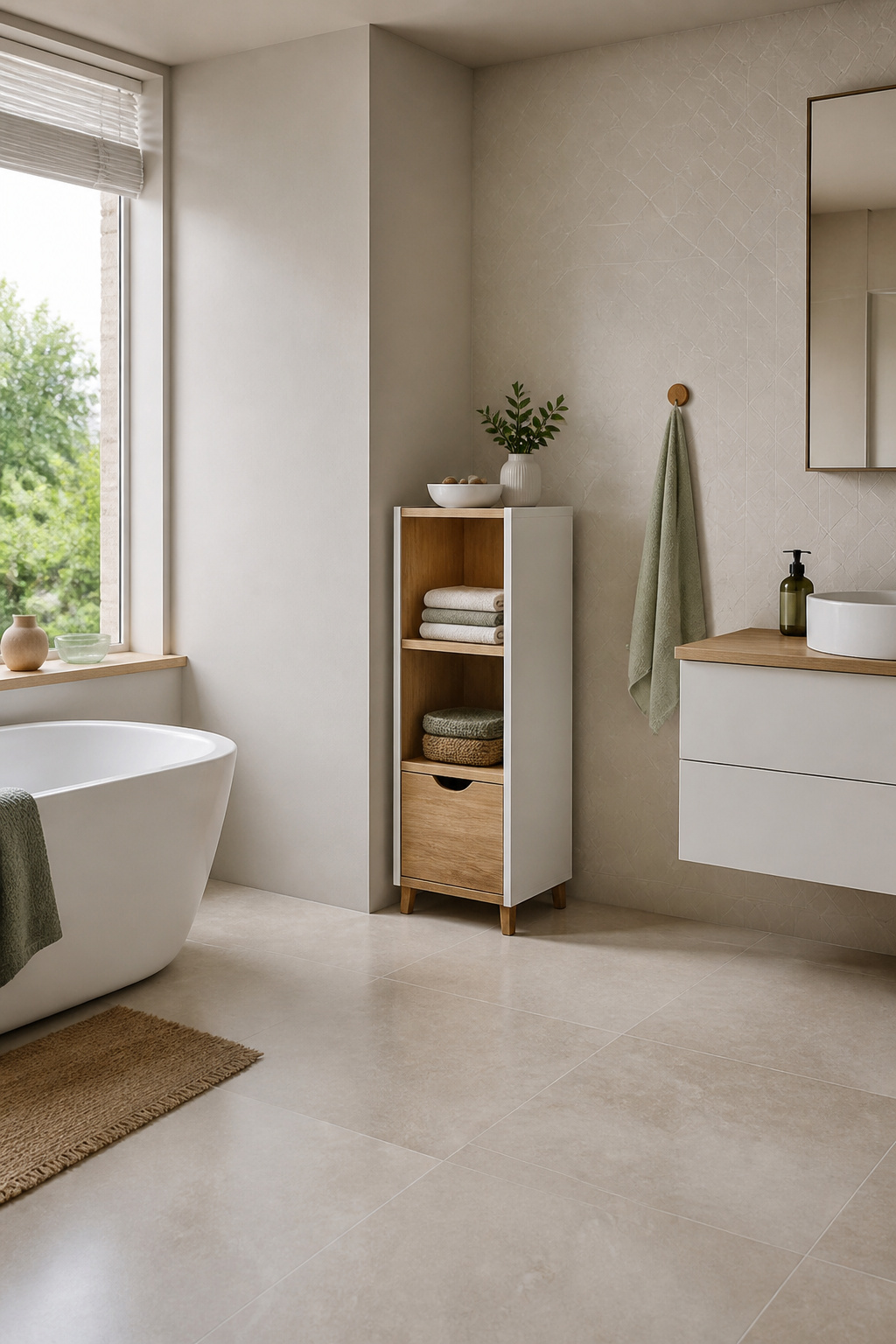
Slim floor cabinets turn the dead zone beside a toilet or between a wall and vanity into actual storage, but only if the proportions run tall and narrow rather than deep. The Yamazaki Pull-Out Bathroom Storage Cabinet measures 22.05"D x 5.24"W x 21.65"H, which means its 5.24-inch width is the front face you see; the depth extends back like a tower footprint. That geometry matters because a standard cabinet even a few inches wider would block knee room or door swing in a small bath, while this one slides into gaps most measuring tapes would write off.
At $195 on Amazon, the Yamazaki sits in a midrange spot between budget wire racks and the $749 West Elm Mid-Century Pharmacy Cabinet. The powder-coated steel and wood build holds up to 12 toilet paper rolls plus a brush in its pull-out drawer, and the flat wood top works as a shelf for a basket of washcloths. For renters, freestanding units skip wall damage entirely; for first-home owners, they buy time before committing to built-ins.
9. Towel Hooks
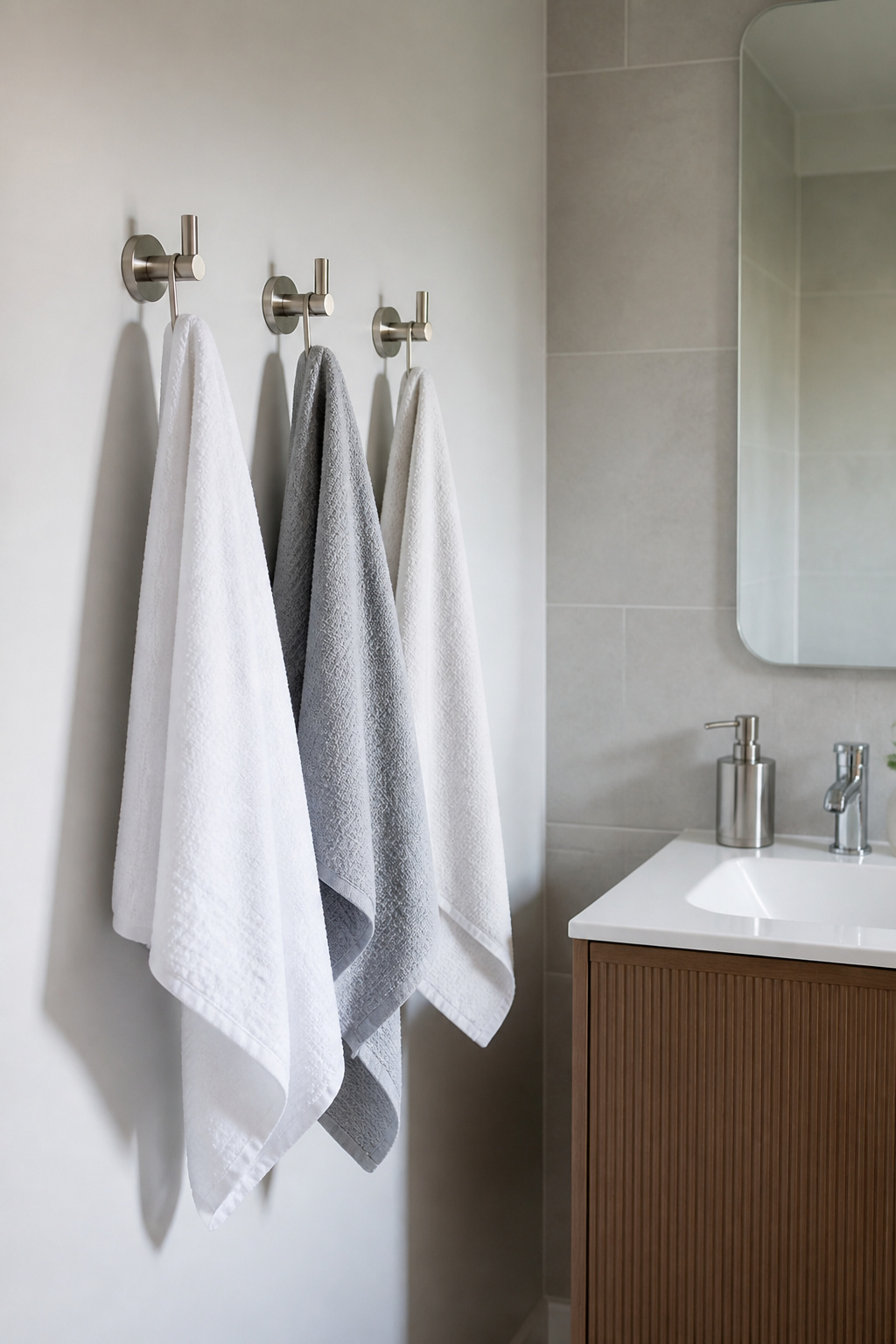
A towel bar eats 18 to 24 inches of wall width. A hook needs about two. In a bathroom barely five feet across, that gap is the difference between a door that opens fully and one that doesn’t.
I used to think hooks were a downgrade. Towels would stay damp, or they’d slip, or the loop would wear through. None of that happened. The towels dry by morning, same as they did on a bar, and the wall that was too narrow for anything else suddenly holds two towels without drama.
The real win is behavioral. Kids, guests, me before coffee: a hook accepts a towel flung in its general direction. A bar demands folding, draping, balancing. In a small bathroom, the storage ideas that survive are the ones that forgive sloppy execution.
If you are already using over-toilet space for shelves or a cabinet, the wall beside the sink or behind the door is often the only remaining real estate. Hooks fit there. Bars don’t. That is the whole calculation.
10. Shower Caddies
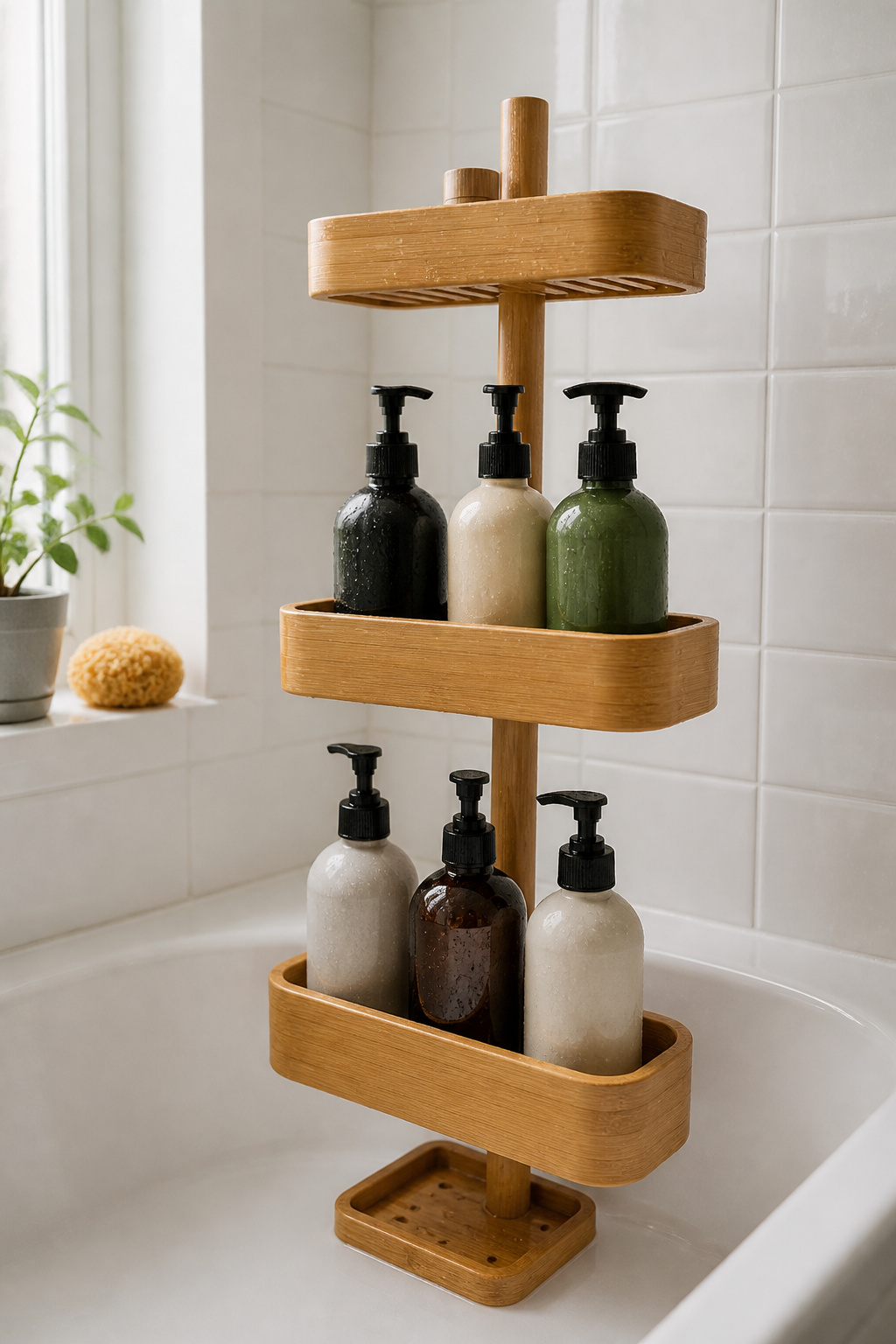
Shower caddies move the clutter off your vanity and into the one place you actually use it. Two types have held up in the sources: bamboo storage racks and hanging caddies. The bamboo floor rack sits on the ground of a tub-shower combo, giving you tiers for bottles without drilling into rental tile. A hanging caddy, the kind that loops over the showerhead or mounts on a tension rod, keeps the floor clear entirely. That second option only works if the rod or pipe can take the weight of full bottles, which is where cheap versions snap or slip. I would not trust a suction model with anything glass, and the sources back that hesitation: the standing bamboo rack wins for stability, the hanging caddy wins only when the hardware is strong enough to earn it.
Start by Decluttering
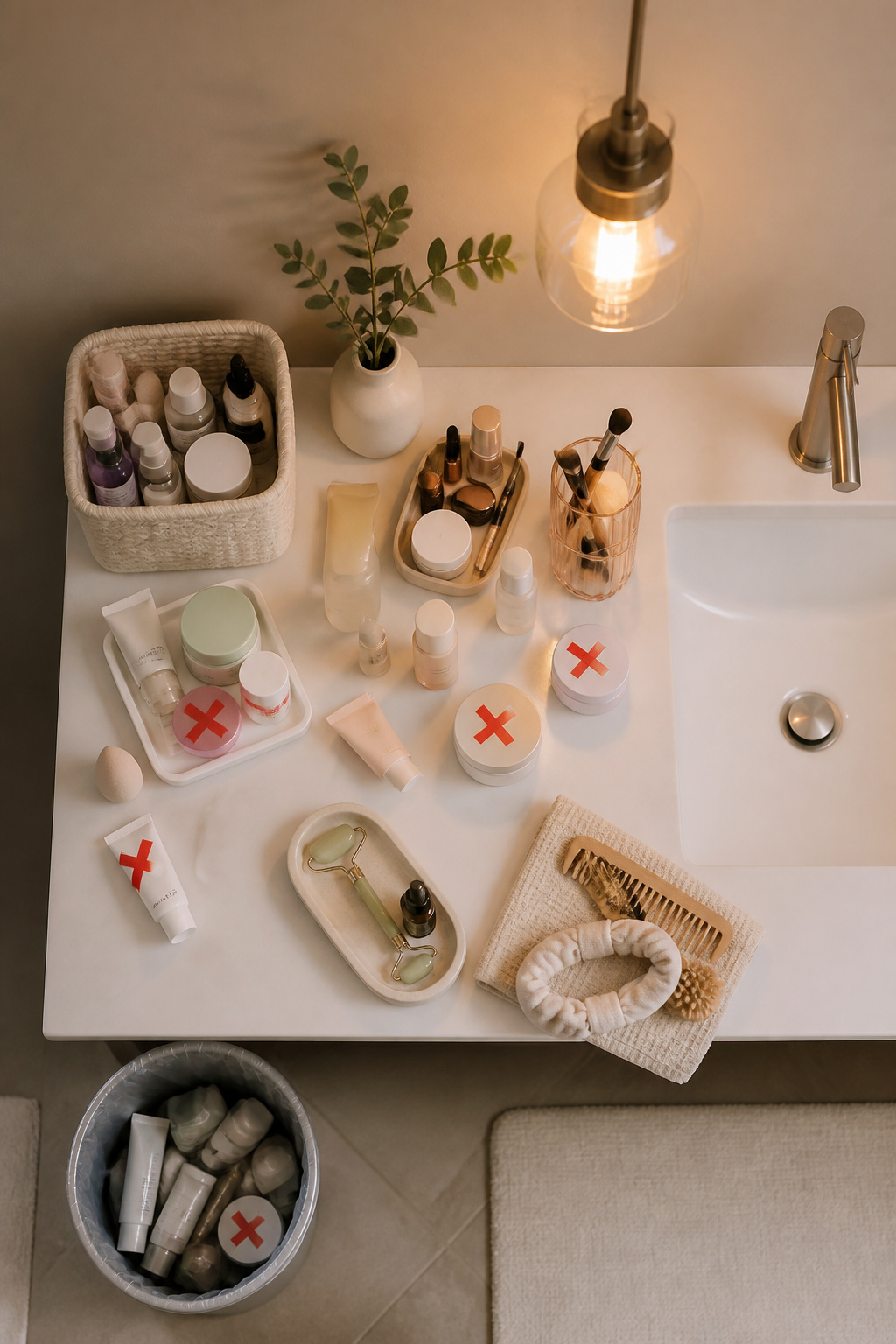
Every small bathroom cupboard project I have started hit the same wall: the stuff had to go before the organizing could begin. The 20/20 rule is what pulled me out of that loop. Anything that costs under $20 and takes under 20 minutes to replace does not earn shelf space. That expired sunscreen from two summers back, the third half-empty bottle of the same drugstore shampoo, the foot file you grabbed on impulse and never touched. Toss them. Storage solutions only work once you stop protecting inventory you would not repurchase. I have opened cupboards that looked packed to the door and found, after twenty minutes of honest sorting, that half the volume was trash or duplicates. The slim organizers and stackable bins everyone wants to talk about come later. They sit flat, slide smooth, and actually stay sorted when there is breathing room to start with.
Organize by Zone
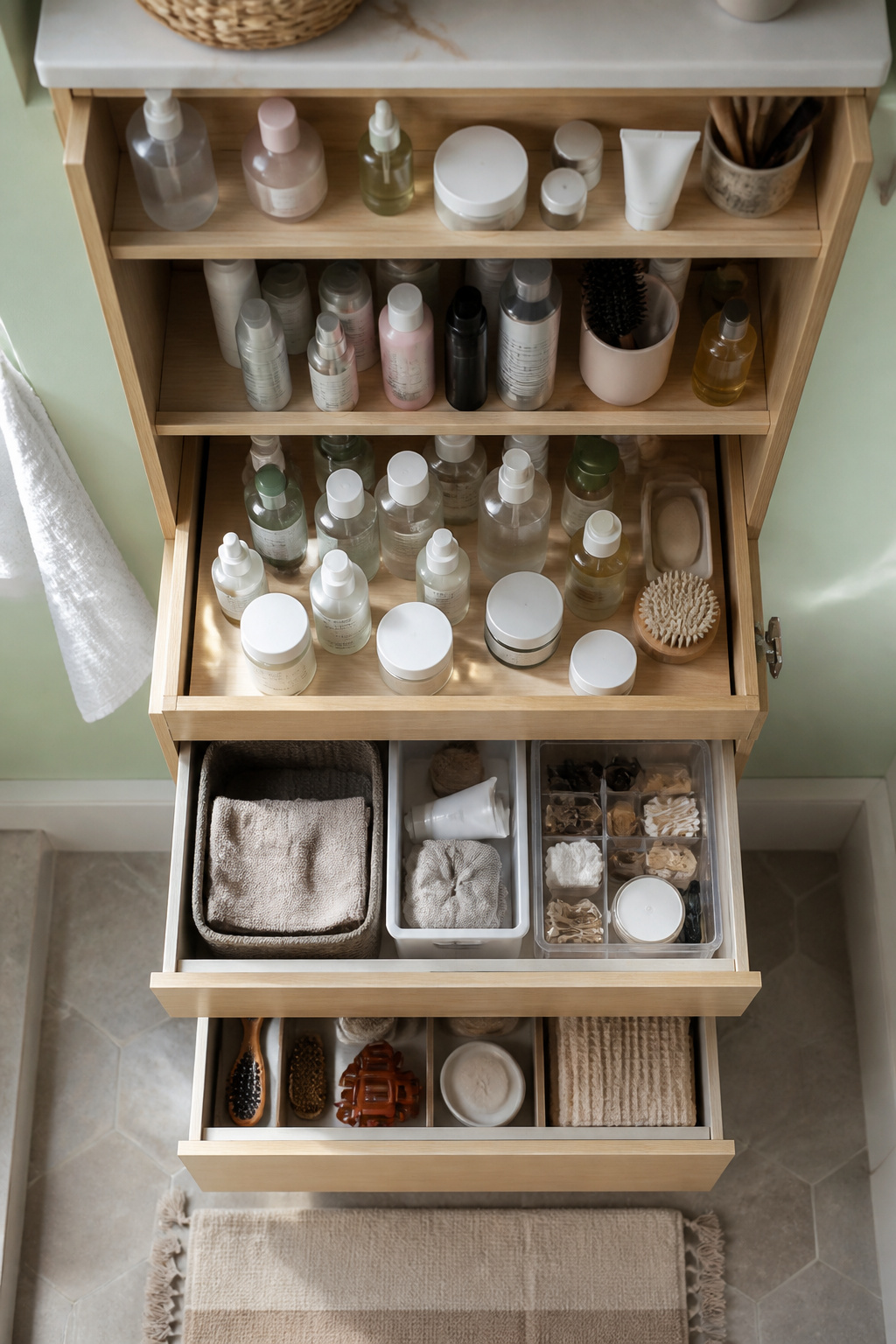
Alphabetical order looks tidy on paper until you are standing at the sink half-awake, running your finger past three bottles of face wash to find the one you actually use. I tried sorting by brand next, which made even less sense: my daily moisturizer lived two shelves away from its nighttime counterpart because the labels did not match. The system that finally stuck was four zones shaped around the actual rhythm of the morning: daily essentials up top where my hand lands first, hair care grouped together so I am not opening three doors to style it, cleaning supplies tucked low and out of the way, and a small guest kit ready for the weekend someone stays over. Zones survive because they match how you stand at the sink, not how you think about inventory.
Vertical Space and Multi-Functional Furniture
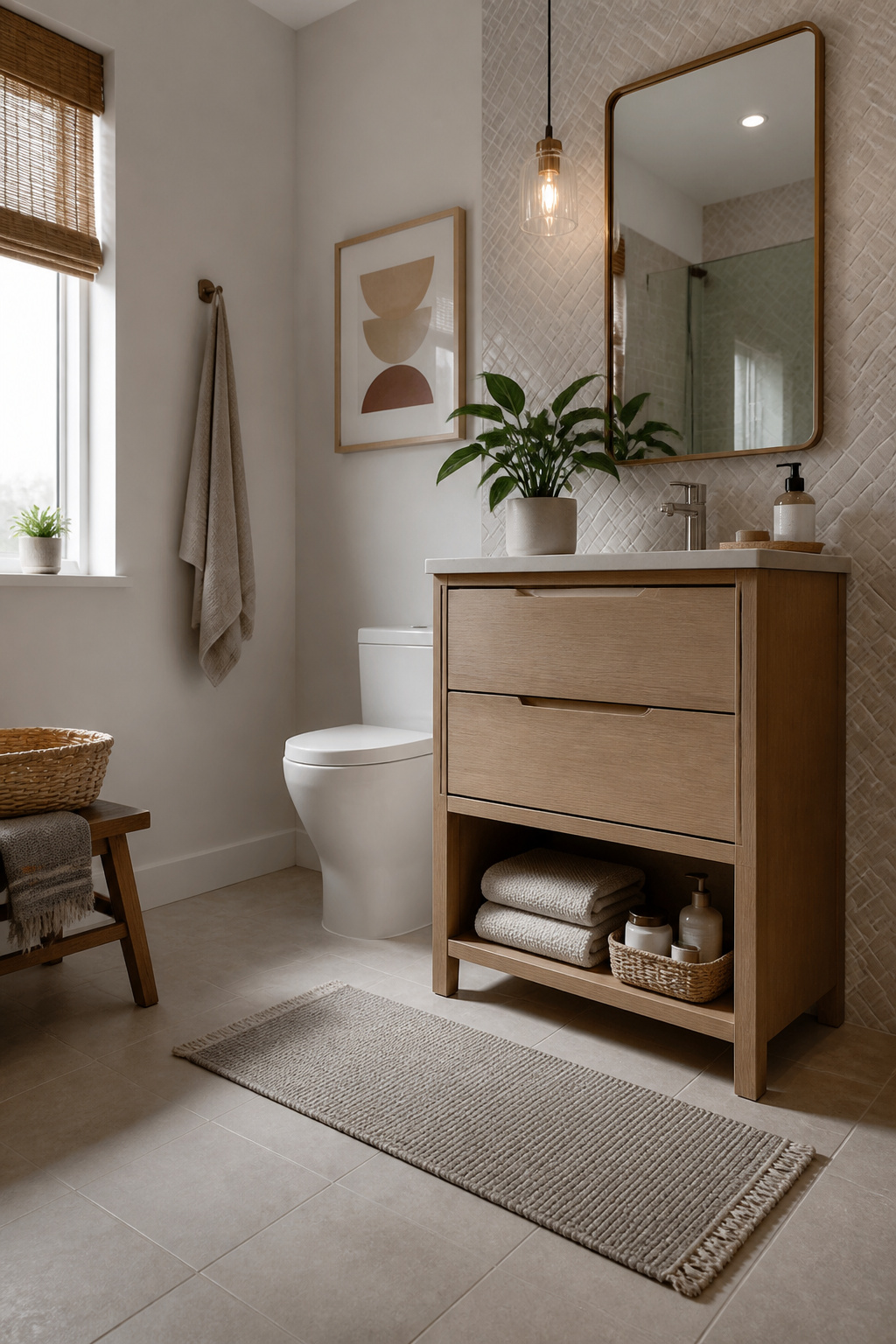
Small bathrooms force a single geometry on you: build up, not out. The wall above the sink, the gap over the toilet, the full height beside the mirror, all of it is storage that costs no floor space. A freestanding wall cabinet, two-tier or tall as you are, turns that vertical plane into shelves for towels and spare rolls without calling a contractor.
The piece you buy should earn its footprint twice. A vanity with drawers plus an open shelf below gives you hidden storage for the backup toothpaste and a daily drop spot for the hand towel you actually use. One purchase, two jobs. In my own reading, the vanity swap that stuck with me replaced a pedestal sink with a 24-inch gray unit: countertop space gained, drawers for toilet paper, lower shelf for towels. The caning, arched bases, and slatted shelves in the similar models come down to taste; the principle does not.
The best bathroom storage cabinets are what make a space truly functional… space-saving storage solutions are a must. Wire baskets under the sink are simply not enough.
That last line is the useful point. A basket under the sink is a start; a cabinet that uses the full height, with a piece of furniture that also holds the sink, is what keeps the floor clear and the morning routine moving.
Magnetic Strips and Repurposed Kitchen Items
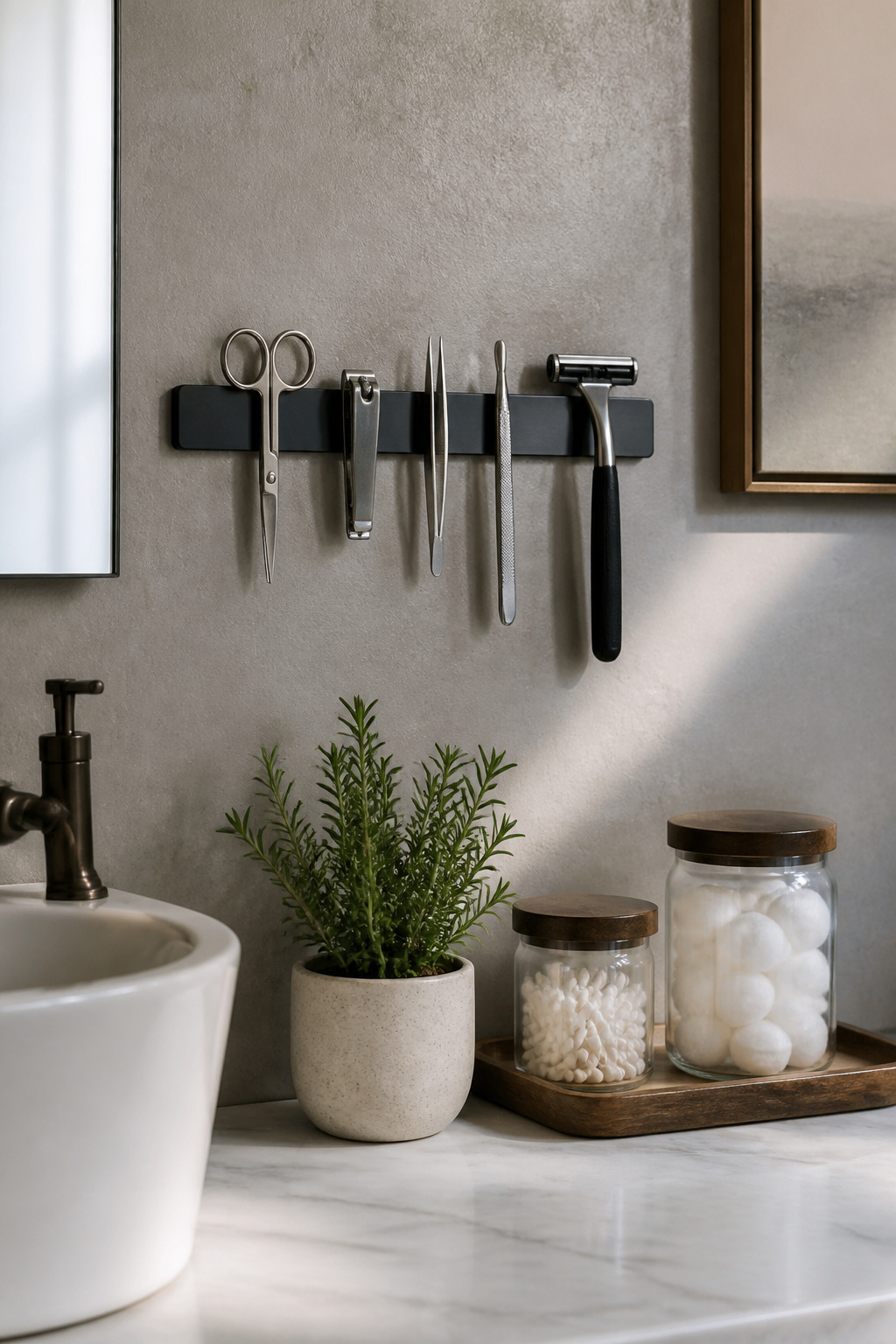
The magnetic knife strip from IKEA that cost $12 has kept my tweezers and nail clippers in plain sight for two years now. Before that, those items lived in a drawer where they migrated to the back corner or vanished entirely. The strip mounts with two screws and holds anything ferrous: bobby pins, small scissors, the tiny metal tools that otherwise demand a dedicated tray.
A wall-mounted spice rack fills the same gap for bottles and tubes. The shallow depth, usually three to four inches, sits flat against the wall without crowding the room. I have seen these used for essential oil bottles, daily vitamins, even the small skincare serums that tip over on deeper shelves. The rails or tiers keep everything upright and visible, which matters more in a small bathroom than in a kitchen where cabinet depth is standard.
These are the $8 to $12 fixes that slip into the leftover spaces. They do not replace a cabinet or a cart, but they recover the square footage those pieces never reach: the six inches beside a mirror, the strip above a towel bar, the back of a door if you add a small ledge. The mistake is treating them as afterthoughts. Mount the magnetic strip where you actually stand to use it, not where the stud happens to land, or you will still fish through the drawer out of habit.
Decorative Storage That Reads as Design
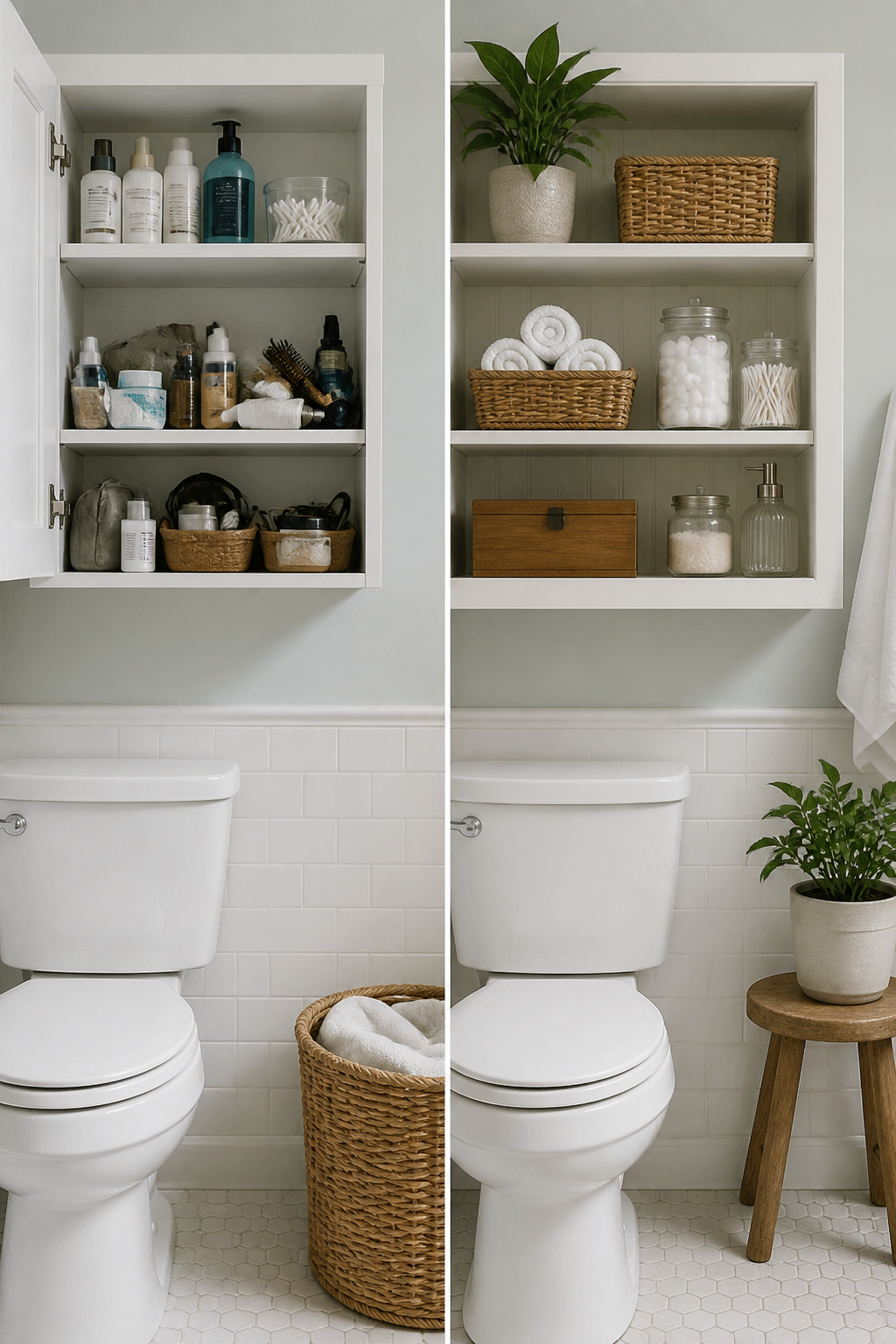
Wicker bins add texture and warmth, but the real difference is what they signal. A basket on a bathroom shelf reads like a choice; a plastic tub reads like a temporary fix. The same spare toilet paper roll, the same hot tools, the same cotton balls look intentional in one container and desperate in another.
I learned this the hard way after a friend walked into my bathroom and asked if I was packing to move. She was looking at a countertop of original packaging, half-empty bottles, and a single loose cotton ball rolling toward the sink. Nothing was dirty; nothing was even that cluttered. But nothing looked like it belonged there.
The fix costs less than the embarrassment. A mason jar with a black lid turns a cotton ball into a design decision. Glass canisters for swabs, floss, or pads remove the visual noise of branding and mismatched boxes. Labeled baskets group the rest into a system someone else can actually maintain. The material matters: washable wicker or glass you can wipe down beats anything that will mildew or stain.
Frequently Asked Questions
How should a bathroom be organized?
Keep daily-use items at eye level or below, store similar items together in designated containers, and place less-frequently used items higher up. Create zones based on activities so everyone in the household can maintain the system. The morning routine shapes the best layout: daily essentials up top, hair care grouped together, cleaning supplies low and out of the way, and a small guest kit ready when needed.
How do you maximize storage in a small bathroom?
Build up, not out: use vertical space with wall-mounted shelves and cabinets, install over-toilet shelving with at least 55 inches of floor-to-ceiling clearance, and choose multi-functional furniture like a vanity with drawers plus an open lower shelf. Rolling carts as slim as 5.1 inches wide slide into gaps beside toilets or vanities, and behind-the-door organizers reclaim dead space without touching the floor.
What are the categories for bathroom closet organization?
Group items into daily essentials, hair care products, body care items, first aid supplies, medications, cleaning products, backup supplies, seasonal items, and guest toiletries. Use baskets or bins to keep each category contained and labeled so anyone in the household can put things back correctly. The zone system that matches your actual morning rhythm will outlast any alphabetical or brand-based sorting.