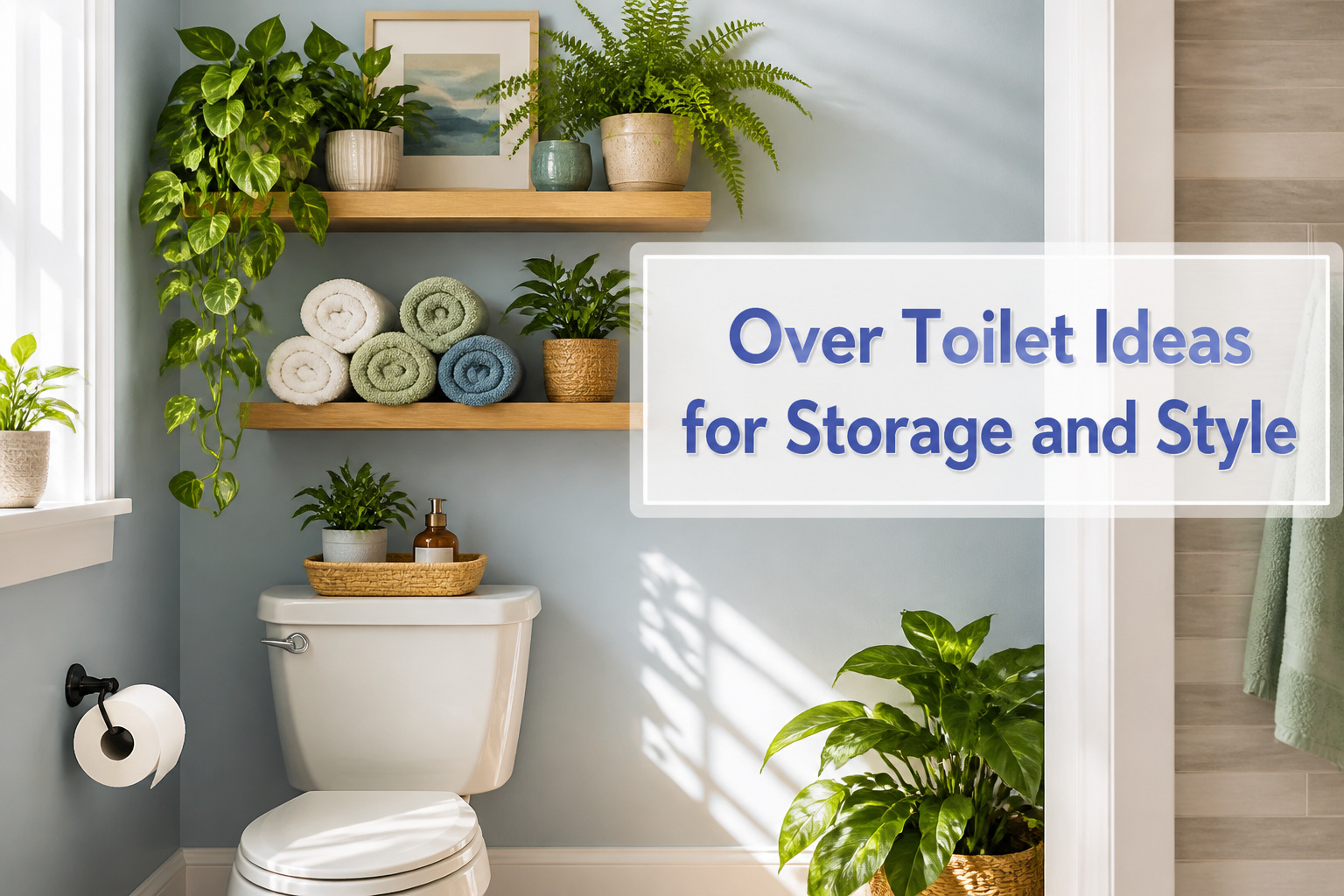
The space above a toilet spans every budget from a $5 stud-finder weekend to a $300 recessed-wall rebuild, and the single deciding factor is whether you own the wall or just rent it. Floating shelves need 10 to 12 inches of clearance above the tank or you will bump them every morning; freestanding ladders need rubber pads that actually grip, not the ones that look sufficient in the store.
1. Floating Shelves
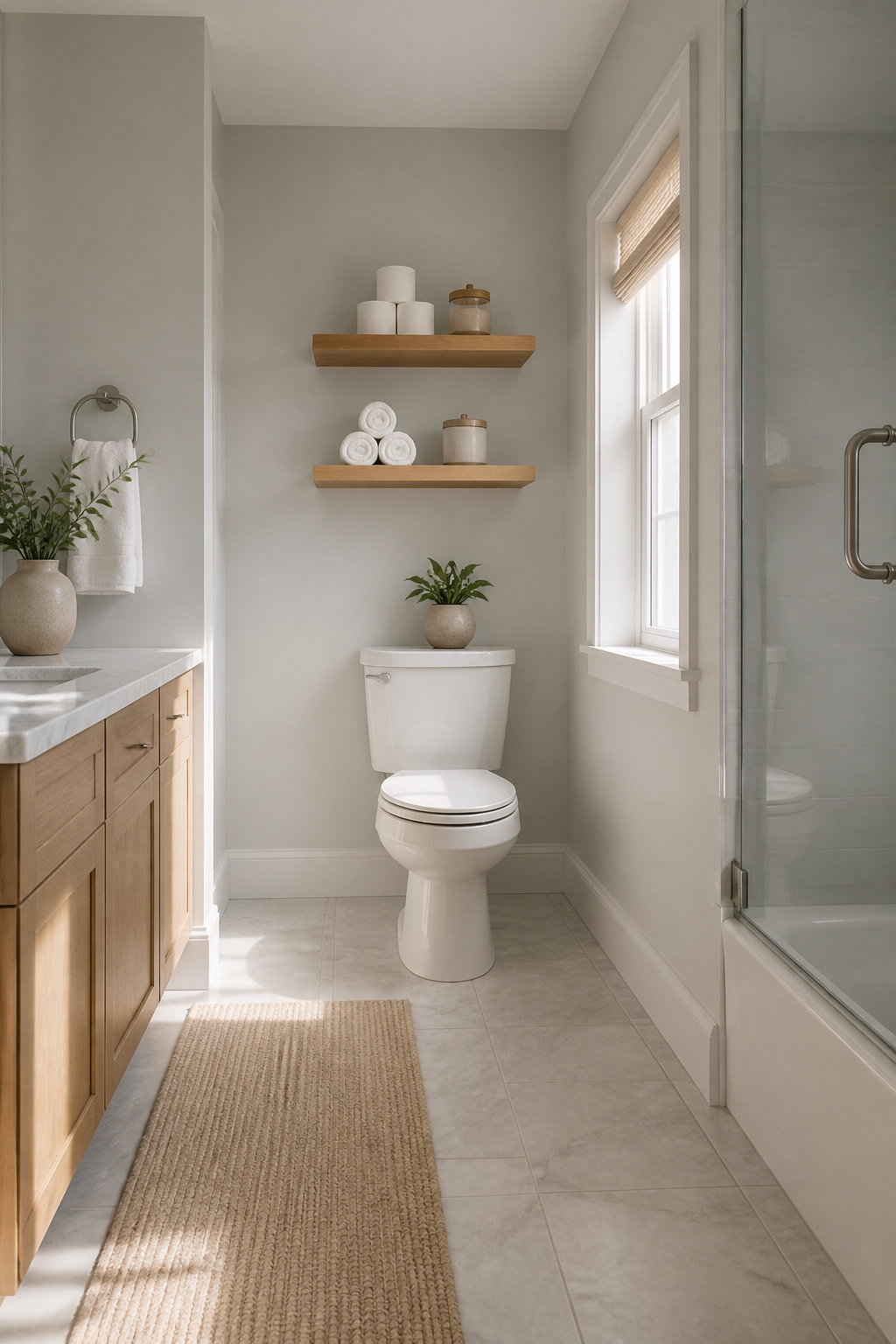
Floating shelves above a toilet work best when they’re hung at eye level, where your gaze naturally settles in a small room. Anything higher and you stop seeing what you put on them; anything lower and you duck every time you stand up. The sweet spot, measured from the finished floor, usually falls between 50 and 60 inches to the shelf’s bottom edge, though a row of three staggered shelves can step up from there.
Clearance from the tank top matters more than most people think. 10 to 12 inches of open air keeps you from knocking the shelf when you lift the lid and gives tall guests room to lean. I learned this spacing the hard way after installing a pair too low and bumping them every other morning until I redrilled the brackets. The unused shelf holes are still there, painted over, a reminder that paper templates beat a tape measure held in one hand.
What sits on these shelves splits naturally into two zones: the front row for face-forward items like rolled white towels or a small ceramic container, and the back row for the utilitarian stuff you do not want to display, extra toilet paper, matches, the things you reach for with your eyes already somewhere else. One long shelf forces everything into competition; two shorter ones let the top hold daily essentials and the bottom hold a plant or a single decorative object. The wood tone itself does some of the styling work. Natural oak or walnut softens the hard surfaces that dominate most rental bathrooms, tile, porcelain, metal, and makes the shelf feel intentional rather than like an afterthought drilled into drywall.
The real risk is measuring once and calling it done. Tile lines, wall studs, and the tank’s exact height all shift the math by an inch or two, and floating brackets do not forgive sloppiness. A shelf that tilts forward because the rear bracket sits lower than the front one is a shelf that dumps its contents into the toilet bowl three months later. Level, step back, level again. The ten minutes you spend on this save the hour of patching and repainting that follows a do-over.
2. Over-the-Toilet Cabinets
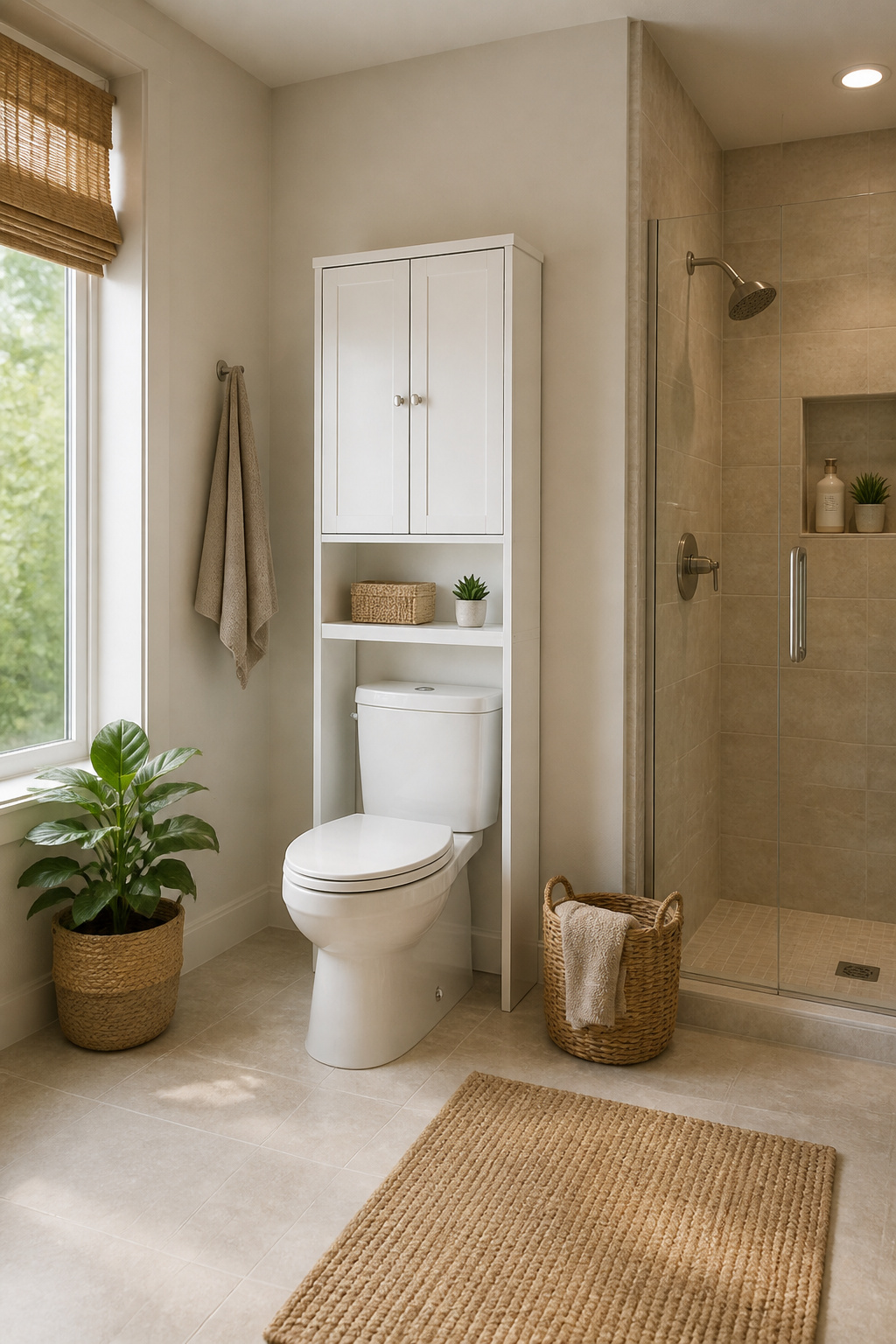
Most over-the-toilet cabinets run about 24 inches wide and 30 inches tall, a footprint that fits standard toilet clearances without crowding the tank. Enclosed storage keeps spare rolls, cleaning bottles, and the backup shampoo supply out of sight, which matters in a bathroom where open shelving turns every cluttered surface into the room’s focal point.
The catch for renters is mounting. A cabinet that needs anchor screws into tile or drywall is not a Sunday afternoon decision when your lease says "no drilling." Freestanding units that straddle the toilet solve this, though they eat more floor space and tend to read bulkier than wall-hung versions.
I measured the depth wrong on my first one. The cabinet cleared the tank but the door swung out into the knee space in front of the bowl, so sitting down meant tucking your feet to the side like a dinner guest in a cramped booth. A 7-inch depth would have worked; the 10-inch I bought stuck out just far enough to annoy me every morning for eight months until I replaced it.
3. Built-In Shelving
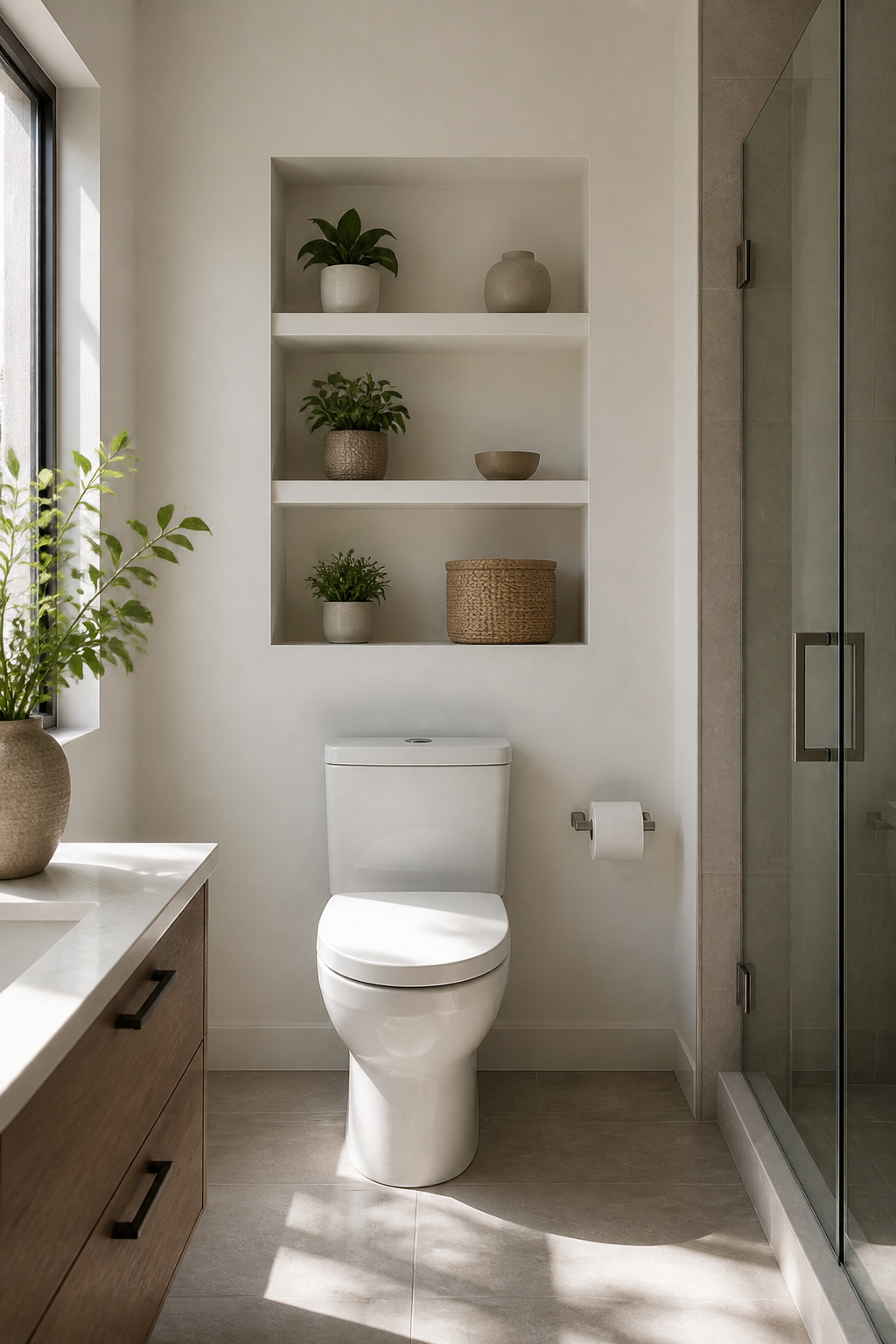
Custom shelves recessed into the wall sit flush with the drywall, so nothing juts out over the toilet or shrinks the walking lane. The look is clean because the wall itself becomes the shelf, not a piece hung on it.
This is a project for owners, not renters. Cutting into the wall means studs, electrical checks, and patching that belongs to a permanent change. I tried skipping full drywall replacement once and paid for it when the joint compound cracked inside the frame within a year. The repair cost me about three hundred dollars to pull out my shortcut work and do it with proper backing and new sheetrock.
For a narrow bathroom, the real gain is vertical storage that never elbows into the room. You keep the floor plan intact while gaining twelve to sixteen inches of depth where there was only blank wall before.
4. Towel Racks
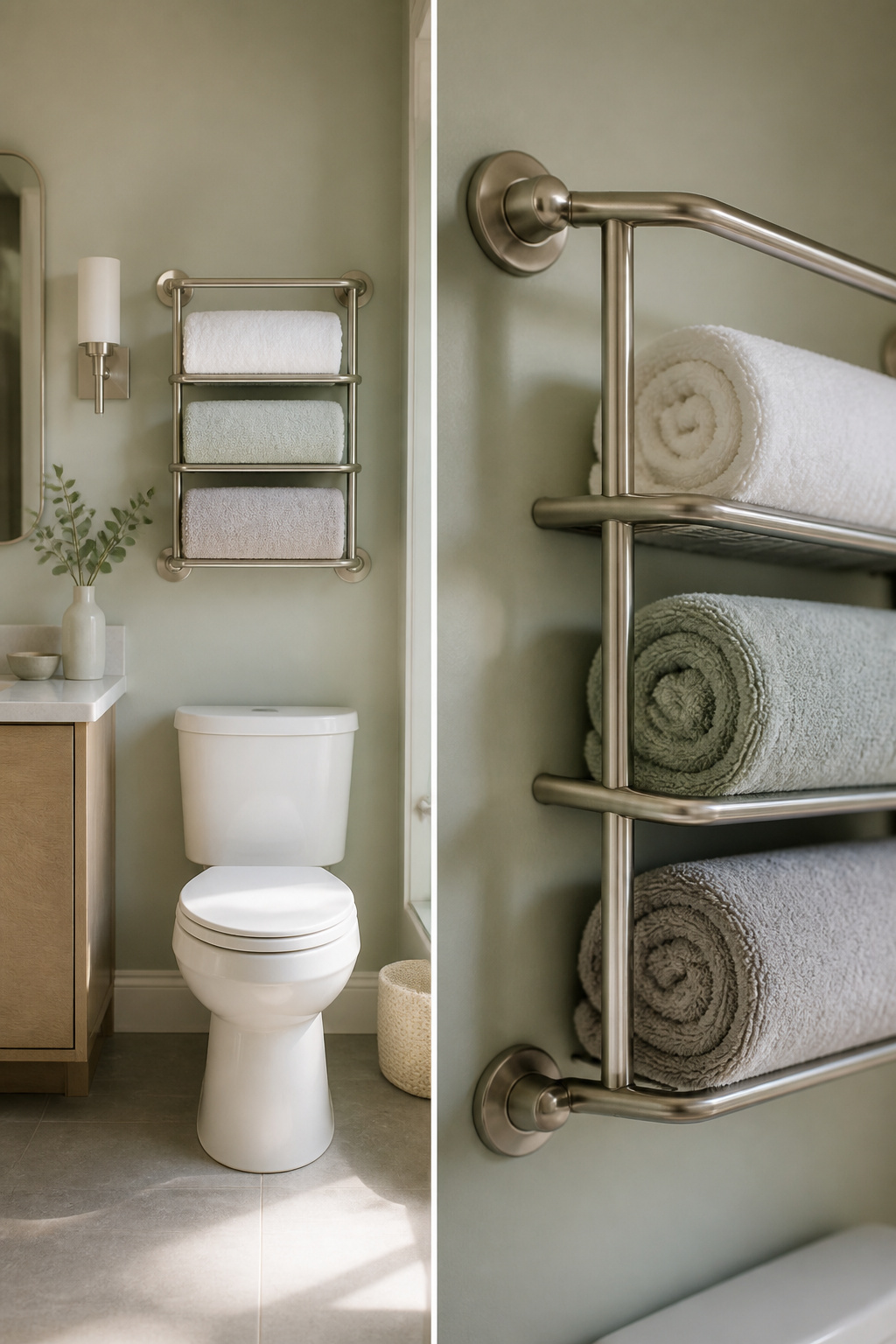
A towel rack over the toilet, sometimes called a train rack, looks spare and hotel-like in the right bathroom. The tiered bars let you roll towels and stack them, or hang a few across the rungs for display. Rolled towels in one color family read as intentional; patterned ones add visual noise fast.
The hygiene issue most roundups skip is real. Toilets aerosolize what flushes, and towels hanging directly overhead catch that drift. The clean wall area behind the rack does not solve this; the towels themselves are the problem. I keep a rack in my guest bath still, but only for display towels that never touch skin. Daily-use towels hang on a hook across the room, well outside the splash zone.
For a rack that earns its spot, mount it low enough that the bottom tier sits within easy reach, not hovering near the crown molding. Devote it to fresh rolls of toilet paper and a single stack of clean hand towels, and treat anything more as clutter.
5. Ladder Shelves
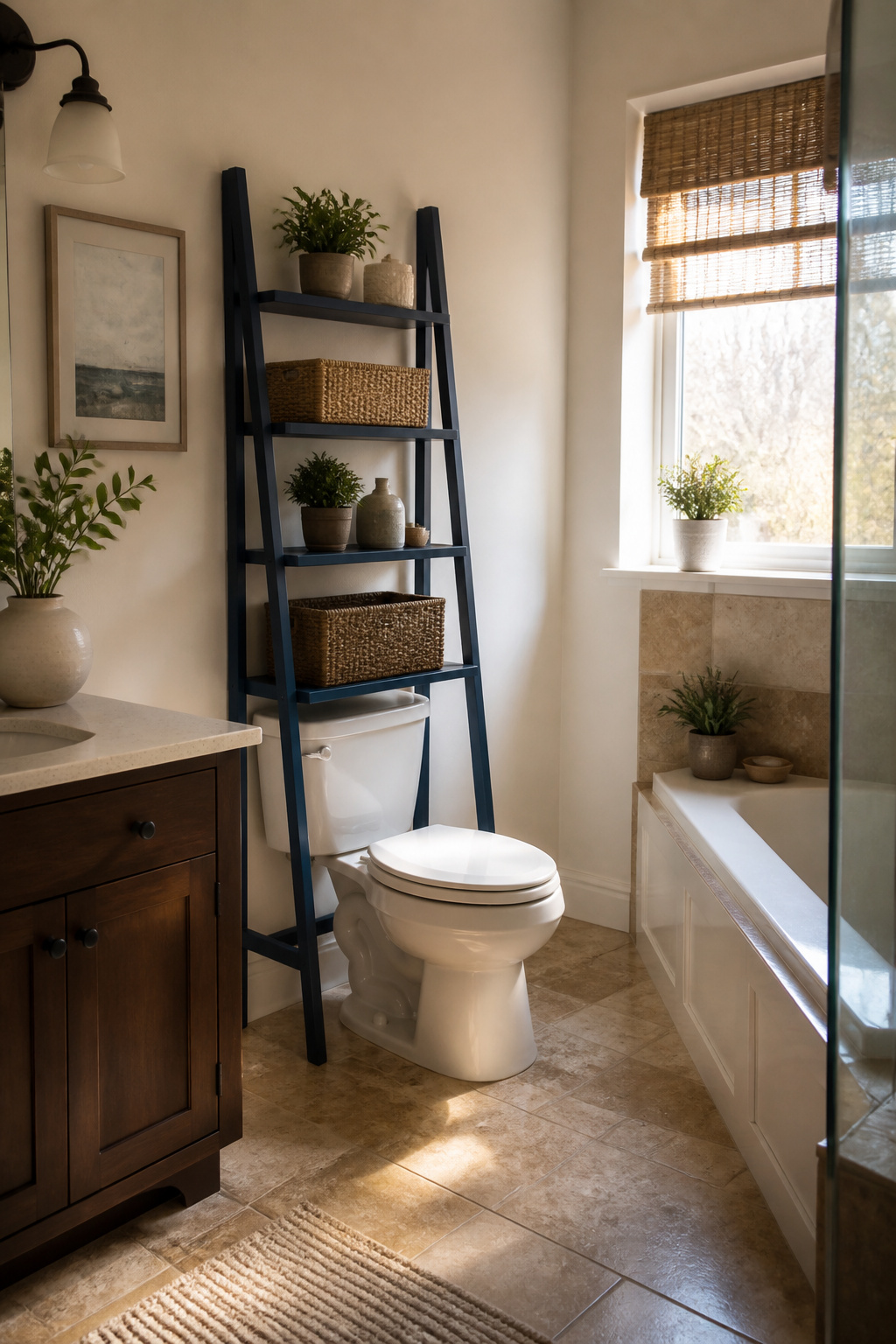
A leaning ladder shelf carries that modern, almost gallery-wall energy without a single hole in the drywall. The tiers stack upward in a clean diagonal, so you get four or five levels of storage in the same footprint a cabinet would use for two. Paint it navy and it ties straight back to a bedroom or hallway color, which keeps a small rental from feeling like a collection of disconnected rooms.
The catch is the feet. Rubber pads look sufficient in the store, but on tile they slip. Mine walked half an inch every few days until I found it angled into the bowl one morning. This is a half-bath solution, or at least a bathroom you do not stumble into at 2 a.m. with the lights still off. The lean looks effortless; keeping it that way takes attention, or a wall anchor that defeats the point. Small bins on the rungs help, since anything loose adds weight up high and turns the wobble into a real tipping hazard.
6. Mirrored Medicine Cabinets
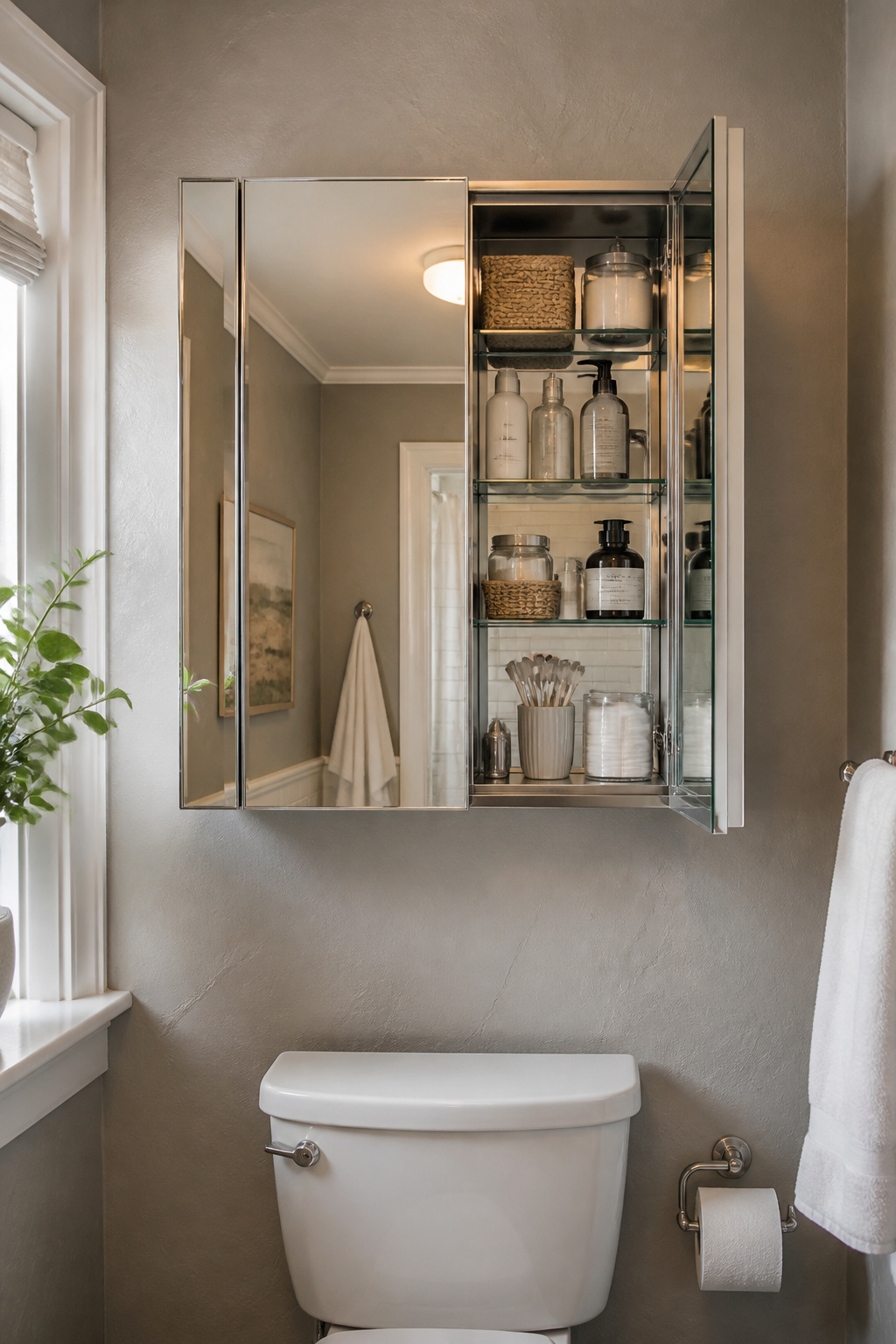
A mirrored medicine cabinet above the toilet gives you two jobs in one footprint: the mirror you need for the space and a hideaway for the backup toothpaste, extra soap, or that skin care routine you do not want sitting out. The catch is depth. Most cabinets run 4 to 6 inches deep inside, so tall bottles and pump dispensers may need to lie flat or find another home. Measure what you actually stock before you buy.
Surface-mount versus recessed was the call I spent a weekend on in my 1950s bathroom. The plaster walls were lath and plaster, not drywall, and cutting a clean recess meant risking cracks that would spider past the frame. I left it surface-mounted. The tradeoff is the box protrudes into the room by that full depth, which matters in a narrow bath where every inch of shoulder room counts.
What sold me, though, was the light. A plain mirror bounces whatever the room has. The cabinet’s three mirrored surfaces, opened, catch window light from angles a flat mirror misses and throw it back into the corners. In that small bath with one overhead fixture, the difference was immediate: the whole wall brightened instead of just the person standing in front of it. For a rental or a first home with wiring you do not want to touch, that free light is worth the bulk.
7. Decorative Baskets
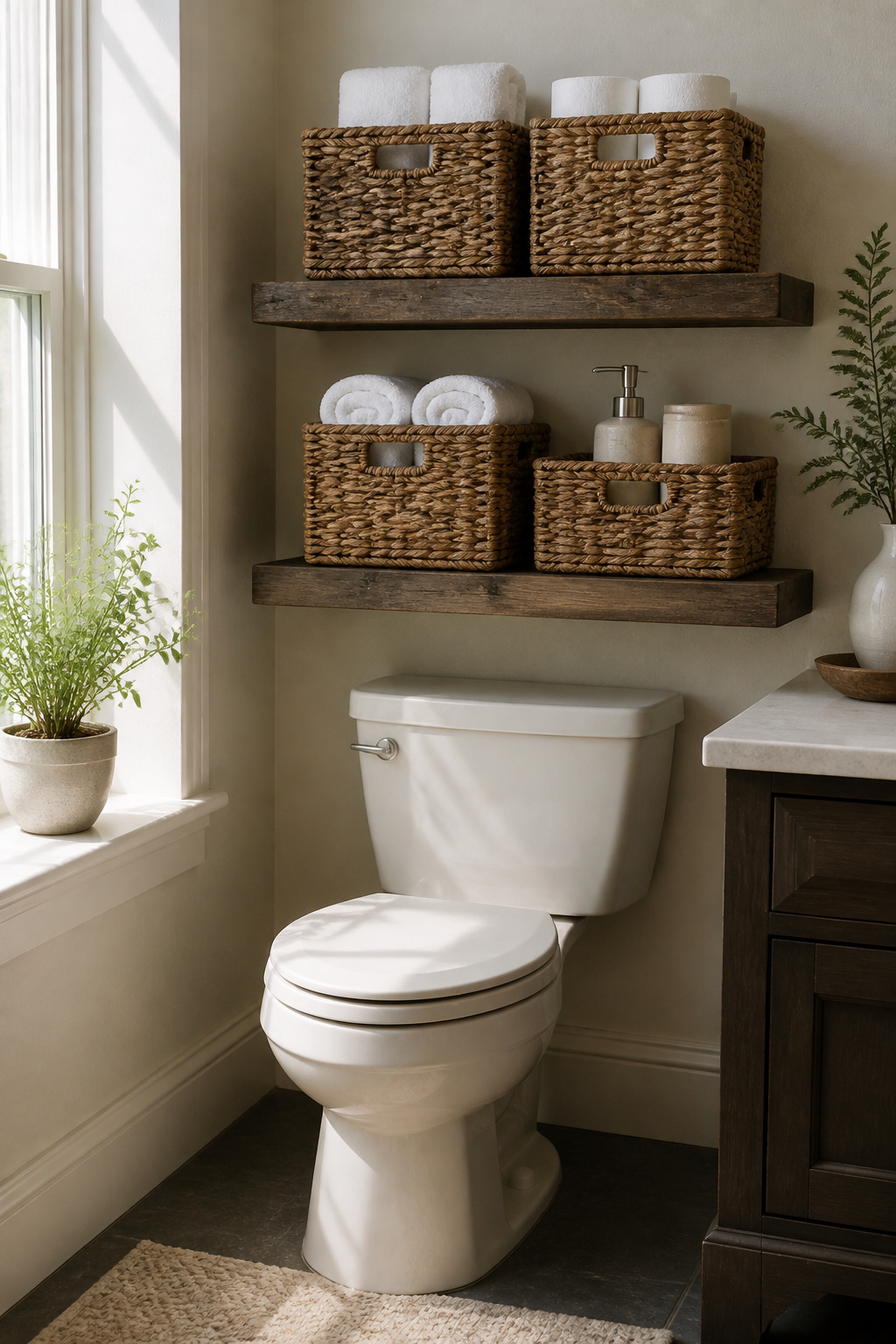
Baskets above the toilet hide the clutter that open shelves force you to curate. I learned the humidity lesson the hard way. Wicker turned spotty with mold after one summer, and wire baskets I liked the look of started flaking rust onto the tank within months. Seagrass was the third try, and the one that held up. It sheds moisture instead of soaking it in, and the weave still looks tight two years later.
The texture matters more than I expected. A flat shelf with folded towels reads staged; the same towels dropped into a seagrass bin look lived-in and still tidy. Small items that ruin the look, backup toilet paper rolls, the extra soap, disappear without a dedicated cabinet. Seagrass over wire or wicker for anything within splash range is the rule I follow now.
8. Plants and Greenery
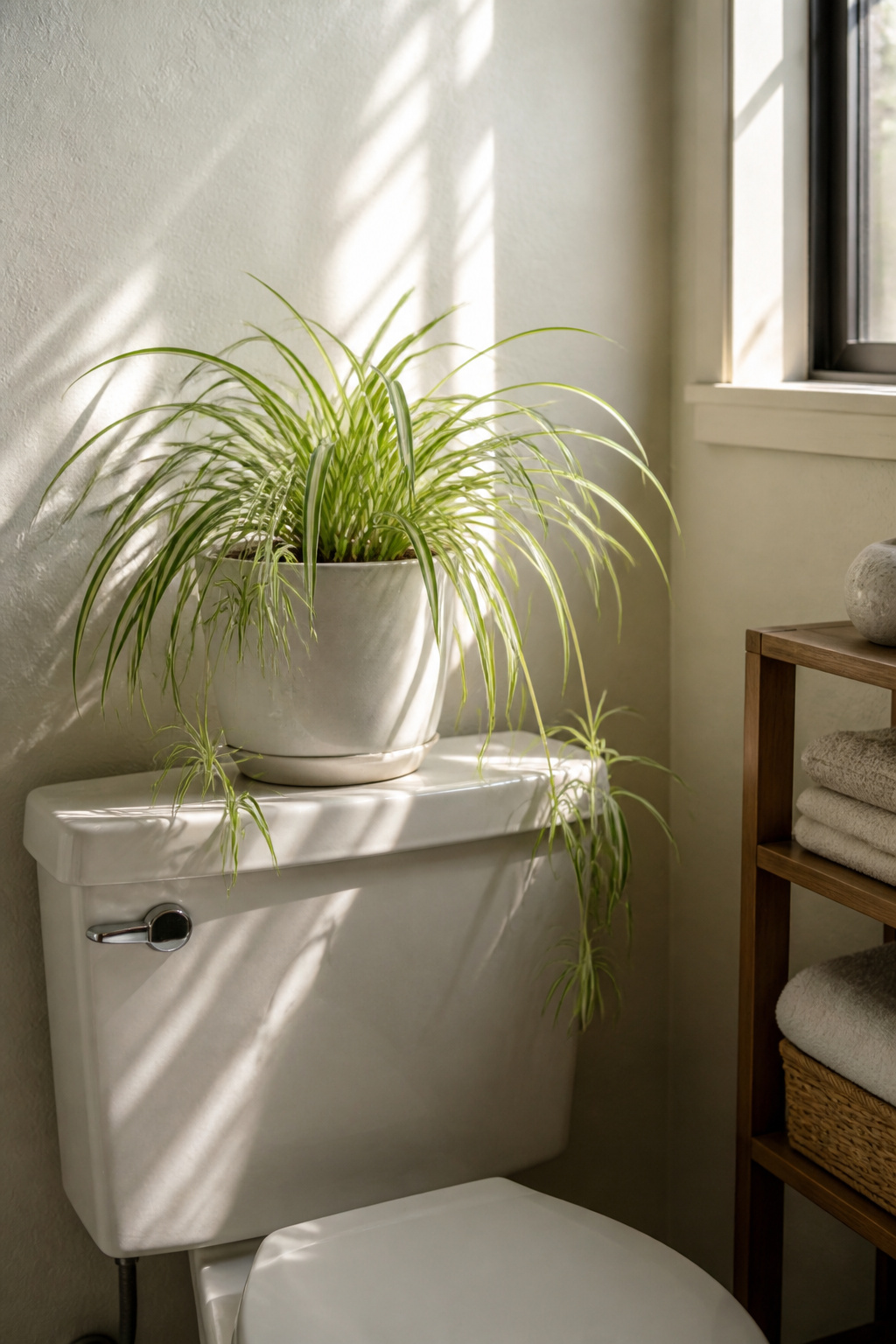
Ferns and spider plants are the two that actually want the conditions above a toilet. The humidity from showers keeps them alive in a way dry-living-room air never will. I tried a Boston fern there for six months. It browned from the roots up because the shelf sat far enough under the window that no direct sun ever reached it, and I watered on a schedule instead of checking the soil. The spider plant in the same spot, left alone for weeks at a time, kept sending out runners.
Weight matters more than people expect. A terracotta pot with damp soil can hit five pounds, and most over-toilet shelves are rated for ten to fifteen total. Two plants in ceramic pots plus a stack of towels and the bracket starts to bow. I switched to lightweight plastic liners inside woven baskets, which kept the look without the load.
The one that survived my neglect was a pothos, technically not on the fern-or-spider list but worth the exception. It lived in that dim corner for two years on bathroom humidity alone, trailing down the side of the tank and looking intentional even when I forgot to dust the leaves.
9. Artwork and Decorative Objects
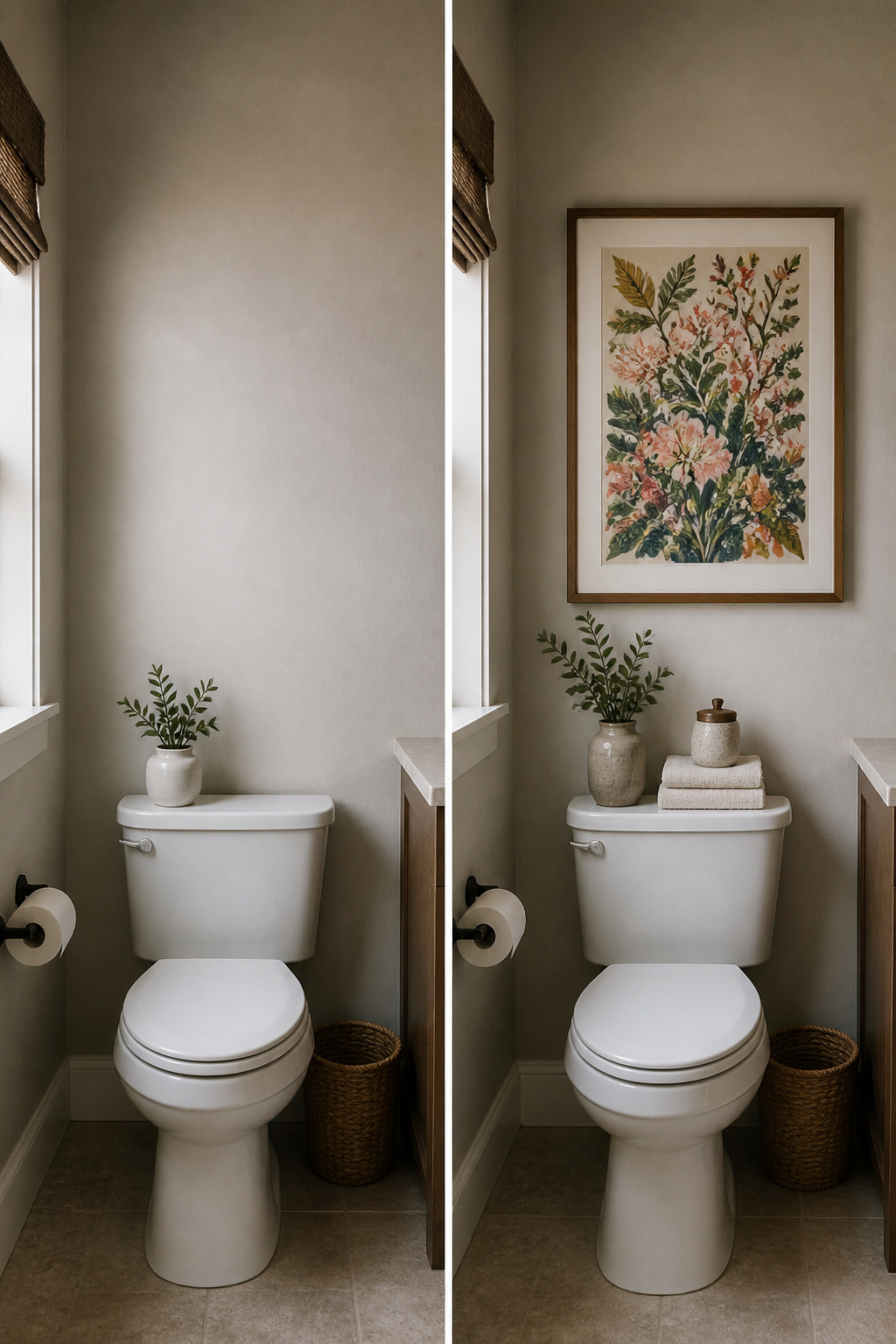
A 5×7 frame hung alone over a toilet looks like a postage stamp on a door. I learned that the hard way in my first apartment, squinting up at a photo I’d centered with so much care and realizing it had vanished into the drywall. The wall above a standard toilet runs about 30 inches wide; the art needs to fill most of that horizontally, or stack two larger pieces vertically so the eye reads them as one mass.
Humidity is the second test. Steam from the shower curls behind the tank and warps cheap backing boards. Metal frames rust at the corners. What survives is sealed: acrylic face mounts, canvas gallery wraps, or solid wood with proper sealing. Skip anything with exposed MDF or an unprotected paper print.
Botanicals, line drawings, and abstracts all work here. The only subject to avoid is people. Guests do not need to make eye contact with your family portraits mid-task. Travel photography, on the other hand, gives the room a sense of place without the awkwardness.
Why Vertical Space Matters Most
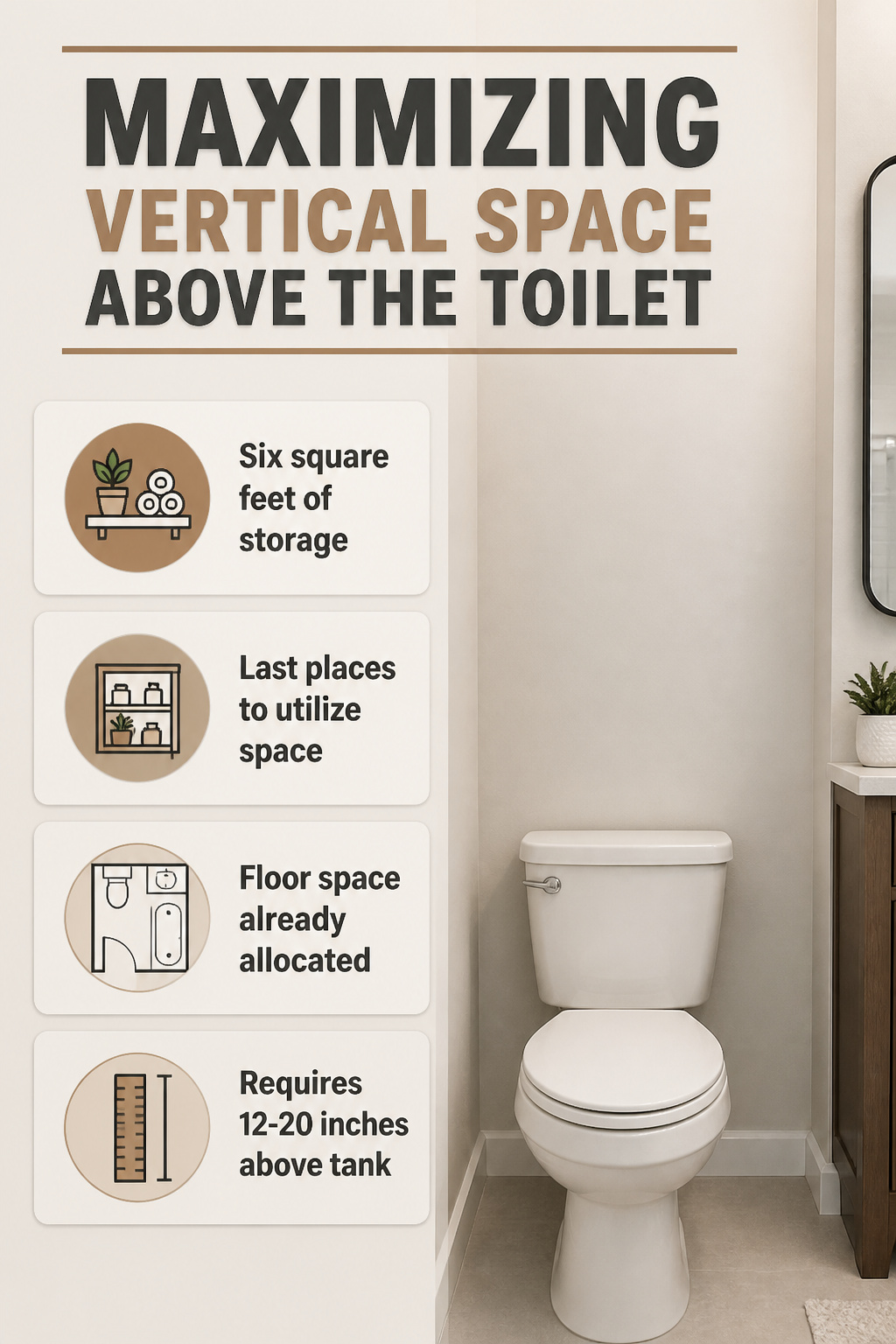
The wall above a toilet is usually the last place anyone thinks to use, which is exactly why it holds so much unused potential. In my own 5-by-8 foot bathroom, claiming that vertical strip gave back roughly six square feet of usable storage area without touching the floor plan at all. Small bathrooms force a choice: you either store upward or you do without. Floor space in a room that size is already spoken for by the door swing, the tub, and the vanity. The twelve to twenty inches of clear wall above the tank is often the only real estate left, and leaving it blank is a decision most renters and first-home owners cannot afford to make. What changes the situation from cramped to workable is recognizing that height costs nothing in a bathroom where the footprint is fixed.
Function Plus Looks
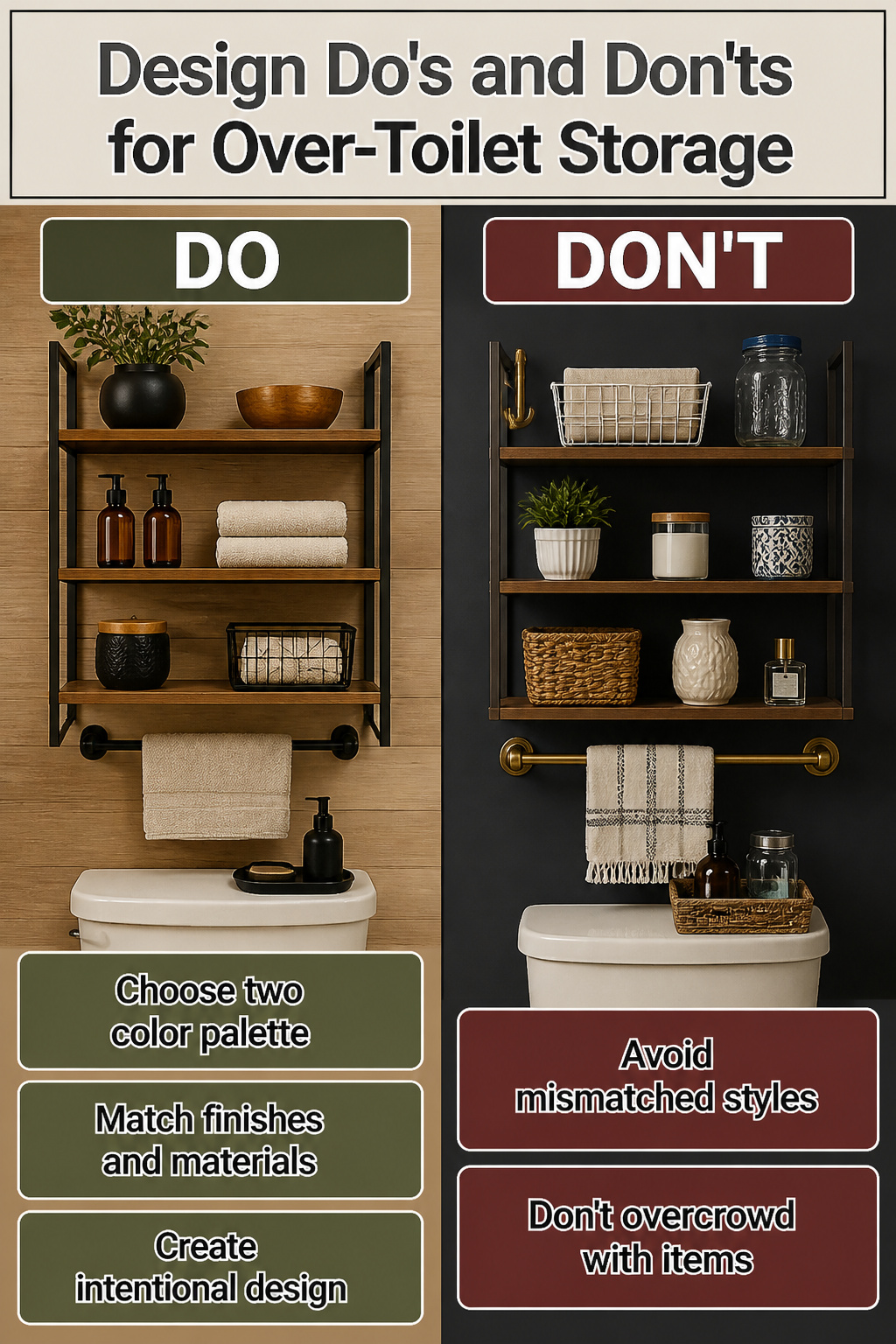
Storage above the toilet falls apart fast when every shelf holds a different finish, a different era, a different mood. The eye has nowhere to rest, and the room starts to feel like a staging area instead of a bathroom. The two-color palette rule keeps it in check: pick two materials or tones and let nothing else join the party. In my own place that meant warm wood and matte black. Towel bars, shelf brackets, the little ceramic tray for hand soap, all of it spoke those two languages and nothing more.
I broke this rule once, chasing what magazines call a "collected" look. A brass hook wandered in, then a white wire basket, then a glass jar with a blue lid that felt vintage and therefore allowed. The result read as cluttered, not curated. Each piece fought for attention and none of them won. Two colors does not mean two items; it means two families that everything belongs to. The restraint is what makes it look intentional rather than accidental.
DIY Options That Actually Work
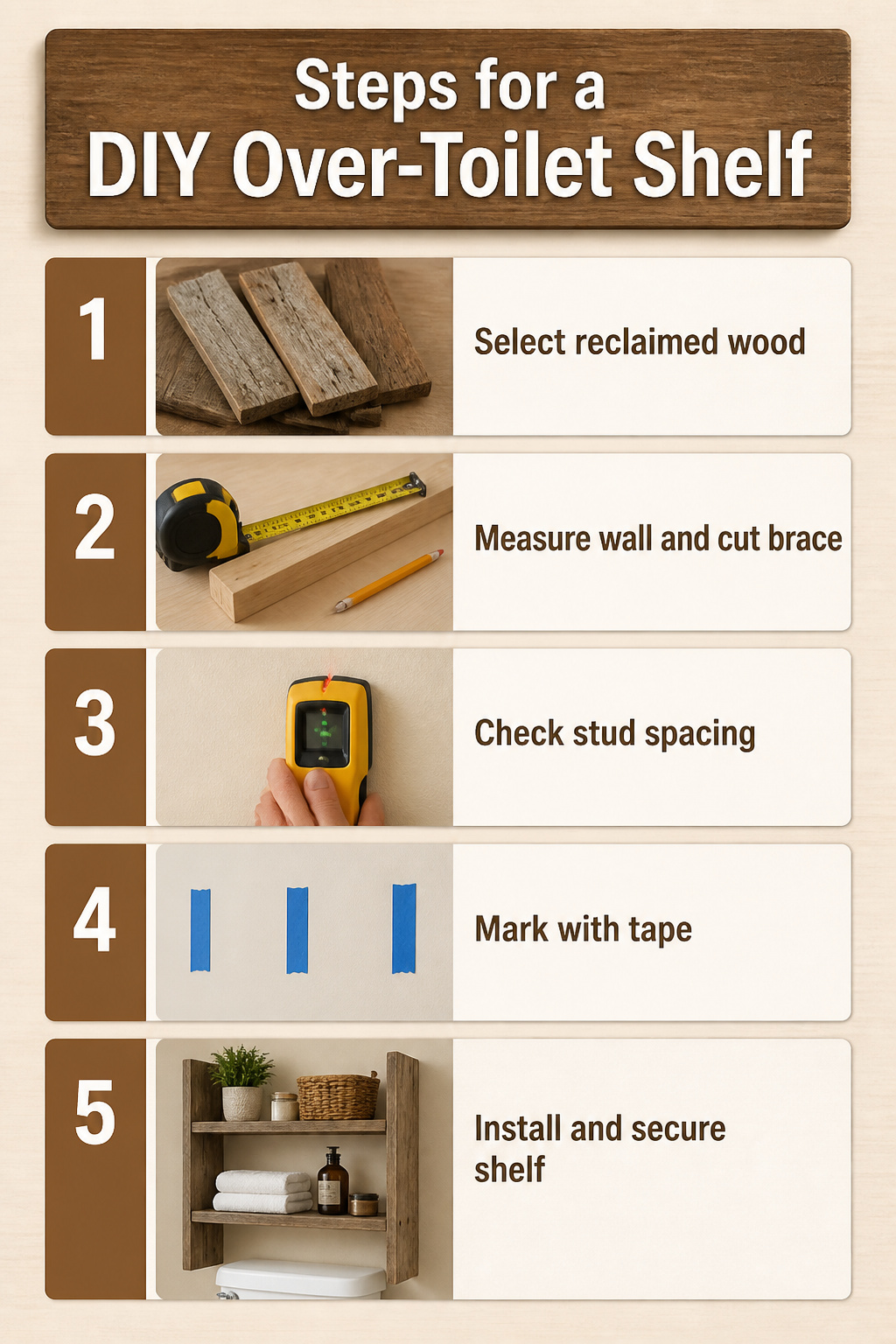
Reclaimed wood from a demolished porch gave me the cheapest over-toilet shelf I ever built, and the grain beat anything I saw at retail. I considered glass first, since it photographs well, but every fingerprint and water spot shows up under bathroom light. Bamboo seemed greener until I learned how fast it warps in humidity; three months in, the corners on my friend’s unit had started to curl.
Wall stud spacing is what turns a one-weekend project into three. I measured the wall, cut the back brace to length, and assumed studs sit where they always had in my last apartment. They did not. A $5 stud finder would have saved me two weekends of patching drywall and re-anchoring. Now I check twice, mark with tape, and never trust the 16-inch rule in buildings older than 1990.
Seasonal Updates Without Rebuilding
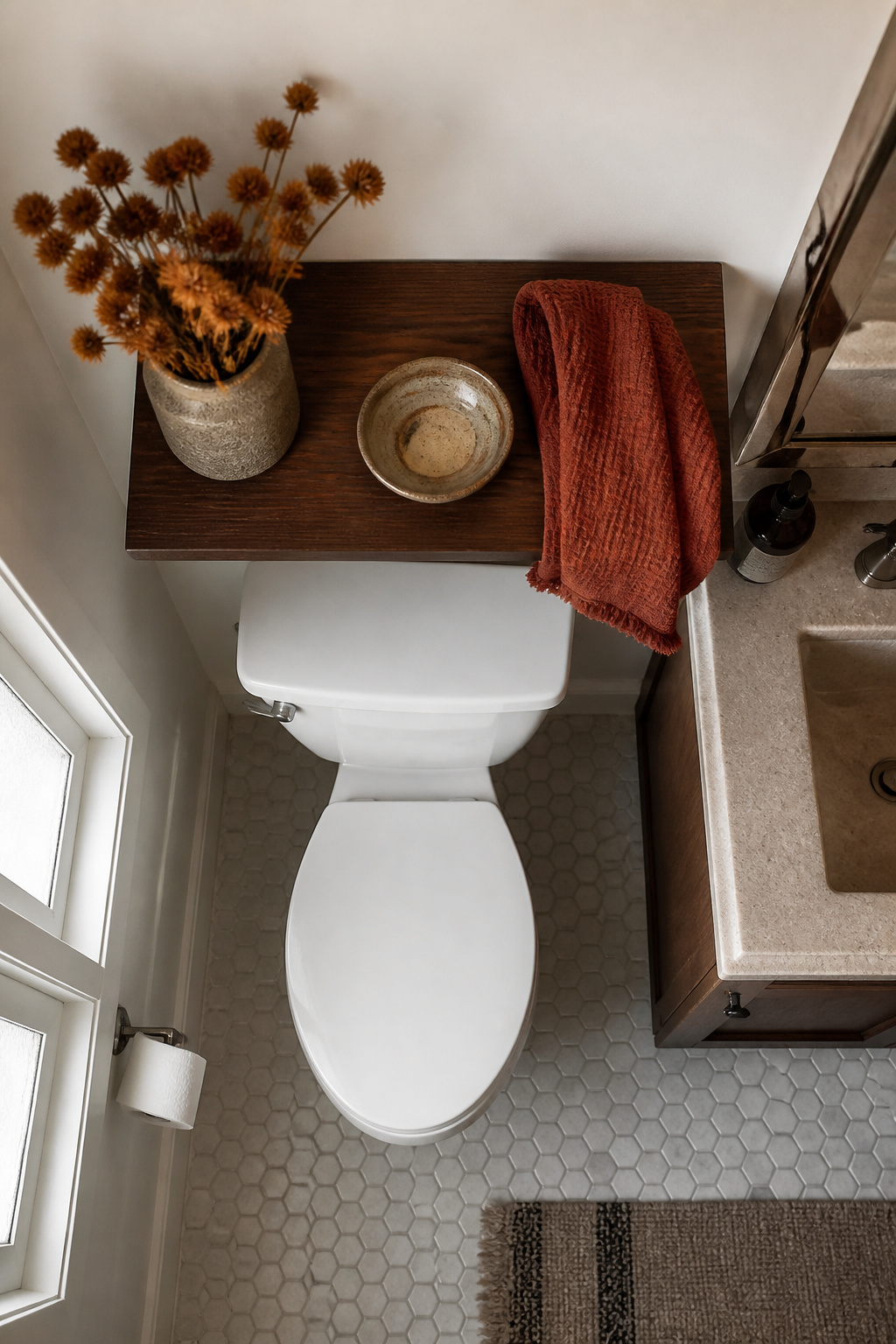
The shelf above my toilet holds the same three green stems in a matte vase for maybe eight months of the year. Around late October I pull the storage bin from the hall closet, the one labeled "bath swap" in painter’s tape, and trade them for dried seed heads I picked up somewhere. The whole rotation takes maybe ten minutes. Towels go from white to a deep rust, a small ceramic dish replaces the glass one, and the room suddenly reads like someone remodeled it.
That bin system matters more than the styling. Off-season items sit in a lidded container on a closet shelf, accessible enough that I will actually swap back when January hits, but never cluttering the bathroom itself. The humidity in there will warp wood and yellow paper faster than you’d expect, so everything waits its turn in dry storage.
The ten-minute swap that reads like a new room is usually just the textiles. Greenery, towels, and one small accent piece changed together signal intention in a way a single new candle never does. The shelf format stays fixed; only what sits on it moves.
Frequently Asked Questions
How do you organize above a toilet?
Use floating shelves, cabinets, baskets, or ladder units to turn that blank wall into storage without touching the floor plan. Keep daily items within easy reach and stash backups behind closed doors or inside bins so the eye has somewhere to rest. A two-color palette for all hardware and accessories keeps the look intentional rather than cluttered.
Can you put shelves above a toilet?
Yes, and the sweet spot for the bottom shelf sits 50 to 60 inches from the finished floor, with 10 to 12 inches of clearance above the tank lid. That spacing keeps you from ducking when you stand and from knocking the shelf when you lift the lid. Use a level twice and check for studs; floating brackets do not forgive sloppiness.
What are some over-the-toilet storage ideas?
Floating shelves, wall-mounted or freestanding cabinets, built-in recessed niches, leaning ladder shelves, towel racks, mirrored medicine cabinets, decorative baskets, and even plants or artwork all work above a toilet. Renters often do best with freestanding units or ladder shelves that need no drilling, while owners can recess shelves into the wall for a flush, permanent look.