
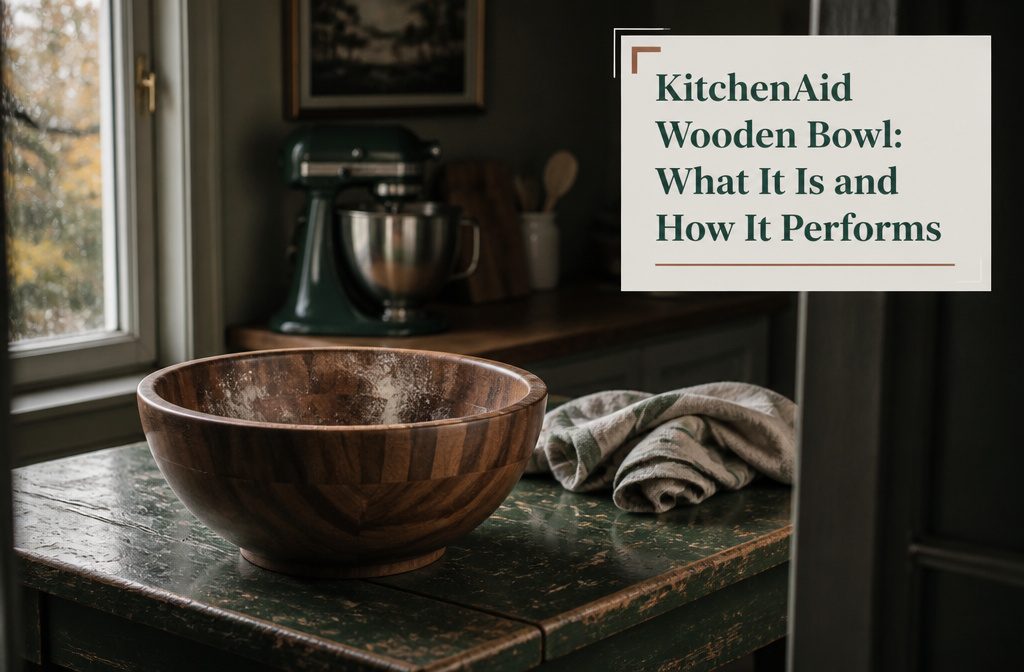
The KitchenAid walnut bowl is a 5-quart wooden mixing bowl that shipped with a single 2024 mixer model, the $700 Evergreen tilt-head, and requires hand-washing, immediate drying and regular oiling instead of the dishwasher routine steel bowls allow.
Third-party acacia bowls now fit other tilt-head models. The walnut insulates rather than conducts cold, so dough left in it for 2 hours stayed room temperature at the center even after refrigeration.
What KitchenAid Wooden Bowl Options Exist
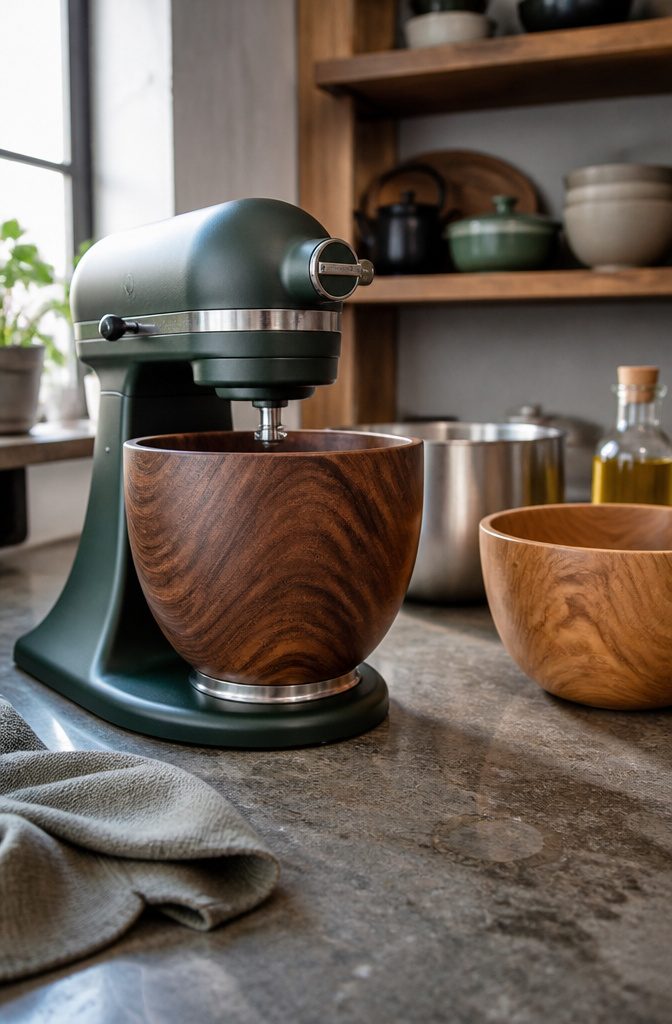
KitchenAid’s walnut bowl came packaged with a single mixer: the model KSM156WBPL, part of the 2024 Design Series Evergreen release priced at $699.99.
That 5-quart tilt-head mixer paired a matte dark green frame with a walnut bowl, the first wooden option KitchenAid has shipped with any stand mixer.
The bowl is quarter-inch thick sustainably certified walnut with no handle, and it requires hand-washing with immediate drying and regular oiling.
Standard Artisan mixers ship with stainless steel bowls, which go straight into the dishwasher and hold up to soaking. Some bundles include glass or ceramic, but wood has never been a factory option beyond that one Evergreen model.
Third-party makers now sell acacia bowls that fit specific KitchenAid mixers. Willow Haven’s version works with 4.5- and 5-quart tilt-head models but not bowl-lift mixers, and it carries the same hand-wash, dry-immediately, and oil-every-few-weeks routine as the walnut original.
Which Mixer Models Fit a Wooden Bowl
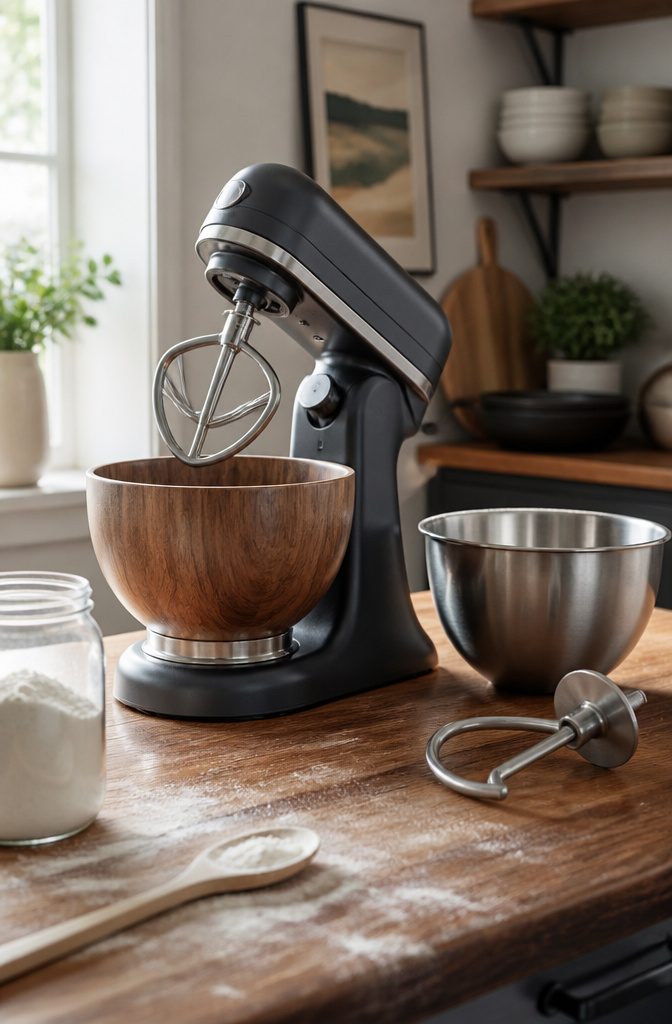
The KitchenAid walnut bowl ships with one specific tilt-head model (KSM156WBPL), a 5 quart Artisan-series mixer sold from 2024. If you own a different tilt-head mixer, third-party acacia bowls fit models K45, KSM75, KSM90, KSM150, KSM152, KSM155, KSM160, KSM175 and KSM195.
The acacia bowl sits on a stainless steel base that twists in like the original bowl and works with the flat beater, wire whisk and dough hook.
Bowl-lift mixers are not compatible. They hold the bowl on two side-pin arms, a completely different fitting, and no wooden bowl is made for that system.
After attaching any new bowl, run the coin test: slide a dime between the beater and the bowl bottom while the mixer runs.
If the beater strikes the coin or the bowl, adjust the height screw on the motor head. The fix takes a minute and prevents both scraping and gap problems.
How Wooden Bowls Perform for Mixing and Whipping

I whipped meringue in the walnut bowl four minutes after making an olive-oil-heavy cake batter in it, and the egg whites still reached stiff peaks.
That run matched what another test found: five minutes to glossy, pipeable meringue in a bowl that had been used but not yet oiled.
KitchenAid does warn against whipped egg dishes in an oiled wooden bowl, since the conditioning treatment leaves a film that can keep whites from mounting properly.
Cookie dough mixed cleanly, bread dough handled the same way steel does, and whipped cream came together across a month of regular use.
Cake batter whipped in seconds and lifted off the wood faster than it does from metal, leaving almost nothing to scrub.
How Wooden Bowls Handle Dough and Proofing
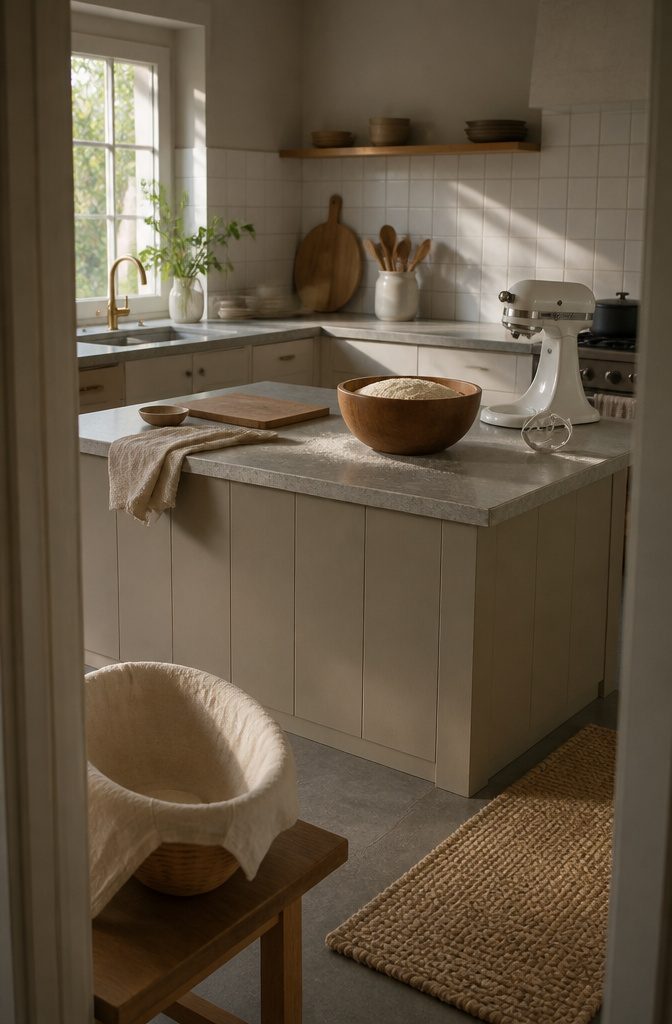
I mixed several bread doughs in the wooden bowl without trouble. The dough hook worked through a three-stage Japanese milk bread from start to finish, including beating cold butter into sticky dough at the end.
The dough clung to the wooden sides slightly more than it would to steel, but that extra friction actually sped up the butter step.
An 8-hour proof left no yeast smell in the walnut bowl. Wood is porous, so I expected it to pick up the fermentation scent, but a close sniff after the long rise came back neutral.
That was the Evergreen walnut bowl; the Willow Haven acacia bowl also handles dough and works with the dough hook, as long as you stay within your mixer’s normal batch size.
Cookie dough is where the thickness shows. After 2 hours in the refrigerator, the center of the dough was still room temperature — the quarter-inch walnut insulates rather than conducts cold through.
KitchenAid does not recommend refrigerating the bowl at all, since the cold can stress the finish and the glued joints. Transfer the dough to a metal bowl if it needs to chill.
Care Demands: Hand-Washing and Conditioning
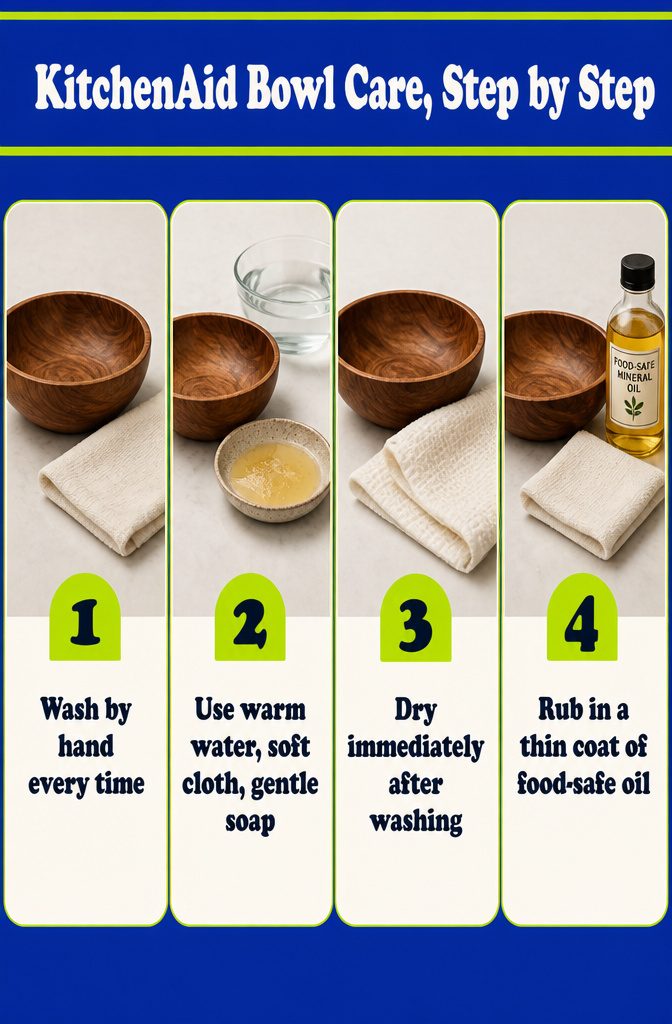
A wooden bowl demands hand-washing every time, and that means warm water, a soft cloth, and a gentle dish soap that won’t strip the finish. No dishwasher, no soaking in the sink, no abrasive scrubbers.
Dry it immediately after washing so water doesn’t sit in the grain and raise it. The whole cycle takes about three minutes once you’ve done it twice.
Conditioning keeps the timber sealed and smooth.
Food-safe mineral oil works, as does food-safe wood polish or walnut oil. How often depends on how dry your kitchen runs: regular oiling is the safe answer, though every three to four weeks holds up in ordinary use.
A thin coat rubbed in with a clean rag is all it takes, and the bowl looks better for it.
What You Trade for the Look

The walnut bowl looks beautiful on a counter or at the table, and it runs quieter than steel when the beater is on.
But you give up the handle that makes lifting and steadying a full bowl easier, though in practice most people only grab it when wrenching the bowl off the base or holding it steady through stiff dough.
Steel keeps three practical advantages. It goes in the dishwasher; wood is hand wash only, and the heat dries it out.
Steel tolerates an overnight soak if dough sticks; wood cannot sit in water and needs to be washed, towel dried, and stood upright to air.
And clip-on pouring chutes are designed for stainless steel rims, so they will not fit the wooden bowl.
Wood also wants a thin coat of food-safe oil or board butter every few weeks.
Steel never asks for it. A separate steel bowl costs around $30 if you want both.
Price and Where to Find One
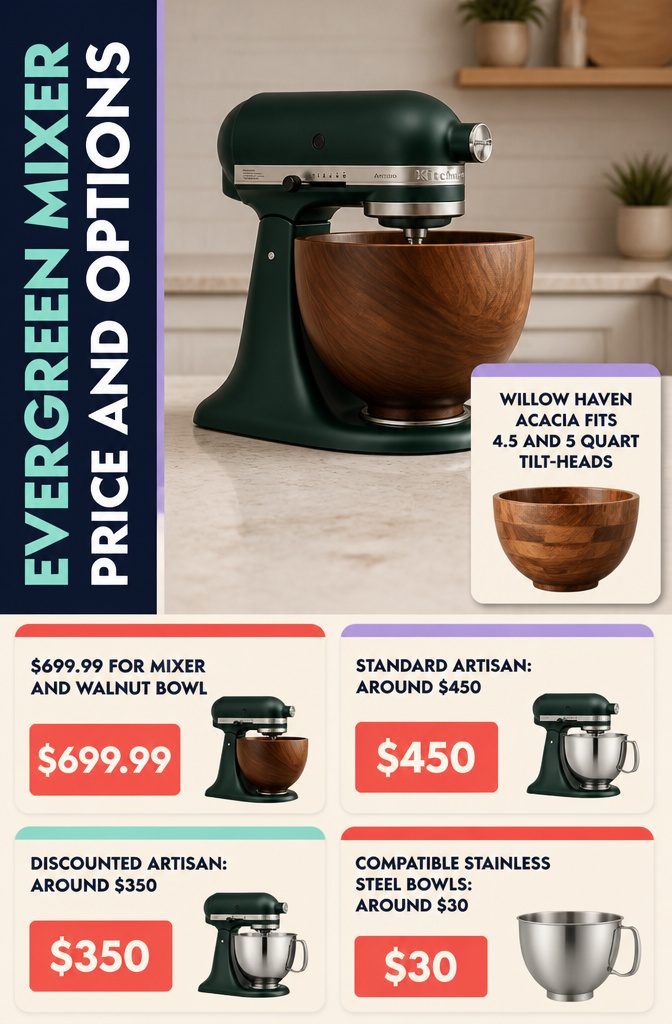
The Evergreen sits at $699.99 through KitchenAid’s site, though some listings round it to $700. That price lands you the dark green tilt-head mixer and the walnut bowl together.
A standard Artisan tilt-head without the wooden bowl runs closer to $450, or $350 when retailers discount it. The first run of Evergreen mixers sold out inside a week, which tells you something about demand even at twice the base model’s price.
If you want the wooden bowl mostly for display, compatible stainless steel bowls cost around $30. Swap the walnut bowl back on when the mixer sits out, and use steel for anything messy or acidic.
Willow Haven sells a third-party acacia bowl that fits 4.5 and 5 quart tilt-heads, giving you a wooden option without committing to the full Evergreen package.
Which Attachments Work With a Wooden Bowl
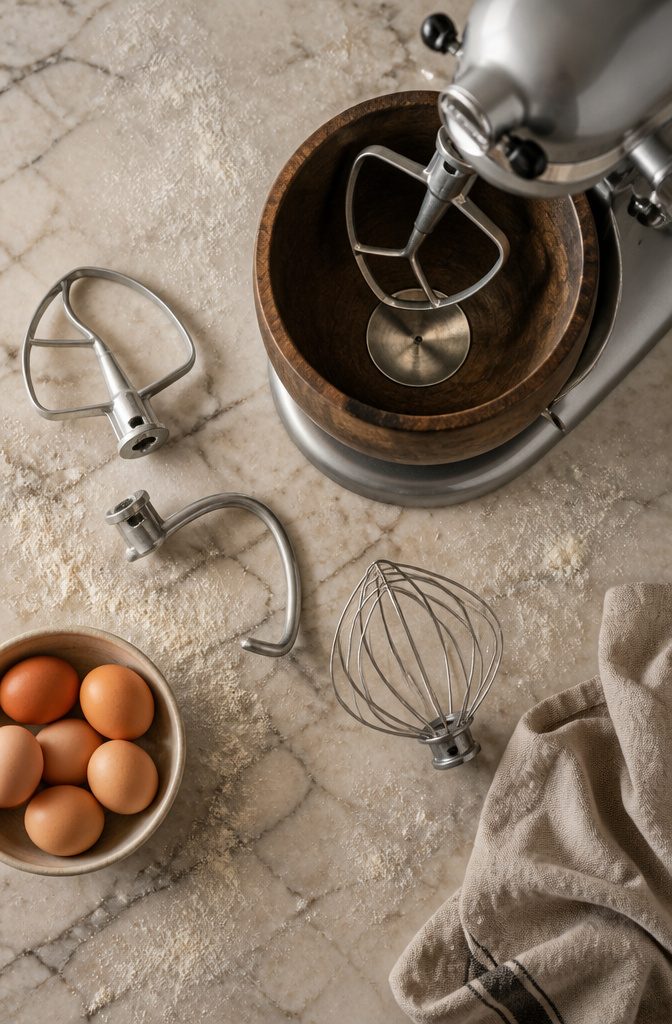
The Evergreen walnut bowl ships with three steel attachments designed for its bowl height and capacity: a flat beater, a dough hook, and a wire whip.
Each one locks into the power hub the way it would with a steel bowl, and the clearance from bowl bottom to attachment surface stays consistent whether you’re creaming butter or kneading dough.
The Willow Haven bowl follows the same attachment compatibility, fitting the flat beater, wire whisk, and dough hook that come standard with most tilt-head mixers.
Clip-on pouring chutes sit out. The wooden rim profile doesn’t give them the edge they need to grip securely, so they slide or tip when you tilt the bowl to pour.
KitchenAid sells over ten additional attachments separately for the mixer itself—pasta rollers, food grinders, spiralizers—and all of those mount to the power hub rather than the bowl, so the bowl material changes nothing about what the mixer can do beyond mixing.
Frequently Asked Questions
Does the KitchenAid Artisan come with a wooden bowl?
No.
Standard Artisan mixers ship with stainless steel bowls, and some bundles include glass or ceramic. The walnut bowl was exclusive to one model, the KSM156WBPL, released in 2024 as part of the Design Series Evergreen.
Can you put a wooden bowl on the mixer you already own?
Third-party acacia bowls fit 4.5- and 5-quart tilt-head models like the K45, KSM75, KSM90, KSM150, KSM152, KSM155, KSM160, KSM175 and KSM195. Bowl-lift mixers are not compatible because they use a different mounting system with side-pin arms.
So did KitchenAid ever make a wooden bowl?
Yes.
The walnut bowl came with the KSM156WBPL mixer, a 5-quart tilt-head Artisan-series model released in 2024 as part of the Evergreen collection. That was the first and only wooden bowl KitchenAid has shipped with any stand mixer.
Is a wooden bowl a sensible choice, or just a pretty one?
It performs well for most mixing tasks and runs quieter than steel, but requires hand-washing, immediate drying, and regular oiling. You give up dishwasher convenience, overnight soaking, and compatibility with clip-on pouring chutes.
Can you make bread dough in a wooden mixer bowl?
Yes.
Both the KitchenAid walnut bowl and the Willow Haven acacia bowl work with the dough hook for bread dough, as long as you stay within your mixer’s normal batch size. The dough hook worked through multi-stage doughs without trouble.
Are wooden bowls safe for food?
Yes, when finished with food-safe oil or conditioner. Both the KitchenAid walnut bowl and third-party acacia bowls use food-safe finishes and require regular conditioning with food-safe mineral oil or wood polish to maintain the seal.
What should you check after fitting a new bowl?
Run the coin test by sliding a dime between the beater and bowl bottom while the mixer runs. If the beater strikes the coin or bowl, adjust the height screw on the motor head to fix the clearance.
Will a wooden bowl void my KitchenAid warranty?
Using an accessory does not change the mixer itself, but warranty terms are set by the manufacturer. Check your warranty document or contact KitchenAid directly if you have concerns about coverage.