Vintage tea sets span single novelty cups to complete sterling silver services, with porcelain and bone china in between. The choice depends on whether you want a full matching service or individual pieces you can collect one at a time.
Wedgwood Jasperware produces sharp white relief figures on colored stoneware that hold detail across 2 centuries, while scenic transferware teacups cost less and stack flat for storage.
1. Porcelain Tea Sets

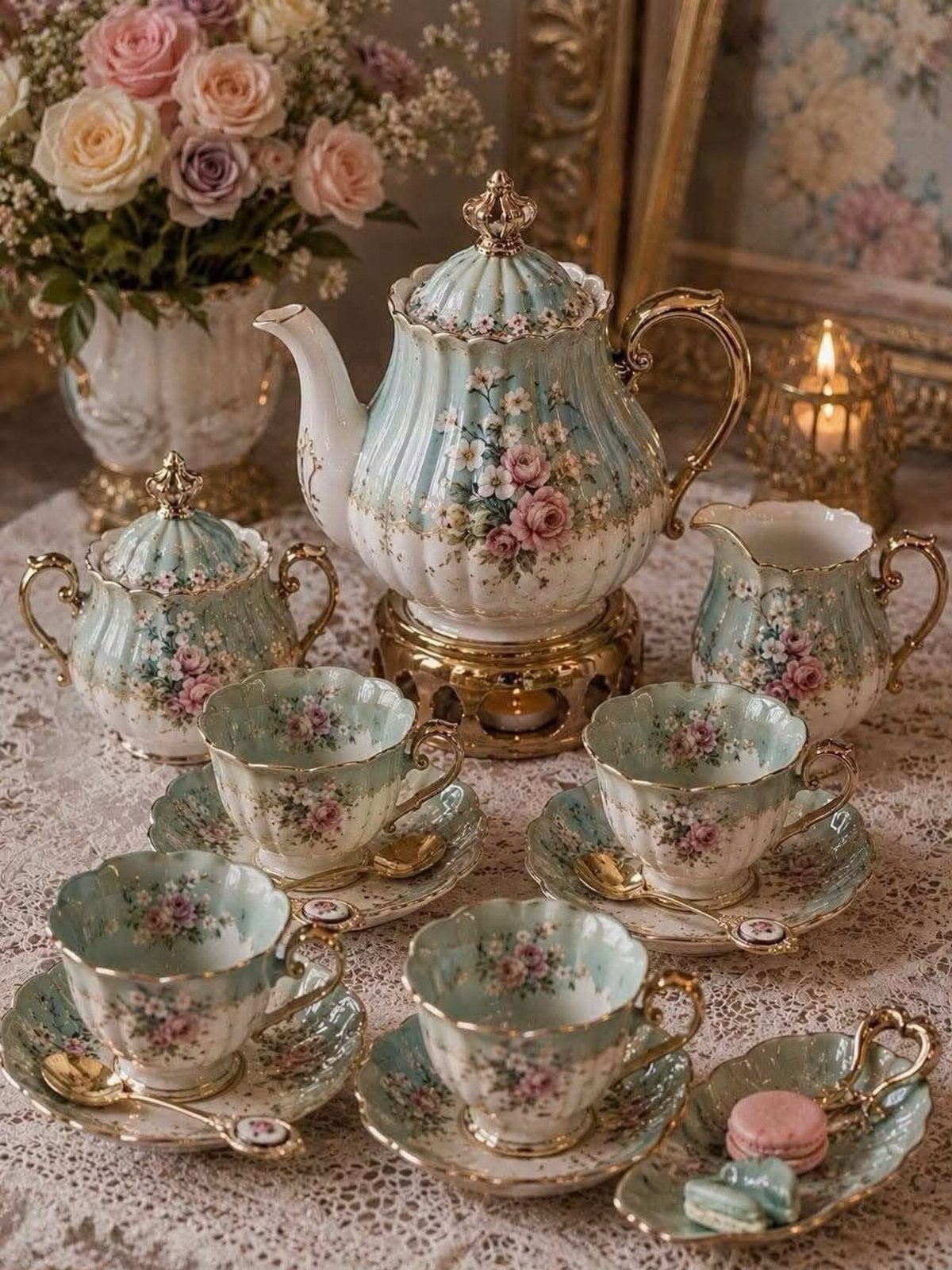
Porcelain tea sets carry the weight and translucence that collectors look for in older pieces. The floral decoration and gold trim visible here mark a formal service, the kind made for display and special occasions rather than daily use.
A complete set typically includes a teapot, creamer, sugar bowl, and four to six cups with saucers.
Known makers and intact services fetch more, while partial sets cost less. Condition decides value: chips, cracks, and worn gilding all bring the price down.
2. Wedgwood Tea Sets

Wedgwood produced tea services in multiple styles, but Jasperware stands apart.
The matte stoneware body takes a dip in colored slip, and white relief figures get applied by hand before firing. The result is crisp detail that holds up across 2 centuries.
This terracotta version, sold as a service for 8, shows the neoclassical figures Wedgwood is known for. Jasperware also comes in the more common pale blue, sage green, and black.
Full services cost more when the color is rarer, the production year is older, and all pieces remain. Individual teapots or creamers start lower if you want a single piece.
3. Bone China Tea Sets

Bone china gets its name from the bone ash mixed into the clay, which makes the fired piece thin, strong, and slightly translucent when held to light. The material became the standard for English tea services in the 19th century.
The embossed floral pattern here sits in relief rather than painted on.
Collectors value bone china for its durability paired with a refined appearance. A teapot and cup in good condition hold value, with rarer patterns and older marks commanding more.
4. Silver Tea Sets
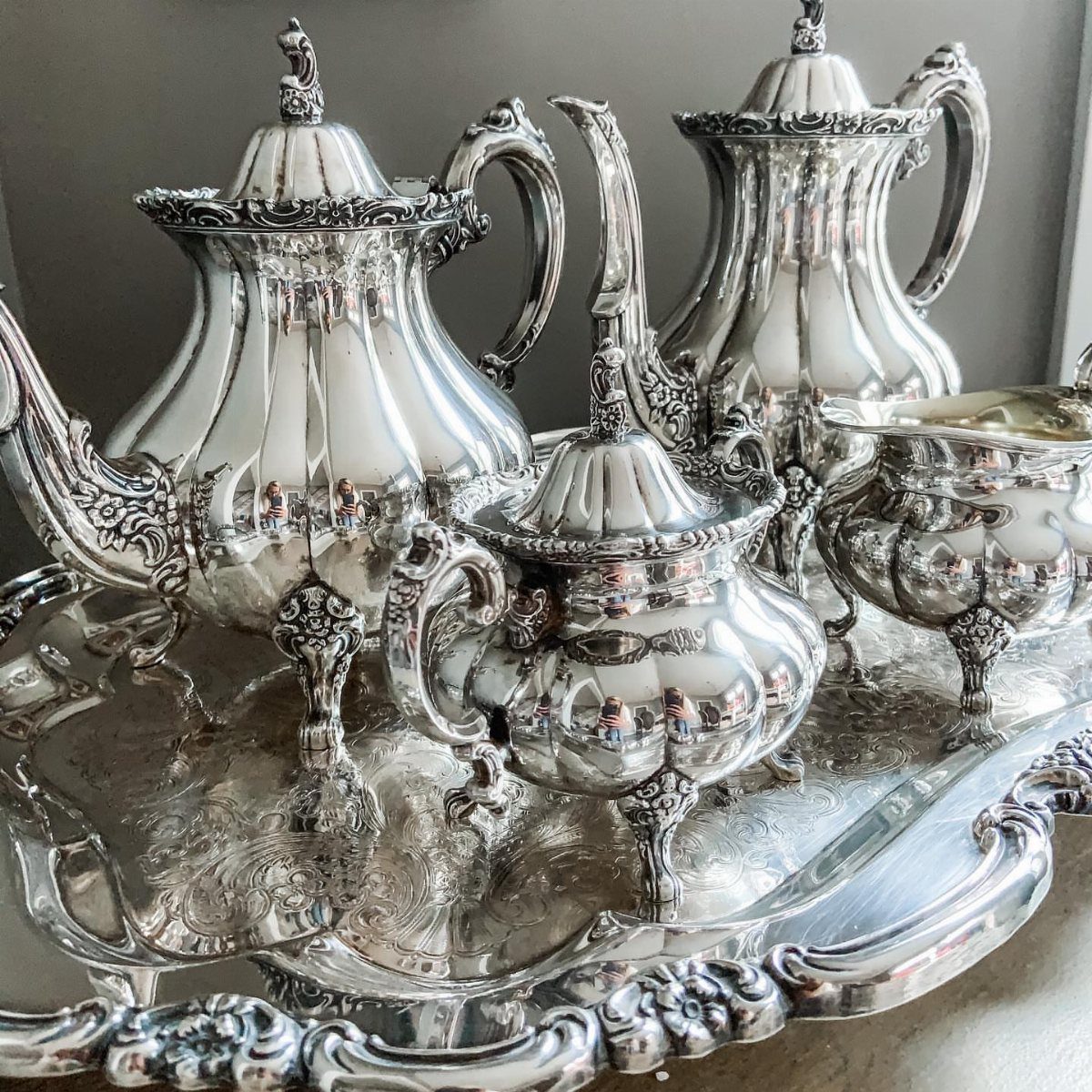
Silver tea services carry more weight than porcelain, both literally and in the polishing they require.
Sterling silver commands higher prices than silver plate, and hallmarks confirm which you have.
A complete service in good condition holds value, and the price climbs with age, maker, and condition. Tarnish comes off with polish, but dents and worn plating do not, so check those before buying.
5. Teacups and Saucers

Single cups and saucers let you collect patterns one at a time instead of committing to a full service. The pink and white porcelain here, trimmed in gold, shows the decorative range available when you buy individual pieces.
Price depends on maker, age, and decoration.
Mismatched sets work if you pick a theme: all florals, all gold trim, or all from one era. Cracks lower value more than small chips on the rim or foot.
6. Wedgwood Jasperware
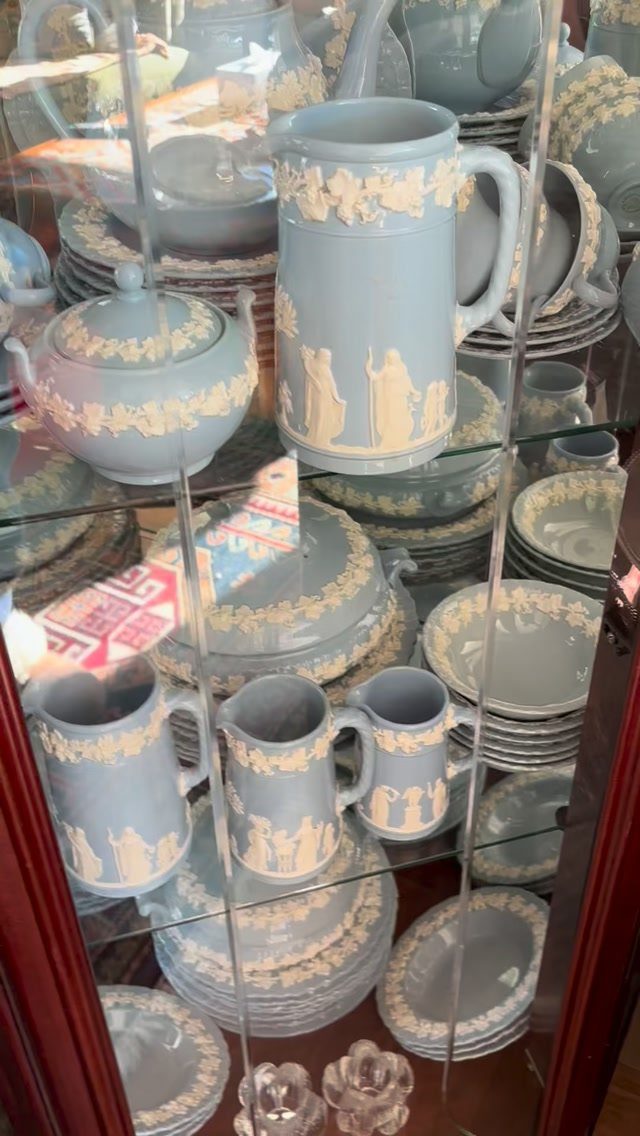
The process produces sharp detail that does not wear or fade.
Jasperware holds value well.
Individual pieces cost less, and larger serving pieces or complete sets cost more. The pale blue is easiest to find; darker blues, greens, and unusual colors like lilac or yellow cost more.
7. Antique Teapots

Molded teapots shaped like cottages, animals, or faces turn up in antique markets and estate sales. The house forms here date from the mid-20th century, when novelty teapots sold as souvenirs and shelf pieces.
Single pots cost less than full services, and condition matters more when the spout or handle is part of the sculptural form.
A crack in a curved handle or a chip on a peaked roof lowers value. Prices depend on the maker, the form, and how early the piece is.
8. Tea Caddies

Tea caddies stored loose tea when it cost enough to lock up. Wooden caddies usually held 2 compartments for different leaves and a center bowl where the blend was mixed before brewing.
The lock and key add value if both survive. Intact examples with original hardware cost more when the wood is better, the metalwork survives, and the piece is older.
9. Chinese Tea Sets

Chinese tea sets follow gongfu brewing, which uses small vessels and multiple short infusions.
The gaiwan here, a lidded bowl with no handle, steeps the tea. The glass pitcher decants it, and small cups hold a few sips each.
Sets range from simple porcelain to hand-painted Jingdezhen ware.
Condition and maker drive price. A basic working set costs less; older pieces with fine painting or known kilns cost more.
10. Japanese Tea Sets
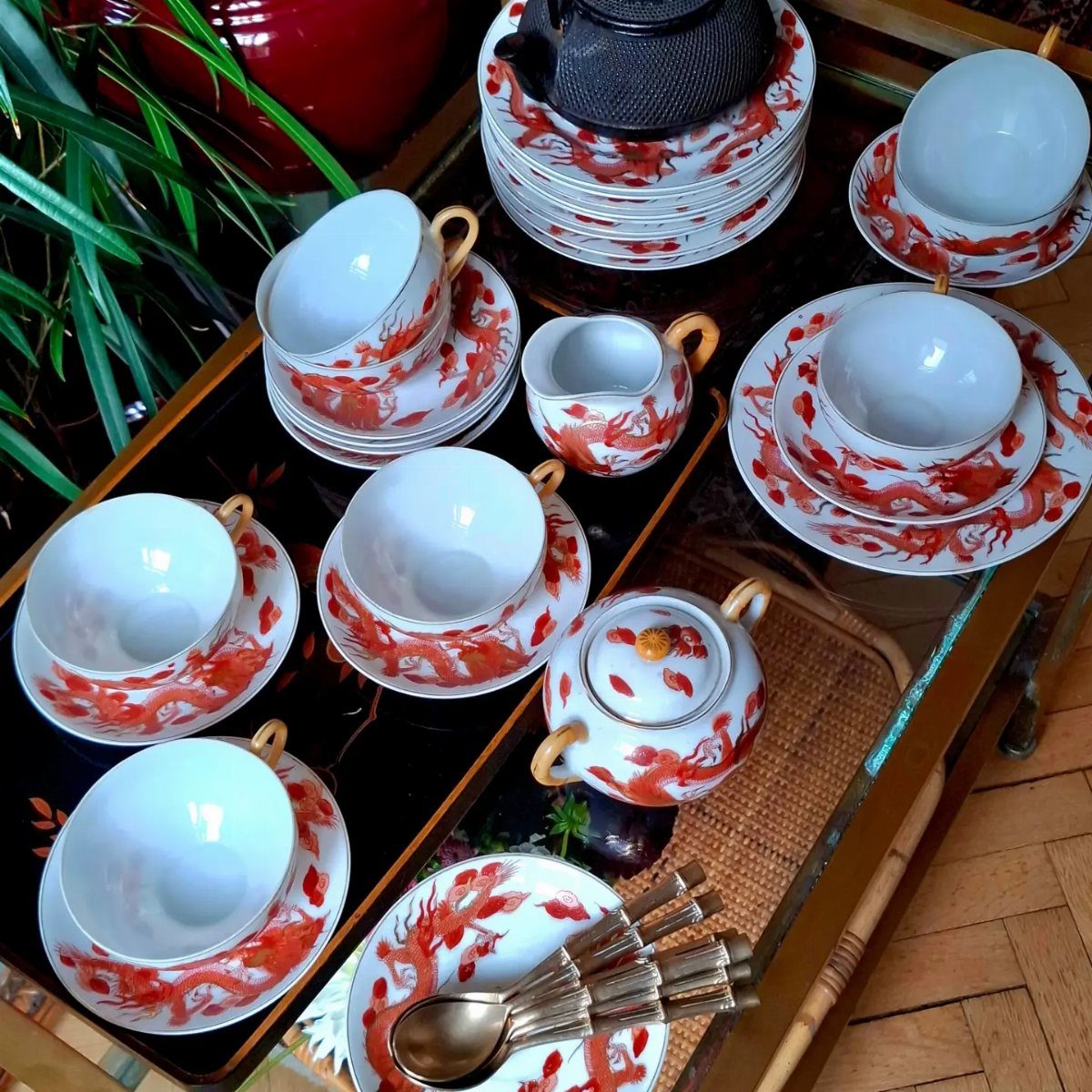
Japanese tea sets made for export often pair porcelain with cast iron. The white cups and teapot here carry red dragon patterns, a design that became standard for Western markets in the 20th century.
Cast iron teapots hold heat longer than porcelain but need care: water left inside causes rust.
Porcelain pieces are easier to maintain. A matching service costs more when all pieces survive, and older Kutani or Imari patterns command higher prices than mass-produced export ware.
11. Antique Tea Sets

The porcelain set here sits on a lace cloth, the kind of formal presentation these pieces were made for.
Age alone does not set the price. Maker’s marks, pattern rarity, and condition all matter more.
Services with all pieces intact cost more than partial sets, and any damage, visible cracks, or worn gilding lowers value. Expect to pay more for named makers and less for unmarked pieces.
12. Vintage Tea Sets

Vintage tea sets span decades and styles, from Art Deco geometric patterns to mid-century florals. The purple and gold service here shows the ornate decoration common in European and Eastern European pieces from midcentury.
Partial sets cost less than complete ones. A teapot and a few cups cost less than a full service with serving pieces.
13. English Tea Sets
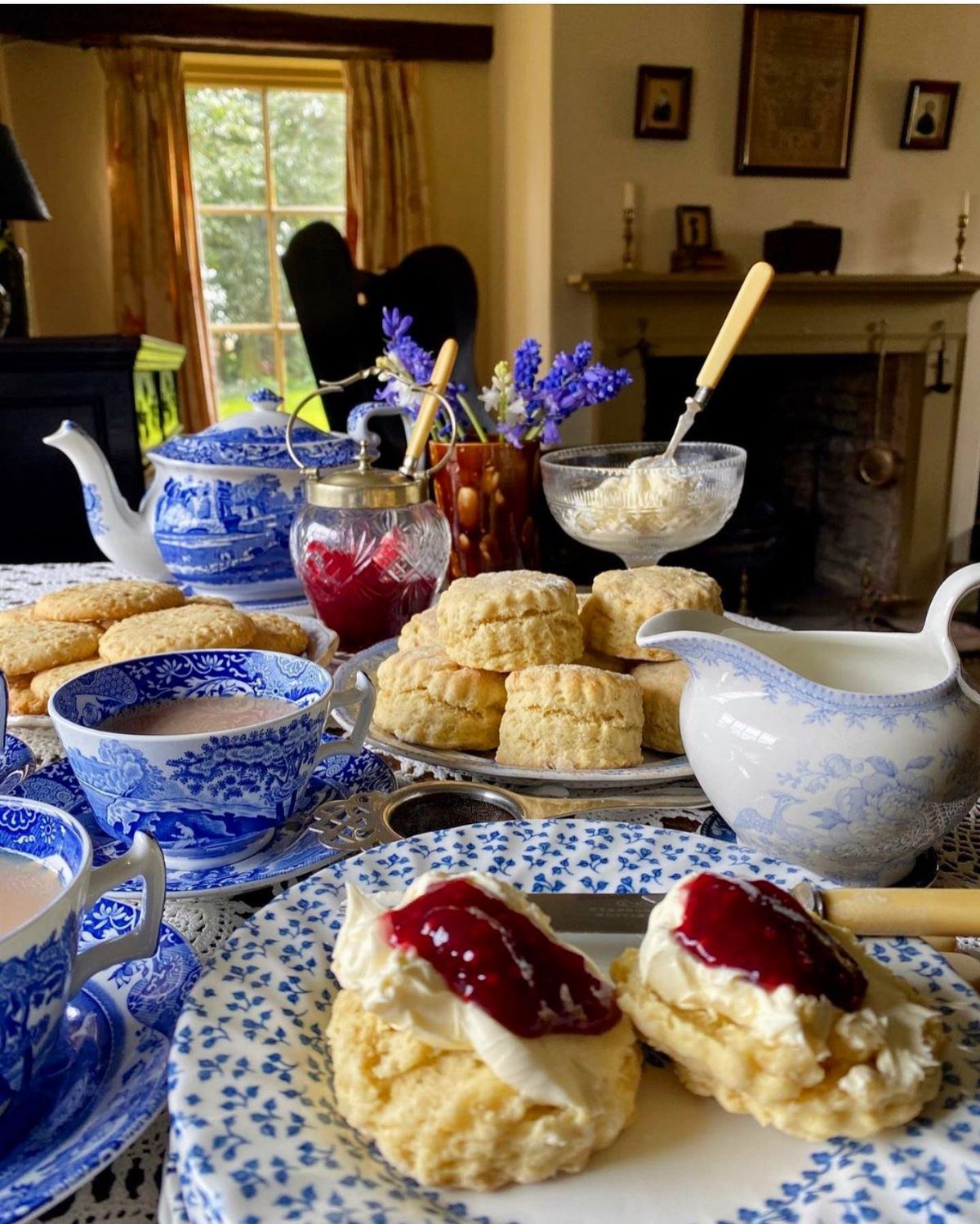
English tea services built around bone china and ironstone brought formal tea service into middle-class homes in the 19th and early 20th centuries.
The blue and white pattern here follows a tradition that crosses makers, from Spode to Wedgwood, with printed decoration that holds up through decades of use.
A full service includes serving pieces, and those cost more when present. Partial sets work fine if you want a teapot and cups without committing to the tray and sugar bowl.
14. Tea Sets for Two
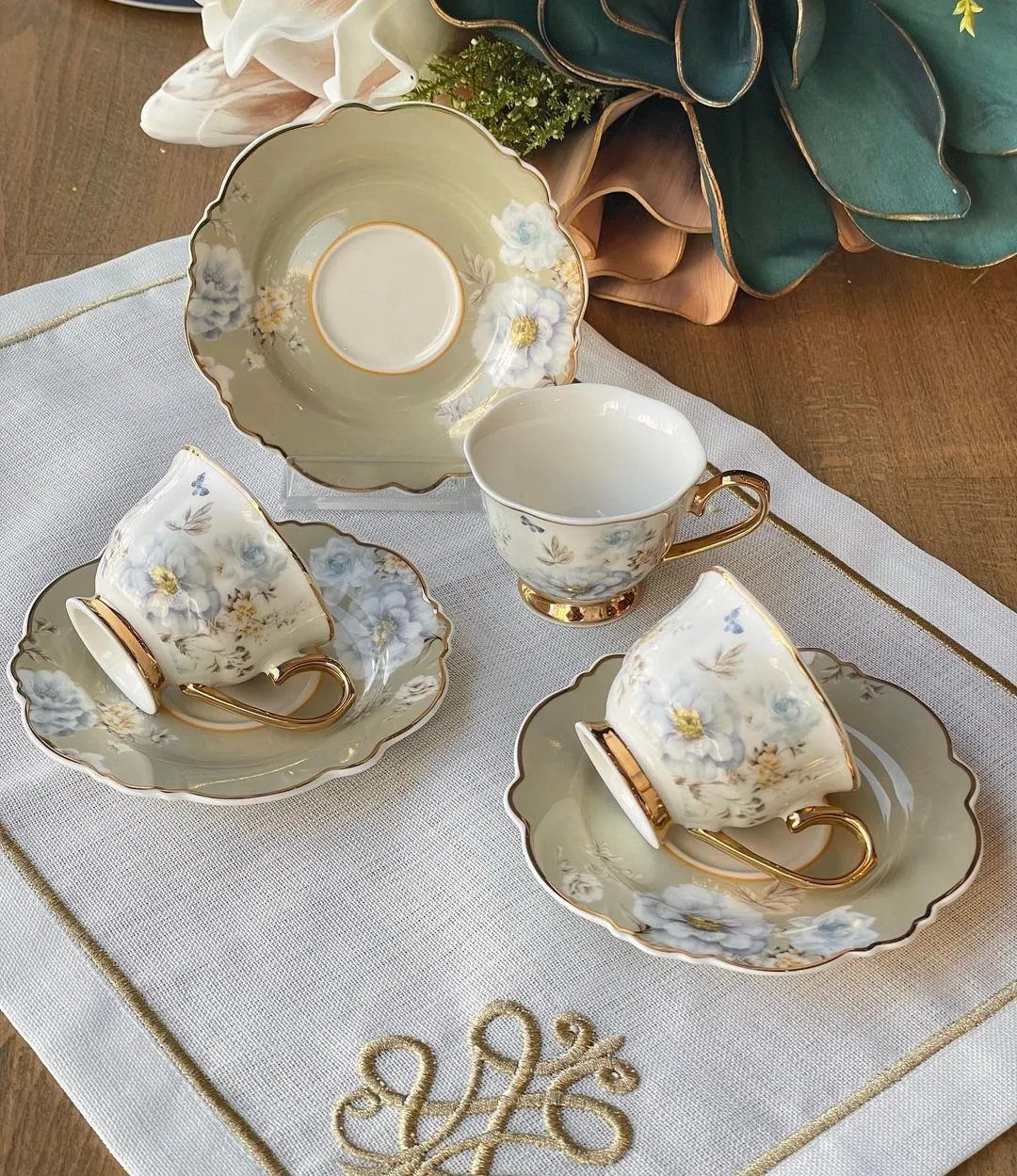
Services for 2 include 2 cups with saucers, and sometimes a small creamer or sugar bowl.
Smaller services take less shelf space and cost less than full services, which makes them easier to collect when you want variety.
A matching pair in good condition holds value better than single orphaned cups. Cracks matter more than small rim chips when only 2 pieces carry the pattern.
15. Royal Worcester Sets
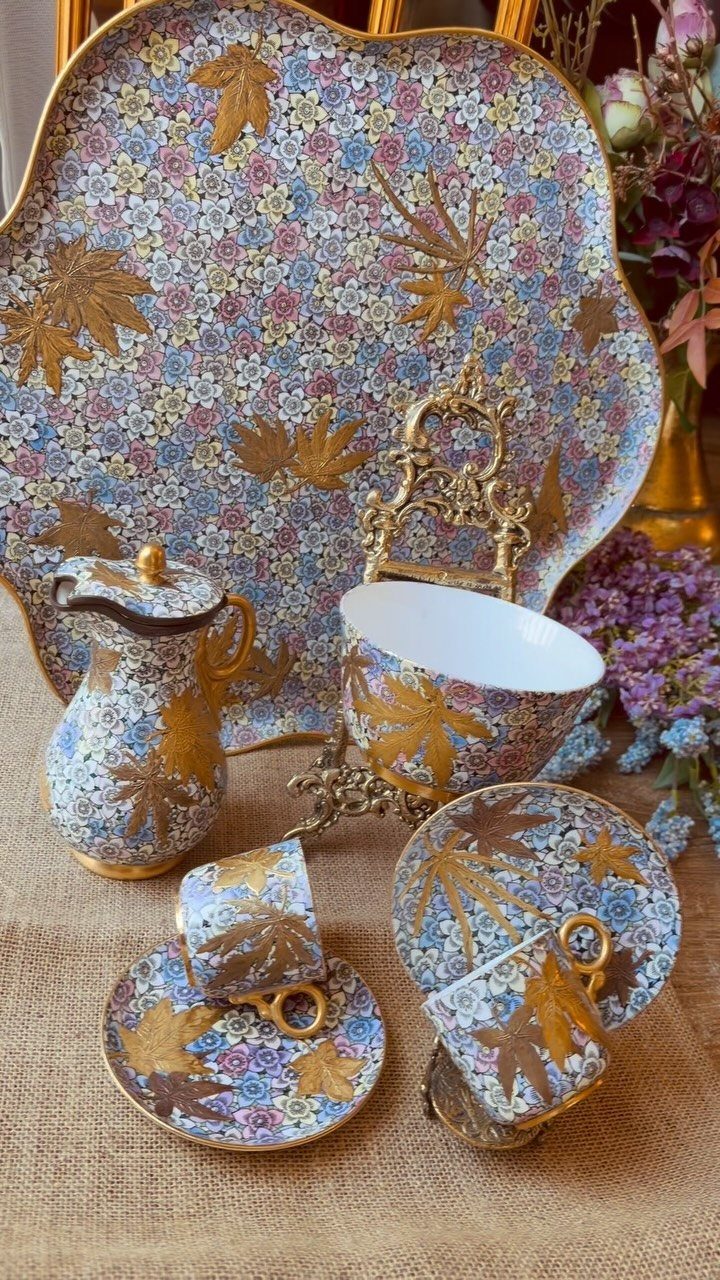
Royal Worcester produced elaborate services combining hand-painted flowers with raised gold work. The gilding here sits in relief rather than flat, a technique that takes more labor and shows wear less obviously than painted gold.
Complete services with intact gilding cost more, and older pieces often carry more value when backstamps show country of origin.
Worn gold and missing pieces lower value, but the maker’s name still commands attention. Individual serving pieces turn up more often than full sets.
16. Cloisonné Enamel Sets

Cloisonné enamel builds color between thin metal wires, which are soldered to a metal body, filled with powdered glass, and fired. The blue floral work here shows the crisp edges and glossy finish that separate cloisonné from painted decoration.
Tea services in cloisonné cost more than porcelain because of the labor involved.
Damage shows as missing enamel or bent wires, and both lower value. Matching sets cost more when all pieces survive.
17. Tea Sets with Gold
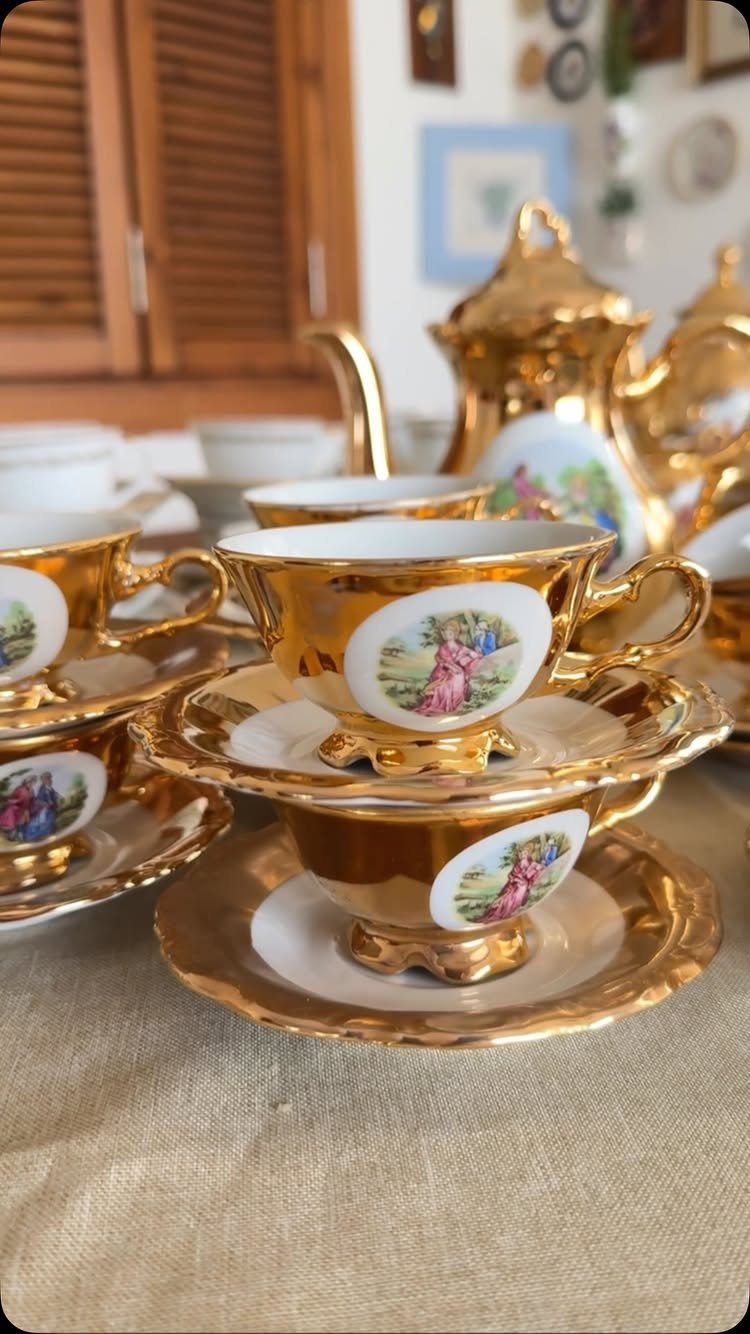
Gold decoration shows up as trim, painted patterns, or applied leaf.
Complete sets with minimal gold loss cost more. Worn rims are common and lower value less than chips or cracks.
If you plan to use the set, expect the gold to wear further. Display pieces hold their gilding longer.
18. Floral Tea Sets
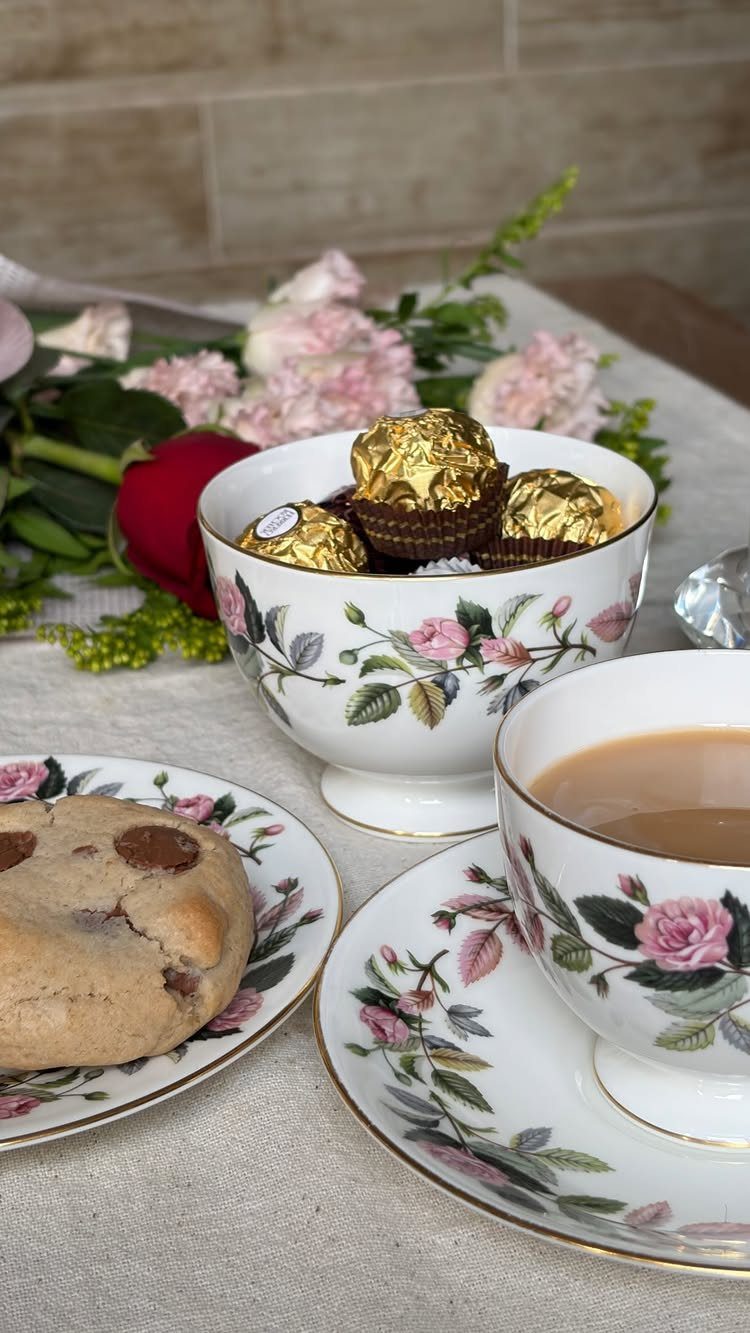
Floral patterns cover more vintage tea services than any other decoration.
Hand-painted flowers cost more than transfer prints, and named patterns cost more than generic florals. A single cup and saucer in good condition costs less than a service and lets you build slowly.
19. Blue and White Wares

Blue and white porcelain has been made for centuries, starting in China and copied across Europe and Asia. The pattern here shows the painted decoration that collectors look for, with detailed brushwork rather than printed transfers.
Chinese originals cost more than English or Japanese copies, and hand-painted pieces cost more than transfer prints.
A single teapot or serving piece starts lower than a full service. Condition matters: crazing and small chips are common, but cracks lower value.
20. Tea Sets with Trays
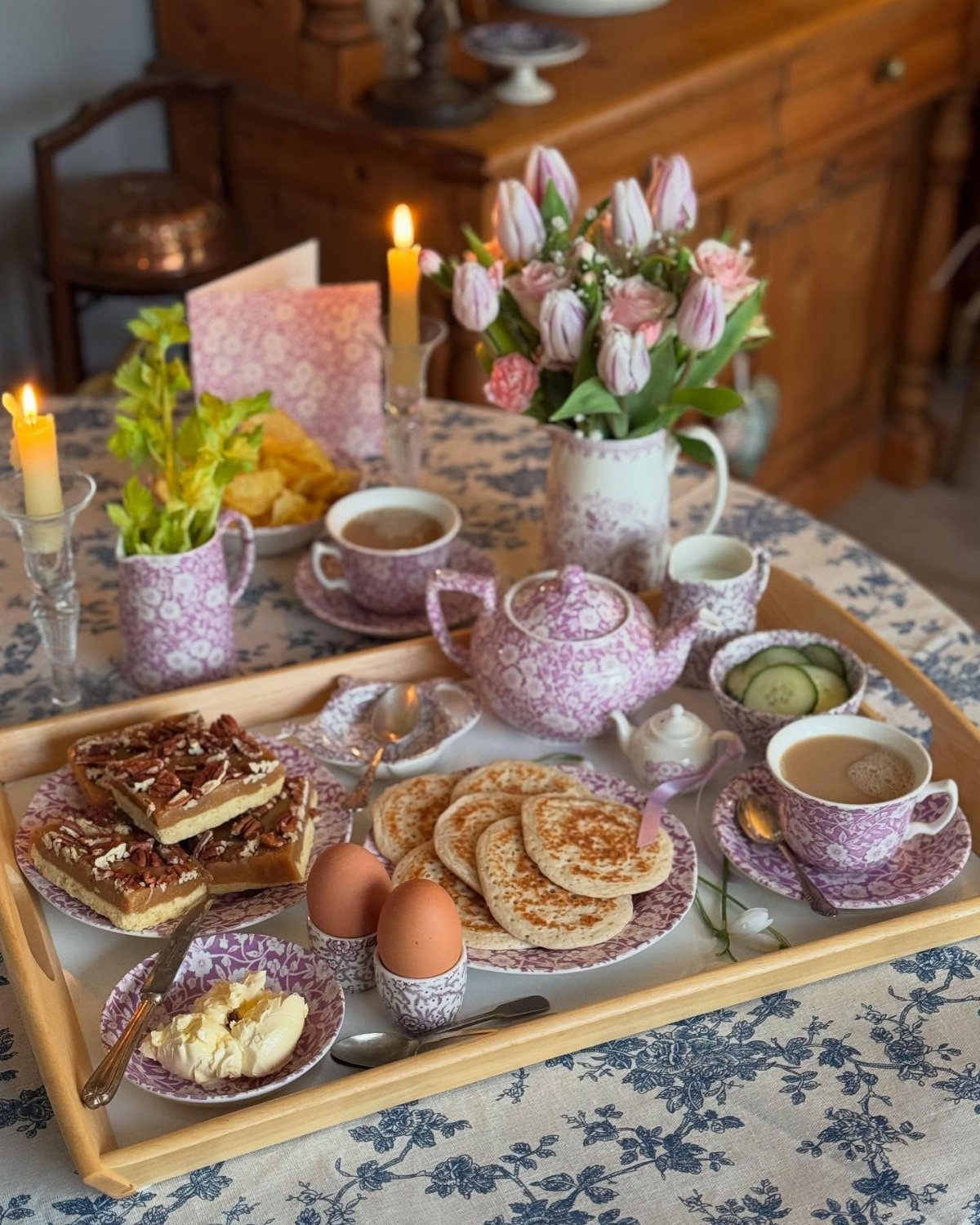
A serving tray turns a tea service into something you can carry without making 2 trips. A wooden tray keeps the pot, cups, and snacks together when you’re serving tea on a low table or carrying it to another room.
Trays sold separately from tea services, so matching is rare.
Wood trays hold more weight than painted metal ones. A tray sized to fit your teapot, cups, and a plate or 2 costs less than a large butler’s tray and takes less storage space.
21. Gaiwan Tea Wares

Gaiwans differ from Western teapots in that you drink directly from the lidded bowl after tilting the lid to strain the leaves.
Gaiwan brewing uses small cups because you refill them several times from the same leaves, each steep lighter than the last.
A gaiwan set costs less than a full Western tea service because the pieces are smaller.
Porcelain gaiwans cost less than those with fine enamel work. The lid, bowl, and saucer all need to survive for the piece to function, so check for chips on the rim where the lid sits.
22. Tea Set Shopping

Antique stores, estate sales, and flea markets stock more vintage tea wares than any other category of tableware.
Dealers who focus on one category stock deeper: you’ll find sets grouped by maker, pattern era, or glaze type instead of mixed shelves.
Prices vary with condition and rarity. A common floral cup costs less than a named maker’s piece.
Buying in person lets you check for cracks, worn gilding, and chips before paying. Partial sets cost less, and individual cups let you build a collection slowly.
23. Vintage Teacups

Single vintage teacups let you collect specific themes without buying full services. Character licensing makes certain teacups collectible once the manufacturer stops the run and supply shrinks.
Themed cups, whether character designs or commemorative pieces, hold value when the set remains complete and the decoration has not worn.
A cup without its saucer costs less. Novelty pieces appeal to collectors of the theme as much as tea ware collectors, which can push prices higher for popular subjects.
24. Vintage Floral Porcelain Sets

Floral porcelain services with gold trim were made for formal use, and many survive because they spent more time on display than in rotation. The cream ground here lets the pink flowers and gold edging stand out.
A complete service holds value better than partial sets, and intact gilding matters.
Wear shows first on handles and rims where hands touch most. Services displayed rather than used hold their finish longer, which keeps resale value higher.
25. Scenic Transferware Teacups

Scenic transferware prints buildings, bridges, and countryside onto porcelain using engraved copper plates. The cottage scene here shows the level of detail transfer printing holds: crisp lines in a single color, usually black, brown, or blue.
Scenic patterns hold value when the print remains sharp and the porcelain is free of cracks. Displayed cups show wear only if handled often.
26. Miniature Tea Set
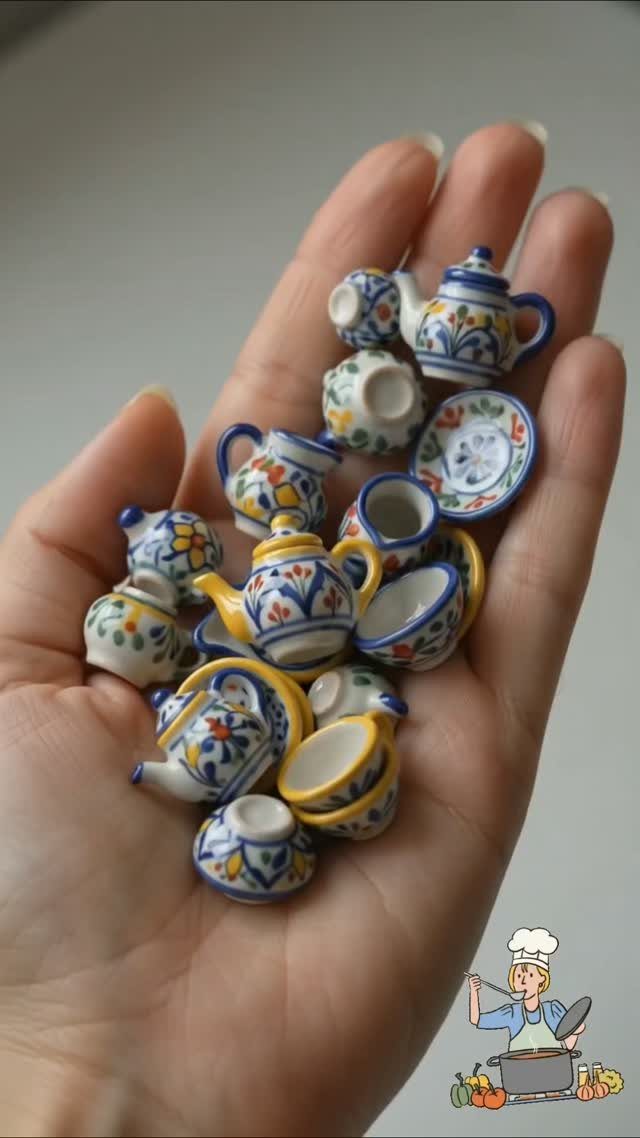
Miniature tea sets were made as children’s toys, dollhouse furnishings, and salesmen’s samples. The pot stands three-quarters of an inch at the handle, the cups closer to half.
Child-scale sets cost less than dollhouse-scale pieces, and complete sets cost more than loose pieces.
Condition matters more at this size because a chip takes up a larger share of the surface. Collectors who focus on miniatures or a specific maker pay more for marked pieces.
27. Embossed Green and Blue Sets
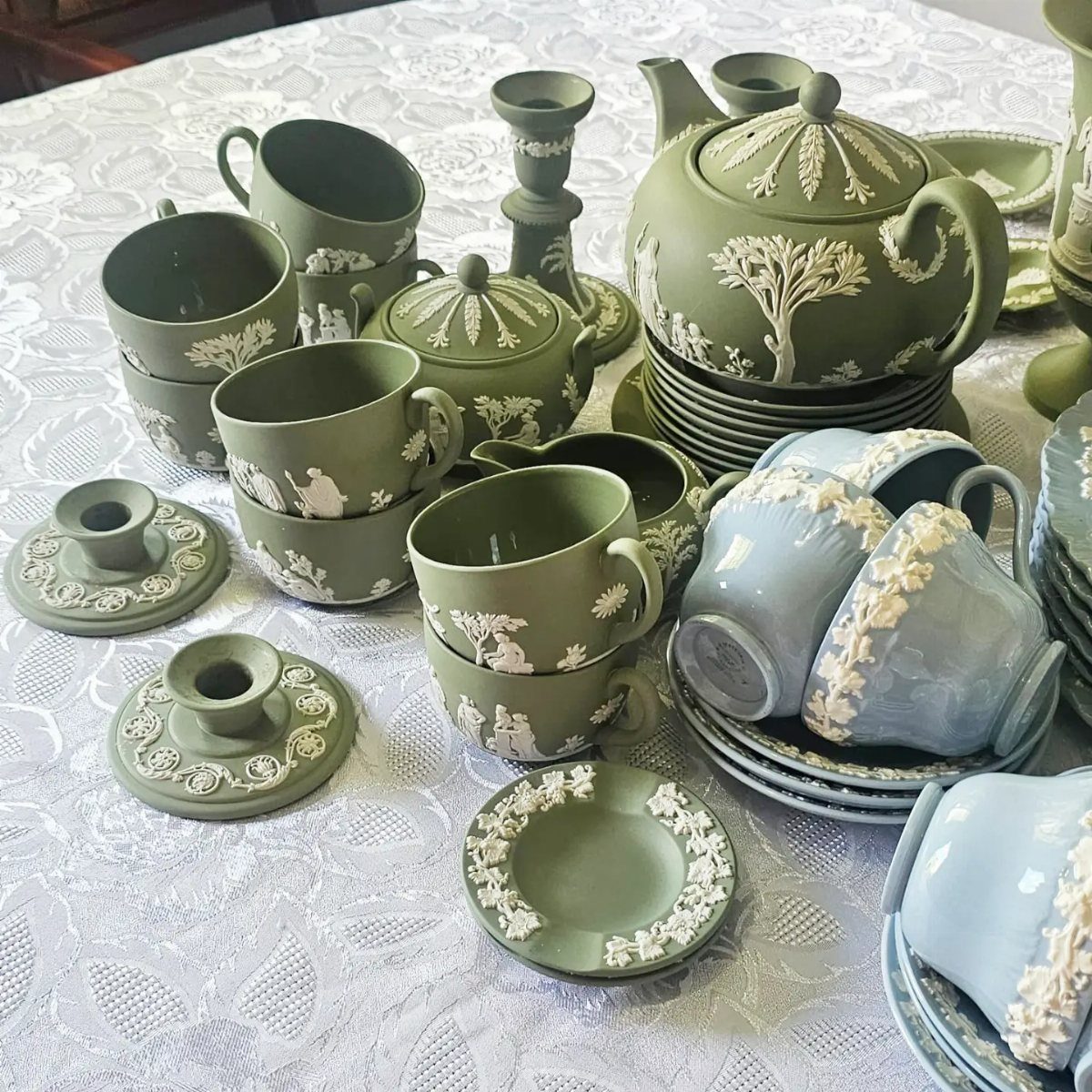
Raised white decoration sits in relief against colored backgrounds, a technique called sprigging. The floral and tree motifs here stand out from the green and blue surfaces rather than painted onto them.
Jasperware and other relief-decorated tea sets hold their patterns through decades of use because the design is part of the body, not a surface treatment. Minor chips on the relief work matter less than cracks through the body.
28. Pink Classical Relief Set
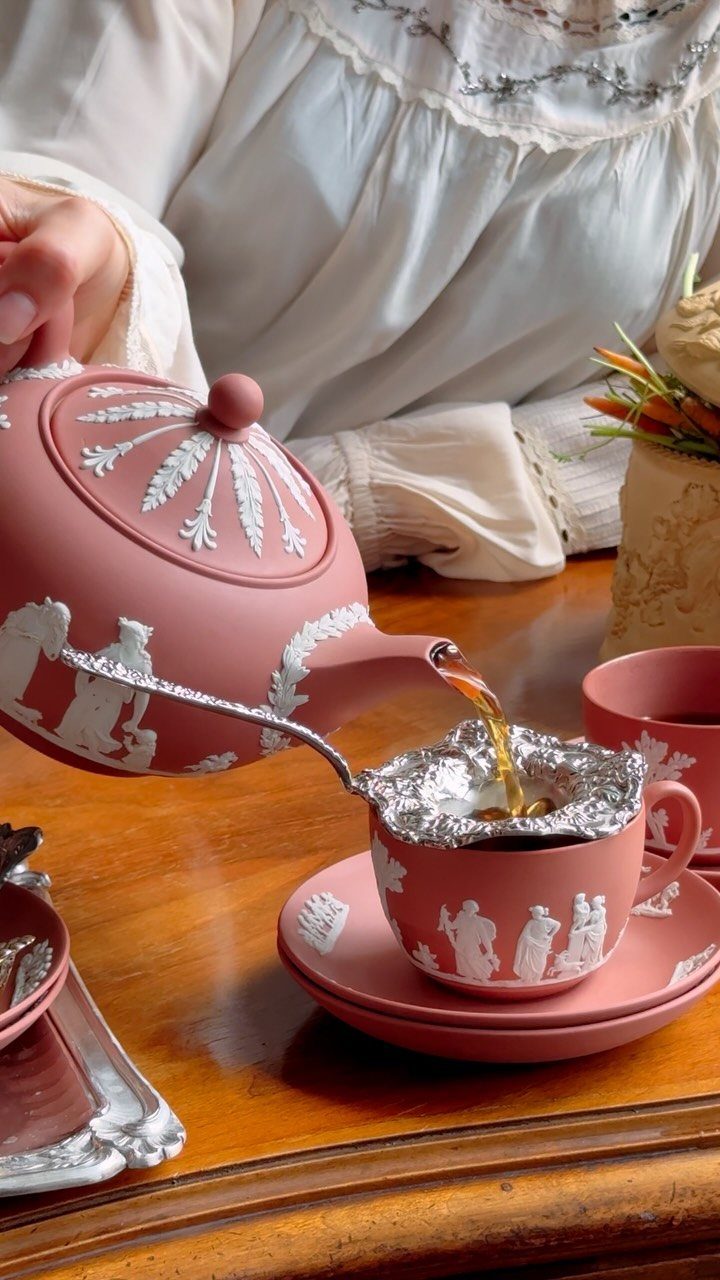
Classical relief work shows figures, scenes, or ornament raised against a contrasting ground. The dusty-rose body here carries white figures molded in high relief, a style Wedgwood made standard and other makers copied.
Relief decoration does not wear the way gilding does, which keeps value more stable over time.
A teapot and cup in matching relief work cost more than painted pieces when the maker is known. The technique shows best on solid colors that let the white stand out.
29. Landscape Castle Teacups
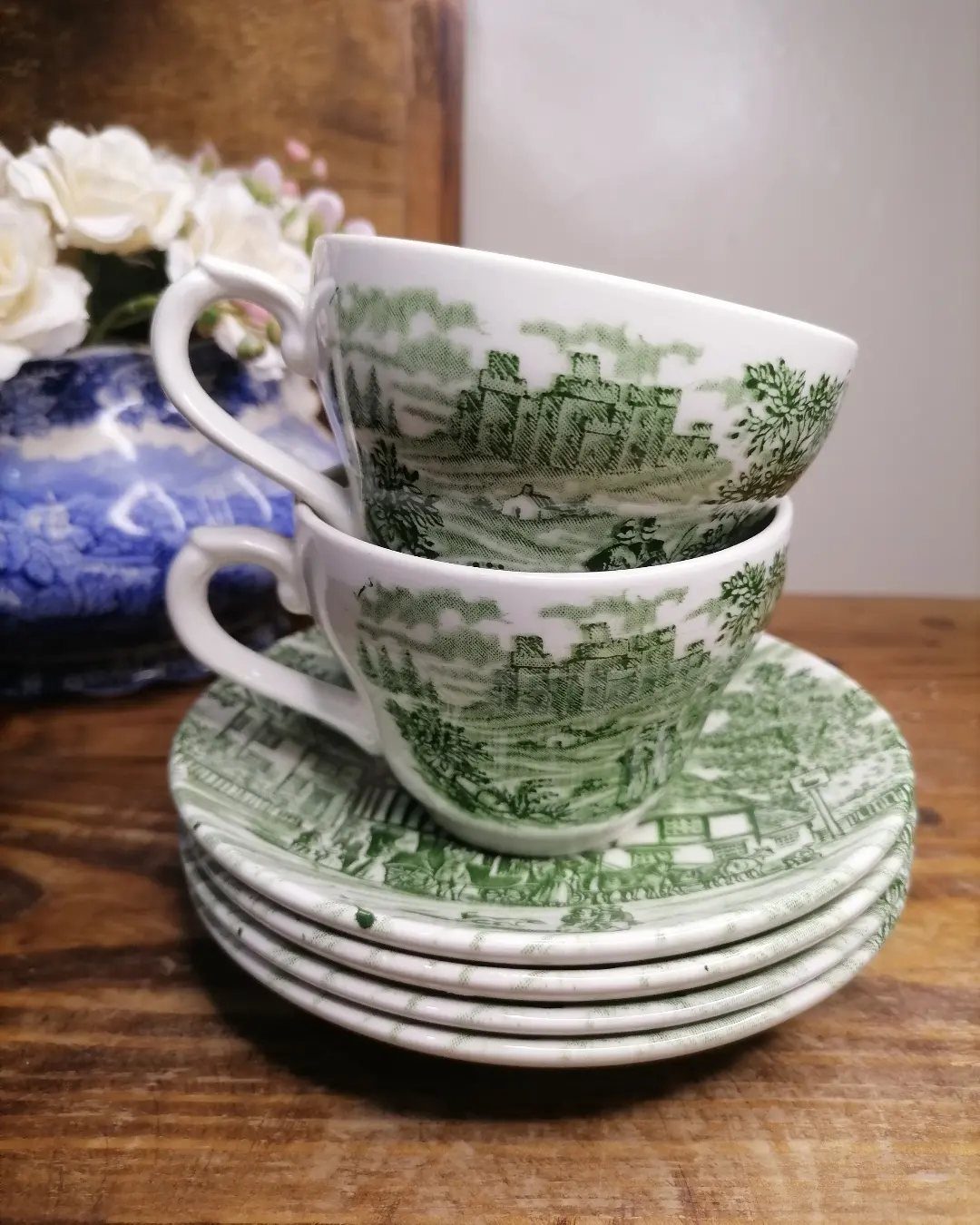
Green transfer prints on white porcelain follow a palette that English makers used for landscape and architectural scenes through the 19th and early 20th centuries.
The castle illustration here prints in one color, a technique that kept production costs lower than hand-painted decoration.
Stacking cups and saucers takes less shelf space than displaying them flat, which matters when you collect sets by pattern. Transfer prints fade less than painted decoration but can wear at the rim from handling.
30. Blue Floral Vintage Set

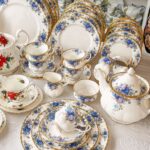
Blue floral patterns on white porcelain cross makers and decades, from transferware to hand-painted services. The coordinated set here includes a teapot, cups, and saucers that carry the same pattern across all pieces.
A matching set costs more than individual pieces but lets you serve tea with a cohesive look. Blue and white porcelain holds resale value well because the palette stays popular.
31. Red Floral Porcelain Set

Red floral patterns on white porcelain reverse the blue and white palette most collectors recognize but hold value the same way. The teapot, creamer, and plate here carry matching decoration across all pieces.
Red transfer prints cost about the same as blue when the maker is comparable.
A partial set works fine if you want serving pieces without committing to full place settings. Red shows wear less obviously than gold trim.
32. Blue Duck Tea Set

Novelty tea sets with themed decoration, like the blue duck pattern here, were sold as retail gifts rather than formal services.
Original packaging adds value for collectors who focus on complete presentation. The plastic box protects the pieces but takes more storage space than stacking them loose.
Sets still sealed cost more than opened ones, though opened sets with all pieces intact still hold interest for buyers who want the novelty without the premium.
33. Vintage Tea Ware Collection

A shelf of mixed tea wares lets you collect patterns you like without matching every piece. The floral teapots and scene-painted plates here sit together because the colors coordinate, not because they share a maker or pattern.
Collecting across makers costs less per piece than completing a single service.
Plates with red borders and floral teapots cross decades and makers, so you can add to the collection whenever something turns up. Display takes more space than a single set, but each piece works on its own.
34. Mixed Colorful Porcelain Sets
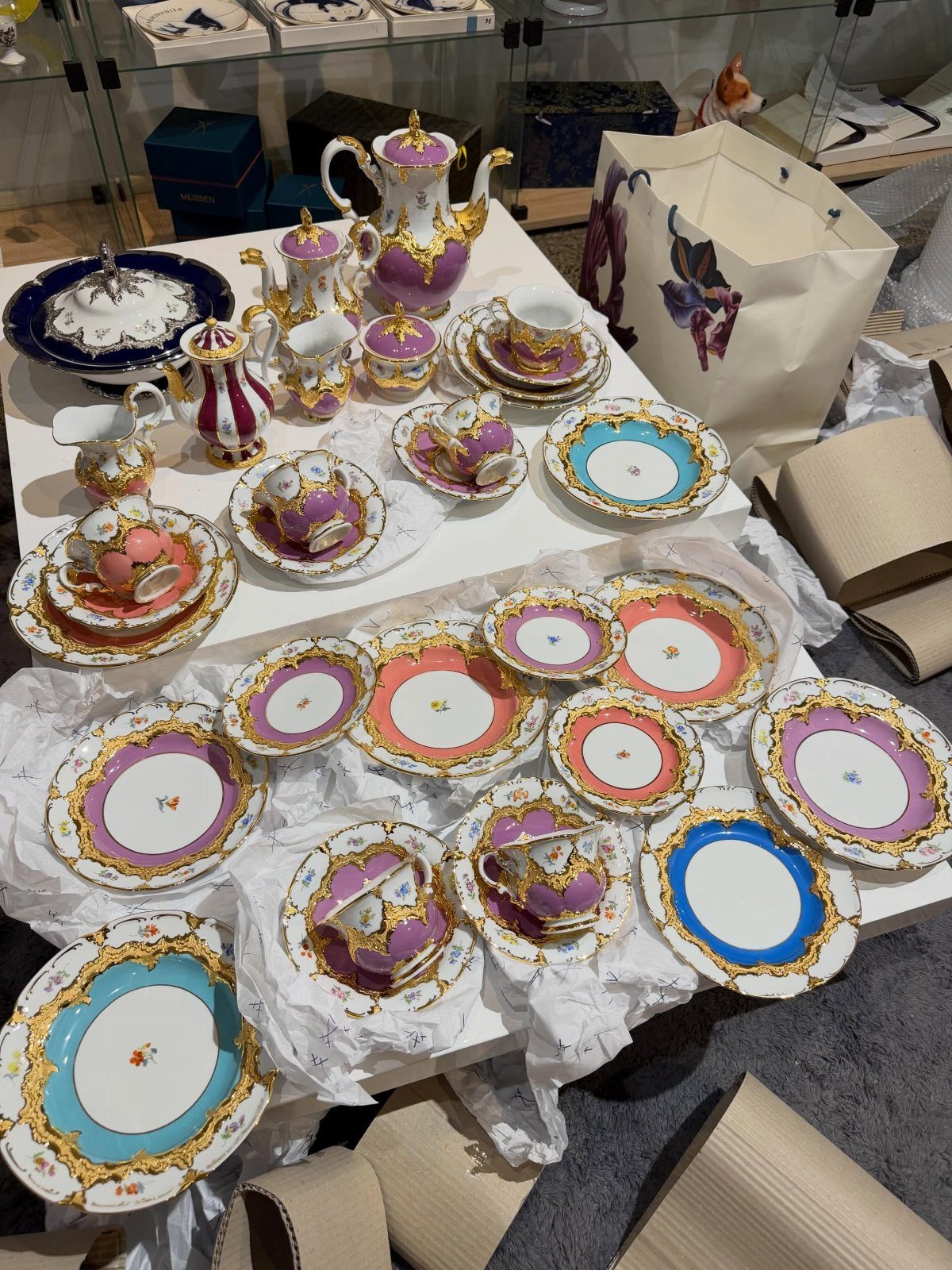
Grouping vintage tea sets by color rather than maker or era gives you variety without filling every shelf with one pattern. The gold rims and bright decoration here unify pieces that would otherwise look scattered.
Buying individual teapots and plates costs less than complete services and lets you stop when the shelf fills.
Gold trim holds the look together when patterns vary. Pieces that share a palette or finish read as a collection you chose, not one you assembled from leftovers.
Frequently Asked Questions
Which vintage tea sets are worth money?
Sterling silver services, marked Wedgwood Jasperware in rare colors, and bone china from known English makers hold the most value.
Complete sets with intact gilding, original hardware, and no damage command higher prices than partial services or pieces with cracks and worn decoration.
The hand work puts Chinese export porcelain and cloisonné enamel pieces in a higher bracket than factory transferware.
How to tell if a tea set is valuable?
Check the maker’s mark on the bottom, count how many pieces remain, and look for damage like cracks, chips, or worn gold.
Named makers, complete services, and intact decoration bring higher prices. Sterling silver hallmarks confirm the metal, relief decoration like Jasperware holds up better than surface treatments, and hand-painted patterns cost more than printed transfers.
How much is a vintage tea set worth?
Price depends on the maker, material, completeness, and condition. Damage knocks the price down fast: chips, faded gold, a missing lid or teapot handle all subtract from what a collector will offer.
Sterling silver, rare Jasperware colors, and hand-painted Chinese porcelain command more than common floral transferware or unmarked pieces.
Which brand is considered the best for tea sets?
Wedgwood holds consistent value for its Jasperware and bone china services, while Royal Worcester and English bone china makers command attention for elaborate decoration.
Chinese Jingdezhen ware and Japanese Kutani or Imari patterns cost more than mass-produced export pieces. The maker’s mark matters more than a single brand name when condition and completeness are equal.