A sage green KitchenAid mixer with a walnut or acacia bowl runs $800 at Williams Sonoma, and that price reflects the only wooden bowl KitchenAid has made for a stand mixer.
The finish you pick decides whether the mixer sits quiet on the counter or pulls attention: matte green and dark walnut read as one material family, while sage green against white counters keeps the green sharper.
1. Evergreen Design Series

A forest-green KitchenAid Artisan tilt-head mixer paired with a walnut wooden bowl makes the deep green read even richer against white marble.
The walnut bowl needs hand-washing but brings warmth that steel cannot. The green reads cooler and more grounded than pistachio or sage, which makes it anchor a neutral kitchen without fighting other colors.
This finish holds up to daily use, and walnut takes on a deeper patina over time if you oil it every few months.
2. Matte Green Mixer, Dark Wood Bowl

Matte green brings down the shine and makes the mixer feel less like an appliance, more like a countertop fixture.
Pair it with a dark brown wooden bowl and the whole setup reads as one material family instead of a metal tool with a bowl clipped on.
The matte finish shows fingerprints more than gloss, so plan to wipe it down after handling. Dark walnut or acacia bowls hold up to repeated mixing if you hand-wash and dry them right after use.
Gold pans and wooden utensils on the wall behind it carry the warm tones through, which keeps the green from feeling cold.
3. Green Mixer with Wood Bowl in a Kitchen
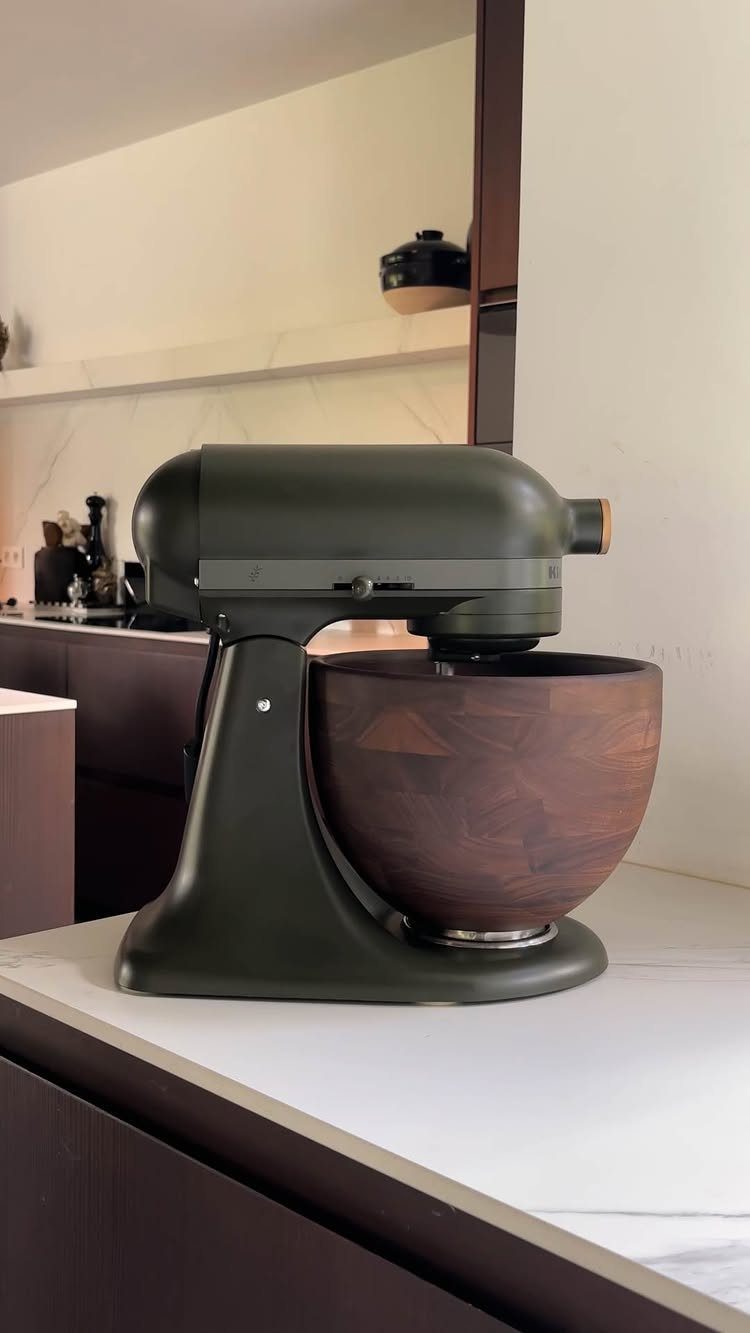
Styling a green mixer with a wooden bowl on your everyday counter means treating it like part of the kitchen, not something you put away.
A white marble surface keeps the green sharp, and leaving the mixer out between bakes saves lifting it in and out of storage.
The wooden bowl adds visual weight without the industrial look of stainless steel. If you bake weekly, the counter space it takes is worth the convenience.
Keep a hand towel nearby to wipe flour dust off the mixer body before it settles into the seams.
4. Green Mixer with Wood Bowl and Attachments

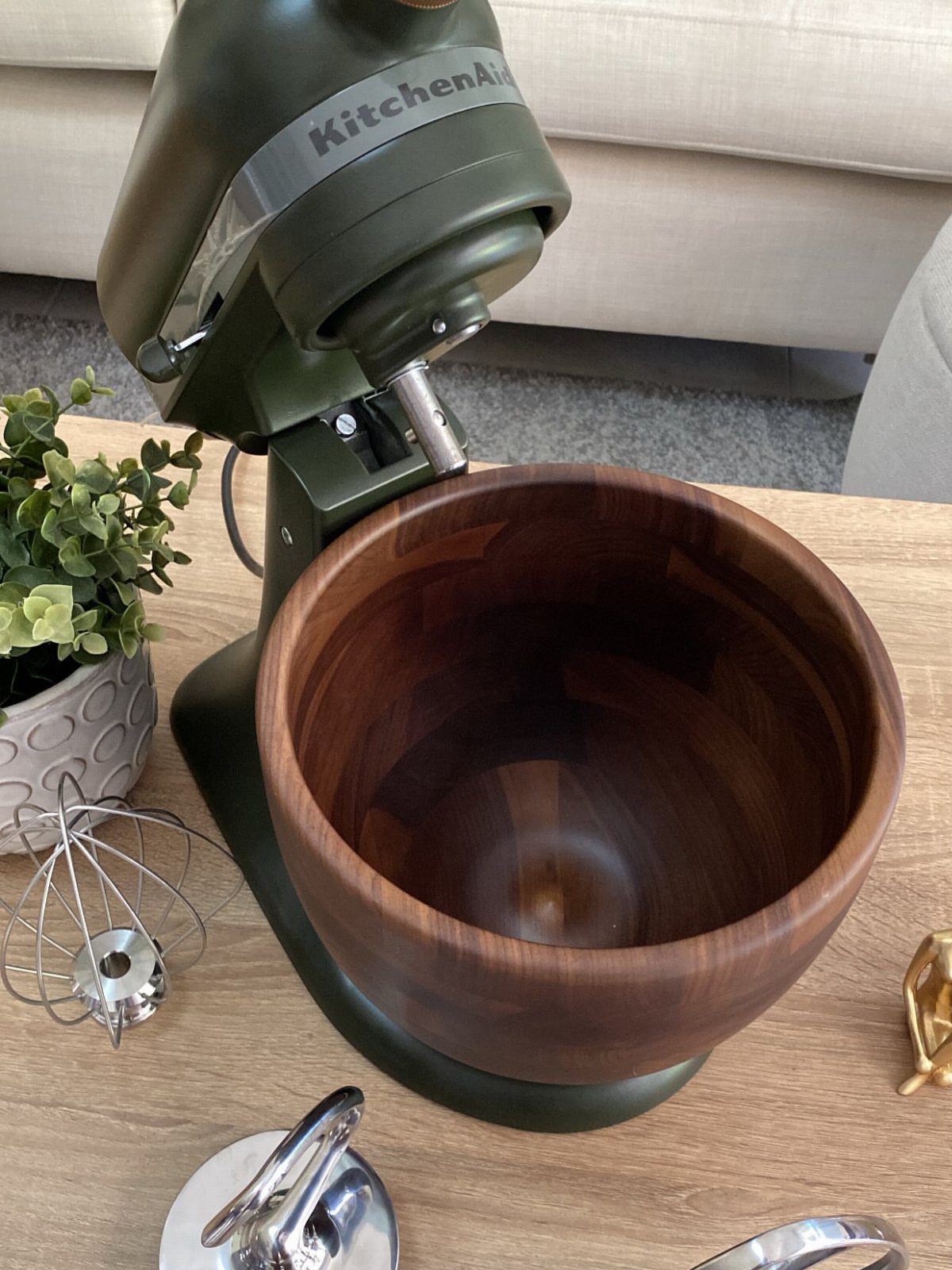
A green mixer with a dark wood bowl and a whisk attachment visible gives you a sense of what it looks like in the middle of a recipe, not just sitting idle.
The polished wood bowl catches light in a way that makes it feel deliberate, like a serving piece that also happens to mix.
The whisk attachment handles meringues and whipped cream, and seeing it installed reminds you that this mixer runs attachments beyond the flat beater.
Set it on a light wood table instead of a built-in counter and it reads as furniture, which suits an open kitchen where everything shows.
5. Green Mixer Mixing or Milling
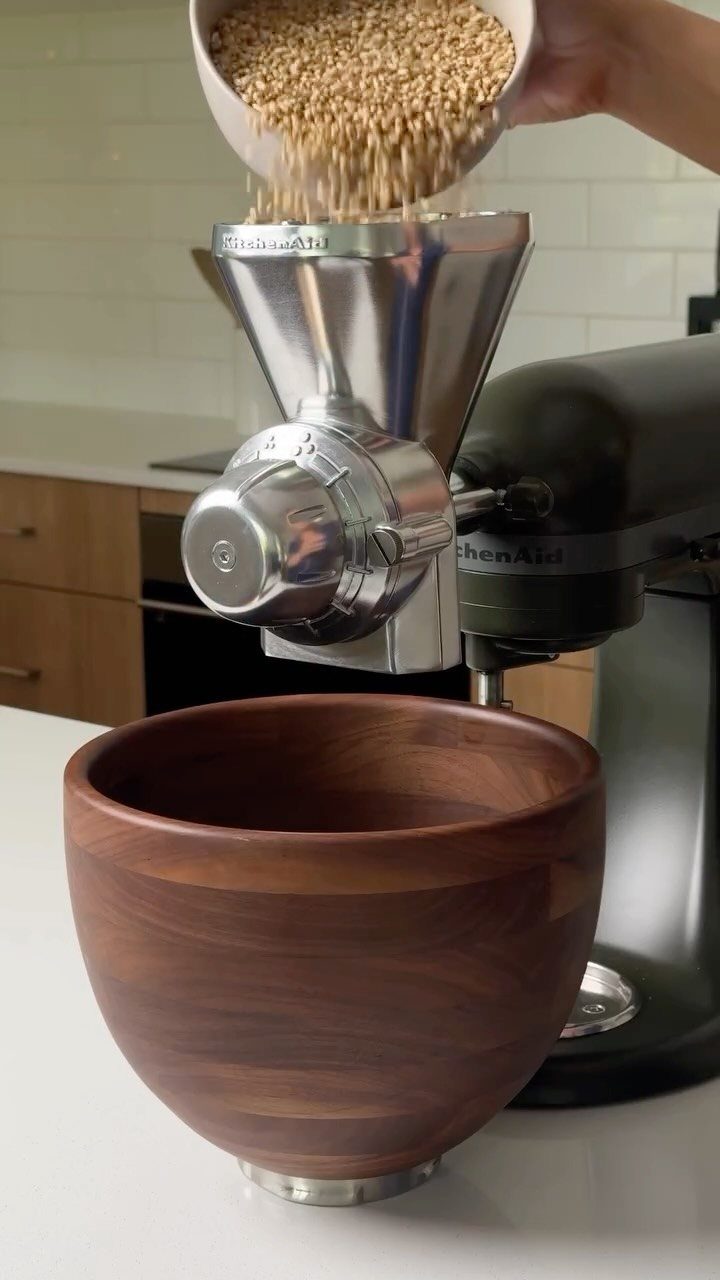
A grain mill attachment on a dark green mixer turns it into a milling station, and the polished wood bowl underneath catches fresh flour as the grains run through.
Milling your own wheat or spelt gives you flour with more flavor and shorter shelf life, which matters if you bake sourdough or whole-grain loaves weekly.
The attachment fits any KitchenAid stand mixer with a front hub, and the wood bowl keeps the setup cohesive while you work.
Expect fine flour dust around the base, so wipe the counter and the mixer body right after milling.
6. Sage Mixer with Wood Bowl
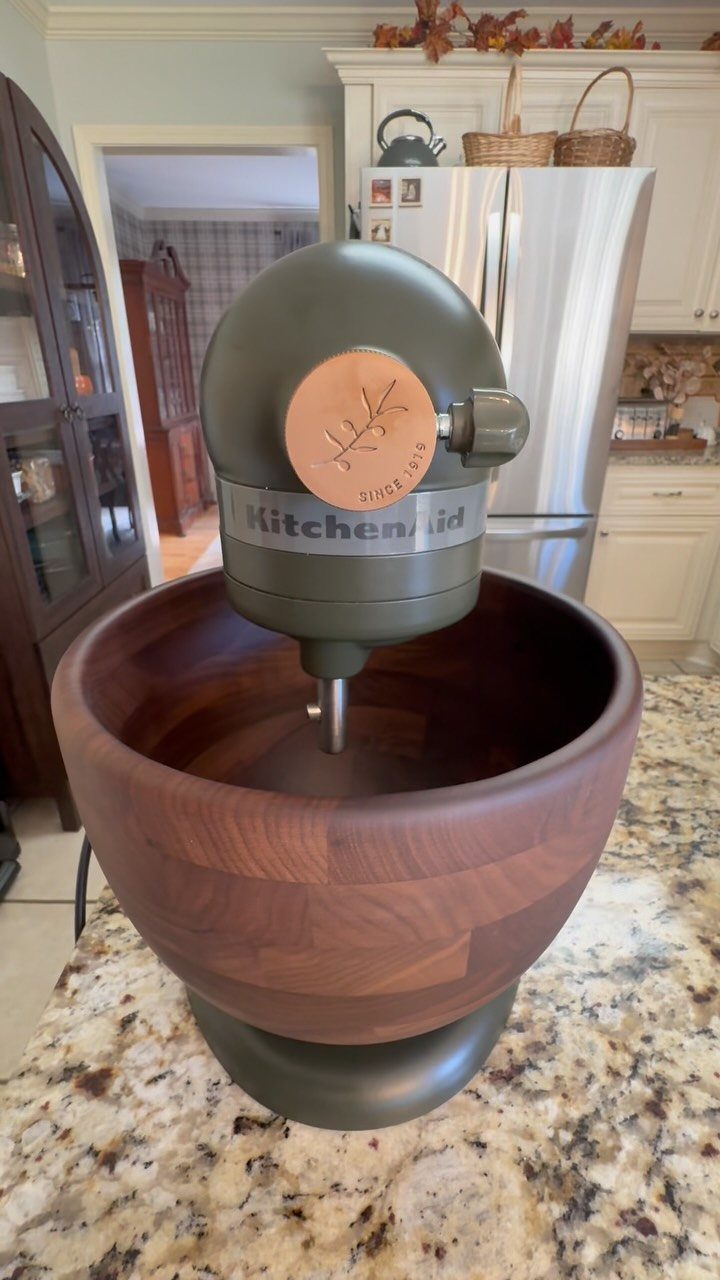
Sage green sits lighter and grayer than forest or emerald, which makes it easier to pair with white cabinets or subway tile without pulling too much attention.
The large polished wooden bowl on this one gives you room for double batches, and the copper-colored emblem on the mixer ties into warm hardware if your kitchen already leans that way.
Granite counters ground the whole setup, and sage holds its own against busy stone patterns without disappearing.
The wood bowl still needs hand-washing, but the larger size means fewer mid-recipe bowl swaps when you’re scaling up.
7. Mixer Beside a Finished Bake
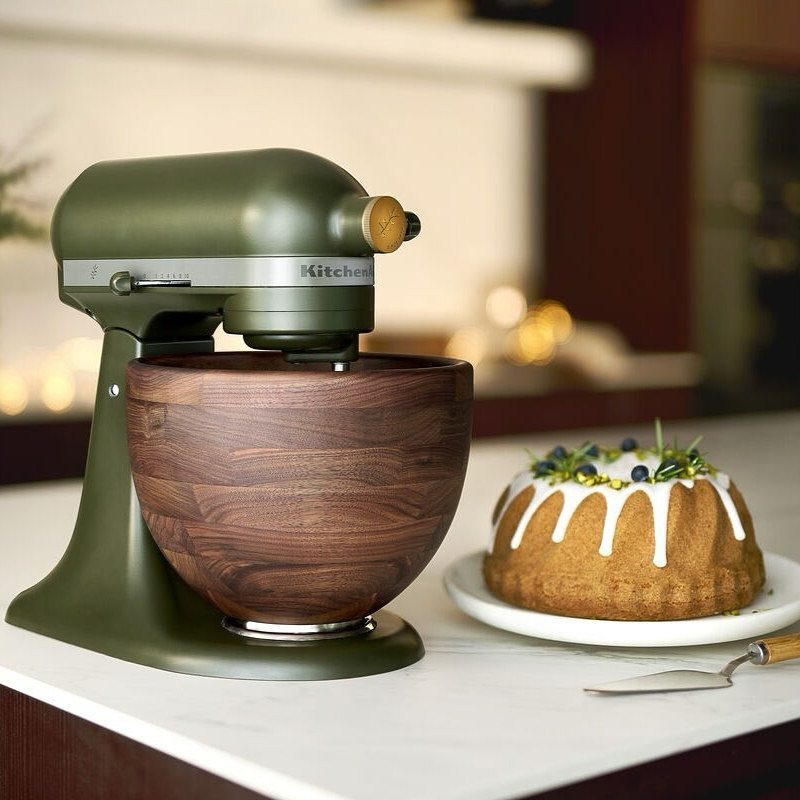
An olive green mixer with a dark wooden bowl next to a finished bundt cake gives you the after shot, proof that the mixer earned its counter space.
Styling it this way works if you bake often enough that leaving it out between recipes makes sense. The wood bowl stays part of the scene even when it’s empty.
8. Mixer with Baking Ingredients

Staging a sage green mixer with flour, butter, and a cutting board on black marble makes it look like someone is in the middle of baking, not posing the mixer.
The black counter keeps the sage from reading too soft, and the ingredients around it tell you what kind of work happens here.
If your kitchen has dark stone, sage holds up better than brighter greens that can look washed out against a strong surface.
9. Mixer in a Bright Kitchen

A sage green mixer on white marble under a shelf of ceramics and a plant sits in the kind of bright kitchen where everything shows.
The white counter and the natural light make the sage read cooler and cleaner than it does on darker stone.
If you keep your counters clear, the mixer becomes the main object, so pick a finish you want to look at every day. The wooden bowl warms up the setup without adding clutter.
10. Mixer in a Warm Kitchen
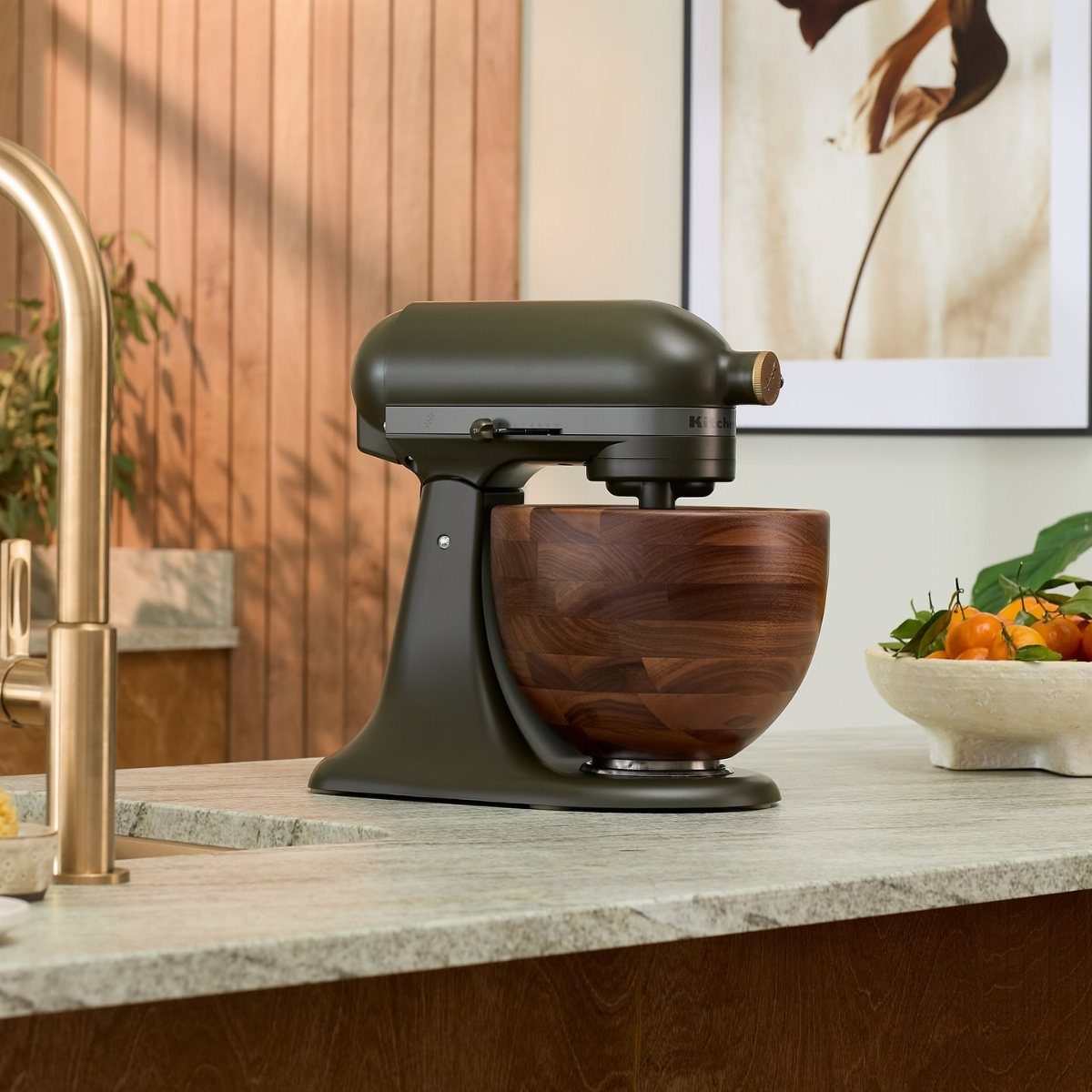
A matte olive green mixer with a dark wooden bowl on speckled countertop against wood paneling brings the whole palette into one warm register.
The wood paneling behind it and the speckled stone below it mean the mixer is not the only texture competing for attention, which lets it settle in instead of standing out.
Matte finishes work better in kitchens with other textured surfaces; gloss would bounce too much light in a space like this.
Wood Bowl Care and Cleaning
Hand-wash the walnut bowl right after you use it.
Wipe it down with warm soapy water, rinse, and dry it completely before putting it away. Submerging it or leaving it wet invites warping and cracks.
Every few months, rub food-safe mineral oil or walnut oil into the wood to keep it from drying out.
Pour a small amount onto a clean cloth and rub it into the wood in the direction of the grain, then let it sit for a few hours before wiping off the excess.
Regular oiling keeps the wood from drying out and deepens the color over time.
If you use the bowl weekly, plan on oiling it more often. A dry bowl absorbs moisture unevenly during mixing, which can lead to splitting.
Buying and Price
Good Housekeeping lists the mixer at $800, which puts it at the high end for a KitchenAid stand mixer.
Homes & Gardens reported it sold out at KitchenAid USA but stayed available through Williams Sonoma and KitchenAid UK, so check both if you want one.
The price reflects the walnut bowl, which is the only wooden bowl KitchenAid has made for a stand mixer. Cheaper models exist, but none come with wood.
If the full price feels steep, watch for holiday sales at Williams Sonoma. KitchenAid mixers drop in price around Black Friday and in January.
Mixer Attachments and Uses
The mixer ships with a flat beater, dough hook, and wire whisk. The flat beater handles cookie dough and cake batter, the dough hook kneads bread, and the whisk beats egg whites and whips cream.
KitchenAid makes over 10 optional attachments that fit the front hub, including pasta rollers and meat grinders. A pasta attachment lets you roll and cut fresh noodles.
A grinder handles burgers or sausage. An ice cream attachment churns without a separate machine.
Each attachment locks into the hub under the removable cover at the front of the mixer. If you already own attachments for another KitchenAid stand mixer, they work on this one.
Whipped cream and egg whites were a success: The whisk attachment produced stiff peaks quickly and held without weeping.
Frequently Asked Questions
What do the different parts of the KitchenAid Evergreen Design Series Artisan Tilt-Head Stand Mixer name mean?
Evergreen Design Series tells you this is the debut set in that deep forest finish paired with the walnut bowl.
Artisan is KitchenAid’s mid-tier line, one step above Classic, with a stronger motor and a 5-quart handled bowl instead of the 4.5-quart version.
Tilt-head describes the mixer style where the top tilts back to let you lift the bowl in and out.
How much is the new KitchenAid stand mixer?
It costs $800, which is the high end for a KitchenAid stand mixer.
That number buys you the walnut bowl, the only wood option KitchenAid has ever offered for these mixers. Watch for sales at Williams Sonoma around Black Friday or January if the full price feels steep.
What is the new KitchenAid stand mixer bowl made from?
Walnut wood. You’ll hand-wash it and oil it now and then to keep it from splitting, but the grain gives you something steel never will.
Where can I buy the new KitchenAid mixer?
Williams Sonoma and KitchenAid UK carry it, though KitchenAid USA sold out. Check both retailers if you want one, and expect it to move quickly.