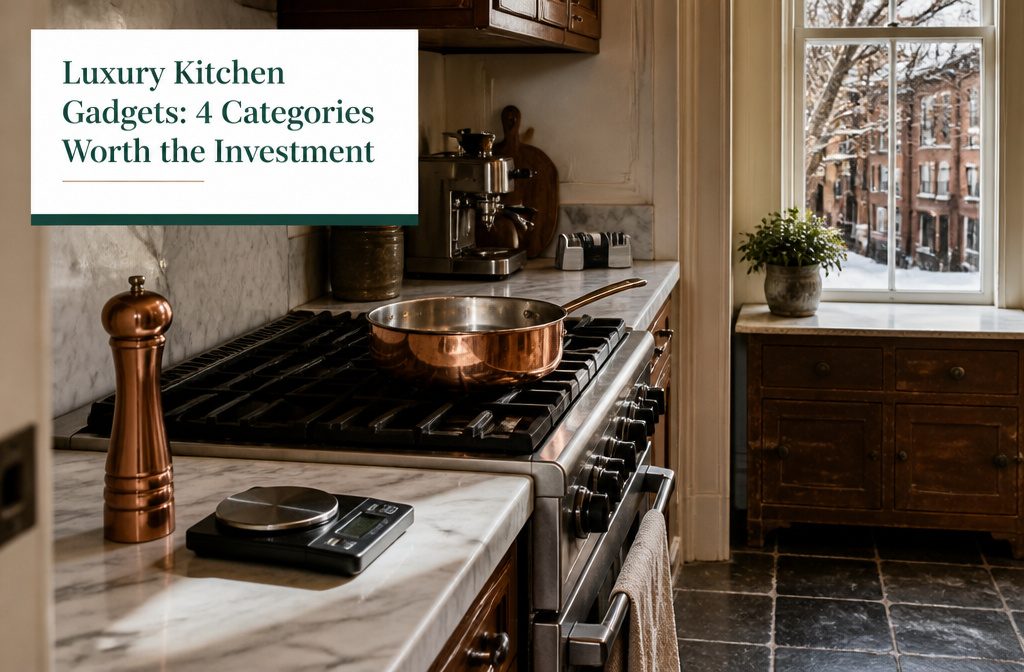
Luxury kitchen gadgets are tools and appliances priced well above standard models, justified by better materials, tighter tolerances, or features that solve problems cheaper versions ignore.
The difference shows up in how copper cookware responds to temperature changes faster than stainless steel, or how a $150 pepper mill produces a tablespoon of ground pepper in seconds when a manual grinder leaves your wrist aching.
High-End Cookware Built to Last

The material decides how the pan behaves, and luxury cookware earns its price when it answers with precision heat or durability you can pass down.
Titanium-layered stainless steel gives you the responsiveness of a good skillet with scratch resistance that outlasts ordinary finishes.
The Hestan NanoBond Stainless Steel Titanium Frying Pan ($350 for 11-inch, $450 for 12-inch) keeps its mirror-like surface through a year of use and a little Pink Stuff when it needs polishing.
Cast iron at this tier means a smoother seasoning and tighter production standards than the hardware-store pans: the Smithey No. 14 Skillet ($240) carries a lifetime guarantee and arrives polished enough to start cooking the day it shows up.
Copper responds faster to temperature changes than anything else, which matters when a sauce can tip from perfect to broken in seconds.
Mauviel builds the pans French haute cuisine kitchens still reach for, and the M’200 B 16-Piece Cookware Set With Brass Handles ($3,000) includes saucepans, fry pans, a sauté pan, rondeau, and stockpot.
If the set is too much at once, individual pieces like the M’TRADITION Hammered Copper & Tin Saucepan in 6.4-quart ($535) let you add copper where quick heat adjustment actually earns the investment.
Small Tools That Do One Job Right
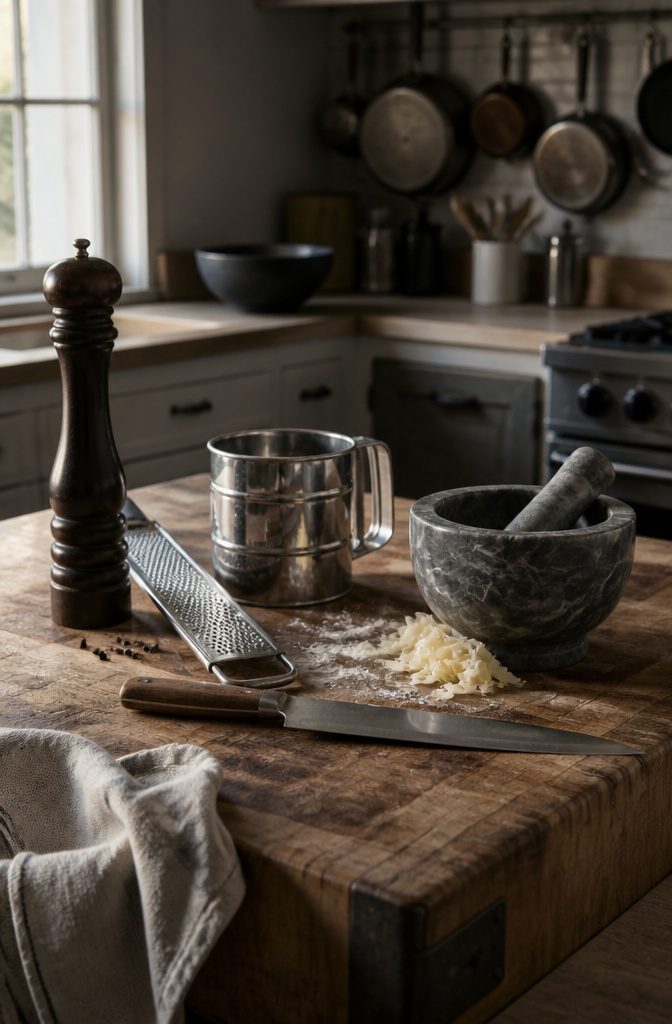
A pepper mill shouldn’t cost $150, but the Black Rain Precision Pepper Mill produces large amounts of pepper at a click, which matters when a recipe calls for a tablespoon or more of freshly ground black pepper and your wrist is ready to give out.
The Alessi Todo Giant Cheese And Nutmeg Grater runs $156 and stretches long enough to produce a complete portion of cheese with a single swipe.
Jacob Bromwell invented the world’s first flour sifter in 1819, and the company’s design has remained largely unchanged since; at $150, the Bromwell Flour Sifter is built to last for generations and gets passed down rather than replaced.
For grinding spices, a 17th C. Massive Italian Marble Pharmacy Mortar costs $5,900 and demonstrates enough longevity to produce a family dynasty’s worth of pesto, though the pestle is sold separately.
The Tessen by Tanaka Tamahagane Sakimaru Yanagiba is $3,490 and made with tamahagane high-grade Japanese steel that is smithed using traditional methods historically reserved for sword making; this long, narrow yanagiba knife is designed for skinning and filleting fish with exacting precision.
Appliances and Specialist Equipment

The compressor on the Lello Musso Lussino ice cream maker eliminates the overnight bowl freeze: pour in your base and turn out restaurant-grade ice cream in half an hour or less.
The 1.5-quart model runs $699 to $800. If nugget ice is what you want enough to surrender counter space for it, the GE Profile Opal 2.0 with side tank delivers that specifically chewy texture at $450 to $629.
The Hobart N50 is the brand that made KitchenAid stand mixers until 1986, and some bakers still call these the original.
The five-quart bowl-lift model costs $4,402 and belongs to the commercial lineup, but a home baker with the budget can buy in.
Blendtec’s Stealth Nitro X blends an iPad’s worth of resistance while staying quiet enough to hold a conversation over, assuming your family doesn’t yell. It runs $1,800 to $2,657.
Ooni’s Volt 12 is the only electric pizza oven in their range and the most expensive at $629 to $999, suited to kitchens that lack outdoor space for a gas or wood model.
The Steak Locker Home Edition smart dry-aging refrigerator costs $1,799 and caters to the narrow audience dry-aging meat at home.
Serving, Storage, and Decorative Pieces

Serving pieces and tabletop accessories pull double duty: they organize the counter and add color or detail that appliances alone can’t match.
I keep a few pieces from Juliska, Vietri, and La Rochère visible year-round because the design work justifies the shelf space.
La Rochère’s French pressed glassware shows up in my kitchen more than any other drinkware. The Versailles Ice Tea Glass holds 11.5 ounces, the Bee Iced Tea Glass holds 10.5 ounces, and the Bee Highball Glass holds 15 ounces.
The Lyonnais Wine Glass holds 8 ounces, the Bee Carafe holds 26 ounces, and the Lyonnais Tumbler holds 8 ounces. Each design has visible texture from the mold, and the consistency across pieces means you can mix patterns without the table looking random.
Michael Aram’s serving pieces land in the same category: sculptural enough to leave out between meals, functional enough to use daily. Vietri’s Italian ceramics add hand-painted color that breaks up stainless steel and white subway tile.
The Vipp17 Pedal Bin costs $615 and belongs in this list because Holger Nielsen designed it in 1939 for his wife’s hair salon, and very few trash cans end up on display at MoMA. The pedal mechanism still feels satisfying decades later.
When Expense Means Function, Not Just Appearance
I look for pieces that earn their price through what they accomplish, not because they carry a name or look expensive on the counter.
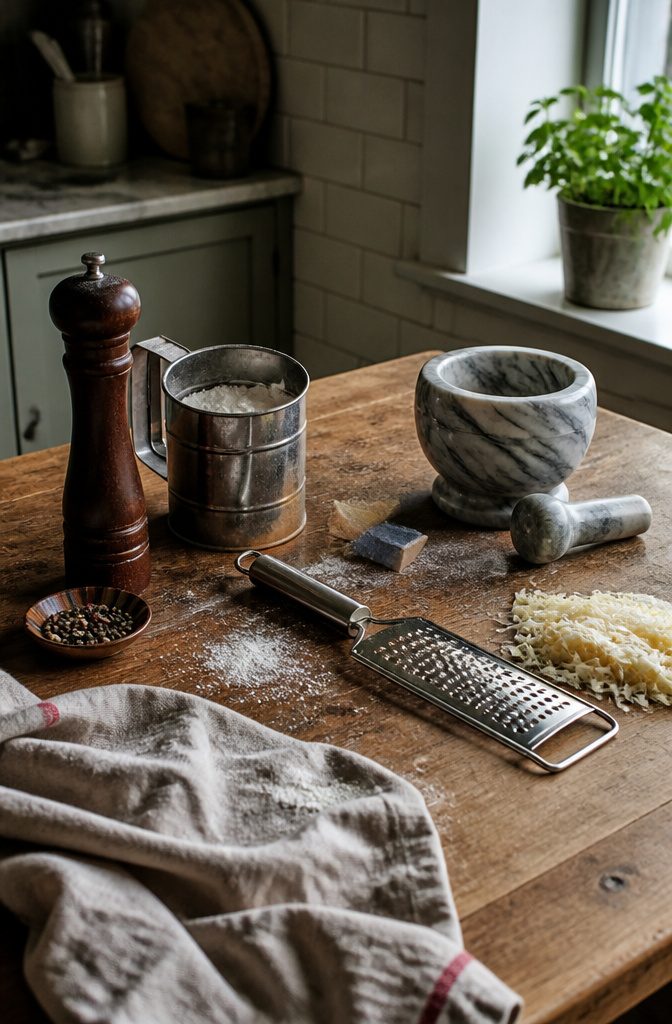
The Black Rain Precision Pepper Mill produces large amounts of pepper at the click of a button, which matters when a recipe calls for a tablespoon or more of freshly ground black pepper and your wrist would otherwise pay the price.
At $200, that function justifies the cost in a way diamond-encrusted shakers never could.
Some of my picks lean eccentric.
The Jacob Bromwell flour sifter has held the same sturdy design since 1819, built to last for generations. The Alessi Todo grater’s long shape is meant to produce a complete portion of cheese with a single swipe.
A 17th-century Italian marble mortar on 1stdibs will run you $5,900 without the pestle, but longevity like that is worth noting even if few of us are buying it.
Craftsmanship, scarcity, historical significance, and technical complexity all drive these prices higher than a typical gadget, and I would rather spend on those qualities than on a refrigerator wrapped in fashion branding.
Brands Worth Knowing

Hestan makes cookware with a titanium-bonded stainless surface the brand calls Nanobond.
The finish resists scratches better than plain stainless and holds a mirror polish through a year of stovetop use. The frying pans run $350 to $450 depending on diameter, and the look stays sharp with minimal upkeep.
Smithey builds cast iron with a smooth, pre-seasoned cooking surface that improves as you use it.
The pans carry vintage styling and a lifetime guarantee, with high production standards that keep the finish even from piece to piece. The No. 14 skillet sells for $240.
Mauviel is one of the oldest copper cookware makers, known for the pots associated with French haute cuisine. Copper responds quickly to heat changes, which matters for techniques that need precise temperature control.
The M’200 B sixteen-piece set with polished brass handles lists at $3,000, and individual pieces are available if a full set is more than the kitchen needs.
Staub and All-Clad appear repeatedly in high-end collections for their durability and performance, Staub for enameled cast iron and All-Clad for stainless-steel saucepans that hold up to professional use.
Frequently Asked Questions
What are 10 must-have kitchen gadgets?
The must-haves depend on what you cook, but a responsive stainless or copper pan, a precision pepper mill, a quality chef’s knife, a stand mixer for baking, a high-speed blender, and durable serving pieces form a solid foundation.
Add cast iron for searing, an ice cream maker if frozen desserts matter to you, a pizza oven if you make pies weekly, and pressed glassware that holds up to daily use.
What are the must-haves for a luxury kitchen?
Start with cookware that responds precisely to heat changes, like copper or titanium-layered stainless steel, and add tools built to last generations rather than replacements every few years.
A commercial-grade stand mixer, a compressor-driven ice cream maker, and specialty knives made from high-grade steel earn their place through performance. Serving pieces that pull double duty as countertop detail finish the kitchen without looking like a showroom.
What are the best luxury kitchenware brands?
Hestan, Smithey, and Mauviel stand out for cookware that pairs durability with performance, whether titanium-bonded stainless, smooth-seasoned cast iron, or French copper.
Staub and All-Clad show up repeatedly in high-end kitchens for enameled cast iron and professional-grade stainless. For serving pieces and tableware, Juliska, Vietri, La Rochère, and Michael Aram combine craft with designs worth leaving visible year-round.
What is the most useful kitchen gadget?
A responsive skillet that holds and distributes heat evenly gets used more than any other tool in the kitchen.
Titanium-layered stainless steel like the Hestan NanoBond or copper from Mauviel answers with precision you can feel in the pan’s behavior, and both materials last long enough to outlive the kitchen itself.