Maximalist rooms range from an accent wall painted deep color behind framed art to bookshelves organized by spine color, floral wallpaper across walls and ceiling, and sculptural lights that read as sculpture.
The choice depends on how much pattern and color you want visible at once: if you keep collections because they matter and want them on display, the ideas here give them structure.
Velvet catches light while wool stays matte, and vintage carved wood pairs with bright contemporary upholstery when the finishes stay consistent.
1. Pink and Green Room

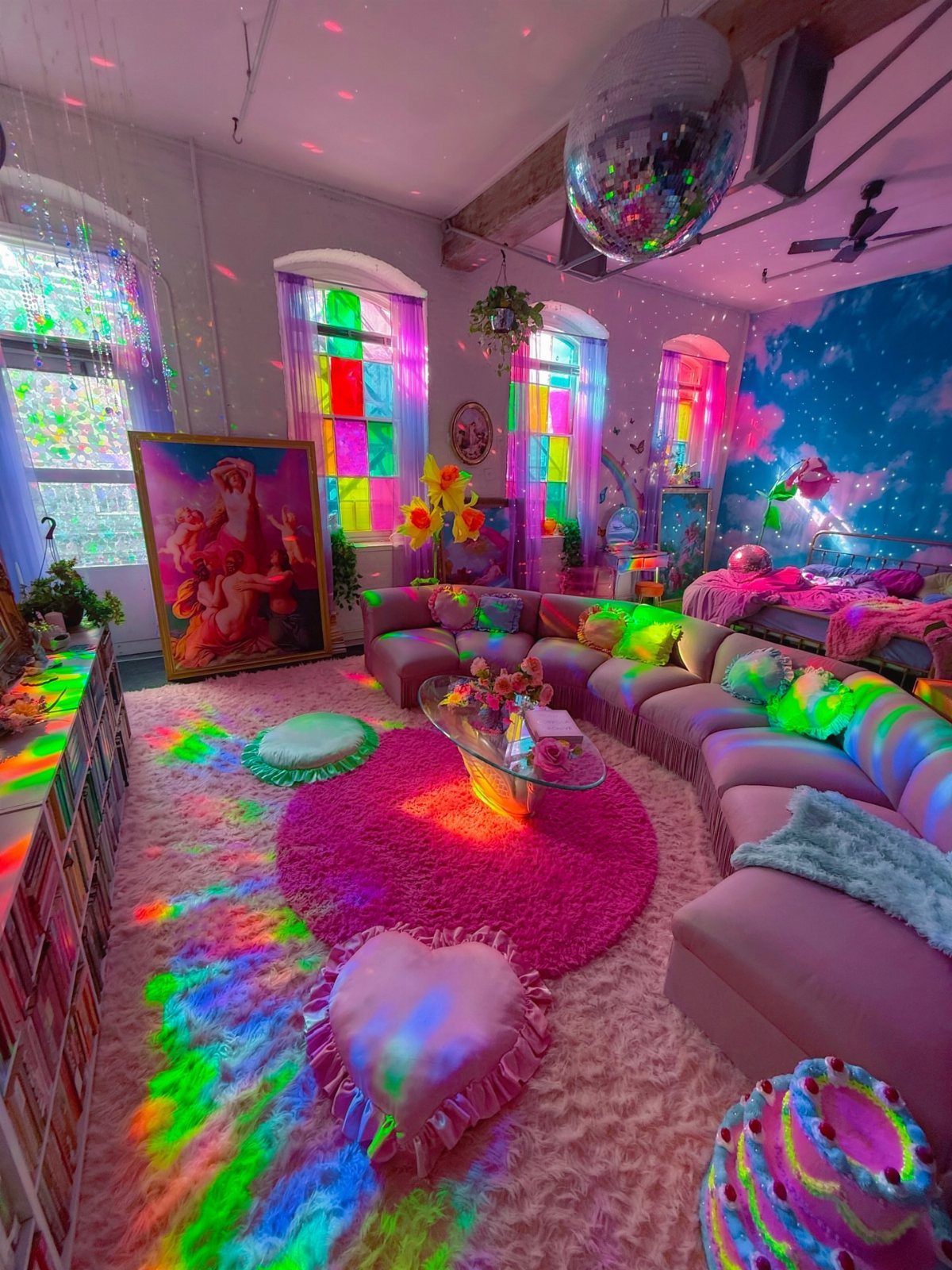
One color anchors the room while the other shows up in accents: here pink floods the furniture and rugs, green lands in the mural and a few small pieces.
I would start with one color on the largest surface and bring the second in through pillows, art or a single piece of furniture before committing to more. That lets you test the balance without repainting.
2. Floral and Striped Patterns
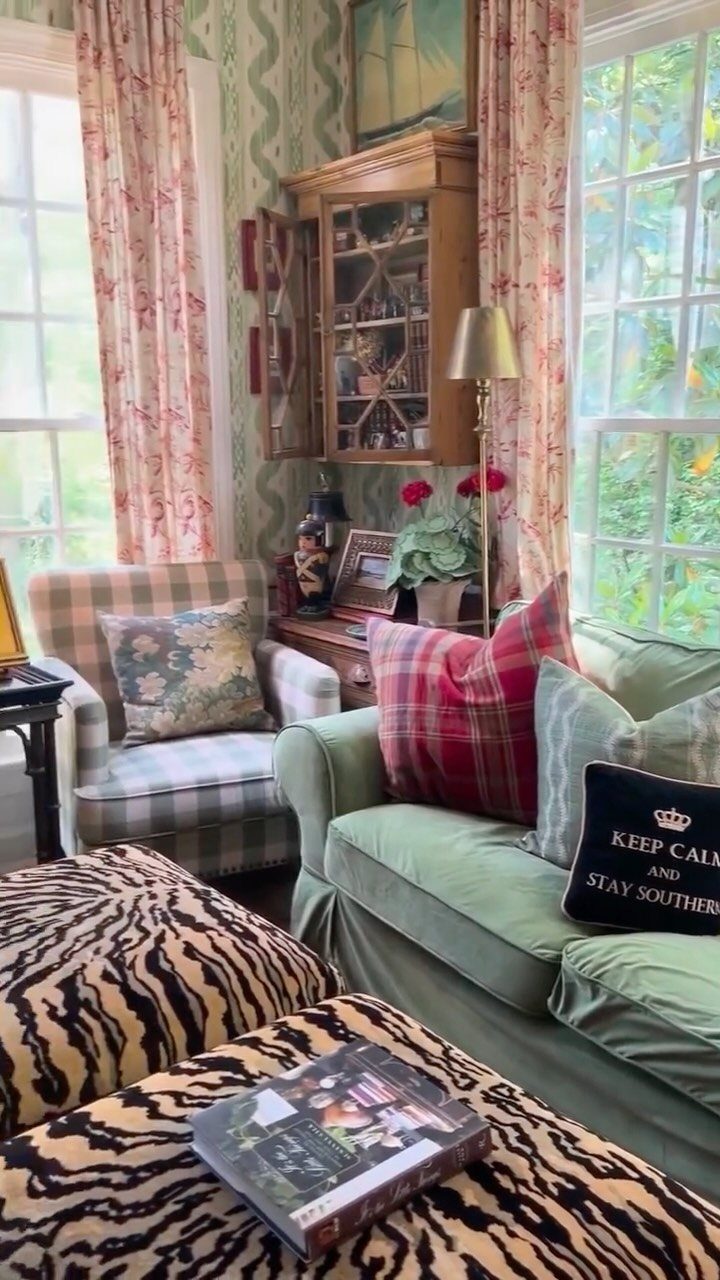
Florals, stripes and animal prints each carry strong pattern, and maximalist rooms let them sit side by side instead of isolating one per space.
Scale them differently: large stripes on the chair, small florals at the window, mid-scale tiger print on the ottomans.
Pick one pattern to cover the most area, then add two more in smaller doses. When all three run the same size, they compete rather than layer.
3. Treasured Collections on Shelves

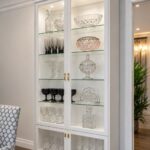
Collections earn their shelf space when they mean something to you: pottery, figurines, vintage glassware, anything you return to. Grouping them on open shelves turns a dozen small items into one intentional display instead of scattered clutter.
I arrange collections by type or color rather than spreading them across the room. That looks intentional rather than accidental, and makes dusting faster.
4. Velvet and Wool Textiles
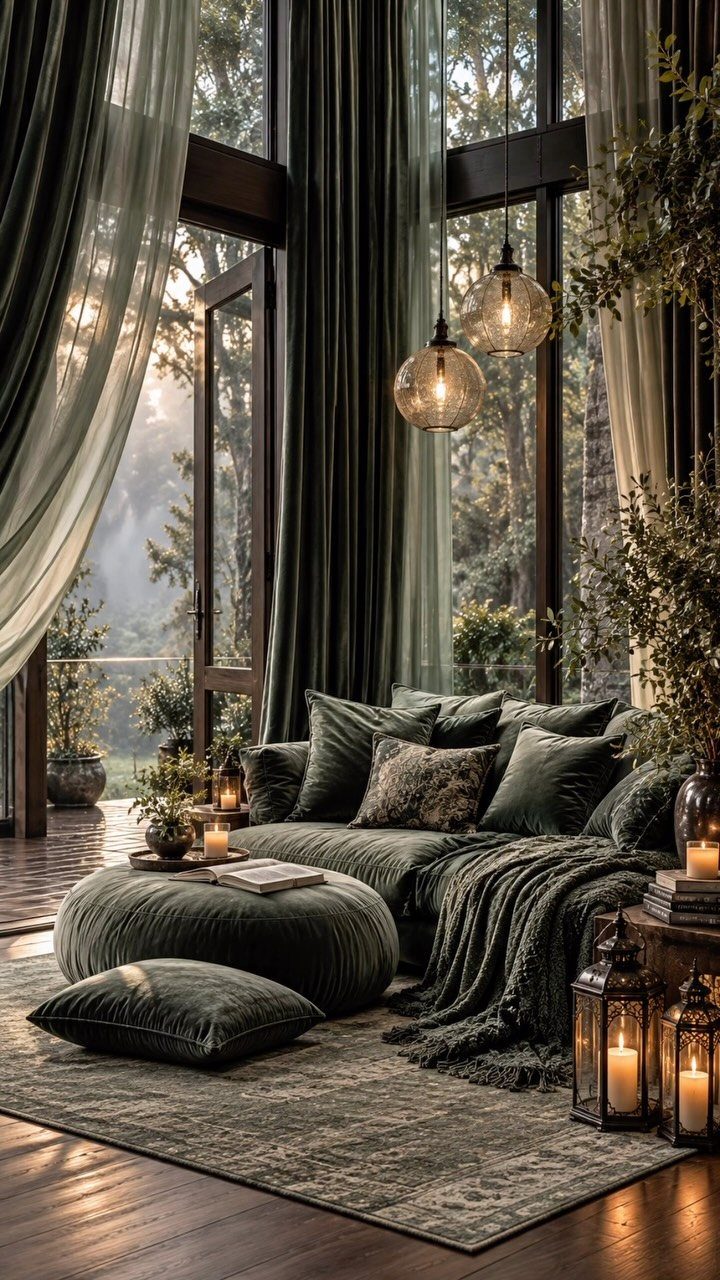
Velvet and wool bring different textures to the same color family: velvet catches light and shifts tone depending on the angle, wool stays matte and adds warmth. Pairing them on a sofa and throw stops surfaces from reading flat.
Velvet works on furniture that gets light use. For a sofa that sees daily wear, I would choose a performance velvet or save it for pillows and save the wool for the throw.
5. Create a Gallery Wall
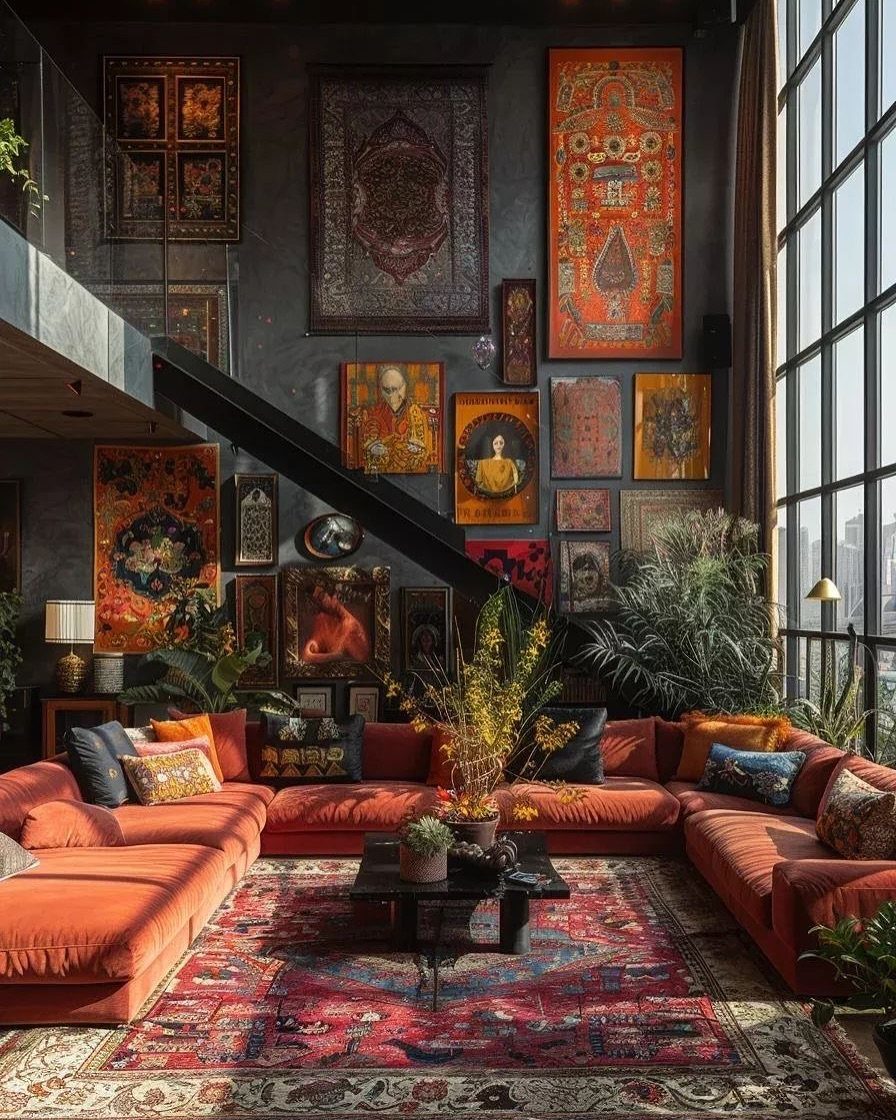
A gallery wall fills vertical space with art in different sizes and frames, arranged close enough that the collection reads as one piece rather than individual works floating on their own.
Varying the frame styles and mat widths adds to the density maximalist rooms thrive on.
I start by laying the frames on the floor and adjusting the arrangement there before putting holes in the wall.
6. Vintage and Contemporary Furniture

Vintage carved wood and bright contemporary upholstery belong in the same room when one finish anchors the space: here the archway’s warm wood grounds the yellow sofa and floral chair without competing.
I look for vintage pieces in good structural shape and refinish or reupholster them to fit current colors.
That costs less than new furniture with the same presence and adds age to a room that would otherwise read as recently decorated all at once.
7. Sculptural Hanging Lights

A sculptural chandelier acts as art you look up at. This stained-glass piece pulls focus upward and matches the decorative ceiling medallion rather than disappearing into the background.
I choose lighting by silhouette before I check the bulb count. A fixture with presence changes a room more than another coat of paint.
8. Choose Bold Wallpaper

Wallpaper in a bold pattern sets the room’s tone before furniture does. Stripes running across walls and ceiling treat the envelope as one surface and give every other choice something strong to work with or against.
I paper one room at a time instead of carrying a pattern into the next space. That lets each room establish its own mood.
9. Style a Small Room Boldly
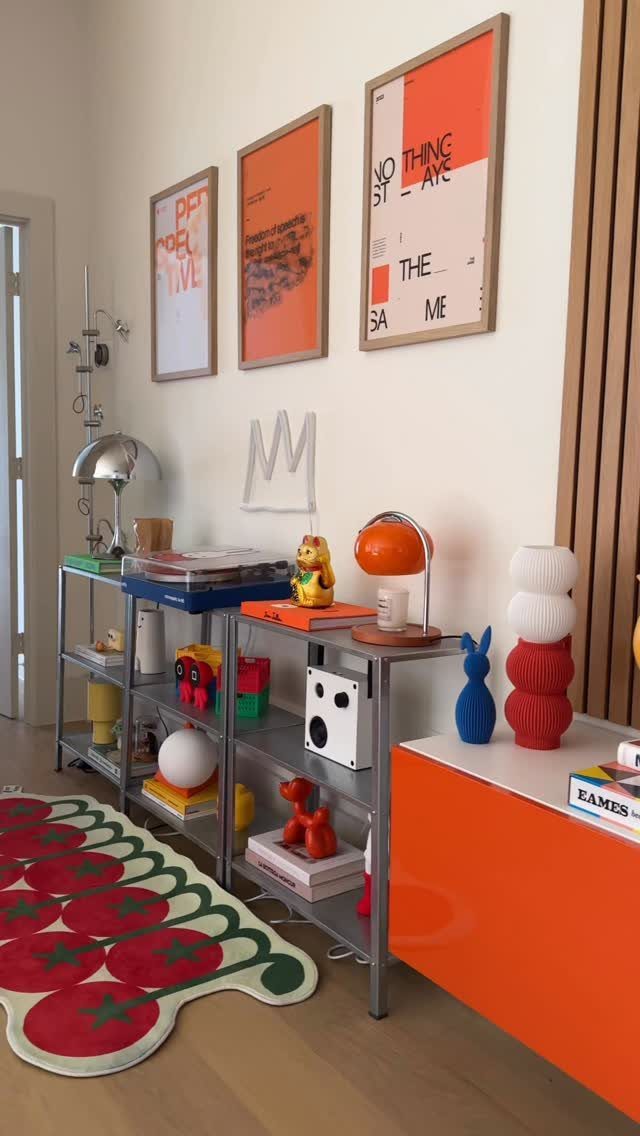
Small rooms hold maximalist decor as well as large ones when the layers stay intentional. A small room holds a statement rug, saturated furniture, framed art and open shelving when each piece is chosen rather than defaulted to.
Compact spaces get claustrophobic when storage hides, not when color shows up. I keep surfaces clear and let the walls and furniture carry the personality.
10. Decorate the Entryway
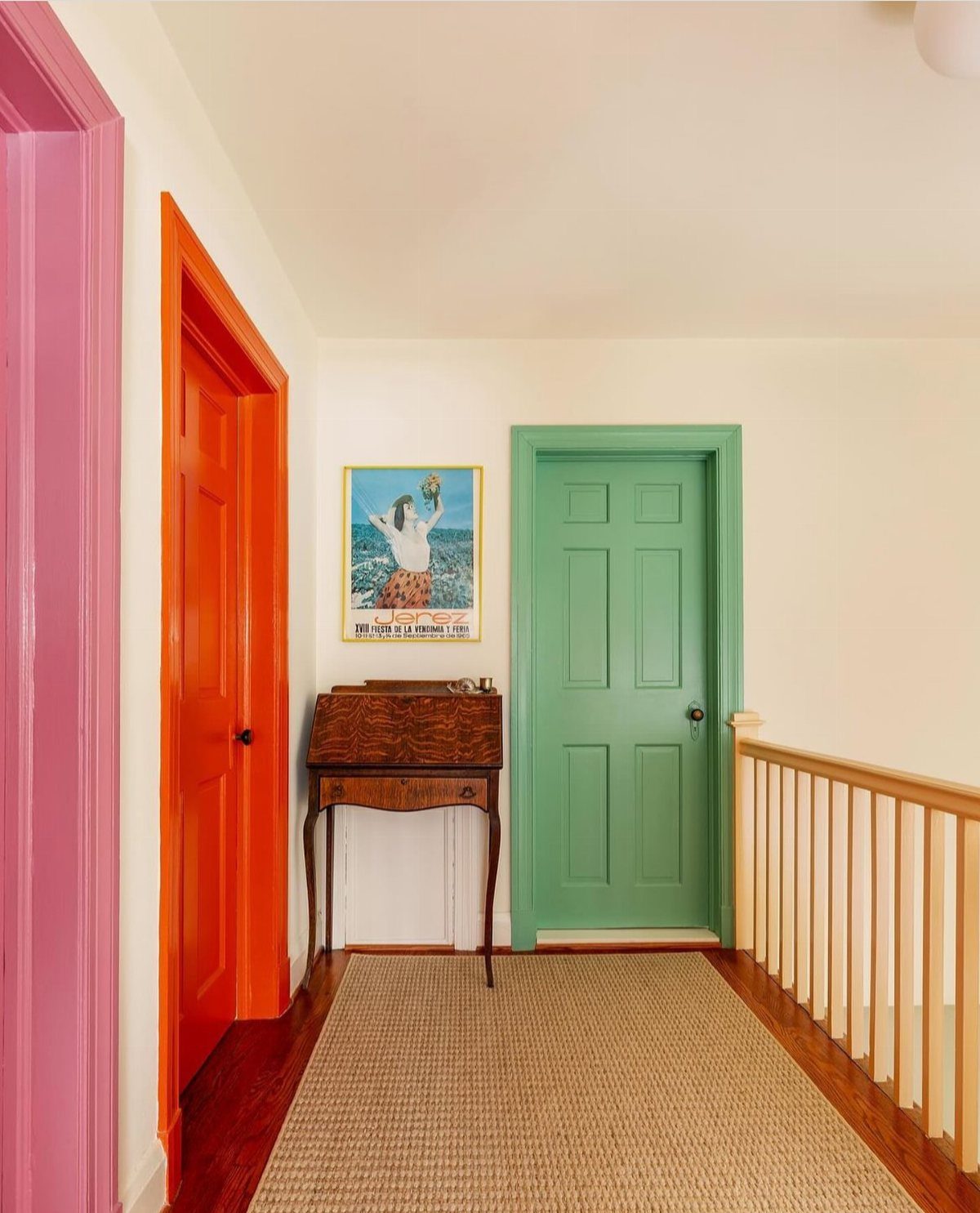
An entryway with distinct door colors and a vintage desk tells guests what kind of home they walked into before they reach the other rooms.
Painting trim and doors in separate bright colors costs a modest amount per opening and takes an afternoon.
I treat the entry as its own room instead of a hallway to somewhere better. That justifies a rug, furniture and art in a space most people rush through.
11. Cozy Bed with Bright Pillows
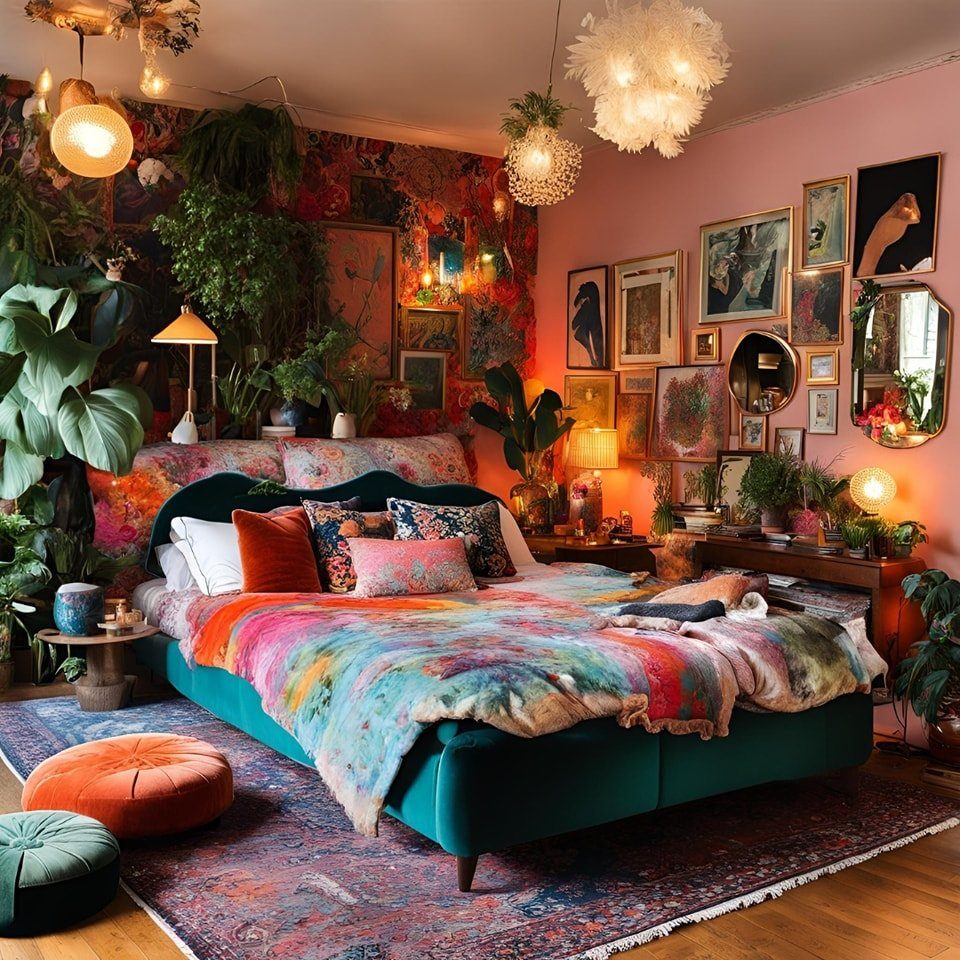
Bright pillows in mixed colors and patterns turn a bed into the room’s main draw without repainting walls or changing furniture. Layering pillows in different sizes builds depth across a flat surface.
I add pillows over time rather than buying a set. That keeps the bed from looking like it came from one catalog page.
12. Use Colorful Curtains

Curtains in a strong pattern or saturated color add a vertical accent that paint alone cannot match. Purple curtains against a red sofa and patterned rug prove that more color does not mean chaos when the scale varies.
13. Decorate with Florals
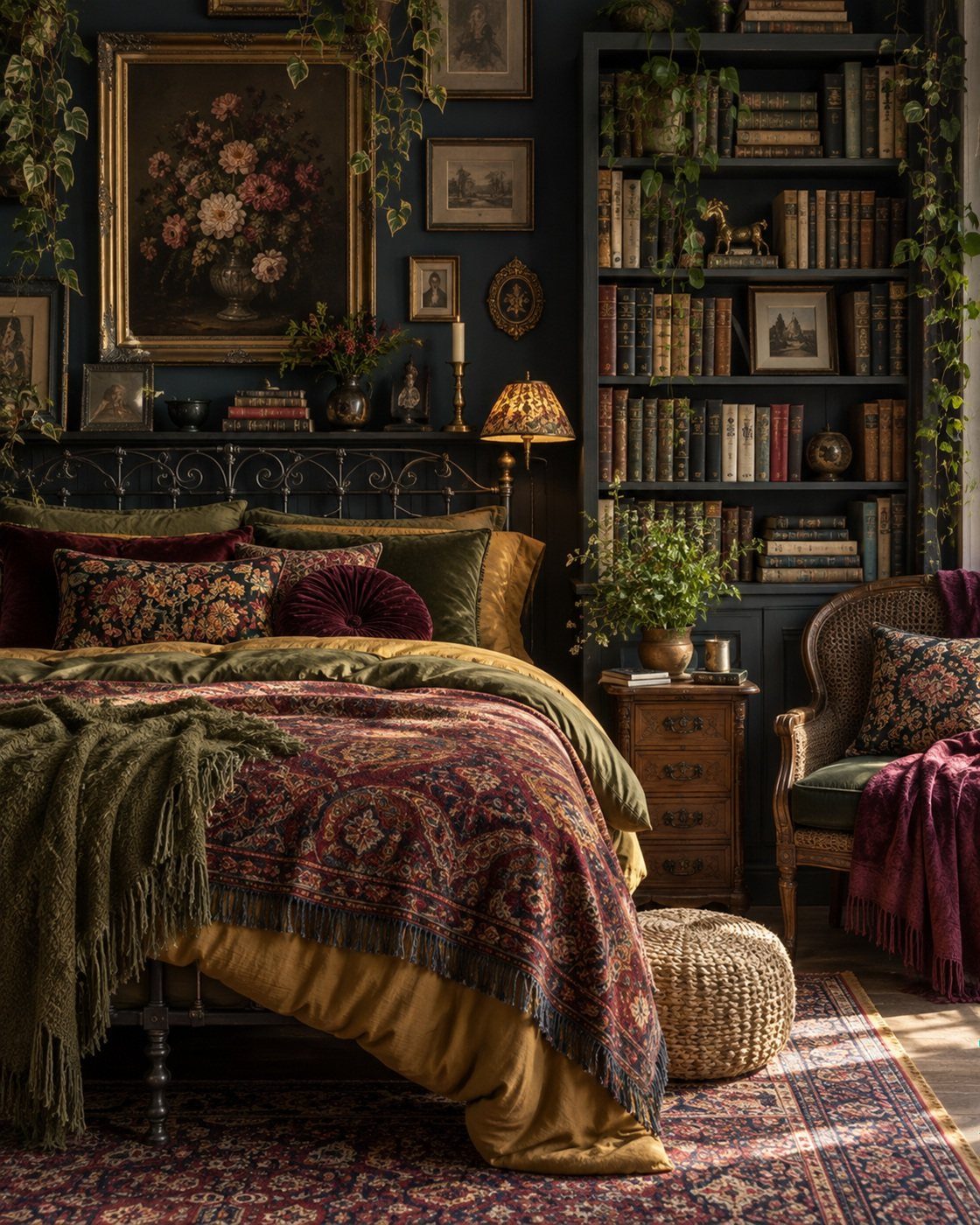
Florals that run large across bedding, art and rugs turn the pattern into the room’s structure rather than an accent.
Pairing floral textiles with a floral painting doubles down instead of balancing out, which suits maximalist rooms that commit to one direction.
Dark walls hold bold patterns better than light ones. The contrast lets the florals read clearly without washing out.
14. Choose Statement Furniture
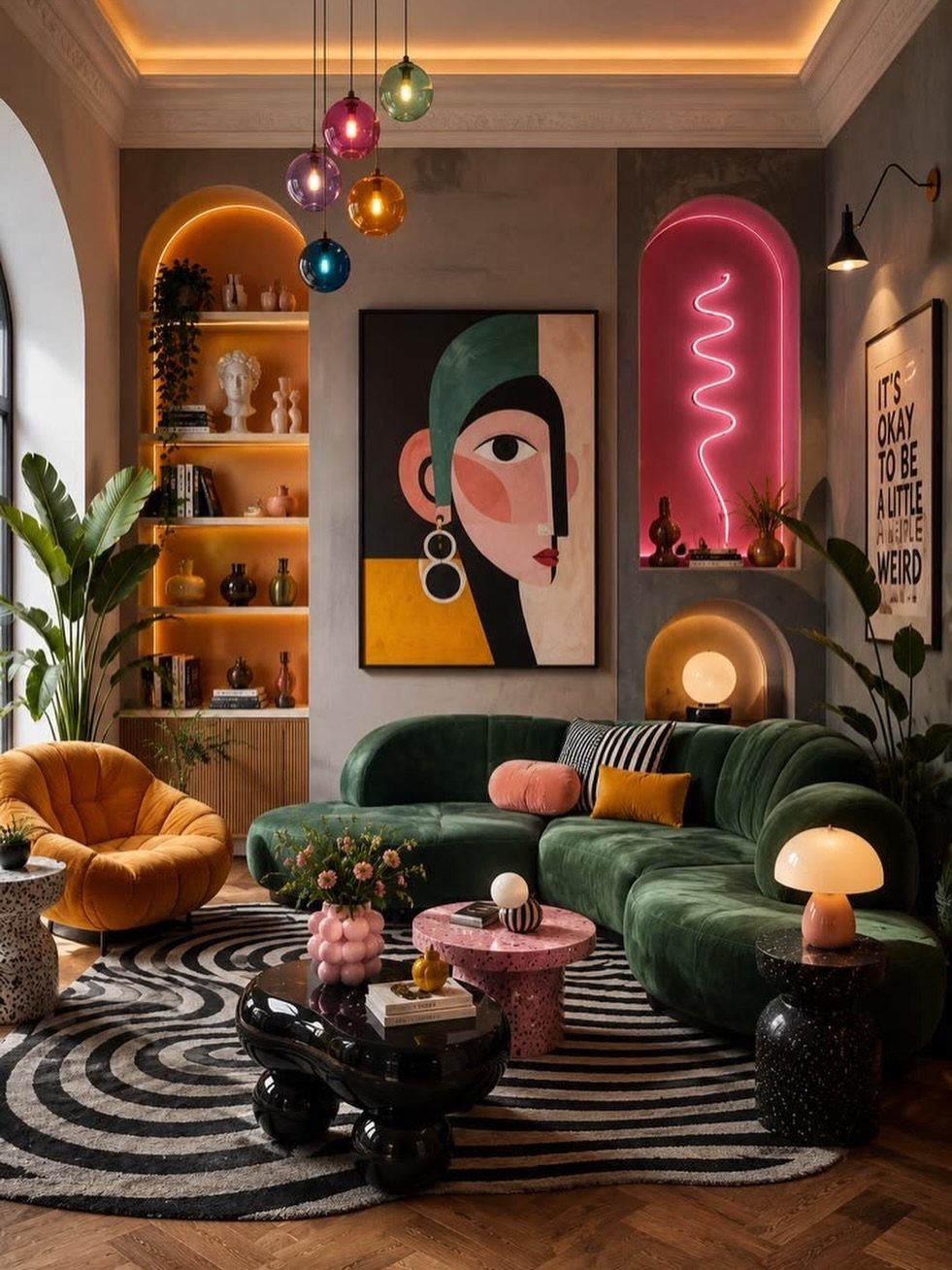
A curved sofa or sculptural chair gives the room a shape that square furniture cannot. The green velvet sofa here defines the seating area by silhouette before the orange chair and black rug add their colors.
I look for furniture with a distinct profile: curved backs, turned legs, unusual arms. Those pieces hold a room together when everything else is competing for attention.
15. Organized Books and Pillows
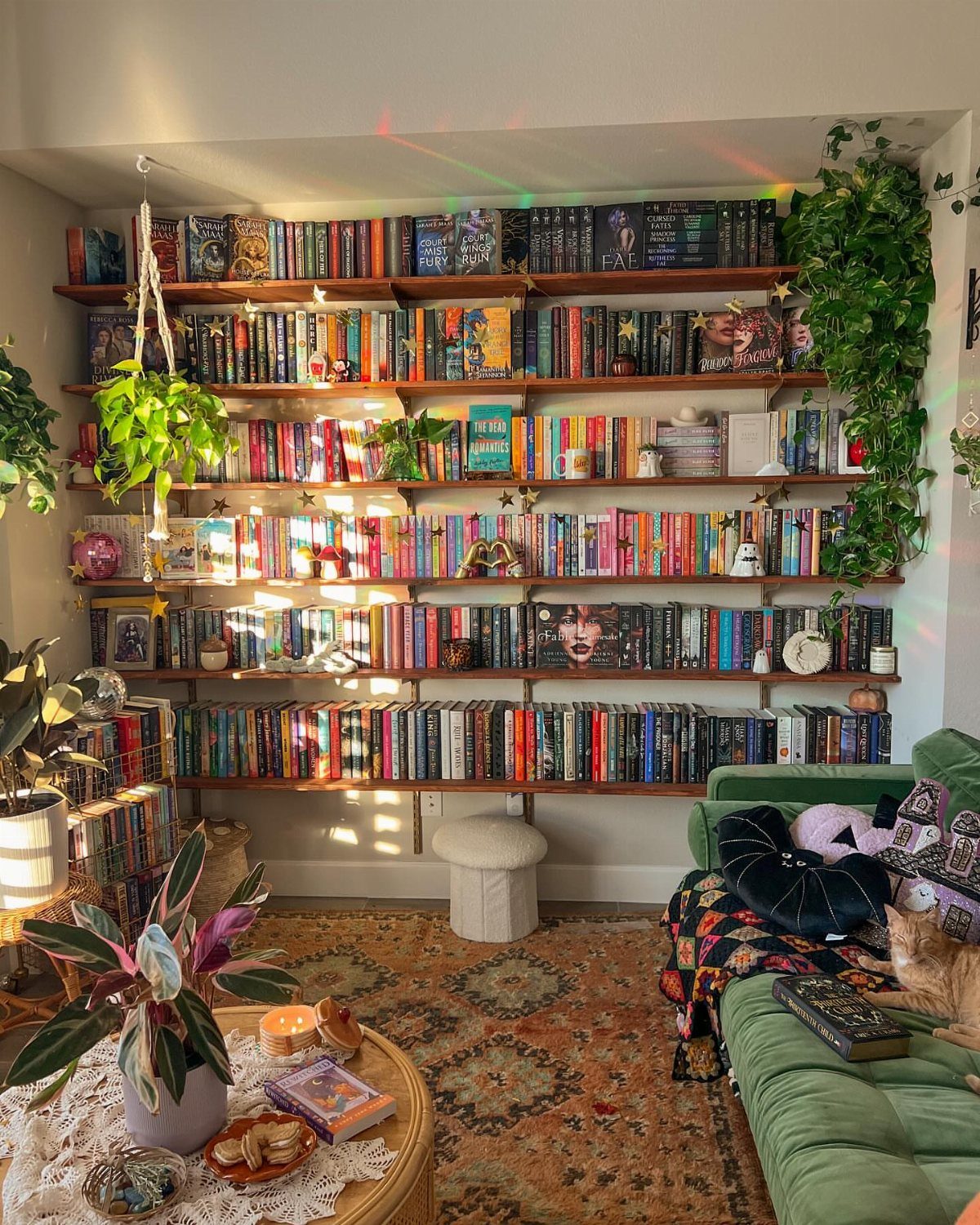
Books arranged by spine color or size turn storage into pattern. Floor-to-ceiling shelves filled tightly look controlled instead of messy, and keeping the books vertical and aligned front to back keeps the wall from tipping into chaos.
I group books by color when I want the shelves to read as one block, by size when I want the eye to move across them. Pillows in similar tones tie the shelves to the seating below.
16. Add Houseplants
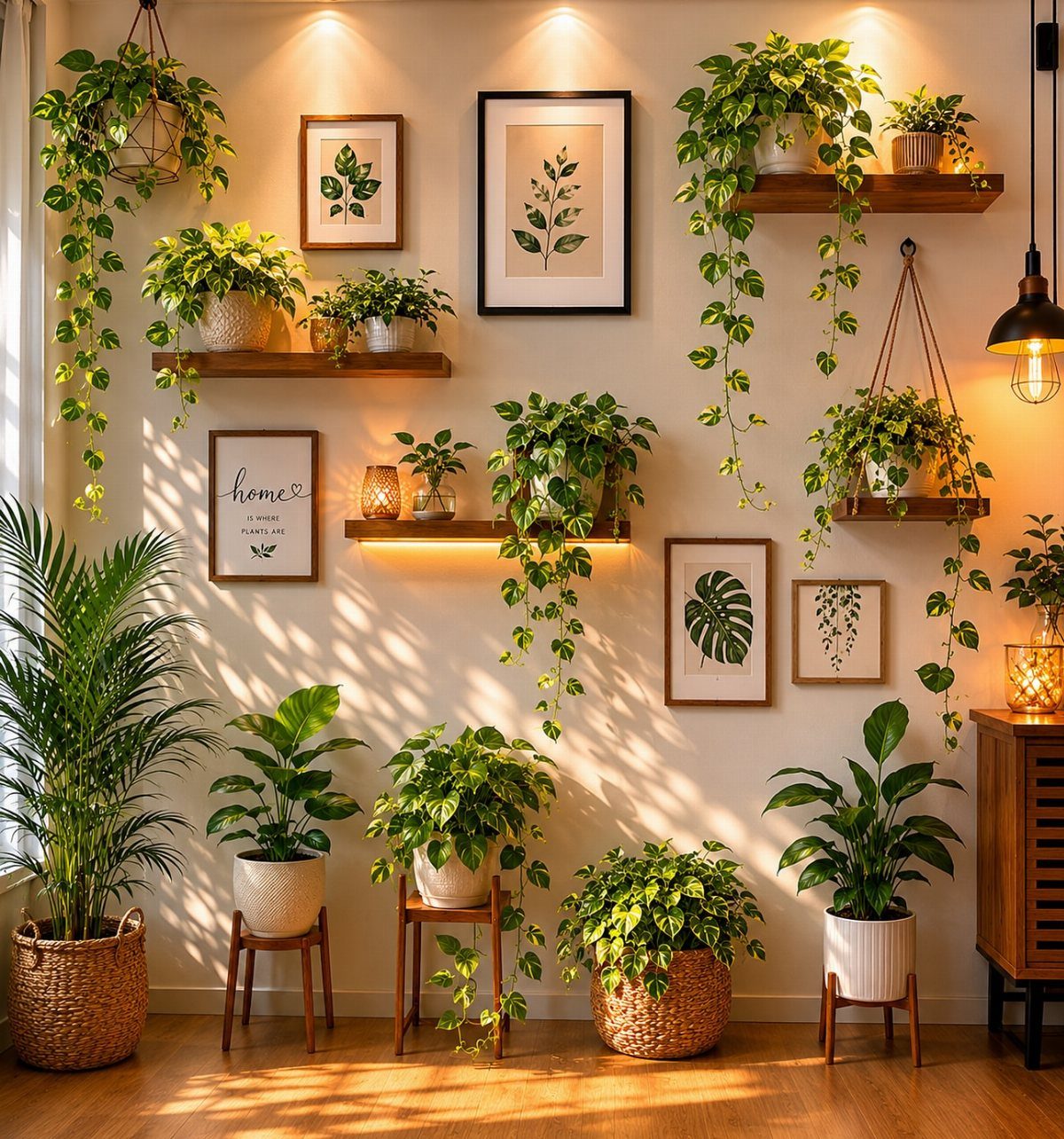
Houseplants in varied pot sizes and leaf shapes fill vertical space the way art does, and they change as they grow. Grouping them on shelves, stands and the floor turns a collection of plants into a living wall.
I choose plants by leaf texture and growth habit rather than matching pots. That adds variety without adding clutter, and lets me add to the group over time.
17. Paint an Accent Wall
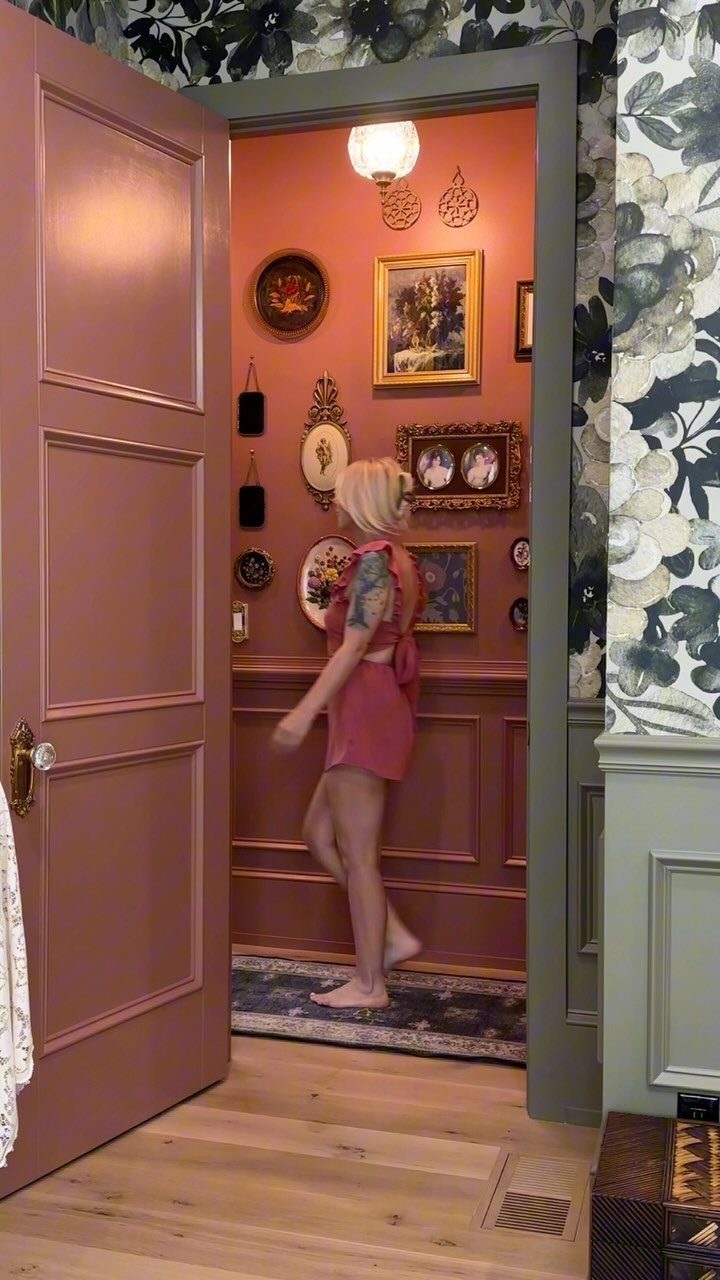
One wall in a saturated color pulls the eye and gives framed art a backdrop that white cannot match. Orange or terracotta warms a room and makes gold frames stand out without repainting the entire space.
I paint the surface you see from the doorway or the one that backs the headboard. That anchors the room and takes an afternoon.
Maximalism Versus Minimalism
Maximalism fills rooms with personal collections, layered textiles and art that mean something to the person living there. Minimalism strips back to what functions, keeps surfaces clear and limits objects to the essential.
The 2 styles oppose each other in volume but share a need for cohesion.
A maximalist room with too many unrelated pieces reads as clutter, just as a minimalist space with mismatched furniture looks unfinished. Both approaches ask you to choose deliberately.
Where minimalism values calm and emptiness, maximalism treats display as the point.
If you keep things because they matter to you and want them visible, maximalist decor gives them a structure. If you prefer rooms that stay quiet and hold only what you use regularly, minimalism fits that better.
Origins and Historical Examples
Maximalist decor has roots in different eras depending on where you start counting.
You can see its threads in Victorian England, in Renaissance curiosity cabinets, and in the layered rebellion of postmodern design. Another wave arrived with the high-color, pattern-on-pattern rooms of the decade that followed.
Historical examples range from the Palace of Versailles to Cara Delevingne’s jungle-themed home to the Madonna Inn. Each takes a different approach but shares the same density: rooms where more is the organizing principle rather than the exception.
If you want to see how far the style can go, those spaces show what it looks like when every surface is treated as an opportunity.
Frequently Asked Questions
What is maximalist decor?
Maximalist decor layers bold colors, mixed patterns, rich textures and personal collections into rooms that feel abundant rather than spare.
The style values display over emptiness and treats every surface as an opportunity to add something that matters to you. Cohesion comes from choosing deliberately, not from limiting what shows up.
What is the difference between messy and maximalist?
A maximalist room has a plan: each object earns its place and relates to what sits near it.
Clutter lacks a plan and accumulates by accident. Maximalist spaces might fill every surface, but the items belong together by color, scale or meaning, and storage stays organized even when it stays visible.
What is an example of a maximalist room?
A maximalist living room might pair a curved velvet sofa with patterned chairs, a bold rug, sculptural lighting and a gallery wall, all working within a cohesive color palette.
The room holds multiple patterns, vintage and contemporary furniture, and collections on open shelves.
What is a maximalist bedroom?
A maximalist bedroom layers bold patterns across bedding, curtains and rugs, and fills walls with framed art or saturated paint.
The style adds depth through mixed textures like velvet and wool, and personal collections earn space on shelves or nightstands. The room should feel comfortable and enveloping, not just visually busy.
What is bohemian maximalism?
Bohemian maximalism mixes globally inspired patterns, vintage furniture and natural materials like wood and rattan into rooms layered with colorful textiles and personal objects.
The style leans eclectic and relaxed, where travel finds, houseplants and bold color choices sit together without matching. Intentional curation keeps the abundance from reading as clutter.
Is Art Deco the same as maximalism?
No. Art Deco leans on geometry, shine and 1920s glamour, not the layered abundance that defines maximalism.
Maximalism is eclectic and mixes styles, colors and textures from different eras without following one design language. Both embrace bold choices, but Art Deco stays controlled where maximalism invites abundance.