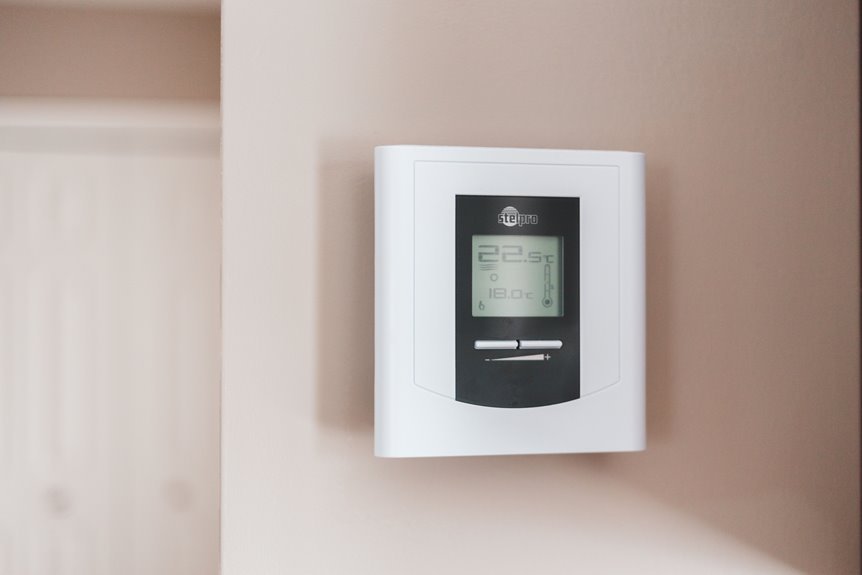
Your bedroom’s heat likely stems from solar gain through windows, an undersized AC system, or airflow problems. South and west-facing windows let intense infrared heat stream inside, especially in afternoons. Your AC may struggle to cool distant rooms evenly, or blocked vents and ducts restrict cooled air flow. Check your thermostat placement, as direct sunlight causes false readings.
Quick fixes include opening all vents, replacing dirty filters, sealing duct leaks, and installing window films that block 80% of heat. Deeper solutions are covered in the sections ahead.
Solar Heat Gain and Window Insulation
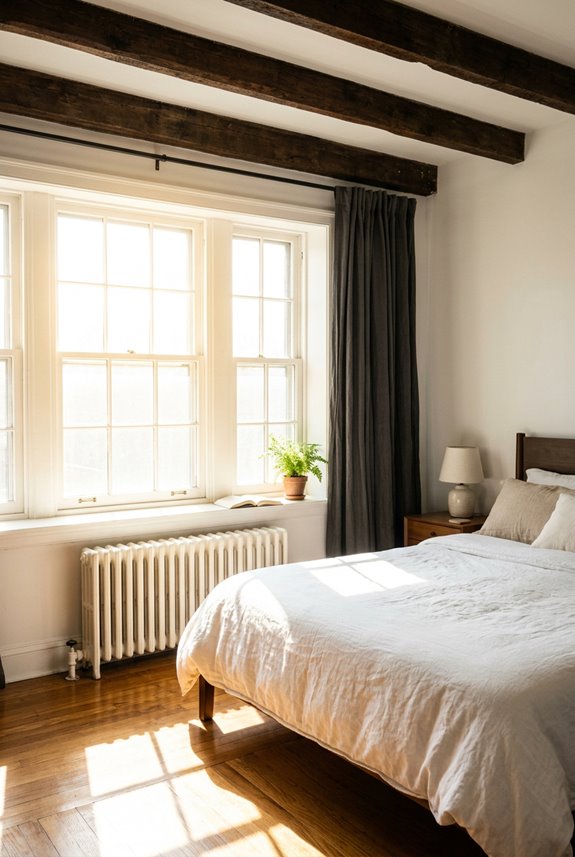
Solar heat gain through windows lets infrared heat and UV rays stream inside, warming everything they touch on sunny days.
Ever wonder why your bedroom feels like an oven on sunny days? Solar heat gain through windows is the culprit. Your windows let infrared heat and UV rays stream inside, warming everything they touch.
What’s happening:
Your south-facing windows and west-facing windows absorb the most direct sunlight. This intense solar heat gain makes your room uncomfortably warm, especially in afternoons.
The solution is window insulation improvement:
Window films block up to 80% of infrared heat and 99% of UV rays while keeping natural light flowing. They’re an affordable way to reduce glare and lower temperatures without darkening your space.
Consider exterior shading first; it stops heat before entering. Then add window films for extra protection. Together, they’ll transform your bedroom into a cooler, more comfortable retreat.
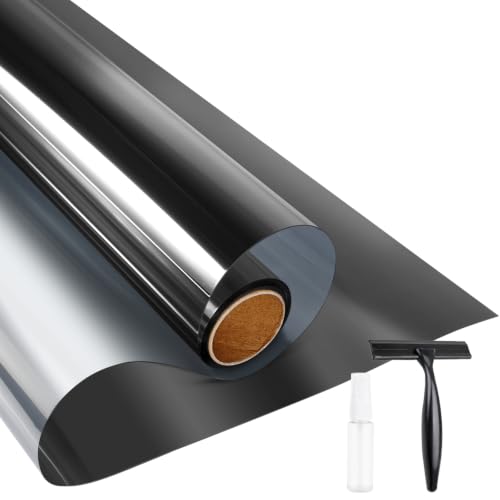
UV BLOCKING & GLARE CONTROL: KESPEN sun blocking window film can effectively block 82% of infrared rays and 90% of UV rays which may hurt your skin, prevent your precious furniture and interior decorations from fading. 12% VLT means that some visible light can enter the room, not only to block the harsh light and reduce glare, but also to maintain your good view

2026 Updated Backing Grids: Our window tint for home has been upgraded to the latest version! There are 1 inch grids on the backing for you to cut it easily. Now you can complete the installation more easily!

Heat Control, Energy Saving: This window tint reflects 91% infrared rays to cut glass heat transfer, proven to noticeably reduce room heat for hot south/west-facing windows. It keeps rooms cool in summer and retains warmth in winter, reducing excess AC consumption for improved energy efficiency. Note: Do not apply on double-pane windows exposed to prolonged sunlight
Why Your Bedroom AC System Is Too Small
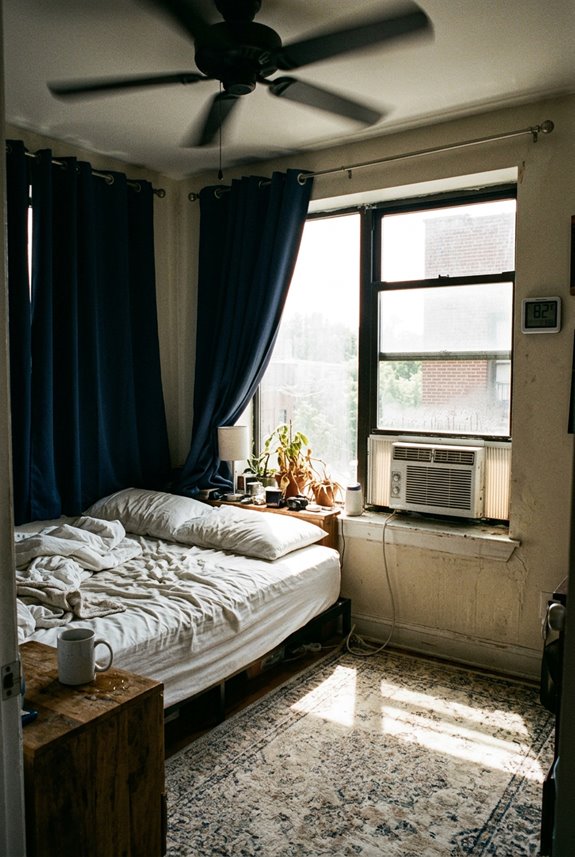
What if your air conditioner simply can’t handle your home’s cooling needs?
An undersized AC struggles to cool your entire home evenly. Your master bedroom warms up while other rooms stay cooler. This happens because:
The Problem:
- Your system lacks sufficient cooling capacity for your home’s heat load
- An undersized AC runs longer and cycles continuously
- This increases humidity and reduces comfort in your bedroom
- Distant rooms receive weaker airflow than closer spaces
What You’ll Notice:
- Uneven cooling throughout your home
- Consistently higher bedroom temperature than other areas
- Extended system run times without reaching desired comfort
The Solution:
Consider professional sizing analysis. Experts evaluate your home’s layout and heat load. They’ll ensure your AC’s cooling capacity matches your actual needs, especially for upstairs bedrooms requiring adequate airflow.

Reflective Window Insulation: Our rv window insulation is well-made, which is weight of 200 g / 10.76 sqft. It is of good material and long-lasting

Double Reflective Insulation Sheet: You will receive 48 inch x 10 FT reflective foil insulation, and it comes with 12 hook-and-loop fasteners for better installation and fixation to prevent falling off
Airflow Problems Keeping Your Bedroom Hot
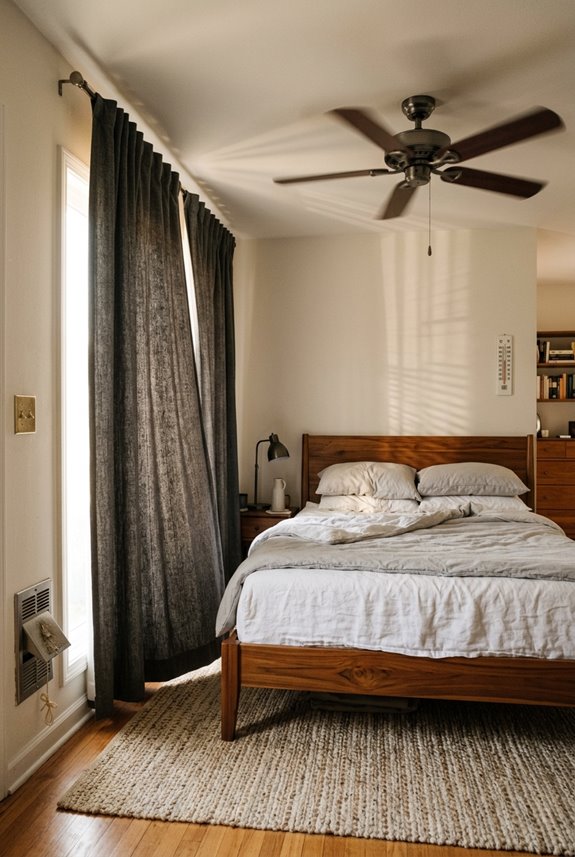
Even if your AC system has enough power, airflow problems can still leave your bedroom feeling hot and uncomfortable. Blocked return vents, leaky ducts, and weak supply airflow are common culprits that trap heat in your space. Let’s explore each of these issues so you can identify what’s really keeping your bedroom warm.

Effortless Cooling: Achieve optimal comfort with customizable temperature settings and two fan speeds; Effortless Temperature Control helps to maintain your preset temperatures for consistent comfort

【4-in-1 Multifunctional Cooling & Humidifying】 Stay cool and comfortable with this portable air conditioner that combines a powerful fan, evaporative air cooler, and humidifier into one compact design. Perfect for dry environments, adding moisture to the air while lowering the temperature for a refreshing experience during hot summer days or in air-conditioned rooms.

【Multifunctional Portable Air Conditioners – 4-in-1 Cooling Solution】:This portable ac unit integrates multiple practical functions: air cooler, desktop cooling fan, humidifier, 8-color night light.Its exclusive 5-blade design delivers a more powerful yet gentle 3D airflow compared to a standard 3-blade fan, increasing air volume by 30%.Adding ice to the spray helps lower the ambient temperature and relieves dry skin.It's an ideal personal air conditioner for bedrooms, offices, or outdoor camping
Blocked Return Air Vents
Have you noticed your bedroom stays uncomfortably warm even when the AC runs constantly? Blocked return air vents might be your culprit.
Your HVAC system depends on return vents to pull warm air back inside. When furniture, rugs, or clutter cover these vents, you create an airflow obstruction. This reduces your cooling efficiency significantly.
Your system works harder to pull air through blocked returns. This strains your HVAC system and increases run time. You’ll notice uneven temperatures throughout the room, with some spots staying hot while others cool down.
A blocked return also creates negative pressure. Warm air from adjacent rooms or outdoors gets pulled in through gaps and cracks.
The fix is simple. Clear all obstructions from your return vents today. Keep them fully open. This restores proper indoor air circulation and noticeably improves bedroom comfort within hours.
Faulty Ductwork Systems
Your bedroom’s ductwork could be silently sabotaging your cooling efforts. When ducts develop leaks or become damaged, conditioned air escapes before reaching your room. This reduces efficiency and leaves your hot bedroom struggling to stay cool.
Common ductwork problems include:
- Air leaks at joints and seams
- Collapsed or restricted ducts blocking airflow
- Poor duct design causing uneven cooling
- Ducts running through unconditioned spaces like attics
These issues create hot spots and reduce your system’s ability to cool evenly. Ducts passing through unconditioned areas absorb heat before delivering air to you.
What you can do:
Have a professional inspect your ducts for leaks and blockages. Sealing gaps and ensuring proper insulation around ducts restores cooling efficiency and comfort in your bedroom.
Insufficient Supply Airflow
Maybe you’ve noticed your bedroom stays uncomfortably warm while other rooms feel just right.
Insufficient airflow from your HVAC system might be the culprit. When supply vents are blocked or undersized ducts restrict airflow, your bedroom doesn’t receive enough cooled air. This creates uneven cooling throughout your home.
| Common Causes | Quick Fixes | Long-term Solutions |
|---|---|---|
| Blocked vents | Open vents fully | Reconfigure duct placement |
| Dirty filters | Replace monthly | Upgrade HVAC capacity |
| Poor register placement | Reposition registers | Enlarge undersized ducts |
Check these areas first:
- Verify all supply vents are completely open
- Replace dirty filters regularly
- Confirm dampers direct air properly
- Assess your HVAC capacity for the room’s cooling load
Adding return vents or upgrading your system resolves persistent hot bedroom problems by increasing air circulation and system capacity.
Thermostat Placement and Control Failures
Where’s your thermostat located? Its placement directly impacts your cooling accuracy and bedroom comfort.
Your thermostat placement affects temperature readings significantly. Consider these factors:
- Direct sunlight or heat sources cause false readings, making your system run longer than necessary
- Distance from your bedroom means it can’t sense actual conditions in that space
- Control failures prevent dampers and vents from delivering adequate cooling where you need it
- Miscalibrated zoning systems create uneven temperatures throughout your home
An aging or malfunctioning thermostat produces inaccurate readings that reduce comfort. Moving your thermostat away from direct sun improves temperature accuracy. Recalibrating your controls ensures cooling delivery reaches your hot bedroom. Updating faulty sensing equipment restores accurate temperature monitoring. These changes work together to solve your bedroom temperature struggles.

STOPS AIR LEAKS & SAVES ENERGY: Designed for HVAC contractors and DIYers. This heavy-duty aluminum foil tape creates an airtight seal on air ducts, furnace pipes, and foamboard insulation. By blocking cold or hot air leaks, it immediately improves your HVAC efficiency and helps lower your home energy bills.

THICKER: 3.9 mil / 0.1mm foil tape. Metal glosses, good insulation. The metal duct tape is too thin is easy to break, and too thick is difficult to fit the pipe surface. The thickness of 3.9mil is moderate for use. So foil tape of 3.9mil is not easy to break and is your best choice.
Rain or shine: All Weather Gorilla Tape is ideal for outdoor repairs that must stand the test of weather and time
Heat From Electronics and Occupants
While your thermostat’s placement matters, there’s another major heat source you might not be considering: the electronics and people in your bedroom.
Your Electronics Are Working Against You
TVs, computers, and lamps emit significant heat that accumulates in your sleeping area. When you run multiple heat-generating devices simultaneously, they create a substantial heat load. The cooling burden increases significantly when these electronics sit near your bed.
People Add to the Problem
Each occupant generates body heat through activity and rest. More people in your bedroom means higher internal temperatures.
Take Action Today
- Turn off unused electronics before bed
- Relocate devices away from your sleeping area
- Unplug chargers and equipment you’re not using
These simple changes reduce your bedroom temperature and improve sleep quality.

Unbreakable & Durable - DGQ heat and cold air deflectors are made of quality policarbonate material, high transparent, unbreakable and durable, heat resistant up to temperature 212°F / 100°C.
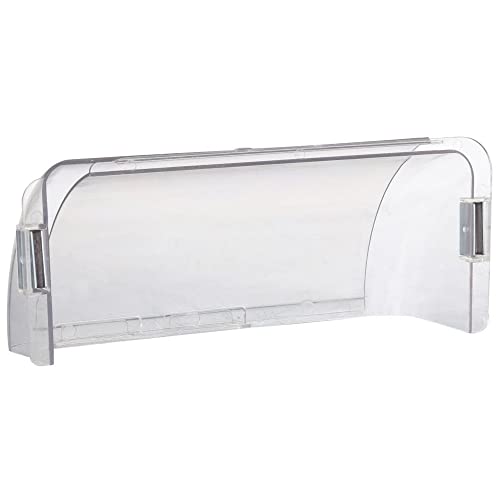
IMPORTANT: The deflector attaches with magnets so the register must be made of metal. It will not stick to plastic or wood registers.

Optimized Airflow Control: Say goodbye to uneven room temperatures! Our Air vent deflector is designed to redirect airflow from under furniture (like sofas or beds) into the center of the room, maximizing your HVAC efficiency for both heating and cooling seasons.
Zoning Solutions and Quick Fixes That Work
If your bedroom stays stubbornly hot while other rooms feel comfortable, a zoning system might be your answer. You can use dampers, thermostat settings, and simple adjustments to push cooler air exactly where you need it. These practical fixes deliver measurable results.
ONLY DAYTIME PRIVACY PROTECTION: This one way window film provides superb privacy during daytime, the mirror reflection of privacy control window film allows others to not see any interiors from the outside, effectively protecting your private space. But when inside light is stronger than outside, loss of light difference, such as the lights turning on, the mirror effect will disappear and will be seen from the outside. So at night with this mirror tint, it is necessary to draw the curtains

Stop Closing Curtains All Day: Turns your windows into a one-way mirror during daylight: nosy neighbors, passersby and delivery drivers see only their reflection, while you enjoy crystal-clear views of birds, trees and the outdoors. Note: Draw curtains at night for full privacy when indoor lights are on. Perfect for ground-floor homes, street-facing bedrooms and busy offices

[DAYTIME PRIVACY & SEE OUT NOT IN] - Stop hiding behind dark, claustrophobic blinds. Our upgraded one way privacy window film creates a premium reflective mirror tint effect, shielding your personal space from neighbors while maintaining a crystal-clear outdoor view. As a premium window privacy film see out not in solution, it is perfect for home windows, glass doors, apartments, and home offices. (Important Note: The mirror effect reverses at night; please close curtains for privacy.)
Multi-Zone System Benefits
How much cooler could your bedroom be with room-by-room temperature control? A multi-zone system gives you that power. Here’s what makes it work so well:
- Separate dampers on main ducts control airflow to each zone independently
- Individual sensors monitor temperatures in different rooms automatically
- Targeted cooling reduces hot spots without overcooling your entire house
- Flexible balance lets your master bedroom stay cooler while other areas run warmer
Multi-zone zoning is particularly effective in homes with multiple levels, where heat rises upstairs and long duct runs cause uneven cooling. The dampers adjust how much conditioned air reaches each zone, improving balance throughout your home.
When you pair zoning with additional returns or improved duct insulation, you maintain consistent airflow and prevent return air shortfalls. Your bedroom receives the comfort control you need.
Damper Alignment and Repair
Your bedroom’s hot spots often trace back to one simple culprit: misaligned or stuck dampers. These valves regulate airflow to each room through your main ducts. When they’re not properly positioned, your master bedroom doesn’t receive adequate cooling.
| Issue | Solution | Result |
|---|---|---|
| Stuck damper | Clean and adjust valve | Better airflow |
| Misalignment | Reposition damper lever | Even temperatures |
| Poor calibration | Fine-tune settings | Balanced cooling |
Start by checking your bedroom damper is fully open. Then calibrate it so your space gets proper airflow. This quick fix often solves persistent hot spots before considering bigger changes.
Quick Action Steps:
- Locate your bedroom damper on the main duct
- Verify it opens completely
- Adjust alignment if needed
- Monitor temperatures for improvement
Proper damper alignment combined with zoning controls delivers the temperature control you need.
Thermostat Zoning Calibration
When your bedroom stays hot while other rooms feel comfortable, your zoning system likely needs recalibration. Most temperature imbalances come from miscalibrated settings rather than equipment failure.
What to check:
- Verify your zone thermostat setpoints match across all areas
- Confirm dampers open fully in your hot bedroom zone
- Test communication between your zone thermostat and HVAC controller
- Inspect wiring for loose connections causing dampers to stick
Proper thermostat zoning calibration ensures your dampers respond correctly. When sensors and balancing work together, you’ll direct more cool air where you need it without overcooling other spaces.
If problems persist, recalibrating sensor positions and adjusting damper settings often resolve the issue. Many homeowners successfully fix these imbalances through systematic troubleshooting.