Cabinet hardware spans from simple black bars that let the cabinetry lead to sculptural pulls that become the feature themselves.
The choice depends on whether your kitchen already carries strong material choices, patterned tile or bold fixtures, or whether the cabinets need something to anchor the eye.
A recessed pull works in tight spaces where a protruding handle might catch clothing, while oversized statement hardware reads strongest on plain cabinet fronts with neutral paint or wood grain.
1. Matte Black Hardware
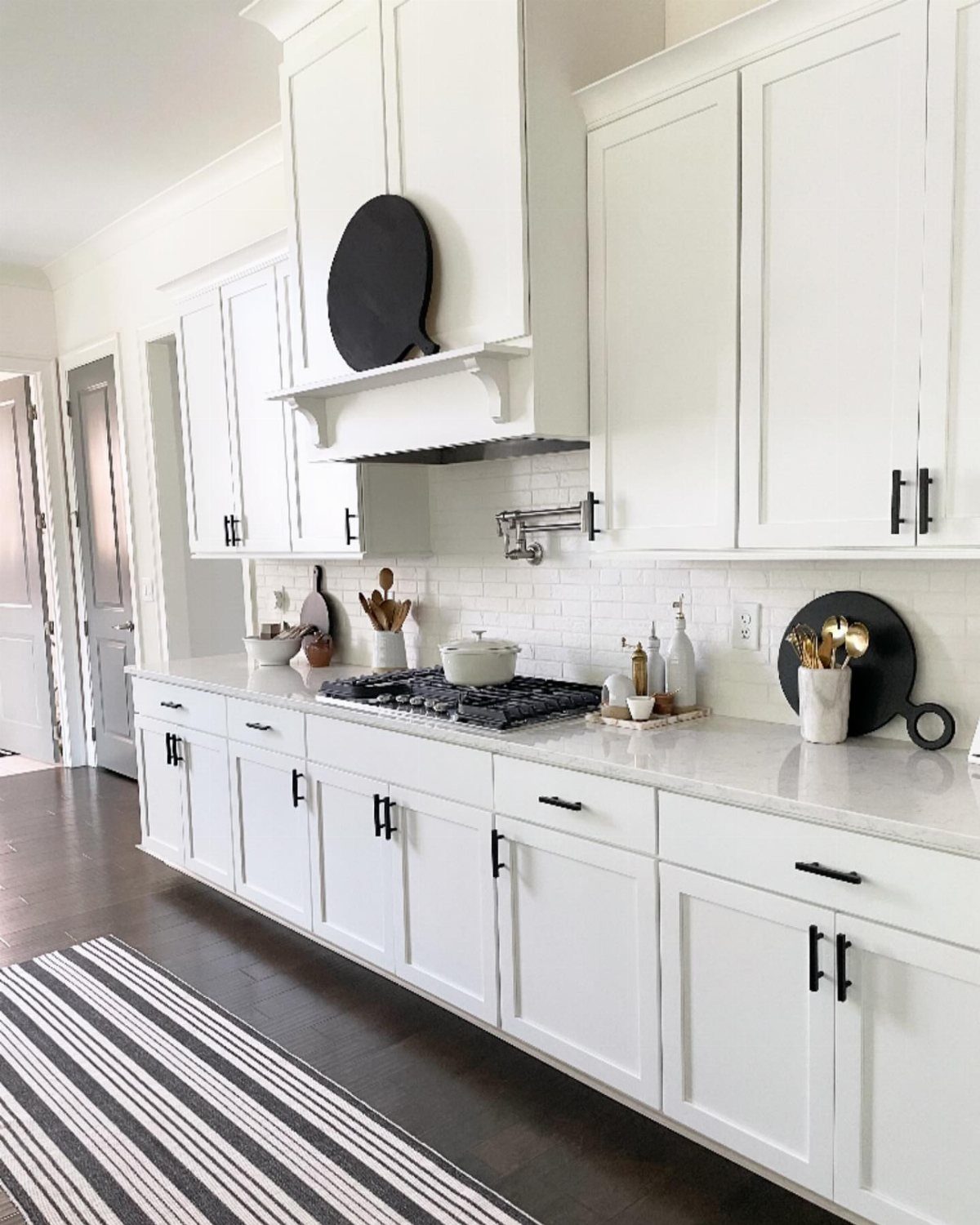
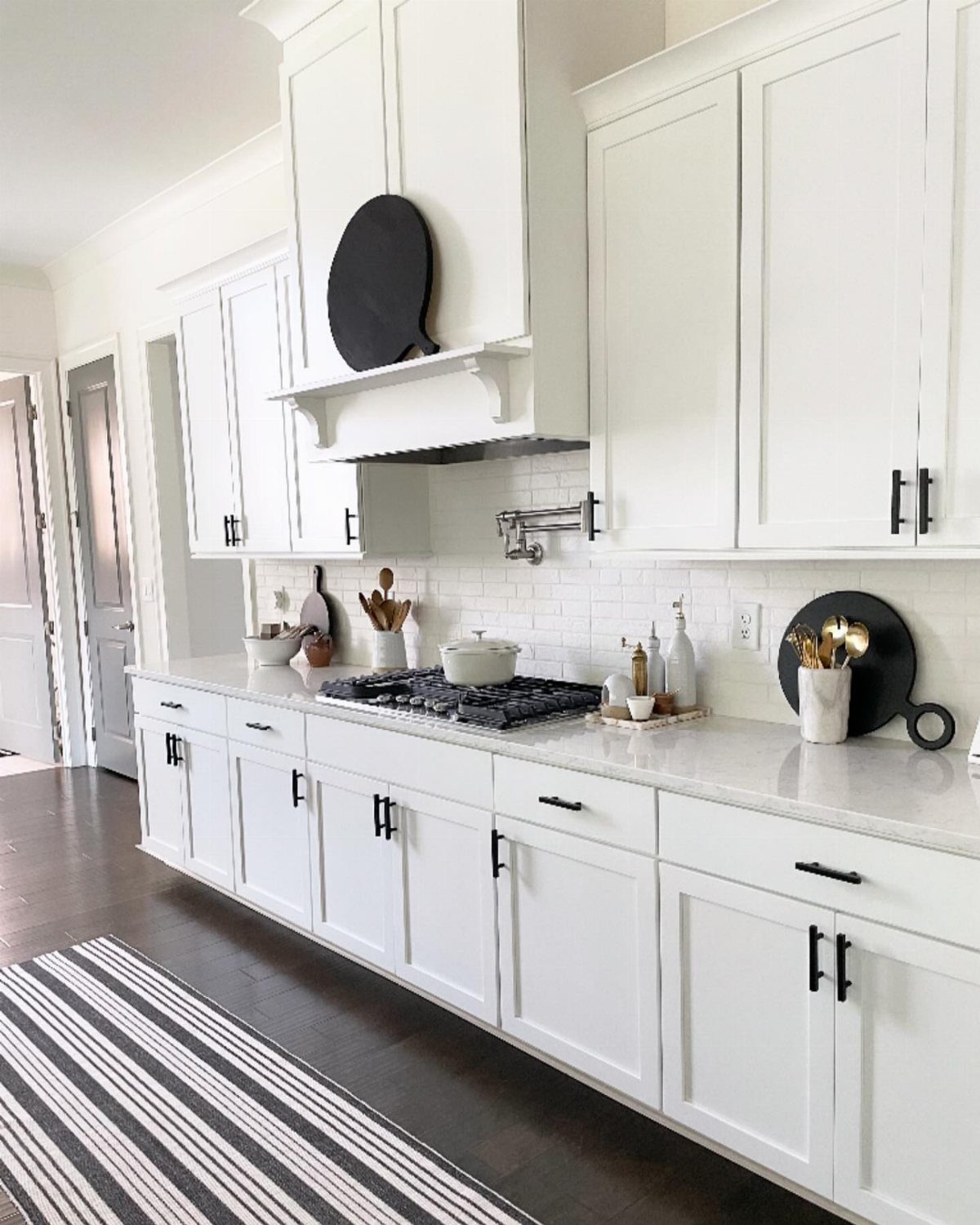
Matte black hardware keeps the focus on the cabinetry itself while still defining each drawer and door. The flat finish absorbs rather than reflects light, so it stays subtle even when placed on white or pale cabinets.
I like this choice when the rest of the kitchen leans neutral. The black reads clearly without competing, and it pairs well with stainless appliances or black faucets if those are already in place.
Bar pulls work on drawers, knobs on doors, or you can run pulls across both for a uniform look.
2. Cup or Bin Pulls
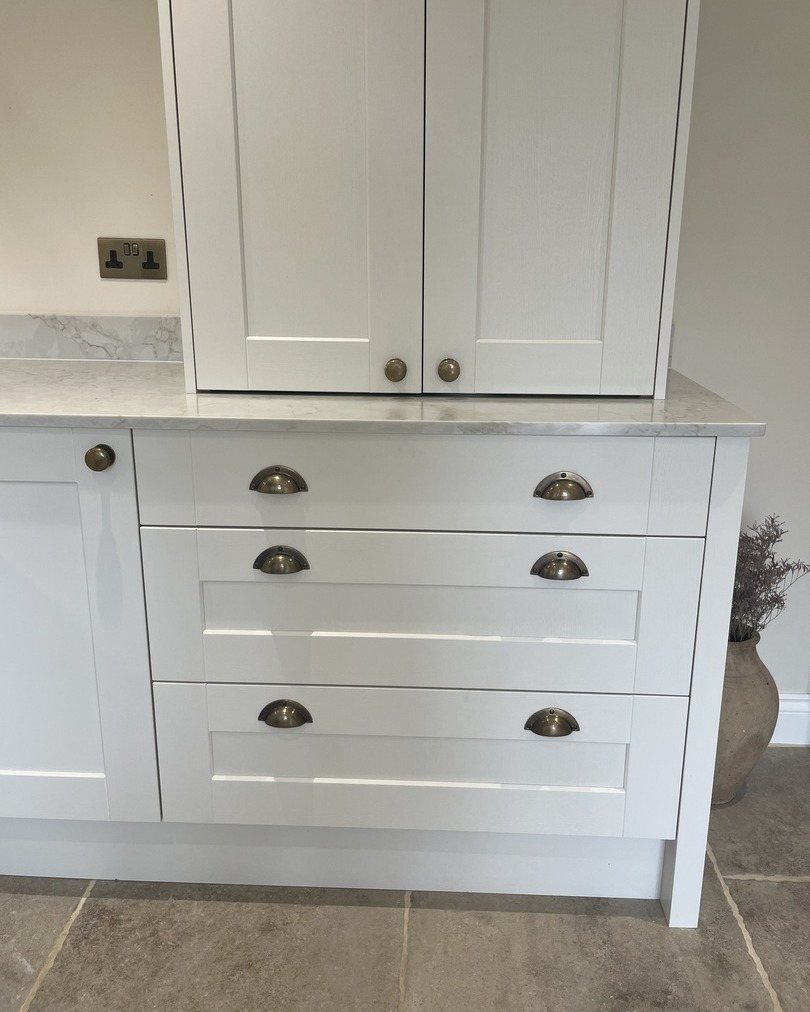
Cup pulls drop into the face of a drawer rather than sitting on top of it, giving your fingers a place to hook without protruding much past the surface.
The semicircular shape nods to vintage cabinet styles but works just as well in a modern kitchen when kept simple.
Brass warms up white cabinetry without adding visual weight. You can also find them in matte black, brushed nickel, or oil-rubbed bronze.
Pair them with round knobs on upper doors to keep the lines consistent, or run cup pulls on every drawer if you prefer a single hardware style throughout.
3. Hidden Hardware
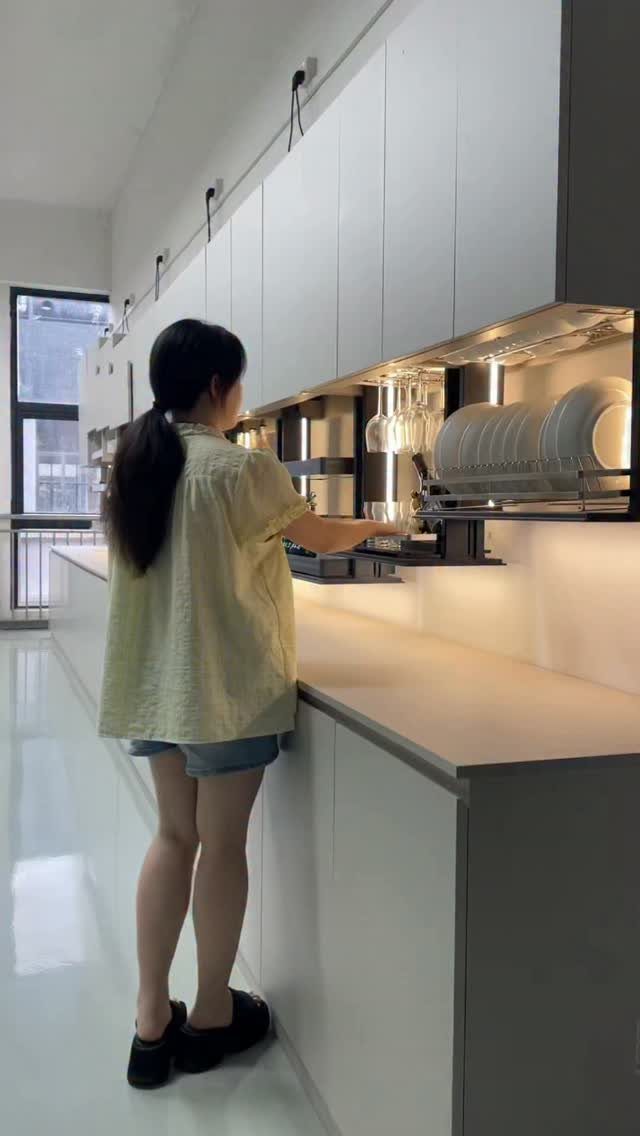
Hidden hardware removes the visual interruption entirely. Cabinets open with a push-latch or a recessed finger pull along the edge, so the door fronts stay smooth and unbroken.
This approach suits kitchens where you want clean, continuous surfaces. It works especially well with slab-front cabinets, which have no frame or panel detail to compete with hardware.
You rely on a light press or a finger along the edge instead of gripping a handle. If anyone in the house has limited hand strength, a traditional pull may be easier to use.
4. Sleek Minimal Hardware
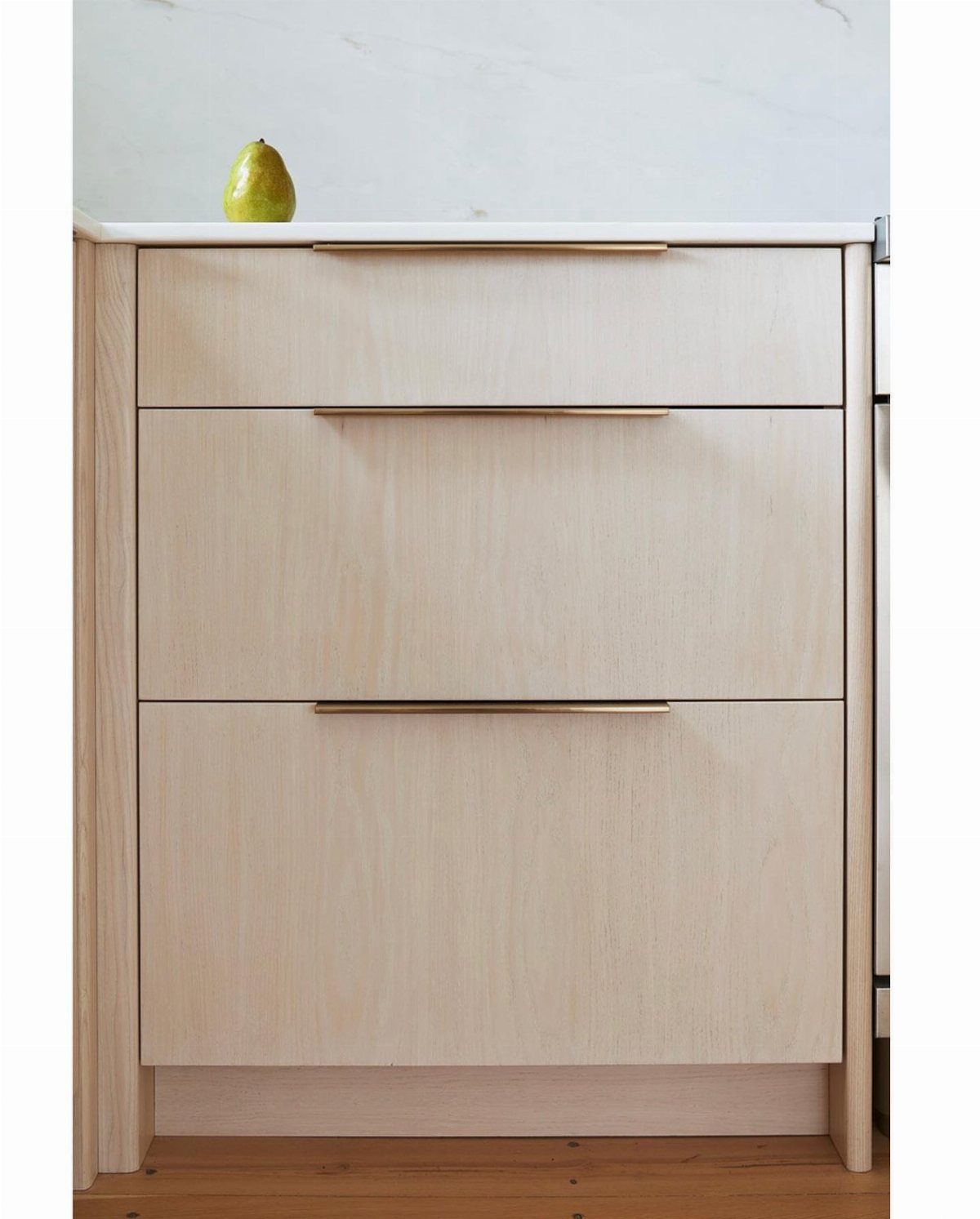
Thin horizontal bars in brushed or polished metal give each drawer a defined line without adding bulk. The profile stays low, so the wood grain or cabinet color remains the main feature.
Gold-toned versions like these warm the overall palette.
Matte black or stainless options cool it down. Either way, the simple shape adapts to most cabinet styles.
I’d choose this when the kitchen already has strong material choices, tile backsplash or textured countertops, and the hardware can afford to step back.
5. Gold Cabinet Hardware

Gold hardware introduces warmth and a touch of formality, especially against darker cabinet colors. Brass, champagne bronze, and brushed gold all fall under this umbrella, each with a slightly different tone.
The finish works in both traditional and contemporary kitchens.
On green, navy, or charcoal cabinets, it provides contrast without the starkness of black. On white or cream, it adds richness.
Polished gold shows fingerprints more readily than brushed or satin finishes. If the kitchen sees heavy use, a matte or lightly textured surface will hold up better between cleanings.
6. Mixed Knobs and Pulls

Using knobs on cabinet doors and pulls on drawers gives each function its own shape. The knob is quick to grab when opening a door, while the pull offers a full grip for sliding out a heavy drawer.
Matching the finish keeps the look cohesive. Gold across both ties the hardware together even when the shapes differ.
Some kitchens mix finishes instead, pairing brass knobs with black pulls, though that calls for both metals to appear elsewhere in the room, on faucets or light fixtures, so the contrast reads as deliberate.
7. Recessed Cabinet Pulls
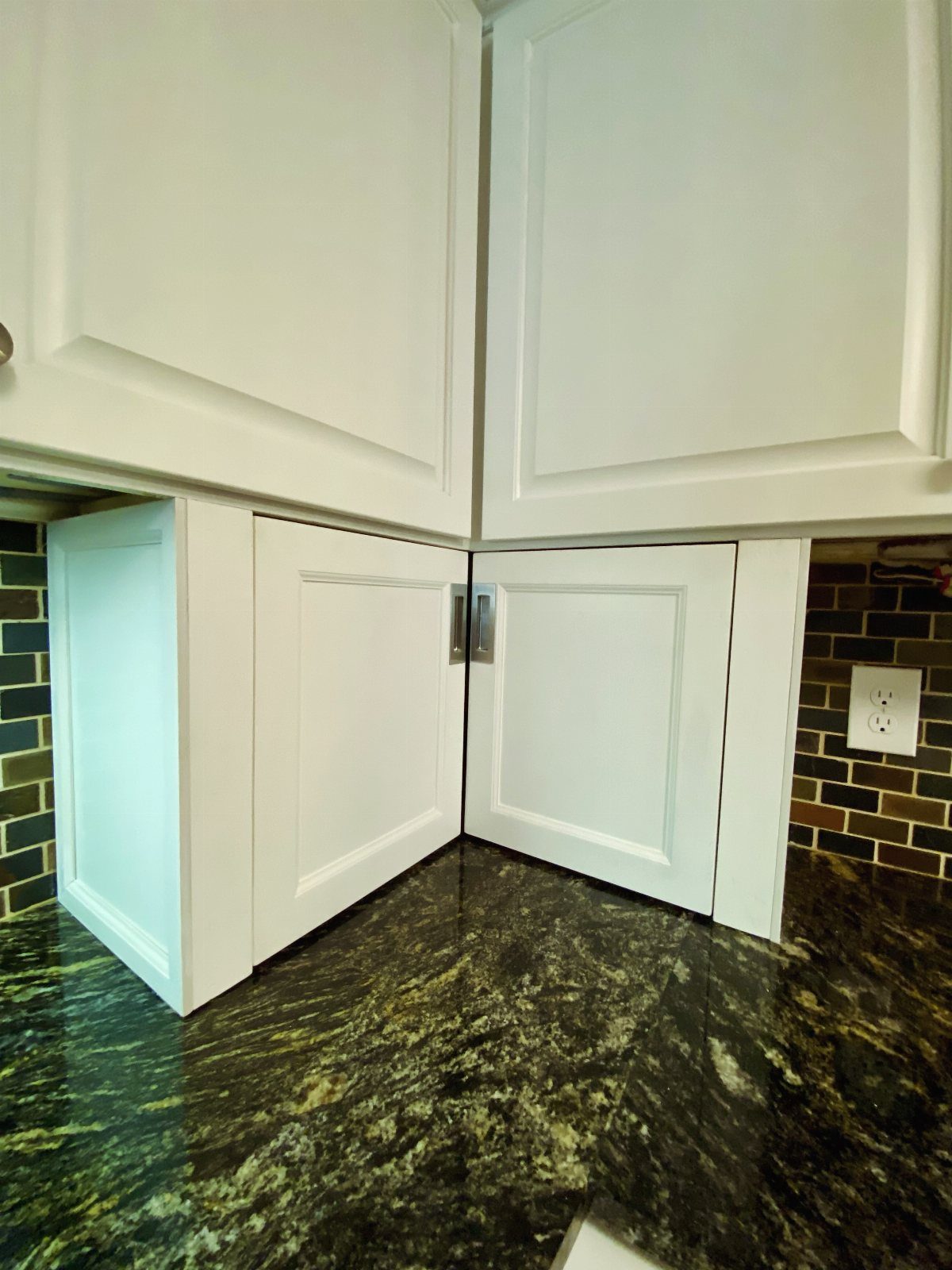
Recessed pulls sit flush with the cabinet face, leaving a shallow channel for your fingers instead of a protruding handle.
The result is a smooth, uninterrupted surface that works well in tight kitchens where a standard pull might catch clothing or get in the way.
Metal inserts in white cabinetry provide enough contrast to find quickly without drawing much attention. Matte or brushed finishes hide smudges better than polished ones.
The shallow recess means you hook a finger or two rather than wrapping your whole hand around a bar. A longer pull gives you something to grip when your other hand is full.
8. Statement Hardware

Sculptural hardware makes each door a little focal point. Oversized shapes, intricate detailing, or unexpected forms shift the focus from the cabinetry itself to the hardware, so the pull becomes the feature rather than a background detail.
Figures like these read strongest on plain cabinet fronts where the wood grain or paint color stays neutral. If the kitchen already has patterned tile or bold fixtures, the hardware may compete rather than stand out.
The size and projection mean these take up more visual and physical space than a slim bar or knob. Consider how they’ll look repeated across your upper and lower cabinets before committing to one style.
9. Antique Brass Bar Pulls
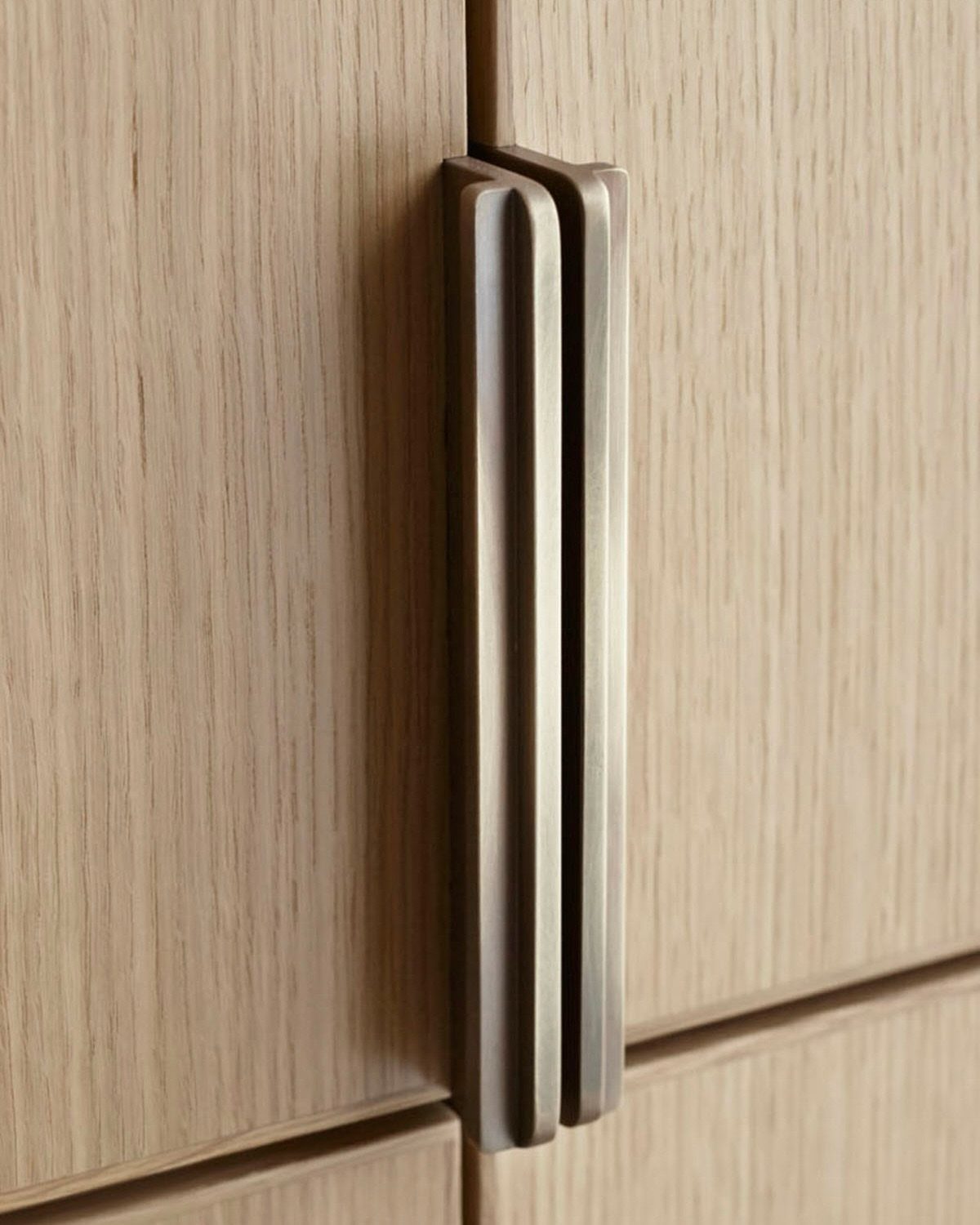
Vertical bar pulls stretch the height of the cabinet door rather than running across it, an orientation that suits tall, narrow doors or drawer fronts.
Antique brass brings warmth without the high shine of polished gold, and the slim profile keeps the look restrained.
Mounting them vertically emphasizes the cabinet’s height, which works well when the doors are taller than they are wide. On short drawers, the same pull installed horizontally may feel more balanced.
Brushed or aged finishes develop a patina over time, especially near the grip points. If you prefer hardware that stays uniform, choose a sealed finish.
10. Decorative Beaded Pulls

A beaded pull layers materials into one piece, alternating metal and stone or ceramic for a look that’s more decorative than purely functional.
The marbled beads here add texture and pattern in a small dose, while the gold metal ties the hardware back to other finishes in the room.
This works best as an accent rather than throughout. Use it on a statement piece, an island drawer, or upper cabinets, and pair it with simpler hardware elsewhere if the budget or the look calls for restraint.
The beads add depth and weight. Check that the mounting screws are long enough to go through both the pull and the cabinet face securely.
11. Handcrafted Ceramic Knobs
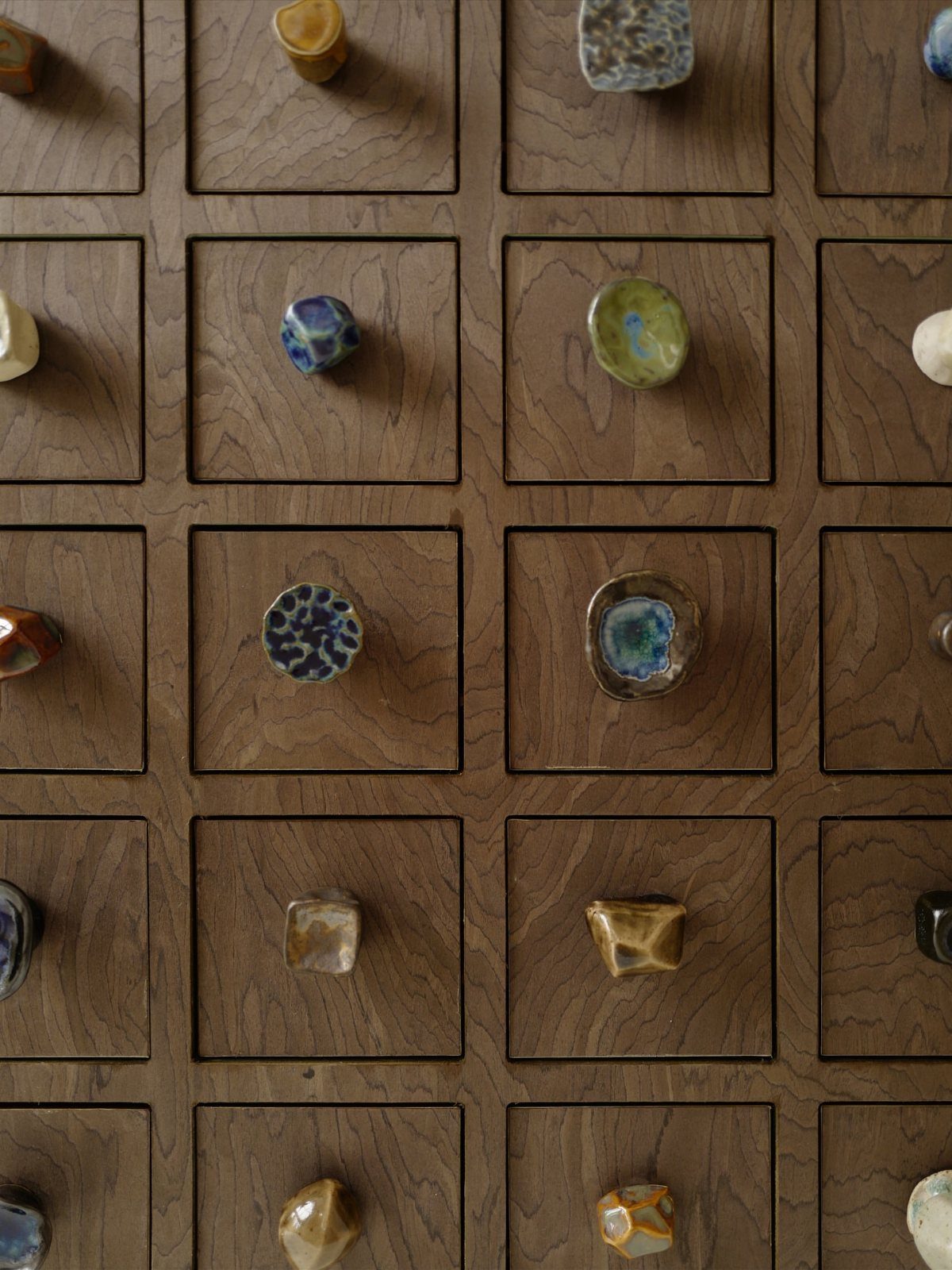
Each knob here has its own shape and glaze, so no 2 drawers look identical. Handmade ceramic hardware brings color and individuality into the kitchen, and the variation feels intentional rather than mismatched.
This approach works when the cabinetry itself is plain, small apothecary-style drawers or a vintage piece that benefits from quirky detail.
In a full kitchen with standard-size cabinets, mixing shapes across every door may feel chaotic unless your walls, counters and backsplash stay neutral.
Ceramic chips more easily than metal, so these suit lighter-use areas better than heavy-traffic drawers.
12. Tomato-Shaped Knobs

Tomato-shaped knobs turn functional hardware into a clear nod toward the kitchen’s purpose. The red and green stand out sharply against white cabinet doors, so the effect is playful and immediate.
This suits a kitchen where a sense of humor is welcome and the rest of the design stays simple enough to support it.
If the backsplash, countertops, and walls already carry strong color or pattern, the knobs may push the space past cohesive.
Ceramic shapes like these work best on doors rather than drawers, where a round form is easier to grab than to pull.
Choose for Comfort and Durability
Hardware that feels awkward in your hand becomes a daily irritation, no matter how much you liked the look initially.
Test the grip before you commit. A pull that’s too thin or too sharp-edged will dig into your fingers when you’re pulling open a drawer loaded with pots.
Consider how the shape meets your hand.
Bar pulls and cup pulls give you something to wrap your fingers around. Small round knobs require a pinch grip, which can be harder for anyone with arthritis or limited hand strength.
Watch for snags.
Hardware that sticks out past the cabinet face will catch on sleeves, pant legs, and bags. In a narrow galley kitchen, protruding handles become obstacles every time you move past the cabinets.
If you have young children or pets, sharp corners and delicate finishes may not hold up. A pull with rounded edges and a durable finish will look better longer.
Coordinate Finishes with the Kitchen
Start with what’s already in the room.
If your faucet and sink are stainless, black hardware will create contrast. If your faucet is brushed gold, matching that finish on the cabinets ties the two together.
White cabinets give you flexibility. Nearly any finish will read clearly against a light background, so you can follow the other metals in the space or introduce a new one.
Dark wood cabinets narrow the field. Gold and brass warm up brown tones, while black can disappear against a dark finish unless the cabinet has enough color variation to hold the contrast.
Mixing finishes can work if both metals appear elsewhere.
Gold pulls on the island and black on the perimeter cabinets make sense when the lighting or range hood echoes one of those finishes. Without that repetition, the mix looks unintentional.
Frequently Asked Questions
What is trending for cabinet handles?
Matte black hardware and thin horizontal bar pulls stay popular for their ability to recede visually while still defining each cabinet.
Gold-toned finishes in brass or brushed gold continue to gain ground, especially on darker cabinet colors where they add warmth without the starkness of black. Hidden hardware and recessed pulls appeal to anyone prioritizing clean, uninterrupted surfaces.
What is the 1/3 rule for cabinet hardware?
The 1/3 rule sizes the pull or knob at roughly one-third the width or height of the door or drawer front.
This creates a balanced, natural look that follows the way your hand moves when you reach to open a cabinet. On drawers, pulls can go either one-third from the top or centered horizontally, depending on drawer height.
What color hardware is in style for 2026?
Gold in its various forms, brass, champagne bronze, and brushed gold, remains strong for 2026, especially against darker cabinetry.
Matte black holds steady as a neutral that works across most kitchen styles. 2 finishes can share the same kitchen when both metals already exist in the faucet, lighting, or appliances, making the pairing look planned instead of random.
Which type of handle is best for kitchen cabinets?
Drawers need bar pulls; the horizontal grip gives you enough surface to pull against when the drawer is full and heavy.
Knobs suit cabinet doors where a quick grip is all you need. Limited grip strength calls for a pull or cup pull, which your whole hand can hold, rather than a knob your fingertips have to pinch.
What advice can you give me about kitchen cabinetry hardware?
Match the finish to the other metals already in the kitchen, your faucet, sink, or range hood, so the hardware feels coordinated rather than tacked on.
Hold the pull in the store first; anything too thin or with sharp edges will press into your fingers each time you open that drawer.
Tight kitchens need low-profile hardware that sits close to the door, not pulls that stick out far enough to snag your sleeve or bag.
Are knobs or pulls more modern?
Pulls lean more modern right now because they create a horizontal line that emphasizes clean, unbroken surfaces, especially on slab-front cabinets.
Knobs can still work in a modern kitchen when kept simple and paired with flat cabinet faces, but the current preference runs toward the streamlined look that pulls provide.
Mixing both, pulls on drawers and knobs on doors, balances function with a cohesive finish.