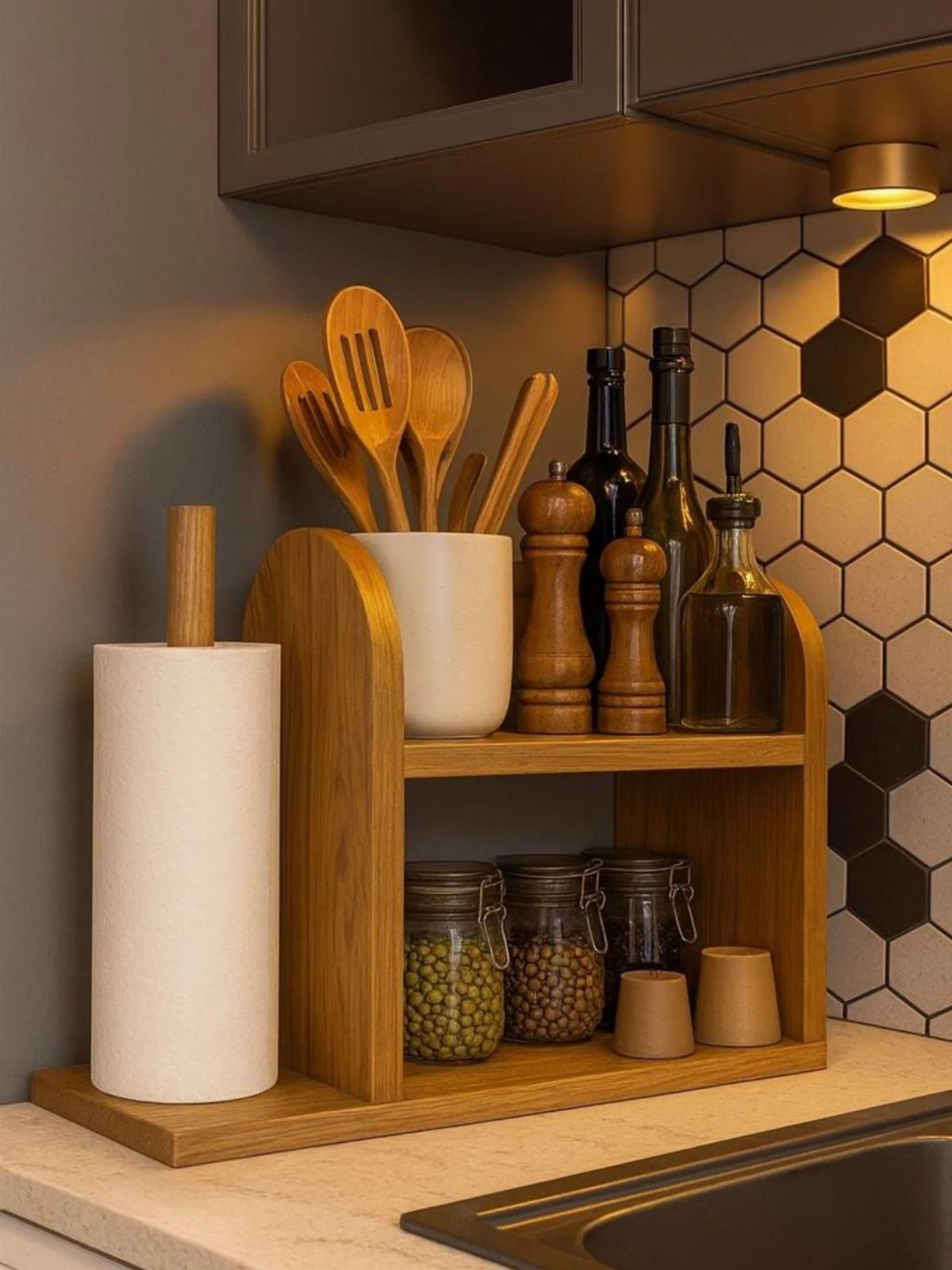
Wood in a kitchen shows up as open shelving that holds what you use, as butcher block you can cut directly on, or as reclaimed ceiling boards that bring in texture most new material cannot match.
The idea that fits comes down to how much surface you want the wood to cover: pedestals and cutting boards add warmth in small doses, while cabinets and floors commit the material across the room.
1. Wooden Bowls
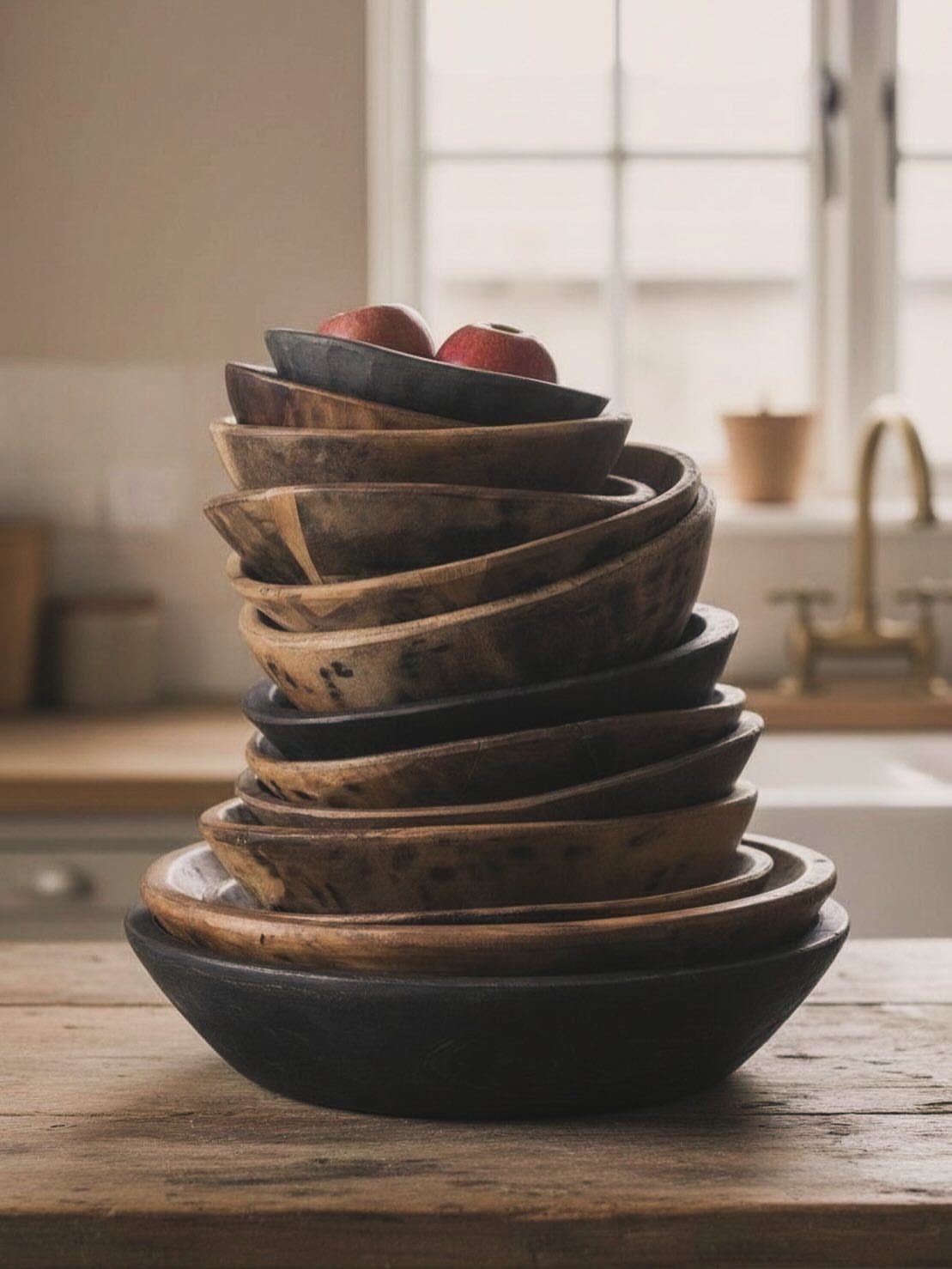
A stack of wooden bowls fills a corner of counter with the kind of sculptural weight most kitchen accessories miss. Different sizes and wood tones layer into a shape worth looking at even when they sit idle.
I keep mine next to the sink where I reach for one most days. Between uses, the grain and the height they add earn their spot.
2. Open Wood Shelves

Swap upper cabinets for open shelves and wood becomes part of the room instead of hidden behind doors. The shelves hold what you use and put that wood grain at eye level all day.
Thickness matters here.
Substantial shelf stock reads intentional where thinner material looks like an afterthought. Mount them on brackets if you want the support visible, or use concealed hardware when clean lines suit the room better.
I like them best in a small kitchen where cabinets can close the space in. The open front keeps sight lines long.
3. Wood Cabinetry

Cabinets in natural wood bring grain and color across more surface than any other single choice. Fluted or flat, stained or sealed, they set the room’s material story before anything else arrives.
A built-in niche for a coffee station or mixer keeps the wood working around function instead of covering it. Interior lighting inside glass-front or open sections shows off what you store and adds another reason to leave doors open.
I would choose a mid-tone finish. It hides less wear than pale wood and feels warmer than dark stain.
4. Wood Cutting Boards

Breadboards lean against a backsplash and turn a cutting surface into something that decorates the counter between meals. The wood brings in warmth, and the upright shape fills vertical space without cabinets.
I prop 2 different sizes together so the composition has depth. One thick board and one thinner keeps the look from feeling too matched.
They work hardest in a kitchen with white or neutral tile, where the wood tone stands out without competing.
5. Wood Kitchen Utensils

Wooden spoons, spatulas and turners gathered in a crock put functional tools on display and keep wood visible near the stove.
The collection builds its own look as you add pieces, and the wear each one picks up adds character instead of looking used up.
Store them within arm’s reach of your cooktop. The arrangement changes every time you pull one out, so it never looks static.
I prefer a ceramic or stoneware holder. The contrast between smooth glaze and rough wood grain reads better than wood on wood.
6. Wood Island

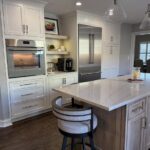
An island finished in a different wood than the perimeter cabinets creates a focal point and breaks up a monochrome kitchen. The contrast works whether you go lighter or darker, as long as the undertones match.
Pair it with stone or marble on top to keep the wood from overwhelming the room. That mix of natural materials feels more considered than wood alone.
Bar stools with woven seats or backs add another texture without introducing a fourth material. I would choose three stools rather than four; the spacing stays comfortable and the sight lines stay open.
7. Wood Ceiling Beams

Beams across the ceiling pull attention up and give a kitchen architectural presence most rooms leave untouched. Natural wood overhead adds warmth without taking counter or wall space.
The effect works best in a room with enough height to carry the horizontal lines. In a kitchen with low ceilings, beams can close the space in rather than open it up.
Finish matters less than spacing. Beams set too close read as busy; spaced wider, they frame the ceiling into panels and feel intentional.
8. Wood Floors
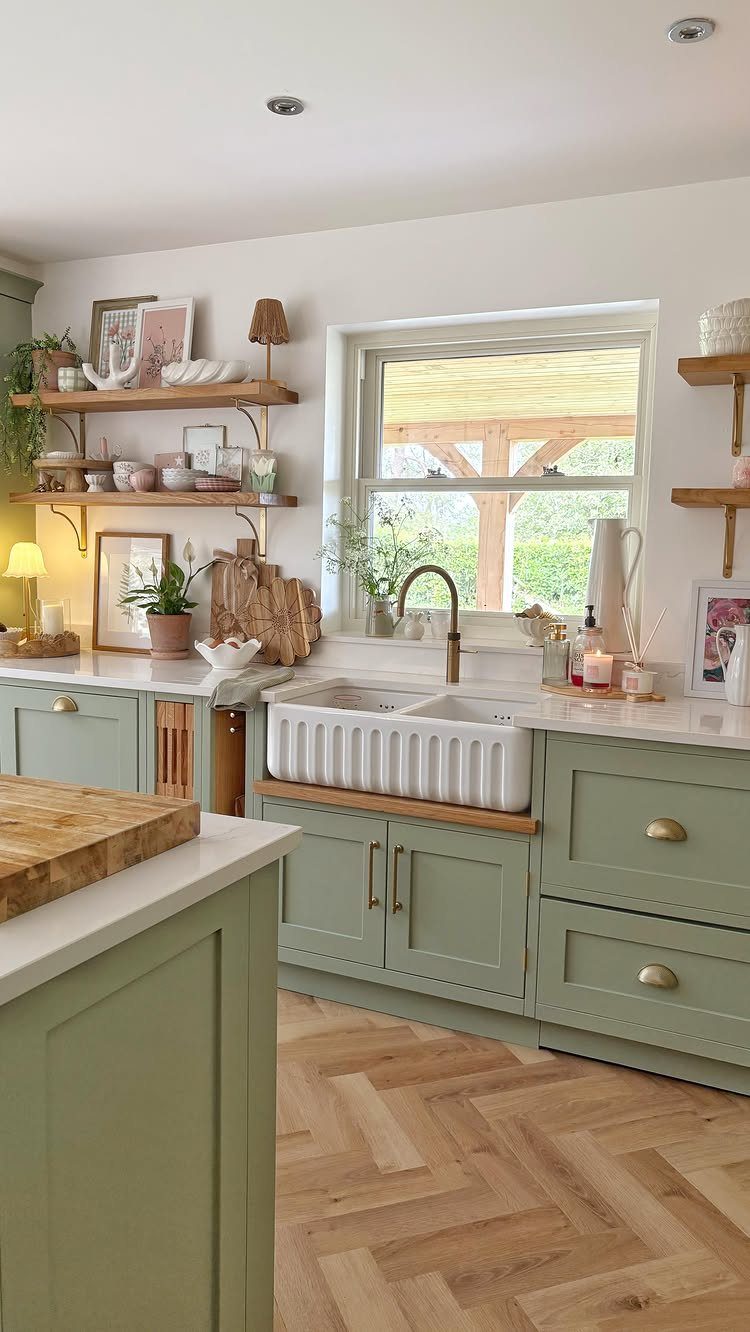
Wood underfoot softens a kitchen’s acoustics and brings in warmth where tile or stone would reflect sound and light. A herringbone or chevron pattern adds detail without requiring another material.
Lighter wood keeps a small kitchen airy. Darker tones work when the room has enough natural light to balance the floor’s visual weight.
Seal it well. Water and wood floors coexist when the finish can handle spills, and most modern polyurethane or hardwax oil does.
9. Wood Bar Stools

Bar stools in dark wood anchor a bright kitchen and keep the room from reading as one uninterrupted white surface. The wood brings in a material that contrasts without fighting the rest of the palette.
Upholstered seats add comfort when the stools see daily use. A neutral fabric keeps the focus on the wood frame.
I would match the stool finish to another wood element in the room, whether that’s open shelving or a floor. The repetition ties the pieces together.
10. Wood Countertop

A wood countertop on the island introduces a material you can work directly on and one that warms up stone or tile elsewhere in the room. The grain and the color variation give the island its own identity.
Butcher block is the most common choice here. It takes wear well and can be sanded down when the surface picks up cuts or stains.
Seal it with food-safe oil if you plan to use the surface for prep. An oil finish requires regular reapplication but keeps the wood looking fresh.
11. Wood Dining Table

A wood table in or next to the kitchen brings a lived-in, less formal note where an all-white room might feel too polished. The grain and the thickness of the top give the space a grounded center.
Pair it with chairs in a different material. Metal, upholstered, or painted wood seats keep the table from blending into the background.
I prefer a table with visible joinery or natural edge detail. Those elements make the wood feel chosen rather than default.
12. Reclaimed Wood Ceilings

Reclaimed wood on the ceiling brings in texture and history most new material cannot match. The irregular width and patina of salvaged boards give a kitchen character and lower the visual height of a tall room.
Installation takes more time than drywall. Each board needs individual placement, and uneven edges require extra fitting.
I would use it in a kitchen that already leans rustic or industrial. In a sleek modern space, the weathered wood can read as out of place.
13. Wood-paneled Dishwasher
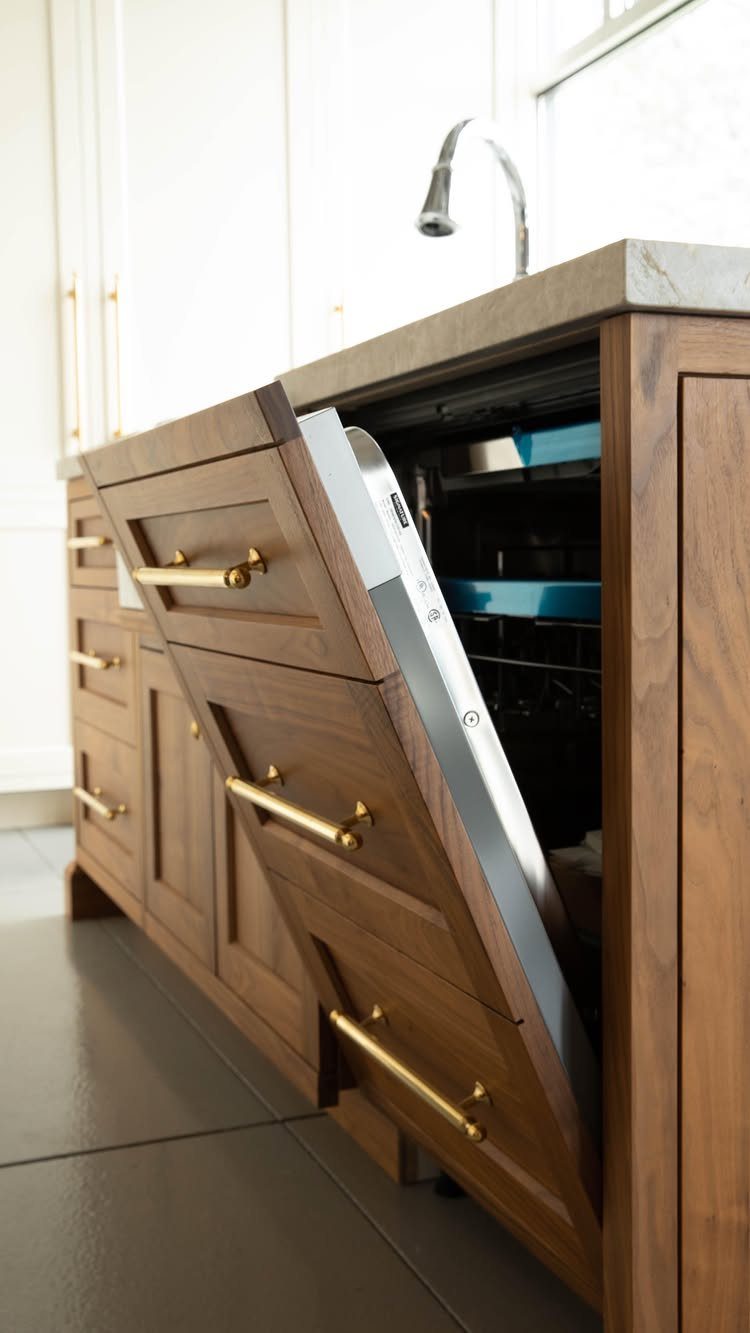
A wood panel fitted to the dishwasher door lets the appliance disappear into the cabinetry or stand out as an accent, depending on whether you match the cabinets or choose a contrasting finish.
The panel attaches to the door with screws through pre-drilled holes.
Order an unfinished panel cut to your door’s dimensions, then stain or seal it to match or contrast with the surrounding wood. Hardware pulls the look together.
This works best in a kitchen where wood already shows up elsewhere. One wood element alone can read as stranded.
14. Wood Pedestal Decor

Pedestals lift a candle or a vase off the counter and turn a small item into something with presence. Grouped in three, they add height variation without drilling or mounting anything.
Dark wood stands out against white tile and light counters. The pedestals here hold a candle, a jar and dried stems, but the composition changes when you swap what sits on top.
I keep mine near the sink where the counter otherwise stays flat. The vertical arrangement fills space that trays and cutting boards cannot.
Wood Grain and Kitchen Mood
Wood grain runs light to dark, tight to open, and the pattern you choose changes how the room reads.
Oak and ash show pronounced grain that adds movement to flat cabinet doors. Walnut and cherry bring darker tones with finer, straighter lines that feel quieter.
A room done in one wood tone can feel monotone.
I mix finishes: a medium walnut island against lighter oak shelves, or a dark-stained table near natural maple cabinets. The variation keeps the wood from blending into one mass.
Cool palettes benefit most from wood.
White tile, stainless appliances and stone counters stay clinical without a warm material to interrupt them. Wood softens that edge without requiring color.
Matte finishes show grain more clearly than high gloss. A satin or flat seal lets texture read, where a shiny surface reflects light and hides the wood underneath.
Frequently Asked Questions
What are some good wooden kitchen items?
Wooden bowls, cutting boards propped against the backsplash, and utensils in a crock near the stove put wood on the counter without drilling or mounting anything. Open shelves replace upper cabinets and bring wood grain to eye level.
Can wood accents work in modern or contemporary kitchens?
Wood softens clean lines and cooler palettes without fighting them. The contrast between wood and stainless steel or concrete feels more considered than a single material alone.
How do I care for wooden kitchenware?
Wash by hand with warm soapy water, wipe it dry instead of leaving it in the sink, and rub mineral oil into the grain when the surface starts to look dull.
The dishwasher’s heat and prolonged moisture will warp and split the grain.
Is wooden kitchenware sanitary?
Dense, closed-grain woods resist moisture and have natural antibacterial properties that hold up better than plastic, which scars and harbors residue. Keep it clean, keep it dry, and treat it with oil when it needs it.