
High-gloss finishes hold heat more than natural wood grain, and pairing black with pink gives you twice the visual weight of grey or beige alone. Acrylic and glass-fronted cabinets cost less than custom-built solid wood, and stainless steel outlasts both.
1. Classic Wooden Cabinets

Light wood cabinets deliver warmth without blocking natural light, which matters in a kitchen where task lighting is already limited.
The grain stays visible under a clear or lightly tinted finish, and the pale tone reflects more light than darker stains.
Solid wood holds up under daily use.
Doors stay aligned, hinges stay seated, and the surface takes a refinish if wear shows after years of cooking. In Nigeria’s humid climate, a sealed finish prevents moisture damage.
The smooth door fronts keep the look calm. If you want texture, raised-panel doors or open shelving above the countertop add detail without turning the space busy.
2. High Gloss Cabinets
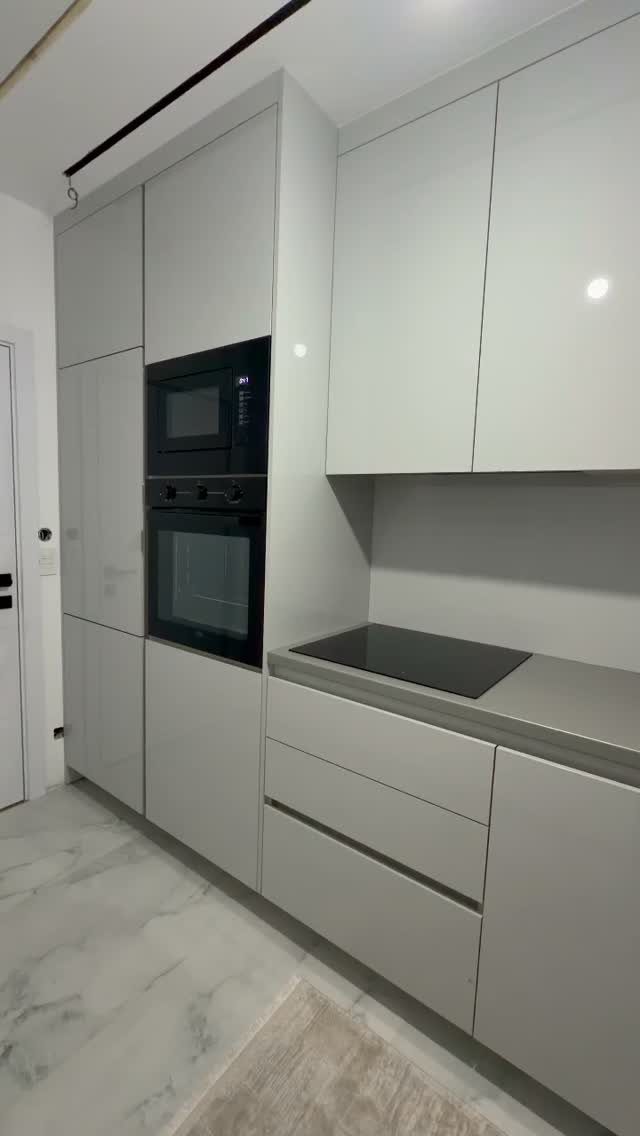
A gloss finish bounces light around the room, which makes a small kitchen feel larger and brighter. The effect is strongest under LED or fluorescent fixtures, where the reflective surface amplifies the output.
White high-gloss cabinets stay the most popular choice because the color and the shine work together: white reflects more light than any tinted finish, and the gloss magnifies that.
The surface shows fingerprints and water spots, so you will wipe it down more often than a matte finish. Acrylic or lacquered MDF takes the gloss well and costs less than glossy laminate over solid wood.
3. Custom-Built Cabinets
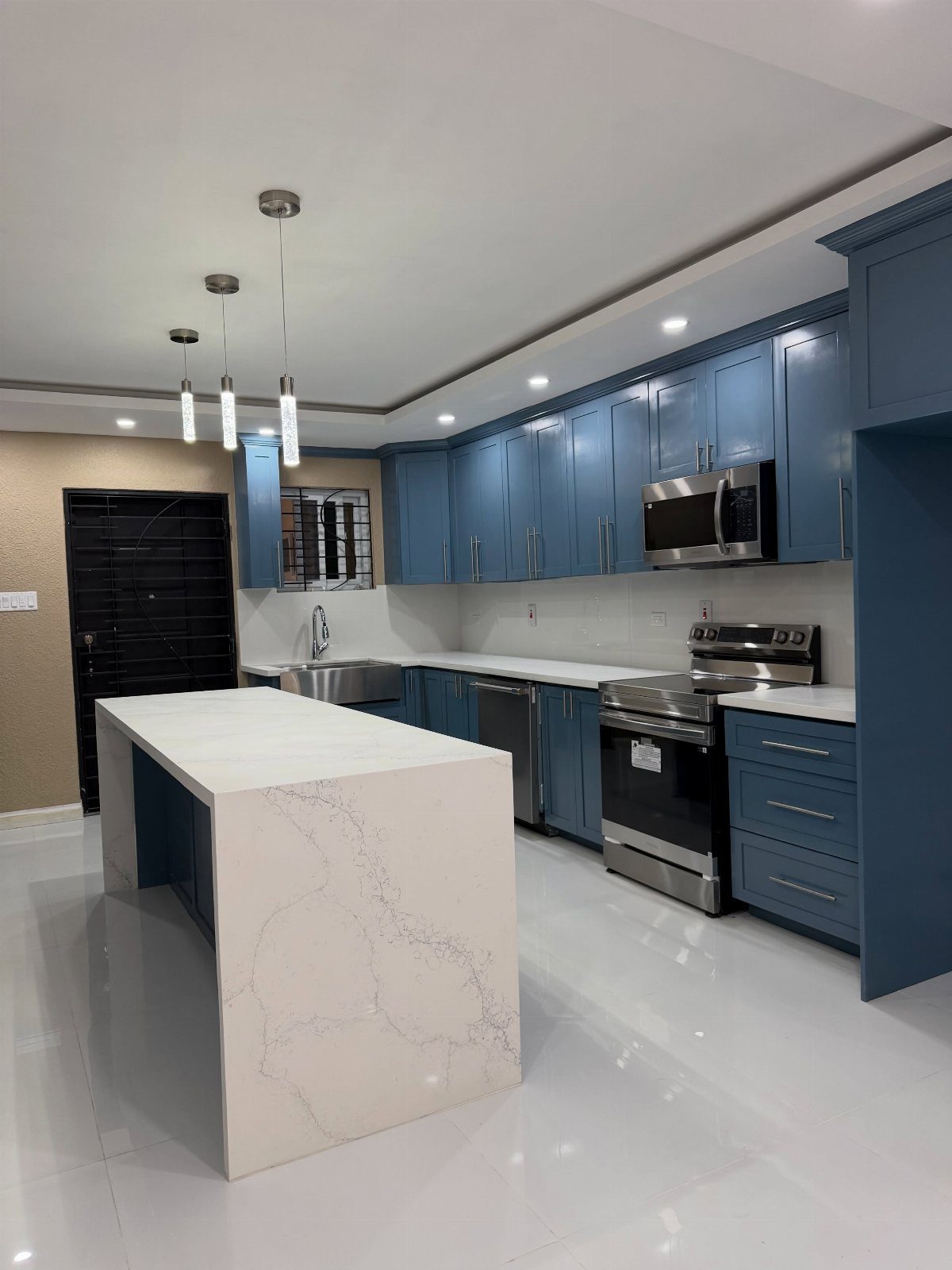
Custom cabinets fill the exact space you have, floor to ceiling and wall to wall, which eliminates gaps and gives you every usable inch. A carpenter measures your kitchen, builds the boxes to fit, and installs them in place.
The cost runs higher than ready-made cabinets because you are paying for the labor and the precision.
In return, you choose the material, the finish, the door style, and the internal layout: pullout shelves, spice racks, or deep drawers where you need them.
If your kitchen has an unusual shape, irregular walls, or ceiling height that standard cabinets do not reach, custom work solves the problem.
4. L-Shaped Kitchen Cabinet
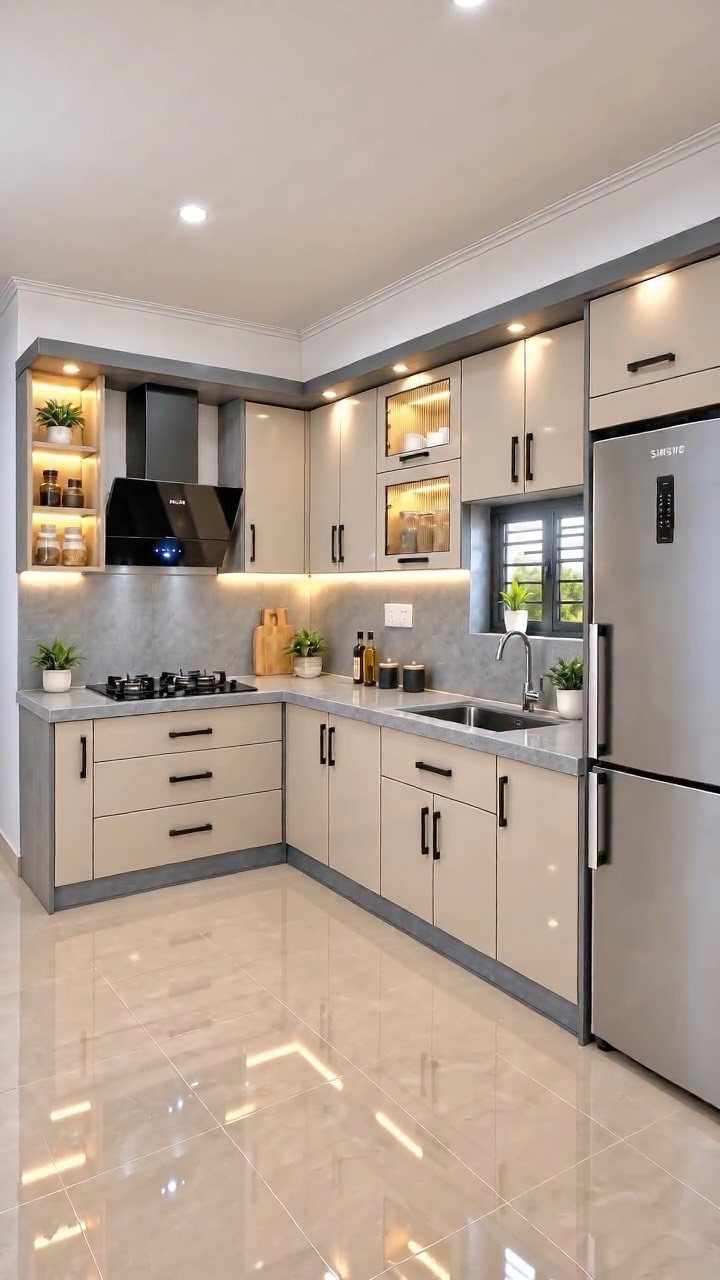
Two cabinet runs meet at a right angle, which gives you counter space on two walls and leaves the third side open.
The layout works in a compact kitchen because you stay within a few steps of the sink, stove, and prep area without crossing back and forth.
The corner where the 2 runs meet needs a solution: a Lazy Susan, a blind corner cabinet with a swing-out shelf, or a diagonal cabinet that cuts across the angle.
Each one retrieves items stored deep in the corner, where a fixed shelf would leave them out of reach.
If your kitchen opens to a dining area or living room, the L-shape keeps the work zone contained while the open side lets family members pass through.
5. Linear Kitchen Cabinet
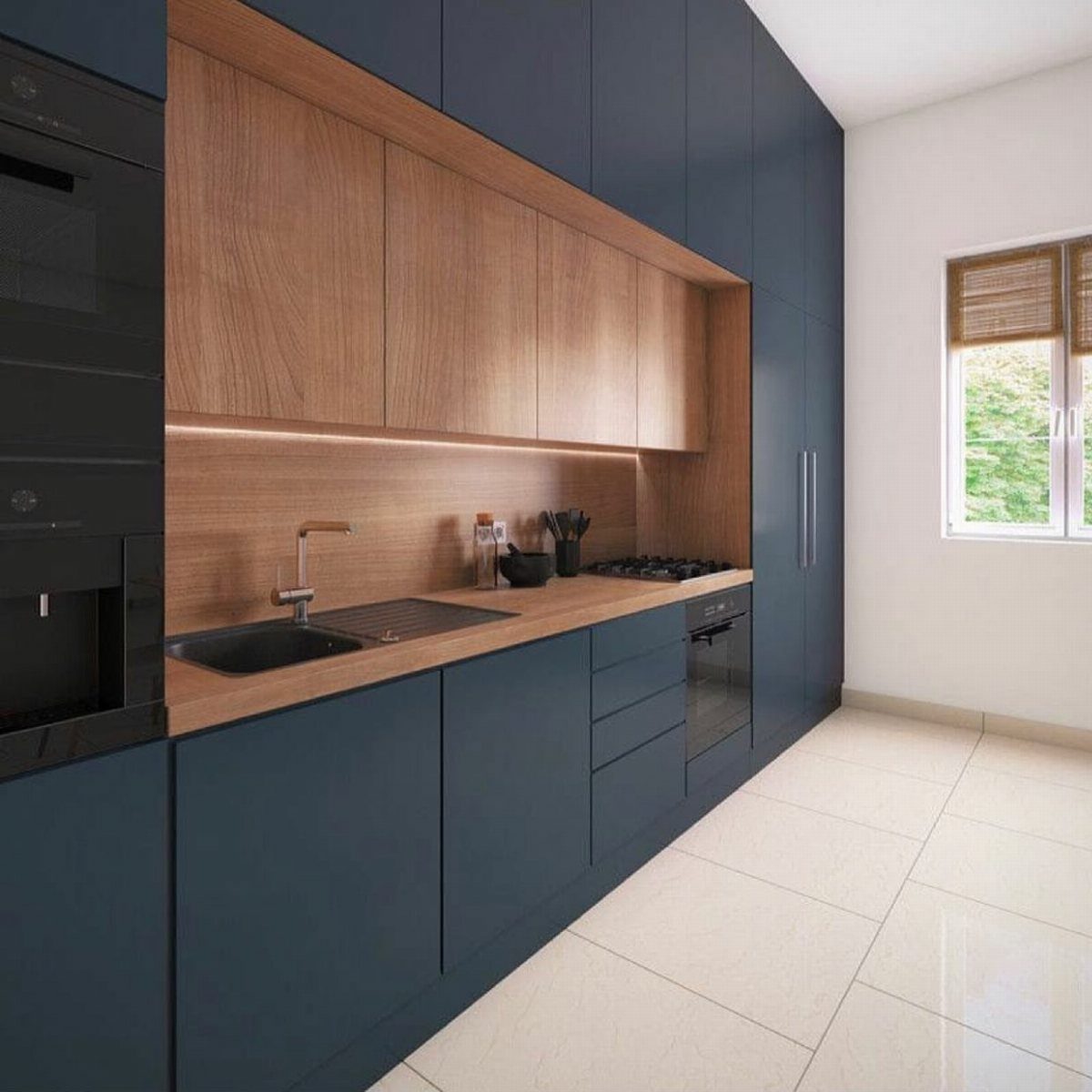
Cabinets along one wall organize a narrow kitchen or a studio where floor space is tight. All the appliances, storage, and prep surface sit in a single line, which keeps the layout simple and leaves the opposite wall open.
The sink, stove, and refrigerator should sit close enough that you do not walk more than a few steps between them. A single run fits all three without crowding.
If you need more counter space, a freestanding island or a fold-down table on the opposite wall adds prep surface without closing in the room. Linear layouts work best in narrow kitchens, where an L-shape or U-shape would block traffic.
6. Trendy Kitchen Cabinet
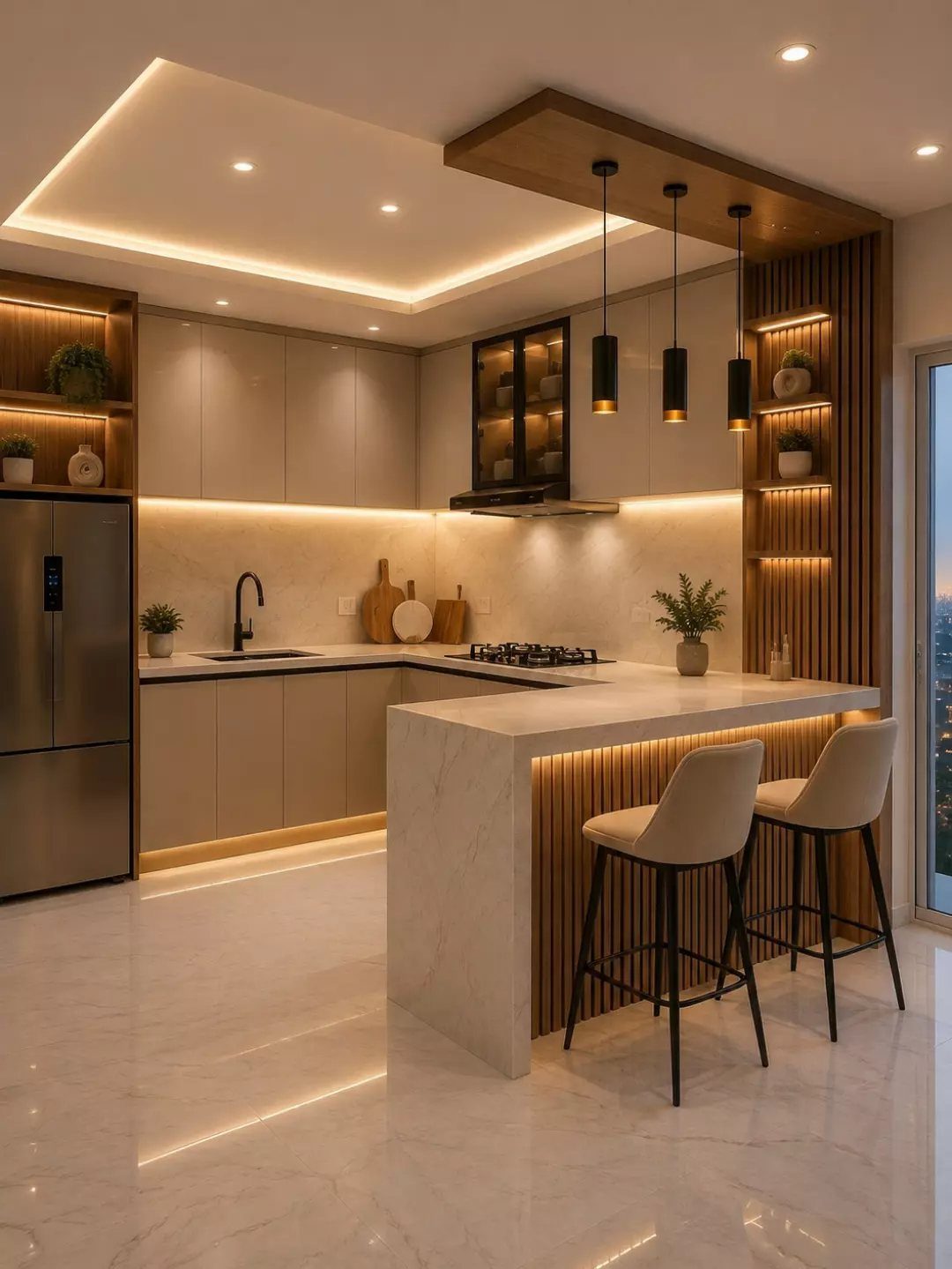
The beige cabinets, white marble island, and wooden slatted wall combine 3 finishes that define current kitchen style in Nigeria. The beige brings warmth, the marble adds polish, and the wood slats give texture without busy pattern.
Under-cabinet lighting makes the countertop usable after dark and highlights the marble veining. The 3 pendant lights over the island provide task lighting for the work surface and fill in the room’s ambient light.
2 stools turn the island into a breakfast bar, which adds seating without requiring a separate dining table. If your kitchen opens to a living area, the island marks the boundary between the 2 spaces.
7. Sleek Kitchen Cabinet

Handleless doors give a cabinet front one unbroken surface, which stays clean and reduces the places dust collects. The doors open with a push-latch mechanism or a recessed groove along the top edge.
Under-cabinet lighting runs in a strip below the wall cabinets and lights the countertop for prep work. LED strips stay cool, draw less power than halogen, and last longer.
Beige cabinets warm the space without darkening it the way brown or walnut finishes do. The black countertop provides contrast and hides stains better than white stone.
8. Minimalist Kitchen Cabinet

Flat-front cabinets, no crown molding, and a small selection of open shelves reduce the number of visual breaks, which makes the kitchen feel larger. The light wood keeps the warmth of natural grain without the weight of dark stain.
White countertops and white tile set the work surface apart from the cabinetry and reflect more light into the room. Vertical subway tile on the backsplash adds subtle texture without pattern.
Open shelves work for dishes you use daily. Items stored there collect dust faster than items behind cabinet doors, so I reserve them for plates, bowls, and glassware in rotation.
9. Large Island Cabinet

A wide island holds a cooktop or sink on one side and leaves counter space for prep on the other. Attaching a wooden table to the island’s end gives you dining space without requiring a separate table.
The cooktop built into the island needs a vent hood overhead or a downdraft system inside the countertop. Overhead vents work better at capturing steam and grease, but a downdraft keeps the sightline open.
Storage underneath the island holds pots, serving dishes, and pantry items within reach of the work surface.
10. High-End Kitchen Cabinet
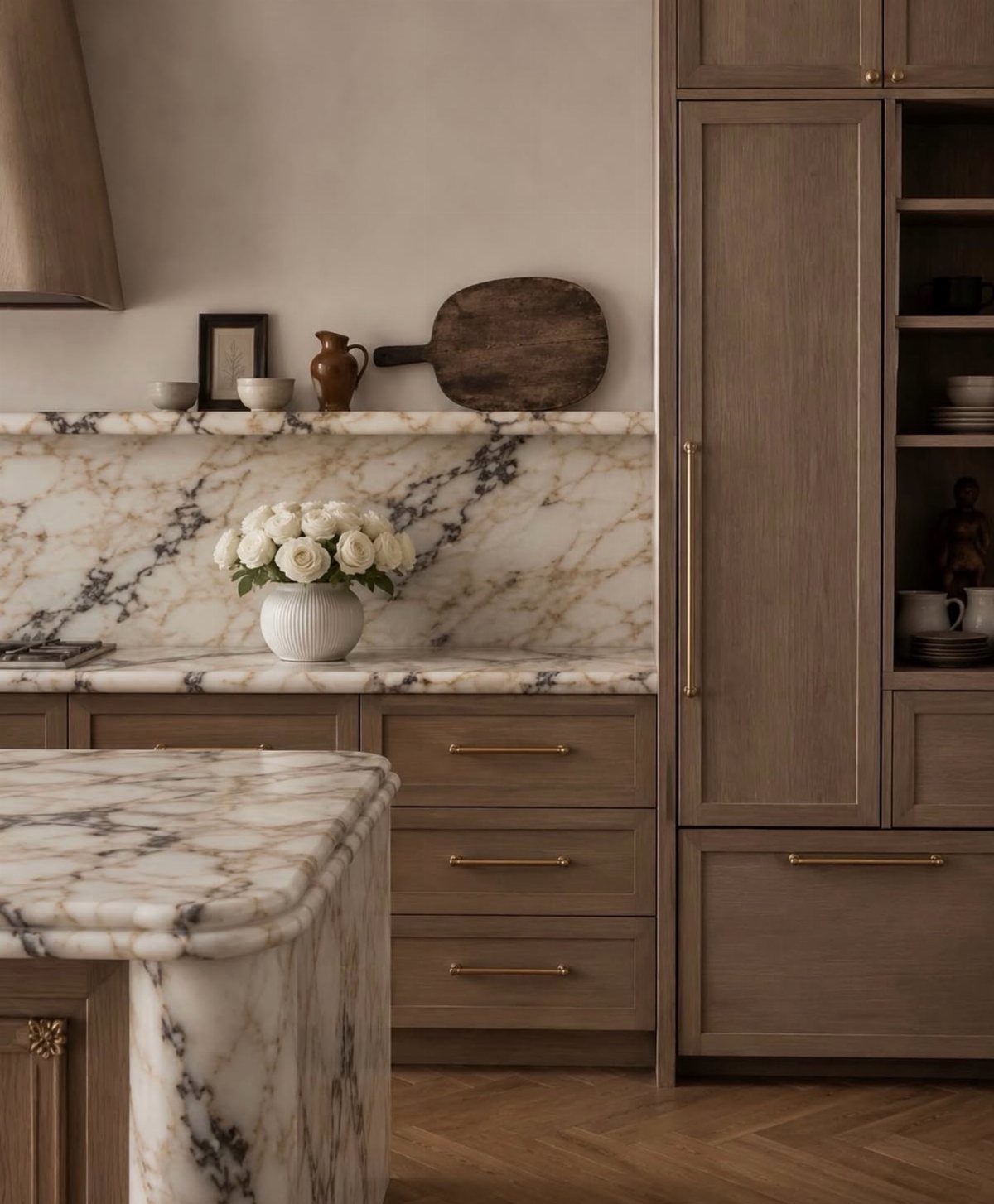
Gold hardware turns a simple cabinet into a finished piece. The warm metal suits wood tones better than chrome or brushed nickel, and it shows up clearly against light brown cabinetry.
The stone is porous, so it needs regular sealing to prevent staining from oil or acidic liquids.
Light brown finishes reflect more natural light than espresso or walnut stains, which stops the kitchen from feeling enclosed.
11. Hardware Kitchen Cabinet
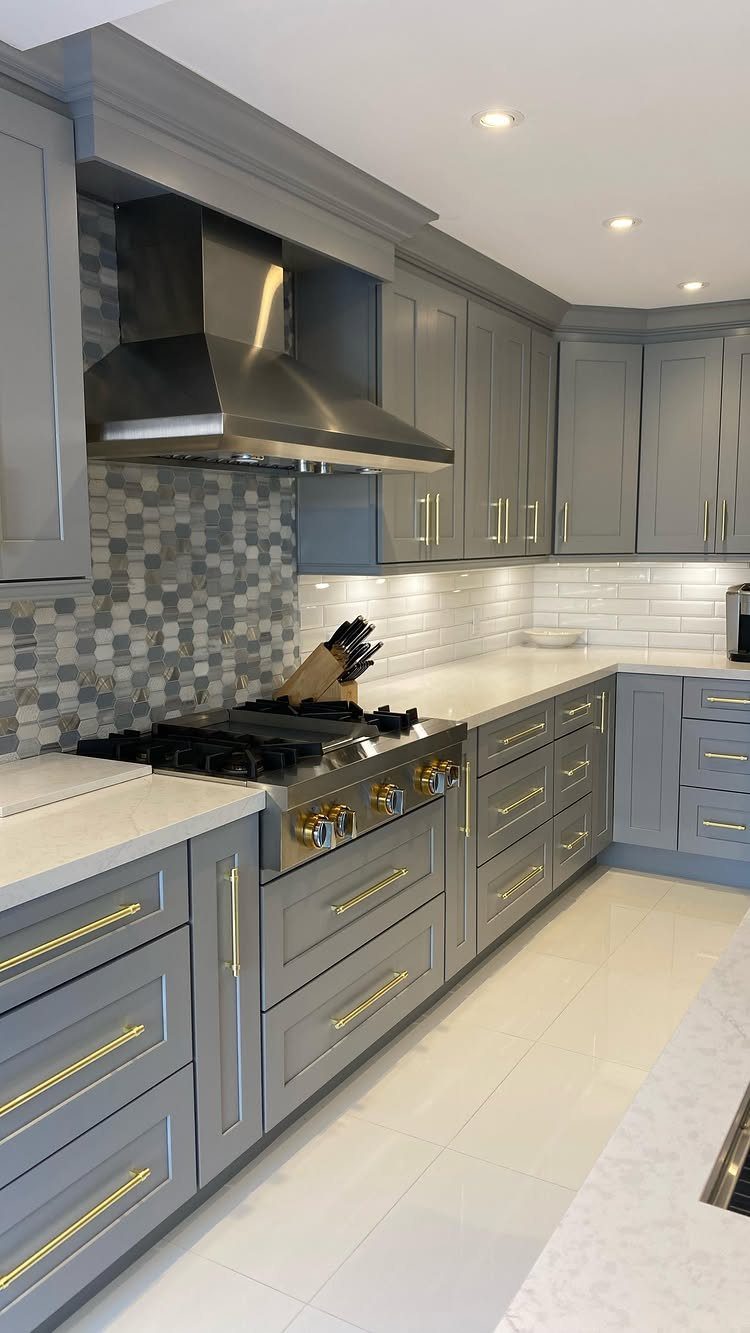
Gold handles on grey cabinets create contrast without requiring a second cabinet color. The metal catches light and stands out against the matte finish, which makes the hardware a design feature rather than a functional afterthought.
Grey cabinetry hides fingerprints and wear better than white, and it pairs with stainless steel appliances without competing for attention. The grey and white tile backsplash continues the neutral palette and keeps the focus on the gold accents.
If you prefer a cooler look, brushed nickel or polished chrome hardware works with the same grey base.
12. Full Height Cabinet
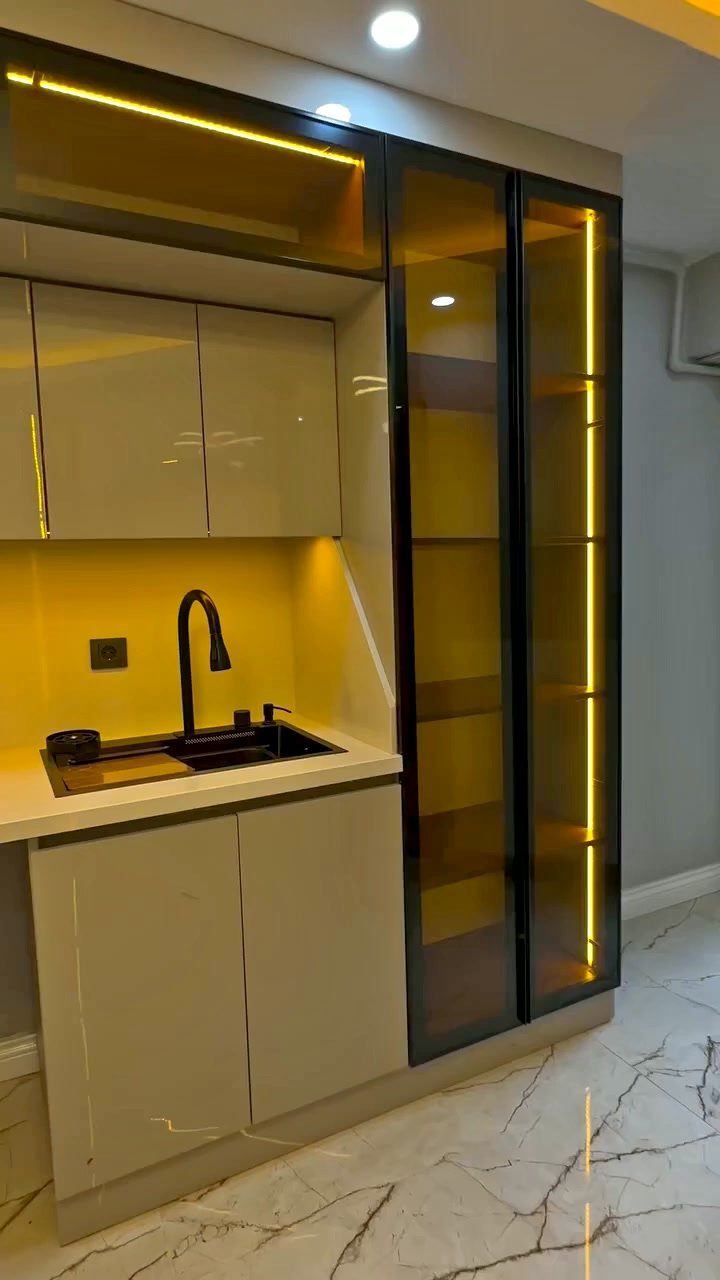
A floor-to-ceiling cabinet maximizes vertical storage in a small kitchen. The glass front lets you see what is inside without opening the door, which speeds up retrieval and turns stored items into display.
LED strip lighting inside the cabinet highlights glassware or dishware and adds ambient light to the room after dark. Yellow or warm white LEDs give a softer look than cool white.
The black frame on this cabinet defines its edges and separates it visually from the beige cabinetry beside it. If your kitchen lacks a pantry, a full-height cabinet holds dry goods, small appliances, and serving pieces in one vertical column.
13. Dual-Tone Kitchen Cabinet
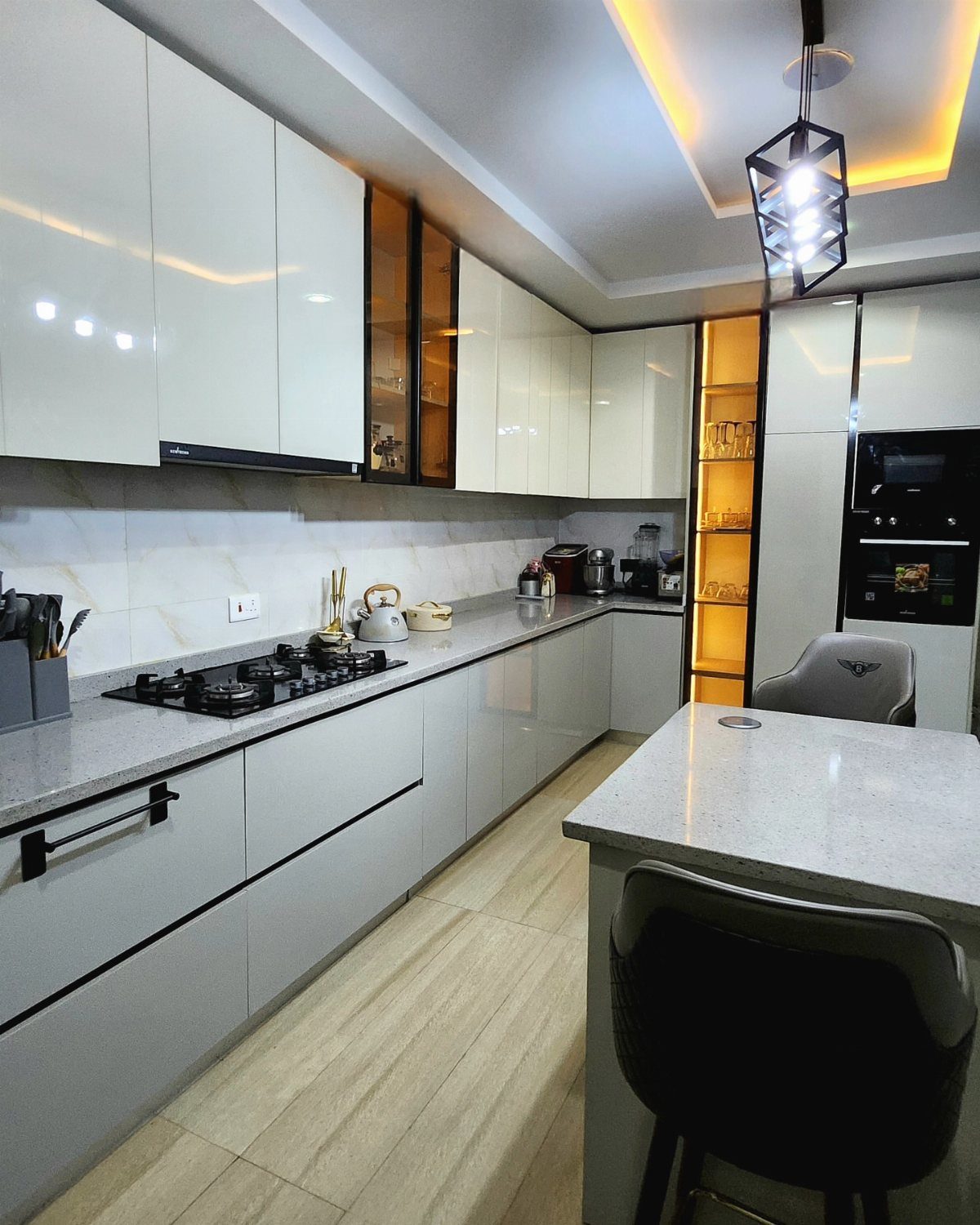
White upper cabinets and grey lower cabinets divide the kitchen into 2 zones: the lighter top half makes the space feel bigger, and the darker base hides scuffs and spills that show up faster on white.
The grey grounds the room without darkening it the way black or navy would. If your countertop is grey, matching it to the lower cabinets ties the 2 surfaces together.
The island follows the same split: grey base, white or light stone on top. That repetition keeps the two-tone scheme from looking accidental.
14. Built-In Kitchen Cabinet
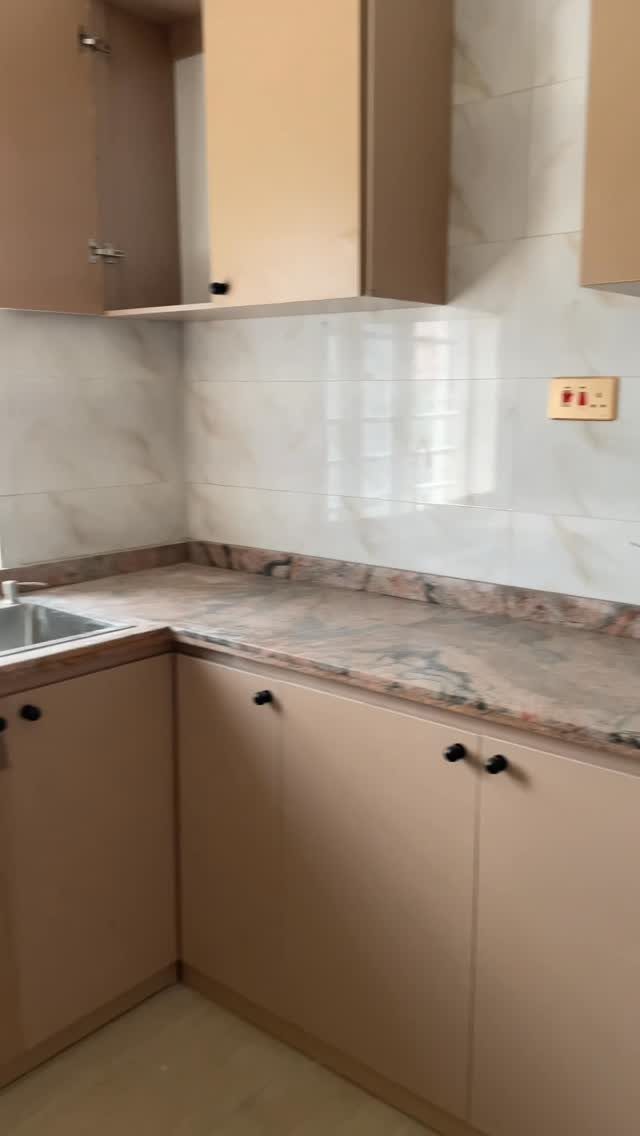
Tan or beige cabinetry suits a marbled countertop because the warm tone picks up the gold or brown veining in the stone. White tile on the backsplash keeps the focus on the cabinets and countertop without adding another color.
If your kitchen has uneven walls or an unusual ceiling height, built-in cabinets fill the space exactly.
15. Acrylic Cabinets
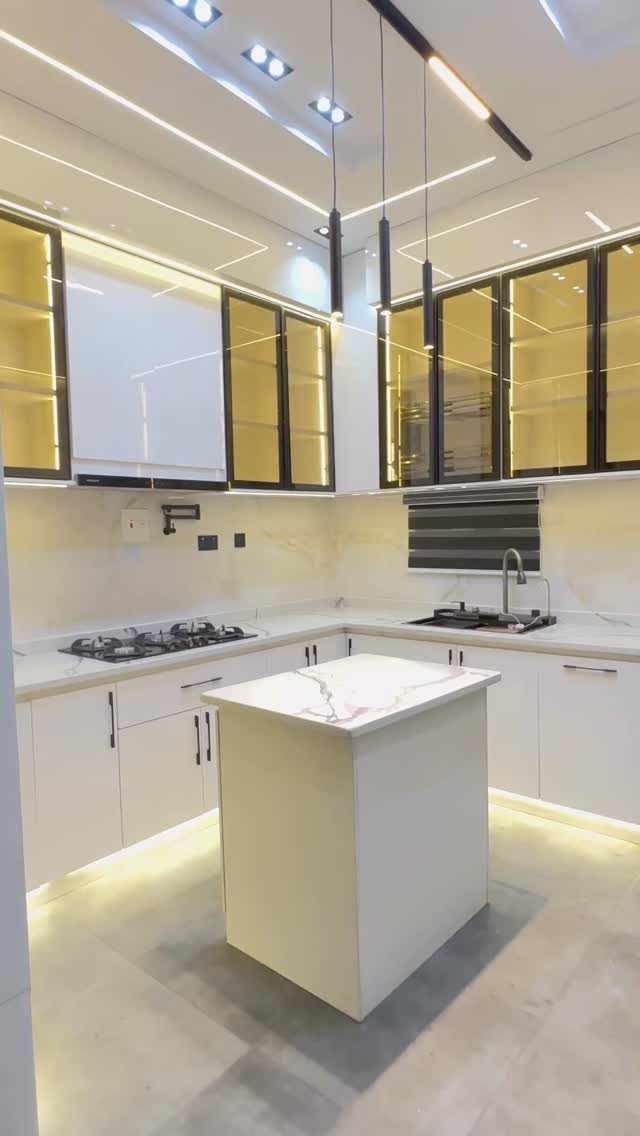
Acrylic cabinet fronts take a high-gloss finish that reflects more light than painted wood or laminate. The surface is smooth, durable, and resists moisture better than lacquered MDF.
Gold-tinted acrylic on the upper cabinets adds warmth and filters the light coming through, which softens the glare from overhead fixtures. White acrylic on the lower cabinets keeps the base light and clean.
A microfiber cloth and water remove most smudges without streaking.
16. Glass-Fronted Cabinets
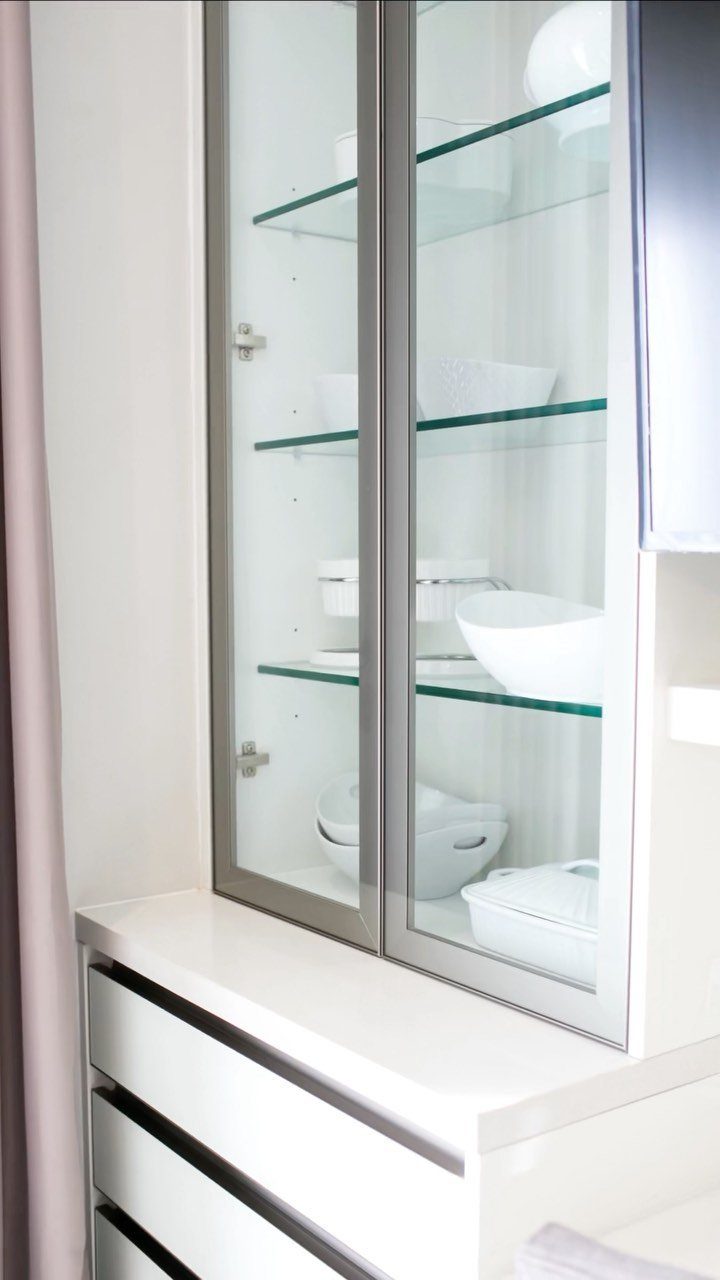
Glass doors turn stored dishes into display, which works when you keep a small set of matching pieces and nothing else. The glass front shows everything inside, so items stay organized or the cabinet looks cluttered.
Silver or aluminum frames hold the glass in place and give the cabinet a lighter look than solid wood doors. Glass shelves continue the transparent effect and let light pass through, but they show dust faster than wood.
If you want the option to hide some items, one glass-front cabinet paired with several solid doors gives you display space without committing the entire kitchen to it.
17. Shaker-Style Cabinets
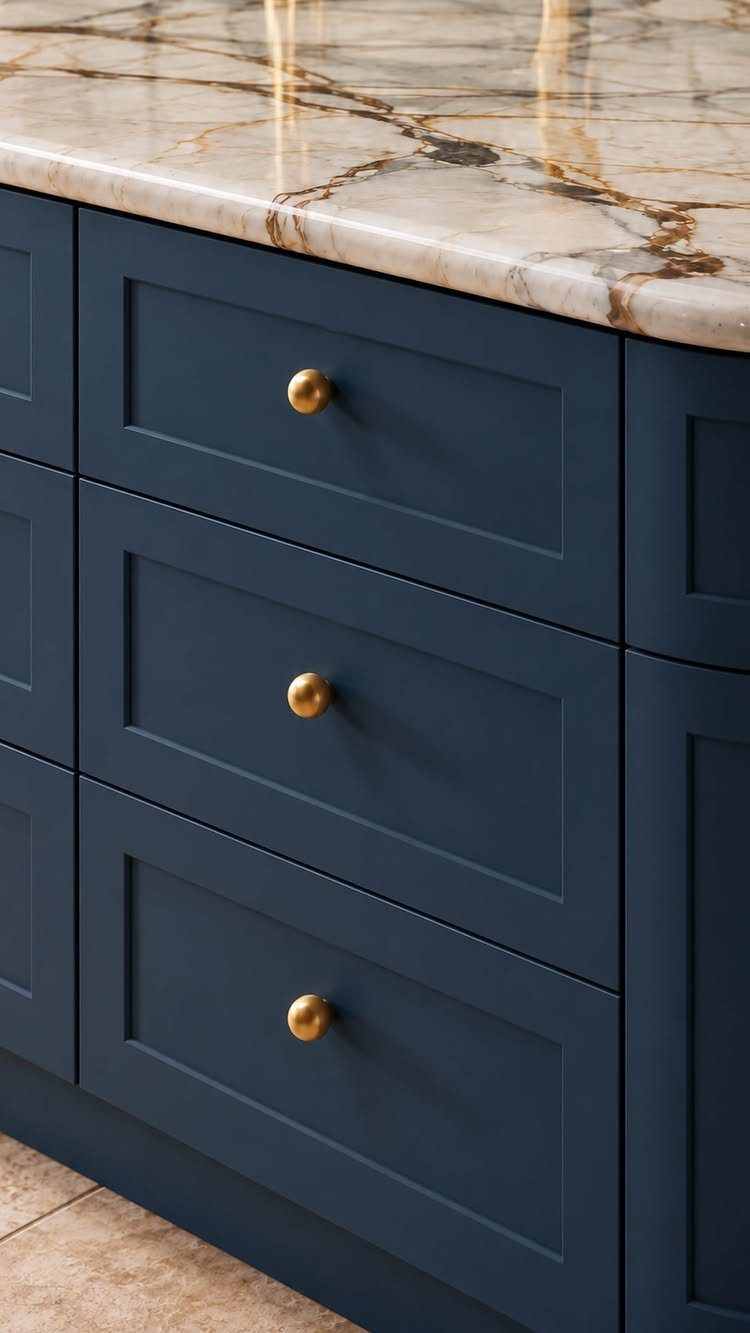
Shaker doors have a flat center panel surrounded by a raised frame, which adds detail without carving or molding. The simple geometry suits modern and traditional kitchens equally well.
Navy blue cabinetry anchors a room with mostly white or light surfaces, and the dark color hides wear better than pale finishes. Gold knobs provide contrast and catch light against the matte blue.
Marble countertops bring pattern and texture to the flat door fronts. The veining in the stone adds visual interest without requiring a patterned backsplash or decorative hardware.
18. Handleless Cabinets
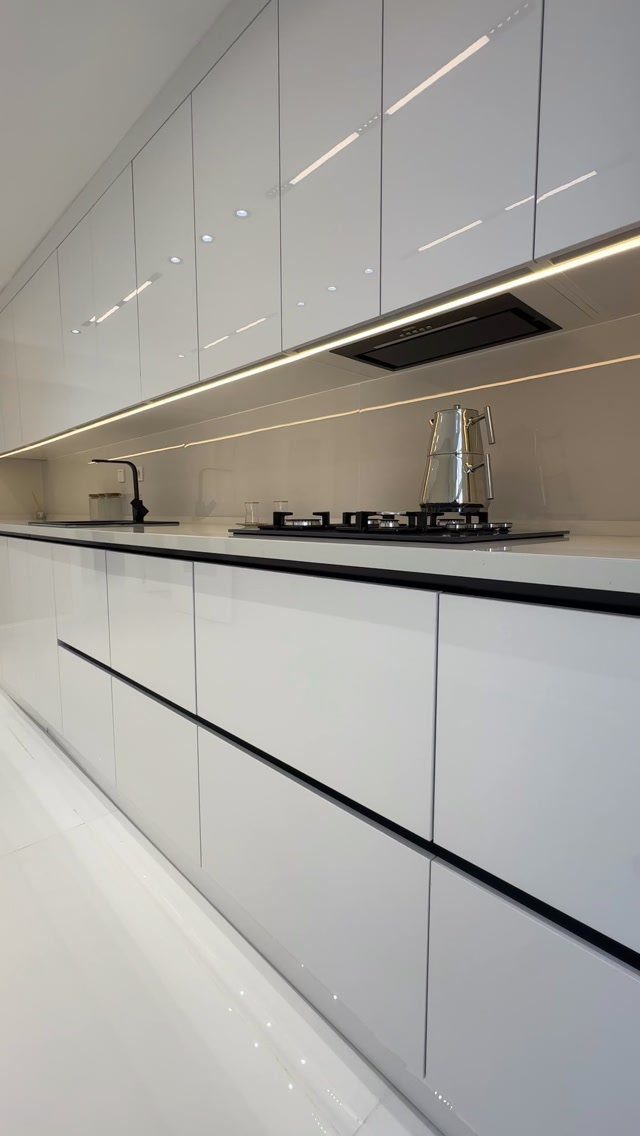
Push-to-open doors eliminate hardware, which gives the cabinet front one clean surface with no knobs or pulls interrupting the line. A light press releases the latch, and the door swings open.
Glossy white cabinets reflect light and make a small kitchen feel larger. The black countertop provides contrast and defines the work surface without adding a second cabinet color.
19. Blue-Grey Cabinets

Blue-grey sits between navy and slate, which gives you the depth of a dark cabinet without blocking as much light.
Glass-front doors on a few upper cabinets let you display dishes or glassware while keeping most storage concealed. Open yellow shelves break up the blue-grey run and add a warm accent that stands out against the cool base color.
20. Marble-Patterned Cabinets
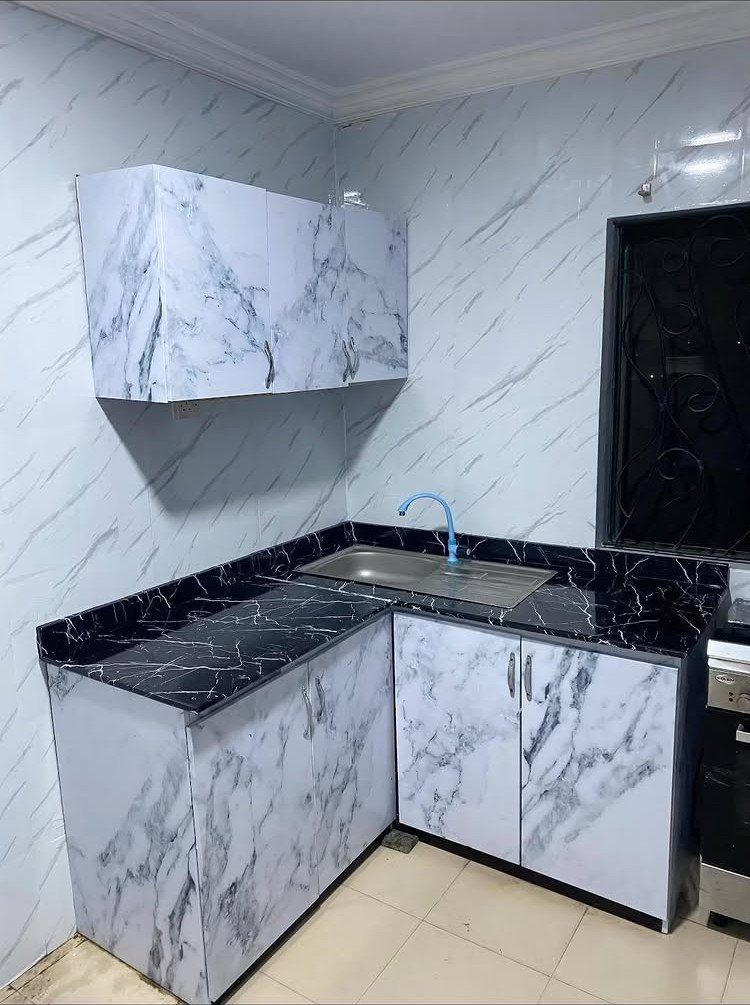
Cabinet fronts printed or laminated with a marble pattern give you the look of stone without the weight or cost of solid slabs.
The white base with grey veining matches real marble closely enough that the cabinets blend with a natural stone countertop.
The pattern works best when the veining stays subtle and the background stays white. Heavy or dark veining can look busy across a full cabinet run.
Black countertops anchor the space and provide contrast against the light cabinet fronts. The pattern continues on the wall tiles, which ties the backsplash to the cabinetry without requiring a solid color.
21. Dark Blue Cabinets
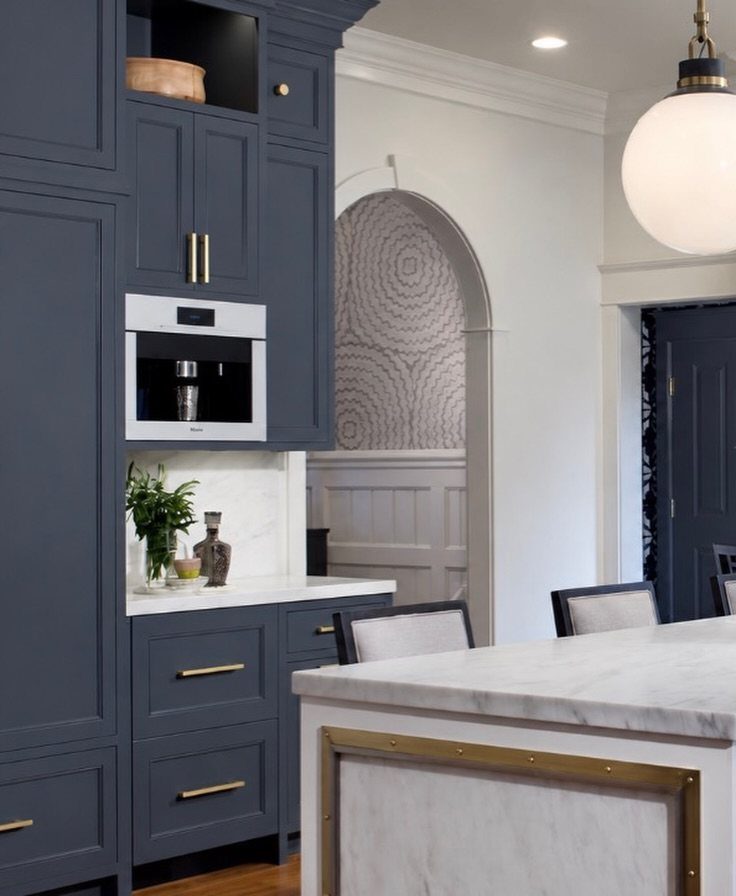
Dark blue anchors a kitchen with light countertops and pale walls. The color reads richer than black and warmer than navy, so it doesn’t turn cold or stark.
Gold hardware stands out against the matte blue and catches light from overhead fixtures or windows.
White marble countertops provide contrast and give you a light work surface that reflects ambient light back into the room.
22. Stainless Steel Cabinets

Metal cabinets resist moisture, heat, and grease, which makes them a practical choice in a kitchen that sees heavy use. Stainless steel does not warp, chip, or absorb stains the way wood or laminate can.
The monochrome look suits a commercial or industrial style kitchen, where matching the cabinets, countertop, and backsplash creates one continuous metal surface. If you want warmth, add wood shelving or a butcher block island to break up the steel.
23. Sage Green Cabinets

Sage green lower cabinets pair with light wood or white upper cabinets to divide the kitchen into 2 tones without a stark contrast.
The green brings color without the boldness of emerald or teal, and it works with both warm and cool neutrals.
Pale countertops keep the space light and give you a clean work surface that does not compete with the green. Black fixtures and a black range hood add definition and prevent the palette from reading too soft.
The two-tone layout makes a small kitchen feel taller by drawing the eye upward to the lighter upper cabinets.
24. Beige Glossy Cabinets
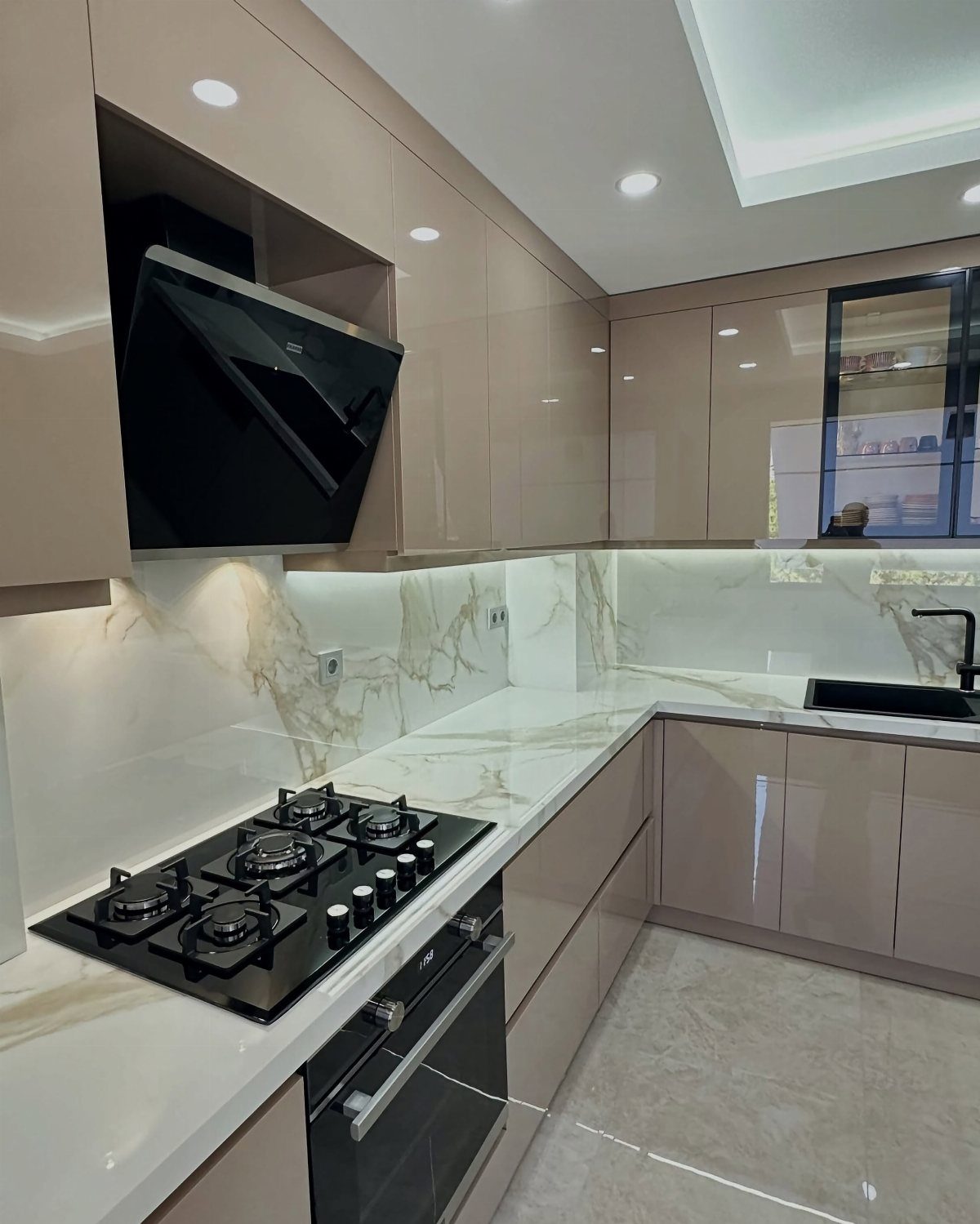
Glossy beige reflects more light than matte finishes, which makes a compact kitchen feel more open. The warm tone softens the space without the starkness of white or the weight of brown.
Black appliances, including the stovetop, oven, and range hood, define the work zone and prevent the beige from dominating the palette.
Gloss shows smudges and fingerprints, so wipe the surface daily with a damp cloth to keep it looking clean.
25. Wood-Grain Cabinets

Wood grain on the lower cabinets adds texture and warmth that plain paint or solid color finishes lack. The natural pattern breaks up a long run of cabinetry without requiring a second color.
Pairing wood grain with beige upper cabinets keeps the kitchen light while grounding the base with a darker, richer tone.
The combination works in kitchens with limited natural light because the beige reflects what light enters and the wood prevents the space from feeling washed out.
A marble backsplash ties the two finishes together by bringing both warm and cool tones into one surface.
26. White Cabinets
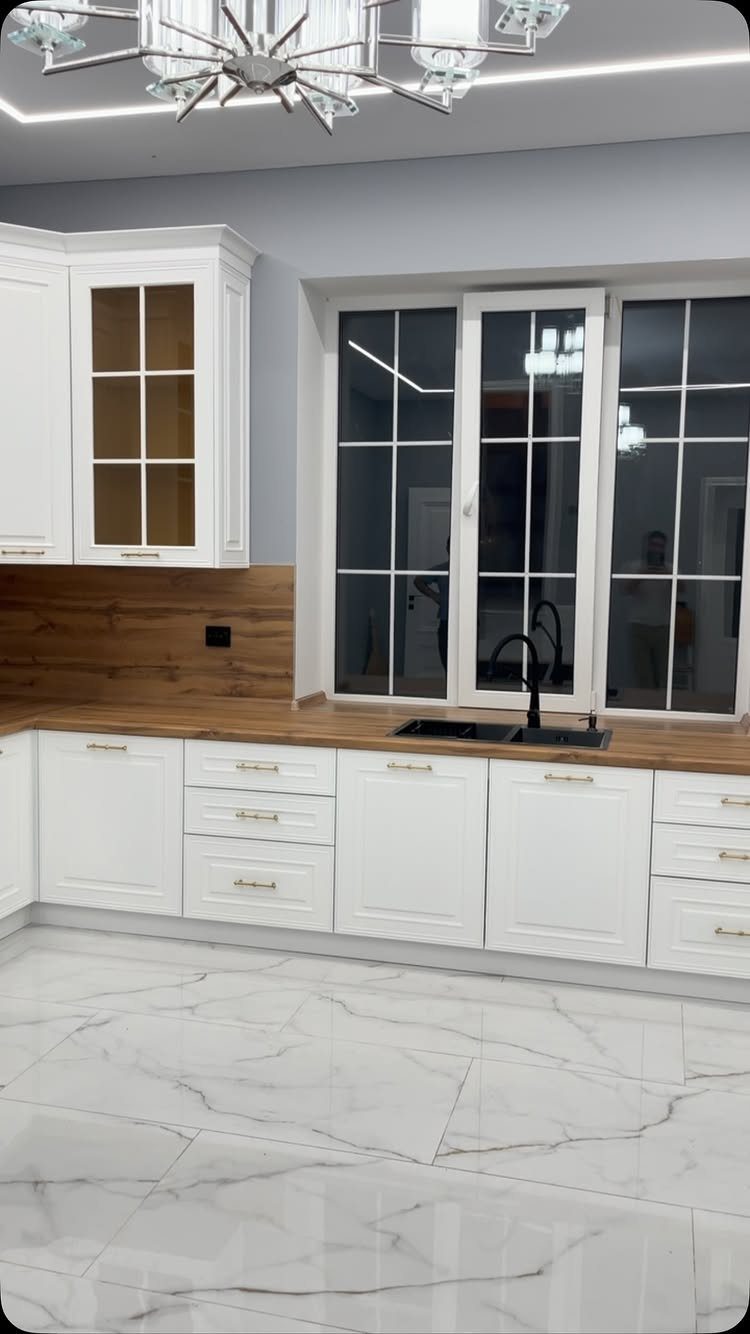
The clean base lets wood countertops or colored backsplashes stand out without competing for attention.
Wooden countertops bring warmth to an all-white kitchen and age visibly, which suits a space where you want the patina of use to show. Marble tile flooring continues the light palette and hides grout lines better than small mosaic tiles.
27. Grey Cabinets
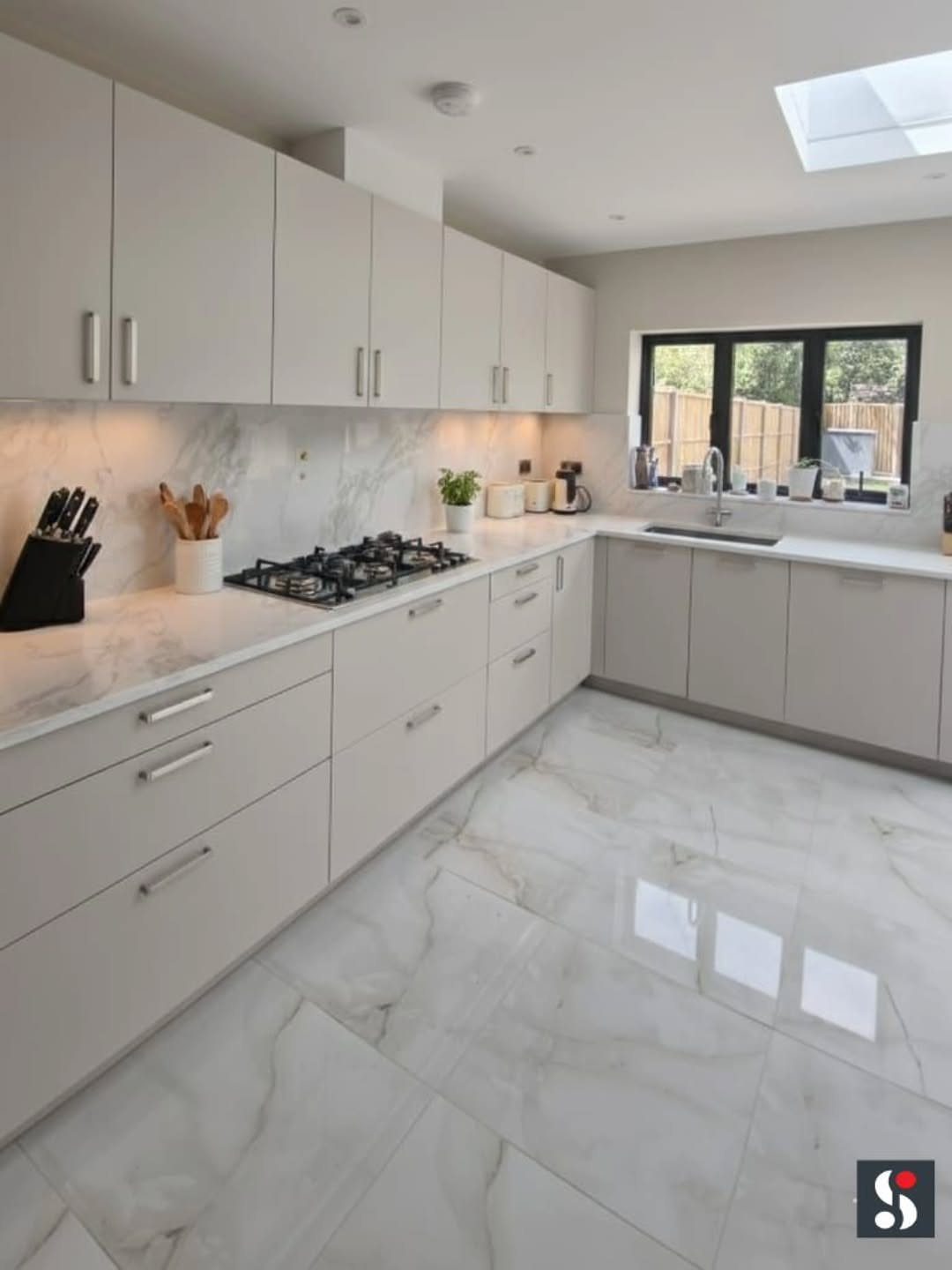
Flat-panel grey cabinets give you a neutral base that suits both warm and cool accents. Flat fronts with no molding or raised details land squarely contemporary and wipe down faster than Shaker or recessed-panel doors.
Grey pairs with stainless steel appliances without creating a monochrome look the way black or white cabinets can.
If your kitchen gets strong sunlight, grey shows less discoloration over time than white.
28. Black and Wood Cabinets

Matte black upper and lower cabinets create a bold base that light wood accents soften. The wood countertop and matching open shelving add warmth and prevent the black from reading too heavy or enclosed.
Black hides fingerprints and wear better than glossy finishes, and the matte surface diffuses light instead of reflecting it harshly. Integrated appliances in black maintain the streamlined look without interrupting the cabinet run.
Light wood flooring balances the dark cabinets and keeps the overall palette from skewing too dim.
29. Blue Lower Cabinets

Blue lower cabinets ground the kitchen while white upper cabinets keep the space feeling open. The two-tone layout pulls the eye upward and stretches the sense of height.
The warm metal works with blue in a way that chrome or brushed nickel does not.
Stainless steel appliances bridge the blue and white without adding a third cabinet color.
30. Pink and Black Cabinets

Glossy pink cabinets paired with black create a high-contrast scheme that makes the kitchen a statement room.
The pink reads bolder than blush or rose and demands commitment, which suits someone renovating a space they plan to keep as is for several years.
Black countertops and lower cabinets anchor the pink and prevent the color from overwhelming the room. The gloss finish on both colors reflects light and makes a compact kitchen feel larger, but it shows smudges faster than matte.
If resale matters, pink limits your buyer pool more than neutral tones.
Cabinet Makers and Buying Locations
Sojionet handles design, installation, and delivers across Lagos, Abuja, Port Harcourt, Bonny, Enugu, Benin, Warri, Delta, and Ibadan. The bill comes down to how much cabinet space you need and which materials you pick.
Ariaria Market in Aba carries carved wood for decorative panels or custom door fronts.
Jumia and Jiji.ng list ready-made cabinets and hardware online. Delivery times vary by location, so check the seller’s shipping zone before you order.
When you visit a showroom, bring your kitchen measurements: wall length, ceiling height, and the distance between the sink, stove, and refrigerator.
A cabinet maker needs those numbers to quote accurately and to avoid gaps or unused space when the cabinets arrive.
Frequently Asked Questions
How Much Does It Cost To Do A Kitchen Cabinet in Nigeria?
Mid-range cabinets run ₦300,000 to ₦700,000, while custom high-end cabinets cost ₦700,000 to ₦1,500,000 or more.
Installation adds another ₦50,000 to ₦200,000. Your final price depends on the material you choose, your kitchen’s size, and whether you order ready-made cabinets or hire a carpenter to build them for your space.
What styles of kitchen cabinets suit Nigerian homes?
Classic wooden cabinets, high-gloss finishes, Shaker-style doors, handleless designs, and dual-tone layouts all work in Nigerian kitchens.
Your choice depends on how much light your kitchen gets and whether you want a modern or traditional look. L-shaped and linear layouts fit compact spaces, while large islands add storage and seating in bigger kitchens.
Which materials work best in Nigeria’s climate?
Sealed solid wood, stainless steel, and acrylic resist humidity better than unsealed MDF or particle board.
Wood needs a moisture-proof finish to prevent warping, and metal cabinets handle heat and moisture without swelling. Acrylic and glossy finishes hold up well and stay easy to clean in a humid kitchen.
What are the most durable kitchen cabinet options?
Wood holds up better than laminate or MDF under the heat and humidity typical in Nigerian kitchens, and you can sand and restain it if the finish dulls over time.
Stainless steel resists moisture, heat, and grease without warping or chipping. Acrylic fronts resist moisture better than lacquered MDF and keep their gloss longer than painted wood.