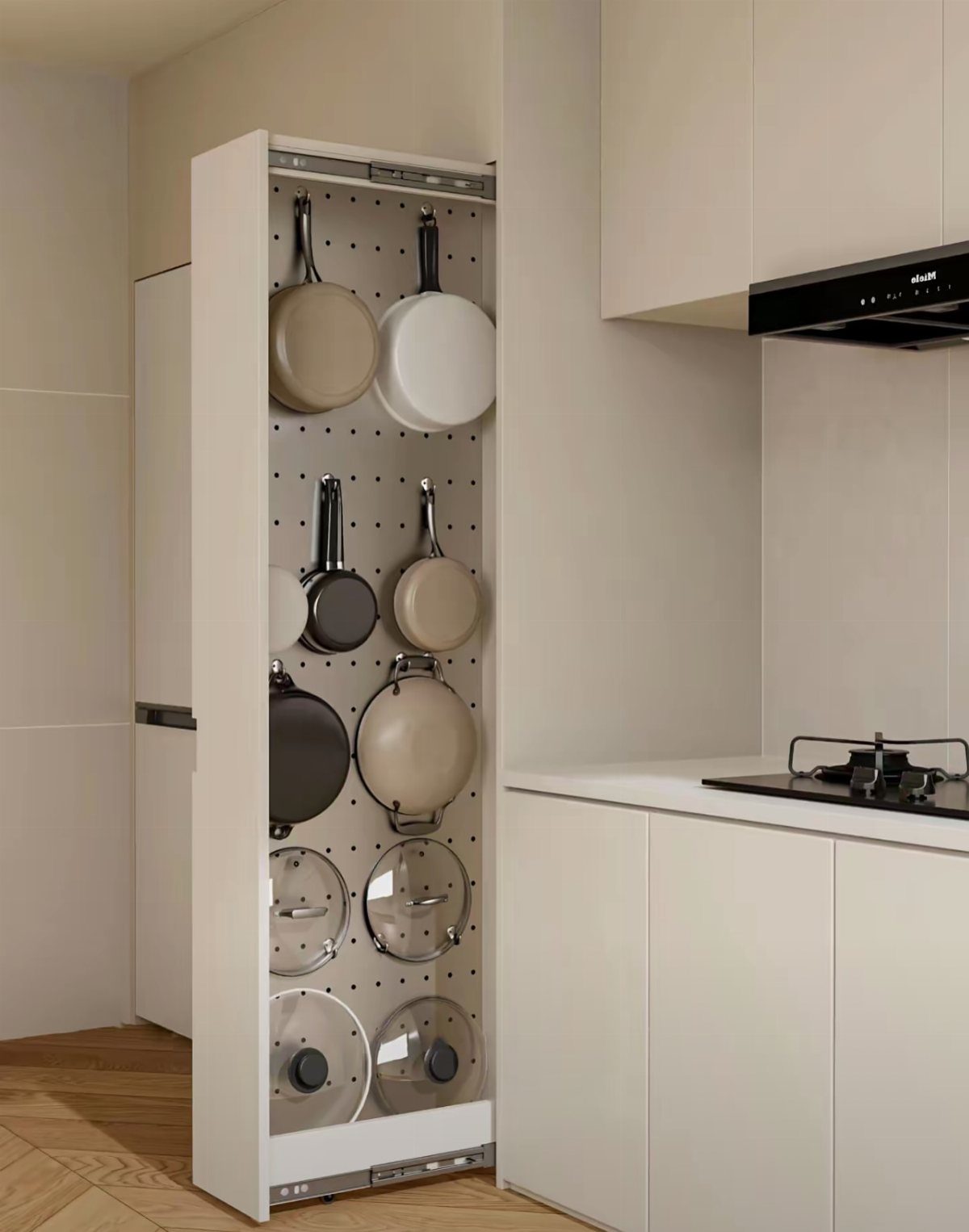
Adjustable organizers stand lids on edge in deep cabinets, wall pegboards bring storage into the open, and cabinet-door racks hold 4 or 5 lids without taking up shelf space.
The right setup depends on how many lids you own, how deep your cabinets run, and whether you want to store lids with their pans or give them a separate spot.
Adjustable dividers need cabinets with at least 10 inches of depth, adhesive hooks work for lighter lids, and heavier cast iron covers call for wire racks or mounted pegboard.
1. Adjustable Lid & Pan Organizer

An adjustable organizer holds lids upright so you can lift one out without moving the rest. The slots widen or narrow to fit different lid sizes, from small saucepan covers to wide stockpot tops.
Most models are metal racks that sit on a shelf or inside a drawer.
Set the dividers where you need them, then slide each lid into its own slot. Lids stay in place and you see every one at a glance.
This setup works well if you have space in a cabinet or a drawer deep enough to stand lids on edge.
2. Vertical Skillet Organizer

Storing skillets upright clears the stack so you can pull one pan without lifting three others first. A vertical organizer divides the drawer into slots, each wide enough for one skillet or lid.
The slots hold pans by their edges, handles up.
Glass lids fit between the pans or in their own slots. You see what you have and reach straight for it.
Measure your drawer depth before choosing an organizer. Most need enough clearance so pans stand fully upright without tilting.
3. Vertical Pot Organizer
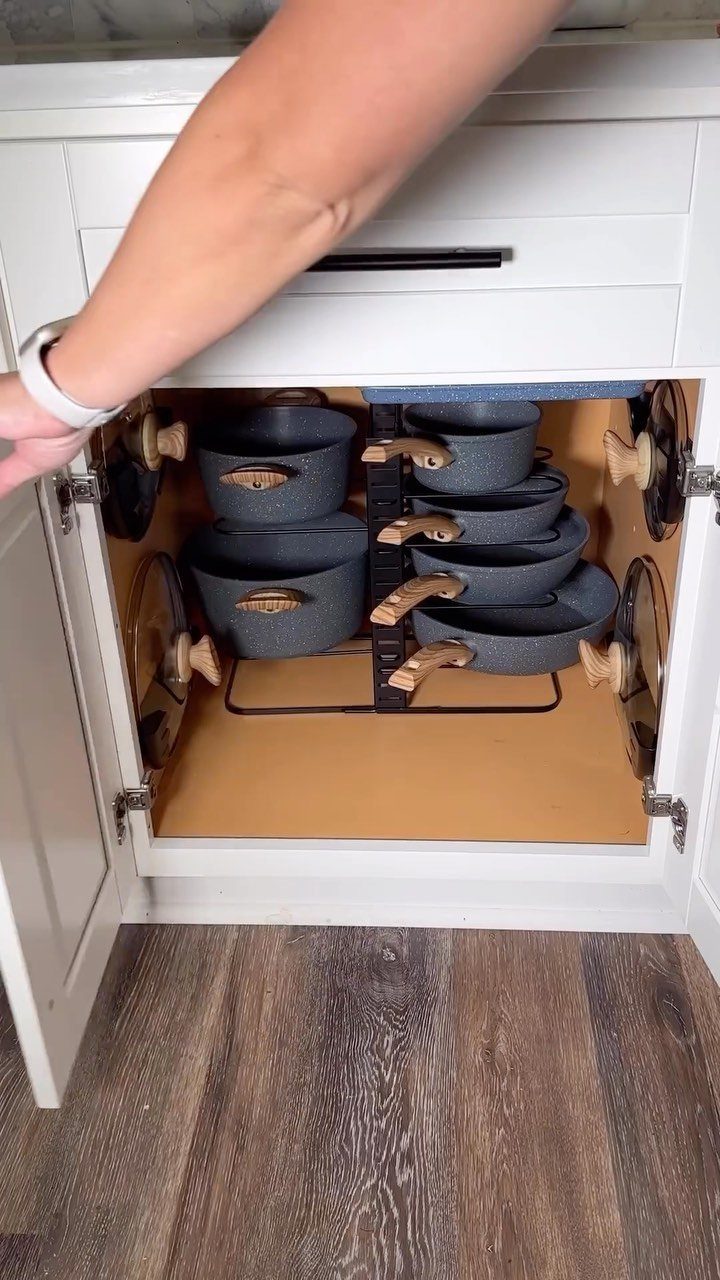
A wire shelf organizer turns a cabinet into vertical storage by creating narrow slots that hold pots and pans on their sides. Each piece stands in its own section, so grabbing one does not disturb the others.
The organizer sits on the cabinet floor and divides the space into lanes.
Slide pots in by their handles, heaviest pieces toward the back. Lids go in their own slots or stand between pots if the fit allows it.
This idea makes the most of deep cabinets where stacking wastes height.
4. Dedicated Lid Organizer

A lid organizer built for the job holds only lids, nothing else competing for space. The slots are sized and angled to keep circular lids upright and stable, whether glass or metal.
Slot each lid in by size, smallest to largest, so they stay put and you can see every handle. The rack keeps them from tipping or sliding into each other.
If you have more lids than pots, a dedicated organizer clears them out of the cookware pile entirely.
5. Command Hook Lid Storage
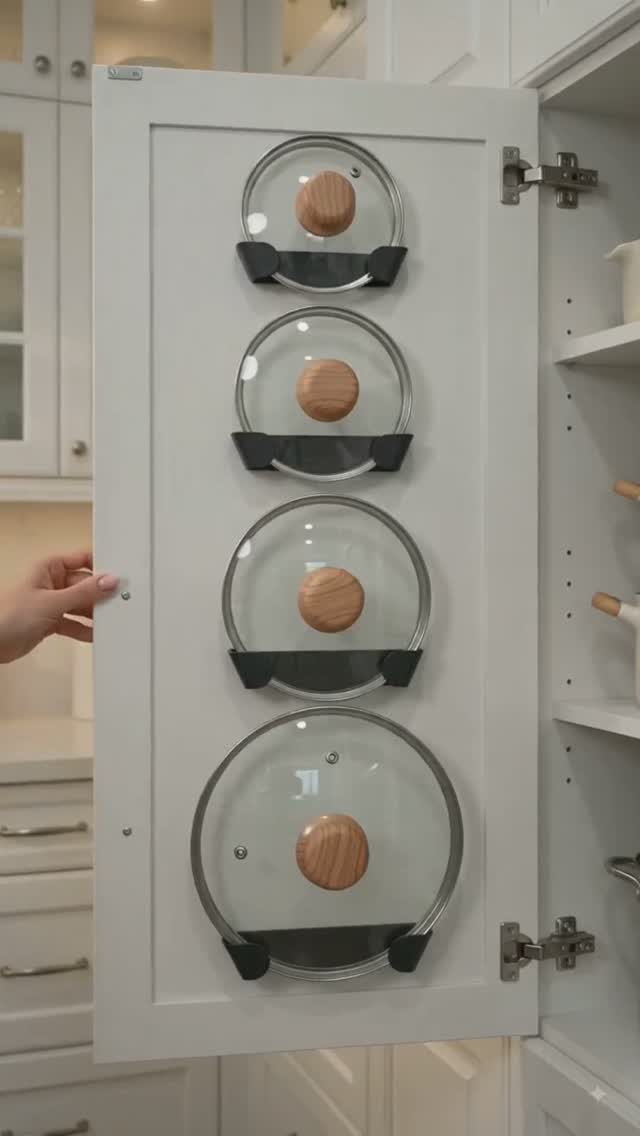
Hanging lids on the inside of a cabinet door uses space that usually sits empty. Adhesive hooks hold flat lids by their handles, four or five per door depending on size.
Space the hooks vertically so lids hang without overlapping.
Press each hook firmly to the door, wait the time the package recommends, then loop the lid handles over. Lids stay visible and within reach when you open the cabinet.
This works best for lighter lids. Glass lids with metal rims hold fine; heavy cast iron covers may pull hooks loose over time.
6. Deep Shelf with Cookware Hooks
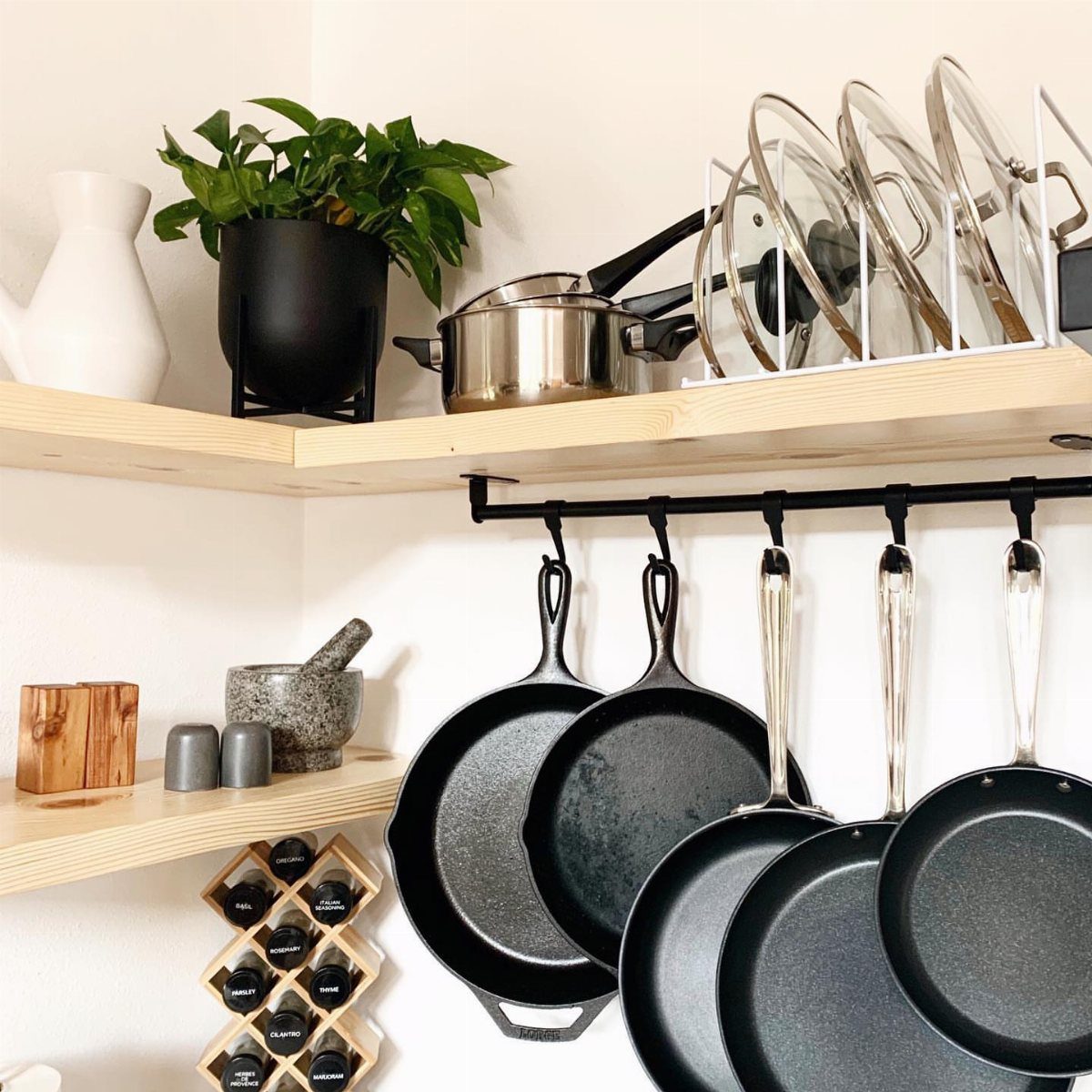
A deep shelf paired with a rail of hooks keeps your most-used cookware off the counter and easy to grab.
Mount the rail at a comfortable height, then hang skillets with handles facing out.
The shelf holds a small lid rack, spices, or other kitchen items you reach for daily. Everything stays visible and you free up cabinet space for less-used pieces.
This setup suits open kitchens where cookware on display fits the look you want.
7. Pegboard Organizer Tray
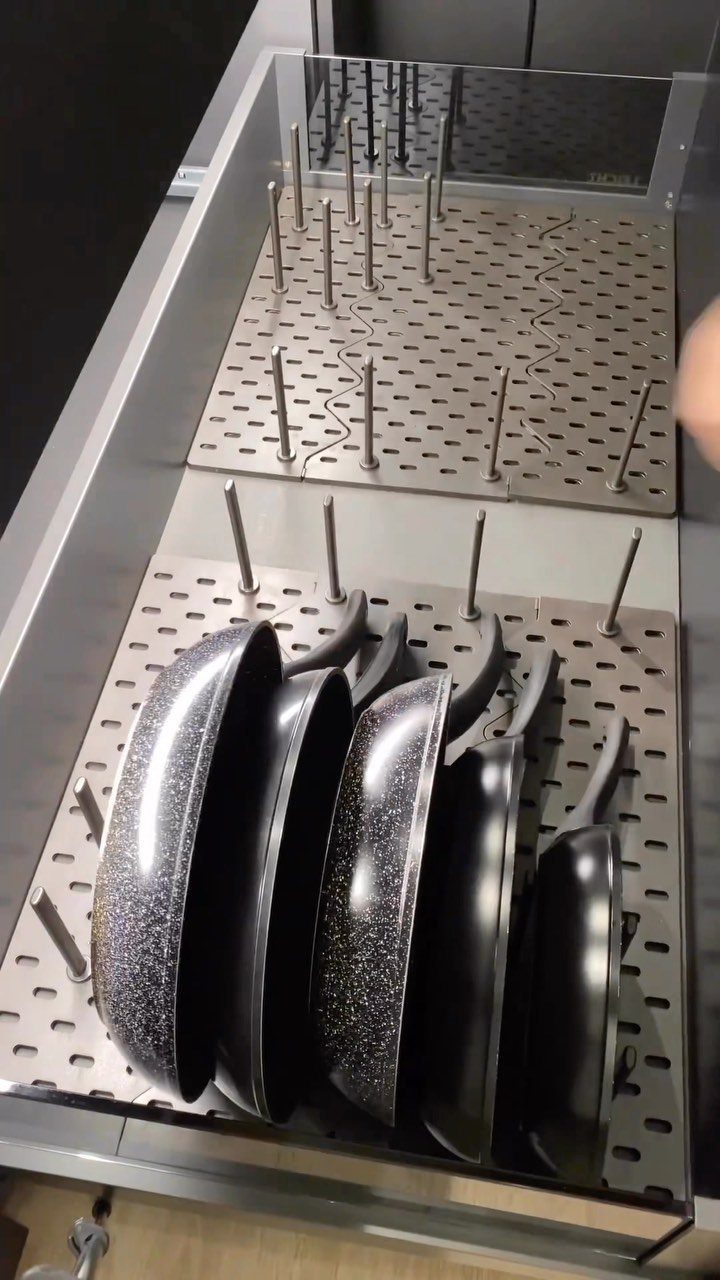
A pegboard tray fits inside a drawer and holds cookware upright with movable pegs. You place the pegs where you need them, then slide pans and lids into the spaces they create.
The pegs lock cookware in place so nothing shifts when you open the drawer. Lids stand next to pans or in their own section, depending on how you arrange the pegs.
This works if your drawer is deep enough to stand lids on edge and you want more control over spacing than a fixed rack gives you.
If you care about the design and look of your shelving system, you’ll be far more inclined to keep it tidy. Unseemly plastic bins and impulsively-bought storage solutions often result in junk drawer upon junk drawer.
8. Wall Pegboard Rack
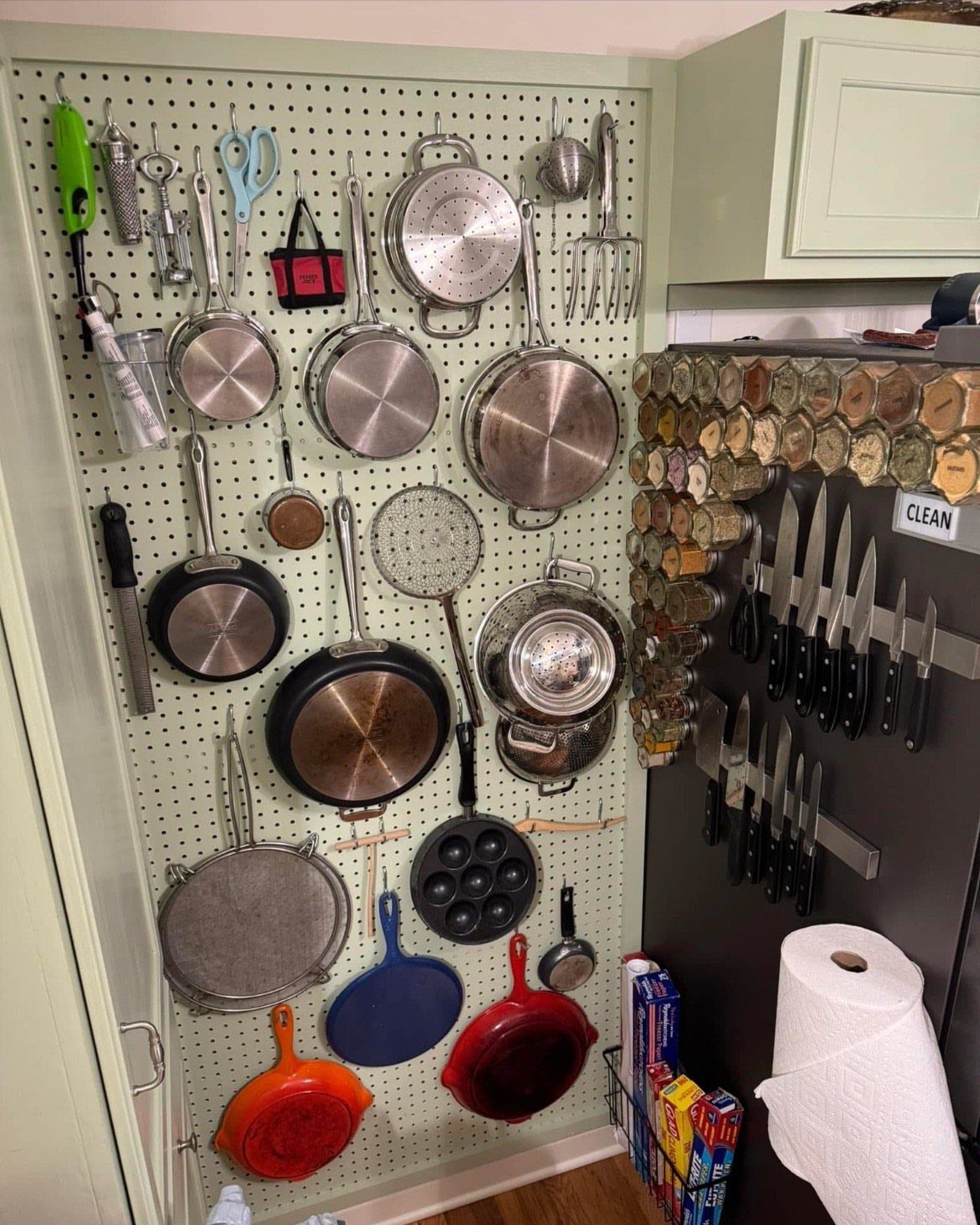
Mounting a pegboard on the wall turns cookware into visible storage. Hooks slot into the holes wherever you need them, holding pans by their handles and lids by their knobs.
Hang your most-used pieces at arm height.
Heavier pots go on hooks closer to the board’s frame where support is strongest. You can rearrange hooks as your cookware changes.
This suits kitchens where wall space is easier to find than cabinet space, and where you do not mind cookware on display.
9. Tiered Cookware Shelf
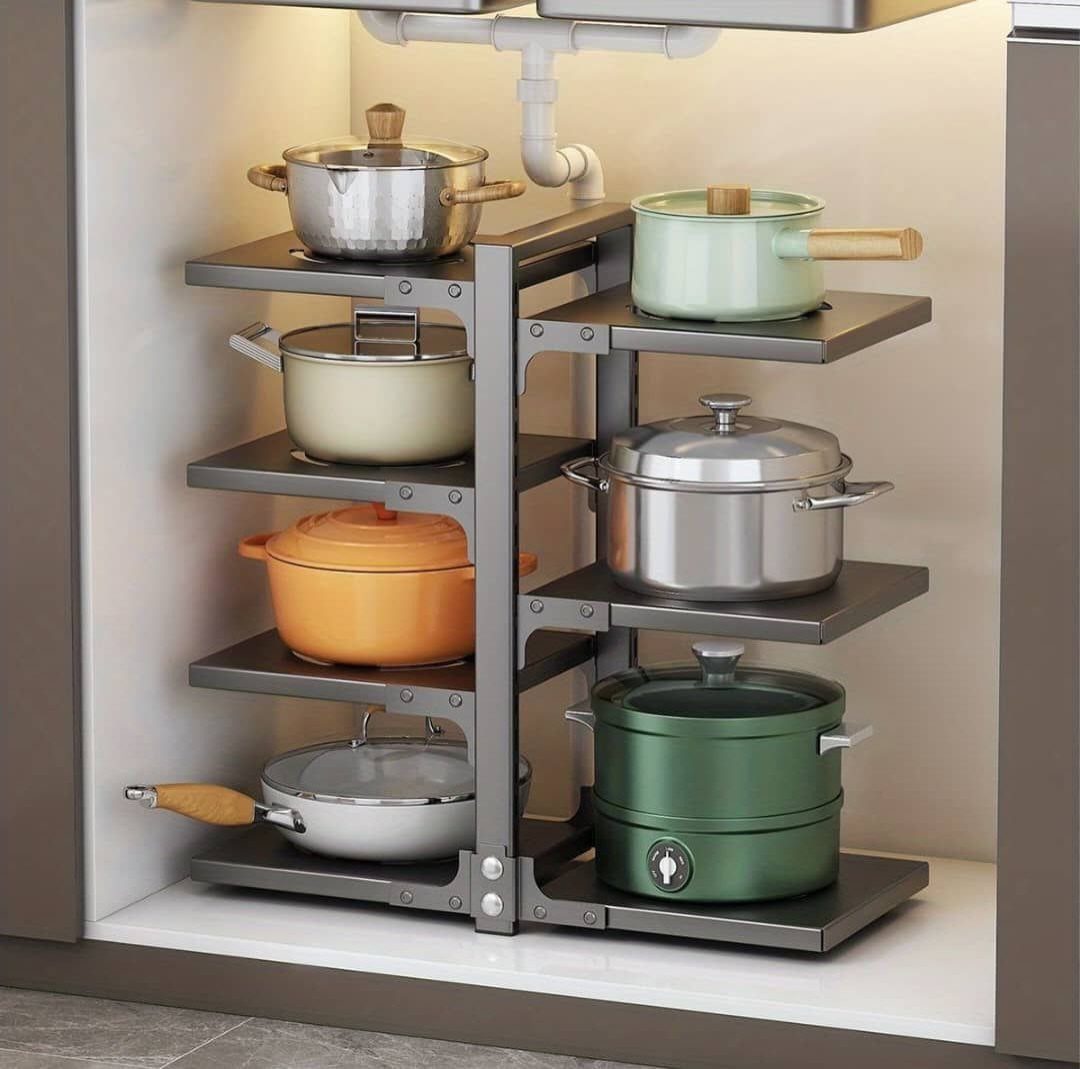
Tiered shelving inside a cabinet stacks cookware vertically without actual stacking. Each shelf holds one layer of pots or pans, so you lift straight up instead of moving pieces to reach what sits underneath.
The tallest pots go on the bottom tier, smaller ones stack above. Lids fit on their own tier or next to pans if the shelf is wide enough.
Most tiered shelves need at least 12 inches of clearance to hold standard cookware without crowding.
10. Wire Rack in Cabinet
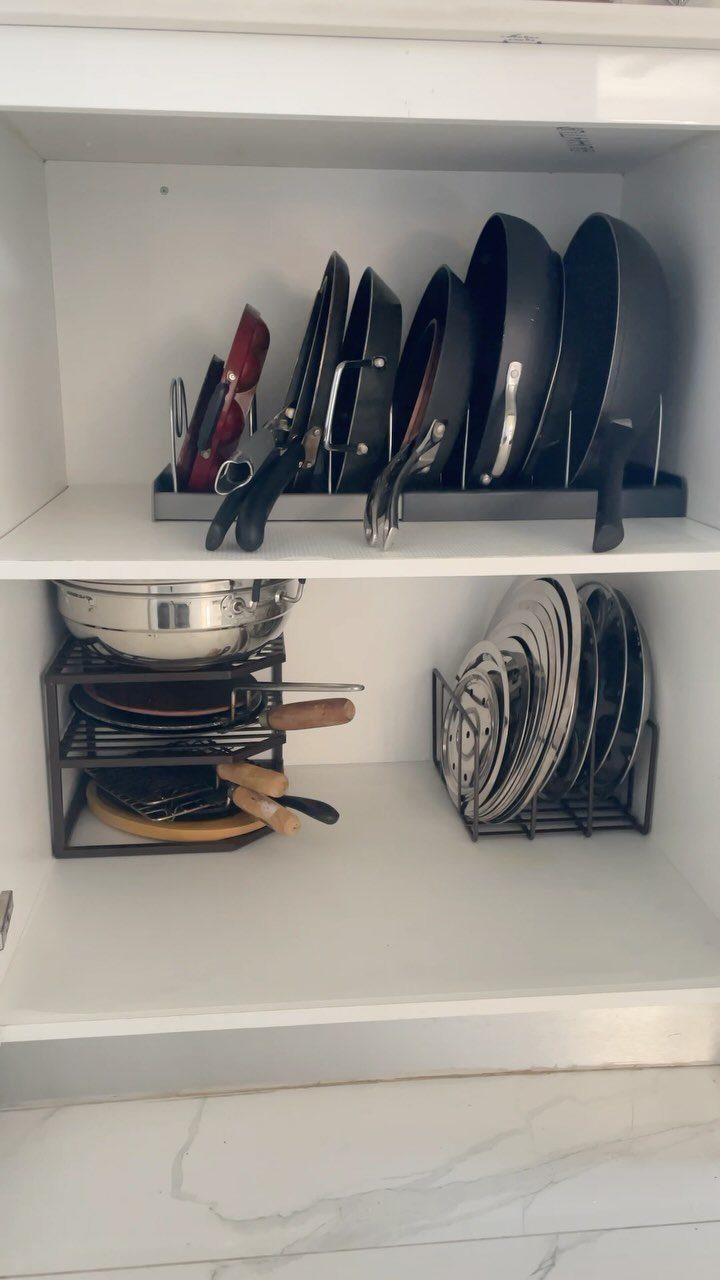
A wire rack on a cabinet shelf divides the space so lids stand upright in slots while pots and pans sit flat nearby. The rack keeps lids separated and visible without taking up a full shelf.
Slot lids in by size, handles facing forward. The wire construction lets you see through to what sits behind it, so nothing gets lost at the back of the cabinet.
This fits cabinets where you store cookware and lids together but want lids out of the way.
11. Cabinet-Door Lid Rack

Mounting a rack to the inside of a cabinet door stores lids vertically in unused space. The rack holds lids by their edges in individual slots, handles pointing down.
Screw the rack to the door panel, positioning it high enough that lids clear the shelf inside when the door closes. Load lids from largest to smallest so you can see each one.
Check that your cabinet door swings fully open without hitting a wall. Lids add weight, and doors that stop partway make reaching awkward.
12. Drawer Divider Rack
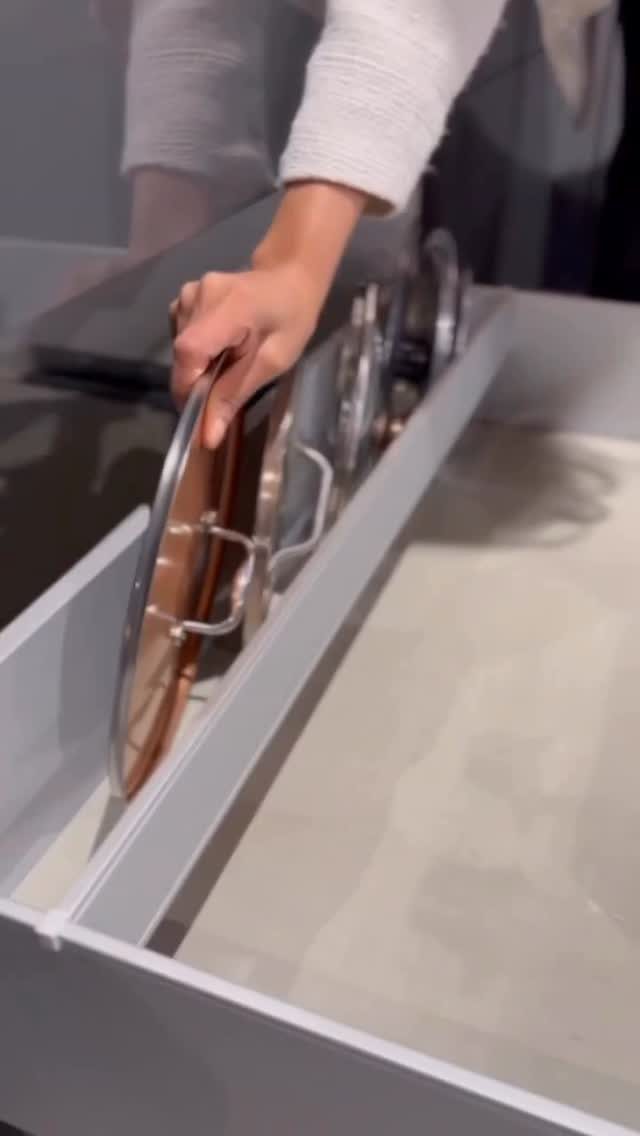
Metal dividers in a drawer hold glass lids upright so you can grab one without lifting the stack. Each divider creates a slot that keeps lids from leaning or sliding into each other.
Space the dividers to match your lid sizes. Glass lids with metal rims stay stable in narrow slots; wider spaces work if you store lids with silicone edges that grip the divider.
Glass lids need enough depth to stand upright, so check your drawer before you buy dividers.
Plan and Measure Cabinet Storage
Measure the inside width, depth, and height of the cabinet before you order a rack or organizer.
If the unit is wider than the cabinet opening it will not go in, and if it is taller than the gap between shelves you will either lose clearance or need to pull a shelf out.
For cabinets with adjustable shelves, measure the height you can clear between two shelves and check whether moving one up or down gives you the clearance you need.
Some lazy Susans adjust between 26 and 31 inches in height, which lets you fit them under cabinets where a quarter inch decides whether they work.
Lids mounted on hooks should hang at about 4:00 and 8:00 on the door so they clear the frame when the door closes. If lids lean outward, add a third hook at the 10:00 or 2:00 position to hold them upright.