A pull-out drawer in a lower cabinet brings a stand mixer to counter height without you crouching to lift it, while a high pantry shelf holds a fondue pot you use twice a year.
Choose based on how often you actually use the appliance: daily items belong within arm’s reach on the counter or one shelf below it, and seasonal appliances sit higher where they stay out of the way.
Most appliance lifts and pull-out shelves install during a remodel, but shelf risers and pantry storage work in the kitchen you already have.
1. Appliance Garage

An appliance garage is a cabinet with a roll-up or fold-back door that sits on the counter or just above it.
You keep your most-used appliances inside, plug them into an outlet mounted in the cabinet, and open the door when you need them.
The tambour door slides up into the cabinet frame instead of swinging out, so it takes up no clearance space when it’s open. That matters in a kitchen where counter space and working room are both tight.
Most appliance garages are built into a run of cabinetry during a remodel, but a few cabinet makers sell freestanding units that sit on the counter.
Anyone who’s ever lived in a studio apartment knows that the only way to really maximize your space is to get crafty and think outside the box.
2. Coffee Nook
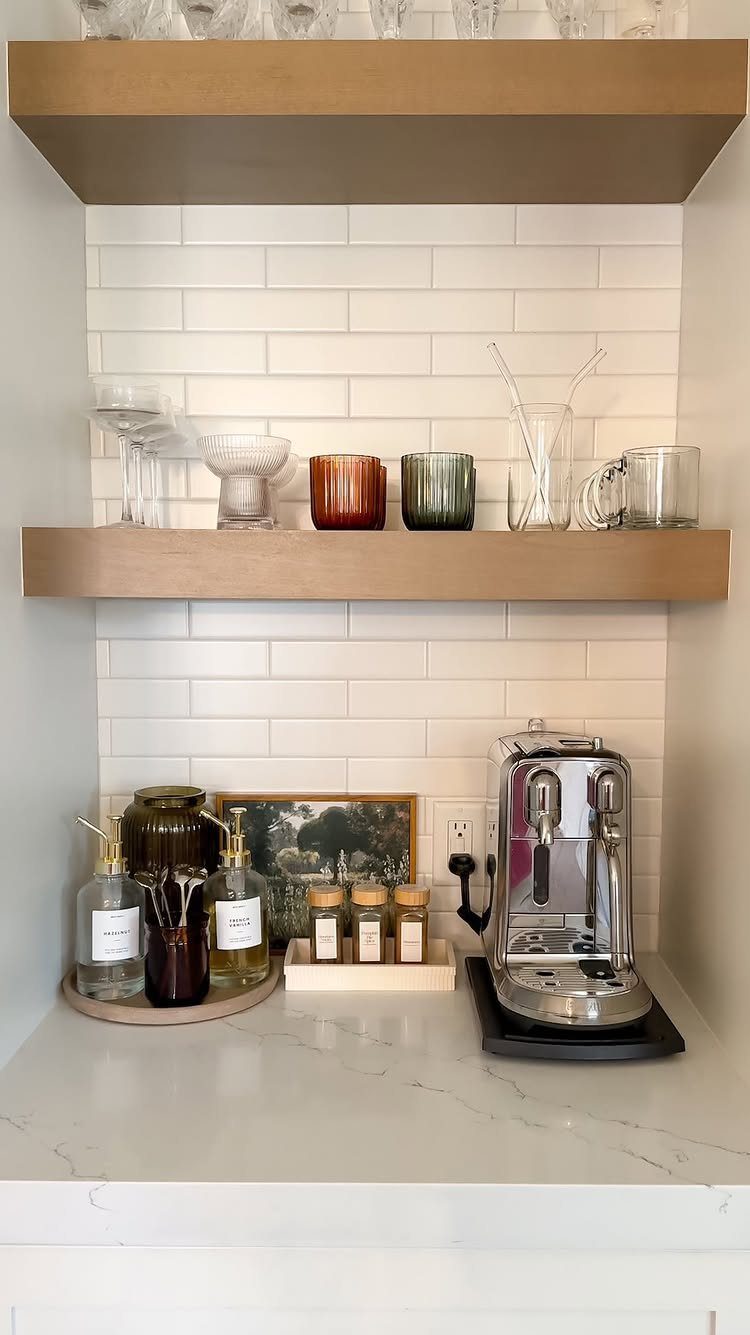
A coffee nook gathers your espresso machine, grinder, syrups and mugs in one spot, usually on a lower cabinet shelf or a section of counter you set aside for it.
If you have the cabinet space, the whole setup goes inside and you open the door to make coffee.
You reach for these appliances every morning, so keeping them on the counter and plugged in saves you the setup step. The nook keeps your main counter clear while everything you need stays plugged in and within reach.
Floating shelves above the counter hold mugs, syrups and filters. If you are short on counter space, a narrow cart works the same way.
3. Appliance Lift

A mechanical lift raises a heavy appliance from a lower cabinet to counter height. When you are done, you push it back down and close the cabinet door.
The lift is a metal frame with a spring-loaded arm that mounts inside a base or lower cabinet.
This is a good option if you use a heavy appliance regularly but do not want it sitting on the counter full-time. The lift takes up most of a lower cabinet, so you lose that storage.
4. Pull-out Shelves
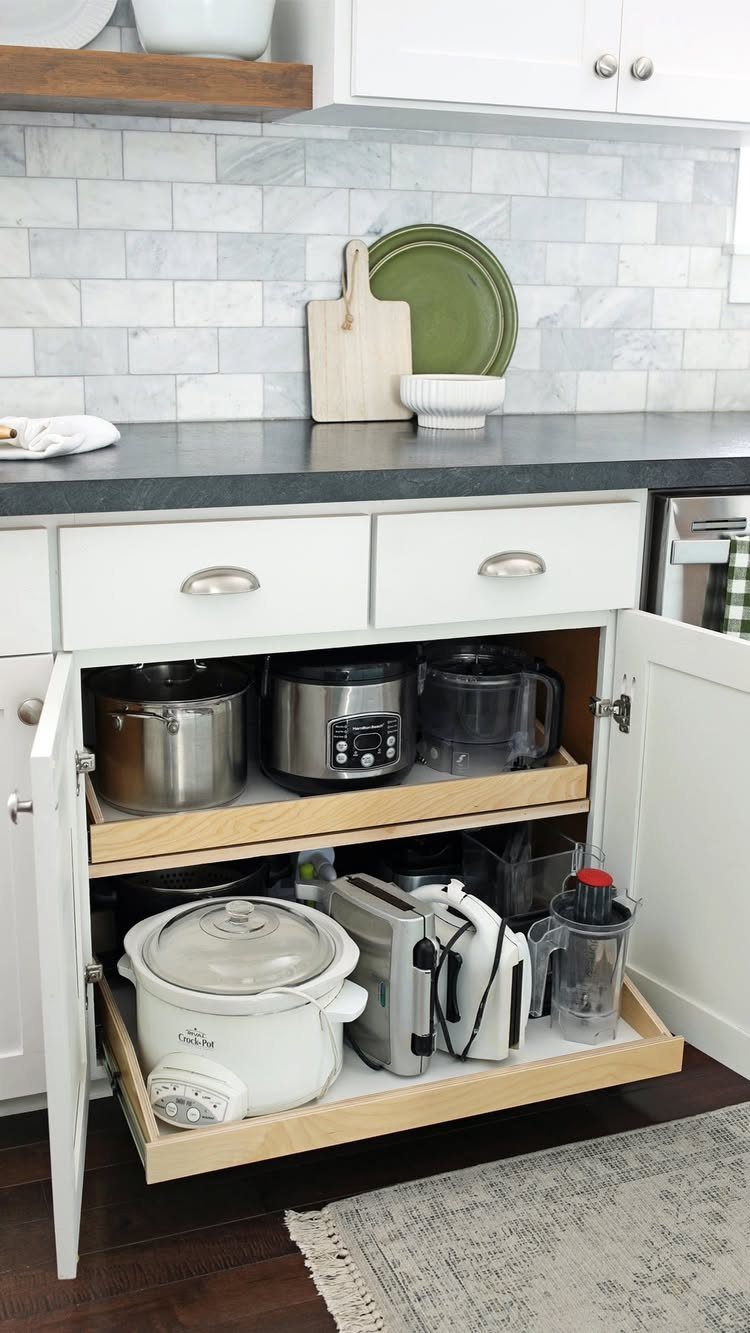
Pull-out shelves let you reach appliances stored at the back of a deep cabinet without having to move everything in front of them. The shelf slides out on metal or wooden glides, and you pull the appliance forward.
Most pull-out shelves are installed during a cabinet build or remodel, but you can retrofit them into an existing cabinet with glide hardware.
The shelf needs to clear the cabinet frame when it slides out, so measure the opening width before you order.
A pantry cabinet or lower cabinet gains the most from this, since appliances stored there would otherwise sit too low or too far back to reach comfortably.
5. Pantry Appliance Shelf

If you have a walk-in pantry or a tall pantry cabinet, dedicate one or two shelves to appliances you use less often.
A waffle maker, a slow cooker or a bread machine sits there instead of taking up kitchen cabinet space.
The shelf should be low enough that you can lift the appliance down without straining. I would not put anything heavier than 15 pounds above shoulder height.
This frees up your kitchen cabinets for dishes and everyday items, and it keeps the counters clear. If the pantry has an outlet, you can plug in the appliance right there and use it in place.
6. Shelf Risers

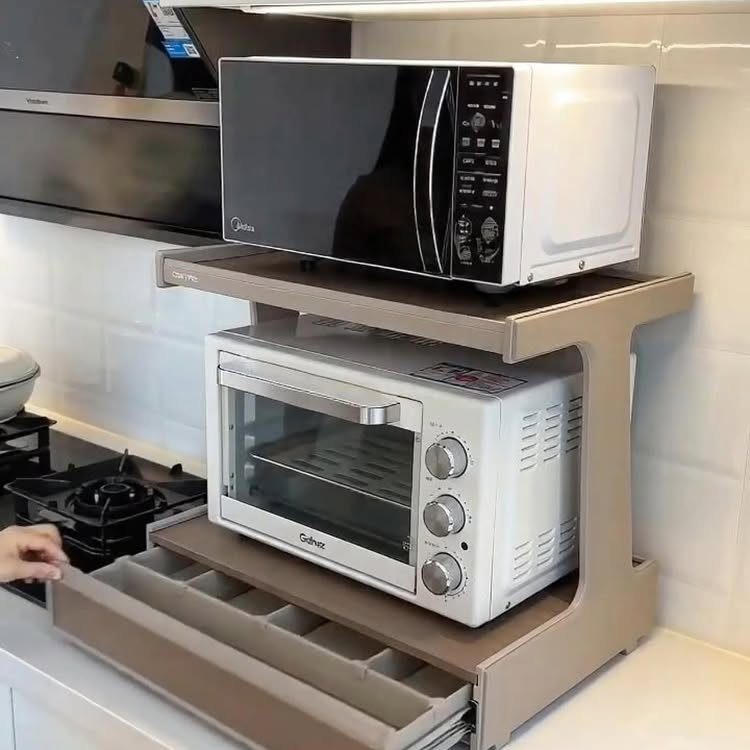
A shelf riser is a low rack that sits on a shelf or countertop and lifts one appliance above another.
You store a microwave or a toaster oven under the riser and use the top surface for a smaller appliance or storage containers.
Most risers are metal or plastic frames that hold a blender or toaster oven and give you storage space underneath. The feet need to be narrow enough to fit under the appliance on the bottom shelf.
This works in a pantry or on a counter where you have vertical space but not enough width to line appliances up side by side. The riser doubles the storage capacity of one shelf.
7. Stack Appliances

Stacking appliances on a shelf or counter lets you use the full height of your cabinet or pantry instead of leaving vertical space empty.
This works when you have narrow shelves or limited floor space in a cabinet.
The appliance on the bottom needs to be stable enough to support the one above it, and you need to be able to lift the top appliance down without tipping either one.
Keep the heavier appliance on the bottom so the stack stays balanced.
8. High Pantry Shelves

High pantry shelves are good for appliances you use a few times a year, like a fondue pot or a seasonal gadget. They stay out of the way and leave the lower shelves free for what you use daily.
The appliance needs to be light enough that you can lift it down safely. Heavier appliances belong lower, where you can lift them without stretching overhead.
This frees up the middle and lower shelves for the appliances you actually use, and it keeps your kitchen cabinets clear.
9. Appliance Cabinet Shelves

A tall cabinet with fixed shelves holds several appliances in a single column, each one on its own shelf. The cabinet stays open so you can see what is inside and reach any appliance without opening a door.
This takes up less floor space than a row of lower cabinets, and it keeps appliances out of the kitchen without hiding them behind cabinet doors.
The shelves need to be deep enough to hold a stand mixer or microwave without tipping forward.
If you are building new cabinets, this is a good way to add appliance storage without losing counter space.
10. Appliance Storage Cabinet

An open storage cabinet gives you a place to keep appliances without closing them behind a door.
This works in a kitchen where you have floor space for a tall cabinet but no room to add more base cabinets.
The cabinet can stand alone or fit into a built-in run, with adjustable shelves that adapt to different appliance heights.
The appliances are visible, so this looks best when you keep the shelves organized.
11. Appliances on Open Shelves

Several open shelves inside a built-in cabinet give you room to line up multiple appliances vertically. Each appliance sits on its own shelf, and you can reach any of them without moving the others out of the way.
This is a good option if you have the wall space for a tall cabinet and you want to keep appliances out of your main cabinets.
The shelves should be spaced far enough apart that you can lift an appliance off without scraping the one above it.
The cabinet keeps everything in one place, and the open shelves make it easy to see what you have.
12. Appliances in Pull-out Drawers

Pull-out drawers inside a cabinet bring the appliance to you instead of making you reach into the back of a deep shelf.
This is different from a pull-out shelf because the drawer has sides that keep the appliance from sliding off when you pull it out.
This suits a lower cabinet, where reaching to the back of a fixed shelf means crouching or kneeling.
Match Storage to Use
Keep the appliances you use daily within arm’s reach and put the rest somewhere you have to think about before pulling them down.
If you make coffee every morning, the machine belongs on the counter or one shelf below it. A fondue pot used twice a year can sit higher.
Lazy Susan carousels let you spin what sits at the back of a cabinet forward without unloading the front.
They fit in standard cabinets and hold multiple small appliances at once. Give the carousel a slow turn and the item you need comes to you.
Group appliances by task instead of scattering them across the kitchen. Coffee gear, baking tools, and breakfast appliances each get their own zone so you are not opening three cabinets to make one meal.
Check Heat and Weight
Pull an appliance forward when you turn it on, even if it lives inside a cabinet. Heat and steam build up fast in an enclosed space, and that damages both the appliance and the cabinet finish over time.
A sliding shelf or pull-out drawer makes this easy. You slide the shelf out, use the appliance, and push it back when it cools.
Check the weight limit before you load a pull-out drawer or shelf.
Each one is rated for a specific load, and exceeding it bends the glides or breaks the mounting hardware. A stand mixer or bread machine may be too heavy for a standard drawer.
Declutter and Assess Space
Go through your appliances once a year and set aside anything you have not used in the last 12 months. If it has not earned its space yet, it probably will not.
Measure your cabinet opening before you order pull-out shelves or drawer glides.
Test one shelf or pantry change before you commit to relocating more appliances.
Pull it out a few times, load it with the appliance it will hold, and make sure the glides run smoothly and the shelf stops where you need it to.
One appliance you use often beats three that sit untouched.
Frequently Asked Questions
How to organize small appliances?
Keep what you use daily on the counter or one shelf below it, and store the rest higher or in a pantry where they will not block your path.
Sort by task: coffee station, baking counter, breakfast lineup. Pull-outs let you slide the shelf forward instead of digging toward the back wall.
Are appliance garages a good idea?
An appliance garage keeps frequently used appliances plugged in and ready while clearing the counter when you close the door. The door rolls up and out of the way rather than taking up room when you open it.
You lose some cabinet room to install it, but you gain counter space and cut out the daily setup step for appliances you use often.
What is the best method for organizing small kitchen appliances?
Place what you use every day on the counter or within arm’s reach, and move everything else to a higher shelf, the pantry, or a lower cabinet.
Store appliances by how often you use them: daily items stay out, weekly items go in a nearby cabinet, and seasonal appliances sit higher or farther back. Measure the cabinet opening width and depth before you buy any slide hardware.
How do I properly store a toaster oven in my kitchen?
A toaster oven belongs on the counter or on an open shelf where air can move around it when it is on.
Do not push it back under a cabinet or store it in an enclosed space without pulling it forward first, because heat and steam damage the cabinet finish and raise the fire risk.
How do I hide a microwave in a small kitchen?
A microwave fits in a tall pantry cabinet on a shelf at counter height, or in a pull-out drawer inside a lower cabinet.
Both options keep it off the counter and out of sight until you need it. The pantry needs an outlet if you want to use the microwave in place, and the drawer needs glides rated for the microwave’s weight.
What appliances are best stored on a kitchen counter?
Keep appliances you use every day or several times a day on the counter: a coffee maker, toaster, toaster oven, or can opener.
Everything else can go in a cabinet or pantry. If counter space is tight, a coffee nook on one section of counter or inside a lower cabinet keeps your coffee gear in one place without taking over the whole surface.
What appliances are best stored in a kitchen cabinet?
Store appliances you use once or twice a week in a lower or upper cabinet near where you use them: a blender, indoor grill, air fryer, or slow cooker.
Check the weight rating on the slides before you set a stand mixer or food processor on them.
What appliances are best stored in a kitchen pantry?
Stash seasonal gear on a pantry shelf: the fondue pot, canner, waffle iron, bread machine.
Put heavy pots and processors on a lower shelf where you can lift them safely; light seasonal pieces go higher. That clears your main cabinets for the gear you actually touch every day.
What appliances should you keep where?
Keep heavy machines on a low shelf or the counter so you are not lifting a stand mixer over your head.
Lighter appliances can sit higher or deeper in a cabinet. Daily gear sits within arm’s reach; occasional pieces go where you pause before pulling them out.